
The Book Of Woman
Paperback
• 224 Pages
• ₹ 275.00
• English
• 9780143420613
No ratings yet
| Publisher | Penguin Ananda |
|---|---|
| ISBN13 | 9780143420613 |
| ASIN/SKU | 0143420615 |
| Book Format | Paperback |
| Language | English |
| Pages | 224 |
| List Price | ₹ 275.00 |
| Publishing Date | 07/04/2013 |
| Dimensions | 19.8 x 12.9 x 1.44 cm |
| Weight | 170 g |
| Book Code | BD00070778 |
Buy this Book
Amazon Stores
Ebook Stores
Other Stores
Discover The Book Of Woman by Osho. This book is published by Penguin Ananda in Paperback format, ISBN 9780143420613, ASIN 0143420615, under Religion and Spirituality, Society and Culture.
Book Description
Find your own potential In this book, based on his discourses, Osho talks about woman not in his capacity as a man, but as a ‘consciousness, an awareness’. Osho talks about various issues like motherhood, relationships, family and birth control. Questioning the concept of marriage, he says it is the ‘ugliest institution invented by man’ as its aim is to monopolize a woman. He is equally critical of the institution of family which ‘corrupts the human mind’. A woman, he says, should not imitate man: ‘Rejoice in your feminine qualities, make a poetry out of them.’ The perfect state of being, according to Osho, is a synthesis between the head and the heart, with the heart remaining the master. The rare sensitivity of Osho’s words will appeal to both men and women.
Author Biography
Latest News : OSHO TIMES http://www.oshotimes.com
Osho, known for his revolutionary contribution to the science of inner transformation, continues to inspire millions of people worldwide in their search to define a new approach to individual spirituality that is self-directed and responsive to the everyday challenges of contemporary life. The Sunday Times of London named him one of the '1,000 Makers of the Twentieth Century,' and novelist Tom Robbins called him 'the most dangerous man since Jesus Christ.' For more information about Osho and his work, please visit osho.com.
Osho's teachings defy categorization, covering everything from the individual quest for meaning to the most urgent social and political issues facing individuals and society today.
His unique "Osho Active Meditations" are designed to first release the accumulated stresses of body and mind, so that it is easier to experience the thought-free and relaxed state of meditation. (Meditation -The First and Last Freedom, by Osho)
About his own work Osho has said that he is helping to create the conditions for the birth of a new kind of human being. He has often characterized this new human being as "Zorba the Buddha" -- capable both of enjoying the earthy pleasures of a Zorba the Greek and the silent serenity of a Gautam Buddha.
Running like a thread through all aspects of Osho's work is a vision that encompasses both the timeless wisdom of the East and the highest potential of Western science and technology.
Osho has been described by the Sunday Times in London as one of the "1000 Makers of the 20th Century" and by American author Tom Robbins as "the most dangerous man since Jesus Christ."
Biographical:
Autobiography of a Spiritually Incorrect Mystic, ST. MARTIN'S Press, New York, available in multiple languages.
Websites for more information:
http://www.oshotimes.com
http://www.OSHO.com
http://OSHO.com/resort
http://www.youtube.com/OSHO
http://www.Twitter.com/OSHOtimes
http://www.facebook.com/pages/OSHO.International
Osho, known for his revolutionary contribution to the science of inner transformation, continues to inspire millions of people worldwide in their search to define a new approach to individual spirituality that is self-directed and responsive to the everyday challenges of contemporary life. The Sunday Times of London named him one of the '1,000 Makers of the Twentieth Century,' and novelist Tom Robbins called him 'the most dangerous man since Jesus Christ.' For more information about Osho and his work, please visit osho.com.
Osho's teachings defy categorization, covering everything from the individual quest for meaning to the most urgent social and political issues facing individuals and society today.
His unique "Osho Active Meditations" are designed to first release the accumulated stresses of body and mind, so that it is easier to experience the thought-free and relaxed state of meditation. (Meditation -The First and Last Freedom, by Osho)
About his own work Osho has said that he is helping to create the conditions for the birth of a new kind of human being. He has often characterized this new human being as "Zorba the Buddha" -- capable both of enjoying the earthy pleasures of a Zorba the Greek and the silent serenity of a Gautam Buddha.
Running like a thread through all aspects of Osho's work is a vision that encompasses both the timeless wisdom of the East and the highest potential of Western science and technology.
Osho has been described by the Sunday Times in London as one of the "1000 Makers of the 20th Century" and by American author Tom Robbins as "the most dangerous man since Jesus Christ."
Biographical:
Autobiography of a Spiritually Incorrect Mystic, ST. MARTIN'S Press, New York, available in multiple languages.
Websites for more information:
http://www.oshotimes.com
http://www.OSHO.com
http://OSHO.com/resort
http://www.youtube.com/OSHO
http://www.Twitter.com/OSHOtimes
http://www.facebook.com/pages/OSHO.International
Editorial Reviews
Editorial Reviews will be added soon…
Book Summary
The Book of Woman by Osho is a wide-ranging collection of his reflections on womanhood, love, relationships, sexuality, motherhood, marriage, freedom, meditation, and spiritual awakening. Rather than presenting a conventional argument about what women should be, Osho repeatedly questions the social ideas that have defined women for centuries. His central concern is freedom: the freedom to become an individual rather than merely fulfilling roles imposed by family, religion, culture, or society. The book is therefore not simply about women; it is also about the psychological structures that shape human relationships and prevent people from living naturally and consciously.
Osho begins from the observation that women have historically been defined through relationships. A woman is often described as someone's daughter, wife, mother, or sister before she is recognized as an individual in her own right. He sees this as one of the deepest forms of social conditioning. From childhood, girls are taught what is considered feminine, respectable, attractive, obedient, desirable, or appropriate. These expectations can become so deeply embedded that a woman may eventually mistake society's voice for her own. For Osho, liberation begins when a person becomes aware of these inherited patterns and starts asking a simple but profound question: “Who am I when I am not trying to satisfy somebody else's expectations?”
This emphasis on individuality is one of the book's recurring themes. Osho does not present freedom as rebellion merely for the sake of rebellion. He distinguishes genuine freedom from reaction. If a person simply moves from one set of rules to another, she may technically reject tradition while remaining psychologically controlled by it. True freedom, in his view, comes from awareness. When a woman understands why she behaves in a certain way, why she fears particular judgments, and why she seeks approval, she begins to make choices consciously rather than mechanically. Freedom is therefore an inner condition before it becomes an outer social condition.
Osho is particularly critical of the ways in which patriarchal societies have controlled female sexuality. He argues that sexuality has been surrounded by guilt, shame, secrecy, and moral judgment. Women, in particular, have often been expected to suppress their desires while simultaneously being judged according to standards of purity and respectability. Osho believes that repression does not eliminate sexuality; instead, it drives natural impulses into the unconscious, where they can become sources of anxiety, conflict, hypocrisy, or unhealthy behavior. He therefore calls for a more accepting and conscious understanding of sexuality.
For Osho, acceptance does not mean unconscious indulgence. This distinction is important throughout his philosophy. He does not regard awareness and repression as the same thing. Repression means pushing an experience away because it has been declared unacceptable. Awareness means observing an experience without immediately condemning or obeying it. Sexual energy, like other forms of human energy, can be understood rather than feared. When approached consciously, Osho believes it can become part of a larger movement toward intimacy, creativity, love, and spiritual awareness.
The book also examines the relationship between love and possession. Osho argues that what people frequently call love is actually a mixture of attachment, dependency, fear, jealousy, and the desire to control. Traditional relationships can easily turn into arrangements in which two people possess one another. The language of ownership may be socially accepted, but psychologically it can create insecurity. If one person believes that another belongs to them, the possibility of losing that person becomes a constant source of fear.
Osho proposes a different understanding of love. Genuine love, in his view, should contain freedom. To love another person is not to imprison them but to allow them to exist as an individual. This does not mean that relationships should become emotionally careless or indifferent. Rather, love becomes deeper when it is based on trust instead of control. A relationship can then become a meeting between two individuals rather than an arrangement between two incomplete people desperately trying to possess one another.
This leads Osho into a discussion of marriage. He questions the assumption that marriage automatically produces love, intimacy, or happiness. Marriage, as a social institution, can provide stability and companionship, but it can also become a mechanism through which expectations and obligations replace living intimacy. Two people may remain together because they are afraid of social judgment, financial insecurity, loneliness, or change, even when the relationship itself has become emotionally empty.
Osho's criticism is therefore directed less at two people choosing to marry than at unconscious marriage. He believes that any relationship becomes problematic when people stop relating to one another as living individuals and begin relating through fixed roles. A husband becomes “the husband,” a wife becomes “the wife,” and both begin behaving according to a script. The freshness of the relationship disappears. Osho repeatedly emphasizes that love needs awareness and freedom because real human beings are constantly changing.
The subject of motherhood receives similarly complex treatment. Osho recognizes the profound importance of motherhood, but he questions the cultural tendency to make motherhood a woman's entire identity. A woman can be a mother without losing herself as an individual. When society insists that motherhood must involve complete self-sacrifice, a woman may gradually suppress her own desires, talents, and individuality. Such sacrifice can eventually produce frustration, resentment, or emotional dependence.
Osho's broader point is that love should not require the destruction of the self. A mother can care deeply for her children while also maintaining her own inner life. In fact, he suggests that children benefit from seeing their mother as a whole human being rather than as a person whose only purpose is to serve them. A conscious mother can offer love without turning that love into possession. She can support a child's growth while allowing the child to become independent.
Another important dimension of The Book of Woman is Osho's discussion of feminine qualities. He frequently contrasts qualities traditionally associated with masculinity and femininity, but his deeper message is that human beings should not be imprisoned by these categories. Compassion, receptivity, sensitivity, intuition, strength, courage, intelligence, and independence are not properties that belong exclusively to one gender. Society may emphasize some qualities in women and others in men, but consciousness can transcend such rigid divisions.
Osho particularly values qualities such as receptivity and sensitivity because he believes they can create a different approach to life. He often describes women as potentially more connected with intuition and feeling, while men have traditionally been encouraged toward competition, aggression, and intellectual control. However, the value of this argument lies less in treating these characteristics as biological absolutes and more in his criticism of a culture that rewards domination while undervaluing tenderness. He imagines a more balanced human being in whom intelligence and intuition, strength and softness, action and receptivity can coexist.
Spirituality is ultimately where Osho takes his discussion of womanhood. He rejects the idea that spiritual authority should belong primarily to men or that women must become less feminine in order to become spiritual. For him, enlightenment is not masculine or feminine. It is a transformation of consciousness. The spiritual journey begins when one moves beyond identification with the body, social role, personality, and accumulated conditioning.
Meditation therefore becomes central to his vision of liberation. Osho's teachings repeatedly encourage observation: watching thoughts, emotions, desires, fears, and reactions without immediately identifying with them. The purpose is not to suppress the mind but to understand it. When a woman observes her conditioning, she can gradually distinguish between what she has genuinely chosen and what has been placed inside her by society.
This approach also changes the meaning of rebellion. Osho does not ask women merely to exchange traditional restrictions for fashionable new identities. He wants them to become conscious enough that they no longer need an externally prescribed identity at all. The liberated woman, in his vision, is not defined simply by whether she is traditional or unconventional. She is defined by her awareness.
The book's treatment of femininity is also connected to creativity. Osho believes that when people are not burdened by fear and repression, their energy can move into creative forms. Art, music, meditation, love, dance, poetry, and other forms of expression can become ways of celebrating existence. A woman who is free from excessive social conditioning does not need to prove her worth by conforming to somebody else's idea of perfection. She can explore her own possibilities.
At the same time, Osho's provocative style can make the book challenging. He frequently uses sweeping statements, paradoxes, humor, and deliberately controversial observations to disrupt conventional thinking. Some of his descriptions of men and women reflect broad generalizations that modern readers may question. His ideas are best approached as philosophical provocations rather than as scientific descriptions of gender. The value of the book lies in examining the questions he raises and considering where his arguments illuminate human experience and where they may oversimplify it.
At its heart, The Book of Woman is a meditation on freedom. Osho's central message is that a woman should not have to live according to an identity handed to her by society. She can love without possessing, become a mother without disappearing into motherhood, enter relationships without surrendering individuality, experience sexuality without shame, and pursue spirituality without abandoning her natural humanity. None of these possibilities, in his view, can be achieved through another set of rigid rules. They require awareness.
The deepest transformation Osho proposes is therefore inward. Social freedom matters, but external freedom becomes incomplete if the mind remains controlled by fear, guilt, comparison, and the need for approval. A person can leave one prison and unknowingly build another inside herself. Meditation and self-awareness are presented as ways of discovering these invisible prisons.
Ultimately, The Book of Woman asks readers to reconsider what it means to be a woman in a world full of expectations. Its vision is not of a perfect woman who follows a new ideal, but of an individual who becomes increasingly conscious of her own life. Osho's ideal woman is not defined by obedience or rebellion, marriage or independence, motherhood or career, sexuality or celibacy. She is defined by her capacity to live consciously.
The book's enduring appeal comes from this insistence on individuality. Beneath its discussions of gender, relationships, sexuality, and spirituality is a universal human question: how can we live without constantly performing an identity created for us by others? Osho's answer is awareness. When a person begins to see conditioning clearly, she gains the possibility of choosing rather than merely repeating. In that sense, The Book of Woman ultimately becomes a book about human liberation—the movement from social identity toward individuality, from possession toward love, from repression toward awareness, and from unconscious living toward a more authentic relationship with oneself and with life.
Osho begins from the observation that women have historically been defined through relationships. A woman is often described as someone's daughter, wife, mother, or sister before she is recognized as an individual in her own right. He sees this as one of the deepest forms of social conditioning. From childhood, girls are taught what is considered feminine, respectable, attractive, obedient, desirable, or appropriate. These expectations can become so deeply embedded that a woman may eventually mistake society's voice for her own. For Osho, liberation begins when a person becomes aware of these inherited patterns and starts asking a simple but profound question: “Who am I when I am not trying to satisfy somebody else's expectations?”
This emphasis on individuality is one of the book's recurring themes. Osho does not present freedom as rebellion merely for the sake of rebellion. He distinguishes genuine freedom from reaction. If a person simply moves from one set of rules to another, she may technically reject tradition while remaining psychologically controlled by it. True freedom, in his view, comes from awareness. When a woman understands why she behaves in a certain way, why she fears particular judgments, and why she seeks approval, she begins to make choices consciously rather than mechanically. Freedom is therefore an inner condition before it becomes an outer social condition.
Osho is particularly critical of the ways in which patriarchal societies have controlled female sexuality. He argues that sexuality has been surrounded by guilt, shame, secrecy, and moral judgment. Women, in particular, have often been expected to suppress their desires while simultaneously being judged according to standards of purity and respectability. Osho believes that repression does not eliminate sexuality; instead, it drives natural impulses into the unconscious, where they can become sources of anxiety, conflict, hypocrisy, or unhealthy behavior. He therefore calls for a more accepting and conscious understanding of sexuality.
For Osho, acceptance does not mean unconscious indulgence. This distinction is important throughout his philosophy. He does not regard awareness and repression as the same thing. Repression means pushing an experience away because it has been declared unacceptable. Awareness means observing an experience without immediately condemning or obeying it. Sexual energy, like other forms of human energy, can be understood rather than feared. When approached consciously, Osho believes it can become part of a larger movement toward intimacy, creativity, love, and spiritual awareness.
The book also examines the relationship between love and possession. Osho argues that what people frequently call love is actually a mixture of attachment, dependency, fear, jealousy, and the desire to control. Traditional relationships can easily turn into arrangements in which two people possess one another. The language of ownership may be socially accepted, but psychologically it can create insecurity. If one person believes that another belongs to them, the possibility of losing that person becomes a constant source of fear.
Osho proposes a different understanding of love. Genuine love, in his view, should contain freedom. To love another person is not to imprison them but to allow them to exist as an individual. This does not mean that relationships should become emotionally careless or indifferent. Rather, love becomes deeper when it is based on trust instead of control. A relationship can then become a meeting between two individuals rather than an arrangement between two incomplete people desperately trying to possess one another.
This leads Osho into a discussion of marriage. He questions the assumption that marriage automatically produces love, intimacy, or happiness. Marriage, as a social institution, can provide stability and companionship, but it can also become a mechanism through which expectations and obligations replace living intimacy. Two people may remain together because they are afraid of social judgment, financial insecurity, loneliness, or change, even when the relationship itself has become emotionally empty.
Osho's criticism is therefore directed less at two people choosing to marry than at unconscious marriage. He believes that any relationship becomes problematic when people stop relating to one another as living individuals and begin relating through fixed roles. A husband becomes “the husband,” a wife becomes “the wife,” and both begin behaving according to a script. The freshness of the relationship disappears. Osho repeatedly emphasizes that love needs awareness and freedom because real human beings are constantly changing.
The subject of motherhood receives similarly complex treatment. Osho recognizes the profound importance of motherhood, but he questions the cultural tendency to make motherhood a woman's entire identity. A woman can be a mother without losing herself as an individual. When society insists that motherhood must involve complete self-sacrifice, a woman may gradually suppress her own desires, talents, and individuality. Such sacrifice can eventually produce frustration, resentment, or emotional dependence.
Osho's broader point is that love should not require the destruction of the self. A mother can care deeply for her children while also maintaining her own inner life. In fact, he suggests that children benefit from seeing their mother as a whole human being rather than as a person whose only purpose is to serve them. A conscious mother can offer love without turning that love into possession. She can support a child's growth while allowing the child to become independent.
Another important dimension of The Book of Woman is Osho's discussion of feminine qualities. He frequently contrasts qualities traditionally associated with masculinity and femininity, but his deeper message is that human beings should not be imprisoned by these categories. Compassion, receptivity, sensitivity, intuition, strength, courage, intelligence, and independence are not properties that belong exclusively to one gender. Society may emphasize some qualities in women and others in men, but consciousness can transcend such rigid divisions.
Osho particularly values qualities such as receptivity and sensitivity because he believes they can create a different approach to life. He often describes women as potentially more connected with intuition and feeling, while men have traditionally been encouraged toward competition, aggression, and intellectual control. However, the value of this argument lies less in treating these characteristics as biological absolutes and more in his criticism of a culture that rewards domination while undervaluing tenderness. He imagines a more balanced human being in whom intelligence and intuition, strength and softness, action and receptivity can coexist.
Spirituality is ultimately where Osho takes his discussion of womanhood. He rejects the idea that spiritual authority should belong primarily to men or that women must become less feminine in order to become spiritual. For him, enlightenment is not masculine or feminine. It is a transformation of consciousness. The spiritual journey begins when one moves beyond identification with the body, social role, personality, and accumulated conditioning.
Meditation therefore becomes central to his vision of liberation. Osho's teachings repeatedly encourage observation: watching thoughts, emotions, desires, fears, and reactions without immediately identifying with them. The purpose is not to suppress the mind but to understand it. When a woman observes her conditioning, she can gradually distinguish between what she has genuinely chosen and what has been placed inside her by society.
This approach also changes the meaning of rebellion. Osho does not ask women merely to exchange traditional restrictions for fashionable new identities. He wants them to become conscious enough that they no longer need an externally prescribed identity at all. The liberated woman, in his vision, is not defined simply by whether she is traditional or unconventional. She is defined by her awareness.
The book's treatment of femininity is also connected to creativity. Osho believes that when people are not burdened by fear and repression, their energy can move into creative forms. Art, music, meditation, love, dance, poetry, and other forms of expression can become ways of celebrating existence. A woman who is free from excessive social conditioning does not need to prove her worth by conforming to somebody else's idea of perfection. She can explore her own possibilities.
At the same time, Osho's provocative style can make the book challenging. He frequently uses sweeping statements, paradoxes, humor, and deliberately controversial observations to disrupt conventional thinking. Some of his descriptions of men and women reflect broad generalizations that modern readers may question. His ideas are best approached as philosophical provocations rather than as scientific descriptions of gender. The value of the book lies in examining the questions he raises and considering where his arguments illuminate human experience and where they may oversimplify it.
At its heart, The Book of Woman is a meditation on freedom. Osho's central message is that a woman should not have to live according to an identity handed to her by society. She can love without possessing, become a mother without disappearing into motherhood, enter relationships without surrendering individuality, experience sexuality without shame, and pursue spirituality without abandoning her natural humanity. None of these possibilities, in his view, can be achieved through another set of rigid rules. They require awareness.
The deepest transformation Osho proposes is therefore inward. Social freedom matters, but external freedom becomes incomplete if the mind remains controlled by fear, guilt, comparison, and the need for approval. A person can leave one prison and unknowingly build another inside herself. Meditation and self-awareness are presented as ways of discovering these invisible prisons.
Ultimately, The Book of Woman asks readers to reconsider what it means to be a woman in a world full of expectations. Its vision is not of a perfect woman who follows a new ideal, but of an individual who becomes increasingly conscious of her own life. Osho's ideal woman is not defined by obedience or rebellion, marriage or independence, motherhood or career, sexuality or celibacy. She is defined by her capacity to live consciously.
The book's enduring appeal comes from this insistence on individuality. Beneath its discussions of gender, relationships, sexuality, and spirituality is a universal human question: how can we live without constantly performing an identity created for us by others? Osho's answer is awareness. When a person begins to see conditioning clearly, she gains the possibility of choosing rather than merely repeating. In that sense, The Book of Woman ultimately becomes a book about human liberation—the movement from social identity toward individuality, from possession toward love, from repression toward awareness, and from unconscious living toward a more authentic relationship with oneself and with life.
Sample Chapters
Sample Chapters will be added soon…
Reader Reviews
No reviews yet.
The Book Of Woman
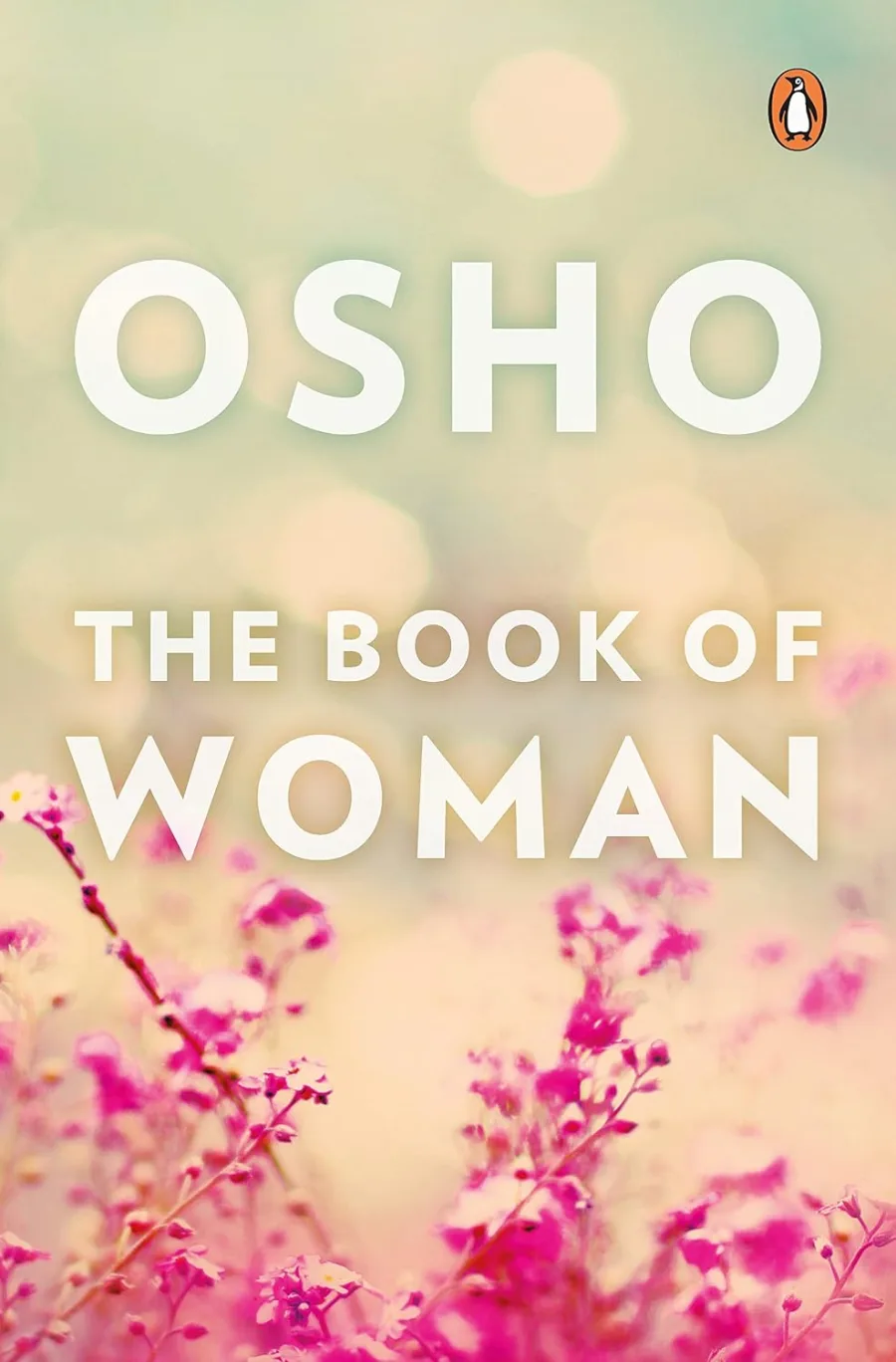
Download Cover Image
Do you want to download the full cover image for The Book Of Woman?