
Life's Amazing Secrets: How to Find Balance and Purpose in Your Life
Paperback
• 256 Pages
• ₹ 178.00
• English
• 9780143442295
No ratings yet
| Publisher | Penguin Ananda |
|---|---|
| ISBN13 | 9780143442295 |
| ASIN/SKU | 0143442295 |
| Book Format | Paperback |
| Language | English |
| Pages | 256 |
| List Price | ₹ 178.00 |
| Publishing Date | 17/09/2018 |
| Dimensions | 19.8 x 12.9 x 1.42 cm |
| Weight | 170 g |
| Book Code | BD00070773 |
Buy this Book
Amazon Stores
Ebook Stores
Other Stores
Discover Life's Amazing Secrets: How to Find Balance and Purpose in Your Life by Gaur Gopal Das. This book is published by Penguin Ananda in Paperback format, ISBN 9780143442295, ASIN 0143442295, under Religion and Spirituality, Spirituality, Spiritual Self-Help.
Book Description
Stop going through life,
Start growing through life!
While navigating their way through Mumbai's horrendous traffic, Gaur Gopal Das and his wealthy young friend Harry get talking, delving into concepts ranging from the human condition to finding one's purpose in life and the key to lasting happiness.
Whether you are looking at strengthening your relationships, discovering your true potential, understanding how to do well at work or even how you can give back to the world, Gaur Gopal Das takes us on an unforgettable journey with his precious insights on these areas of life.
Das is one of the most popular and sought-after monks and life coaches in the world, having shared his wisdom with millions. His debut book, Life's Amazing Secrets, distils his experiences and lessons about life into a light-hearted, thought-provoking book that will help you align yourself with the life you want to live.
Start growing through life!
While navigating their way through Mumbai's horrendous traffic, Gaur Gopal Das and his wealthy young friend Harry get talking, delving into concepts ranging from the human condition to finding one's purpose in life and the key to lasting happiness.
Whether you are looking at strengthening your relationships, discovering your true potential, understanding how to do well at work or even how you can give back to the world, Gaur Gopal Das takes us on an unforgettable journey with his precious insights on these areas of life.
Das is one of the most popular and sought-after monks and life coaches in the world, having shared his wisdom with millions. His debut book, Life's Amazing Secrets, distils his experiences and lessons about life into a light-hearted, thought-provoking book that will help you align yourself with the life you want to live.
Author Biography
Gaur Gopal Das studied electrical engineering at the College of Engineering, Pune. After a brief stint with Hewlett-Packard, he decided to live life as a monk in an ashram in downtown Mumbai. He has remained there for twenty-six years, learning the antiquity of ancient philosophy and the modernity of contemporary psychology, to become a life coach to thousands in the city. Gaur Gopal Das has been travelling the world for over two decades, sharing his wisdom with corporate executives, universities and charities, and has also spoken at the United Nations. In 2016, his global popularity exploded as he took his message online. With over one billion views on his videos on social media, he now leads a movement to help others achieve happiness and purpose in their lives. Now one of the most famous monks in the world, Gaur Gopal Das has been conferred with several honours, including the prestigious Dadasaheb Phalke International Film Festival Award and an honorary doctorate (DLitt) by KIIT University.
Editorial Reviews
Editorial Reviews will be added soon…
Book Summary
Gaur Gopal Das’s Life’s Amazing Secrets: How to Find Balance and Purpose in Your Life is a warm, practical, and deeply reflective book about living a meaningful and balanced life. Written in a simple conversational style, the book explores questions that quietly trouble many people: How can we become happier? How do we balance work and relationships? Why do achievements sometimes fail to give us lasting satisfaction? How can we discover our purpose while dealing with the ordinary pressures of everyday life? Rather than offering complicated theories, Gaur Gopal Das uses stories, conversations, examples, and spiritual insights to make these questions easier to understand.
At the heart of the book is the idea that a successful life is not necessarily a meaningful life. A person may have money, professional recognition, possessions, and social status and still feel restless inside. Conversely, someone with fewer material comforts may experience deep contentment because their relationships are strong, their priorities are clear, and they have a sense of purpose. The book therefore asks readers to look beyond external achievement and examine the quality of their inner life.
The narrative is built around a journey with three central characters: Gaur Gopal Das himself, his friend Harry, and Harry’s father. Their conversations become a vehicle for discussing the deeper questions of life. Through these interactions, the author introduces a framework for understanding four important dimensions of human existence: personal life, relationships, work, and social contribution. These areas are interconnected, and neglecting one of them can disturb the balance of the whole life.
One of the book’s most important messages is that balance does not mean giving equal time to everything. Life constantly changes, and different responsibilities demand attention at different moments. Balance means knowing what matters most at a particular stage and making conscious choices accordingly. A person may spend more time working during an important professional period, but that should not mean permanently sacrificing health, family, friendships, or inner peace. Balance requires awareness rather than mathematical equality.
The author begins by encouraging readers to examine their relationship with themselves. Before trying to fix the outside world, we need to understand our inner world. Many people spend enormous amounts of energy managing appearances while paying very little attention to their thoughts, emotions, fears, and desires. They become busy chasing external approval and forget to ask whether the life they are building actually reflects what they value.
Gaur Gopal Das repeatedly distinguishes between what we have and who we are. Possessions can make life comfortable, but they cannot automatically make a person peaceful. Achievements can increase social recognition, but they cannot guarantee emotional fulfillment. When our identity becomes dependent entirely on external success, our happiness becomes fragile because it depends on circumstances that are constantly changing.
The book therefore encourages self-awareness. We need to understand our strengths and weaknesses, recognize unhealthy patterns, and become honest about the things that genuinely matter to us. Self-awareness does not mean becoming obsessed with oneself. It means developing enough inner clarity to make better decisions.
The second major dimension is relationships. According to the book, relationships are among the greatest sources of happiness and also among the greatest sources of pain. People often damage important relationships not because they do not care, but because they allow ego, expectations, misunderstanding, anger, and poor communication to take control.
One of the book’s humane lessons is that relationships require investment. Love cannot survive purely on intention. It needs time, attention, patience, forgiveness, and understanding. We sometimes give our best energy to strangers, colleagues, customers, and professional responsibilities while giving whatever remains to the people closest to us. Over time, this can create emotional distance.
The author encourages readers to recognize that people are imperfect. If we expect parents, spouses, friends, colleagues, or children to behave exactly according to our expectations, disappointment becomes inevitable. Healthy relationships require us to distinguish between what genuinely matters and what is merely an irritation. Not every disagreement deserves a battle.
Forgiveness becomes especially important here. Holding on to resentment can make us prisoners of the past. Forgiveness does not necessarily mean approving harmful behavior or pretending that nothing happened. Rather, it can mean releasing the emotional burden that prevents us from moving forward. The ability to forgive allows relationships—and sometimes our own hearts—to heal.
The book also discusses the danger of comparison. Modern life encourages people to measure themselves against others constantly. We compare careers, salaries, homes, relationships, appearances, achievements, and lifestyles. Social media can intensify this tendency because people usually display carefully selected moments rather than the full reality of their lives.
Gaur Gopal Das suggests that comparison often creates unnecessary dissatisfaction. Someone else's success does not automatically mean our failure. Every person has a different journey, background, responsibility, opportunity, and definition of fulfillment. Instead of constantly asking whether we are ahead or behind someone else, we should ask whether we are growing in the direction that matters to us.
Work forms another important part of the book. Professional life is necessary and valuable, but the author warns against allowing work to become the entire identity of a person. Career success can be deeply satisfying when it is connected with meaningful contribution, but it becomes exhausting when it is driven entirely by status, competition, or material accumulation.
The book encourages readers to work with sincerity and excellence while maintaining perspective. Work should support life rather than consume it completely. A successful career loses some of its meaning if it comes at the cost of health, family, integrity, or inner peace.
At the same time, the author does not suggest that ambition is wrong. Ambition can motivate people to learn, improve, and contribute. The problem arises when ambition becomes endless. If every achievement simply creates a new desire for something bigger, the mind can remain permanently dissatisfied. Contentment does not mean giving up aspirations. It means being able to appreciate the present while continuing to grow.
Another significant idea is the difference between pleasure and happiness. Pleasure often comes from external stimulation: food, entertainment, shopping, recognition, comfort, or success. Such experiences are not necessarily bad, but they are temporary. Happiness and fulfillment are deeper states connected with meaning, relationships, gratitude, contribution, and inner stability.
This distinction becomes especially relevant when discussing materialism. Society often teaches people that the next purchase, promotion, house, car, or achievement will finally make them happy. But once the excitement disappears, the mind starts looking for the next thing. This creates a cycle of wanting, acquiring, and wanting again.
The author does not reject material success. Instead, he places it in perspective. Money is useful and important, but it should be treated as a means rather than the ultimate purpose of life. The question is not simply how much we can accumulate but what kind of person we become while pursuing it.
The fourth dimension is contribution. A meaningful life extends beyond personal satisfaction. Human beings naturally seek significance, and one powerful way of finding it is by helping others. Contribution can take many forms. It does not require extraordinary wealth or fame. A person can contribute through kindness, teaching, mentoring, professional excellence, community service, family responsibilities, or simply making another person's life a little easier.
This emphasis on contribution gives the book its deeper spiritual dimension. Gaur Gopal Das suggests that lasting fulfillment comes when our abilities and resources become useful to others. When life becomes entirely self-centered, even success can feel strangely empty. When our efforts serve something larger than our immediate desires, ordinary activities can acquire meaning.
The book also explores the importance of attitude. We cannot control everything that happens to us, but we have some control over how we respond. Two people can experience similar circumstances and react very differently because their interpretations differ. One may see a difficulty as proof that life is unfair, while another may see it as an opportunity to learn resilience.
This does not mean that every painful experience should be treated as a blessing or that suffering is always easy to overcome. Rather, the book encourages readers to develop a constructive response to circumstances. We may not choose every event in our lives, but we can gradually develop the wisdom to choose our response.
Another recurring lesson concerns priorities. People often claim that certain things are important but allow their daily schedules to reveal different priorities. Someone may say that family matters most while consistently giving family only leftover time. Someone may say that health is important while continually ignoring sleep, exercise, and rest. The author encourages readers to align their actions with their stated values.
This is where the idea of balance becomes practical. Balance is not achieved through a single decision. It is created through hundreds of small choices. It may mean putting away the phone during a conversation, spending meaningful time with family, taking care of the body, setting professional boundaries, cultivating spiritual practices, or simply learning to say no to unnecessary demands.
The book also encourages gratitude. Gratitude shifts attention from what is missing to what is already present. This does not mean ignoring problems. Instead, it creates a healthier perspective. A grateful person can acknowledge difficulties without allowing them to erase every good thing in life.
Spirituality provides another foundation for the author's understanding of purpose. The book draws on spiritual wisdom to suggest that human beings are more than their professional identities, possessions, and social roles. Inner development requires reflection, humility, discipline, and a willingness to look beyond the ego.
Ultimately, Life’s Amazing Secrets is less about finding one perfect formula for happiness and more about developing a wiser way of living. Its four-part framework—self, relationships, work, and contribution—encourages readers to examine whether these dimensions of life are receiving the attention they deserve.
The book's deepest message is that a meaningful life is built through conscious choices rather than discovered as a finished destination. Happiness is not something that suddenly appears after we achieve everything we want. It grows when we learn to live according to our values, nurture the people we love, perform our responsibilities sincerely, maintain inner awareness, and contribute to something beyond ourselves.
What makes Gaur Gopal Das’s approach especially accessible is his humane understanding of ordinary struggles. He does not present life as a problem that can be solved once and for all. People will still experience disappointment, conflict, ambition, fear, loss, and uncertainty. Balance does not eliminate these experiences. It gives us a way of navigating them without allowing one area of life to destroy everything else.
In the end, Life’s Amazing Secrets invites readers to pause and ask a deceptively simple question: What kind of life am I actually creating? Not merely what am I earning, achieving, or possessing, but how am I treating myself, how am I treating the people around me, what am I contributing through my work, and what difference am I making beyond myself?
The book suggests that a truly fulfilling life is not necessarily the loudest, richest, or most impressive one. It is a life in which achievement and contentment can coexist, ambition is balanced by gratitude, relationships are treated as treasures rather than obligations, and personal success gradually becomes a means of serving others. Its wisdom lies in this simple shift of perspective: instead of constantly asking what more life can give us, we can begin asking what more we can give to life.
That is perhaps the most enduring secret in the book. A balanced and purposeful life is not created through one grand transformation. It is built quietly, day after day, through awareness, love, responsibility, gratitude, and meaningful contribution. When these elements begin to work together, success becomes more than achievement—it becomes a way of living with greater peace, purpose, and humanity.
At the heart of the book is the idea that a successful life is not necessarily a meaningful life. A person may have money, professional recognition, possessions, and social status and still feel restless inside. Conversely, someone with fewer material comforts may experience deep contentment because their relationships are strong, their priorities are clear, and they have a sense of purpose. The book therefore asks readers to look beyond external achievement and examine the quality of their inner life.
The narrative is built around a journey with three central characters: Gaur Gopal Das himself, his friend Harry, and Harry’s father. Their conversations become a vehicle for discussing the deeper questions of life. Through these interactions, the author introduces a framework for understanding four important dimensions of human existence: personal life, relationships, work, and social contribution. These areas are interconnected, and neglecting one of them can disturb the balance of the whole life.
One of the book’s most important messages is that balance does not mean giving equal time to everything. Life constantly changes, and different responsibilities demand attention at different moments. Balance means knowing what matters most at a particular stage and making conscious choices accordingly. A person may spend more time working during an important professional period, but that should not mean permanently sacrificing health, family, friendships, or inner peace. Balance requires awareness rather than mathematical equality.
The author begins by encouraging readers to examine their relationship with themselves. Before trying to fix the outside world, we need to understand our inner world. Many people spend enormous amounts of energy managing appearances while paying very little attention to their thoughts, emotions, fears, and desires. They become busy chasing external approval and forget to ask whether the life they are building actually reflects what they value.
Gaur Gopal Das repeatedly distinguishes between what we have and who we are. Possessions can make life comfortable, but they cannot automatically make a person peaceful. Achievements can increase social recognition, but they cannot guarantee emotional fulfillment. When our identity becomes dependent entirely on external success, our happiness becomes fragile because it depends on circumstances that are constantly changing.
The book therefore encourages self-awareness. We need to understand our strengths and weaknesses, recognize unhealthy patterns, and become honest about the things that genuinely matter to us. Self-awareness does not mean becoming obsessed with oneself. It means developing enough inner clarity to make better decisions.
The second major dimension is relationships. According to the book, relationships are among the greatest sources of happiness and also among the greatest sources of pain. People often damage important relationships not because they do not care, but because they allow ego, expectations, misunderstanding, anger, and poor communication to take control.
One of the book’s humane lessons is that relationships require investment. Love cannot survive purely on intention. It needs time, attention, patience, forgiveness, and understanding. We sometimes give our best energy to strangers, colleagues, customers, and professional responsibilities while giving whatever remains to the people closest to us. Over time, this can create emotional distance.
The author encourages readers to recognize that people are imperfect. If we expect parents, spouses, friends, colleagues, or children to behave exactly according to our expectations, disappointment becomes inevitable. Healthy relationships require us to distinguish between what genuinely matters and what is merely an irritation. Not every disagreement deserves a battle.
Forgiveness becomes especially important here. Holding on to resentment can make us prisoners of the past. Forgiveness does not necessarily mean approving harmful behavior or pretending that nothing happened. Rather, it can mean releasing the emotional burden that prevents us from moving forward. The ability to forgive allows relationships—and sometimes our own hearts—to heal.
The book also discusses the danger of comparison. Modern life encourages people to measure themselves against others constantly. We compare careers, salaries, homes, relationships, appearances, achievements, and lifestyles. Social media can intensify this tendency because people usually display carefully selected moments rather than the full reality of their lives.
Gaur Gopal Das suggests that comparison often creates unnecessary dissatisfaction. Someone else's success does not automatically mean our failure. Every person has a different journey, background, responsibility, opportunity, and definition of fulfillment. Instead of constantly asking whether we are ahead or behind someone else, we should ask whether we are growing in the direction that matters to us.
Work forms another important part of the book. Professional life is necessary and valuable, but the author warns against allowing work to become the entire identity of a person. Career success can be deeply satisfying when it is connected with meaningful contribution, but it becomes exhausting when it is driven entirely by status, competition, or material accumulation.
The book encourages readers to work with sincerity and excellence while maintaining perspective. Work should support life rather than consume it completely. A successful career loses some of its meaning if it comes at the cost of health, family, integrity, or inner peace.
At the same time, the author does not suggest that ambition is wrong. Ambition can motivate people to learn, improve, and contribute. The problem arises when ambition becomes endless. If every achievement simply creates a new desire for something bigger, the mind can remain permanently dissatisfied. Contentment does not mean giving up aspirations. It means being able to appreciate the present while continuing to grow.
Another significant idea is the difference between pleasure and happiness. Pleasure often comes from external stimulation: food, entertainment, shopping, recognition, comfort, or success. Such experiences are not necessarily bad, but they are temporary. Happiness and fulfillment are deeper states connected with meaning, relationships, gratitude, contribution, and inner stability.
This distinction becomes especially relevant when discussing materialism. Society often teaches people that the next purchase, promotion, house, car, or achievement will finally make them happy. But once the excitement disappears, the mind starts looking for the next thing. This creates a cycle of wanting, acquiring, and wanting again.
The author does not reject material success. Instead, he places it in perspective. Money is useful and important, but it should be treated as a means rather than the ultimate purpose of life. The question is not simply how much we can accumulate but what kind of person we become while pursuing it.
The fourth dimension is contribution. A meaningful life extends beyond personal satisfaction. Human beings naturally seek significance, and one powerful way of finding it is by helping others. Contribution can take many forms. It does not require extraordinary wealth or fame. A person can contribute through kindness, teaching, mentoring, professional excellence, community service, family responsibilities, or simply making another person's life a little easier.
This emphasis on contribution gives the book its deeper spiritual dimension. Gaur Gopal Das suggests that lasting fulfillment comes when our abilities and resources become useful to others. When life becomes entirely self-centered, even success can feel strangely empty. When our efforts serve something larger than our immediate desires, ordinary activities can acquire meaning.
The book also explores the importance of attitude. We cannot control everything that happens to us, but we have some control over how we respond. Two people can experience similar circumstances and react very differently because their interpretations differ. One may see a difficulty as proof that life is unfair, while another may see it as an opportunity to learn resilience.
This does not mean that every painful experience should be treated as a blessing or that suffering is always easy to overcome. Rather, the book encourages readers to develop a constructive response to circumstances. We may not choose every event in our lives, but we can gradually develop the wisdom to choose our response.
Another recurring lesson concerns priorities. People often claim that certain things are important but allow their daily schedules to reveal different priorities. Someone may say that family matters most while consistently giving family only leftover time. Someone may say that health is important while continually ignoring sleep, exercise, and rest. The author encourages readers to align their actions with their stated values.
This is where the idea of balance becomes practical. Balance is not achieved through a single decision. It is created through hundreds of small choices. It may mean putting away the phone during a conversation, spending meaningful time with family, taking care of the body, setting professional boundaries, cultivating spiritual practices, or simply learning to say no to unnecessary demands.
The book also encourages gratitude. Gratitude shifts attention from what is missing to what is already present. This does not mean ignoring problems. Instead, it creates a healthier perspective. A grateful person can acknowledge difficulties without allowing them to erase every good thing in life.
Spirituality provides another foundation for the author's understanding of purpose. The book draws on spiritual wisdom to suggest that human beings are more than their professional identities, possessions, and social roles. Inner development requires reflection, humility, discipline, and a willingness to look beyond the ego.
Ultimately, Life’s Amazing Secrets is less about finding one perfect formula for happiness and more about developing a wiser way of living. Its four-part framework—self, relationships, work, and contribution—encourages readers to examine whether these dimensions of life are receiving the attention they deserve.
The book's deepest message is that a meaningful life is built through conscious choices rather than discovered as a finished destination. Happiness is not something that suddenly appears after we achieve everything we want. It grows when we learn to live according to our values, nurture the people we love, perform our responsibilities sincerely, maintain inner awareness, and contribute to something beyond ourselves.
What makes Gaur Gopal Das’s approach especially accessible is his humane understanding of ordinary struggles. He does not present life as a problem that can be solved once and for all. People will still experience disappointment, conflict, ambition, fear, loss, and uncertainty. Balance does not eliminate these experiences. It gives us a way of navigating them without allowing one area of life to destroy everything else.
In the end, Life’s Amazing Secrets invites readers to pause and ask a deceptively simple question: What kind of life am I actually creating? Not merely what am I earning, achieving, or possessing, but how am I treating myself, how am I treating the people around me, what am I contributing through my work, and what difference am I making beyond myself?
The book suggests that a truly fulfilling life is not necessarily the loudest, richest, or most impressive one. It is a life in which achievement and contentment can coexist, ambition is balanced by gratitude, relationships are treated as treasures rather than obligations, and personal success gradually becomes a means of serving others. Its wisdom lies in this simple shift of perspective: instead of constantly asking what more life can give us, we can begin asking what more we can give to life.
That is perhaps the most enduring secret in the book. A balanced and purposeful life is not created through one grand transformation. It is built quietly, day after day, through awareness, love, responsibility, gratitude, and meaningful contribution. When these elements begin to work together, success becomes more than achievement—it becomes a way of living with greater peace, purpose, and humanity.
Sample Chapters
Sample Chapters will be added soon…
Reader Reviews
No reviews yet.
Life's Amazing Secrets: How to Find Balance and Purpose in Your Life
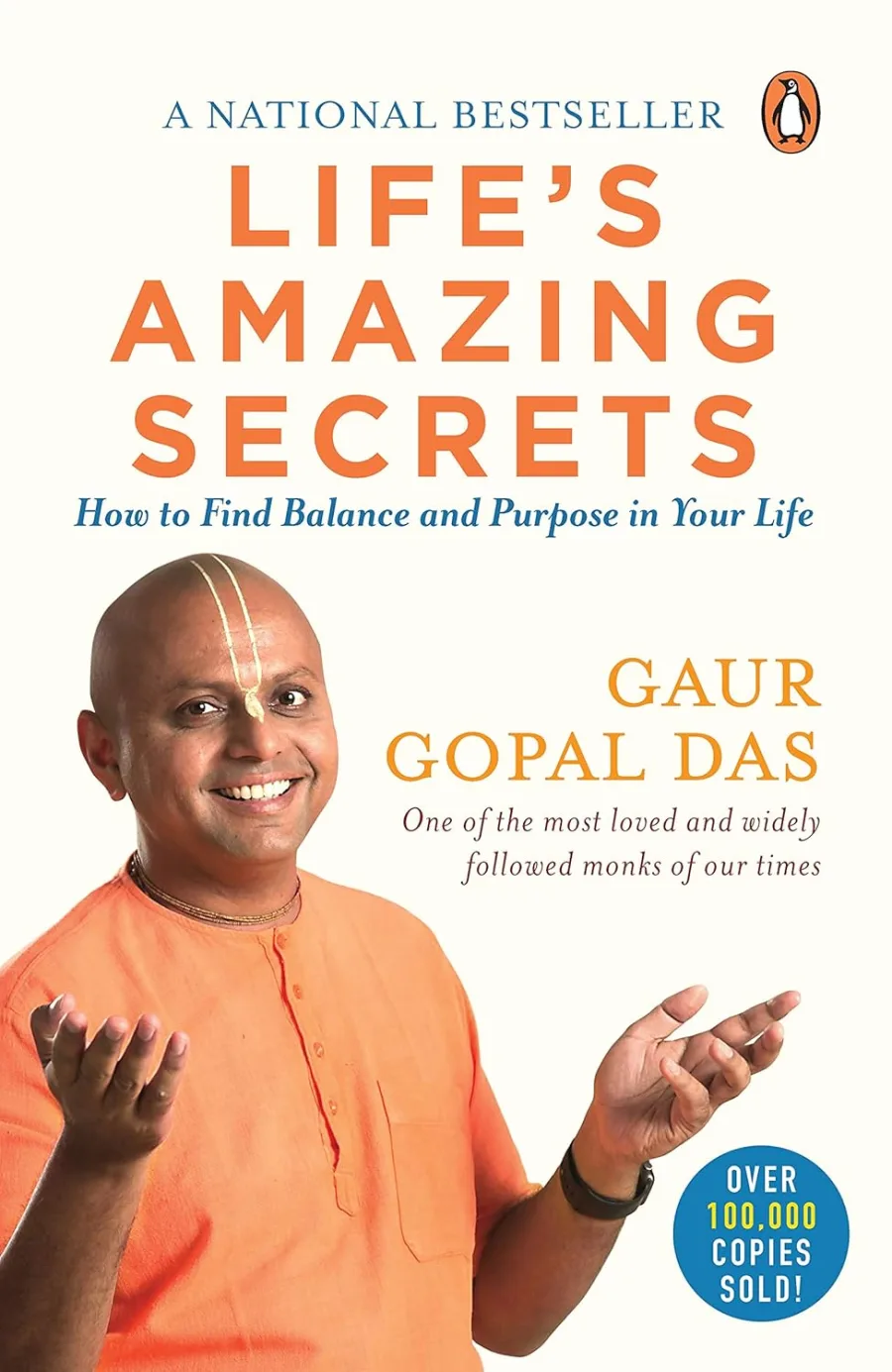
Download Cover Image
Do you want to download the full cover image for Life's Amazing Secrets: How to Find Balance and Purpose in Your Life?