
Steal Like an Artist
Paperback
• 160 Pages
• ₹ 499.00
• English
• 9780761169253
No ratings yet
| Publisher | Workman Publishing |
|---|---|
| ISBN13 | 9780761169253 |
| ASIN/SKU | 0761169253 |
| Book Format | Paperback |
| Language | English |
| Pages | 160 |
| List Price | ₹ 499.00 |
| Publishing Date | 15/04/2014 |
| Dimensions | 15.29 x 1.43 x 14.99 cm |
| Weight | 1 kg 50 g |
| Book Code | BD00070772 |
Buy this Book
Amazon Stores
Ebook Stores
Other Stores
Discover Steal Like an Artist by Austin Kleon. This book is published by Workman Publishing in Paperback format, ISBN 9780761169253, ASIN 0761169253, under Self-Help, Self-Employment.
Book Description
When asked to talk to students at Broome Community College in upstate New York in the spring of 2011, Austin Kleon wrote a simple list often things he wished he'd heard when he was their age: 'Steal like an artist; Don't wait until you know who you are to start making things; Write the book you want to read; Use your hands; Side projects are important; Do good work and put it where people can see it; Geography is no longer our master; Be nice (the world is a small town.); Be boring (it's the only way to get work done.); and, Creativity is subtraction.' After giving the speech, he posted the text and slides to his popular blog, where it quickly went viral. Now Kleon has expanded his original manifesto into an illustrated guide to the creative life for writers, artists, entrepreneurs, designers, photographers, musicians, and anyone attempting to make things - art, a career, a life - in the digital age. Brief, direct, and visually interactive, the book includes illustrative anecdotes and mini-exercise sections calling out practical actions readers can take to unleash their own creative spirits.
Author Biography
Austin Kleon is a writer who draws. He is the author of the New York Times bestsellers Steal Like an Artist and Show Your Work! His work has been featured on NPR’s Morning Edition, PBS Newshour, and in the New York Times and Wall Street Journal. He also speaks frequently about creativity in the digital age for such organizations as Pixar, Google, SXSW, TEDx, and The Economist. He lives in Austin, Texas, and online at austinkleon.com.
Editorial Reviews
Editorial Reviews will be added soon…
Book Summary
Austin Kleon’s Steal Like an Artist: 10 Things Nobody Told You About Being Creative is a short, energetic, and deeply encouraging book about creativity, originality, influence, and the process of making meaningful work. Rather than presenting creativity as a mysterious gift possessed by a fortunate few, Kleon treats it as a practical skill that can be developed through curiosity, observation, experimentation, discipline, and consistent work. His central message is simple but powerful: nobody creates in complete isolation. Every artist, writer, designer, musician, entrepreneur, or thinker is influenced by what came before. The goal is not to become completely original, but to learn how to collect influences, transform them, and use them to create something that carries your own personality.
The title, Steal Like an Artist, immediately sounds provocative. Kleon does not mean that artists should literally plagiarize other people's work. Instead, he uses “stealing” as a metaphor for learning from the people and works that inspire us. Good artists study what they admire, identify what makes it powerful, absorb its lessons, and then transform those lessons into something new. In this sense, creativity is less like creating something from nothing and more like building a personal library of influences. We are all shaped by the books we read, the films we watch, the conversations we have, the people we admire, the places we live, and the experiences we collect. Our creative identity gradually emerges from the combination of these influences.
Kleon begins with an important idea: nothing is completely original. Every creative work exists within a long chain of influence. Writers have writers they admire, musicians have musical traditions, painters learn from earlier painters, and designers borrow ideas from previous generations. Even seemingly revolutionary ideas usually contain traces of something that existed before. This should not discourage creative people. Instead, it should remove the unnecessary pressure to invent something entirely new. The question is not, “How can I create something nobody has ever seen?” but rather, “What can I learn from the things I love, and how can I combine those lessons in my own way?”
This leads to one of the book’s most useful distinctions: there is a difference between stealing and copying. Copying means reproducing someone else's work without transformation. Stealing like an artist means understanding the underlying ideas, techniques, principles, and sensibilities behind work you admire and then making them your own through transformation. A person who studies several artists and gradually develops a distinctive style is not simply copying them. They are participating in a conversation that has existed for generations.
Kleon encourages readers to create what he calls a “genealogy” of influences. Instead of vaguely saying that you admire someone, investigate the people who influenced that person. Then explore the influences of those influences. This process can lead to unexpected discoveries. A favorite author may have learned from another writer, who was influenced by a philosopher, who drew inspiration from an ancient tradition. By following these connections, the creative world becomes much larger. At the same time, the artist begins to understand that creativity is part of a continuing cultural conversation rather than an isolated act of individual genius.
Another important idea is that beginners should embrace imitation rather than fear it. When people are starting out, they often try desperately to “find their voice.” Kleon suggests that this can be counterproductive. Your voice is not something you discover by staring inward and waiting for inspiration. It develops naturally through years of making things, studying others, trying different approaches, and discovering what feels authentic to you. In the beginning, imitation can be a useful form of education. By trying to understand how your favorite creators work, you learn techniques and develop your own instincts. Eventually, your personality begins to appear through the differences between what you admire and what you actually create.
Kleon also challenges the romantic idea of the creative genius who works alone in a studio and waits for inspiration. Creativity, in his view, is much more ordinary and practical. It requires showing up and doing the work. This is one of the book’s most humane messages because it makes creativity less intimidating. You do not need to feel inspired every day. You do not need perfect conditions. You need to keep making things.
The book therefore places great importance on routine. A creative person benefits from establishing habits that make creative work easier to begin. Small acts of consistency can matter more than occasional bursts of inspiration. Writing a few pages every day, sketching regularly, taking photographs, collecting ideas, reading widely, or maintaining a notebook can gradually produce a body of work. Creativity becomes sustainable when it becomes part of everyday life rather than something reserved for special moments.
Kleon also advises readers to write the kind of book they would like to read, make the kind of art they would like to see, or create the kind of work they wish already existed. This is a powerful way to turn dissatisfaction into creativity. If you cannot find something that speaks to you, perhaps you can make it yourself. Instead of complaining that nobody produces the work you want, ask what you could contribute. The absence of something can become an invitation to create it.
Another major theme is the importance of hobbies and side projects. Kleon argues that creative people should not always be obsessed with turning every activity into a career. A hobby can provide freedom precisely because it does not have to satisfy commercial expectations. You can experiment, make mistakes, play, and follow curiosity. Sometimes these seemingly unimportant activities eventually become central to your creative identity.
The book also emphasizes the value of working with your hands. Kleon distinguishes between the digital and analog worlds. Computers are powerful tools, but they can sometimes encourage passive behavior, endless editing, and distraction. Working physically—with paper, pens, scissors, notebooks, index cards, or other simple materials—can engage the mind differently. Kleon describes a practice of maintaining two workspaces: an analog space for physical experimentation and a digital space for organizing and refining the work. The underlying lesson is that different environments encourage different kinds of thinking.
Kleon also addresses the internet and the problem of distraction. The internet gives creative people unprecedented opportunities to learn, share, and connect. At the same time, it can consume enormous amounts of attention. Constant notifications, social media feeds, emails, and online comparison can prevent deep work. Kleon encourages creators to protect their attention and create boundaries around technology. The internet should serve the work rather than replace it.
One of the most practical ideas in the book is the importance of sharing your work. In the modern creative world, it is no longer enough simply to make something privately and wait for someone important to discover you. Artists can build an audience by sharing their process, experiments, interests, discoveries, and finished work. Kleon encourages readers to document what they do and share it publicly. This does not necessarily mean constantly promoting oneself. Instead, it means allowing people to see the work and the thinking behind it.
This idea connects to another central principle: build a good story around your work. People are naturally interested in the person behind a creation, the process that produced it, and the ideas that shaped it. Sharing the journey can create meaningful connections between creator and audience. The goal is not to manufacture a false personality but to communicate honestly about what you are learning and making.
Kleon also talks about obscurity and patience. Many creative people become discouraged because their work does not receive immediate recognition. The reality is that most meaningful creative careers develop slowly. Being unknown is not necessarily a sign of failure. It can be a productive period in which you learn, experiment, and build a body of work without excessive public pressure. Instead of worrying constantly about becoming famous, focus on becoming good.
This leads naturally to the importance of persistence. Creative work involves rejection, uncertainty, mistakes, unfinished projects, and periods when nothing seems to work. Kleon does not romanticize these difficulties, but he treats them as normal parts of the process. The artist must continue. You may not control whether other people appreciate your work, but you can control whether you keep learning and producing.
Another memorable lesson is that creativity needs constraints. At first, unlimited freedom sounds wonderful, but too many possibilities can make it difficult to begin. Restrictions can provide structure. A limited number of colors, a fixed writing schedule, a particular format, a specific subject, or a small daily goal can actually encourage greater creativity. Constraints force the mind to solve problems instead of wandering endlessly among possibilities.
Kleon also emphasizes the importance of geographical and emotional independence. You do not have to live in a famous cultural center or be surrounded by other creative people to make meaningful work. The internet has made access to knowledge and communities much easier, but physical location does not determine creative potential. What matters more is what you notice, what you consume, what you practice, and what you make.
Perhaps the most comforting idea in Steal Like an Artist is that nobody really knows exactly what they are doing. Creative careers rarely follow a perfectly planned path. People discover their direction by moving forward, experimenting, making mistakes, and responding to opportunities. Instead of waiting until everything is certain, Kleon encourages readers to begin with what they have. Use the tools available to you. Learn from people you admire. Make something today. Then make something else tomorrow.
The book ultimately presents creativity as a process of collecting, transforming, and connecting. We collect influences from the world around us. We transform them through our experiences and personalities. We connect apparently unrelated ideas and create something that did not exist in exactly that form before. Originality, therefore, is not the absence of influence. It is the particular way an individual combines influences.
What makes Steal Like an Artist so appealing is its simplicity. Kleon does not present creativity as an exclusive territory reserved for extraordinary people. He makes it accessible to ordinary human beings who are curious enough to begin. His advice applies not only to professional artists but also to writers, students, entrepreneurs, teachers, designers, photographers, programmers, and anyone who wants to make something meaningful.
At its heart, the book is an invitation to stop waiting for permission. Read widely. Study the people whose work moves you. Follow the trail of their influences. Keep a notebook. Work regularly. Experiment with your hands. Protect your attention. Share what you make. Accept that recognition may take time. Use limitations as opportunities. Most importantly, keep creating.
Steal Like an Artist reminds us that creativity is not about being untouched by the world. It is about being deeply touched by the world and then responding to it in your own way. Every creator begins with things that already exist. What matters is what happens after that beginning. Through curiosity, practice, personal experience, and persistence, borrowed influences can become something deeply personal. The artist's task is not to prove that they invented everything from nothing, but to take what they have learned, mix it with who they are, and give something meaningful back to the world.
The title, Steal Like an Artist, immediately sounds provocative. Kleon does not mean that artists should literally plagiarize other people's work. Instead, he uses “stealing” as a metaphor for learning from the people and works that inspire us. Good artists study what they admire, identify what makes it powerful, absorb its lessons, and then transform those lessons into something new. In this sense, creativity is less like creating something from nothing and more like building a personal library of influences. We are all shaped by the books we read, the films we watch, the conversations we have, the people we admire, the places we live, and the experiences we collect. Our creative identity gradually emerges from the combination of these influences.
Kleon begins with an important idea: nothing is completely original. Every creative work exists within a long chain of influence. Writers have writers they admire, musicians have musical traditions, painters learn from earlier painters, and designers borrow ideas from previous generations. Even seemingly revolutionary ideas usually contain traces of something that existed before. This should not discourage creative people. Instead, it should remove the unnecessary pressure to invent something entirely new. The question is not, “How can I create something nobody has ever seen?” but rather, “What can I learn from the things I love, and how can I combine those lessons in my own way?”
This leads to one of the book’s most useful distinctions: there is a difference between stealing and copying. Copying means reproducing someone else's work without transformation. Stealing like an artist means understanding the underlying ideas, techniques, principles, and sensibilities behind work you admire and then making them your own through transformation. A person who studies several artists and gradually develops a distinctive style is not simply copying them. They are participating in a conversation that has existed for generations.
Kleon encourages readers to create what he calls a “genealogy” of influences. Instead of vaguely saying that you admire someone, investigate the people who influenced that person. Then explore the influences of those influences. This process can lead to unexpected discoveries. A favorite author may have learned from another writer, who was influenced by a philosopher, who drew inspiration from an ancient tradition. By following these connections, the creative world becomes much larger. At the same time, the artist begins to understand that creativity is part of a continuing cultural conversation rather than an isolated act of individual genius.
Another important idea is that beginners should embrace imitation rather than fear it. When people are starting out, they often try desperately to “find their voice.” Kleon suggests that this can be counterproductive. Your voice is not something you discover by staring inward and waiting for inspiration. It develops naturally through years of making things, studying others, trying different approaches, and discovering what feels authentic to you. In the beginning, imitation can be a useful form of education. By trying to understand how your favorite creators work, you learn techniques and develop your own instincts. Eventually, your personality begins to appear through the differences between what you admire and what you actually create.
Kleon also challenges the romantic idea of the creative genius who works alone in a studio and waits for inspiration. Creativity, in his view, is much more ordinary and practical. It requires showing up and doing the work. This is one of the book’s most humane messages because it makes creativity less intimidating. You do not need to feel inspired every day. You do not need perfect conditions. You need to keep making things.
The book therefore places great importance on routine. A creative person benefits from establishing habits that make creative work easier to begin. Small acts of consistency can matter more than occasional bursts of inspiration. Writing a few pages every day, sketching regularly, taking photographs, collecting ideas, reading widely, or maintaining a notebook can gradually produce a body of work. Creativity becomes sustainable when it becomes part of everyday life rather than something reserved for special moments.
Kleon also advises readers to write the kind of book they would like to read, make the kind of art they would like to see, or create the kind of work they wish already existed. This is a powerful way to turn dissatisfaction into creativity. If you cannot find something that speaks to you, perhaps you can make it yourself. Instead of complaining that nobody produces the work you want, ask what you could contribute. The absence of something can become an invitation to create it.
Another major theme is the importance of hobbies and side projects. Kleon argues that creative people should not always be obsessed with turning every activity into a career. A hobby can provide freedom precisely because it does not have to satisfy commercial expectations. You can experiment, make mistakes, play, and follow curiosity. Sometimes these seemingly unimportant activities eventually become central to your creative identity.
The book also emphasizes the value of working with your hands. Kleon distinguishes between the digital and analog worlds. Computers are powerful tools, but they can sometimes encourage passive behavior, endless editing, and distraction. Working physically—with paper, pens, scissors, notebooks, index cards, or other simple materials—can engage the mind differently. Kleon describes a practice of maintaining two workspaces: an analog space for physical experimentation and a digital space for organizing and refining the work. The underlying lesson is that different environments encourage different kinds of thinking.
Kleon also addresses the internet and the problem of distraction. The internet gives creative people unprecedented opportunities to learn, share, and connect. At the same time, it can consume enormous amounts of attention. Constant notifications, social media feeds, emails, and online comparison can prevent deep work. Kleon encourages creators to protect their attention and create boundaries around technology. The internet should serve the work rather than replace it.
One of the most practical ideas in the book is the importance of sharing your work. In the modern creative world, it is no longer enough simply to make something privately and wait for someone important to discover you. Artists can build an audience by sharing their process, experiments, interests, discoveries, and finished work. Kleon encourages readers to document what they do and share it publicly. This does not necessarily mean constantly promoting oneself. Instead, it means allowing people to see the work and the thinking behind it.
This idea connects to another central principle: build a good story around your work. People are naturally interested in the person behind a creation, the process that produced it, and the ideas that shaped it. Sharing the journey can create meaningful connections between creator and audience. The goal is not to manufacture a false personality but to communicate honestly about what you are learning and making.
Kleon also talks about obscurity and patience. Many creative people become discouraged because their work does not receive immediate recognition. The reality is that most meaningful creative careers develop slowly. Being unknown is not necessarily a sign of failure. It can be a productive period in which you learn, experiment, and build a body of work without excessive public pressure. Instead of worrying constantly about becoming famous, focus on becoming good.
This leads naturally to the importance of persistence. Creative work involves rejection, uncertainty, mistakes, unfinished projects, and periods when nothing seems to work. Kleon does not romanticize these difficulties, but he treats them as normal parts of the process. The artist must continue. You may not control whether other people appreciate your work, but you can control whether you keep learning and producing.
Another memorable lesson is that creativity needs constraints. At first, unlimited freedom sounds wonderful, but too many possibilities can make it difficult to begin. Restrictions can provide structure. A limited number of colors, a fixed writing schedule, a particular format, a specific subject, or a small daily goal can actually encourage greater creativity. Constraints force the mind to solve problems instead of wandering endlessly among possibilities.
Kleon also emphasizes the importance of geographical and emotional independence. You do not have to live in a famous cultural center or be surrounded by other creative people to make meaningful work. The internet has made access to knowledge and communities much easier, but physical location does not determine creative potential. What matters more is what you notice, what you consume, what you practice, and what you make.
Perhaps the most comforting idea in Steal Like an Artist is that nobody really knows exactly what they are doing. Creative careers rarely follow a perfectly planned path. People discover their direction by moving forward, experimenting, making mistakes, and responding to opportunities. Instead of waiting until everything is certain, Kleon encourages readers to begin with what they have. Use the tools available to you. Learn from people you admire. Make something today. Then make something else tomorrow.
The book ultimately presents creativity as a process of collecting, transforming, and connecting. We collect influences from the world around us. We transform them through our experiences and personalities. We connect apparently unrelated ideas and create something that did not exist in exactly that form before. Originality, therefore, is not the absence of influence. It is the particular way an individual combines influences.
What makes Steal Like an Artist so appealing is its simplicity. Kleon does not present creativity as an exclusive territory reserved for extraordinary people. He makes it accessible to ordinary human beings who are curious enough to begin. His advice applies not only to professional artists but also to writers, students, entrepreneurs, teachers, designers, photographers, programmers, and anyone who wants to make something meaningful.
At its heart, the book is an invitation to stop waiting for permission. Read widely. Study the people whose work moves you. Follow the trail of their influences. Keep a notebook. Work regularly. Experiment with your hands. Protect your attention. Share what you make. Accept that recognition may take time. Use limitations as opportunities. Most importantly, keep creating.
Steal Like an Artist reminds us that creativity is not about being untouched by the world. It is about being deeply touched by the world and then responding to it in your own way. Every creator begins with things that already exist. What matters is what happens after that beginning. Through curiosity, practice, personal experience, and persistence, borrowed influences can become something deeply personal. The artist's task is not to prove that they invented everything from nothing, but to take what they have learned, mix it with who they are, and give something meaningful back to the world.
Sample Chapters
Sample Chapters will be added soon…
Reader Reviews
No reviews yet.
Steal Like an Artist
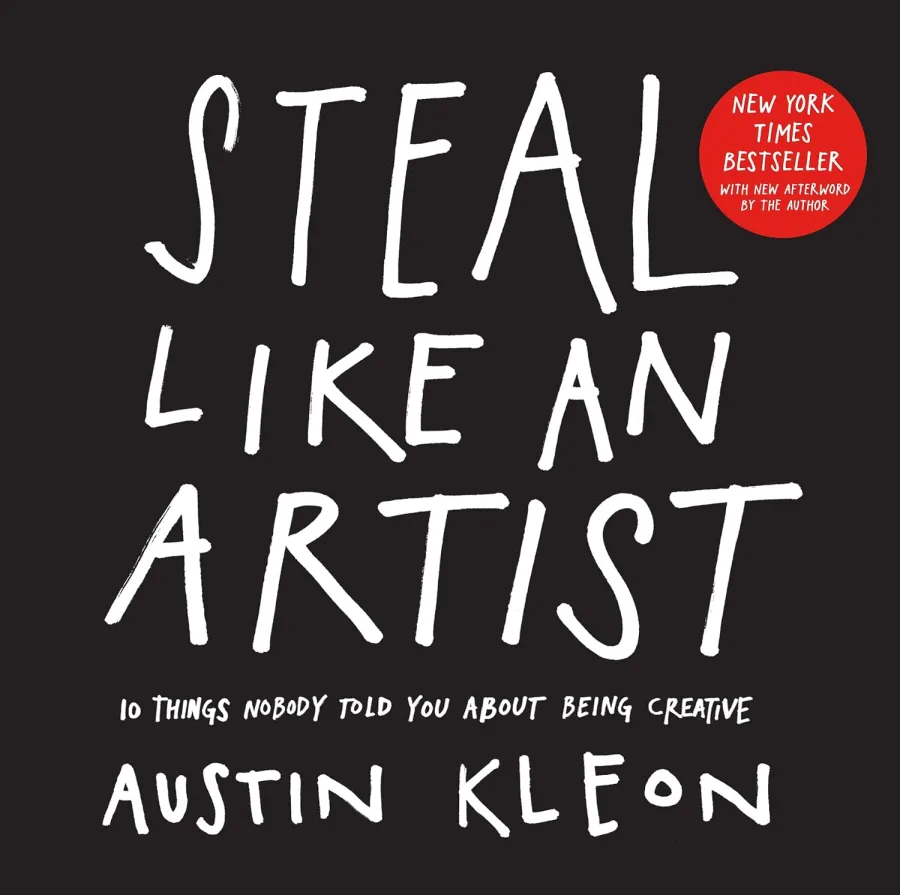
Download Cover Image
Do you want to download the full cover image for Steal Like an Artist?