
Energize Your Mind: Learn the Art of Mastering Your Thoughts, Feelings and Emotions
Paperback
• 256 Pages
• ₹ 182.00
• English
• 9780143442288
No ratings yet
| Publisher | Penguin Ananda |
|---|---|
| ISBN13 | 9780143442288 |
| ASIN/SKU | 0143442287 |
| Book Format | Paperback |
| Language | English |
| Pages | 256 |
| List Price | ₹ 182.00 |
| Publishing Date | 01/01/2023 |
| Dimensions | 13 x 2 x 20 cm |
| Weight | 500.00 Grams |
| Book Code | BD00070766 |
Buy this Book
Amazon Stores
Ebook Stores
Other Stores
Discover Energize Your Mind: Learn the Art of Mastering Your Thoughts, Feelings and Emotions by Gaur Gopal Da. This book is published by Penguin Ananda in Paperback format, ISBN 9780143442288, ASIN 0143442287, under Religion and Spirituality, Spirituality, Meditation.
Book Description
Take charge of your mind.
Be in charge of your life.
In this book, bestselling author and life coach Gaur Gopal Das decodes how the mind works. He combines his anecdotal style with analytical research to teach us how to discipline our mind for our greater well-being. Throughout this book, he provides interactive exercises, meditation techniques and worksheets to help us take charge of our mind.
This book is an essential read for anyone who wants to work towards a better, more fulfilling future for themselves.
Be in charge of your life.
In this book, bestselling author and life coach Gaur Gopal Das decodes how the mind works. He combines his anecdotal style with analytical research to teach us how to discipline our mind for our greater well-being. Throughout this book, he provides interactive exercises, meditation techniques and worksheets to help us take charge of our mind.
This book is an essential read for anyone who wants to work towards a better, more fulfilling future for themselves.
Author Biography
Gaur Gopal Das studied electrical engineering at the College of Engineering, Pune. After a brief stint with Hewlett-Packard, he decided to live life as a monk in an ashram in downtown Mumbai. He has remained there for twenty-six years, learning the antiquity of ancient philosophy and the modernity of contemporary psychology, to become a life coach to thousands in the city. Gaur Gopal Das has been travelling the world for over two decades, sharing his wisdom with corporate executives, universities and charities, and has also spoken at the United Nations. In 2016, his global popularity exploded as he took his message online. With over one billion views on his videos on social media, he now leads a movement to help others achieve happiness and purpose in their lives. Now one of the most famous monks in the world, Gaur Gopal Das has been conferred with several honours, including the prestigious Dadasaheb Phalke International Film Festival Award and an honorary doctorate (DLitt) by KIIT University.
Editorial Reviews
Editorial Reviews will be added soon…
Book Summary
Energize Your Mind: Learn the Art of Mastering Your Thoughts, Feelings and Emotions by Gaur Gopal Das is a thoughtful and practical guide to understanding the mind and developing a healthier relationship with our thoughts, feelings, emotions, memories, relationships, and surroundings. Published by Penguin Ananda in 2023, the book is structured around four broad dimensions of inner life: understanding our own mind, understanding how others affect our mind, learning to understand the minds of others, and finally connecting our individual well-being with the larger universe. The author combines stories, personal experiences, spiritual wisdom, psychological insights, exercises, meditation techniques, and reflective questions to make the subject approachable and practical.
At the heart of the book is a simple but powerful idea: we cannot always control what happens to us, but we can gradually learn to control how we respond to what happens. Much of human suffering comes not only from external circumstances but from the way our mind interprets those circumstances. Two people can experience the same event and respond very differently because their inner worlds are different. One may see an obstacle as a disaster, while another may see it as an opportunity to learn. One person may receive criticism and spend days replaying it, while another may examine the criticism calmly and take whatever is useful from it. For Das, therefore, the journey toward a happier and more fulfilling life begins with learning to understand the mind rather than allowing it to run our lives automatically.
The book begins with the relationship we have with ourselves. Das explores emotions and encourages readers not to suppress uncomfortable feelings but to understand them. His approach can be summarized as learning to feel, deal, and heal. Emotions are part of being human; anger, sadness, fear, guilt, disappointment, jealousy, and grief cannot simply be wished away. The problem begins when we either become prisoners of our emotions or pretend that they do not exist. Healthy emotional living requires acknowledging what we feel, understanding why we feel it, responding appropriately, and eventually allowing ourselves to heal. This is an important distinction because emotional strength does not mean becoming emotionless. It means developing enough awareness to experience emotions without being completely controlled by them.
Das then turns to one of the defining problems of modern life: the fear of missing out, or FOMO. Social media has made comparison almost unavoidable. We constantly see other people's achievements, vacations, possessions, relationships, careers, celebrations, and apparently perfect lives. The mind begins to ask, “Am I missing something?” The more we compare, the more dissatisfied we can become with what we already have. Das encourages readers to shift their attention from what they lack to what they genuinely value. The deeper lesson is that happiness becomes fragile when it depends on constantly measuring our lives against someone else's. Contentment does not mean abandoning ambition; it means refusing to make comparison the foundation of self-worth.
Another major challenge examined in the book is mental chatter. The mind rarely remains silent. It moves backward into memories, forward into imagined possibilities, and sideways into judgments about other people and situations. A single thought can trigger another, which triggers another, until we become exhausted by conversations that are taking place entirely inside our own heads. Das explains that trying to force the mind to become completely silent may not always work. Instead, we can learn to observe our thoughts without automatically believing or following every one of them. This creates a small but meaningful distance between the person who is aware and the thoughts being observed. Meditation, conscious attention, and disciplined awareness become tools for developing this distance.
The discussion of anxiety takes the reader deeper into the relationship between thoughts and emotional reactions. Anxiety often arises when the mind travels into an uncertain future and begins constructing frightening possibilities. The body may respond to these imagined threats almost as though they were happening in the present. Das uses relatable stories to show how anticipation can sometimes become more painful than the actual event. His message is not that people should simply “stop worrying,” but that they should learn to recognize anxious thinking, distinguish possibility from certainty, focus on what is within their control, and seek appropriate support when necessary. This is particularly valuable because it treats emotional difficulties with compassion rather than judgment.
The book also addresses depression, emphasizing that prolonged sadness and emotional suffering should not be reduced to weakness or a lack of positive thinking. Das discusses the importance of recognizing when emotional pain is deeper than an ordinary bad mood. His broader approach encourages self-awareness, supportive relationships, healthy habits, spiritual practices, and professional help where appropriate. The underlying message is humane: suffering should not be hidden simply because society expects people to appear strong. Sometimes healing begins when a person admits that they are struggling and allows others to help.
Guilt is another difficult emotion explored in the first section. Guilt can sometimes be useful because it tells us that our actions may have violated our values or harmed someone. But guilt can also become destructive when we endlessly punish ourselves for past mistakes. Das encourages readers to distinguish between constructive remorse and unhealthy self-condemnation. If we have genuinely done something wrong, we should accept responsibility, apologize when appropriate, learn from the experience, and change our behaviour. Continuing to hate ourselves does not repair the past. Growth comes from transforming guilt into responsibility and responsibility into better action.
The second section moves from the individual mind toward the influence of other people. One particularly relevant subject is toxic behaviour. We cannot always choose who enters our lives, and we cannot control how every person behaves toward us. But we can become more conscious of the influence that unhealthy relationships have on our emotional well-being. Das encourages readers to establish boundaries and avoid allowing another person's negativity to become their permanent inner voice. Compassion does not require unlimited tolerance. Sometimes caring for ourselves means creating distance from people or situations that repeatedly damage our peace.
The author then explores old memories. Human beings have an extraordinary capacity to remember, but memories are not always neutral recordings of the past. A painful event can continue influencing our present long after the actual situation has ended. We may replay conversations, imagine alternative endings, or repeatedly ask why something happened. The danger is that yesterday begins to occupy today's mental space. Das encourages readers to acknowledge the past without allowing it to dictate the present. Letting go does not mean pretending that something never happened. It means refusing to give an old event unlimited authority over our current life.
Closely connected to this is the subject of criticism. Nobody enjoys being criticized, particularly when criticism touches something connected to our identity or pride. Yet criticism can either become a source of bitterness or an opportunity for growth. Das encourages readers to listen before reacting. Some criticism may be unfair and need not be accepted; other criticism may contain valuable information. Emotional maturity lies in being able to separate the useful message from the unnecessary hurt. Instead of asking only, “Why did this person criticize me?” we can also ask, “Is there anything here that I need to learn?”
The chapter on grief brings an especially human dimension to the book. Loss cannot always be solved. When someone or something deeply important disappears from our lives, the mind may resist accepting the new reality. Grief can come in waves, and healing does not necessarily mean forgetting. Das presents grief as something that must be experienced rather than hurried through. Memories of loved ones can remain painful and beautiful at the same time. Over time, the relationship with the memory may change, allowing love to remain even when the immediate intensity of grief becomes softer.
The third section focuses on our relationship with other people's minds. Here Das introduces the importance of empathy. We often interpret other people's behaviour from our own perspective. We know our own intentions but see only the actions of others. As a result, we may judge someone harshly without understanding what they are experiencing. Empathy asks us to pause and imagine the world from another person's position. It does not mean agreeing with everything someone does. Rather, it means trying to understand before judging.
This naturally leads to sensitive communication. Words can heal, but they can also leave wounds that remain long after a conversation has ended. Das emphasizes the importance of considering not only what we want to say but also how our words might be received. Communication is more than transferring information; it is an interaction between two emotional worlds. Timing, tone, choice of words, listening, and genuine attention all matter. A technically correct statement can still be emotionally insensitive. Good communication therefore requires both clarity and compassion.
Another important idea is selflessness. Das challenges the tendency to organize life entirely around “me” and “my” concerns. Ambition, achievement, possessions, and personal success are not inherently wrong, but a life permanently centered on the self can become exhausting and empty. Serving others can broaden our sense of purpose. When we contribute to another person's well-being, our own problems sometimes become easier to put into perspective. Selflessness, in this sense, is not self-destruction. It is the ability to recognize that our lives are interconnected with those of other people.
The final section expands the discussion from the individual to the universe. Das presents the idea that we are not isolated beings but part of a much larger system. Our physical health, mental state, relationships, environment, habits, values, and spiritual life influence one another. This leads to a holistic understanding of wellness. A healthy mind cannot be separated completely from the body that carries it or the environment in which it lives.
The book therefore concludes with a broader vision of well-being. Energizing the mind is not simply about becoming more productive or thinking positively all the time. It is about creating an inner life that is balanced, aware, compassionate, resilient, and purposeful. The exercises, meditation practices, and worksheets included in the book reinforce this practical orientation: understanding something intellectually is different from practicing it consistently.
Ultimately, Energize Your Mind is less about controlling every thought and more about developing a wiser relationship with the mind. Thoughts will arise, emotions will fluctuate, people will disappoint us, memories will return, uncertainty will remain, and life will continue to bring unexpected events. The goal is not to construct a life without difficulty. It is to become better equipped to meet difficulty without losing ourselves.
Gaur Gopal Das presents this message through an accessible combination of storytelling and reflective wisdom rather than through abstract psychological theory. The book's progression—from “me and my mind,” to “others and my mind,” to “me and the mind of others,” and finally to “the universe and my mind”—suggests that personal well-being gradually expands into relational and spiritual well-being.
The deepest lesson of the book is perhaps that peace is not created by controlling the world around us; it is cultivated by learning how to work with the world within us. When we become aware of our emotions instead of being ruled by them, question our mental chatter instead of believing everything it says, learn from criticism instead of fearing it, process grief instead of suppressing it, establish boundaries instead of absorbing toxicity, communicate with empathy instead of judgment, and practice selflessness instead of living entirely for ourselves, the mind gradually becomes a source of strength rather than a source of constant struggle.
In this way, Energize Your Mind offers a compassionate invitation to pause and look inward. It reminds readers that mental well-being is not a destination reached once and for all. It is a daily practice. Every thought we examine, every emotion we understand, every painful memory we process, every kind word we choose, and every moment of mindful awareness becomes part of the larger process of creating a calmer and more meaningful life. The book ultimately encourages us to become not perfect masters of our minds, but wiser caretakers of them.
At the heart of the book is a simple but powerful idea: we cannot always control what happens to us, but we can gradually learn to control how we respond to what happens. Much of human suffering comes not only from external circumstances but from the way our mind interprets those circumstances. Two people can experience the same event and respond very differently because their inner worlds are different. One may see an obstacle as a disaster, while another may see it as an opportunity to learn. One person may receive criticism and spend days replaying it, while another may examine the criticism calmly and take whatever is useful from it. For Das, therefore, the journey toward a happier and more fulfilling life begins with learning to understand the mind rather than allowing it to run our lives automatically.
The book begins with the relationship we have with ourselves. Das explores emotions and encourages readers not to suppress uncomfortable feelings but to understand them. His approach can be summarized as learning to feel, deal, and heal. Emotions are part of being human; anger, sadness, fear, guilt, disappointment, jealousy, and grief cannot simply be wished away. The problem begins when we either become prisoners of our emotions or pretend that they do not exist. Healthy emotional living requires acknowledging what we feel, understanding why we feel it, responding appropriately, and eventually allowing ourselves to heal. This is an important distinction because emotional strength does not mean becoming emotionless. It means developing enough awareness to experience emotions without being completely controlled by them.
Das then turns to one of the defining problems of modern life: the fear of missing out, or FOMO. Social media has made comparison almost unavoidable. We constantly see other people's achievements, vacations, possessions, relationships, careers, celebrations, and apparently perfect lives. The mind begins to ask, “Am I missing something?” The more we compare, the more dissatisfied we can become with what we already have. Das encourages readers to shift their attention from what they lack to what they genuinely value. The deeper lesson is that happiness becomes fragile when it depends on constantly measuring our lives against someone else's. Contentment does not mean abandoning ambition; it means refusing to make comparison the foundation of self-worth.
Another major challenge examined in the book is mental chatter. The mind rarely remains silent. It moves backward into memories, forward into imagined possibilities, and sideways into judgments about other people and situations. A single thought can trigger another, which triggers another, until we become exhausted by conversations that are taking place entirely inside our own heads. Das explains that trying to force the mind to become completely silent may not always work. Instead, we can learn to observe our thoughts without automatically believing or following every one of them. This creates a small but meaningful distance between the person who is aware and the thoughts being observed. Meditation, conscious attention, and disciplined awareness become tools for developing this distance.
The discussion of anxiety takes the reader deeper into the relationship between thoughts and emotional reactions. Anxiety often arises when the mind travels into an uncertain future and begins constructing frightening possibilities. The body may respond to these imagined threats almost as though they were happening in the present. Das uses relatable stories to show how anticipation can sometimes become more painful than the actual event. His message is not that people should simply “stop worrying,” but that they should learn to recognize anxious thinking, distinguish possibility from certainty, focus on what is within their control, and seek appropriate support when necessary. This is particularly valuable because it treats emotional difficulties with compassion rather than judgment.
The book also addresses depression, emphasizing that prolonged sadness and emotional suffering should not be reduced to weakness or a lack of positive thinking. Das discusses the importance of recognizing when emotional pain is deeper than an ordinary bad mood. His broader approach encourages self-awareness, supportive relationships, healthy habits, spiritual practices, and professional help where appropriate. The underlying message is humane: suffering should not be hidden simply because society expects people to appear strong. Sometimes healing begins when a person admits that they are struggling and allows others to help.
Guilt is another difficult emotion explored in the first section. Guilt can sometimes be useful because it tells us that our actions may have violated our values or harmed someone. But guilt can also become destructive when we endlessly punish ourselves for past mistakes. Das encourages readers to distinguish between constructive remorse and unhealthy self-condemnation. If we have genuinely done something wrong, we should accept responsibility, apologize when appropriate, learn from the experience, and change our behaviour. Continuing to hate ourselves does not repair the past. Growth comes from transforming guilt into responsibility and responsibility into better action.
The second section moves from the individual mind toward the influence of other people. One particularly relevant subject is toxic behaviour. We cannot always choose who enters our lives, and we cannot control how every person behaves toward us. But we can become more conscious of the influence that unhealthy relationships have on our emotional well-being. Das encourages readers to establish boundaries and avoid allowing another person's negativity to become their permanent inner voice. Compassion does not require unlimited tolerance. Sometimes caring for ourselves means creating distance from people or situations that repeatedly damage our peace.
The author then explores old memories. Human beings have an extraordinary capacity to remember, but memories are not always neutral recordings of the past. A painful event can continue influencing our present long after the actual situation has ended. We may replay conversations, imagine alternative endings, or repeatedly ask why something happened. The danger is that yesterday begins to occupy today's mental space. Das encourages readers to acknowledge the past without allowing it to dictate the present. Letting go does not mean pretending that something never happened. It means refusing to give an old event unlimited authority over our current life.
Closely connected to this is the subject of criticism. Nobody enjoys being criticized, particularly when criticism touches something connected to our identity or pride. Yet criticism can either become a source of bitterness or an opportunity for growth. Das encourages readers to listen before reacting. Some criticism may be unfair and need not be accepted; other criticism may contain valuable information. Emotional maturity lies in being able to separate the useful message from the unnecessary hurt. Instead of asking only, “Why did this person criticize me?” we can also ask, “Is there anything here that I need to learn?”
The chapter on grief brings an especially human dimension to the book. Loss cannot always be solved. When someone or something deeply important disappears from our lives, the mind may resist accepting the new reality. Grief can come in waves, and healing does not necessarily mean forgetting. Das presents grief as something that must be experienced rather than hurried through. Memories of loved ones can remain painful and beautiful at the same time. Over time, the relationship with the memory may change, allowing love to remain even when the immediate intensity of grief becomes softer.
The third section focuses on our relationship with other people's minds. Here Das introduces the importance of empathy. We often interpret other people's behaviour from our own perspective. We know our own intentions but see only the actions of others. As a result, we may judge someone harshly without understanding what they are experiencing. Empathy asks us to pause and imagine the world from another person's position. It does not mean agreeing with everything someone does. Rather, it means trying to understand before judging.
This naturally leads to sensitive communication. Words can heal, but they can also leave wounds that remain long after a conversation has ended. Das emphasizes the importance of considering not only what we want to say but also how our words might be received. Communication is more than transferring information; it is an interaction between two emotional worlds. Timing, tone, choice of words, listening, and genuine attention all matter. A technically correct statement can still be emotionally insensitive. Good communication therefore requires both clarity and compassion.
Another important idea is selflessness. Das challenges the tendency to organize life entirely around “me” and “my” concerns. Ambition, achievement, possessions, and personal success are not inherently wrong, but a life permanently centered on the self can become exhausting and empty. Serving others can broaden our sense of purpose. When we contribute to another person's well-being, our own problems sometimes become easier to put into perspective. Selflessness, in this sense, is not self-destruction. It is the ability to recognize that our lives are interconnected with those of other people.
The final section expands the discussion from the individual to the universe. Das presents the idea that we are not isolated beings but part of a much larger system. Our physical health, mental state, relationships, environment, habits, values, and spiritual life influence one another. This leads to a holistic understanding of wellness. A healthy mind cannot be separated completely from the body that carries it or the environment in which it lives.
The book therefore concludes with a broader vision of well-being. Energizing the mind is not simply about becoming more productive or thinking positively all the time. It is about creating an inner life that is balanced, aware, compassionate, resilient, and purposeful. The exercises, meditation practices, and worksheets included in the book reinforce this practical orientation: understanding something intellectually is different from practicing it consistently.
Ultimately, Energize Your Mind is less about controlling every thought and more about developing a wiser relationship with the mind. Thoughts will arise, emotions will fluctuate, people will disappoint us, memories will return, uncertainty will remain, and life will continue to bring unexpected events. The goal is not to construct a life without difficulty. It is to become better equipped to meet difficulty without losing ourselves.
Gaur Gopal Das presents this message through an accessible combination of storytelling and reflective wisdom rather than through abstract psychological theory. The book's progression—from “me and my mind,” to “others and my mind,” to “me and the mind of others,” and finally to “the universe and my mind”—suggests that personal well-being gradually expands into relational and spiritual well-being.
The deepest lesson of the book is perhaps that peace is not created by controlling the world around us; it is cultivated by learning how to work with the world within us. When we become aware of our emotions instead of being ruled by them, question our mental chatter instead of believing everything it says, learn from criticism instead of fearing it, process grief instead of suppressing it, establish boundaries instead of absorbing toxicity, communicate with empathy instead of judgment, and practice selflessness instead of living entirely for ourselves, the mind gradually becomes a source of strength rather than a source of constant struggle.
In this way, Energize Your Mind offers a compassionate invitation to pause and look inward. It reminds readers that mental well-being is not a destination reached once and for all. It is a daily practice. Every thought we examine, every emotion we understand, every painful memory we process, every kind word we choose, and every moment of mindful awareness becomes part of the larger process of creating a calmer and more meaningful life. The book ultimately encourages us to become not perfect masters of our minds, but wiser caretakers of them.
Sample Chapters
Sample Chapters will be added soon…
Reader Reviews
No reviews yet.
Energize Your Mind: Learn the Art of Mastering Your Thoughts, Feelings and Emotions
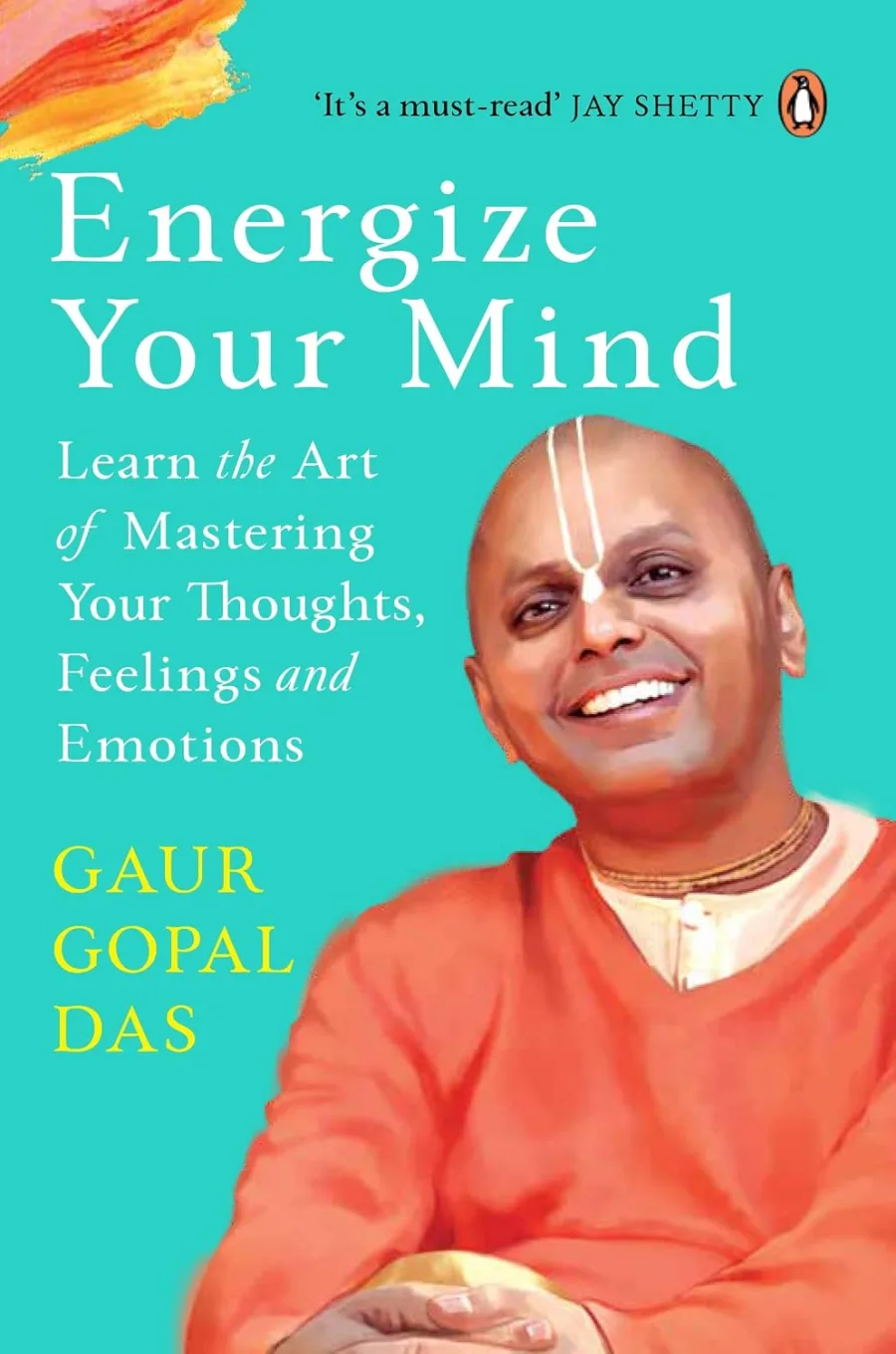
Download Cover Image
Do you want to download the full cover image for Energize Your Mind: Learn the Art of Mastering Your Thoughts, Feelings and Emotions?