
Manifest: 7 Steps to Living Your Best Life
Hardcover
• 192 Pages
• ₹ 448.00
• English
• 9780241539590
No ratings yet
| Publisher | Michael Joseph |
|---|---|
| ISBN13 | 9780241539590 |
| ASIN/SKU | 0241539595 |
| Book Format | Hardcover |
| Language | English |
| Pages | 192 |
| List Price | ₹ 448.00 |
| Publishing Date | 06/01/2022 |
| Dimensions | 14.2 x 2 x 20.5 cm |
| Weight | 268 g |
| Book Code | BD00070765 |
Buy this Book
Amazon Stores
Ebook Stores
Other Stores
Discover Manifest: 7 Steps to Living Your Best Life by Roxie Nafousi. This book is published by Michael Joseph in Hardcover format, ISBN 9780241539590, ASIN 0241539595, under Self-Help, Self-Help for Happiness, Self-Esteem.
Book Description
THE INSTANT SUNDAY TIMES BESTSELLER - OVER 1 MILLION COPIES SOLD WORLDWIDE
In this life-changing guide, 'Queen of Manifesting' Roxie Nafousi reveals the 7-step formula to unlock your full potential, boost your confidence, and attract your dream life
'The millennial answer to The Secret' VOGUE
'The ultimate queen of manifesting' GLAMOUR UK
***Manifest is the Cambridge dictionary 'Word of the Year' 2024***
MANIFEST is the original must-have guide by Roxie Nafousi, self-development coach and 'Queen of Manifesting'.
Essential for anyone wanting to feel more empowered and be more intentional, in just seven simple steps you can learn the true art of manifestation and how to create the life you have always dreamed of.
Whether you want to attract your soulmate, find your perfect career, invite success into your life, or simply discover more confidence and self-worth, MANIFEST will teach you exactly how to get there in just 7 steps . . .
1. Be clear in your vision
2. Remove fear and doubt
3. Align your behaviour
4. Overcome tests from the universe
5. Embrace gratitude without caveats
6. Turn envy into inspiration
7. Trust in the universe
A meeting of science and wisdom, manifesting is a philosophy and a self-development practice to help you recognize your worth, pursue your dreams and live your best life.
Unlock the magic for yourself and begin your journey to turning your dreams into reality.
Why Readers LOVE Manifest:
'The face of manifesting in Britain' THE TIMES
'A roadmap for a more positive way of life' FINANCIAL TIMES
'The essential guide to anyone and everyone wanting to feel more empowered in their lives' GLAMOUR UK
'Roxie’s proving that manifesting is more than just a word―it’s a way of life' HELLO FASHION
'Buy the book, do the work, and watch your life change' ***** Reader Review
'The 'go-to' manifesting handbook' ***** Reader Review
*Sunday Times bestseller, January 2022
In this life-changing guide, 'Queen of Manifesting' Roxie Nafousi reveals the 7-step formula to unlock your full potential, boost your confidence, and attract your dream life
'The millennial answer to The Secret' VOGUE
'The ultimate queen of manifesting' GLAMOUR UK
***Manifest is the Cambridge dictionary 'Word of the Year' 2024***
MANIFEST is the original must-have guide by Roxie Nafousi, self-development coach and 'Queen of Manifesting'.
Essential for anyone wanting to feel more empowered and be more intentional, in just seven simple steps you can learn the true art of manifestation and how to create the life you have always dreamed of.
Whether you want to attract your soulmate, find your perfect career, invite success into your life, or simply discover more confidence and self-worth, MANIFEST will teach you exactly how to get there in just 7 steps . . .
1. Be clear in your vision
2. Remove fear and doubt
3. Align your behaviour
4. Overcome tests from the universe
5. Embrace gratitude without caveats
6. Turn envy into inspiration
7. Trust in the universe
A meeting of science and wisdom, manifesting is a philosophy and a self-development practice to help you recognize your worth, pursue your dreams and live your best life.
Unlock the magic for yourself and begin your journey to turning your dreams into reality.
Why Readers LOVE Manifest:
'The face of manifesting in Britain' THE TIMES
'A roadmap for a more positive way of life' FINANCIAL TIMES
'The essential guide to anyone and everyone wanting to feel more empowered in their lives' GLAMOUR UK
'Roxie’s proving that manifesting is more than just a word―it’s a way of life' HELLO FASHION
'Buy the book, do the work, and watch your life change' ***** Reader Review
'The 'go-to' manifesting handbook' ***** Reader Review
*Sunday Times bestseller, January 2022
Author Biography
Roxie Nafousi is a self-development coach, inspirational speaker, manifesting expert and 2 x Sunday Times Bestselling author. Her debut book MANIFEST: 7 Steps to Living Your Best Life has become a global success since it entered the market in January 2022, and is widely regarded as the must-have guide to manifestation. It has been translated into 22 languages and has spent 25 weeks in the Sunday Times Bestseller charts. Roxie’s much anticipated follow-up book, MANIFEST: Dive Deeper debuted straight at number 5 in the charts and has already received acclaim from the UK’s top publications.
Hailed as ‘the manifesting queen’ by Forbes & the Financial Times, Roxie brings her unique approach to self-development across the world, hosting corporate workshops for the world’s largest companies including Google, Meta, Rothschild, and many more. Roxie also hosts her own sell-out workshops and webinars.
In collaboration with The Head Plan, Roxie also offers a range of transformational products, including The Journal, The Manifest Deck, The Notebook and The Mantra cards, that provide people with the tools they need to fulfil their potential and live their best lives.
Her commitment and dedication to transforming the lives of people who suffer with emotional and mental-health issues and helping them to fulfil their potential has seen her quickly become a leading figure in the wellness world.
'Roxie is the voice manifestation needs' Jay Shetty
'The Queen of Manifesting' Financial Times + Forbes
'The face of manifesting in Britain' The Times
'The A-list's new favourite manifester' Sunday Times Style
‘One of the most prominent figures in the wellness world’ Hello
‘Nafousi – often referred to as the ‘queen of manifesting’ – brought her way of thinking to the masses’ The Independent
‘It is a refreshingly raw approach that makes the methods she is teaching feel so accessible.’ Cosmopolitan
‘She really is the perfect poster girl for the practice (manifestation), proving it does work’ Red
PRAISE FOR MANIFEST
'The essential guide to anyone and everyone wanting to feel more empowered' Glamour
'A phenomenon' Grazia
'A roadmap for a more positive way of life' Financial Times
'The book you're seeing all over your Instagram feed' Red
'THE MILLENNIAL ANSWER TO THE SECRET' VOGUE
‘The must-have self-development bible’ Cosmopolitan
‘Not only does it look good on your coffee table, but it actually has the potential to change your life – as countless Amazon reviews have confirmed.’ Glamour
‘Roxie’s book put manifesting on the map’ Red
PRAISE FOR MANIFEST: DIVE DEEPER
'An empowering and clear read, filled with helpful exercises, the book explores everything from your inner child to daily rituals, stepping outside your comfort zone and how to stop caring about what people think… Self-help just got cool again.’ VOGUE
‘A grown-up guide to Manifesting’ The Times
'Looking to live more intentionally? Put Manifest: Dive Deeper on your radar' HELLO!
'The internet's 'queen of manifesting' takes a refreshingly next-gen, no nonsense approach to the practice.' BUSTLE
‘MANIFEST: Dive Deeper – a book for anyone who’s feeling a little lost and wants to embark on a brand new journey’ - Forbes
'Manifesting expert Roxie Nafousi is back. This deeper dive into the principles and practice of manifestation seeks to expand your understanding of the seven steps on a journey to lasting transformative change' SUNDAY EXPRESS
‘In this hotly demanded follow-up, Roxie expands readers’ understanding of each of the seven steps to manifestation, providing practical techniques for harnessing your potential and confidently stepping into your power.’ SHEERLUXE
Hailed as ‘the manifesting queen’ by Forbes & the Financial Times, Roxie brings her unique approach to self-development across the world, hosting corporate workshops for the world’s largest companies including Google, Meta, Rothschild, and many more. Roxie also hosts her own sell-out workshops and webinars.
In collaboration with The Head Plan, Roxie also offers a range of transformational products, including The Journal, The Manifest Deck, The Notebook and The Mantra cards, that provide people with the tools they need to fulfil their potential and live their best lives.
Her commitment and dedication to transforming the lives of people who suffer with emotional and mental-health issues and helping them to fulfil their potential has seen her quickly become a leading figure in the wellness world.
'Roxie is the voice manifestation needs' Jay Shetty
'The Queen of Manifesting' Financial Times + Forbes
'The face of manifesting in Britain' The Times
'The A-list's new favourite manifester' Sunday Times Style
‘One of the most prominent figures in the wellness world’ Hello
‘Nafousi – often referred to as the ‘queen of manifesting’ – brought her way of thinking to the masses’ The Independent
‘It is a refreshingly raw approach that makes the methods she is teaching feel so accessible.’ Cosmopolitan
‘She really is the perfect poster girl for the practice (manifestation), proving it does work’ Red
PRAISE FOR MANIFEST
'The essential guide to anyone and everyone wanting to feel more empowered' Glamour
'A phenomenon' Grazia
'A roadmap for a more positive way of life' Financial Times
'The book you're seeing all over your Instagram feed' Red
'THE MILLENNIAL ANSWER TO THE SECRET' VOGUE
‘The must-have self-development bible’ Cosmopolitan
‘Not only does it look good on your coffee table, but it actually has the potential to change your life – as countless Amazon reviews have confirmed.’ Glamour
‘Roxie’s book put manifesting on the map’ Red
PRAISE FOR MANIFEST: DIVE DEEPER
'An empowering and clear read, filled with helpful exercises, the book explores everything from your inner child to daily rituals, stepping outside your comfort zone and how to stop caring about what people think… Self-help just got cool again.’ VOGUE
‘A grown-up guide to Manifesting’ The Times
'Looking to live more intentionally? Put Manifest: Dive Deeper on your radar' HELLO!
'The internet's 'queen of manifesting' takes a refreshingly next-gen, no nonsense approach to the practice.' BUSTLE
‘MANIFEST: Dive Deeper – a book for anyone who’s feeling a little lost and wants to embark on a brand new journey’ - Forbes
'Manifesting expert Roxie Nafousi is back. This deeper dive into the principles and practice of manifestation seeks to expand your understanding of the seven steps on a journey to lasting transformative change' SUNDAY EXPRESS
‘In this hotly demanded follow-up, Roxie expands readers’ understanding of each of the seven steps to manifestation, providing practical techniques for harnessing your potential and confidently stepping into your power.’ SHEERLUXE
Editorial Reviews
The millennial answer to The Secret ― Vogue
The face of manifesting in Britain ― The Times
A roadmap for a more positive way of life ― Financial Times
The A-list's new favourite manifester ― Sunday Times Style
The perfect read to kick off those New Year's resolutions ― New
The essential guide to anyone and everyone wanting to feel more empowered in their lives ― Glamour UK
The book you're seeing all over your Instagram feed ― Red
A phenomenon ― Grazia
The face of manifesting in Britain ― The Times
A roadmap for a more positive way of life ― Financial Times
The A-list's new favourite manifester ― Sunday Times Style
The perfect read to kick off those New Year's resolutions ― New
The essential guide to anyone and everyone wanting to feel more empowered in their lives ― Glamour UK
The book you're seeing all over your Instagram feed ― Red
A phenomenon ― Grazia
Book Summary
Manifest: 7 Steps to Living Your Best Life by Roxie Nafousi is a practical self-development book about consciously creating a life that feels more meaningful, fulfilling, and aligned with one's deepest desires. Nafousi presents manifestation not as a magical process in which simply thinking about something makes it appear, but as a combination of self-awareness, emotional healing, clear intention, confidence, disciplined action, and openness to possibility. The book is organized around seven practical steps designed to help readers understand what they truly want, identify what is holding them back, develop a stronger sense of self-worth, and take consistent action toward the life they envision.
At the center of the book is a simple idea: the life we create externally is deeply connected to the beliefs, choices, habits, and emotional patterns we carry internally. Nafousi argues that manifestation begins not with asking the universe for something, but with becoming clear about what we want and understanding why we want it. When people live without clarity, they can easily become trapped in comparison, insecurity, fear, and other people's expectations. They may work hard toward goals that do not genuinely belong to them. The first task, therefore, is to look inward and identify what a fulfilling life actually means.
The book's seven-step framework begins with being clear in your vision. This means identifying the life you genuinely want rather than simply copying what appears successful or desirable in other people's lives. Modern society constantly gives people images of what they “should” want: a particular career, income level, relationship, appearance, lifestyle, or social status. Social media can make this especially confusing because people are continually exposed to carefully presented versions of other people's lives.
Nafousi encourages the reader to move beyond these external expectations. Instead of asking, “What will make me look successful?” the more important question becomes, “What would actually make me feel fulfilled?” This distinction is crucial. A goal can be impressive and still leave a person unhappy if it does not reflect their genuine values.
Clarity also requires specificity. Vague wishes such as “I want to be happy” or “I want a better life” are difficult to translate into action. A clearer vision might involve the kind of work one wants to do, the relationships one wants to cultivate, the environment one wants to live in, the qualities one wants to develop, and the experiences one wants to have. The goal is not to predict every detail of the future but to create a meaningful direction.
The second major step involves removing fear and doubt. Once a person becomes clear about a desired future, doubts often appear. The mind begins producing questions: “What if I fail?” “What if I am not good enough?” “What if other people judge me?” “What if I lose what I already have?” Nafousi sees these fears as obstacles that can prevent people from taking action.
Importantly, the book does not suggest that fear must completely disappear before someone can move forward. Fear is a normal human emotion. Waiting until one feels perfectly confident can become another form of avoidance. Instead, the reader is encouraged to recognize fear without allowing it to dictate every decision.
This requires examining the stories behind fear. Sometimes a person says they want success but unconsciously associates success with pressure, rejection, responsibility, or failure. Someone may want a loving relationship while simultaneously believing that they are unworthy of love. Another person may desire financial abundance while carrying deep beliefs that money is inaccessible or that wanting more is selfish. These conflicting beliefs can quietly influence behavior.
The third step is aligning your behavior with your desires. This is where manifestation becomes practical. It is not enough to imagine a new life while continuing to behave according to old patterns. If someone wants a healthier lifestyle, they must change daily habits. If they want a new career, they may need to learn new skills, make connections, apply for opportunities, or create work that demonstrates their abilities. If they want stronger relationships, they may need to communicate more honestly and establish healthier boundaries.
Nafousi emphasizes that manifestation requires participation. The universe, in the book's framework, is not presented as a substitute for effort. Instead, the individual's internal transformation should lead to external action. The person begins behaving like someone who believes their desired future is possible.
This step also introduces the importance of consistency. Many people become excited when they first set a goal but lose momentum when results do not appear quickly. Manifestation requires continuing to act even when external evidence is limited. Progress is often gradual and difficult to see in the beginning.
The fourth step focuses on overcoming limiting beliefs and cultivating self-worth. This is one of the book's deepest psychological themes. People often believe that the biggest obstacle between themselves and their desired life is an external circumstance. But sometimes the strongest barrier is the belief that they do not deserve what they want.
Low self-worth can take many forms. A person may constantly compare themselves with others, accept relationships that do not treat them well, avoid opportunities because they fear rejection, or sabotage progress once success begins to appear. They may unconsciously remain within familiar circumstances because those circumstances match their existing self-image.
Nafousi encourages readers to challenge these patterns. Self-worth is not supposed to depend entirely on achievements, appearance, social approval, or other people's opinions. A person who believes they are worthy of love and opportunity is more likely to make choices consistent with that belief.
This does not mean developing an unrealistic sense of superiority. Healthy self-worth is quieter. It means recognizing that one deserves respect, kindness, growth, and meaningful opportunities without needing to prove superiority over anyone else.
The fifth step involves embracing gratitude. Gratitude is a recurring principle in manifestation literature, but Nafousi presents it as more than a technique for attracting desirable outcomes. Gratitude changes the emotional relationship a person has with the present.
Human beings easily fall into the habit of focusing on what is missing. Even after achieving something they wanted, they may immediately begin thinking about the next thing they need. This creates a permanent sense of deficiency. Gratitude interrupts that cycle by bringing attention to what is already valuable.
Practicing gratitude does not mean pretending that everything is perfect. A person can acknowledge pain, disappointment, or difficulty while still recognizing what is meaningful in their life. This creates emotional balance. Instead of pursuing goals from a feeling of “I am incomplete,” the person can pursue them from “I appreciate what I have, and I am open to growth.”
This distinction is important because manifestation, in Nafousi's framework, is not supposed to become another form of endless striving. If every goal is treated as something necessary to become worthy or happy, the process simply creates another cycle of dissatisfaction.
The sixth step is about trusting the process and surrendering control. This may be one of the most difficult aspects of manifestation. People naturally want certainty. Once they have decided what they want, they want to know exactly when it will arrive and how it will happen. But life rarely provides such certainty.
Nafousi encourages readers to distinguish between intention and control. We can decide what direction we want to move toward, but we cannot control every detail of the journey. Opportunities may appear in unexpected forms. Plans may change. Something that initially feels like rejection may eventually lead to a different possibility.
Trust therefore involves remaining open to outcomes that do not perfectly match one's original expectations. This is not passive waiting. The reader is encouraged to continue taking action while releasing the demand to control every result.
Surrender also means accepting timing. Modern culture often encourages impatience. People see someone else's success online and wonder why their own life is not moving at the same speed. Nafousi reminds readers that comparison distorts perception. Every person has a different starting point, different circumstances, and different journey.
The seventh step brings the process toward receiving and becoming the person capable of living the desired life. Manifestation is not merely about obtaining an external object or achieving a particular milestone. It involves personal transformation. The person who wants a new life must become willing to receive new possibilities.
Sometimes people unconsciously reject what they say they want. They may want intimacy but avoid vulnerability. They may want success but fear visibility. They may want abundance but feel guilty about receiving money. They may want freedom but continue making choices based on other people's approval.
Receiving therefore requires openness. It means becoming comfortable with positive experiences rather than constantly questioning whether they are deserved or sustainable.
Throughout the book, visualization and positive emotional alignment play supporting roles. Imagining a desired future can help make goals more vivid and emotionally meaningful. When a person repeatedly visualizes what they want, they may become more attentive to opportunities related to that vision. Visualization can also strengthen motivation by making a distant goal feel psychologically more concrete.
However, the deeper lesson is that visualization should be accompanied by action. Imagining a destination does not replace traveling toward it. The mental image is useful because it can influence behavior, focus attention, and reinforce commitment.
The book also emphasizes personal responsibility. Manifestation should not become a way of blaming people for everything that happens to them. Human beings live within circumstances they do not completely control. Economic conditions, family situations, health, social structures, accidents, and the actions of other people can profoundly affect life. A useful interpretation of Nafousi's approach is therefore not that people consciously create every event, but that they can influence how they respond, what they pursue, and which patterns they reinforce.
This distinction matters because otherwise manifestation can become emotionally harmful. Not every disappointment is evidence that someone “manifested” something negative. Life contains randomness and circumstances beyond individual control. The constructive value of the book lies more in developing agency than in assuming complete control over reality.
One of the most appealing aspects of Nafousi's approach is its emphasis on becoming rather than merely having. If someone wants a meaningful career, the question is not only what job they want but what qualities they need to develop. If they want a healthy relationship, they must become capable of communicating, trusting, setting boundaries, and giving affection. If they want financial stability, they may need to develop discipline, skills, patience, and better decision-making.
In this sense, manifestation becomes a process of personal evolution.
The book's overall philosophy can be understood as a movement through several stages: first, identify what you genuinely want; then recognize the fears and beliefs that stand in your way; strengthen your self-worth; change your behavior; practice gratitude; remain open to possibilities; and trust yourself enough to continue even when the outcome is uncertain.
The deeper message is that your external goals and your internal identity cannot be completely separated. If you want a different life, you often need to develop a different relationship with yourself. You may need to stop speaking to yourself harshly, stop accepting relationships that diminish you, stop allowing fear to make every important decision, and stop measuring your worth entirely through achievement.
Ultimately, Manifest: 7 Steps to Living Your Best Life is less about making wishes come true and more about becoming an active participant in your own life. Roxie Nafousi presents manifestation as a combination of vision, mindset, emotional healing, self-belief, gratitude, aligned action, and trust.
The most useful takeaway is perhaps that manifestation should not be understood as sitting back and waiting for life to deliver a perfect future. It is about clarifying what matters, changing the patterns that keep you stuck, taking courageous action, and remaining open to unexpected possibilities.
The book encourages the reader to stop treating the desired future as something that belongs to a different version of themselves. Instead, the journey begins now. Every choice, habit, boundary, thought, and action can move a person either closer to or further from the life they want.
In the end, Nafousi's message is hopeful but practical: you may not be able to control everything that happens to you, but you can become more conscious of what you want, what you believe, how you respond, and what you repeatedly choose. That awareness creates agency. And when clarity is combined with self-worth, consistent action, gratitude, and trust, the process of creating a more fulfilling life becomes not a mysterious event but an ongoing practice of becoming the person you want to be.
At the center of the book is a simple idea: the life we create externally is deeply connected to the beliefs, choices, habits, and emotional patterns we carry internally. Nafousi argues that manifestation begins not with asking the universe for something, but with becoming clear about what we want and understanding why we want it. When people live without clarity, they can easily become trapped in comparison, insecurity, fear, and other people's expectations. They may work hard toward goals that do not genuinely belong to them. The first task, therefore, is to look inward and identify what a fulfilling life actually means.
The book's seven-step framework begins with being clear in your vision. This means identifying the life you genuinely want rather than simply copying what appears successful or desirable in other people's lives. Modern society constantly gives people images of what they “should” want: a particular career, income level, relationship, appearance, lifestyle, or social status. Social media can make this especially confusing because people are continually exposed to carefully presented versions of other people's lives.
Nafousi encourages the reader to move beyond these external expectations. Instead of asking, “What will make me look successful?” the more important question becomes, “What would actually make me feel fulfilled?” This distinction is crucial. A goal can be impressive and still leave a person unhappy if it does not reflect their genuine values.
Clarity also requires specificity. Vague wishes such as “I want to be happy” or “I want a better life” are difficult to translate into action. A clearer vision might involve the kind of work one wants to do, the relationships one wants to cultivate, the environment one wants to live in, the qualities one wants to develop, and the experiences one wants to have. The goal is not to predict every detail of the future but to create a meaningful direction.
The second major step involves removing fear and doubt. Once a person becomes clear about a desired future, doubts often appear. The mind begins producing questions: “What if I fail?” “What if I am not good enough?” “What if other people judge me?” “What if I lose what I already have?” Nafousi sees these fears as obstacles that can prevent people from taking action.
Importantly, the book does not suggest that fear must completely disappear before someone can move forward. Fear is a normal human emotion. Waiting until one feels perfectly confident can become another form of avoidance. Instead, the reader is encouraged to recognize fear without allowing it to dictate every decision.
This requires examining the stories behind fear. Sometimes a person says they want success but unconsciously associates success with pressure, rejection, responsibility, or failure. Someone may want a loving relationship while simultaneously believing that they are unworthy of love. Another person may desire financial abundance while carrying deep beliefs that money is inaccessible or that wanting more is selfish. These conflicting beliefs can quietly influence behavior.
The third step is aligning your behavior with your desires. This is where manifestation becomes practical. It is not enough to imagine a new life while continuing to behave according to old patterns. If someone wants a healthier lifestyle, they must change daily habits. If they want a new career, they may need to learn new skills, make connections, apply for opportunities, or create work that demonstrates their abilities. If they want stronger relationships, they may need to communicate more honestly and establish healthier boundaries.
Nafousi emphasizes that manifestation requires participation. The universe, in the book's framework, is not presented as a substitute for effort. Instead, the individual's internal transformation should lead to external action. The person begins behaving like someone who believes their desired future is possible.
This step also introduces the importance of consistency. Many people become excited when they first set a goal but lose momentum when results do not appear quickly. Manifestation requires continuing to act even when external evidence is limited. Progress is often gradual and difficult to see in the beginning.
The fourth step focuses on overcoming limiting beliefs and cultivating self-worth. This is one of the book's deepest psychological themes. People often believe that the biggest obstacle between themselves and their desired life is an external circumstance. But sometimes the strongest barrier is the belief that they do not deserve what they want.
Low self-worth can take many forms. A person may constantly compare themselves with others, accept relationships that do not treat them well, avoid opportunities because they fear rejection, or sabotage progress once success begins to appear. They may unconsciously remain within familiar circumstances because those circumstances match their existing self-image.
Nafousi encourages readers to challenge these patterns. Self-worth is not supposed to depend entirely on achievements, appearance, social approval, or other people's opinions. A person who believes they are worthy of love and opportunity is more likely to make choices consistent with that belief.
This does not mean developing an unrealistic sense of superiority. Healthy self-worth is quieter. It means recognizing that one deserves respect, kindness, growth, and meaningful opportunities without needing to prove superiority over anyone else.
The fifth step involves embracing gratitude. Gratitude is a recurring principle in manifestation literature, but Nafousi presents it as more than a technique for attracting desirable outcomes. Gratitude changes the emotional relationship a person has with the present.
Human beings easily fall into the habit of focusing on what is missing. Even after achieving something they wanted, they may immediately begin thinking about the next thing they need. This creates a permanent sense of deficiency. Gratitude interrupts that cycle by bringing attention to what is already valuable.
Practicing gratitude does not mean pretending that everything is perfect. A person can acknowledge pain, disappointment, or difficulty while still recognizing what is meaningful in their life. This creates emotional balance. Instead of pursuing goals from a feeling of “I am incomplete,” the person can pursue them from “I appreciate what I have, and I am open to growth.”
This distinction is important because manifestation, in Nafousi's framework, is not supposed to become another form of endless striving. If every goal is treated as something necessary to become worthy or happy, the process simply creates another cycle of dissatisfaction.
The sixth step is about trusting the process and surrendering control. This may be one of the most difficult aspects of manifestation. People naturally want certainty. Once they have decided what they want, they want to know exactly when it will arrive and how it will happen. But life rarely provides such certainty.
Nafousi encourages readers to distinguish between intention and control. We can decide what direction we want to move toward, but we cannot control every detail of the journey. Opportunities may appear in unexpected forms. Plans may change. Something that initially feels like rejection may eventually lead to a different possibility.
Trust therefore involves remaining open to outcomes that do not perfectly match one's original expectations. This is not passive waiting. The reader is encouraged to continue taking action while releasing the demand to control every result.
Surrender also means accepting timing. Modern culture often encourages impatience. People see someone else's success online and wonder why their own life is not moving at the same speed. Nafousi reminds readers that comparison distorts perception. Every person has a different starting point, different circumstances, and different journey.
The seventh step brings the process toward receiving and becoming the person capable of living the desired life. Manifestation is not merely about obtaining an external object or achieving a particular milestone. It involves personal transformation. The person who wants a new life must become willing to receive new possibilities.
Sometimes people unconsciously reject what they say they want. They may want intimacy but avoid vulnerability. They may want success but fear visibility. They may want abundance but feel guilty about receiving money. They may want freedom but continue making choices based on other people's approval.
Receiving therefore requires openness. It means becoming comfortable with positive experiences rather than constantly questioning whether they are deserved or sustainable.
Throughout the book, visualization and positive emotional alignment play supporting roles. Imagining a desired future can help make goals more vivid and emotionally meaningful. When a person repeatedly visualizes what they want, they may become more attentive to opportunities related to that vision. Visualization can also strengthen motivation by making a distant goal feel psychologically more concrete.
However, the deeper lesson is that visualization should be accompanied by action. Imagining a destination does not replace traveling toward it. The mental image is useful because it can influence behavior, focus attention, and reinforce commitment.
The book also emphasizes personal responsibility. Manifestation should not become a way of blaming people for everything that happens to them. Human beings live within circumstances they do not completely control. Economic conditions, family situations, health, social structures, accidents, and the actions of other people can profoundly affect life. A useful interpretation of Nafousi's approach is therefore not that people consciously create every event, but that they can influence how they respond, what they pursue, and which patterns they reinforce.
This distinction matters because otherwise manifestation can become emotionally harmful. Not every disappointment is evidence that someone “manifested” something negative. Life contains randomness and circumstances beyond individual control. The constructive value of the book lies more in developing agency than in assuming complete control over reality.
One of the most appealing aspects of Nafousi's approach is its emphasis on becoming rather than merely having. If someone wants a meaningful career, the question is not only what job they want but what qualities they need to develop. If they want a healthy relationship, they must become capable of communicating, trusting, setting boundaries, and giving affection. If they want financial stability, they may need to develop discipline, skills, patience, and better decision-making.
In this sense, manifestation becomes a process of personal evolution.
The book's overall philosophy can be understood as a movement through several stages: first, identify what you genuinely want; then recognize the fears and beliefs that stand in your way; strengthen your self-worth; change your behavior; practice gratitude; remain open to possibilities; and trust yourself enough to continue even when the outcome is uncertain.
The deeper message is that your external goals and your internal identity cannot be completely separated. If you want a different life, you often need to develop a different relationship with yourself. You may need to stop speaking to yourself harshly, stop accepting relationships that diminish you, stop allowing fear to make every important decision, and stop measuring your worth entirely through achievement.
Ultimately, Manifest: 7 Steps to Living Your Best Life is less about making wishes come true and more about becoming an active participant in your own life. Roxie Nafousi presents manifestation as a combination of vision, mindset, emotional healing, self-belief, gratitude, aligned action, and trust.
The most useful takeaway is perhaps that manifestation should not be understood as sitting back and waiting for life to deliver a perfect future. It is about clarifying what matters, changing the patterns that keep you stuck, taking courageous action, and remaining open to unexpected possibilities.
The book encourages the reader to stop treating the desired future as something that belongs to a different version of themselves. Instead, the journey begins now. Every choice, habit, boundary, thought, and action can move a person either closer to or further from the life they want.
In the end, Nafousi's message is hopeful but practical: you may not be able to control everything that happens to you, but you can become more conscious of what you want, what you believe, how you respond, and what you repeatedly choose. That awareness creates agency. And when clarity is combined with self-worth, consistent action, gratitude, and trust, the process of creating a more fulfilling life becomes not a mysterious event but an ongoing practice of becoming the person you want to be.
Sample Chapters
Sample Chapters will be added soon…
Reader Reviews
No reviews yet.
Manifest: 7 Steps to Living Your Best Life
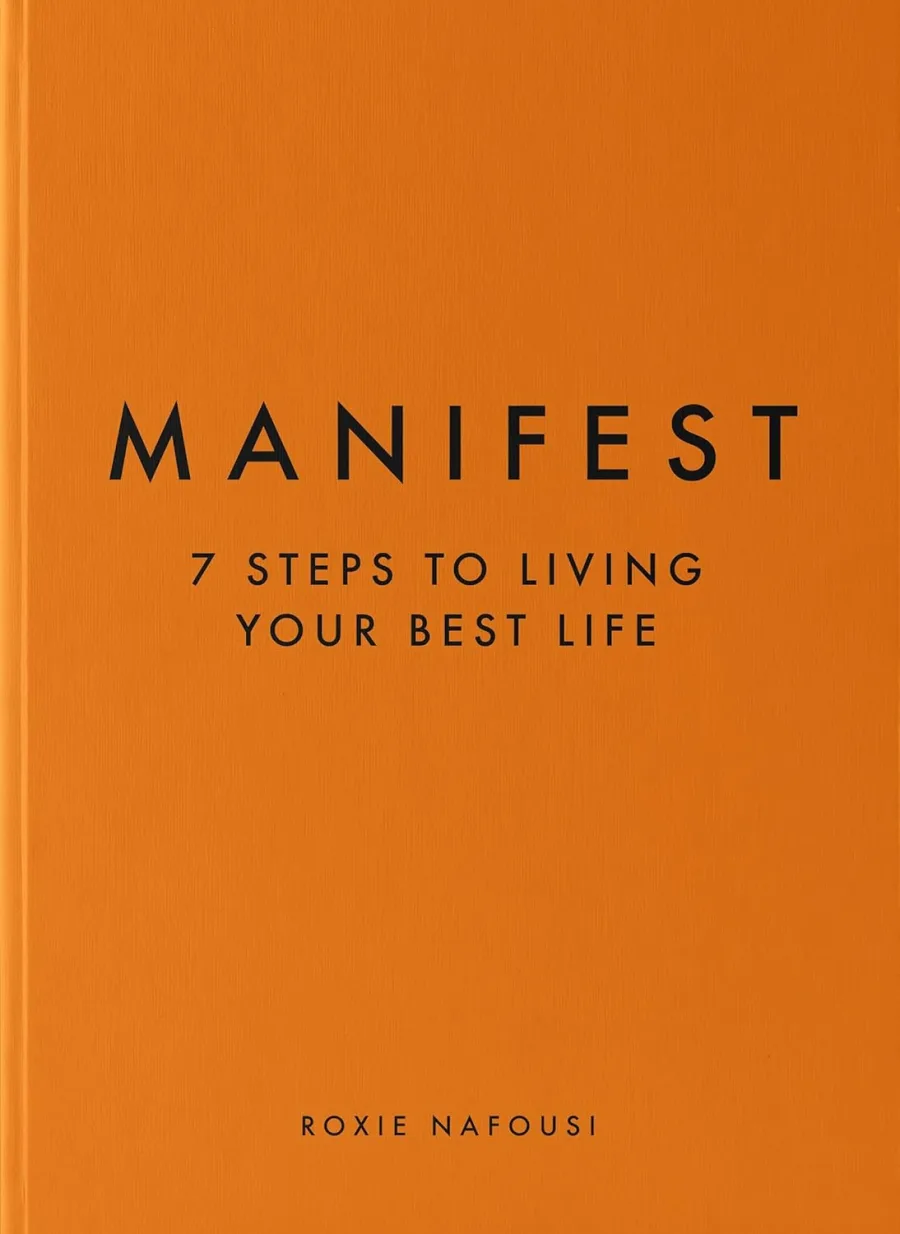
Download Cover Image
Do you want to download the full cover image for Manifest: 7 Steps to Living Your Best Life?