
A Cup of Zen: 21 Short Stories to Calm the Mind, Stop Overthinking, and Find Inner Peace
Hardcover
• 104 Pages
• ₹ 395.00
• English
• 9788183287111
No ratings yet
| Publisher | Wisdom Tree |
|---|---|
| ISBN13 | 9788183287111 |
| ASIN/SKU | 8183287115 |
| Book Format | Hardcover |
| Language | English |
| Pages | 104 |
| List Price | ₹ 395.00 |
| Publishing Date | 29/04/2026 |
| Dimensions | 20 x 13 x 1.3 cm |
| Weight | 200 g |
| Book Code | BD00070753 |
Buy this Book
Amazon Stores
Ebook Stores
Other Stores
Discover A Cup of Zen: 21 Short Stories to Calm the Mind, Stop Overthinking, and Find Inner Peace by Kai Tsukimi. This book is published by Wisdom Tree in Hardcover format, ISBN 9788183287111, ASIN 8183287115, under Religion and Spirituality, Buddhism.
Book Description
Escape the Noise. Embrace the Stillness. Find Your Zen. Do you ever wish your mind had an “off” switch? Tired of overthinking everything and feeling overwhelmed? Longing for a moment of true peace in your day? A Cup of Zen is your invitation to step away from the chaos and into clarity. This collection of 21 short, soul-soothing Zen stories is designed to help you quiet your mind, let go of unnecessary worries, and reconnect with the simplicity of the present moment. Each story is quick and easy to read, yet filled with timeless wisdom that gently shifts your perspective—offering clarity where there was confusion, peace where there was tension. What makes this book special? ✔ Bite-sized and effortless—Read a story in just a few minutes and feel the shift instantly. ✔ Reflection prompts included—Simple yet powerful takeaways to help you apply Zen wisdom to your daily life. ✔ Beginner-friendly—No prior knowledge of Zen or meditation required—just an open heart and a desire for peace. You’ll discover how to: Free yourself from overthinking and mental clutter; embrace simplicity and find beauty in the ordinary; let go of stress and surrender to the flow of life; cultivate mindfulness, patience, and deep inner peace Like a warm cup of tea for the soul, A Cup of Zen is here to nourish you—one gentle, thoughtful story at a time. Breathe. Relax. And begin your journey to inner peace today. Grab your copy by clicking the "Buy Now with 1-Click" button.
Author Biography
If you’re craving stillness in a noisy world, these stories are for you.
As the creator of The Zen Storyteller series, Kai blends the simplicity of Zen with the power of narrative, crafting short, thought-provoking tales that quietly shift the way you see the world. A best-seller in the Zen Buddhism category, Kai’s stories have helped thousands of readers find stillness, clarity, and beauty in everyday moments. When not writing, Kai can often be found traveling to new countries, sipping tea in unfamiliar cities, or chasing metaphors across cultures.
Start your journey with a single story—one moment at a time.
As the creator of The Zen Storyteller series, Kai blends the simplicity of Zen with the power of narrative, crafting short, thought-provoking tales that quietly shift the way you see the world. A best-seller in the Zen Buddhism category, Kai’s stories have helped thousands of readers find stillness, clarity, and beauty in everyday moments. When not writing, Kai can often be found traveling to new countries, sipping tea in unfamiliar cities, or chasing metaphors across cultures.
Start your journey with a single story—one moment at a time.
Editorial Reviews
Editorial Reviews will be added soon…
Book Summary
A Cup of Zen: 21 Short Stories to Calm the Mind, Stop Overthinking, and Find Inner Peace by Kai Tsukimi is a gentle collection of short Zen-inspired stories designed to help readers slow down, step away from mental noise, and rediscover a quieter relationship with themselves and everyday life. Rather than presenting inner peace as something that can be achieved through complicated spiritual practices, the book approaches wisdom through simple stories, familiar human situations, and small moments of realization. Its central message is that peace does not necessarily require us to change the world around us. Often, it begins when we stop fighting with our own thoughts and learn to see the present moment more clearly.
The book is especially relevant to modern life because overthinking has become almost a normal part of daily existence. People replay conversations, worry about the future, regret the past, compare themselves with others, and constantly imagine situations that may never happen. The mind can become exhausted even when the body is doing very little. A Cup of Zen responds to this restless mental state with stories that encourage simplicity, acceptance, awareness, and emotional distance from unnecessary thoughts.
The book’s format is important to its purpose. Instead of giving long philosophical explanations, it uses short stories that allow an idea to unfold naturally. Each story functions almost like a small pause in a busy day. The reader is not asked to memorize rules or master a particular system. Instead, the stories invite reflection. Their simplicity is part of their strength because Zen wisdom often works through direct insight rather than intellectual complexity.
One of the recurring ideas throughout the collection is that the mind often creates more suffering than circumstances themselves. Difficult situations are certainly real, but human beings frequently add additional layers of fear, interpretation, expectation, and resistance. A small mistake becomes evidence that we are failures. A delayed message becomes a reason to imagine rejection. An uncertain future becomes a source of endless anxiety. Something that happened years ago is repeatedly reconstructed in the mind until it feels as painful as it did originally.
Zen approaches this problem differently. Instead of asking the mind to solve every uncertainty, it encourages us to notice what is happening without immediately reacting to it. A thought can be seen as a thought rather than a fact. A feeling can be experienced without becoming an identity. This distinction is subtle but powerful. When we realize that we are having a thought rather than accepting every thought as truth, we create a little space between ourselves and our mental activity.
Many of the stories also explore the importance of letting go. Human beings naturally hold on to things: old disappointments, arguments, expectations, relationships, achievements, failures, and ideas about how life should have unfolded. We may believe that holding on keeps us safe, but often it simply keeps us emotionally tied to something that has already passed.
The Zen perspective presented through these stories suggests that letting go does not mean pretending that something never happened. It means allowing the past to remain in the past without repeatedly dragging it into the present. A painful experience can teach us something without becoming the center of our identity. A mistake can become wisdom without becoming a permanent accusation against ourselves.
This idea becomes particularly meaningful in relation to regret. Overthinking frequently takes the form of mental time travel. We return to an earlier moment and imagine how things might have been different if we had chosen another path. But the past cannot be edited. The mind may continue producing alternative versions of history, yet none of them can become reality. Peace begins when we recognize the difference between learning from the past and living inside it.
The stories also encourage readers to stop demanding certainty from life. Much anxiety comes from wanting to know what will happen before it happens. We want guarantees about relationships, careers, finances, health, success, and the future. Yet life does not provide such guarantees. Trying to eliminate all uncertainty can therefore become an endless task.
Zen wisdom suggests another possibility: learning to live with uncertainty. This does not mean becoming careless or abandoning responsibility. It means recognizing that preparation has a limit. We can make thoughtful decisions, but we cannot control every outcome. Once we accept this, energy that was previously spent worrying can be redirected toward living.
Another important theme is being present. The present moment is often the only place where life is actually happening, yet the mind frequently leaves it. During breakfast, we may already be worrying about work. During work, we may think about the evening. While spending time with loved ones, we may be checking our phones or thinking about tomorrow. Even during moments of rest, the mind may be busy analyzing yesterday.
The stories in A Cup of Zen repeatedly bring attention back to ordinary experiences. A cup of tea, a walk, a conversation, silence, nature, or a simple daily task can become an opportunity for awareness. The message is not that every moment must be transformed into a profound spiritual experience. Instead, ordinary life becomes more peaceful when we actually inhabit it.
This emphasis on ordinary moments gives the book a humane quality. Inner peace is not presented as something reserved for monks living far away from society. It can begin in the middle of ordinary responsibilities. A person can practice awareness while washing dishes, commuting, working, eating, or talking to another person. The difference lies in how fully the person is present.
The collection also deals with comparison, another major source of modern dissatisfaction. People naturally compare their lives with those of others. Social media intensifies this tendency by constantly displaying carefully selected images of success, beauty, wealth, travel, relationships, and achievement. When we compare our private struggles with another person’s public appearance, we almost always feel inadequate.
The Zen-inspired response is to return attention to one's own path. Every person has different circumstances, abilities, timing, struggles, and responsibilities. Comparing two lives as though they were identical is therefore fundamentally misleading. Peace becomes possible when we stop measuring our worth against someone else’s journey.
The book also encourages a healthier relationship with success and failure. Modern culture often teaches people to identify themselves through achievements. We may think we are successful when things go well and worthless when they do not. Zen thinking challenges this rigid attachment to outcomes.
Success can be enjoyed without becoming an identity, and failure can be experienced without becoming a permanent definition of the self. Both are temporary conditions. What matters more is the quality of attention and action brought to the present situation.
Several stories can also be understood as reflections on ego. The ego wants to be right, admired, recognized, respected, and validated. It dislikes criticism and resists situations that make it feel small. Much unnecessary conflict begins because people are protecting an image of themselves.
A Zen approach does not require destroying personality or ambition. Instead, it asks us to notice how strongly we cling to the need to be right or important. Sometimes peace comes not from winning an argument but from realizing that the argument does not deserve our emotional energy.
This idea naturally connects with forgiveness. Holding anger can feel like a form of justice, but prolonged resentment often keeps the injured person connected to the original wound. Forgiveness, in the spirit of the book, can be understood less as approving another person's behavior and more as releasing oneself from the burden of continually carrying the event.
The collection also emphasizes simplicity. A restless mind tends to complicate everything. It turns straightforward situations into elaborate stories. Someone does not reply to a message, and the mind invents ten possible explanations. A mistake happens at work, and suddenly the future seems ruined. A relationship changes, and the mind begins predicting an entire lifetime of loneliness.
Simplicity means returning to what is actually known. What happened? What can be done now? What is outside our control? These questions help separate reality from imagination.
One of the book’s deeper lessons is that peace is not the same as having no problems. Life will continue to contain disappointment, conflict, uncertainty, loss, and change. A peaceful person is not necessarily someone whose circumstances are perfect. Rather, peace comes from developing a different relationship with difficulty.
Instead of immediately asking, “How do I make this disappear?” we can sometimes ask, “How can I meet this moment without adding unnecessary suffering?” This shift is profound. It does not deny pain; it prevents the mind from multiplying it.
The short-story format makes these lessons easier to absorb. Each story offers a small mirror in which readers can recognize their own habits. The purpose is not merely entertainment. The stories encourage readers to pause and ask themselves where they are creating unnecessary tension in their own lives.
The book's overall philosophy can therefore be understood as a movement from mental noise toward awareness. Overthinking says, “What if?” Awareness says, “What is happening right now?” Anxiety says, “I must control everything.” Acceptance says, “I will respond to what I can and release what I cannot.” Regret says, “The past should have been different.” Wisdom says, “The past can teach me, but I live now.”
Perhaps the most comforting aspect of A Cup of Zen is that it does not demand perfection. Readers do not have to become permanently calm. They will still worry, become angry, compare themselves with others, make mistakes, and lose patience. The goal is not to eliminate humanity but to become more aware of it.
Inner peace, in this sense, is a practice of returning. When the mind wanders into fear, return. When regret takes over, return. When comparison becomes painful, return. When anger becomes overwhelming, return. Return to the breath, the present moment, the immediate task, and the reality in front of you.
The title A Cup of Zen captures this spirit beautifully. A cup is simple. It does not demand anything extraordinary. It suggests sitting down, slowing down, and allowing a small ordinary moment to be enough. The metaphor also reflects the book’s central approach: wisdom does not always arrive through dramatic revelations. Sometimes it appears quietly when we stop rushing.
Ultimately, A Cup of Zen: 21 Short Stories to Calm the Mind, Stop Overthinking, and Find Inner Peace is a book about changing our relationship with our own minds. It reminds readers that thoughts are not always commands, uncertainty is not always danger, the past does not have to control the present, and peace does not require perfect circumstances.
Its deepest lesson is simple: we cannot always control what happens, but we can learn to meet what happens with greater awareness and less resistance. The mind may continue to produce worries and stories, but we do not have to follow every one of them.
Through its short, reflective stories, the book encourages a gentler way of living—one in which we pause before reacting, accept what cannot be changed, appreciate ordinary moments, release unnecessary burdens, and give ourselves permission to simply be present.
In that sense, the book's promise is not that life will suddenly become free from difficulty. Its promise is quieter and perhaps more realistic: when we stop fighting every thought and every circumstance, we may discover that there is already a small space of stillness within us. We only need to become quiet enough to notice it.
The book is especially relevant to modern life because overthinking has become almost a normal part of daily existence. People replay conversations, worry about the future, regret the past, compare themselves with others, and constantly imagine situations that may never happen. The mind can become exhausted even when the body is doing very little. A Cup of Zen responds to this restless mental state with stories that encourage simplicity, acceptance, awareness, and emotional distance from unnecessary thoughts.
The book’s format is important to its purpose. Instead of giving long philosophical explanations, it uses short stories that allow an idea to unfold naturally. Each story functions almost like a small pause in a busy day. The reader is not asked to memorize rules or master a particular system. Instead, the stories invite reflection. Their simplicity is part of their strength because Zen wisdom often works through direct insight rather than intellectual complexity.
One of the recurring ideas throughout the collection is that the mind often creates more suffering than circumstances themselves. Difficult situations are certainly real, but human beings frequently add additional layers of fear, interpretation, expectation, and resistance. A small mistake becomes evidence that we are failures. A delayed message becomes a reason to imagine rejection. An uncertain future becomes a source of endless anxiety. Something that happened years ago is repeatedly reconstructed in the mind until it feels as painful as it did originally.
Zen approaches this problem differently. Instead of asking the mind to solve every uncertainty, it encourages us to notice what is happening without immediately reacting to it. A thought can be seen as a thought rather than a fact. A feeling can be experienced without becoming an identity. This distinction is subtle but powerful. When we realize that we are having a thought rather than accepting every thought as truth, we create a little space between ourselves and our mental activity.
Many of the stories also explore the importance of letting go. Human beings naturally hold on to things: old disappointments, arguments, expectations, relationships, achievements, failures, and ideas about how life should have unfolded. We may believe that holding on keeps us safe, but often it simply keeps us emotionally tied to something that has already passed.
The Zen perspective presented through these stories suggests that letting go does not mean pretending that something never happened. It means allowing the past to remain in the past without repeatedly dragging it into the present. A painful experience can teach us something without becoming the center of our identity. A mistake can become wisdom without becoming a permanent accusation against ourselves.
This idea becomes particularly meaningful in relation to regret. Overthinking frequently takes the form of mental time travel. We return to an earlier moment and imagine how things might have been different if we had chosen another path. But the past cannot be edited. The mind may continue producing alternative versions of history, yet none of them can become reality. Peace begins when we recognize the difference between learning from the past and living inside it.
The stories also encourage readers to stop demanding certainty from life. Much anxiety comes from wanting to know what will happen before it happens. We want guarantees about relationships, careers, finances, health, success, and the future. Yet life does not provide such guarantees. Trying to eliminate all uncertainty can therefore become an endless task.
Zen wisdom suggests another possibility: learning to live with uncertainty. This does not mean becoming careless or abandoning responsibility. It means recognizing that preparation has a limit. We can make thoughtful decisions, but we cannot control every outcome. Once we accept this, energy that was previously spent worrying can be redirected toward living.
Another important theme is being present. The present moment is often the only place where life is actually happening, yet the mind frequently leaves it. During breakfast, we may already be worrying about work. During work, we may think about the evening. While spending time with loved ones, we may be checking our phones or thinking about tomorrow. Even during moments of rest, the mind may be busy analyzing yesterday.
The stories in A Cup of Zen repeatedly bring attention back to ordinary experiences. A cup of tea, a walk, a conversation, silence, nature, or a simple daily task can become an opportunity for awareness. The message is not that every moment must be transformed into a profound spiritual experience. Instead, ordinary life becomes more peaceful when we actually inhabit it.
This emphasis on ordinary moments gives the book a humane quality. Inner peace is not presented as something reserved for monks living far away from society. It can begin in the middle of ordinary responsibilities. A person can practice awareness while washing dishes, commuting, working, eating, or talking to another person. The difference lies in how fully the person is present.
The collection also deals with comparison, another major source of modern dissatisfaction. People naturally compare their lives with those of others. Social media intensifies this tendency by constantly displaying carefully selected images of success, beauty, wealth, travel, relationships, and achievement. When we compare our private struggles with another person’s public appearance, we almost always feel inadequate.
The Zen-inspired response is to return attention to one's own path. Every person has different circumstances, abilities, timing, struggles, and responsibilities. Comparing two lives as though they were identical is therefore fundamentally misleading. Peace becomes possible when we stop measuring our worth against someone else’s journey.
The book also encourages a healthier relationship with success and failure. Modern culture often teaches people to identify themselves through achievements. We may think we are successful when things go well and worthless when they do not. Zen thinking challenges this rigid attachment to outcomes.
Success can be enjoyed without becoming an identity, and failure can be experienced without becoming a permanent definition of the self. Both are temporary conditions. What matters more is the quality of attention and action brought to the present situation.
Several stories can also be understood as reflections on ego. The ego wants to be right, admired, recognized, respected, and validated. It dislikes criticism and resists situations that make it feel small. Much unnecessary conflict begins because people are protecting an image of themselves.
A Zen approach does not require destroying personality or ambition. Instead, it asks us to notice how strongly we cling to the need to be right or important. Sometimes peace comes not from winning an argument but from realizing that the argument does not deserve our emotional energy.
This idea naturally connects with forgiveness. Holding anger can feel like a form of justice, but prolonged resentment often keeps the injured person connected to the original wound. Forgiveness, in the spirit of the book, can be understood less as approving another person's behavior and more as releasing oneself from the burden of continually carrying the event.
The collection also emphasizes simplicity. A restless mind tends to complicate everything. It turns straightforward situations into elaborate stories. Someone does not reply to a message, and the mind invents ten possible explanations. A mistake happens at work, and suddenly the future seems ruined. A relationship changes, and the mind begins predicting an entire lifetime of loneliness.
Simplicity means returning to what is actually known. What happened? What can be done now? What is outside our control? These questions help separate reality from imagination.
One of the book’s deeper lessons is that peace is not the same as having no problems. Life will continue to contain disappointment, conflict, uncertainty, loss, and change. A peaceful person is not necessarily someone whose circumstances are perfect. Rather, peace comes from developing a different relationship with difficulty.
Instead of immediately asking, “How do I make this disappear?” we can sometimes ask, “How can I meet this moment without adding unnecessary suffering?” This shift is profound. It does not deny pain; it prevents the mind from multiplying it.
The short-story format makes these lessons easier to absorb. Each story offers a small mirror in which readers can recognize their own habits. The purpose is not merely entertainment. The stories encourage readers to pause and ask themselves where they are creating unnecessary tension in their own lives.
The book's overall philosophy can therefore be understood as a movement from mental noise toward awareness. Overthinking says, “What if?” Awareness says, “What is happening right now?” Anxiety says, “I must control everything.” Acceptance says, “I will respond to what I can and release what I cannot.” Regret says, “The past should have been different.” Wisdom says, “The past can teach me, but I live now.”
Perhaps the most comforting aspect of A Cup of Zen is that it does not demand perfection. Readers do not have to become permanently calm. They will still worry, become angry, compare themselves with others, make mistakes, and lose patience. The goal is not to eliminate humanity but to become more aware of it.
Inner peace, in this sense, is a practice of returning. When the mind wanders into fear, return. When regret takes over, return. When comparison becomes painful, return. When anger becomes overwhelming, return. Return to the breath, the present moment, the immediate task, and the reality in front of you.
The title A Cup of Zen captures this spirit beautifully. A cup is simple. It does not demand anything extraordinary. It suggests sitting down, slowing down, and allowing a small ordinary moment to be enough. The metaphor also reflects the book’s central approach: wisdom does not always arrive through dramatic revelations. Sometimes it appears quietly when we stop rushing.
Ultimately, A Cup of Zen: 21 Short Stories to Calm the Mind, Stop Overthinking, and Find Inner Peace is a book about changing our relationship with our own minds. It reminds readers that thoughts are not always commands, uncertainty is not always danger, the past does not have to control the present, and peace does not require perfect circumstances.
Its deepest lesson is simple: we cannot always control what happens, but we can learn to meet what happens with greater awareness and less resistance. The mind may continue to produce worries and stories, but we do not have to follow every one of them.
Through its short, reflective stories, the book encourages a gentler way of living—one in which we pause before reacting, accept what cannot be changed, appreciate ordinary moments, release unnecessary burdens, and give ourselves permission to simply be present.
In that sense, the book's promise is not that life will suddenly become free from difficulty. Its promise is quieter and perhaps more realistic: when we stop fighting every thought and every circumstance, we may discover that there is already a small space of stillness within us. We only need to become quiet enough to notice it.
Sample Chapters
Sample Chapters will be added soon…
Reader Reviews
No reviews yet.
A Cup of Zen: 21 Short Stories to Calm the Mind, Stop Overthinking, and Find Inner Peace
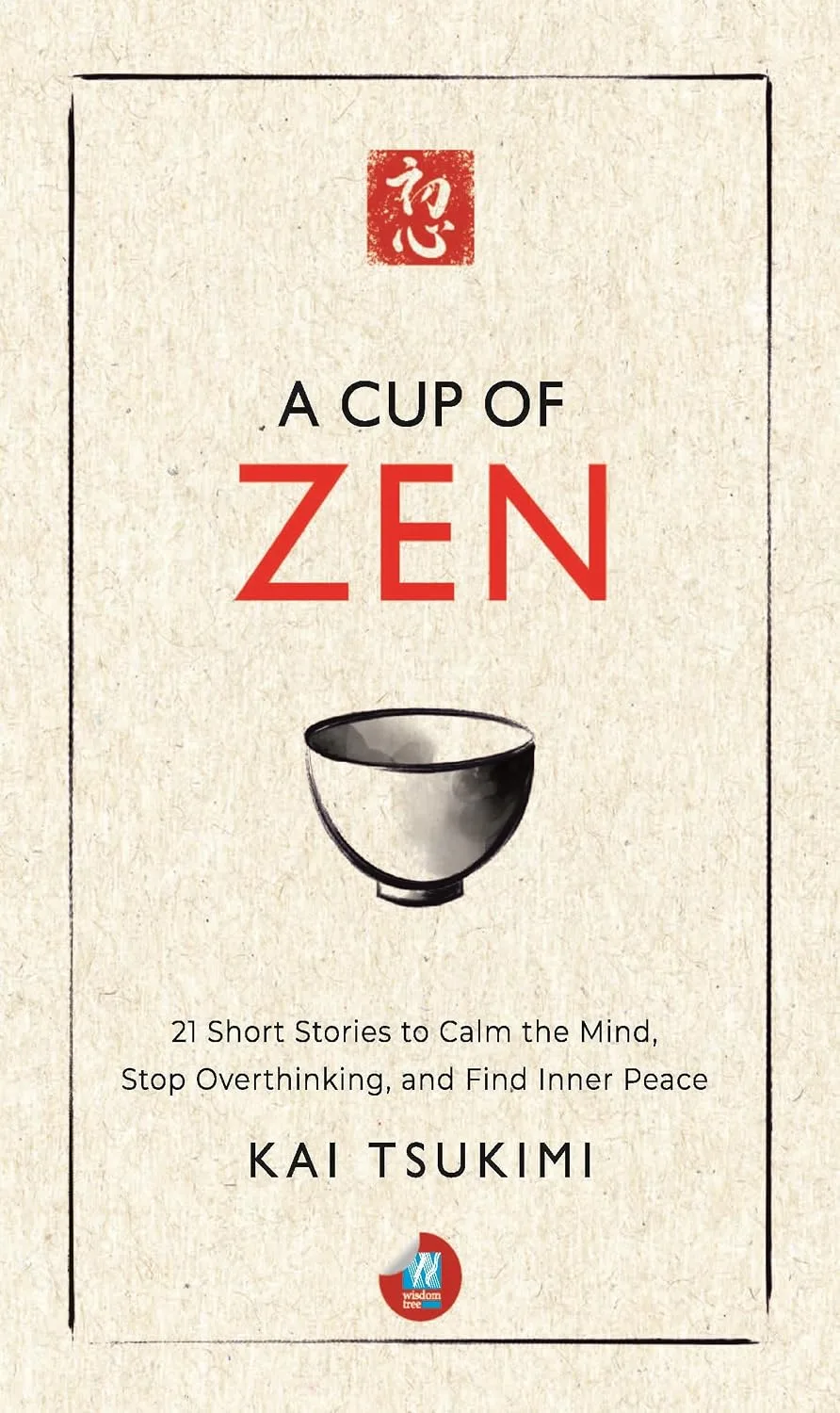
Download Cover Image
Do you want to download the full cover image for A Cup of Zen: 21 Short Stories to Calm the Mind, Stop Overthinking, and Find Inner Peace?