
Islamic Store Original Product - The Holy Quran English With New Edition Urdu Translation & Transl
Paperback
• 430 Pages
• ₹ 500.00
• English
No ratings yet
| Publisher | Makatbah Assunnah -Huda Publications |
|---|---|
| ASIN/SKU | B096TK6H4P |
| Book Format | Paperback |
| Language | English |
| Pages | 430 |
| List Price | ₹ 500.00 |
| Publishing Date | 01/01/2021 |
| Book Code | BD00070749 |
Buy this Book
Amazon Stores
Ebook Stores
Other Stores
Discover Islamic Store Original Product - The Holy Quran English With New Edition Urdu Translation and Transl by Huda Quran. This book is published by Makatbah Assunnah -Huda Publications in Paperback format, ASIN B096TK6H4P, under Religion and Spirituality, Islam.
Book Description
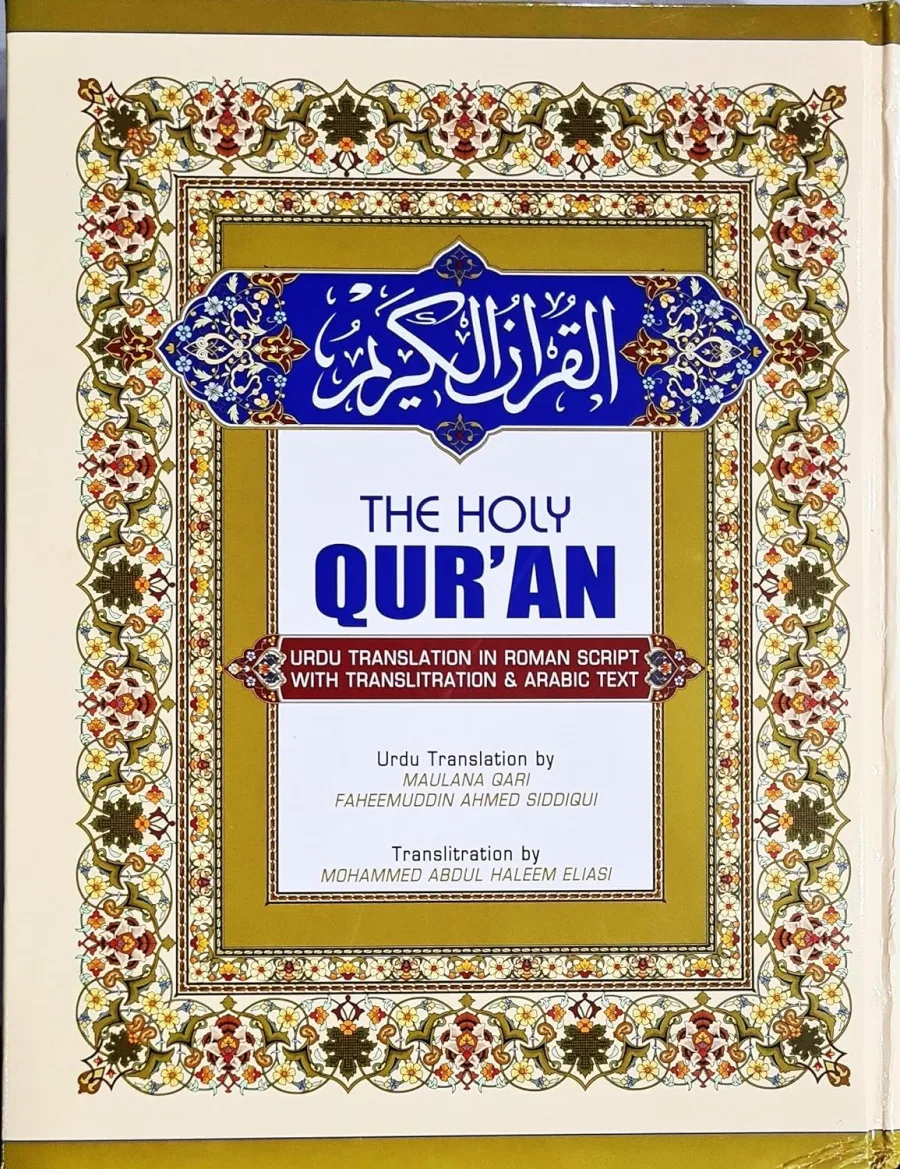
S ISLAMIC STORE original product - The Holy Quran English with New Edition Urdu Translation & Transliteration in Roman Script with Transliteration & Arabic Text 5 Star Paper Quality (HUDA QURAN)
Author Biography
Author Biography will be added soon…
Editorial Reviews
Editorial Reviews will be added soon…
Book Summary
The Holy Quran is the central scripture of Islam and, for Muslims, the revealed word of Allah. Unlike a conventional book that develops one continuous story from beginning to end, the Quran brings together revelation concerning faith, worship, morality, human relationships, history, law, spiritual reflection, and the ultimate destiny of humanity. Its central purpose is to guide human beings toward recognition of their Creator and toward a life shaped by faith, righteousness, justice, compassion, responsibility, and awareness of the Hereafter. The HUDA Quran edition makes this message more accessible by presenting the Arabic text alongside transliteration and translation, helping readers who may understand Urdu but have difficulty reading the Urdu script. The edition is described as a 778-page volume containing the Arabic Quran with translation and transliteration.
At the heart of the Quran is the concept of Tawhid, the absolute oneness of Allah. The Quran repeatedly invites human beings to look beyond the visible world and recognize the One who created and sustains it. The heavens, the earth, the changing of night and day, human life, nature, rain, plants, animals, and the remarkable structure of creation are presented as signs that point toward divine wisdom. The Quran does not treat faith merely as acceptance of an abstract religious idea. Instead, it asks a person to cultivate an awareness of Allah that influences the entire way he or she thinks and lives. Belief is therefore connected with gratitude, humility, worship, moral conduct, and responsibility.
The Quran begins with Surah Al-Fatihah, a short but profound prayer that establishes many of its central themes. The believer praises Allah as the Lord and Master of all worlds, recognizes His mercy, acknowledges His authority over the Day of Judgment, and asks Him for guidance along the straight path. In this sense, the opening chapter establishes the basic relationship between human beings and their Creator: humanity is dependent upon Allah, while Allah is the ultimate source of guidance, mercy, and judgment. The prayer for guidance also reflects one of the Quran's most important concerns: human beings need continual moral and spiritual direction.
A major theme throughout the Quran is the nature of human beings. People are portrayed as possessing dignity and moral responsibility, but they are also shown to be vulnerable to forgetfulness, arrogance, greed, impatience, desire, and self-deception. Human beings are capable of great goodness, but they can also turn away from truth when they become attached to power, wealth, pride, or worldly pleasure. The Quran therefore repeatedly calls people to self-awareness. It asks them to examine their intentions, remember their mortality, and understand that earthly life is temporary.
This awareness of mortality leads naturally to the Quranic teaching about the Hereafter. According to the Quran, human existence does not end with death. Every person will ultimately return to Allah and will be accountable for his or her deeds. The Quran describes resurrection, judgment, Paradise, and Hell in powerful language, not simply to frighten the reader but to establish a sense of moral seriousness. Human actions have consequences. Acts of kindness, charity, patience, honesty, repentance, and faith have lasting significance, while injustice, oppression, arrogance, dishonesty, and rejection of truth are not ultimately without consequence.
The Quran frequently tells stories of earlier prophets and communities. These accounts include Adam, Noah, Abraham, Lot, Moses, Joseph, David, Solomon, Jonah, Jesus, and other prophetic figures. These stories are not presented merely as historical narratives. They function as moral lessons. The story of Adam explores temptation, error, repentance, and divine forgiveness. Noah represents perseverance in the face of rejection. Abraham represents devotion to Allah and a willingness to challenge false beliefs. Moses' story examines the struggle between truth and oppression. Joseph's story explores jealousy, suffering, patience, forgiveness, and eventual vindication.
The story of Joseph is especially significant because it demonstrates how the Quran can transform a sequence of personal tragedies into a lesson about trust in Allah. Joseph experiences betrayal by his brothers, separation from his family, slavery, false accusation, imprisonment, and years of uncertainty. Yet his character remains grounded in faith and moral restraint. Eventually his circumstances change dramatically, and he gains authority in Egypt. When he finally meets the brothers who had wronged him, he chooses forgiveness rather than revenge. The story therefore presents patience not as passive weakness but as a form of spiritual strength.
The Quran also places great emphasis on justice. Faith is repeatedly connected with fair treatment of other people. The Quran condemns exploitation, dishonesty in trade, oppression, false testimony, abuse of power, and taking advantage of vulnerable people. It speaks particularly about the rights of orphans, the poor, travelers, debtors, widows, and those who lack social power. Wealth is not presented as inherently evil, but the Quran warns against allowing wealth to become an object of arrogance or selfish accumulation. Believers are encouraged to give charity and to recognize that material possessions carry responsibilities toward others.
Family life is another important area of Quranic guidance. Marriage, parental responsibilities, treatment of children, inheritance, divorce, and relations between relatives are discussed in different passages. The Quran places strong emphasis on kindness toward parents and describes gratitude toward them as a serious moral duty. At the same time, family relationships are placed within a wider framework of justice and responsibility. The Quran does not present spirituality as something separate from everyday relationships. How a person treats parents, spouses, children, relatives, neighbors, and strangers is part of religious life.
The Quran's treatment of charity reveals another central idea: worship should transform character. Prayer is not intended merely to be a ritual performed at fixed times. Fasting is not simply abstaining from food and drink. Charity is not merely transferring money. These practices are intended to cultivate consciousness of Allah, self-control, gratitude, compassion, generosity, and moral discipline. The Quran repeatedly connects spiritual devotion with practical behavior.
The month of Ramadan and the practice of fasting receive particular attention. Fasting is described as a means of developing Taqwa, often translated as God-consciousness or mindfulness of Allah. The purpose is therefore deeper than physical deprivation. By voluntarily controlling basic desires, the believer learns discipline and becomes more conscious of the needs of others. Ramadan also becomes a time for remembrance, prayer, charity, reflection, and renewed connection with the Quran.
The Quran repeatedly returns to the idea of repentance. Human beings make mistakes, and the Quran does not portray the believer as someone who never fails. Instead, it emphasizes the possibility of returning to Allah after wrongdoing. Sincere repentance involves recognizing one's mistake, regretting it, seeking forgiveness, and attempting to change one's behavior. Divine mercy is repeatedly emphasized, giving the reader hope even after serious moral failure. This balance between accountability and mercy is one of the most humane dimensions of the Quranic message.
Another important theme is patience, or Sabr. The Quran acknowledges that life contains suffering, uncertainty, loss, fear, poverty, conflict, and disappointment. Faith does not guarantee a life without difficulty. Rather, it teaches believers how to respond to difficulty. Patience means remaining committed to what is right even when circumstances are painful. It is accompanied by trust in Allah, prayer, perseverance, and hope. The Quran presents hardship as part of the human experience while reminding believers that suffering is not necessarily meaningless.
The Quran also speaks extensively about gratitude. Human beings are encouraged to recognize the blessings they possess rather than focusing endlessly on what they lack. Health, family, food, knowledge, security, nature, and life itself are presented as gifts that deserve acknowledgment. Gratitude, however, is more than saying thank you. It involves using blessings responsibly and remembering the One from whom they come.
Knowledge and reflection occupy an important place in the Quranic worldview. The reader is repeatedly encouraged to think, observe, remember, reason, and learn from history. The Quran asks people to reflect upon creation and upon their own existence. It challenges blind imitation and repeatedly draws attention to the consequences of refusing to think honestly. In this respect, the Quran presents faith and reflection as closely connected.
The Quran also discusses the dangers of arrogance. Several of its narratives demonstrate how pride can lead individuals and societies away from truth. The figure of Pharaoh represents political tyranny and self-exaltation, while Iblis represents refusal to submit because of pride. These examples function as warnings that spiritual destruction can begin when a person becomes convinced that status, knowledge, wealth, ancestry, or power makes him superior to others.
At the same time, the Quran repeatedly describes qualities admired in righteous people: humility, honesty, patience, generosity, forgiveness, courage, modesty, compassion, and trust in Allah. The ideal believer is not simply someone who possesses religious knowledge but someone whose knowledge produces better character. The Quran therefore connects inward belief with outward conduct.
One of the most moving aspects of the Quran is its treatment of hope. Even while describing judgment and accountability, it repeatedly reminds people that Allah is merciful and forgiving. The door of repentance remains open. A person who has wandered can return. Someone who has committed mistakes can seek forgiveness. Someone facing hardship can continue to hope. This message gives the Quran a deeply personal quality: it speaks not only to communities and societies but also to the individual who is struggling privately with fear, guilt, grief, temptation, or uncertainty.
The Quran's final message can therefore be understood as a call toward a transformed relationship with life. It asks human beings to recognize Allah, live consciously in His presence, worship Him sincerely, treat other people justly, control destructive desires, care for the vulnerable, remain patient during hardship, practice gratitude during prosperity, repent after mistakes, and remember that earthly life is temporary. The ultimate destination is the Hereafter, where each person encounters the consequences of his or her choices.
The particular value of the HUDA Quran edition lies in its attempt to make this message accessible to a broader range of readers. The Arabic text preserves the original Quranic language, while transliteration can help readers who cannot comfortably read Arabic script. The Roman-script Urdu translation is especially useful for people who understand spoken or written Urdu but are more comfortable reading Roman letters. Product descriptions specifically explain that the edition was designed around this accessibility problem.
Ultimately, the Quran is not simply a book to be read once and put aside. Its structure, themes, repeated reminders, stories, prayers, warnings, and promises invite repeated reading and reflection. Different passages speak to different moments of life: a person experiencing hardship may find strength in its teachings on patience; someone burdened by guilt may find hope in its teachings on repentance; someone consumed by material success may be reminded of accountability; and someone searching for meaning may encounter its central invitation to know and worship the Creator.
The deepest message of the Quran is therefore one of guidance. It presents human life as purposeful rather than accidental, morality as meaningful rather than arbitrary, suffering as something that can be met with patience and faith, and death as a transition rather than the end of existence. Through its teachings on Allah, humanity, worship, justice, mercy, repentance, family, society, nature, prophecy, and the Hereafter, the Quran seeks to form not merely informed believers but people whose inner convictions are reflected in the way they live. The HUDA edition, with its combination of Arabic text, transliteration, and accessible translation, provides a format intended to help readers engage with that message even when language or script might otherwise create a barrier.
At the heart of the Quran is the concept of Tawhid, the absolute oneness of Allah. The Quran repeatedly invites human beings to look beyond the visible world and recognize the One who created and sustains it. The heavens, the earth, the changing of night and day, human life, nature, rain, plants, animals, and the remarkable structure of creation are presented as signs that point toward divine wisdom. The Quran does not treat faith merely as acceptance of an abstract religious idea. Instead, it asks a person to cultivate an awareness of Allah that influences the entire way he or she thinks and lives. Belief is therefore connected with gratitude, humility, worship, moral conduct, and responsibility.
The Quran begins with Surah Al-Fatihah, a short but profound prayer that establishes many of its central themes. The believer praises Allah as the Lord and Master of all worlds, recognizes His mercy, acknowledges His authority over the Day of Judgment, and asks Him for guidance along the straight path. In this sense, the opening chapter establishes the basic relationship between human beings and their Creator: humanity is dependent upon Allah, while Allah is the ultimate source of guidance, mercy, and judgment. The prayer for guidance also reflects one of the Quran's most important concerns: human beings need continual moral and spiritual direction.
A major theme throughout the Quran is the nature of human beings. People are portrayed as possessing dignity and moral responsibility, but they are also shown to be vulnerable to forgetfulness, arrogance, greed, impatience, desire, and self-deception. Human beings are capable of great goodness, but they can also turn away from truth when they become attached to power, wealth, pride, or worldly pleasure. The Quran therefore repeatedly calls people to self-awareness. It asks them to examine their intentions, remember their mortality, and understand that earthly life is temporary.
This awareness of mortality leads naturally to the Quranic teaching about the Hereafter. According to the Quran, human existence does not end with death. Every person will ultimately return to Allah and will be accountable for his or her deeds. The Quran describes resurrection, judgment, Paradise, and Hell in powerful language, not simply to frighten the reader but to establish a sense of moral seriousness. Human actions have consequences. Acts of kindness, charity, patience, honesty, repentance, and faith have lasting significance, while injustice, oppression, arrogance, dishonesty, and rejection of truth are not ultimately without consequence.
The Quran frequently tells stories of earlier prophets and communities. These accounts include Adam, Noah, Abraham, Lot, Moses, Joseph, David, Solomon, Jonah, Jesus, and other prophetic figures. These stories are not presented merely as historical narratives. They function as moral lessons. The story of Adam explores temptation, error, repentance, and divine forgiveness. Noah represents perseverance in the face of rejection. Abraham represents devotion to Allah and a willingness to challenge false beliefs. Moses' story examines the struggle between truth and oppression. Joseph's story explores jealousy, suffering, patience, forgiveness, and eventual vindication.
The story of Joseph is especially significant because it demonstrates how the Quran can transform a sequence of personal tragedies into a lesson about trust in Allah. Joseph experiences betrayal by his brothers, separation from his family, slavery, false accusation, imprisonment, and years of uncertainty. Yet his character remains grounded in faith and moral restraint. Eventually his circumstances change dramatically, and he gains authority in Egypt. When he finally meets the brothers who had wronged him, he chooses forgiveness rather than revenge. The story therefore presents patience not as passive weakness but as a form of spiritual strength.
The Quran also places great emphasis on justice. Faith is repeatedly connected with fair treatment of other people. The Quran condemns exploitation, dishonesty in trade, oppression, false testimony, abuse of power, and taking advantage of vulnerable people. It speaks particularly about the rights of orphans, the poor, travelers, debtors, widows, and those who lack social power. Wealth is not presented as inherently evil, but the Quran warns against allowing wealth to become an object of arrogance or selfish accumulation. Believers are encouraged to give charity and to recognize that material possessions carry responsibilities toward others.
Family life is another important area of Quranic guidance. Marriage, parental responsibilities, treatment of children, inheritance, divorce, and relations between relatives are discussed in different passages. The Quran places strong emphasis on kindness toward parents and describes gratitude toward them as a serious moral duty. At the same time, family relationships are placed within a wider framework of justice and responsibility. The Quran does not present spirituality as something separate from everyday relationships. How a person treats parents, spouses, children, relatives, neighbors, and strangers is part of religious life.
The Quran's treatment of charity reveals another central idea: worship should transform character. Prayer is not intended merely to be a ritual performed at fixed times. Fasting is not simply abstaining from food and drink. Charity is not merely transferring money. These practices are intended to cultivate consciousness of Allah, self-control, gratitude, compassion, generosity, and moral discipline. The Quran repeatedly connects spiritual devotion with practical behavior.
The month of Ramadan and the practice of fasting receive particular attention. Fasting is described as a means of developing Taqwa, often translated as God-consciousness or mindfulness of Allah. The purpose is therefore deeper than physical deprivation. By voluntarily controlling basic desires, the believer learns discipline and becomes more conscious of the needs of others. Ramadan also becomes a time for remembrance, prayer, charity, reflection, and renewed connection with the Quran.
The Quran repeatedly returns to the idea of repentance. Human beings make mistakes, and the Quran does not portray the believer as someone who never fails. Instead, it emphasizes the possibility of returning to Allah after wrongdoing. Sincere repentance involves recognizing one's mistake, regretting it, seeking forgiveness, and attempting to change one's behavior. Divine mercy is repeatedly emphasized, giving the reader hope even after serious moral failure. This balance between accountability and mercy is one of the most humane dimensions of the Quranic message.
Another important theme is patience, or Sabr. The Quran acknowledges that life contains suffering, uncertainty, loss, fear, poverty, conflict, and disappointment. Faith does not guarantee a life without difficulty. Rather, it teaches believers how to respond to difficulty. Patience means remaining committed to what is right even when circumstances are painful. It is accompanied by trust in Allah, prayer, perseverance, and hope. The Quran presents hardship as part of the human experience while reminding believers that suffering is not necessarily meaningless.
The Quran also speaks extensively about gratitude. Human beings are encouraged to recognize the blessings they possess rather than focusing endlessly on what they lack. Health, family, food, knowledge, security, nature, and life itself are presented as gifts that deserve acknowledgment. Gratitude, however, is more than saying thank you. It involves using blessings responsibly and remembering the One from whom they come.
Knowledge and reflection occupy an important place in the Quranic worldview. The reader is repeatedly encouraged to think, observe, remember, reason, and learn from history. The Quran asks people to reflect upon creation and upon their own existence. It challenges blind imitation and repeatedly draws attention to the consequences of refusing to think honestly. In this respect, the Quran presents faith and reflection as closely connected.
The Quran also discusses the dangers of arrogance. Several of its narratives demonstrate how pride can lead individuals and societies away from truth. The figure of Pharaoh represents political tyranny and self-exaltation, while Iblis represents refusal to submit because of pride. These examples function as warnings that spiritual destruction can begin when a person becomes convinced that status, knowledge, wealth, ancestry, or power makes him superior to others.
At the same time, the Quran repeatedly describes qualities admired in righteous people: humility, honesty, patience, generosity, forgiveness, courage, modesty, compassion, and trust in Allah. The ideal believer is not simply someone who possesses religious knowledge but someone whose knowledge produces better character. The Quran therefore connects inward belief with outward conduct.
One of the most moving aspects of the Quran is its treatment of hope. Even while describing judgment and accountability, it repeatedly reminds people that Allah is merciful and forgiving. The door of repentance remains open. A person who has wandered can return. Someone who has committed mistakes can seek forgiveness. Someone facing hardship can continue to hope. This message gives the Quran a deeply personal quality: it speaks not only to communities and societies but also to the individual who is struggling privately with fear, guilt, grief, temptation, or uncertainty.
The Quran's final message can therefore be understood as a call toward a transformed relationship with life. It asks human beings to recognize Allah, live consciously in His presence, worship Him sincerely, treat other people justly, control destructive desires, care for the vulnerable, remain patient during hardship, practice gratitude during prosperity, repent after mistakes, and remember that earthly life is temporary. The ultimate destination is the Hereafter, where each person encounters the consequences of his or her choices.
The particular value of the HUDA Quran edition lies in its attempt to make this message accessible to a broader range of readers. The Arabic text preserves the original Quranic language, while transliteration can help readers who cannot comfortably read Arabic script. The Roman-script Urdu translation is especially useful for people who understand spoken or written Urdu but are more comfortable reading Roman letters. Product descriptions specifically explain that the edition was designed around this accessibility problem.
Ultimately, the Quran is not simply a book to be read once and put aside. Its structure, themes, repeated reminders, stories, prayers, warnings, and promises invite repeated reading and reflection. Different passages speak to different moments of life: a person experiencing hardship may find strength in its teachings on patience; someone burdened by guilt may find hope in its teachings on repentance; someone consumed by material success may be reminded of accountability; and someone searching for meaning may encounter its central invitation to know and worship the Creator.
The deepest message of the Quran is therefore one of guidance. It presents human life as purposeful rather than accidental, morality as meaningful rather than arbitrary, suffering as something that can be met with patience and faith, and death as a transition rather than the end of existence. Through its teachings on Allah, humanity, worship, justice, mercy, repentance, family, society, nature, prophecy, and the Hereafter, the Quran seeks to form not merely informed believers but people whose inner convictions are reflected in the way they live. The HUDA edition, with its combination of Arabic text, transliteration, and accessible translation, provides a format intended to help readers engage with that message even when language or script might otherwise create a barrier.
Sample Chapters
Sample Chapters will be added soon…
Reader Reviews
No reviews yet.
Islamic Store Original Product - The Holy Quran English With New Edition Urdu Translation & Transl
Download Cover Image
Do you want to download the full cover image for Islamic Store Original Product - The Holy Quran English With New Edition Urdu Translation & Transl?