
Mindfulness: Coloring Book for Adults with Tear out Sheets I Coloring for Anxiety Relief
Paperback
• 151 Pages
• ₹ 151.00
• English
• 9789815280333
No ratings yet
| Publisher | Penguin Select |
|---|---|
| ISBN13 | 9789815280333 |
| ASIN/SKU | 9815280333 |
| Book Format | Paperback |
| Language | English |
| Pages | 151 |
| List Price | ₹ 151.00 |
| Publishing Date | 19/12/2024 |
| Dimensions | 26.7 x 0.9 x 26.7 cm |
| Weight | 301 g |
| Book Code | BD00070748 |
Buy this Book
Amazon Stores
Ebook Stores
Other Stores
Discover Mindfulness: Coloring Book for Adults with Tear out Sheets I Coloring for Anxiety Relief by Penguin Books. This book is published by Penguin Select in Paperback format, ISBN 9789815280333, ASIN 9815280333, under Crafts, Hobbies and Home, Visual Arts, Theory and Criticism.
Book Description
Color Your Way to Mindfulness with Every Stroke
A coloring book designed to unlock your creativity, play with colors, and transport you to a calming world.
This coloring book is a way to find inner peace and boost your overall well-being. The soothing strokes guide you to mindfulness, letting go of daily worries. Enjoy each page designed to bring you into the present moment.
Unique Features:
Mindfulness Quotes on Every Page
Beautifully Designed Art for All Skill Levels
Mindfulness and Relaxation
Durable, High-Quality Paper
ADULT COLORING SERIES
Embark on a journey of self-discovery and creativity with this captivating series of adult coloring books. These books are thoughtfully designed to soothe your soul, sharpen your focus, and ignite your inner artist.
This series has four coloring books. The Mandala Coloring Book helps you find peace and creativity. The Doodle Coloring Book encourages free creativity without constraints with playful designs. The Mindfulness Coloring Book brings inner calm through art. The Motivation Coloring Book inspires you with quotes and designs.
A coloring book designed to unlock your creativity, play with colors, and transport you to a calming world.
This coloring book is a way to find inner peace and boost your overall well-being. The soothing strokes guide you to mindfulness, letting go of daily worries. Enjoy each page designed to bring you into the present moment.
Unique Features:
Mindfulness Quotes on Every Page
Beautifully Designed Art for All Skill Levels
Mindfulness and Relaxation
Durable, High-Quality Paper
ADULT COLORING SERIES
Embark on a journey of self-discovery and creativity with this captivating series of adult coloring books. These books are thoughtfully designed to soothe your soul, sharpen your focus, and ignite your inner artist.
This series has four coloring books. The Mandala Coloring Book helps you find peace and creativity. The Doodle Coloring Book encourages free creativity without constraints with playful designs. The Mindfulness Coloring Book brings inner calm through art. The Motivation Coloring Book inspires you with quotes and designs.
Author Biography
The Early Learning Program of Penguin Books offers a diverse collection of children's books designed to support curriculum learning across various age groups, from infants and toddlers to pre-schoolers, ensuring engaging and age-appropriate content. These thoughtfully crafted books cater to the developmental needs of young learners and promote essential cognitive skills such as problem solving, critical thinking, and creativity, fostering a love for reading from an early age.
The list offers picture books, story books, coloring books, activity books, workbooks, reference books and other innovative titles and formats.
The list offers picture books, story books, coloring books, activity books, workbooks, reference books and other innovative titles and formats.
Editorial Reviews
Editorial Reviews will be added soon…
Book Summary
Mindfulness: Coloring Book for Adults is a calming and thoughtfully designed book that uses the simple act of coloring as a way to encourage mindfulness, relaxation, and emotional balance. Rather than being a traditional book that teaches mindfulness through long explanations or structured lessons, it offers an experience. Its central idea is wonderfully simple: sometimes, slowing down, focusing on one small activity, and allowing the mind to become quiet can be deeply restorative.
In everyday life, adults are often surrounded by responsibilities, deadlines, messages, worries, and constant stimulation. Even when the body is resting, the mind may continue moving from one thought to another. This book creates a small space away from that constant mental activity. Through patterns, illustrations, shapes, and creative designs, it invites the reader to put aside distractions and concentrate on the present moment. The coloring process becomes more than a recreational activity; it becomes an opportunity to breathe, observe, choose colors, and simply be present.
One of the most appealing aspects of Mindfulness: Coloring Book for Adults is that it does not demand artistic expertise. There is no expectation that the reader must create something perfect. The purpose is not to produce professional artwork or impress anyone with artistic ability. Instead, the value lies in the process. Choosing a color, filling a small section, moving carefully from one shape to another, and watching a black-and-white image slowly become colorful can naturally encourage concentration. This makes the book accessible even to people who may not consider themselves creative.
The book also challenges the common assumption that adults must always be productive. Modern life often places value on completing tasks, achieving goals, and making efficient use of time. Coloring appears, at first, to have no obvious practical purpose. Yet that is precisely what makes it valuable. It allows a person to spend time doing something without needing a measurable outcome. The experience encourages the mind to slow down and reminds the reader that relaxation itself has value.
Mindfulness is essentially about paying attention to the present rather than constantly being carried away by memories of the past or worries about the future. Coloring naturally supports this principle. When someone concentrates on a detailed pattern, attention becomes anchored to what is directly in front of them. The person begins noticing lines, spaces, shapes, and colors. Thoughts may still appear, but they do not necessarily have to control attention. The coloring activity offers a gentle point of focus that can bring the mind back whenever it wanders.
This makes the book particularly relevant for people who experience busy or restless minds. It does not promise to solve every problem or eliminate difficult emotions. Instead, it provides a simple activity through which the reader can create moments of mental quiet. Even a short period spent coloring can feel different from scrolling through a phone, watching television, or moving between multiple tasks. The physical involvement of holding a colored pencil or marker and carefully filling spaces gives the mind something tangible to focus on.
Another important quality of the book is the freedom it gives the reader. There are no strict rules about which colors should be used. A flower does not have to be the color it would be in nature. A geometric pattern does not need to follow a particular palette. The reader can choose bright colors, soft colors, contrasting colors, or completely unusual combinations. This freedom turns coloring into an expression of personal preference rather than a test of correctness.
That freedom can also encourage self-expression. Adults sometimes lose opportunities for spontaneous creativity because daily life becomes dominated by practical responsibilities. Children are generally encouraged to draw, paint, experiment, and make things simply for enjoyment. Adults, however, may feel that creative activities need to have a purpose. A mindfulness coloring book restores some of that uncomplicated creativity. It says, in effect, that it is perfectly acceptable to create something simply because the process feels good.
The detailed designs found in adult coloring books are also significant. Many of the illustrations contain repeated patterns, symmetrical shapes, floral elements, mandala-like forms, or intricate decorative structures. These details encourage slower movement and sustained attention. Instead of quickly filling an entire page, the reader may spend considerable time working through individual sections. This naturally creates a slower rhythm.
That slower rhythm is one of the book's greatest strengths. Life frequently encourages speed. People eat quickly, communicate quickly, work quickly, and consume information almost continuously. Coloring moves in the opposite direction. It encourages patience. A complicated image cannot be completed instantly. The reader must gradually work through it, one section at a time. In that sense, the book quietly teaches an important lesson: not everything needs to happen immediately.
The experience can also provide a sense of accomplishment. Although coloring is relaxing, completing a detailed page requires attention and patience. When the final section is filled, the reader can look at the finished image and see the result of that quiet investment of time. The accomplishment is modest, but it can still be satisfying. It demonstrates how small, repeated actions can eventually create something complete.
There is also something comforting about repetition. Coloring involves many simple movements: selecting a color, placing the pencil on the page, filling an area, changing colors, and continuing. Repetitive activities can provide a predictable rhythm that feels peaceful, especially when compared with the unpredictability of everyday responsibilities. The reader does not need to make hundreds of complicated decisions. The task is straightforward and contained within the boundaries of the page.
The book can therefore be viewed as a form of intentional pause. It creates a physical and mental separation from the demands of the outside world. For someone who has spent the day dealing with work, family responsibilities, household tasks, or digital distractions, sitting down with a coloring page can become a small personal ritual. Even without a formal meditation practice, the person can experience a period of quiet attention.
One of the book's broader messages is that mindfulness does not necessarily have to be complicated. People sometimes imagine mindfulness as something that requires special training, long meditation sessions, or a perfectly quiet environment. This coloring book presents a much more approachable possibility. Mindful attention can begin with an ordinary activity. The important part is not necessarily what the activity is, but how consciously it is performed.
This makes the book especially approachable for beginners. Someone who has never meditated may find it difficult to sit still and observe their thoughts. Coloring provides a more active alternative. The hands remain engaged while the mind gradually settles. Rather than demanding complete mental silence, the activity allows attention to become more focused naturally.
The book can also encourage people to become more aware of their own preferences and emotional responses. A person might notice that certain colors feel soothing, while others feel energizing. They may prefer symmetrical patterns or organic designs. They may discover that they enjoy working slowly or experimenting with unexpected combinations. These small observations can become part of a larger practice of paying attention to one's experiences.
Importantly, the value of the book is not limited to the finished pages. In fact, the finished picture may be less important than everything that happens while creating it. The real experience lies in the concentration, patience, creativity, and quiet that take place along the way. Once the page is complete, the coloring session is over, but the sense of calm created during the process may remain for a while.
The book also encourages a healthier relationship with imperfection. A colored area may go slightly outside the lines. Two colors may not look as expected. A pattern may turn out differently from what the reader imagined. Instead of treating these small imperfections as failures, the reader can simply continue. This can be a useful reminder that creative activities do not need to be flawless to be meaningful.
In a wider sense, Mindfulness: Coloring Book for Adults encourages readers to reclaim small amounts of personal time. It does not require expensive equipment, complicated preparation, or extensive knowledge. A few coloring tools and a quiet place are enough. This simplicity is part of its appeal. The book can become something a person returns to whenever they want a break from routine.
The book's strongest contribution is therefore its ability to transform an ordinary creative activity into an opportunity for presence. It does not approach mindfulness as an abstract concept alone. Instead, it gives the reader something concrete to do. The page is directly in front of them. The colors are in their hands. The next small section is waiting to be completed. Attention can settle naturally around these simple elements.
Ultimately, Mindfulness: Coloring Book for Adults is less about coloring itself and more about creating moments in which the mind does not have to rush. It offers a gentle reminder that relaxation does not always require elaborate techniques. Sometimes it can begin with a blank section of a page, a handful of colors, and a willingness to slow down.
The book's lasting appeal comes from this simplicity. It gives adults permission to pause, create, experiment, and enjoy an activity without judging its usefulness. In a world filled with constant demands for attention, that pause can feel surprisingly valuable. The book encourages readers to focus on one thing at a time, accept imperfections, explore creativity, and appreciate the present moment.
For anyone looking for an accessible introduction to mindful activity, a relaxing creative pastime, or simply a way to spend some quiet time away from screens and everyday pressures, Mindfulness: Coloring Book for Adults offers a gentle and inviting experience. Its pages are not merely spaces waiting to be filled with color; they are invitations to slow down. The real transformation happens not on the paper but in the experience of the person holding the pencil—becoming a little more patient, a little more attentive, and, for a while, more fully present in the moment.
In everyday life, adults are often surrounded by responsibilities, deadlines, messages, worries, and constant stimulation. Even when the body is resting, the mind may continue moving from one thought to another. This book creates a small space away from that constant mental activity. Through patterns, illustrations, shapes, and creative designs, it invites the reader to put aside distractions and concentrate on the present moment. The coloring process becomes more than a recreational activity; it becomes an opportunity to breathe, observe, choose colors, and simply be present.
One of the most appealing aspects of Mindfulness: Coloring Book for Adults is that it does not demand artistic expertise. There is no expectation that the reader must create something perfect. The purpose is not to produce professional artwork or impress anyone with artistic ability. Instead, the value lies in the process. Choosing a color, filling a small section, moving carefully from one shape to another, and watching a black-and-white image slowly become colorful can naturally encourage concentration. This makes the book accessible even to people who may not consider themselves creative.
The book also challenges the common assumption that adults must always be productive. Modern life often places value on completing tasks, achieving goals, and making efficient use of time. Coloring appears, at first, to have no obvious practical purpose. Yet that is precisely what makes it valuable. It allows a person to spend time doing something without needing a measurable outcome. The experience encourages the mind to slow down and reminds the reader that relaxation itself has value.
Mindfulness is essentially about paying attention to the present rather than constantly being carried away by memories of the past or worries about the future. Coloring naturally supports this principle. When someone concentrates on a detailed pattern, attention becomes anchored to what is directly in front of them. The person begins noticing lines, spaces, shapes, and colors. Thoughts may still appear, but they do not necessarily have to control attention. The coloring activity offers a gentle point of focus that can bring the mind back whenever it wanders.
This makes the book particularly relevant for people who experience busy or restless minds. It does not promise to solve every problem or eliminate difficult emotions. Instead, it provides a simple activity through which the reader can create moments of mental quiet. Even a short period spent coloring can feel different from scrolling through a phone, watching television, or moving between multiple tasks. The physical involvement of holding a colored pencil or marker and carefully filling spaces gives the mind something tangible to focus on.
Another important quality of the book is the freedom it gives the reader. There are no strict rules about which colors should be used. A flower does not have to be the color it would be in nature. A geometric pattern does not need to follow a particular palette. The reader can choose bright colors, soft colors, contrasting colors, or completely unusual combinations. This freedom turns coloring into an expression of personal preference rather than a test of correctness.
That freedom can also encourage self-expression. Adults sometimes lose opportunities for spontaneous creativity because daily life becomes dominated by practical responsibilities. Children are generally encouraged to draw, paint, experiment, and make things simply for enjoyment. Adults, however, may feel that creative activities need to have a purpose. A mindfulness coloring book restores some of that uncomplicated creativity. It says, in effect, that it is perfectly acceptable to create something simply because the process feels good.
The detailed designs found in adult coloring books are also significant. Many of the illustrations contain repeated patterns, symmetrical shapes, floral elements, mandala-like forms, or intricate decorative structures. These details encourage slower movement and sustained attention. Instead of quickly filling an entire page, the reader may spend considerable time working through individual sections. This naturally creates a slower rhythm.
That slower rhythm is one of the book's greatest strengths. Life frequently encourages speed. People eat quickly, communicate quickly, work quickly, and consume information almost continuously. Coloring moves in the opposite direction. It encourages patience. A complicated image cannot be completed instantly. The reader must gradually work through it, one section at a time. In that sense, the book quietly teaches an important lesson: not everything needs to happen immediately.
The experience can also provide a sense of accomplishment. Although coloring is relaxing, completing a detailed page requires attention and patience. When the final section is filled, the reader can look at the finished image and see the result of that quiet investment of time. The accomplishment is modest, but it can still be satisfying. It demonstrates how small, repeated actions can eventually create something complete.
There is also something comforting about repetition. Coloring involves many simple movements: selecting a color, placing the pencil on the page, filling an area, changing colors, and continuing. Repetitive activities can provide a predictable rhythm that feels peaceful, especially when compared with the unpredictability of everyday responsibilities. The reader does not need to make hundreds of complicated decisions. The task is straightforward and contained within the boundaries of the page.
The book can therefore be viewed as a form of intentional pause. It creates a physical and mental separation from the demands of the outside world. For someone who has spent the day dealing with work, family responsibilities, household tasks, or digital distractions, sitting down with a coloring page can become a small personal ritual. Even without a formal meditation practice, the person can experience a period of quiet attention.
One of the book's broader messages is that mindfulness does not necessarily have to be complicated. People sometimes imagine mindfulness as something that requires special training, long meditation sessions, or a perfectly quiet environment. This coloring book presents a much more approachable possibility. Mindful attention can begin with an ordinary activity. The important part is not necessarily what the activity is, but how consciously it is performed.
This makes the book especially approachable for beginners. Someone who has never meditated may find it difficult to sit still and observe their thoughts. Coloring provides a more active alternative. The hands remain engaged while the mind gradually settles. Rather than demanding complete mental silence, the activity allows attention to become more focused naturally.
The book can also encourage people to become more aware of their own preferences and emotional responses. A person might notice that certain colors feel soothing, while others feel energizing. They may prefer symmetrical patterns or organic designs. They may discover that they enjoy working slowly or experimenting with unexpected combinations. These small observations can become part of a larger practice of paying attention to one's experiences.
Importantly, the value of the book is not limited to the finished pages. In fact, the finished picture may be less important than everything that happens while creating it. The real experience lies in the concentration, patience, creativity, and quiet that take place along the way. Once the page is complete, the coloring session is over, but the sense of calm created during the process may remain for a while.
The book also encourages a healthier relationship with imperfection. A colored area may go slightly outside the lines. Two colors may not look as expected. A pattern may turn out differently from what the reader imagined. Instead of treating these small imperfections as failures, the reader can simply continue. This can be a useful reminder that creative activities do not need to be flawless to be meaningful.
In a wider sense, Mindfulness: Coloring Book for Adults encourages readers to reclaim small amounts of personal time. It does not require expensive equipment, complicated preparation, or extensive knowledge. A few coloring tools and a quiet place are enough. This simplicity is part of its appeal. The book can become something a person returns to whenever they want a break from routine.
The book's strongest contribution is therefore its ability to transform an ordinary creative activity into an opportunity for presence. It does not approach mindfulness as an abstract concept alone. Instead, it gives the reader something concrete to do. The page is directly in front of them. The colors are in their hands. The next small section is waiting to be completed. Attention can settle naturally around these simple elements.
Ultimately, Mindfulness: Coloring Book for Adults is less about coloring itself and more about creating moments in which the mind does not have to rush. It offers a gentle reminder that relaxation does not always require elaborate techniques. Sometimes it can begin with a blank section of a page, a handful of colors, and a willingness to slow down.
The book's lasting appeal comes from this simplicity. It gives adults permission to pause, create, experiment, and enjoy an activity without judging its usefulness. In a world filled with constant demands for attention, that pause can feel surprisingly valuable. The book encourages readers to focus on one thing at a time, accept imperfections, explore creativity, and appreciate the present moment.
For anyone looking for an accessible introduction to mindful activity, a relaxing creative pastime, or simply a way to spend some quiet time away from screens and everyday pressures, Mindfulness: Coloring Book for Adults offers a gentle and inviting experience. Its pages are not merely spaces waiting to be filled with color; they are invitations to slow down. The real transformation happens not on the paper but in the experience of the person holding the pencil—becoming a little more patient, a little more attentive, and, for a while, more fully present in the moment.
Sample Chapters
Sample Chapters will be added soon…
Reader Reviews
No reviews yet.
Mindfulness: Coloring Book for Adults with Tear out Sheets I Coloring for Anxiety Relief
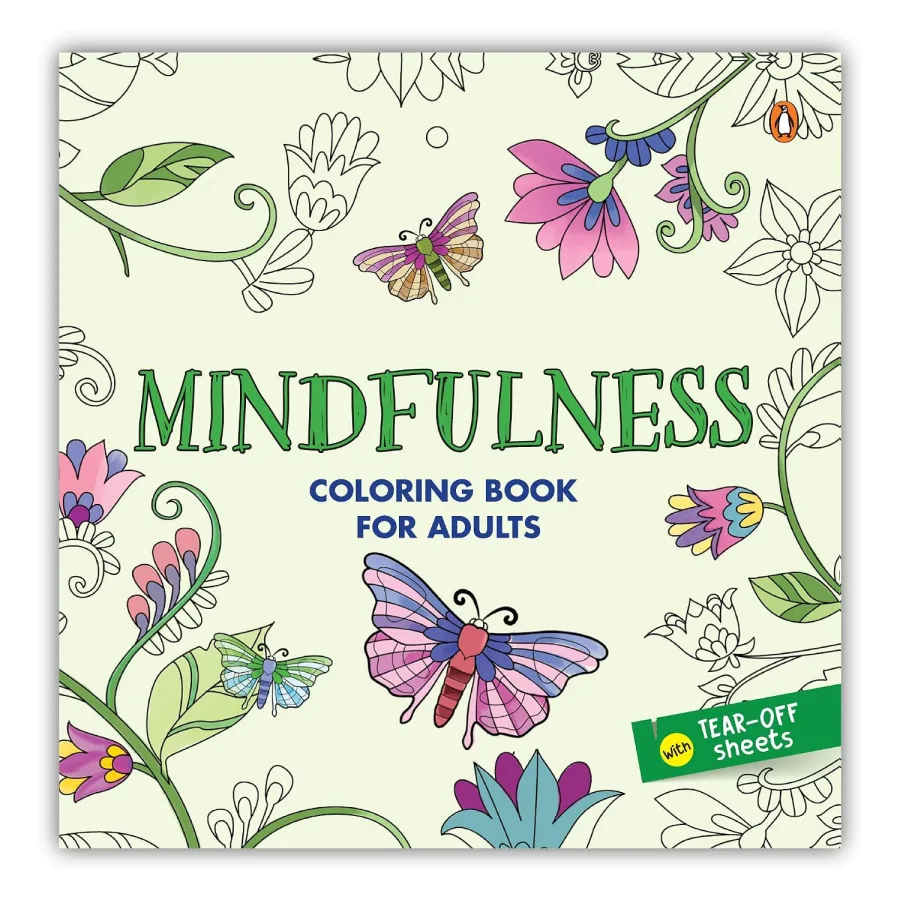
Download Cover Image
Do you want to download the full cover image for Mindfulness: Coloring Book for Adults with Tear out Sheets I Coloring for Anxiety Relief?