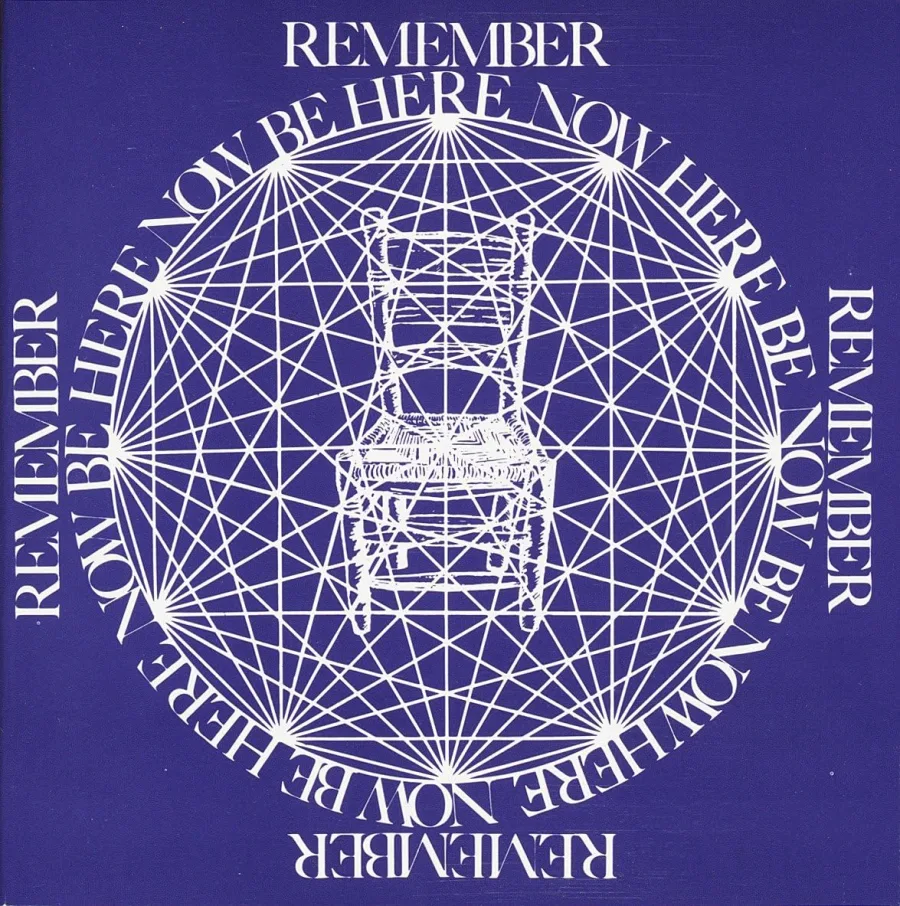
Be Here Now
Paperback
• 416 Pages
• ₹ 1399.00
• English
• 9780517543054
No ratings yet
| Publisher | Harmony |
|---|---|
| ISBN13 | 9780517543054 |
| ASIN/SKU | 0517543052 |
| Book Format | Paperback |
| Language | English |
| Pages | 416 |
| List Price | ₹ 1399.00 |
| Publishing Date | 12/10/1971 |
| Dimensions | 20 x 2.1 x 20.3 cm |
| Weight | 571 g |
| Book Code | BD00070734 |
Buy this Book
Amazon Stores
Ebook Stores
Other Stores
Discover Be Here Now by Ram Dass. This book is published by Harmony in Paperback format, ISBN 9780517543054, ASIN 0517543052, under Religion and Spirituality, Spirituality, New Age and Spirituality.
Book Description
Beloved guru Ram Dass tells the story of his spiritual awakening and gives you the tools to take control of your life in this “counterculture bible” (The New York Times) featuring powerful guidance on yoga, meditation, and finding your true self.
When Be Here Now was first published in 1971, it filled a deep spiritual emptiness, launched the ongoing mindfulness revolution, and established Ram Dass as perhaps the preeminent seeker of the twentieth century.
Just ten years earlier, he was known as Professor Richard Alpert. He held appointments in four departments at Harvard University. He published books, drove a Mercedes and regularly vacationed in the Caribbean. By most societal standards, he had achieved great success. . . . And yet he couldn’t escape the feeling that something was missing.
Psilocybin and LSD changed that. During a period of experimentation, Alpert peeled away each layer of his identity, disassociating from himself as a professor, a social cosmopolite, and lastly, as a physical being. Fear turned into exaltation upon the realization that at his truest, he was just his inner-self: a luminous being that he could trust indefinitely and love infinitely.
And thus, a spiritual journey commenced. Alpert headed to India where his guru renamed him Baba Ram Dass—“servant of God.” He was introduced to mindful breathing exercises, hatha yoga, and Eastern philosophy. If he found himself reminiscing or planning, he was reminded to “Be Here Now.” He started upon the path of enlightenment, and has been journeying along it ever since.
When Be Here Now was first published in 1971, it filled a deep spiritual emptiness, launched the ongoing mindfulness revolution, and established Ram Dass as perhaps the preeminent seeker of the twentieth century.
Just ten years earlier, he was known as Professor Richard Alpert. He held appointments in four departments at Harvard University. He published books, drove a Mercedes and regularly vacationed in the Caribbean. By most societal standards, he had achieved great success. . . . And yet he couldn’t escape the feeling that something was missing.
Psilocybin and LSD changed that. During a period of experimentation, Alpert peeled away each layer of his identity, disassociating from himself as a professor, a social cosmopolite, and lastly, as a physical being. Fear turned into exaltation upon the realization that at his truest, he was just his inner-self: a luminous being that he could trust indefinitely and love infinitely.
And thus, a spiritual journey commenced. Alpert headed to India where his guru renamed him Baba Ram Dass—“servant of God.” He was introduced to mindful breathing exercises, hatha yoga, and Eastern philosophy. If he found himself reminiscing or planning, he was reminded to “Be Here Now.” He started upon the path of enlightenment, and has been journeying along it ever since.
Author Biography
Ram Dass, formerly Dr. Richard Alpert, became a multigenerational spiritual teacher and cultural icon spanning from the 1960s through his peaceful passing at his home on December 22, 2019. His zeitgeist shifting book Be Here Now sparked a watershed of Eastern spiritual traditions and practices to become accessible to a Western audience. After a life-altering stroke, Ram Dass spent the remainder of his life on Maui, continuing to write books, share teachings, and hold retreats. His many books include Walking Each Other Home, Polishing the Mirror, Be Love Now, Paths to God, Still Here, and The Only Dance There Is. Ram Dass devoted his life to service, founding the Love Serve Remember Foundation, the Hanuman Foundation, and co-founding the Seva Foundation, Lama Foundation, and the Neem Karoli Baba Ashram in Taos, New Mexico. For talks, podcasts, or more information, visit ramdass.org.
Editorial Reviews
Editorial Reviews will be added soon…
Book Summary
Be Here Now by Ram Dass is much more than an ordinary book about spirituality, meditation, or self-improvement. First published in 1971, it is a deeply personal account of a man who moved from an accomplished academic life in the West toward a profound search for inner freedom. Ram Dass, born Richard Alpert, describes his journey from psychology professor to spiritual seeker and eventually to a teacher whose central message was beautifully simple: be fully present, let go of the ego, and learn to recognize the deeper reality of existence. The book combines autobiography, spiritual teachings, meditation instructions, illustrations, quotations, and practical reflections. Its unusual form is part of its message. Rather than presenting spirituality as an intellectual theory, Ram Dass tries to invite the reader into an experience of awareness.
At the beginning of the book, Ram Dass introduces the person he once was: Richard Alpert, a successful, educated, ambitious American academic. He had achieved many of the things that conventional society considers signs of success. He was a professor at Harvard and was deeply interested in psychology, human behavior, consciousness, and the possibilities of the human mind. His work eventually brought him into contact with Timothy Leary and the emerging exploration of psychedelic substances. Alpert became interested in the way altered states of consciousness appeared to challenge conventional assumptions about identity and reality.
The experiences associated with psychedelics became important in his spiritual development, but they also revealed a limitation. Extraordinary states of consciousness could be experienced, but they could not necessarily be maintained. A person could have an overwhelming sense of unity, freedom, love, or transcendence and then return to ordinary consciousness. This raised a deeper question for Alpert: if a profound spiritual experience disappears, how can a person transform the way he actually lives?
This question becomes one of the central turning points in the book. Ram Dass gradually realizes that collecting unusual experiences is not the same as becoming free. Spirituality cannot simply mean searching for another extraordinary state. The deeper challenge is to transform one's relationship with the mind, the ego, desire, fear, attachment, and the ordinary events of life.
His journey eventually takes him to India, where he meets his spiritual teacher, Neem Karoli Baba, whom he affectionately calls Maharaj-ji. This meeting becomes one of the defining experiences of his life. Ram Dass describes how the presence of his guru affected him in a way that intellectual knowledge and psychedelic experiences had not. Maharaj-ji did not merely give him a philosophy to believe. Instead, he embodied qualities such as unconditional love, simplicity, compassion, and freedom from the ordinary demands of ego.
The encounter also leads to Ram Dass receiving the name “Ram Dass,” meaning “servant of God.” The change in name symbolizes a change in identity. Richard Alpert had been strongly associated with achievement, intellect, status, and personal accomplishment. Ram Dass represents a different orientation: service rather than self-importance, awareness rather than constant ambition, and surrender rather than control.
One of the most important ideas in Be Here Now is that the human being normally lives through a constructed identity. We continually tell ourselves who we are. We identify ourselves through our profession, possessions, relationships, memories, social status, opinions, successes, failures, and ambitions. Ram Dass calls attention to the ego that constantly says, in effect, “This is me.”
The problem is not simply having a personality or functioning in society. The problem arises when we believe that this limited identity represents the whole of who we are. According to Ram Dass, beneath the constantly changing personality is a deeper dimension of awareness. Spiritual practice begins when we become curious about that deeper reality.
This is where the title Be Here Now becomes especially meaningful. Human beings frequently live either in the past or in the future. We replay old experiences, regrets, humiliations, successes, and wounds. At other times we live in anticipation: waiting for money, recognition, relationships, achievements, security, or some imagined future moment when life will finally become satisfying.
Ram Dass suggests that the mind is rarely completely present. Yet the only moment in which life actually happens is the present. The past exists as memory, and the future exists as imagination. When we constantly escape into either one, we miss the reality immediately in front of us.
“Be here now” therefore becomes both a spiritual instruction and a way of seeing life. It does not mean ignoring responsibilities or refusing to plan for tomorrow. Rather, it means learning to experience the present without constantly filtering it through anxiety, expectation, judgment, or attachment.
The book repeatedly returns to the importance of awareness. Ram Dass encourages the reader to observe thoughts rather than automatically becoming identified with them. A thought may arise saying, “I am afraid,” “I am angry,” “I need this,” or “I must succeed.” Ordinary consciousness tends to accept such thoughts as unquestionable truth. Meditation creates a little distance between awareness and the thought itself.
In this sense, meditation is not simply a relaxation technique. It becomes a method for discovering the difference between consciousness and the contents of consciousness. Thoughts come and go. Emotions come and go. Sensations come and go. Even one's sense of personal identity changes over time. Yet there is an awareness capable of observing these changes.
Ram Dass draws from Indian spiritual traditions, particularly Hindu and yogic ideas, while presenting them to a Western audience. Concepts involving karma, reincarnation, meditation, yoga, devotion, spiritual discipline, and liberation appear throughout the book. He does not treat spirituality as something that can be reduced to a single intellectual system. Instead, he presents it as a path of practice and transformation.
One important lesson is that spiritual development requires patience. The ego often wants spirituality to become another achievement. A person may begin meditating and immediately want to know whether he is progressing. He may compare himself with others, seek impressive experiences, or become proud of his discipline. Ironically, the desire to become spiritually advanced can itself become another expression of ego.
Ram Dass therefore emphasizes letting go of attachment to results. The spiritual path is not about constructing a more impressive version of oneself. It is about becoming less imprisoned by the need to constantly defend and improve that self-image.
Love occupies an equally important place in the book. For Ram Dass, genuine love is deeper than possession, romantic attachment, or emotional dependence. Ordinary love often contains conditions: “I love you because you make me feel good,” or “I will love you as long as you behave according to my expectations.” Spiritual love moves toward acceptance and compassion.
This does not mean becoming passive toward harmful behavior. Instead, it means attempting to see other people beyond the narrow categories through which the ego judges them. Each person carries fears, desires, wounds, and conditioning. Seeing this can make compassion possible.
The idea of service follows naturally from this understanding. If spiritual life becomes entirely focused on one's own enlightenment, it can become another form of self-centeredness. Ram Dass increasingly sees serving others as a spiritual practice. Helping another person, caring for someone who is suffering, listening without judgment, and offering compassion can become ways of transcending the boundaries of the ego.
Another important theme is suffering. Be Here Now does not promise that spiritual awareness will eliminate every difficulty in life. Instead, it suggests that suffering becomes different when our relationship to it changes. Pain is part of human existence, but resistance, identification, and fear can add another layer of suffering.
When a person can observe pain without immediately turning it into a story about “my life,” “my failure,” or “my injustice,” there can be greater freedom. This does not deny the reality of suffering. It changes the consciousness with which suffering is experienced.
The book's distinctive presentation reinforces these teachings. Rather than following the structure of a conventional academic book, Be Here Now contains unusual typography, drawings, diagrams, photographs, quotations, spiritual passages, and practical instructions. Its visual form reflects the movement from intellectual analysis toward direct experience. Readers are encouraged not merely to consume information but to slow down, contemplate, meditate, and experience.
The latter portions of the book become increasingly practical. Ram Dass discusses meditation, yoga, diet, spiritual discipline, mantras, awareness, and ways of integrating spiritual understanding into everyday life. The underlying message is that spirituality should not remain separated from ordinary existence. Eating, working, walking, talking, relationships, and even difficult moments can become opportunities for awareness.
This integration is important because it prevents spirituality from becoming an escape from life. The goal is not to run away from the world but to experience the world differently. The awakened person still has responsibilities and relationships, but he is less completely controlled by fear, craving, pride, and attachment.
Perhaps the deepest message of Be Here Now is that freedom does not necessarily come from acquiring more. Western culture often teaches people to search for happiness through possessions, achievement, recognition, pleasure, and future success. Ram Dass challenges this endless pursuit by asking the reader to look inward.
The book does not suggest that material life is inherently evil. Rather, it questions the belief that external circumstances can provide permanent fulfillment. Everything external changes. Careers change, relationships change, bodies age, possessions disappear, and circumstances rise and fall. If our sense of identity depends entirely on these things, insecurity is inevitable.
The spiritual path, in Ram Dass's presentation, is a gradual movement from identification with the temporary toward awareness of something deeper and more enduring. It involves becoming present, observing the mind, loosening attachment, cultivating compassion, and learning to serve.
Ultimately, Be Here Now is an invitation rather than a conventional argument. Ram Dass does not simply tell readers what to believe. He asks them to investigate their own consciousness. What happens when you sit quietly and watch your thoughts? What remains when you stop trying to become somebody? Can you experience another person without immediately judging or categorizing them? Can you be fully present in an ordinary moment without demanding that it become something else?
The power of the book lies in these questions. Its central teaching is remarkably simple but difficult to practice: stop living entirely in memory and anticipation, and learn to inhabit the present moment with awareness.
Be Here Now ultimately presents spirituality as a journey from ego toward awareness, from achievement toward presence, from attachment toward freedom, and from self-centeredness toward love and service. Ram Dass's own transformation gives the message a human dimension. He begins as a highly accomplished intellectual searching for extraordinary experiences and gradually discovers that the deepest transformation is not necessarily found in extraordinary states. It is found in how one sees, loves, serves, and inhabits ordinary life.
For readers approaching the book today, its greatest lesson may be its reminder that life is not waiting somewhere in the future. The mind may continually promise that happiness will arrive after the next achievement, relationship, possession, or milestone. Ram Dass asks us to question that promise. The present moment, with all its imperfections, is the place where consciousness actually meets life.
To “be here now” is therefore not merely to live in the moment in a casual sense. It is to become awake to one's own existence. It is to see thoughts without being completely ruled by them, to experience emotions without allowing them to define the whole self, to meet other people with compassion, and to discover a sense of meaning that does not depend entirely on external success.
In that sense, Be Here Now remains a spiritual guide built around a deceptively simple invitation: come back to the present, become aware, let go of the unnecessary burdens of the ego, and learn to meet life as it is.
At the beginning of the book, Ram Dass introduces the person he once was: Richard Alpert, a successful, educated, ambitious American academic. He had achieved many of the things that conventional society considers signs of success. He was a professor at Harvard and was deeply interested in psychology, human behavior, consciousness, and the possibilities of the human mind. His work eventually brought him into contact with Timothy Leary and the emerging exploration of psychedelic substances. Alpert became interested in the way altered states of consciousness appeared to challenge conventional assumptions about identity and reality.
The experiences associated with psychedelics became important in his spiritual development, but they also revealed a limitation. Extraordinary states of consciousness could be experienced, but they could not necessarily be maintained. A person could have an overwhelming sense of unity, freedom, love, or transcendence and then return to ordinary consciousness. This raised a deeper question for Alpert: if a profound spiritual experience disappears, how can a person transform the way he actually lives?
This question becomes one of the central turning points in the book. Ram Dass gradually realizes that collecting unusual experiences is not the same as becoming free. Spirituality cannot simply mean searching for another extraordinary state. The deeper challenge is to transform one's relationship with the mind, the ego, desire, fear, attachment, and the ordinary events of life.
His journey eventually takes him to India, where he meets his spiritual teacher, Neem Karoli Baba, whom he affectionately calls Maharaj-ji. This meeting becomes one of the defining experiences of his life. Ram Dass describes how the presence of his guru affected him in a way that intellectual knowledge and psychedelic experiences had not. Maharaj-ji did not merely give him a philosophy to believe. Instead, he embodied qualities such as unconditional love, simplicity, compassion, and freedom from the ordinary demands of ego.
The encounter also leads to Ram Dass receiving the name “Ram Dass,” meaning “servant of God.” The change in name symbolizes a change in identity. Richard Alpert had been strongly associated with achievement, intellect, status, and personal accomplishment. Ram Dass represents a different orientation: service rather than self-importance, awareness rather than constant ambition, and surrender rather than control.
One of the most important ideas in Be Here Now is that the human being normally lives through a constructed identity. We continually tell ourselves who we are. We identify ourselves through our profession, possessions, relationships, memories, social status, opinions, successes, failures, and ambitions. Ram Dass calls attention to the ego that constantly says, in effect, “This is me.”
The problem is not simply having a personality or functioning in society. The problem arises when we believe that this limited identity represents the whole of who we are. According to Ram Dass, beneath the constantly changing personality is a deeper dimension of awareness. Spiritual practice begins when we become curious about that deeper reality.
This is where the title Be Here Now becomes especially meaningful. Human beings frequently live either in the past or in the future. We replay old experiences, regrets, humiliations, successes, and wounds. At other times we live in anticipation: waiting for money, recognition, relationships, achievements, security, or some imagined future moment when life will finally become satisfying.
Ram Dass suggests that the mind is rarely completely present. Yet the only moment in which life actually happens is the present. The past exists as memory, and the future exists as imagination. When we constantly escape into either one, we miss the reality immediately in front of us.
“Be here now” therefore becomes both a spiritual instruction and a way of seeing life. It does not mean ignoring responsibilities or refusing to plan for tomorrow. Rather, it means learning to experience the present without constantly filtering it through anxiety, expectation, judgment, or attachment.
The book repeatedly returns to the importance of awareness. Ram Dass encourages the reader to observe thoughts rather than automatically becoming identified with them. A thought may arise saying, “I am afraid,” “I am angry,” “I need this,” or “I must succeed.” Ordinary consciousness tends to accept such thoughts as unquestionable truth. Meditation creates a little distance between awareness and the thought itself.
In this sense, meditation is not simply a relaxation technique. It becomes a method for discovering the difference between consciousness and the contents of consciousness. Thoughts come and go. Emotions come and go. Sensations come and go. Even one's sense of personal identity changes over time. Yet there is an awareness capable of observing these changes.
Ram Dass draws from Indian spiritual traditions, particularly Hindu and yogic ideas, while presenting them to a Western audience. Concepts involving karma, reincarnation, meditation, yoga, devotion, spiritual discipline, and liberation appear throughout the book. He does not treat spirituality as something that can be reduced to a single intellectual system. Instead, he presents it as a path of practice and transformation.
One important lesson is that spiritual development requires patience. The ego often wants spirituality to become another achievement. A person may begin meditating and immediately want to know whether he is progressing. He may compare himself with others, seek impressive experiences, or become proud of his discipline. Ironically, the desire to become spiritually advanced can itself become another expression of ego.
Ram Dass therefore emphasizes letting go of attachment to results. The spiritual path is not about constructing a more impressive version of oneself. It is about becoming less imprisoned by the need to constantly defend and improve that self-image.
Love occupies an equally important place in the book. For Ram Dass, genuine love is deeper than possession, romantic attachment, or emotional dependence. Ordinary love often contains conditions: “I love you because you make me feel good,” or “I will love you as long as you behave according to my expectations.” Spiritual love moves toward acceptance and compassion.
This does not mean becoming passive toward harmful behavior. Instead, it means attempting to see other people beyond the narrow categories through which the ego judges them. Each person carries fears, desires, wounds, and conditioning. Seeing this can make compassion possible.
The idea of service follows naturally from this understanding. If spiritual life becomes entirely focused on one's own enlightenment, it can become another form of self-centeredness. Ram Dass increasingly sees serving others as a spiritual practice. Helping another person, caring for someone who is suffering, listening without judgment, and offering compassion can become ways of transcending the boundaries of the ego.
Another important theme is suffering. Be Here Now does not promise that spiritual awareness will eliminate every difficulty in life. Instead, it suggests that suffering becomes different when our relationship to it changes. Pain is part of human existence, but resistance, identification, and fear can add another layer of suffering.
When a person can observe pain without immediately turning it into a story about “my life,” “my failure,” or “my injustice,” there can be greater freedom. This does not deny the reality of suffering. It changes the consciousness with which suffering is experienced.
The book's distinctive presentation reinforces these teachings. Rather than following the structure of a conventional academic book, Be Here Now contains unusual typography, drawings, diagrams, photographs, quotations, spiritual passages, and practical instructions. Its visual form reflects the movement from intellectual analysis toward direct experience. Readers are encouraged not merely to consume information but to slow down, contemplate, meditate, and experience.
The latter portions of the book become increasingly practical. Ram Dass discusses meditation, yoga, diet, spiritual discipline, mantras, awareness, and ways of integrating spiritual understanding into everyday life. The underlying message is that spirituality should not remain separated from ordinary existence. Eating, working, walking, talking, relationships, and even difficult moments can become opportunities for awareness.
This integration is important because it prevents spirituality from becoming an escape from life. The goal is not to run away from the world but to experience the world differently. The awakened person still has responsibilities and relationships, but he is less completely controlled by fear, craving, pride, and attachment.
Perhaps the deepest message of Be Here Now is that freedom does not necessarily come from acquiring more. Western culture often teaches people to search for happiness through possessions, achievement, recognition, pleasure, and future success. Ram Dass challenges this endless pursuit by asking the reader to look inward.
The book does not suggest that material life is inherently evil. Rather, it questions the belief that external circumstances can provide permanent fulfillment. Everything external changes. Careers change, relationships change, bodies age, possessions disappear, and circumstances rise and fall. If our sense of identity depends entirely on these things, insecurity is inevitable.
The spiritual path, in Ram Dass's presentation, is a gradual movement from identification with the temporary toward awareness of something deeper and more enduring. It involves becoming present, observing the mind, loosening attachment, cultivating compassion, and learning to serve.
Ultimately, Be Here Now is an invitation rather than a conventional argument. Ram Dass does not simply tell readers what to believe. He asks them to investigate their own consciousness. What happens when you sit quietly and watch your thoughts? What remains when you stop trying to become somebody? Can you experience another person without immediately judging or categorizing them? Can you be fully present in an ordinary moment without demanding that it become something else?
The power of the book lies in these questions. Its central teaching is remarkably simple but difficult to practice: stop living entirely in memory and anticipation, and learn to inhabit the present moment with awareness.
Be Here Now ultimately presents spirituality as a journey from ego toward awareness, from achievement toward presence, from attachment toward freedom, and from self-centeredness toward love and service. Ram Dass's own transformation gives the message a human dimension. He begins as a highly accomplished intellectual searching for extraordinary experiences and gradually discovers that the deepest transformation is not necessarily found in extraordinary states. It is found in how one sees, loves, serves, and inhabits ordinary life.
For readers approaching the book today, its greatest lesson may be its reminder that life is not waiting somewhere in the future. The mind may continually promise that happiness will arrive after the next achievement, relationship, possession, or milestone. Ram Dass asks us to question that promise. The present moment, with all its imperfections, is the place where consciousness actually meets life.
To “be here now” is therefore not merely to live in the moment in a casual sense. It is to become awake to one's own existence. It is to see thoughts without being completely ruled by them, to experience emotions without allowing them to define the whole self, to meet other people with compassion, and to discover a sense of meaning that does not depend entirely on external success.
In that sense, Be Here Now remains a spiritual guide built around a deceptively simple invitation: come back to the present, become aware, let go of the unnecessary burdens of the ego, and learn to meet life as it is.
Sample Chapters
Sample Chapters will be added soon…
Reader Reviews
No reviews yet.
Be Here Now