
You Can Have It All
Paperback
• 304 Pages
• ₹ 219.00
• English
• 9789369891320
No ratings yet
| Publisher | Harper Non Fiction India |
|---|---|
| ISBN13 | 9789369891320 |
| ASIN/SKU | 9369891323 |
| Book Format | Paperback |
| Language | English |
| Pages | 304 |
| List Price | ₹ 219.00 |
| Publishing Date | 23/12/2025 |
| Dimensions | 19.8 x 12.9 x 1.5 cm |
| Weight | 222 g |
| Book Code | BD00070727 |
Buy this Book
Amazon Stores
Ebook Stores
Other Stores
Discover You Can Have It All by Gaur Gopal Das. This book is published by Harper Non Fiction India in Paperback format, ISBN 9789369891320, ASIN 9369891323, under Religion and Spirituality, Spiritual Self-Help, Meditation.
Book Description
Gaur Gopal Das, India's most-followed monk with over 25 million followers and 2.5 billion video views, brings you a book unlike anything he has ever written before.
Most of us spend our lives chasing our dreams - happiness, love, good health, financial freedom, security and more.
- But can we really have it all?
On a cool November morning, Gaur Gopal Das arrives in Jaisalmer to attend his friend Rakesh Arora's son's three-day-long wedding festivities where he meets the Arora clan and the soon-to-be bride's family. As the wedding day approaches and an unexpected visitor makes an appearance, he observes the storm that threatens to tear apart the two families.
In the course of his conversations with his hosts and their guests, through his unassuming presence, he unearths the secret fears and desires they guard fiercely in their hearts and offers them steadying counsel even as he reveals his own journey through life's vicissitudes.
You Can Have It All is Gaur Gopal Das's most personal and profound narrative yet, a captivating book that presents a transformative and radical path for those of us caught between ambition and fulfilment, between striving and being. Marked by his iconic humour, deep empathy and gentle wisdom, it urges us to understand how perspective shapes our reality, learn to recognize and overcome our blind spots, and develop the self-compassion we need to better navigate this beautiful, complicated thing we call life.
Most of us spend our lives chasing our dreams - happiness, love, good health, financial freedom, security and more.
- But can we really have it all?
On a cool November morning, Gaur Gopal Das arrives in Jaisalmer to attend his friend Rakesh Arora's son's three-day-long wedding festivities where he meets the Arora clan and the soon-to-be bride's family. As the wedding day approaches and an unexpected visitor makes an appearance, he observes the storm that threatens to tear apart the two families.
In the course of his conversations with his hosts and their guests, through his unassuming presence, he unearths the secret fears and desires they guard fiercely in their hearts and offers them steadying counsel even as he reveals his own journey through life's vicissitudes.
You Can Have It All is Gaur Gopal Das's most personal and profound narrative yet, a captivating book that presents a transformative and radical path for those of us caught between ambition and fulfilment, between striving and being. Marked by his iconic humour, deep empathy and gentle wisdom, it urges us to understand how perspective shapes our reality, learn to recognize and overcome our blind spots, and develop the self-compassion we need to better navigate this beautiful, complicated thing we call life.
Author Biography
Gaur Gopal Das studied electrical engineering at the College of Engineering, Pune. After a brief stint with Hewlett-Packard, he chose to dedicate his life to spirituality and service, joining an ashram in downtown Mumbai.
For more than two decades, Gaur Gopal Das has travelled the globe, addressing corporate leaders, universities and charitable organizations, and has spoken at the United Nations in New York. His global reach grew exponentially in 2016 when he took his message online. Today, with over 2.5 billion views on his videos and a following of more than 25 million across social media platforms, he continues to inspire millions to find purpose, balance, and happiness.
Gaur Gopal Das is the author of two national bestsellers and has been conferred with several honours, including the prestigious Global Changemaker of the Year Award at the Dadasaheb Phalke International Film Festival in 2020 and an honorary doctorate (DLitt) from Kalinga Institute of Industrial Technology (KIIT), Bhubaneswar. Recognized as one of the most influential monks in the world today, Gaur Gopal Das leads a movement dedicated to helping people live more meaningful and fulfilled lives.
For more than two decades, Gaur Gopal Das has travelled the globe, addressing corporate leaders, universities and charitable organizations, and has spoken at the United Nations in New York. His global reach grew exponentially in 2016 when he took his message online. Today, with over 2.5 billion views on his videos and a following of more than 25 million across social media platforms, he continues to inspire millions to find purpose, balance, and happiness.
Gaur Gopal Das is the author of two national bestsellers and has been conferred with several honours, including the prestigious Global Changemaker of the Year Award at the Dadasaheb Phalke International Film Festival in 2020 and an honorary doctorate (DLitt) from Kalinga Institute of Industrial Technology (KIIT), Bhubaneswar. Recognized as one of the most influential monks in the world today, Gaur Gopal Das leads a movement dedicated to helping people live more meaningful and fulfilled lives.
Editorial Reviews
Editorial Reviews will be added soon…
Book Summary
You Can Have It All by Gaur Gopal Das is a practical and deeply reflective book about creating a life that feels complete rather than merely successful. Written in Gaur Gopal Das’s warm, conversational style, the book explores the tension between ambition and inner peace, achievement and relationships, material success and emotional well-being. Its central message is not that a person can possess everything the world has to offer, but that a fulfilling life can be built when success is understood more broadly. A meaningful career, healthy relationships, physical well-being, emotional balance, spiritual growth, and a sense of purpose can coexist when they are consciously nurtured.
The title, You Can Have It All, immediately raises an important question: what does “having it all” actually mean? Modern life often teaches people to measure themselves through visible achievements. A good job, a higher salary, a beautiful home, recognition, social status, and professional success are frequently treated as evidence that someone has made it in life. Yet many people who achieve these things continue to feel restless, lonely, exhausted, or dissatisfied. Gaur Gopal Das approaches this contradiction with compassion. He does not dismiss ambition or tell readers to reject worldly success. Instead, he asks them to redefine success so that external achievement does not come at the cost of internal well-being.
At the heart of the book is the idea that life is made up of several important dimensions, and neglecting one eventually affects the others. Career matters, but so do family, friendships, health, emotional stability, personal growth, and spirituality. The challenge is not necessarily to give equal attention to everything every day. Life naturally moves through different seasons. Sometimes work demands more of us; at other times family or health needs greater attention. The real objective is to remain conscious of what matters and avoid allowing one area of life to consume everything else.
One of the book's most important lessons is therefore about balance. Balance does not mean living a perfectly organized life in which every responsibility receives exactly the same number of hours. Such perfection is unrealistic. Instead, balance means understanding priorities and making deliberate choices. A person may work hard for several years to build a career, but if professional ambition permanently destroys relationships, health, or peace of mind, the achievement becomes costly. Similarly, someone who avoids all ambition in the name of peace may eventually experience frustration because important abilities and aspirations were never developed.
The book encourages readers to think of life as a whole rather than as a series of disconnected achievements. Success becomes meaningful when it supports a larger sense of purpose.
This leads to another major theme: the difference between success and fulfillment. Success is often externally measurable. Fulfillment is much more personal. Two people can have similar careers and financial circumstances while experiencing completely different levels of happiness. One may feel grateful and purposeful, while another may constantly compare themselves with others and feel inadequate.
Comparison is one of the forces that can quietly destroy contentment. Social media and modern consumer culture make this problem even stronger. People are constantly exposed to carefully selected images of other people's lives. Someone else's promotion, holiday, house, relationship, business, or lifestyle can make an individual feel as though they are falling behind. The book's broader philosophy encourages readers to step away from this endless competition and ask a more personal question: What kind of life do I actually want to live?
This shift from comparison to self-awareness is essential. If a person's definition of success is borrowed entirely from society, they may spend years pursuing goals that do not genuinely satisfy them. True progress begins when people identify their own values and understand why they want what they want.
Gaur Gopal Das also gives considerable importance to relationships. Professional accomplishments can be rebuilt, money can sometimes be earned again, and opportunities can return, but damaged relationships can be much harder to repair. People frequently postpone meaningful conversations because they assume there will always be another day. Yet life is unpredictable. The book therefore encourages readers to invest in the people who give life emotional meaning.
Relationships, however, require more than affection. They require patience, listening, forgiveness, humility, and the willingness to understand another person's perspective. Many conflicts arise because people want to be heard but do not genuinely listen. They defend themselves, prepare their response, or try to prove that they are right. A healthier relationship begins when the desire to win an argument becomes less important than the desire to understand the person standing in front of us.
The book's treatment of family and friendship is particularly relevant to its larger idea of having it all. A person does not truly have a complete life if professional success is accompanied by emotional isolation. Achievement becomes richer when there are people with whom it can be shared.
Another important theme is emotional maturity. Life inevitably contains disappointment, criticism, rejection, failure, betrayal, and uncertainty. We cannot control every event, but we can influence how we respond to events. Emotional maturity does not mean becoming emotionless. It means learning to experience emotions without allowing every emotion to dictate our behavior.
Anger is a useful example. Anger itself is not necessarily wrong; it can signal that something feels unjust or unacceptable. The problem comes when anger takes control of our words and actions. A moment of uncontrolled anger can damage a relationship that took years to build. The wiser response is to create space between emotion and action.
This idea of creating a pause is central to personal growth. Between what happens to us and how we respond, there is an opportunity to choose. That small space can transform the quality of our lives.
The book also examines failure and setbacks. Modern culture often celebrates success stories while hiding the uncertainty, mistakes, and disappointments behind them. As a result, people can begin to believe that failure means they are inadequate. Gaur Gopal Das presents a more constructive perspective. Failure can become a teacher when a person is willing to examine it honestly.
A failed project, rejected application, broken relationship, or professional disappointment can reveal weaknesses, unrealistic expectations, poor preparation, or circumstances beyond one's control. The important question is not simply, “Why did this happen to me?” but “What can I learn from this?” Such a shift transforms failure from a final judgment into information.
The book also places health within the larger definition of success. People often sacrifice sleep, exercise, nutrition, and mental rest while pursuing professional goals. The irony is that the very body and mind required to enjoy success are gradually damaged in the process.
Physical well-being is therefore not a luxury that can be addressed after achieving everything else. It is part of the foundation upon which everything else rests. Similarly, mental and emotional health require attention. Rest is not laziness, and slowing down occasionally does not mean lacking ambition. Sustainable achievement requires recovery.
Another major theme is purpose. Goals tell us what we want to accomplish; purpose helps explain why. A person can achieve many goals and still feel empty if those goals are disconnected from deeper values. Purpose provides direction when circumstances become difficult.
This does not necessarily mean everyone needs to discover one grand mission in life. Purpose can exist in ordinary responsibilities: raising children well, serving customers honestly, creating something useful, supporting family members, teaching others, helping people, or becoming a better human being. Meaning does not always arrive through dramatic achievements. It can grow through the quality of everyday actions.
The book's spiritual dimension becomes especially important here. Gaur Gopal Das encourages readers to look beyond the ego's constant demand for recognition. The ego wants to be praised, noticed, validated, and considered important. Yet a life organized entirely around external validation becomes unstable because other people's opinions are beyond our control.
Spiritual growth, in this context, involves developing a deeper relationship with the self and with something larger than personal achievement. Gratitude becomes an important practice. Instead of constantly focusing on what is missing, a person learns to notice what is already present. Gratitude does not mean ignoring problems. It means refusing to let problems become the only things one can see.
The book also emphasizes giving and service. Happiness becomes deeper when life is not centered exclusively on personal gain. Helping another person, sharing knowledge, offering encouragement, or contributing to a larger cause can create a sense of meaning that consumption alone cannot provide.
This connects to the title in an interesting way. “Having it all” is not ultimately about acquiring everything. It is about experiencing richness in multiple dimensions of life. A person can have money and still be poor in relationships. Another can have professional recognition but no peace. Someone else can have a modest career yet experience deep fulfillment because their relationships, values, health, and purpose are strong.
The book therefore asks readers to reconsider the idea of wealth itself. Financial security is valuable, and there is nothing inherently wrong with wanting prosperity. But wealth becomes meaningful when it serves life rather than replacing it. Money can provide comfort and opportunity, but it cannot automatically create intimacy, wisdom, character, or inner peace.
One of the most humane aspects of You Can Have It All is its refusal to present life as a simple formula. People have different responsibilities, circumstances, personalities, and limitations. Balance will look different for different individuals. The book's lessons are therefore best understood as principles rather than rigid instructions.
Ultimately, You Can Have It All is a book about integration. It asks readers to stop thinking of career and family, ambition and peace, success and spirituality, achievement and happiness as mutually exclusive opposites. A fuller life becomes possible when these dimensions are brought into conscious relationship with one another.
The deepest lesson is that life should not be postponed. Many people live as though happiness will begin after the next promotion, the next financial milestone, the next purchase, or the next achievement. But there is always another milestone waiting. If happiness is continually postponed, life itself passes while we are preparing to begin living.
Gaur Gopal Das's message is ultimately an invitation to live more consciously. Work hard, but do not forget the people you love. Pursue success, but define it according to your values. Earn money, but do not measure your entire worth by it. Take care of your body and mind. Learn from failure instead of allowing it to define you. Practice gratitude. Build meaningful relationships. Serve others. Make room for spirituality and reflection. Most importantly, understand that a successful life is not merely one in which many things are acquired; it is one in which the things that truly matter are not sacrificed along the way.
In this sense, You Can Have It All offers a reassuring but demanding idea: having it all is possible when “all” means a life that is successful on the outside without becoming empty on the inside. The book encourages readers to build not a perfect life, but a meaningful one—one in which achievement, relationships, health, purpose, and inner peace can grow together.
The title, You Can Have It All, immediately raises an important question: what does “having it all” actually mean? Modern life often teaches people to measure themselves through visible achievements. A good job, a higher salary, a beautiful home, recognition, social status, and professional success are frequently treated as evidence that someone has made it in life. Yet many people who achieve these things continue to feel restless, lonely, exhausted, or dissatisfied. Gaur Gopal Das approaches this contradiction with compassion. He does not dismiss ambition or tell readers to reject worldly success. Instead, he asks them to redefine success so that external achievement does not come at the cost of internal well-being.
At the heart of the book is the idea that life is made up of several important dimensions, and neglecting one eventually affects the others. Career matters, but so do family, friendships, health, emotional stability, personal growth, and spirituality. The challenge is not necessarily to give equal attention to everything every day. Life naturally moves through different seasons. Sometimes work demands more of us; at other times family or health needs greater attention. The real objective is to remain conscious of what matters and avoid allowing one area of life to consume everything else.
One of the book's most important lessons is therefore about balance. Balance does not mean living a perfectly organized life in which every responsibility receives exactly the same number of hours. Such perfection is unrealistic. Instead, balance means understanding priorities and making deliberate choices. A person may work hard for several years to build a career, but if professional ambition permanently destroys relationships, health, or peace of mind, the achievement becomes costly. Similarly, someone who avoids all ambition in the name of peace may eventually experience frustration because important abilities and aspirations were never developed.
The book encourages readers to think of life as a whole rather than as a series of disconnected achievements. Success becomes meaningful when it supports a larger sense of purpose.
This leads to another major theme: the difference between success and fulfillment. Success is often externally measurable. Fulfillment is much more personal. Two people can have similar careers and financial circumstances while experiencing completely different levels of happiness. One may feel grateful and purposeful, while another may constantly compare themselves with others and feel inadequate.
Comparison is one of the forces that can quietly destroy contentment. Social media and modern consumer culture make this problem even stronger. People are constantly exposed to carefully selected images of other people's lives. Someone else's promotion, holiday, house, relationship, business, or lifestyle can make an individual feel as though they are falling behind. The book's broader philosophy encourages readers to step away from this endless competition and ask a more personal question: What kind of life do I actually want to live?
This shift from comparison to self-awareness is essential. If a person's definition of success is borrowed entirely from society, they may spend years pursuing goals that do not genuinely satisfy them. True progress begins when people identify their own values and understand why they want what they want.
Gaur Gopal Das also gives considerable importance to relationships. Professional accomplishments can be rebuilt, money can sometimes be earned again, and opportunities can return, but damaged relationships can be much harder to repair. People frequently postpone meaningful conversations because they assume there will always be another day. Yet life is unpredictable. The book therefore encourages readers to invest in the people who give life emotional meaning.
Relationships, however, require more than affection. They require patience, listening, forgiveness, humility, and the willingness to understand another person's perspective. Many conflicts arise because people want to be heard but do not genuinely listen. They defend themselves, prepare their response, or try to prove that they are right. A healthier relationship begins when the desire to win an argument becomes less important than the desire to understand the person standing in front of us.
The book's treatment of family and friendship is particularly relevant to its larger idea of having it all. A person does not truly have a complete life if professional success is accompanied by emotional isolation. Achievement becomes richer when there are people with whom it can be shared.
Another important theme is emotional maturity. Life inevitably contains disappointment, criticism, rejection, failure, betrayal, and uncertainty. We cannot control every event, but we can influence how we respond to events. Emotional maturity does not mean becoming emotionless. It means learning to experience emotions without allowing every emotion to dictate our behavior.
Anger is a useful example. Anger itself is not necessarily wrong; it can signal that something feels unjust or unacceptable. The problem comes when anger takes control of our words and actions. A moment of uncontrolled anger can damage a relationship that took years to build. The wiser response is to create space between emotion and action.
This idea of creating a pause is central to personal growth. Between what happens to us and how we respond, there is an opportunity to choose. That small space can transform the quality of our lives.
The book also examines failure and setbacks. Modern culture often celebrates success stories while hiding the uncertainty, mistakes, and disappointments behind them. As a result, people can begin to believe that failure means they are inadequate. Gaur Gopal Das presents a more constructive perspective. Failure can become a teacher when a person is willing to examine it honestly.
A failed project, rejected application, broken relationship, or professional disappointment can reveal weaknesses, unrealistic expectations, poor preparation, or circumstances beyond one's control. The important question is not simply, “Why did this happen to me?” but “What can I learn from this?” Such a shift transforms failure from a final judgment into information.
The book also places health within the larger definition of success. People often sacrifice sleep, exercise, nutrition, and mental rest while pursuing professional goals. The irony is that the very body and mind required to enjoy success are gradually damaged in the process.
Physical well-being is therefore not a luxury that can be addressed after achieving everything else. It is part of the foundation upon which everything else rests. Similarly, mental and emotional health require attention. Rest is not laziness, and slowing down occasionally does not mean lacking ambition. Sustainable achievement requires recovery.
Another major theme is purpose. Goals tell us what we want to accomplish; purpose helps explain why. A person can achieve many goals and still feel empty if those goals are disconnected from deeper values. Purpose provides direction when circumstances become difficult.
This does not necessarily mean everyone needs to discover one grand mission in life. Purpose can exist in ordinary responsibilities: raising children well, serving customers honestly, creating something useful, supporting family members, teaching others, helping people, or becoming a better human being. Meaning does not always arrive through dramatic achievements. It can grow through the quality of everyday actions.
The book's spiritual dimension becomes especially important here. Gaur Gopal Das encourages readers to look beyond the ego's constant demand for recognition. The ego wants to be praised, noticed, validated, and considered important. Yet a life organized entirely around external validation becomes unstable because other people's opinions are beyond our control.
Spiritual growth, in this context, involves developing a deeper relationship with the self and with something larger than personal achievement. Gratitude becomes an important practice. Instead of constantly focusing on what is missing, a person learns to notice what is already present. Gratitude does not mean ignoring problems. It means refusing to let problems become the only things one can see.
The book also emphasizes giving and service. Happiness becomes deeper when life is not centered exclusively on personal gain. Helping another person, sharing knowledge, offering encouragement, or contributing to a larger cause can create a sense of meaning that consumption alone cannot provide.
This connects to the title in an interesting way. “Having it all” is not ultimately about acquiring everything. It is about experiencing richness in multiple dimensions of life. A person can have money and still be poor in relationships. Another can have professional recognition but no peace. Someone else can have a modest career yet experience deep fulfillment because their relationships, values, health, and purpose are strong.
The book therefore asks readers to reconsider the idea of wealth itself. Financial security is valuable, and there is nothing inherently wrong with wanting prosperity. But wealth becomes meaningful when it serves life rather than replacing it. Money can provide comfort and opportunity, but it cannot automatically create intimacy, wisdom, character, or inner peace.
One of the most humane aspects of You Can Have It All is its refusal to present life as a simple formula. People have different responsibilities, circumstances, personalities, and limitations. Balance will look different for different individuals. The book's lessons are therefore best understood as principles rather than rigid instructions.
Ultimately, You Can Have It All is a book about integration. It asks readers to stop thinking of career and family, ambition and peace, success and spirituality, achievement and happiness as mutually exclusive opposites. A fuller life becomes possible when these dimensions are brought into conscious relationship with one another.
The deepest lesson is that life should not be postponed. Many people live as though happiness will begin after the next promotion, the next financial milestone, the next purchase, or the next achievement. But there is always another milestone waiting. If happiness is continually postponed, life itself passes while we are preparing to begin living.
Gaur Gopal Das's message is ultimately an invitation to live more consciously. Work hard, but do not forget the people you love. Pursue success, but define it according to your values. Earn money, but do not measure your entire worth by it. Take care of your body and mind. Learn from failure instead of allowing it to define you. Practice gratitude. Build meaningful relationships. Serve others. Make room for spirituality and reflection. Most importantly, understand that a successful life is not merely one in which many things are acquired; it is one in which the things that truly matter are not sacrificed along the way.
In this sense, You Can Have It All offers a reassuring but demanding idea: having it all is possible when “all” means a life that is successful on the outside without becoming empty on the inside. The book encourages readers to build not a perfect life, but a meaningful one—one in which achievement, relationships, health, purpose, and inner peace can grow together.
Sample Chapters
Sample Chapters will be added soon…
Reader Reviews
No reviews yet.
You Can Have It All
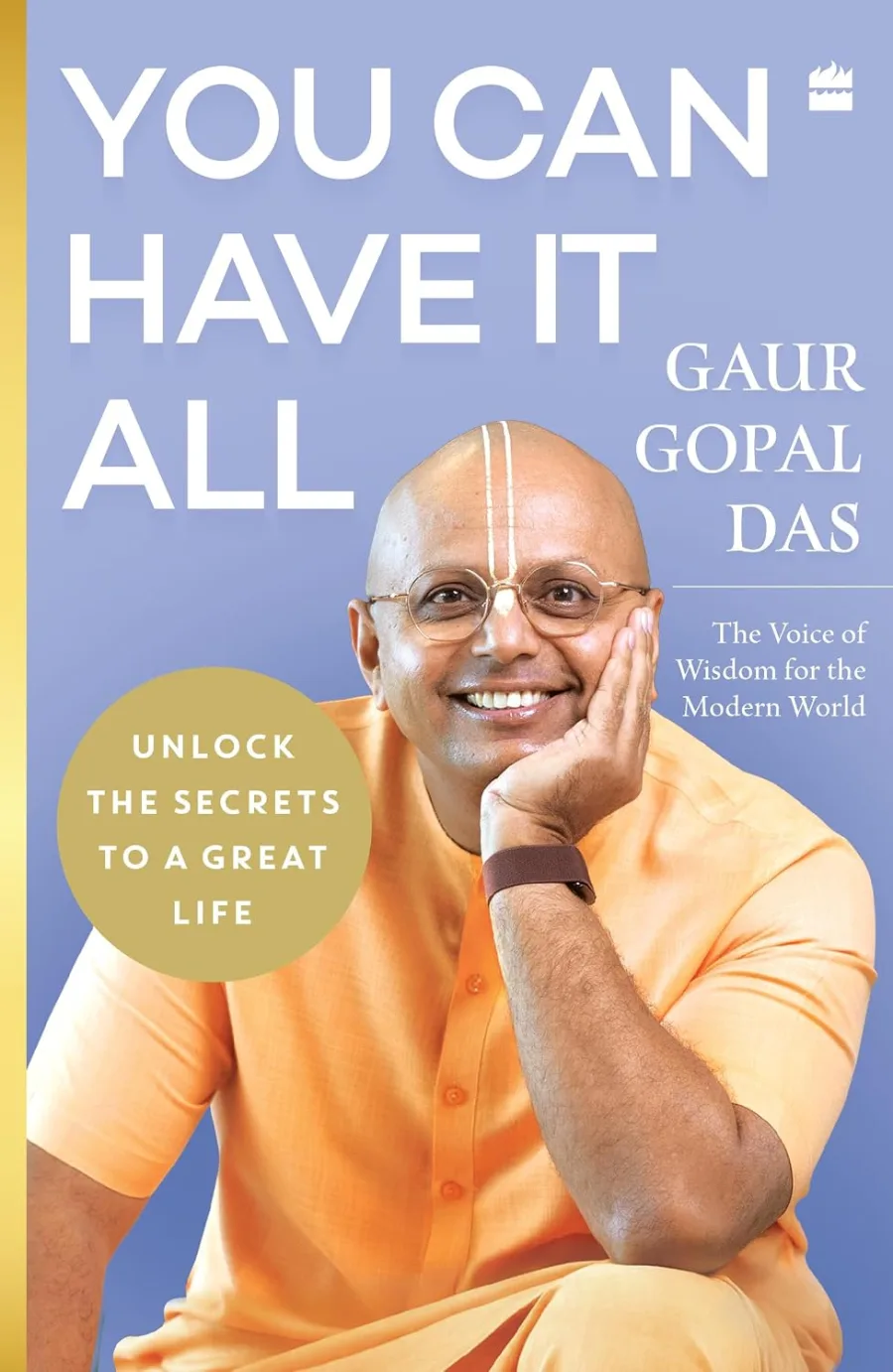
Download Cover Image
Do you want to download the full cover image for You Can Have It All?