
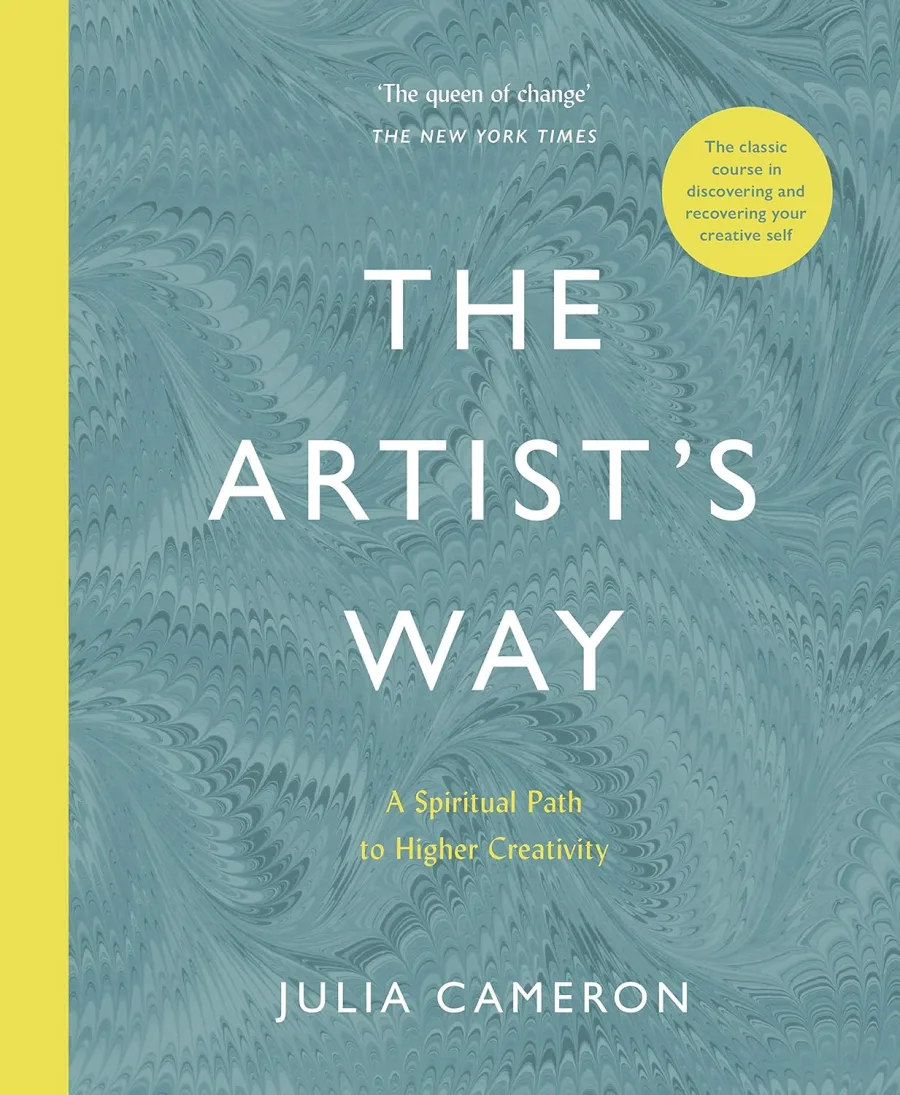
The Artist’s Way
Paperback
• 448 Pages
• ₹ 448.00
• English
• 9781788164290
No ratings yet
| Publisher | Souvenir Press |
|---|---|
| ISBN13 | 9781788164290 |
| ASIN/SKU | 1788164296 |
| Book Format | Paperback |
| Language | English |
| Pages | 448 |
| List Price | ₹ 448.00 |
| Publishing Date | 05/11/2020 |
| Dimensions | 19 x 2.5 x 23 cm |
| Weight | 710 g |
| Book Code | BD00070723 |
Buy this Book
Amazon Stores
Ebook Stores
Other Stores
Discover The Artist’s Way by Julia Cameron. This book is published by Souvenir Press in Paperback format, ISBN 9781788164290, ASIN 1788164296, under Arts and Photography, Music Books, Writing Guides.
Book Description
Since its first publication, The Artist's Way has inspired the genius of Elizabeth Gilbert, Tim Ferriss and millions of readers to embark on a creative journey and find a deeper connection to process and purpose. Julia Cameron guides readers in uncovering problems and pressure points that may be restricting their creative flow and offers techniques to open up opportunities for self-growth and self-discovery.
The program begins with Cameron's most vital tools for creative recovery: The Morning Pages and The Artist Date. From there, she shares hundreds of exercises, activities, and prompts to help readers thoroughly explore each chapter.
A revolutionary programme for personal renewal, The Artist's Way will help get you back on track, rediscover your passions, and take the steps you need to change your life.
The program begins with Cameron's most vital tools for creative recovery: The Morning Pages and The Artist Date. From there, she shares hundreds of exercises, activities, and prompts to help readers thoroughly explore each chapter.
A revolutionary programme for personal renewal, The Artist's Way will help get you back on track, rediscover your passions, and take the steps you need to change your life.
Author Biography
Julia Cameron has been an active artist for more than thirty years. She is the author of more than thirty books, fiction and nonfiction, including her bestselling works on the creative process: The Artist's Way, Walking in This World, Finding Water, and The Writing Diet. A novelist, playwright, songwriter, and poet, she has multiple credits in theater, film, and television.
Latest endeavor: Julia Cameron Live, an online course and artists' community led by Julia. It is the most comprehensive discussion she has ever done on The Artist's Way, and the first time she has allowed cameras in her home. www.juliacameronlive.com
Latest endeavor: Julia Cameron Live, an online course and artists' community led by Julia. It is the most comprehensive discussion she has ever done on The Artist's Way, and the first time she has allowed cameras in her home. www.juliacameronlive.com
Editorial Reviews
Editorial Reviews will be added soon…
Book Summary
The Artist’s Way by Julia Cameron is a practical and deeply encouraging book about recovering creativity and learning to live a more imaginative, authentic, and fulfilling life. First published in 1992, the book is widely known as a twelve-week course for people who feel creatively blocked, discouraged, distracted, or disconnected from the part of themselves that wants to make things. Cameron’s central argument is that creativity is not a special gift reserved for professional artists. It is a natural human capacity, and with patience, regular practice, and a willingness to confront fear, it can be recovered and strengthened.
The book is written for artists, writers, musicians, actors, designers, and other creative professionals, but its appeal extends far beyond them. Someone who has never considered themselves an artist can also benefit from Cameron’s approach because she treats creativity as a way of living rather than simply as a career skill. Cooking, gardening, decorating a room, starting a business, writing a journal, learning an instrument, taking photographs, or simply finding a new way of looking at everyday life can all become expressions of creativity. The real problem, according to Cameron, is not that most people lack creativity. It is that they have learned to suppress it.
At the beginning of the book, Cameron addresses one of the most common experiences among creative people: the feeling of being blocked. A blocked person may desperately want to write, paint, compose, or create, yet find themselves endlessly procrastinating. They may spend hours organizing files, scrolling through information, cleaning the house, worrying about money, comparing themselves with successful people, or telling themselves that they will begin tomorrow. Sometimes the person believes that they have simply lost their talent.
Cameron challenges this belief. Creative blockage, she suggests, often comes from fear rather than lack of ability. People fear criticism, failure, success, embarrassment, financial insecurity, rejection, or the possibility that their creative work will reveal something deeply personal about them. As a result, they protect themselves by avoiding the work altogether. The first step toward creative recovery is therefore not producing a masterpiece. It is becoming willing to show up.
The most famous practice in The Artist’s Way is Morning Pages. Cameron asks readers to write three pages of longhand stream-of-consciousness writing every morning. The writing does not need to be beautiful, intelligent, profound, or even interesting. It can consist of complaints, worries, plans, memories, observations, trivial thoughts, or complete nonsense. The important thing is to keep writing without judging the material.
Morning Pages function like a mental clearing process. The mind is often crowded with unfinished thoughts: “I have to answer that email,” “I am worried about money,” “I am not good enough,” “I should have started this project earlier,” and countless other distractions. By putting these thoughts onto paper, the writer creates psychological space. The practice also makes it harder for the inner critic to control the entire creative process because the writer becomes accustomed to putting words on the page without demanding perfection.
The second major practice is the Artist Date. Cameron asks readers to take themselves on a weekly solo excursion designed to nourish curiosity and imagination. An Artist Date might involve visiting a museum, browsing a bookstore, exploring an unfamiliar neighborhood, going to a garden, watching an old movie, visiting a craft shop, taking photographs, listening to music, or doing anything else that stimulates curiosity.
The idea is important because creativity needs both expression and input. Morning Pages empty the mind; Artist Dates refill it. Many people expect themselves to produce continuously without giving themselves opportunities to experience, observe, play, and discover. Cameron argues that creative energy is strengthened when people deliberately expose themselves to new experiences.
Together, Morning Pages and Artist Dates form the backbone of the book. One practice encourages regular creative output, while the other encourages curiosity and creative nourishment. Cameron returns to these practices repeatedly because she believes creative recovery depends more on consistency than on occasional bursts of inspiration.
A major obstacle explored throughout The Artist’s Way is the inner critic. Cameron describes the internal voice that constantly judges creative efforts: “This is terrible,” “Someone else has already done this,” “You are too old,” “You are not talented enough,” or “Nobody will care.” The inner critic can sound intelligent because its statements often resemble rational analysis. But its practical effect is usually discouragement.
Cameron encourages readers to recognize this voice without automatically believing it. Creativity requires experimentation, and experimentation inevitably produces imperfect results. If every imperfect attempt is treated as evidence of incompetence, the creative process stops before it has a chance to develop. The goal is therefore not to eliminate self-criticism completely but to prevent it from becoming the decision-maker.
Another major theme is perfectionism. Perfectionism may look like high standards, but Cameron shows how easily it can become a form of avoidance. Someone who believes their first draft must be excellent may never finish the first paragraph. Someone who expects every painting to be beautiful may stop painting altogether.
The healthier approach is to allow oneself to make bad work. A terrible first draft can be revised. An awkward sketch can lead to a better one. An unsuccessful experiment can reveal something valuable. Creative recovery requires permission to be a beginner.
Cameron also asks readers to examine fear and self-doubt. Many creative blocks are connected to old experiences of criticism. A teacher may have mocked someone's writing. A parent may have dismissed artistic ambitions as impractical. Friends may have laughed at an unusual idea. A person may have experienced rejection and concluded that rejection proves they are not talented.
Over time, these experiences can become internalized. The external critic disappears, but the person continues criticizing themselves. The Artist’s Way encourages readers to recognize these inherited beliefs and question whether they are still true. Creative recovery therefore becomes partly an emotional process: discovering which negative assumptions belong to the past and which choices genuinely belong to the present.
An important concept in Cameron’s approach is creative identity. People often define themselves according to external roles—employee, parent, spouse, student, businessperson, or professional—and gradually forget their creative identity. They may say, “I used to write,” “I was interested in painting when I was younger,” or “I always wanted to learn music, but life got busy.”
Cameron treats these forgotten desires seriously. She encourages readers to listen to the activities that repeatedly attract their attention. A forgotten dream may not necessarily need to become a career. Its value may simply lie in reconnecting the person with a part of themselves that has been neglected.
The book also explores synchronicity, the experience of meaningful coincidences that seem to occur when a person begins following a more authentic path. Cameron encourages readers to pay attention to unexpected opportunities, helpful people, ideas, invitations, and connections. Once people become more attentive, they may notice possibilities that were previously overlooked.
Whether one interprets synchronicity spiritually or psychologically, the practical lesson is valuable: changing one's attention changes what one notices. When someone becomes genuinely interested in creativity, they begin seeing books, classes, people, places, and opportunities related to that interest. The world may not have changed overnight, but their relationship with it has changed.
Cameron also discusses abundance and the fear of scarcity. Creative people frequently worry that there is not enough money, recognition, opportunity, or success to support their ambitions. They may compare themselves with others and feel that another person's success somehow reduces their own chances.
The book encourages a different mindset. Creativity is not treated as a fixed resource that becomes exhausted when another person succeeds. One writer's success does not prevent another writer from finding an audience. One artist's originality does not eliminate another person's creative possibilities. The challenge is to move from constant comparison toward personal creative development.
This does not mean ignoring practical realities. Money, employment, responsibilities, and professional competition are real. Cameron's approach is instead about reducing the psychological belief that scarcity must determine every creative decision. A person can take practical responsibility while still protecting space for imagination.
Another important theme is self-care. Cameron argues that creative energy is affected by the way people treat themselves. Exhaustion, constant criticism, excessive obligations, and an absence of solitude can gradually weaken creativity. Rest, play, exploration, and personal time are not necessarily selfish luxuries; they can provide the conditions in which creative thought becomes possible.
The book's twelve-week structure gives this philosophy a practical rhythm. Each week introduces different reflections and exercises designed to uncover creative fears and develop new habits. Readers are asked to examine areas such as personal history, identity, self-worth, criticism, prosperity, relationships, independence, and creative confidence.
This gradual structure is significant. Cameron does not promise instant transformation. Creative recovery is presented as a process. A person may begin with resistance, skepticism, embarrassment, or uncertainty. Over time, however, small practices can produce noticeable changes. Writing every morning can make writing feel less frightening. Taking regular Artist Dates can restore curiosity. Finishing small projects can rebuild confidence.
Perhaps the most humane aspect of The Artist’s Way is Cameron's insistence that creativity does not need to justify itself through commercial success. A person does not have to become famous to deserve creative expression. The act of making something can have value even if nobody else sees it.
This idea can be liberating because modern culture often turns creativity into competition. People measure themselves through followers, sales, awards, publication opportunities, exhibitions, and professional recognition. Cameron reminds readers that the first relationship that needs healing is the relationship between the creator and the act of creating.
At its deepest level, The Artist’s Way is therefore about permission. It gives the reader permission to begin again, to be imperfect, to experiment, to change direction, to take creativity seriously, and to make room for activities that bring genuine joy. It also gives permission to discover that one's creative identity may be different from what one once imagined.
The book does not suggest that creativity will eliminate life's problems. Instead, it argues that reconnecting with creativity can change the way people meet those problems. A person who feels more alive, curious, expressive, and connected may approach work and relationships differently. Creativity becomes not an escape from life but a richer way of participating in it.
Ultimately, The Artist’s Way by Julia Cameron is a practical guide to recovering a relationship with one's own imagination. Its central practices—Morning Pages and Artist Dates—are deliberately simple, but their purpose is profound. They encourage people to quiet the inner critic, become curious again, confront fear, examine old beliefs, and make creativity a regular part of everyday life.
The book's lasting message is that creative potential does not necessarily disappear when life becomes difficult or responsibilities become overwhelming. Often, it simply becomes buried beneath fear, judgment, routine, and neglect. With patience and consistent attention, it can be uncovered.
For Cameron, the artist's way is ultimately not a narrow path reserved for professional artists. It is a way of becoming more attentive to one's inner life and more courageous about expressing it. Creativity begins when a person stops waiting to feel completely ready and starts making small, imperfect attempts. In that sense, The Artist’s Way is not only a book about becoming more creative. It is an invitation to become more fully present in one's own life—to notice what inspires us, to listen to neglected desires, to make room for curiosity, and to discover what becomes possible when we give ourselves permission to create.
The book is written for artists, writers, musicians, actors, designers, and other creative professionals, but its appeal extends far beyond them. Someone who has never considered themselves an artist can also benefit from Cameron’s approach because she treats creativity as a way of living rather than simply as a career skill. Cooking, gardening, decorating a room, starting a business, writing a journal, learning an instrument, taking photographs, or simply finding a new way of looking at everyday life can all become expressions of creativity. The real problem, according to Cameron, is not that most people lack creativity. It is that they have learned to suppress it.
At the beginning of the book, Cameron addresses one of the most common experiences among creative people: the feeling of being blocked. A blocked person may desperately want to write, paint, compose, or create, yet find themselves endlessly procrastinating. They may spend hours organizing files, scrolling through information, cleaning the house, worrying about money, comparing themselves with successful people, or telling themselves that they will begin tomorrow. Sometimes the person believes that they have simply lost their talent.
Cameron challenges this belief. Creative blockage, she suggests, often comes from fear rather than lack of ability. People fear criticism, failure, success, embarrassment, financial insecurity, rejection, or the possibility that their creative work will reveal something deeply personal about them. As a result, they protect themselves by avoiding the work altogether. The first step toward creative recovery is therefore not producing a masterpiece. It is becoming willing to show up.
The most famous practice in The Artist’s Way is Morning Pages. Cameron asks readers to write three pages of longhand stream-of-consciousness writing every morning. The writing does not need to be beautiful, intelligent, profound, or even interesting. It can consist of complaints, worries, plans, memories, observations, trivial thoughts, or complete nonsense. The important thing is to keep writing without judging the material.
Morning Pages function like a mental clearing process. The mind is often crowded with unfinished thoughts: “I have to answer that email,” “I am worried about money,” “I am not good enough,” “I should have started this project earlier,” and countless other distractions. By putting these thoughts onto paper, the writer creates psychological space. The practice also makes it harder for the inner critic to control the entire creative process because the writer becomes accustomed to putting words on the page without demanding perfection.
The second major practice is the Artist Date. Cameron asks readers to take themselves on a weekly solo excursion designed to nourish curiosity and imagination. An Artist Date might involve visiting a museum, browsing a bookstore, exploring an unfamiliar neighborhood, going to a garden, watching an old movie, visiting a craft shop, taking photographs, listening to music, or doing anything else that stimulates curiosity.
The idea is important because creativity needs both expression and input. Morning Pages empty the mind; Artist Dates refill it. Many people expect themselves to produce continuously without giving themselves opportunities to experience, observe, play, and discover. Cameron argues that creative energy is strengthened when people deliberately expose themselves to new experiences.
Together, Morning Pages and Artist Dates form the backbone of the book. One practice encourages regular creative output, while the other encourages curiosity and creative nourishment. Cameron returns to these practices repeatedly because she believes creative recovery depends more on consistency than on occasional bursts of inspiration.
A major obstacle explored throughout The Artist’s Way is the inner critic. Cameron describes the internal voice that constantly judges creative efforts: “This is terrible,” “Someone else has already done this,” “You are too old,” “You are not talented enough,” or “Nobody will care.” The inner critic can sound intelligent because its statements often resemble rational analysis. But its practical effect is usually discouragement.
Cameron encourages readers to recognize this voice without automatically believing it. Creativity requires experimentation, and experimentation inevitably produces imperfect results. If every imperfect attempt is treated as evidence of incompetence, the creative process stops before it has a chance to develop. The goal is therefore not to eliminate self-criticism completely but to prevent it from becoming the decision-maker.
Another major theme is perfectionism. Perfectionism may look like high standards, but Cameron shows how easily it can become a form of avoidance. Someone who believes their first draft must be excellent may never finish the first paragraph. Someone who expects every painting to be beautiful may stop painting altogether.
The healthier approach is to allow oneself to make bad work. A terrible first draft can be revised. An awkward sketch can lead to a better one. An unsuccessful experiment can reveal something valuable. Creative recovery requires permission to be a beginner.
Cameron also asks readers to examine fear and self-doubt. Many creative blocks are connected to old experiences of criticism. A teacher may have mocked someone's writing. A parent may have dismissed artistic ambitions as impractical. Friends may have laughed at an unusual idea. A person may have experienced rejection and concluded that rejection proves they are not talented.
Over time, these experiences can become internalized. The external critic disappears, but the person continues criticizing themselves. The Artist’s Way encourages readers to recognize these inherited beliefs and question whether they are still true. Creative recovery therefore becomes partly an emotional process: discovering which negative assumptions belong to the past and which choices genuinely belong to the present.
An important concept in Cameron’s approach is creative identity. People often define themselves according to external roles—employee, parent, spouse, student, businessperson, or professional—and gradually forget their creative identity. They may say, “I used to write,” “I was interested in painting when I was younger,” or “I always wanted to learn music, but life got busy.”
Cameron treats these forgotten desires seriously. She encourages readers to listen to the activities that repeatedly attract their attention. A forgotten dream may not necessarily need to become a career. Its value may simply lie in reconnecting the person with a part of themselves that has been neglected.
The book also explores synchronicity, the experience of meaningful coincidences that seem to occur when a person begins following a more authentic path. Cameron encourages readers to pay attention to unexpected opportunities, helpful people, ideas, invitations, and connections. Once people become more attentive, they may notice possibilities that were previously overlooked.
Whether one interprets synchronicity spiritually or psychologically, the practical lesson is valuable: changing one's attention changes what one notices. When someone becomes genuinely interested in creativity, they begin seeing books, classes, people, places, and opportunities related to that interest. The world may not have changed overnight, but their relationship with it has changed.
Cameron also discusses abundance and the fear of scarcity. Creative people frequently worry that there is not enough money, recognition, opportunity, or success to support their ambitions. They may compare themselves with others and feel that another person's success somehow reduces their own chances.
The book encourages a different mindset. Creativity is not treated as a fixed resource that becomes exhausted when another person succeeds. One writer's success does not prevent another writer from finding an audience. One artist's originality does not eliminate another person's creative possibilities. The challenge is to move from constant comparison toward personal creative development.
This does not mean ignoring practical realities. Money, employment, responsibilities, and professional competition are real. Cameron's approach is instead about reducing the psychological belief that scarcity must determine every creative decision. A person can take practical responsibility while still protecting space for imagination.
Another important theme is self-care. Cameron argues that creative energy is affected by the way people treat themselves. Exhaustion, constant criticism, excessive obligations, and an absence of solitude can gradually weaken creativity. Rest, play, exploration, and personal time are not necessarily selfish luxuries; they can provide the conditions in which creative thought becomes possible.
The book's twelve-week structure gives this philosophy a practical rhythm. Each week introduces different reflections and exercises designed to uncover creative fears and develop new habits. Readers are asked to examine areas such as personal history, identity, self-worth, criticism, prosperity, relationships, independence, and creative confidence.
This gradual structure is significant. Cameron does not promise instant transformation. Creative recovery is presented as a process. A person may begin with resistance, skepticism, embarrassment, or uncertainty. Over time, however, small practices can produce noticeable changes. Writing every morning can make writing feel less frightening. Taking regular Artist Dates can restore curiosity. Finishing small projects can rebuild confidence.
Perhaps the most humane aspect of The Artist’s Way is Cameron's insistence that creativity does not need to justify itself through commercial success. A person does not have to become famous to deserve creative expression. The act of making something can have value even if nobody else sees it.
This idea can be liberating because modern culture often turns creativity into competition. People measure themselves through followers, sales, awards, publication opportunities, exhibitions, and professional recognition. Cameron reminds readers that the first relationship that needs healing is the relationship between the creator and the act of creating.
At its deepest level, The Artist’s Way is therefore about permission. It gives the reader permission to begin again, to be imperfect, to experiment, to change direction, to take creativity seriously, and to make room for activities that bring genuine joy. It also gives permission to discover that one's creative identity may be different from what one once imagined.
The book does not suggest that creativity will eliminate life's problems. Instead, it argues that reconnecting with creativity can change the way people meet those problems. A person who feels more alive, curious, expressive, and connected may approach work and relationships differently. Creativity becomes not an escape from life but a richer way of participating in it.
Ultimately, The Artist’s Way by Julia Cameron is a practical guide to recovering a relationship with one's own imagination. Its central practices—Morning Pages and Artist Dates—are deliberately simple, but their purpose is profound. They encourage people to quiet the inner critic, become curious again, confront fear, examine old beliefs, and make creativity a regular part of everyday life.
The book's lasting message is that creative potential does not necessarily disappear when life becomes difficult or responsibilities become overwhelming. Often, it simply becomes buried beneath fear, judgment, routine, and neglect. With patience and consistent attention, it can be uncovered.
For Cameron, the artist's way is ultimately not a narrow path reserved for professional artists. It is a way of becoming more attentive to one's inner life and more courageous about expressing it. Creativity begins when a person stops waiting to feel completely ready and starts making small, imperfect attempts. In that sense, The Artist’s Way is not only a book about becoming more creative. It is an invitation to become more fully present in one's own life—to notice what inspires us, to listen to neglected desires, to make room for curiosity, and to discover what becomes possible when we give ourselves permission to create.
Sample Chapters
Sample Chapters will be added soon…
Reader Reviews
No reviews yet.
The Artist’s Way
Download Cover Image
Do you want to download the full cover image for The Artist’s Way?