
The Concise 48 Laws of Power
Paperback
• 208 Pages
• ₹ 279.00
• English
No ratings yet
| Publisher | Profile Books |
|---|---|
| ASIN/SKU | 1861974043 |
| Book Format | Paperback |
| Language | English |
| Pages | 208 |
| List Price | ₹ 279.00 |
| Publishing Date | 13/06/2002 |
| Dimensions | 11.4 x 1.4 x 16.4 cm |
| Weight | 0.39 g |
| Book Code | BD00070721 |
Buy this Book
Amazon Stores
Ebook Stores
Other Stores
Discover The Concise 48 Laws of Power by Robert Greene. This book is published by Profile Books in Paperback format, ASIN 1861974043, under Politics and Social Sciences, Society and Culture.
Book Description
The perfect gift book for the power hungry (and who doesn't want power?) at an excellent price. The Concise Edition of an international bestseller. At work, in relationships, on the street or on the 6 o'clock news: the 48 Laws apply everywhere. For anyone with an interest in conquest, self-defence, wealth, power or simply being an educated spectator, The 48 Laws of Power is one of the most useful and entertaining books ever. This book 'teaches you how to cheat, dissemble, feign, fight and advance your cause in the modern world.' (Independent on Sunday) The distilled wisdom of the masters - illustrated through the tactics, triumphs and failures from Elizabeth I to Henry Kissinger on how to get to the top and stay there. Wry, ironic and clever this is an indispensable and witty guide to power. The laws are now famous:- Law 1: Never outshine the master Law 2: Never put too much trust in friends; learn how to use enemies Law 3: Conceal your intentions Law 4: Always say less than necessary
Author Biography
Robert Greene is the author of the New York Times bestsellers The 48 Laws of Power, The Art of Seduction, The 33 Strategies of War, and The 50th Law. His highly anticipated fifth book, Mastery, examines the lives of great historical figures such as Charles Darwin, Mozart, Paul Graham and Henry Ford and distills the traits and universal ingredients that made them masters. In addition to having a strong following within the business world and a deep following in Washington, DC, Greene’s books are hailed by everyone from war historians to the biggest musicians in the industry (including Jay-Z and 50 Cent).
Greene attended U.C. Berkeley and the University of Wisconsin at Madison, where he received a degree in classical studies. He currently lives in Los Angeles.
Greene attended U.C. Berkeley and the University of Wisconsin at Madison, where he received a degree in classical studies. He currently lives in Los Angeles.
Editorial Reviews
Editorial Reviews will be added soon…
Book Summary
The Concise 48 Laws of Power by Robert Greene is a compact presentation of the ideas explored in Robert Greene’s influential book The 48 Laws of Power. It examines the ways power operates in workplaces, friendships, politics, social circles, negotiations, and other human relationships. Rather than presenting power as something reserved for politicians, wealthy people, or famous leaders, Greene argues that power is present wherever people interact and where interests, ambitions, reputation, influence, and competition are involved. The book encourages readers to become more observant of these dynamics and to understand how people gain influence, protect their position, respond to rivals, and sometimes lose power through poor judgment.
The book is deliberately practical and often provocative. Greene draws lessons from historical figures, rulers, military leaders, diplomats, artists, strategists, and other influential personalities. The laws are not presented as a conventional moral philosophy. Instead, they describe recurring patterns that Greene believes can be observed in human behavior. Some laws concern reputation, some concern speech and secrecy, some deal with relationships and competition, and others focus on timing, adaptability, self-control, and strategic thinking. The reader is therefore invited to look beneath the surface of social interactions and ask what people actually want, what they fear, and how their behavior affects the balance of influence.
One of the book's foundational ideas is that reputation is a form of power. People often make judgments about others before they have enough information to understand them fully. A strong reputation can create trust, authority, and respect, while a damaged reputation can make even genuine abilities less effective. Greene therefore emphasizes protecting one's reputation carefully. The point is not simply to appear impressive but to recognize that perception influences opportunities and relationships. A person's character, competence, reliability, and public image can become intertwined in the minds of others.
Closely connected to reputation is the principle of never unnecessarily overshadowing the person above you. Greene argues that people who possess authority can become insecure when someone beneath them appears too talented, ambitious, or eager to demonstrate superiority. In practical terms, this means that competence should be accompanied by social awareness. Showing one's abilities is not always the same as displaying wisdom. There are situations in which allowing another person to feel respected and secure can create better long-term relationships than constantly trying to prove one's own superiority.
This theme illustrates a broader lesson running throughout the book: power depends not only on what you do but also on how others experience what you do. Intelligence, ambition, and ability can become liabilities when they are expressed without sensitivity to the emotions and interests of other people.
Another important law concerns speaking less than necessary. Greene treats excessive speech as a common source of weakness. The more a person talks, the more opportunities there are to reveal insecurity, contradict oneself, disclose information, or unintentionally create conflict. Silence, by contrast, can create an impression of confidence and self-control. The underlying lesson is not that communication is unimportant. Rather, the book encourages deliberate communication. Words should serve a purpose instead of being used simply to fill silence.
The same strategic thinking appears in the law concerning concealing one's intentions. Greene suggests that people may interfere with plans when they understand exactly what another person is trying to accomplish. If every intention is announced too early, competitors may have time to react. Maintaining a degree of privacy can therefore preserve flexibility. This does not necessarily mean lying constantly; it means recognizing that complete transparency is not always strategically wise.
The book repeatedly returns to the importance of self-control. Emotional reactions can make people easier to manipulate. Anger, jealousy, desperation, fear, and wounded pride can cause individuals to act against their own interests. Greene encourages readers to create distance between an event and their reaction to it. Instead of immediately responding, the person who wants to maintain influence observes, evaluates, and chooses a response deliberately.
This idea connects with one of the book's most practical lessons: never allow anger to make your decisions for you. An emotional outburst may provide momentary satisfaction but can create long-term consequences. The more important the relationship or situation, the more valuable composure becomes. The ability to remain calm when others are emotional can itself become a form of influence.
Another recurring principle is understanding other people's motivations. Greene's approach assumes that human behavior is rarely random. People want recognition, security, status, money, belonging, freedom, revenge, approval, or control. Sometimes they do not openly acknowledge these desires, even to themselves. Learning to notice what motivates people can make social situations easier to understand. Instead of listening only to someone's words, the reader is encouraged to observe patterns of behavior.
This leads to another significant law: appeal to people's self-interest rather than expecting them to act purely out of generosity. Greene argues that people are more likely to cooperate when they see how cooperation benefits them. A request becomes more persuasive when it recognizes the other person's interests. In everyday life, this can mean understanding what a colleague values, what a business partner needs, or what a friend is concerned about before asking for assistance.
The book also emphasizes the danger of unnecessary conflict. Some battles consume enormous amounts of energy without producing meaningful benefits. Greene therefore encourages strategic selection of conflicts. Winning an argument may not always be worth damaging a relationship. Proving someone wrong may create an enemy who could have been an ally. In this sense, power involves knowing not only how to fight but also when fighting is unnecessary.
One of the more distinctive ideas in the book is the value of making one's actions appear effortless. Greene argues that people tend to associate apparent ease with mastery. When someone constantly complains about how difficult their work is, others may notice the effort rather than the achievement. By contrast, disciplined preparation behind the scenes can allow a person to present the final result with confidence. The broader lesson is that preparation and presentation are both parts of effective performance.
The book also places great importance on timing. A good idea introduced at the wrong moment may fail, while a modest idea presented at the right moment may succeed. Timing requires patience, observation, and awareness of circumstances. Greene encourages readers not to become so attached to their desired outcome that they ignore whether conditions are favorable. Sometimes the most strategic action is waiting.
Closely related to timing is adaptability. The book warns against becoming too rigidly attached to one method, identity, or strategy. Circumstances change, relationships change, and competitors change. A person who refuses to adapt can become predictable. Greene therefore praises flexibility and encourages readers to develop the ability to change tactics without losing sight of their larger objective.
Another major theme is avoiding unnecessary dependence on others. Greene suggests that excessive dependence can weaken one's position because the person who controls an essential resource gains leverage. Developing one's own skills, knowledge, relationships, and resources creates greater independence. At the same time, the book recognizes that influence often comes through networks. The goal is not isolation but maintaining enough autonomy that one's choices are not completely controlled by another person.
Greene also discusses the importance of choosing allies carefully. Not everyone who appears friendly is necessarily reliable, and not every enemy is permanently hostile. Relationships can change according to circumstances. The reader is encouraged to judge people by patterns of behavior rather than by appearances alone. Trust can be valuable, but blind trust can become a vulnerability.
A particularly important idea is avoiding making oneself predictable. If other people can easily anticipate every response, they may manipulate the situation. A degree of unpredictability can protect freedom of action. Greene does not suggest behaving irrationally; instead, he describes the strategic value of not revealing every future move.
The book's later laws increasingly emphasize long-term strategy. A person can lose power by becoming obsessed with immediate victories. A small advantage today may create a larger problem tomorrow. Greene therefore encourages readers to think several steps ahead. Before acting, one should consider possible reactions, secondary consequences, and the ways a decision could alter future options.
Another major lesson concerns knowing when to stop. Success can create overconfidence. After achieving one goal, people may become greedy and continue taking risks because they assume their success will continue indefinitely. Greene warns that this can turn victory into defeat. Recognizing the appropriate moment to stop can be as important as knowing when to begin.
The book also encourages readers to create a compelling sense of purpose. People are naturally attracted to confidence, vision, and certainty. A person who knows where they are going can often inspire others to follow. But Greene's historical examples also show the danger of leaders who become consumed by their own image. Power can create illusions, and the person who believes too strongly in their own invulnerability can eventually become careless.
One of the deepest themes running through The Concise 48 Laws of Power is therefore self-awareness. The laws are not only about controlling other people. They also encourage readers to understand their own weaknesses. Pride, impatience, insecurity, envy, anger, and excessive need for recognition can all undermine a person's position. Someone who understands these tendencies can become less vulnerable to them.
It is also important to recognize the nature of the book. Greene presents power through a strategic and often cynical lens. The laws describe behaviors and patterns rather than offering a universal moral code about what people should do. Some readers may find certain strategies useful as defensive knowledge: understanding manipulation, recognizing political behavior, protecting boundaries, and identifying unhealthy power dynamics. Others may disagree with applying every principle literally, particularly when strategic behavior conflicts with values such as openness, equality, loyalty, or compassion.
Ultimately, The Concise 48 Laws of Power is best understood as a study of human behavior, social perception, and strategic awareness. Its central message is that influence is rarely determined by ability alone. Reputation, timing, communication, emotional control, relationships, perception, adaptability, and awareness of other people's interests all affect how people navigate social environments.
The book's greatest practical lesson is perhaps the encouragement to observe before reacting. Instead of assuming that every interaction is exactly what it appears to be, Greene asks readers to pay attention to motives, incentives, patterns, and consequences. Who has influence? Who depends on whom? What does each person want? What information is being revealed? What is being concealed? What might happen next?
In the end, The Concise 48 Laws of Power presents power as something that must be understood rather than blindly pursued. Its historical examples and strategic principles encourage readers to become more conscious of the invisible forces operating in relationships and organizations. Whether one agrees with every law or not, the book's central invitation is to become more observant, more deliberate, more emotionally disciplined, and more aware of the consequences of one's actions. Its enduring appeal comes from this combination of psychology, history, strategy, and practical social observation, offering readers a framework for thinking carefully about influence, vulnerability, ambition, and the complicated nature of human relationships.
The book is deliberately practical and often provocative. Greene draws lessons from historical figures, rulers, military leaders, diplomats, artists, strategists, and other influential personalities. The laws are not presented as a conventional moral philosophy. Instead, they describe recurring patterns that Greene believes can be observed in human behavior. Some laws concern reputation, some concern speech and secrecy, some deal with relationships and competition, and others focus on timing, adaptability, self-control, and strategic thinking. The reader is therefore invited to look beneath the surface of social interactions and ask what people actually want, what they fear, and how their behavior affects the balance of influence.
One of the book's foundational ideas is that reputation is a form of power. People often make judgments about others before they have enough information to understand them fully. A strong reputation can create trust, authority, and respect, while a damaged reputation can make even genuine abilities less effective. Greene therefore emphasizes protecting one's reputation carefully. The point is not simply to appear impressive but to recognize that perception influences opportunities and relationships. A person's character, competence, reliability, and public image can become intertwined in the minds of others.
Closely connected to reputation is the principle of never unnecessarily overshadowing the person above you. Greene argues that people who possess authority can become insecure when someone beneath them appears too talented, ambitious, or eager to demonstrate superiority. In practical terms, this means that competence should be accompanied by social awareness. Showing one's abilities is not always the same as displaying wisdom. There are situations in which allowing another person to feel respected and secure can create better long-term relationships than constantly trying to prove one's own superiority.
This theme illustrates a broader lesson running throughout the book: power depends not only on what you do but also on how others experience what you do. Intelligence, ambition, and ability can become liabilities when they are expressed without sensitivity to the emotions and interests of other people.
Another important law concerns speaking less than necessary. Greene treats excessive speech as a common source of weakness. The more a person talks, the more opportunities there are to reveal insecurity, contradict oneself, disclose information, or unintentionally create conflict. Silence, by contrast, can create an impression of confidence and self-control. The underlying lesson is not that communication is unimportant. Rather, the book encourages deliberate communication. Words should serve a purpose instead of being used simply to fill silence.
The same strategic thinking appears in the law concerning concealing one's intentions. Greene suggests that people may interfere with plans when they understand exactly what another person is trying to accomplish. If every intention is announced too early, competitors may have time to react. Maintaining a degree of privacy can therefore preserve flexibility. This does not necessarily mean lying constantly; it means recognizing that complete transparency is not always strategically wise.
The book repeatedly returns to the importance of self-control. Emotional reactions can make people easier to manipulate. Anger, jealousy, desperation, fear, and wounded pride can cause individuals to act against their own interests. Greene encourages readers to create distance between an event and their reaction to it. Instead of immediately responding, the person who wants to maintain influence observes, evaluates, and chooses a response deliberately.
This idea connects with one of the book's most practical lessons: never allow anger to make your decisions for you. An emotional outburst may provide momentary satisfaction but can create long-term consequences. The more important the relationship or situation, the more valuable composure becomes. The ability to remain calm when others are emotional can itself become a form of influence.
Another recurring principle is understanding other people's motivations. Greene's approach assumes that human behavior is rarely random. People want recognition, security, status, money, belonging, freedom, revenge, approval, or control. Sometimes they do not openly acknowledge these desires, even to themselves. Learning to notice what motivates people can make social situations easier to understand. Instead of listening only to someone's words, the reader is encouraged to observe patterns of behavior.
This leads to another significant law: appeal to people's self-interest rather than expecting them to act purely out of generosity. Greene argues that people are more likely to cooperate when they see how cooperation benefits them. A request becomes more persuasive when it recognizes the other person's interests. In everyday life, this can mean understanding what a colleague values, what a business partner needs, or what a friend is concerned about before asking for assistance.
The book also emphasizes the danger of unnecessary conflict. Some battles consume enormous amounts of energy without producing meaningful benefits. Greene therefore encourages strategic selection of conflicts. Winning an argument may not always be worth damaging a relationship. Proving someone wrong may create an enemy who could have been an ally. In this sense, power involves knowing not only how to fight but also when fighting is unnecessary.
One of the more distinctive ideas in the book is the value of making one's actions appear effortless. Greene argues that people tend to associate apparent ease with mastery. When someone constantly complains about how difficult their work is, others may notice the effort rather than the achievement. By contrast, disciplined preparation behind the scenes can allow a person to present the final result with confidence. The broader lesson is that preparation and presentation are both parts of effective performance.
The book also places great importance on timing. A good idea introduced at the wrong moment may fail, while a modest idea presented at the right moment may succeed. Timing requires patience, observation, and awareness of circumstances. Greene encourages readers not to become so attached to their desired outcome that they ignore whether conditions are favorable. Sometimes the most strategic action is waiting.
Closely related to timing is adaptability. The book warns against becoming too rigidly attached to one method, identity, or strategy. Circumstances change, relationships change, and competitors change. A person who refuses to adapt can become predictable. Greene therefore praises flexibility and encourages readers to develop the ability to change tactics without losing sight of their larger objective.
Another major theme is avoiding unnecessary dependence on others. Greene suggests that excessive dependence can weaken one's position because the person who controls an essential resource gains leverage. Developing one's own skills, knowledge, relationships, and resources creates greater independence. At the same time, the book recognizes that influence often comes through networks. The goal is not isolation but maintaining enough autonomy that one's choices are not completely controlled by another person.
Greene also discusses the importance of choosing allies carefully. Not everyone who appears friendly is necessarily reliable, and not every enemy is permanently hostile. Relationships can change according to circumstances. The reader is encouraged to judge people by patterns of behavior rather than by appearances alone. Trust can be valuable, but blind trust can become a vulnerability.
A particularly important idea is avoiding making oneself predictable. If other people can easily anticipate every response, they may manipulate the situation. A degree of unpredictability can protect freedom of action. Greene does not suggest behaving irrationally; instead, he describes the strategic value of not revealing every future move.
The book's later laws increasingly emphasize long-term strategy. A person can lose power by becoming obsessed with immediate victories. A small advantage today may create a larger problem tomorrow. Greene therefore encourages readers to think several steps ahead. Before acting, one should consider possible reactions, secondary consequences, and the ways a decision could alter future options.
Another major lesson concerns knowing when to stop. Success can create overconfidence. After achieving one goal, people may become greedy and continue taking risks because they assume their success will continue indefinitely. Greene warns that this can turn victory into defeat. Recognizing the appropriate moment to stop can be as important as knowing when to begin.
The book also encourages readers to create a compelling sense of purpose. People are naturally attracted to confidence, vision, and certainty. A person who knows where they are going can often inspire others to follow. But Greene's historical examples also show the danger of leaders who become consumed by their own image. Power can create illusions, and the person who believes too strongly in their own invulnerability can eventually become careless.
One of the deepest themes running through The Concise 48 Laws of Power is therefore self-awareness. The laws are not only about controlling other people. They also encourage readers to understand their own weaknesses. Pride, impatience, insecurity, envy, anger, and excessive need for recognition can all undermine a person's position. Someone who understands these tendencies can become less vulnerable to them.
It is also important to recognize the nature of the book. Greene presents power through a strategic and often cynical lens. The laws describe behaviors and patterns rather than offering a universal moral code about what people should do. Some readers may find certain strategies useful as defensive knowledge: understanding manipulation, recognizing political behavior, protecting boundaries, and identifying unhealthy power dynamics. Others may disagree with applying every principle literally, particularly when strategic behavior conflicts with values such as openness, equality, loyalty, or compassion.
Ultimately, The Concise 48 Laws of Power is best understood as a study of human behavior, social perception, and strategic awareness. Its central message is that influence is rarely determined by ability alone. Reputation, timing, communication, emotional control, relationships, perception, adaptability, and awareness of other people's interests all affect how people navigate social environments.
The book's greatest practical lesson is perhaps the encouragement to observe before reacting. Instead of assuming that every interaction is exactly what it appears to be, Greene asks readers to pay attention to motives, incentives, patterns, and consequences. Who has influence? Who depends on whom? What does each person want? What information is being revealed? What is being concealed? What might happen next?
In the end, The Concise 48 Laws of Power presents power as something that must be understood rather than blindly pursued. Its historical examples and strategic principles encourage readers to become more conscious of the invisible forces operating in relationships and organizations. Whether one agrees with every law or not, the book's central invitation is to become more observant, more deliberate, more emotionally disciplined, and more aware of the consequences of one's actions. Its enduring appeal comes from this combination of psychology, history, strategy, and practical social observation, offering readers a framework for thinking carefully about influence, vulnerability, ambition, and the complicated nature of human relationships.
Sample Chapters
Sample Chapters will be added soon…
Reader Reviews
No reviews yet.
The Concise 48 Laws of Power
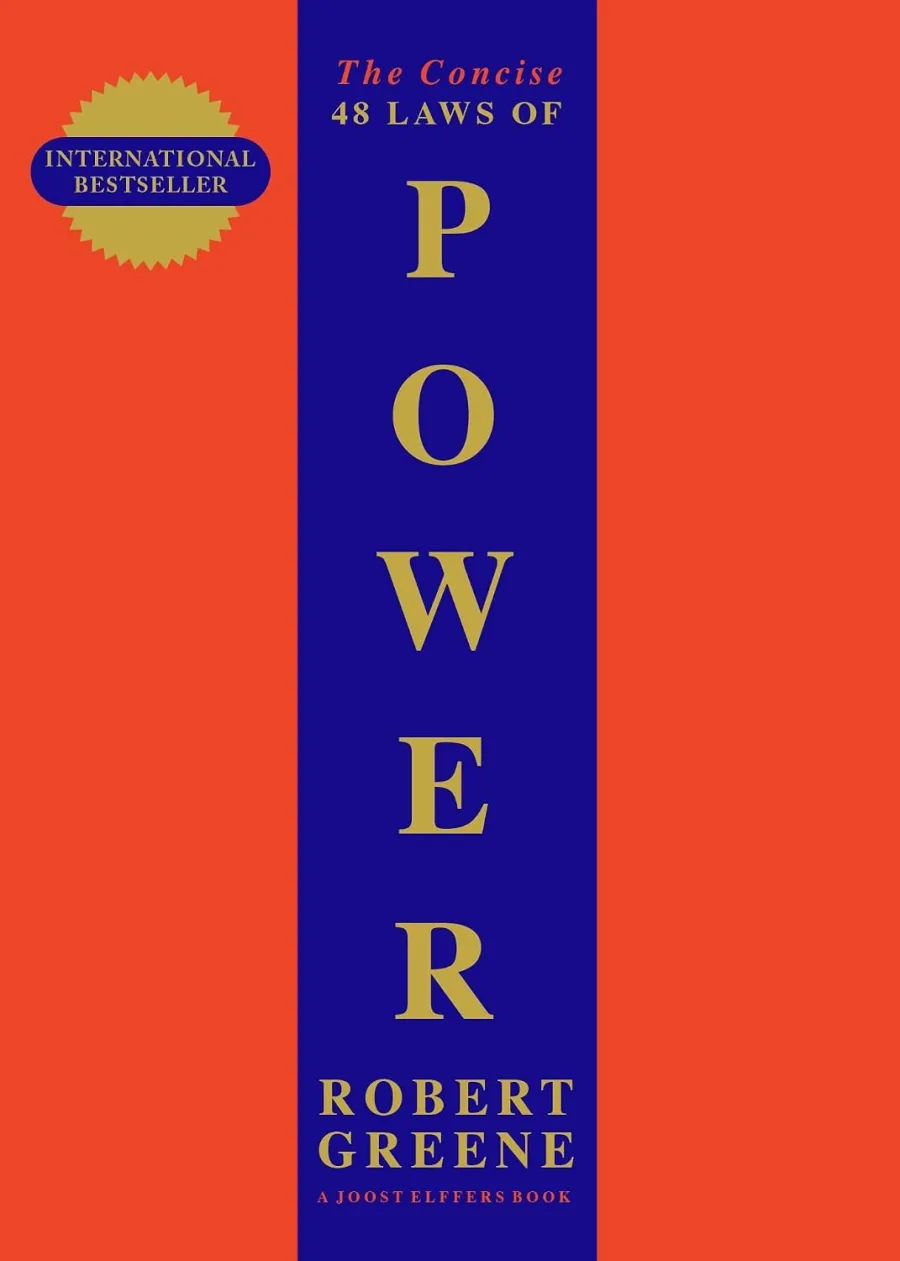
Download Cover Image
Do you want to download the full cover image for The Concise 48 Laws of Power?