
Who Are You?: The Path to Clarity, Authenticity, and Peace
Paperback
• ₹ 399.00
• English
• 9789361130380
No ratings yet
| Publisher | Pan |
|---|---|
| ISBN13 | 9789361130380 |
| ASIN/SKU | 9361130382 |
| Book Format | Paperback |
| Language | English |
| List Price | ₹ 399.00 |
| Publishing Date | 24/10/2026 |
| Weight | 165 g |
| Book Code | BD00070716 |
Buy this Book
Amazon Stores
Ebook Stores
Other Stores
Discover Who Are You?: The Path to Clarity, Authenticity, and Peace by Prem Rawat. This book is published by Pan in Paperback format, ISBN 9789361130380, ASIN 9361130382, under Self-Help, New Age and Spirituality.
Book Description
An extraordinary invitation to connect with your true self
In a world shaped by wealth, power, ambition, and “success,” Who Are You? asks a radical question: When you look beyond labels, who are you, really?
Drawing on his experience connecting with audiences in more than 100 countries, speaker and New York Times bestselling author Prem Rawat invites us to move past identity and belief in search of a deeper understanding of self.
Who Are You? is free of simplistic “rules,” “easy answers,” and self-help “solutions.” Instead, it takes readers on an inward journey shaped by memorable stories, insightful reflections, and episodes from Prem’s remarkable life. Packed with wit and warmth, the book invites us towards a profound connection with our true being.
Both timeless and strikingly relevant, Who Are You? is a book for anyone who values clarity, authenticity, and inner peace.
In a world shaped by wealth, power, ambition, and “success,” Who Are You? asks a radical question: When you look beyond labels, who are you, really?
Drawing on his experience connecting with audiences in more than 100 countries, speaker and New York Times bestselling author Prem Rawat invites us to move past identity and belief in search of a deeper understanding of self.
Who Are You? is free of simplistic “rules,” “easy answers,” and self-help “solutions.” Instead, it takes readers on an inward journey shaped by memorable stories, insightful reflections, and episodes from Prem’s remarkable life. Packed with wit and warmth, the book invites us towards a profound connection with our true being.
Both timeless and strikingly relevant, Who Are You? is a book for anyone who values clarity, authenticity, and inner peace.
Author Biography
From boy prodigy, ‘70s teenage icon, to Global Peace Ambassador, New York Times best-selling author and multiple Guinness World record holder, Prem Rawat has brought exceptional clarity, inspiration and profound lifelong learning to millions.
Prem had his first speech published in his native India when he was just four years old. 2026 marks his 60th year since he began his work for peace. Now based in the United States, yet touring internationally for nine months a year, every year, Prem Rawat works with people from all walks of life, showing them how to experience the source of peace within themselves. His global efforts span over 100 countries, bringing a practical message of hope, happiness and peace to all, one person at a time.
Prem Rawat is the New York Times best-selling author of Hear Yourself: How to Find Peace in a Noisy World and Breath: Wake Up to Life. “Who Are You?” is Prem’s fourth book. He is the creator of the highly successful Peace Education Program which is now used in over 3,000 institutions in 84 countries with over 700,000 participants. The Prem Rawat Foundation provides humanitarian aid through disaster relief, and its permanent Food for People facilities in Asia and Africa, feeding thousands of children daily.
Prem is a highly accomplished pilot with over 14,500 hours of flying experience in both fixed and rotor-wing aircraft, with commercial pilot and flight safety ratings. He is a keen photographer, cook, classic car restorer, a father of four children and a grandfather of four.
Prem had his first speech published in his native India when he was just four years old. 2026 marks his 60th year since he began his work for peace. Now based in the United States, yet touring internationally for nine months a year, every year, Prem Rawat works with people from all walks of life, showing them how to experience the source of peace within themselves. His global efforts span over 100 countries, bringing a practical message of hope, happiness and peace to all, one person at a time.
Prem Rawat is the New York Times best-selling author of Hear Yourself: How to Find Peace in a Noisy World and Breath: Wake Up to Life. “Who Are You?” is Prem’s fourth book. He is the creator of the highly successful Peace Education Program which is now used in over 3,000 institutions in 84 countries with over 700,000 participants. The Prem Rawat Foundation provides humanitarian aid through disaster relief, and its permanent Food for People facilities in Asia and Africa, feeding thousands of children daily.
Prem is a highly accomplished pilot with over 14,500 hours of flying experience in both fixed and rotor-wing aircraft, with commercial pilot and flight safety ratings. He is a keen photographer, cook, classic car restorer, a father of four children and a grandfather of four.
Editorial Reviews
Editorial Reviews will be added soon…
Book Summary
Who Are You?: The Path to Clarity, Authenticity, and Peace by Prem Rawat is a reflective work about one of the most fundamental questions a person can ask: Who am I? Rather than treating this question as an intellectual puzzle about personality, social identity, occupation, or personal history, Prem Rawat approaches it as an invitation to look inward and discover the deeper human being beneath the roles and labels that shape everyday life. The book explores themes of self-awareness, authenticity, inner peace, gratitude, contentment, and the possibility of living with greater clarity. Its central message is that peace is not something that must be manufactured by changing the outside world; it is an inner possibility that can be recognized when a person turns attention toward the self.
The question in the title is deceptively simple. Every person can provide an immediate answer: a name, profession, nationality, family role, personality, beliefs, achievements, or life story. Yet Rawat suggests that these descriptions do not completely answer the question. They describe aspects of a person's life, but they may not reveal the deeper self that experiences those circumstances. A person may be a parent, employee, business owner, student, friend, spouse, or professional, but these identities can change. The question “Who are you?” therefore becomes a doorway into examining what remains beneath these temporary roles.
This distinction between identity and essence is one of the book's most important ideas. Modern life encourages people to define themselves through external measures. Success, possessions, social recognition, education, appearance, status, and accomplishments can gradually become intertwined with self-worth. When these things go well, a person may feel secure; when they change or disappear, insecurity can follow. Rawat's approach encourages the reader to look beyond this constantly changing external landscape and become aware of a more fundamental dimension of human existence.
The book's emphasis on clarity is closely connected to this inward movement. Clarity does not simply mean having a detailed plan for one's career or knowing exactly what will happen tomorrow. It means seeing one's own life more honestly. A person can be extremely busy and still be unclear about what truly matters. Someone may spend years pursuing goals inherited from family, society, or circumstance without stopping to ask whether those goals actually correspond to their deepest needs. For Rawat, genuine clarity begins when a person becomes attentive to the experience of being alive itself.
This attention requires stepping away from the noise of constant thinking. Human beings spend much of their time thinking about the past and imagining the future. Memories, regrets, plans, fears, ambitions, comparisons, and expectations can occupy the mind so completely that the present moment becomes almost invisible. Rawat repeatedly directs attention toward the immediacy of life. The present is not merely a point between yesterday and tomorrow; it is the place where life is actually experienced.
This does not mean that planning or remembering is inherently wrong. The practical responsibilities of life require both. The deeper point is that thinking should not become so dominant that a person loses contact with the experience of simply being alive. When attention is constantly pulled outward, inner peace can seem distant. When attention becomes quieter and more receptive, a different quality of awareness may emerge.
The book also gives considerable importance to authenticity. To live authentically is to recognize what is genuinely meaningful rather than simply performing an identity for others. Human beings often learn to behave according to expectations. Children learn what earns approval; adults learn what society considers successful. Over time, people can become highly skilled at appearing to be what others want them to be. Yet behind that performance there may be a quiet feeling that something important has been overlooked.
Rawat's approach does not suggest abandoning one's responsibilities or rejecting society. Authenticity is not presented as selfishness. Instead, it involves becoming more honest about the source of one's actions. A person can continue working, caring for family, pursuing ambitions, and participating fully in society while also developing a deeper awareness of what gives life meaning. The aim is not to escape ordinary life but to experience it more consciously.
One of the book's strongest themes is peace. Rawat presents peace as something more fundamental than the absence of conflict. External circumstances can certainly influence a person's emotional state, but they cannot guarantee lasting inner contentment. If peace depends entirely on circumstances remaining favourable, it will always be vulnerable to change. Life inevitably contains uncertainty, disappointment, loss, illness, conflict, and unexpected events. The search for permanent security through external control is therefore ultimately limited.
The alternative offered in the book is an inward recognition of peace as a possibility already present within human experience. This idea shifts the reader's attention from How can I make everything around me peaceful? to Can I become aware of the peace that exists within me? Such a shift is subtle but significant. It does not promise that difficulties will disappear. Instead, it suggests that the way a person experiences difficulties can change when there is a stronger connection to inner awareness.
Gratitude plays an important role in this perspective. Everyday life can make people remarkably accustomed to what they have. The ability to see, breathe, move, think, communicate, love, and experience the world can become so ordinary that its extraordinary nature is overlooked. Rawat encourages a renewed appreciation of life itself. Gratitude here is not merely a social expression of thanks; it is an awareness that existence is valuable before any particular achievement is added to it.
This way of looking at life can also transform the meaning of success. Conventional ideas of success often focus on accumulation: more money, more recognition, more influence, more possessions, or more accomplishments. Rawat's perspective asks whether a person can be successful inwardly even while pursuing outward goals. A life can appear impressive from the outside and yet feel empty to the person living it. Conversely, someone with modest external circumstances may experience profound contentment.
The distinction between having and being is therefore central to the book's philosophy. Possessions can provide comfort and practical security, but they cannot by themselves answer the question of who a person is. Accomplishments can be meaningful, but they cannot permanently settle the deeper question of existence. The more a person relies on external achievements to establish identity, the more vulnerable identity becomes to change.
The book's discussion of self-awareness also has an important relationship with fear. Much human anxiety comes from uncertainty about the future or attachment to particular outcomes. People want to know that their plans will work, relationships will remain stable, health will remain strong, and circumstances will remain manageable. But life cannot offer complete guarantees. Rawat's emphasis on inner clarity provides another way of meeting uncertainty: instead of demanding complete control, a person can become more grounded in the present and more aware of what is genuinely important.
This does not eliminate practical responsibility. Rather, it can make responsibility less burdened by unnecessary fear. A person can take action without being completely consumed by the possibility of failure. They can prepare for the future without sacrificing the present. They can acknowledge uncertainty without allowing it to dominate every moment.
Another important aspect of the book is its insistence on personal experience. Rawat's teachings frequently emphasize that understanding cannot be reduced to accepting ideas intellectually. A person may read hundreds of books about peace and still not experience peace. They may be able to explain spiritual concepts beautifully without actually becoming more aware of themselves. The book therefore points toward lived experience rather than abstract belief.
This emphasis makes the title question particularly powerful. “Who are you?” is not necessarily a question that can be answered once and then placed aside. It can become a continuing practice of awareness. Each time a person notices an automatic reaction, questions an inherited assumption, or becomes aware of the present moment, the question opens again. The journey toward clarity is therefore ongoing.
Rawat also emphasizes the value of simplicity. Spiritual ideas can sometimes become complicated systems of terminology, rituals, and intellectual theories. The book repeatedly returns to something much more immediate: the fact that a person is alive right now. The invitation is to appreciate this simple reality rather than becoming lost in unnecessary complexity. The deepest truths of human life may not require elaborate explanations; they may require attention.
The relationship between the individual and the world is consequently presented in a balanced way. Inner peace does not mean withdrawing from life. A person who becomes more peaceful can potentially engage with family, work, community, and difficulty from a different emotional foundation. Instead of constantly demanding that the world provide fulfilment, the individual begins to recognize an inner source of meaning and then participates in the world with greater freedom.
The book's humane quality lies in its recognition that people are often distracted, confused, and searching. It does not approach the reader as someone who has failed because they do not already possess clarity. The question itself is treated as valuable. To wonder who you are is already to begin looking beneath the surface of habitual life.
Ultimately, Who Are You?: The Path to Clarity, Authenticity, and Peace is an invitation to move from external identification toward inner awareness. Prem Rawat encourages the reader to question the identities that have accumulated over a lifetime and to discover what remains when those labels are examined more carefully. The journey is not about constructing a more impressive version of oneself. It is about recognizing the value of the person who already exists beneath the layers of expectation, comparison, achievement, and fear.
The deepest message of the book is that life itself is worthy of attention. Peace does not necessarily have to wait until every problem has been solved. Authenticity does not require abandoning one's responsibilities. Clarity does not mean predicting the future. Instead, these qualities can begin with a simple act: becoming present to one's own existence.
In that sense, the question “Who are you?” becomes both the starting point and the destination. It encourages the reader to look beyond the name, career, possessions, successes, failures, and social roles that ordinarily define a person. What emerges is an invitation to experience life directly—to appreciate being alive, to cultivate gratitude, to recognize inner peace, and to live with greater honesty. The book ultimately presents self-discovery not as an escape from ordinary life, but as a way of entering ordinary life more fully, consciously, and peacefully.
The question in the title is deceptively simple. Every person can provide an immediate answer: a name, profession, nationality, family role, personality, beliefs, achievements, or life story. Yet Rawat suggests that these descriptions do not completely answer the question. They describe aspects of a person's life, but they may not reveal the deeper self that experiences those circumstances. A person may be a parent, employee, business owner, student, friend, spouse, or professional, but these identities can change. The question “Who are you?” therefore becomes a doorway into examining what remains beneath these temporary roles.
This distinction between identity and essence is one of the book's most important ideas. Modern life encourages people to define themselves through external measures. Success, possessions, social recognition, education, appearance, status, and accomplishments can gradually become intertwined with self-worth. When these things go well, a person may feel secure; when they change or disappear, insecurity can follow. Rawat's approach encourages the reader to look beyond this constantly changing external landscape and become aware of a more fundamental dimension of human existence.
The book's emphasis on clarity is closely connected to this inward movement. Clarity does not simply mean having a detailed plan for one's career or knowing exactly what will happen tomorrow. It means seeing one's own life more honestly. A person can be extremely busy and still be unclear about what truly matters. Someone may spend years pursuing goals inherited from family, society, or circumstance without stopping to ask whether those goals actually correspond to their deepest needs. For Rawat, genuine clarity begins when a person becomes attentive to the experience of being alive itself.
This attention requires stepping away from the noise of constant thinking. Human beings spend much of their time thinking about the past and imagining the future. Memories, regrets, plans, fears, ambitions, comparisons, and expectations can occupy the mind so completely that the present moment becomes almost invisible. Rawat repeatedly directs attention toward the immediacy of life. The present is not merely a point between yesterday and tomorrow; it is the place where life is actually experienced.
This does not mean that planning or remembering is inherently wrong. The practical responsibilities of life require both. The deeper point is that thinking should not become so dominant that a person loses contact with the experience of simply being alive. When attention is constantly pulled outward, inner peace can seem distant. When attention becomes quieter and more receptive, a different quality of awareness may emerge.
The book also gives considerable importance to authenticity. To live authentically is to recognize what is genuinely meaningful rather than simply performing an identity for others. Human beings often learn to behave according to expectations. Children learn what earns approval; adults learn what society considers successful. Over time, people can become highly skilled at appearing to be what others want them to be. Yet behind that performance there may be a quiet feeling that something important has been overlooked.
Rawat's approach does not suggest abandoning one's responsibilities or rejecting society. Authenticity is not presented as selfishness. Instead, it involves becoming more honest about the source of one's actions. A person can continue working, caring for family, pursuing ambitions, and participating fully in society while also developing a deeper awareness of what gives life meaning. The aim is not to escape ordinary life but to experience it more consciously.
One of the book's strongest themes is peace. Rawat presents peace as something more fundamental than the absence of conflict. External circumstances can certainly influence a person's emotional state, but they cannot guarantee lasting inner contentment. If peace depends entirely on circumstances remaining favourable, it will always be vulnerable to change. Life inevitably contains uncertainty, disappointment, loss, illness, conflict, and unexpected events. The search for permanent security through external control is therefore ultimately limited.
The alternative offered in the book is an inward recognition of peace as a possibility already present within human experience. This idea shifts the reader's attention from How can I make everything around me peaceful? to Can I become aware of the peace that exists within me? Such a shift is subtle but significant. It does not promise that difficulties will disappear. Instead, it suggests that the way a person experiences difficulties can change when there is a stronger connection to inner awareness.
Gratitude plays an important role in this perspective. Everyday life can make people remarkably accustomed to what they have. The ability to see, breathe, move, think, communicate, love, and experience the world can become so ordinary that its extraordinary nature is overlooked. Rawat encourages a renewed appreciation of life itself. Gratitude here is not merely a social expression of thanks; it is an awareness that existence is valuable before any particular achievement is added to it.
This way of looking at life can also transform the meaning of success. Conventional ideas of success often focus on accumulation: more money, more recognition, more influence, more possessions, or more accomplishments. Rawat's perspective asks whether a person can be successful inwardly even while pursuing outward goals. A life can appear impressive from the outside and yet feel empty to the person living it. Conversely, someone with modest external circumstances may experience profound contentment.
The distinction between having and being is therefore central to the book's philosophy. Possessions can provide comfort and practical security, but they cannot by themselves answer the question of who a person is. Accomplishments can be meaningful, but they cannot permanently settle the deeper question of existence. The more a person relies on external achievements to establish identity, the more vulnerable identity becomes to change.
The book's discussion of self-awareness also has an important relationship with fear. Much human anxiety comes from uncertainty about the future or attachment to particular outcomes. People want to know that their plans will work, relationships will remain stable, health will remain strong, and circumstances will remain manageable. But life cannot offer complete guarantees. Rawat's emphasis on inner clarity provides another way of meeting uncertainty: instead of demanding complete control, a person can become more grounded in the present and more aware of what is genuinely important.
This does not eliminate practical responsibility. Rather, it can make responsibility less burdened by unnecessary fear. A person can take action without being completely consumed by the possibility of failure. They can prepare for the future without sacrificing the present. They can acknowledge uncertainty without allowing it to dominate every moment.
Another important aspect of the book is its insistence on personal experience. Rawat's teachings frequently emphasize that understanding cannot be reduced to accepting ideas intellectually. A person may read hundreds of books about peace and still not experience peace. They may be able to explain spiritual concepts beautifully without actually becoming more aware of themselves. The book therefore points toward lived experience rather than abstract belief.
This emphasis makes the title question particularly powerful. “Who are you?” is not necessarily a question that can be answered once and then placed aside. It can become a continuing practice of awareness. Each time a person notices an automatic reaction, questions an inherited assumption, or becomes aware of the present moment, the question opens again. The journey toward clarity is therefore ongoing.
Rawat also emphasizes the value of simplicity. Spiritual ideas can sometimes become complicated systems of terminology, rituals, and intellectual theories. The book repeatedly returns to something much more immediate: the fact that a person is alive right now. The invitation is to appreciate this simple reality rather than becoming lost in unnecessary complexity. The deepest truths of human life may not require elaborate explanations; they may require attention.
The relationship between the individual and the world is consequently presented in a balanced way. Inner peace does not mean withdrawing from life. A person who becomes more peaceful can potentially engage with family, work, community, and difficulty from a different emotional foundation. Instead of constantly demanding that the world provide fulfilment, the individual begins to recognize an inner source of meaning and then participates in the world with greater freedom.
The book's humane quality lies in its recognition that people are often distracted, confused, and searching. It does not approach the reader as someone who has failed because they do not already possess clarity. The question itself is treated as valuable. To wonder who you are is already to begin looking beneath the surface of habitual life.
Ultimately, Who Are You?: The Path to Clarity, Authenticity, and Peace is an invitation to move from external identification toward inner awareness. Prem Rawat encourages the reader to question the identities that have accumulated over a lifetime and to discover what remains when those labels are examined more carefully. The journey is not about constructing a more impressive version of oneself. It is about recognizing the value of the person who already exists beneath the layers of expectation, comparison, achievement, and fear.
The deepest message of the book is that life itself is worthy of attention. Peace does not necessarily have to wait until every problem has been solved. Authenticity does not require abandoning one's responsibilities. Clarity does not mean predicting the future. Instead, these qualities can begin with a simple act: becoming present to one's own existence.
In that sense, the question “Who are you?” becomes both the starting point and the destination. It encourages the reader to look beyond the name, career, possessions, successes, failures, and social roles that ordinarily define a person. What emerges is an invitation to experience life directly—to appreciate being alive, to cultivate gratitude, to recognize inner peace, and to live with greater honesty. The book ultimately presents self-discovery not as an escape from ordinary life, but as a way of entering ordinary life more fully, consciously, and peacefully.
Sample Chapters
Sample Chapters will be added soon…
Reader Reviews
No reviews yet.
Who Are You?: The Path to Clarity, Authenticity, and Peace
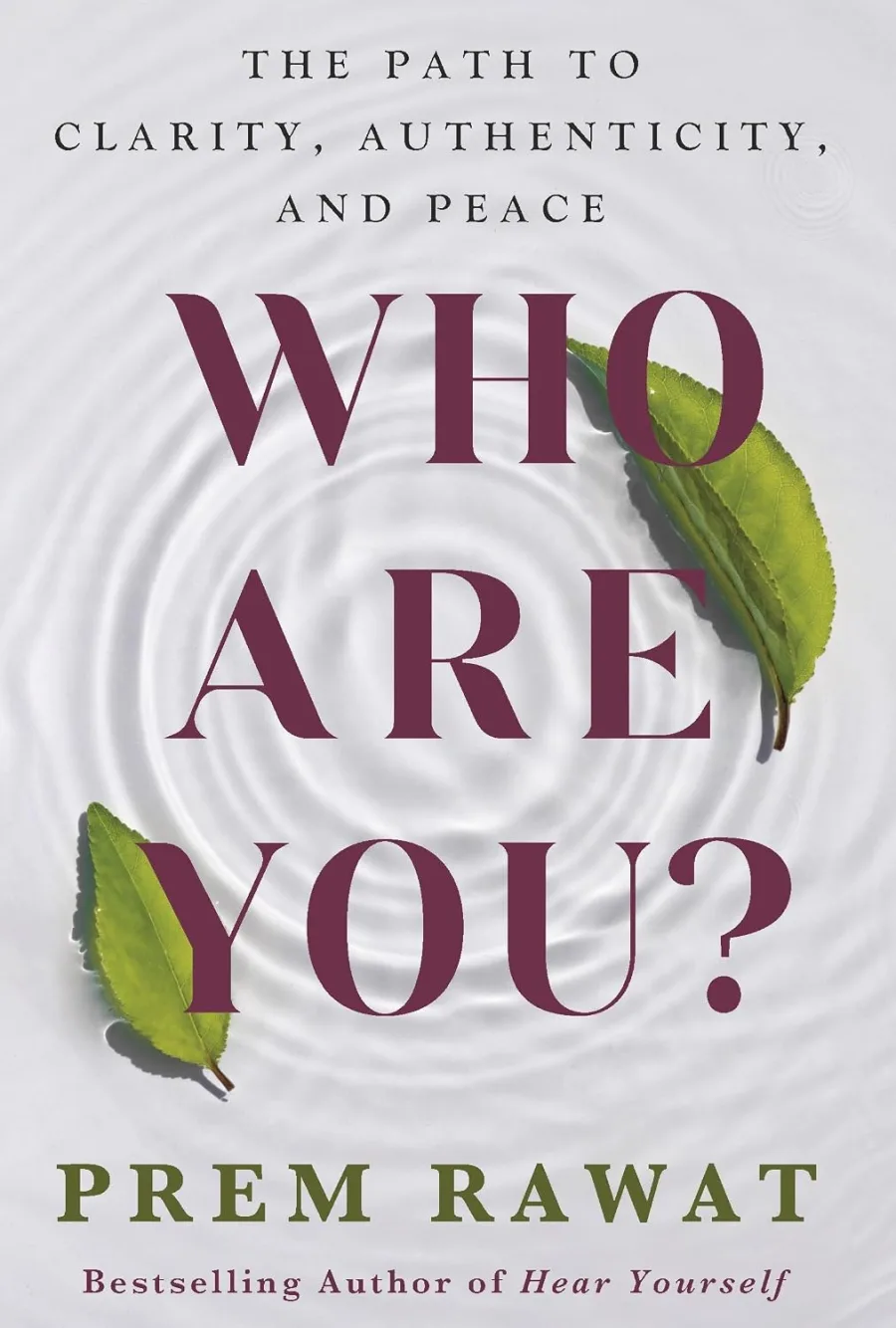
Download Cover Image
Do you want to download the full cover image for Who Are You?: The Path to Clarity, Authenticity, and Peace?