NCERT Class 8 Exploring Society Social Science Textbook Part 2 Latest Edition 2026-27
Paperback
• 258 Pages
• ₹ 120.00
• English
No ratings yet
| Publisher | Vijeta Competition |
|---|---|
| ASIN/SKU | B0H15YVYQS |
| Book Format | Paperback |
| Language | English |
| Pages | 258 |
| List Price | ₹ 120.00 |
| Publishing Date | 25/06/2026 |
| Dimensions | 18 x 8 x 2 cm |
| Weight | 190 |
| Book Code | BD00070483 |
Buy this Book
Amazon Stores
Ebook Stores
Other Stores
Discover NCERT Class 8 Exploring Society Social Science Textbook Part 2 Latest Edition 2026-27 by NCERT. This book is published by Vijeta Competition in Paperback format, ASIN B0H15YVYQS, under School Books, CBSE Textbooks.
Book Description
NCERT Class 8 Exploring Society Social Science Textbook Part 2 Latest Edition 2026-27
Author Biography
Author Biography will be added soon…
Editorial Reviews
Editorial Reviews will be added soon…
Book Summary
NCERT Class 8 Exploring Society: India and Beyond – Social Science Textbook, Part 2 is part of the new integrated Social Science curriculum for Class 8 for the 2026–27 academic session. Published by the National Council of Educational Research and Training (NCERT), the textbook brings together history, geography, civics and economic understanding through an interconnected approach. The new Class 8 Social Science series is designed to encourage students not simply to memorize facts but to explore how people, places, institutions, economies and historical developments are connected. The Part 2 volume is the continuation of the new Exploring Society: India and Beyond series and carries the same broader emphasis on inquiry, observation, interpretation and understanding society. The 2026 edition is identified with ISBN 978-93-5729-102-6.
The central philosophy of the book is that Social Science should be explored rather than merely memorized. Students are encouraged to look at society from multiple perspectives and understand the relationship between human beings and their surroundings. Geography helps explain the physical world, history shows how societies change over time, civics explains institutions and citizenship, and economics helps students understand production and the use of resources. By bringing these areas together, the textbook encourages students to see that real-life problems rarely belong to only one subject. The world around us is interconnected, and understanding it requires looking at several dimensions at once.
A major focus of the book is India's relationship with the wider world. Students are encouraged to understand their country not as an isolated geographical or political unit but as part of a larger global environment. Physical geography, resources, human settlements, trade, political developments and cultural exchanges have all influenced India's history and continue to influence its present. This approach helps students understand that geography affects human activity while human beings also change the environment in which they live.
The book's geographical discussions encourage students to think about natural systems and human use of resources. Natural resources provide the basic materials necessary for human survival and economic activity, but these resources are not unlimited. The textbook therefore encourages an understanding of conservation, responsible use and the relationship between environmental systems and human society. Instead of looking at natural resources only as commodities, students are encouraged to recognize their ecological and social importance.
The historical sections continue the broader story of India's past and examine important political and social developments. History is presented not simply as a collection of dates and names but as a process involving people, institutions, ideas, conflicts and changes in power. Students are encouraged to ask why political systems changed, how different groups interacted, how societies responded to challenges and how past developments continue to influence the present.
An important aspect of the textbook is its attention to different regions and communities of India. India's history cannot be understood through the story of a single kingdom or political centre. Regional powers, cultural traditions and local developments contributed significantly to the formation of Indian society. By examining these different experiences, students can develop a more balanced understanding of the country's past and appreciate the diversity of its historical traditions.
The book also introduces students to the development of political institutions and democratic systems. Democracy is not presented simply as the act of voting. Students are encouraged to understand how institutions function, how citizens participate and why constitutional principles matter. This helps them connect what they learn in the classroom with the institutions they encounter in everyday life.
The idea of citizenship is especially important. Being a citizen involves both rights and responsibilities. Citizens benefit from legal and constitutional protections, but they also have responsibilities toward society and the democratic system. The textbook encourages students to understand that democracy works best when citizens participate responsibly, respect others and understand the institutions that govern them.
The book's economic component introduces students to the basic principles of economic life. Production requires different resources and forms of human effort. Students learn to recognize how land, labour, capital and other factors contribute to production. These ideas help explain how goods and services are created and why economic activities are distributed differently across regions.
The concept of work and production also helps students understand the everyday economy. Farmers, factory workers, shopkeepers, teachers, engineers, transport workers and many others contribute to economic life in different ways. Economic activity is therefore not limited to large companies or financial markets. It is visible in ordinary activities taking place in homes, farms, markets, workshops and businesses.
The textbook encourages students to think about human resources and skills as well. Economic development depends not only on physical resources but also on people's knowledge, education, health and abilities. A population becomes a stronger economic resource when people have opportunities to develop useful skills and participate productively in society. This idea helps students understand why education and training have importance beyond examination results.
Another important feature of the book is its emphasis on questions and activities. Rather than expecting students to read a chapter passively, the textbook uses maps, illustrations, questions, observations and discussion-based activities to encourage active learning. Students may be asked to examine information, compare situations, interpret maps or think about examples from their own surroundings. Such activities help transform Social Science from a memory-based subject into an analytical one.
The textbook also encourages critical thinking. Students are often expected to ask why something happened, what its consequences were and whether different perspectives exist. This is important because historical and social questions cannot always be understood through a single simple explanation. Different groups may experience the same event differently, and understanding those differences can make students more thoughtful readers of history and society.
Maps and visual materials play an important role in developing spatial understanding. Geography becomes easier to understand when students can locate physical features, regions, countries, oceans and other geographical elements. Maps also help connect geography with history because political boundaries, trade routes, migration and settlement patterns often depend on geographical conditions.
The book's approach also encourages students to connect past and present. Historical events are not treated as completely disconnected from contemporary society. Political institutions, cultural traditions, economic practices and social structures often have historical roots. Understanding those roots helps students make better sense of current circumstances.
An important educational goal is therefore the development of informed citizenship. A student who understands history, geography, governance and economics is better equipped to understand public discussions. Whether the topic involves elections, development, environmental conservation, economic activity or cultural heritage, Social Science provides tools for thinking about the issue rather than simply accepting someone else's explanation.
The textbook also promotes an appreciation of India's diversity. India contains many languages, cultures, landscapes, communities and historical experiences. Diversity can sometimes create differences and disagreements, but it can also be a major source of cultural richness. Understanding different communities and historical traditions can help students develop respect for people whose experiences may be different from their own.
The broader educational message is that knowledge should lead to curiosity. Students are encouraged to observe the world around them and ask questions. Why do cities develop in particular places? Why are some regions rich in certain resources? How do governments make decisions? Why do societies change? How does economic production depend on people and resources? Such questions encourage students to move beyond textbook answers and begin thinking like young researchers.
The book is also aligned with the newer approach to school education associated with the National Education Policy 2020 and National Curriculum Framework for School Education 2023, emphasizing holistic learning and connections across disciplines. Public descriptions of the new Class 8 Social Science textbook highlight its integrated treatment of history, geography, civics and economics and its emphasis on analytical and inquiry-based learning.
For students, the book is particularly valuable because it helps develop skills that are useful beyond Social Science examinations. Reading comprehension, interpretation, comparison, reasoning, map reading, observation and critical thinking are all important abilities that students can carry into higher education and everyday life. Instead of remembering information only for a test, students are encouraged to understand why that information matters.
The Part 2 volume should therefore be approached as a book for exploration and understanding, not simply as a collection of examination answers. Students can get more from it by reading the explanations carefully, studying maps and illustrations, answering activity questions independently and discussing difficult concepts with teachers or classmates. Making connections between chapters can also improve understanding because many themes overlap.
Ultimately, Exploring Society: India and Beyond – Part 2 aims to help Class 8 students understand the world as a connected system. History explains how societies reached their present condition; geography explains the physical and spatial factors that shape human life; civics explains institutions and citizenship; and economics explains how people use resources and organize production. Together, these subjects provide a broad framework for understanding society.
The deepest message of the textbook is that being educated means learning how to understand the world, not merely remembering information about it. Students are encouraged to become curious observers, thoughtful citizens and responsible members of society. By studying India's geography, history, institutions, economy and cultural diversity, they can develop a stronger sense of how their own lives fit into the larger story of India and the world.
In simple terms, the book teaches students to look closely, ask questions, understand connections and think independently. It presents Social Science as a living subject that exists all around them—in their communities, environment, institutions, markets, history and everyday experiences. This makes Exploring Society: India and Beyond Part 2 not merely a school textbook but a foundation for understanding the society in which students are growing up.
The central philosophy of the book is that Social Science should be explored rather than merely memorized. Students are encouraged to look at society from multiple perspectives and understand the relationship between human beings and their surroundings. Geography helps explain the physical world, history shows how societies change over time, civics explains institutions and citizenship, and economics helps students understand production and the use of resources. By bringing these areas together, the textbook encourages students to see that real-life problems rarely belong to only one subject. The world around us is interconnected, and understanding it requires looking at several dimensions at once.
A major focus of the book is India's relationship with the wider world. Students are encouraged to understand their country not as an isolated geographical or political unit but as part of a larger global environment. Physical geography, resources, human settlements, trade, political developments and cultural exchanges have all influenced India's history and continue to influence its present. This approach helps students understand that geography affects human activity while human beings also change the environment in which they live.
The book's geographical discussions encourage students to think about natural systems and human use of resources. Natural resources provide the basic materials necessary for human survival and economic activity, but these resources are not unlimited. The textbook therefore encourages an understanding of conservation, responsible use and the relationship between environmental systems and human society. Instead of looking at natural resources only as commodities, students are encouraged to recognize their ecological and social importance.
The historical sections continue the broader story of India's past and examine important political and social developments. History is presented not simply as a collection of dates and names but as a process involving people, institutions, ideas, conflicts and changes in power. Students are encouraged to ask why political systems changed, how different groups interacted, how societies responded to challenges and how past developments continue to influence the present.
An important aspect of the textbook is its attention to different regions and communities of India. India's history cannot be understood through the story of a single kingdom or political centre. Regional powers, cultural traditions and local developments contributed significantly to the formation of Indian society. By examining these different experiences, students can develop a more balanced understanding of the country's past and appreciate the diversity of its historical traditions.
The book also introduces students to the development of political institutions and democratic systems. Democracy is not presented simply as the act of voting. Students are encouraged to understand how institutions function, how citizens participate and why constitutional principles matter. This helps them connect what they learn in the classroom with the institutions they encounter in everyday life.
The idea of citizenship is especially important. Being a citizen involves both rights and responsibilities. Citizens benefit from legal and constitutional protections, but they also have responsibilities toward society and the democratic system. The textbook encourages students to understand that democracy works best when citizens participate responsibly, respect others and understand the institutions that govern them.
The book's economic component introduces students to the basic principles of economic life. Production requires different resources and forms of human effort. Students learn to recognize how land, labour, capital and other factors contribute to production. These ideas help explain how goods and services are created and why economic activities are distributed differently across regions.
The concept of work and production also helps students understand the everyday economy. Farmers, factory workers, shopkeepers, teachers, engineers, transport workers and many others contribute to economic life in different ways. Economic activity is therefore not limited to large companies or financial markets. It is visible in ordinary activities taking place in homes, farms, markets, workshops and businesses.
The textbook encourages students to think about human resources and skills as well. Economic development depends not only on physical resources but also on people's knowledge, education, health and abilities. A population becomes a stronger economic resource when people have opportunities to develop useful skills and participate productively in society. This idea helps students understand why education and training have importance beyond examination results.
Another important feature of the book is its emphasis on questions and activities. Rather than expecting students to read a chapter passively, the textbook uses maps, illustrations, questions, observations and discussion-based activities to encourage active learning. Students may be asked to examine information, compare situations, interpret maps or think about examples from their own surroundings. Such activities help transform Social Science from a memory-based subject into an analytical one.
The textbook also encourages critical thinking. Students are often expected to ask why something happened, what its consequences were and whether different perspectives exist. This is important because historical and social questions cannot always be understood through a single simple explanation. Different groups may experience the same event differently, and understanding those differences can make students more thoughtful readers of history and society.
Maps and visual materials play an important role in developing spatial understanding. Geography becomes easier to understand when students can locate physical features, regions, countries, oceans and other geographical elements. Maps also help connect geography with history because political boundaries, trade routes, migration and settlement patterns often depend on geographical conditions.
The book's approach also encourages students to connect past and present. Historical events are not treated as completely disconnected from contemporary society. Political institutions, cultural traditions, economic practices and social structures often have historical roots. Understanding those roots helps students make better sense of current circumstances.
An important educational goal is therefore the development of informed citizenship. A student who understands history, geography, governance and economics is better equipped to understand public discussions. Whether the topic involves elections, development, environmental conservation, economic activity or cultural heritage, Social Science provides tools for thinking about the issue rather than simply accepting someone else's explanation.
The textbook also promotes an appreciation of India's diversity. India contains many languages, cultures, landscapes, communities and historical experiences. Diversity can sometimes create differences and disagreements, but it can also be a major source of cultural richness. Understanding different communities and historical traditions can help students develop respect for people whose experiences may be different from their own.
The broader educational message is that knowledge should lead to curiosity. Students are encouraged to observe the world around them and ask questions. Why do cities develop in particular places? Why are some regions rich in certain resources? How do governments make decisions? Why do societies change? How does economic production depend on people and resources? Such questions encourage students to move beyond textbook answers and begin thinking like young researchers.
The book is also aligned with the newer approach to school education associated with the National Education Policy 2020 and National Curriculum Framework for School Education 2023, emphasizing holistic learning and connections across disciplines. Public descriptions of the new Class 8 Social Science textbook highlight its integrated treatment of history, geography, civics and economics and its emphasis on analytical and inquiry-based learning.
For students, the book is particularly valuable because it helps develop skills that are useful beyond Social Science examinations. Reading comprehension, interpretation, comparison, reasoning, map reading, observation and critical thinking are all important abilities that students can carry into higher education and everyday life. Instead of remembering information only for a test, students are encouraged to understand why that information matters.
The Part 2 volume should therefore be approached as a book for exploration and understanding, not simply as a collection of examination answers. Students can get more from it by reading the explanations carefully, studying maps and illustrations, answering activity questions independently and discussing difficult concepts with teachers or classmates. Making connections between chapters can also improve understanding because many themes overlap.
Ultimately, Exploring Society: India and Beyond – Part 2 aims to help Class 8 students understand the world as a connected system. History explains how societies reached their present condition; geography explains the physical and spatial factors that shape human life; civics explains institutions and citizenship; and economics explains how people use resources and organize production. Together, these subjects provide a broad framework for understanding society.
The deepest message of the textbook is that being educated means learning how to understand the world, not merely remembering information about it. Students are encouraged to become curious observers, thoughtful citizens and responsible members of society. By studying India's geography, history, institutions, economy and cultural diversity, they can develop a stronger sense of how their own lives fit into the larger story of India and the world.
In simple terms, the book teaches students to look closely, ask questions, understand connections and think independently. It presents Social Science as a living subject that exists all around them—in their communities, environment, institutions, markets, history and everyday experiences. This makes Exploring Society: India and Beyond Part 2 not merely a school textbook but a foundation for understanding the society in which students are growing up.
Sample Chapters
Sample Chapters will be added soon…
Reader Reviews
No reviews yet.
NCERT Class 8 Exploring Society Social Science Textbook Part 2 Latest Edition 2026-27
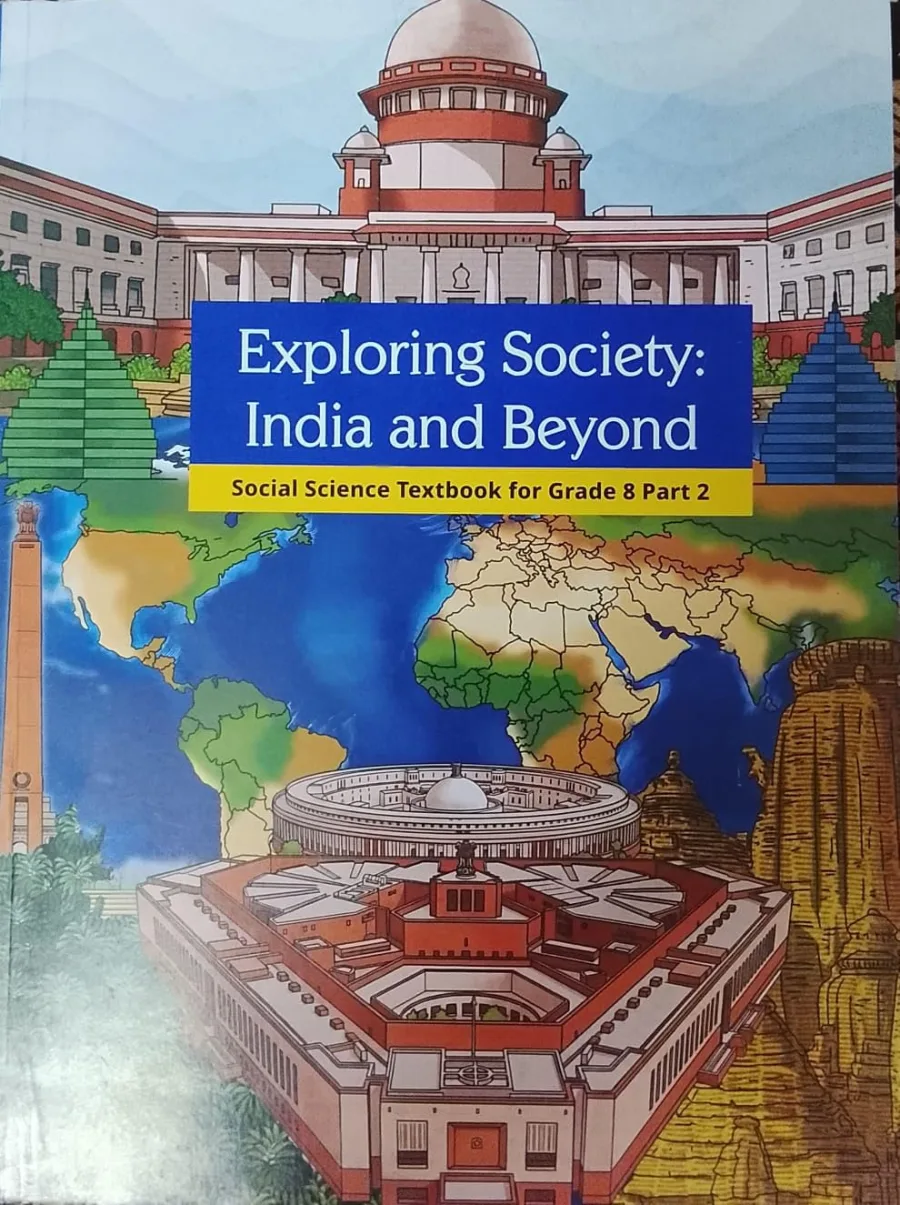
Download Cover Image
Do you want to download the full cover image for NCERT Class 8 Exploring Society Social Science Textbook Part 2 Latest Edition 2026-27?