
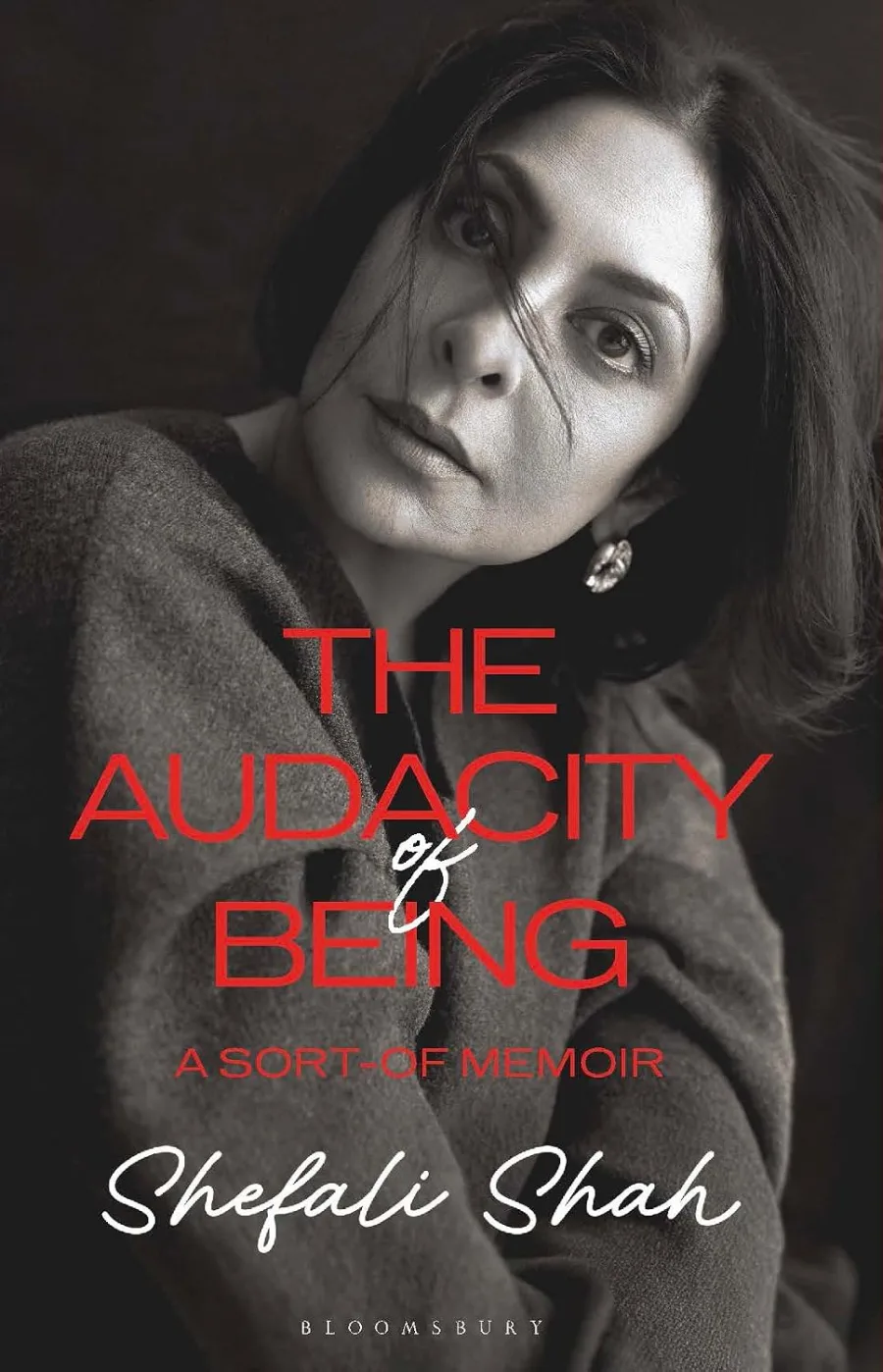
The Audacity of Being: A Sort of Memoir
Hardcover
• 224 Pages
• ₹ 599.00
• English
• 9789361318955
No ratings yet
| Publisher | Bloomsbury India |
|---|---|
| ISBN13 | 9789361318955 |
| ASIN/SKU | 9361318950 |
| Book Format | Hardcover |
| Language | English |
| Pages | 224 |
| List Price | ₹ 599.00 |
| Publishing Date | 01/10/2026 |
| Weight | 350 g |
| Book Code | BD00070466 |
Buy this Book
Amazon Stores
Ebook Stores
Other Stores
Discover The Audacity of Being: A Sort of Memoir by Shefali Shah. This book is published by Bloomsbury India in Hardcover format, ISBN 9789361318955, ASIN 9361318950, under Biographies and Memoirs, Biographies and Autobiographies.
Book Description
For over three decades, Shefali Shah has captivated audiences with her honesty, versatility and unforgettable performances.
From Monsoon Wedding, Dil Dhadakne Do and Darlings to the Emmy-winning series Delhi Crime, Shefali has continually reinvented herself on screen, bringing iconic characters to life with remarkable depth.
But her journey was never a straightforward one.
As a young actor with no connections in the entertainment industry, Shefali hustled her way through theatre and television soaps before making her mark in acclaimed films and OTT shows. Along the way, she built a career guided by instinct, honesty and an unwavering refusal to fit into boxes.
In her memoir-in-essays, The Audacity of Being, Shefali gets downright sincere and unserious at once, reflecting on the projects, roles and experiences that have shaped her.
She writes candidly about love and its familiar aches, divorce and remarriage, friendship and community, ageing as a Bollywood actress, creative self-doubt, body image and the trials of parenting.
Slightly silly, deeply honest and undeniably moving, The Audacity of Being offers a rare glimpse behind the performances to reveal the person, the performer and the process.
From Monsoon Wedding, Dil Dhadakne Do and Darlings to the Emmy-winning series Delhi Crime, Shefali has continually reinvented herself on screen, bringing iconic characters to life with remarkable depth.
But her journey was never a straightforward one.
As a young actor with no connections in the entertainment industry, Shefali hustled her way through theatre and television soaps before making her mark in acclaimed films and OTT shows. Along the way, she built a career guided by instinct, honesty and an unwavering refusal to fit into boxes.
In her memoir-in-essays, The Audacity of Being, Shefali gets downright sincere and unserious at once, reflecting on the projects, roles and experiences that have shaped her.
She writes candidly about love and its familiar aches, divorce and remarriage, friendship and community, ageing as a Bollywood actress, creative self-doubt, body image and the trials of parenting.
Slightly silly, deeply honest and undeniably moving, The Audacity of Being offers a rare glimpse behind the performances to reveal the person, the performer and the process.
Author Biography
Shefali Shah is a National Award-winning Indian actor, with a career spanning over three decades across theatre, television, cinema and streaming. Having delivered power-packed performances in Gandhi, My Father, Satya, Three of Us, Once Again, The Last Lear, Human, Jalsa, Waqt, she garnered global mass fandom as ‘Madam Sir’ for her character of Vartika Chaturvedi, an investigating police officer from the multi-season, Emmy-winning Netflix show Delhi Crime.
Shefali has been honoured with the Filmfare Award, Stardust Award, Tokyo International Film Festival Award and Asian Academy Creative Award, among others. She has directed two short films, Someday and Happy Birthday Mummy Ji, both dealing with the theme of isolation. An avid painter and poet, she enjoys travelling and posts about her life on Instagram as @shefalishahofficial
Shefali has been honoured with the Filmfare Award, Stardust Award, Tokyo International Film Festival Award and Asian Academy Creative Award, among others. She has directed two short films, Someday and Happy Birthday Mummy Ji, both dealing with the theme of isolation. An avid painter and poet, she enjoys travelling and posts about her life on Instagram as @shefalishahofficial
Editorial Reviews
Editorial Reviews will be added soon…
Book Summary
The Audacity of Being: A Sort of Memoir by Shefali Shah is an intimate collection of personal reflections about life, acting, relationships, ageing, motherhood, creativity and the complicated experience of being oneself. Unlike a traditional autobiography that usually tells a person's life in strict chronological order, Shefali Shah describes this work as a “sort of memoir.” It is structured as a memoir-in-essays, bringing together thoughts and experiences from different stages of her life and career. The book is expected to be less about presenting a polished celebrity success story and more about revealing the person behind the performer. Bloomsbury describes it as a book that combines sincerity with humour while exploring both professional experiences and deeply personal questions.
At the centre of the book is Shefali Shah's journey as an actor. Her career has lasted more than three decades and has moved across theatre, television, cinema and streaming platforms. She did not enter the entertainment industry with the kind of established connections that can make an acting career easier to begin. Instead, she gradually built her place through theatre, television soaps, films and later the rapidly changing world of OTT entertainment. Her journey therefore becomes a story of persistence and reinvention. Shefali's career demonstrates that success in acting does not always arrive in a straight line. There can be periods of uncertainty, smaller opportunities, unexpected breakthroughs and long stretches in which an actor has to continue believing in their own abilities.
The book looks back at several of the projects and characters that have shaped her professional identity. Shefali Shah is known for performances in films such as Monsoon Wedding, Dil Dhadakne Do and Darlings, as well as the acclaimed series Delhi Crime. These roles represent different stages and dimensions of her career, but the memoir is not simply intended to list her achievements. Instead, the experiences surrounding those roles provide a way for her to reflect on acting itself—how an actor approaches a character, how professional opportunities change with age, and how much of a performer exists behind the character audiences see on screen.
One of the most interesting ideas suggested by the book is the distinction between the person and the performer. Audiences generally know actors through their characters, interviews, photographs and public appearances. But the person who performs those characters has an ordinary life filled with doubts, relationships, responsibilities, insecurities and private thoughts. The Audacity of Being attempts to move behind that public image. It asks readers to see Shefali not simply as an accomplished actress but as a woman trying to understand herself while moving through different stages of life.
The book also deals openly with creative self-doubt. Even successful artists can question their abilities. Fame does not automatically remove insecurity, and professional recognition does not necessarily eliminate the fear of failing. For an actor, every new role can bring uncertainty: Will the performance work? Will people accept it? Is the interpretation right? Is there still something new to offer? Shefali's reflections suggest that vulnerability is not necessarily the opposite of strength. Sometimes the willingness to acknowledge uncertainty is itself a form of courage.
Another major theme is ageing as a woman and as a Bollywood actress. The entertainment industry often places enormous importance on youth and appearance, particularly for women. As actors grow older, expectations can change, and the kinds of roles available to them may also change. The book explores what it means to continue building an identity and career while getting older in an industry that frequently celebrates youth. Instead of treating ageing only as a professional disadvantage, Shefali's reflections appear to consider it as a natural and meaningful part of becoming more comfortable with oneself.
This idea connects closely with the book's discussion of body image. Public figures are constantly exposed to opinions about their appearance, weight, clothing and physical ageing. Such attention can influence how people see themselves. Shefali brings this subject into her memoir because body image is not merely an issue of appearance; it can affect confidence, identity and one's relationship with the self. By speaking about it openly, the book moves beyond celebrity glamour and addresses an insecurity that many ordinary readers can recognize in their own lives.
Love and relationships form another important part of the memoir. The publisher specifically notes that Shah writes about love and its familiar pains, as well as divorce and remarriage. These experiences allow the book to explore the less glamorous side of adult relationships—the emotional uncertainty, disappointment, adjustment and possibility of beginning again. Rather than presenting relationships as simple success-or-failure stories, the memoir appears to consider how people change through them. Love can bring happiness, but it can also expose vulnerabilities and force people to reconsider what they expect from themselves and from others.
The subject of divorce and starting over adds another layer to this theme. Divorce is often discussed publicly through judgment or gossip, especially when the people involved are well known. A personal memoir provides a different space in which to consider the emotional reality of such transitions. The emphasis appears to be less on sensational details and more on the experience of moving forward. Remarriage and new beginnings suggest that life does not have to remain permanently defined by a difficult chapter. People can change, rebuild relationships and create new versions of their lives.
Friendship and community are also important. A person's identity is not formed only through romantic relationships or professional achievements. Friends, colleagues and communities provide support, humour, perspective and a sense of belonging. For someone working in an unpredictable industry, these relationships can be particularly valuable. The book's personal tone suggests that the people around Shefali have played an important role in helping her navigate both professional pressures and ordinary life.
Parenting provides another window into her life away from the camera. Being a parent involves responsibilities that cannot simply be separated from a demanding professional career. The challenges of balancing work, family, personal identity and children's needs can create both guilt and joy. By including the trials of parenting, the memoir broadens its subject from “actor's life” to the more universal question of how a person attempts to balance different responsibilities without losing themselves.
An especially appealing element of the book is its humour and self-awareness. Shefali has publicly spoken about being an unlikely person to write a book. She recalled struggling with dictation and writing during childhood and joked about her unconventional relationship with punctuation and capital letters. Her comments about eventually turning private diary-like thoughts into an actual published book reveal the playful tone behind the project. Rather than presenting herself as a naturally gifted literary figure, she approaches the experience with humour and a degree of disbelief.
The origins of the book are themselves revealing. Shefali has explained that she used to write scattered thoughts in diaries, on the backs of tickets and alongside receipts. Eventually, she began sharing some of these thoughts on social media. What started as private or spontaneous writing became a conversation with readers when people responded to what she posted. Their reactions encouraged her to write more, eventually contributing to the creation of the book. This background helps explain why The Audacity of Being is described as a memoir-in-essays rather than a conventional autobiography.
The title “The Audacity of Being” captures the book's larger philosophy. Simply being oneself can sometimes require courage. Society places expectations on people about how they should look, behave, age, work, love, parent and succeed. For a public figure, these expectations become even more visible. The “audacity” in the title therefore suggests the courage to exist without constantly trying to fit into an approved version of oneself. Shefali's career has similarly been marked by a refusal to remain confined to one type of role. She has repeatedly moved between different characters, genres and platforms.
The book's deeper message appears to be that a meaningful life does not have to look perfectly organized from the outside. A successful career can coexist with uncertainty. Love can coexist with heartbreak. Motherhood can coexist with professional ambition. Ageing can coexist with creativity. Self-doubt can exist alongside achievement. These apparent contradictions are not necessarily failures; they are part of being human.
Ultimately, The Audacity of Being promises to be less a traditional account of a celebrity career and more a collection of honest observations about what it means to live, work, love, age and continue becoming oneself. Shefali Shah uses her experiences in theatre, television, films and streaming as starting points, but the book reaches beyond the entertainment industry. Its themes—self-doubt, relationships, body image, parenting, friendship, ageing and the search for creative confidence—are widely relatable.
The most distinctive quality of the memoir is its combination of vulnerability and humour. Shefali does not present herself as someone who has figured everything out. Instead, she appears willing to acknowledge confusion, mistakes, insecurities and contradictions. That makes the book's central idea particularly powerful: being fully oneself does not require perfection. It requires honesty, self-awareness and the courage to accept the complicated person one has become.
In that sense, The Audacity of Being is ultimately about owning one's story. Shefali has spent decades performing stories written by other people; this book allows her to tell a story that belongs to her. It moves beyond the characters audiences have watched on screen and offers glimpses of the woman behind them. Its message is not that life is always successful or beautiful, but that there is value in honestly acknowledging every part of it—the achievements, disappointments, relationships, insecurities, laughter, ageing and unexpected beginnings. The “audacity” is simply the courage to say: this is my life, imperfect and unfinished, and I am willing to tell it in my own voice.
At the centre of the book is Shefali Shah's journey as an actor. Her career has lasted more than three decades and has moved across theatre, television, cinema and streaming platforms. She did not enter the entertainment industry with the kind of established connections that can make an acting career easier to begin. Instead, she gradually built her place through theatre, television soaps, films and later the rapidly changing world of OTT entertainment. Her journey therefore becomes a story of persistence and reinvention. Shefali's career demonstrates that success in acting does not always arrive in a straight line. There can be periods of uncertainty, smaller opportunities, unexpected breakthroughs and long stretches in which an actor has to continue believing in their own abilities.
The book looks back at several of the projects and characters that have shaped her professional identity. Shefali Shah is known for performances in films such as Monsoon Wedding, Dil Dhadakne Do and Darlings, as well as the acclaimed series Delhi Crime. These roles represent different stages and dimensions of her career, but the memoir is not simply intended to list her achievements. Instead, the experiences surrounding those roles provide a way for her to reflect on acting itself—how an actor approaches a character, how professional opportunities change with age, and how much of a performer exists behind the character audiences see on screen.
One of the most interesting ideas suggested by the book is the distinction between the person and the performer. Audiences generally know actors through their characters, interviews, photographs and public appearances. But the person who performs those characters has an ordinary life filled with doubts, relationships, responsibilities, insecurities and private thoughts. The Audacity of Being attempts to move behind that public image. It asks readers to see Shefali not simply as an accomplished actress but as a woman trying to understand herself while moving through different stages of life.
The book also deals openly with creative self-doubt. Even successful artists can question their abilities. Fame does not automatically remove insecurity, and professional recognition does not necessarily eliminate the fear of failing. For an actor, every new role can bring uncertainty: Will the performance work? Will people accept it? Is the interpretation right? Is there still something new to offer? Shefali's reflections suggest that vulnerability is not necessarily the opposite of strength. Sometimes the willingness to acknowledge uncertainty is itself a form of courage.
Another major theme is ageing as a woman and as a Bollywood actress. The entertainment industry often places enormous importance on youth and appearance, particularly for women. As actors grow older, expectations can change, and the kinds of roles available to them may also change. The book explores what it means to continue building an identity and career while getting older in an industry that frequently celebrates youth. Instead of treating ageing only as a professional disadvantage, Shefali's reflections appear to consider it as a natural and meaningful part of becoming more comfortable with oneself.
This idea connects closely with the book's discussion of body image. Public figures are constantly exposed to opinions about their appearance, weight, clothing and physical ageing. Such attention can influence how people see themselves. Shefali brings this subject into her memoir because body image is not merely an issue of appearance; it can affect confidence, identity and one's relationship with the self. By speaking about it openly, the book moves beyond celebrity glamour and addresses an insecurity that many ordinary readers can recognize in their own lives.
Love and relationships form another important part of the memoir. The publisher specifically notes that Shah writes about love and its familiar pains, as well as divorce and remarriage. These experiences allow the book to explore the less glamorous side of adult relationships—the emotional uncertainty, disappointment, adjustment and possibility of beginning again. Rather than presenting relationships as simple success-or-failure stories, the memoir appears to consider how people change through them. Love can bring happiness, but it can also expose vulnerabilities and force people to reconsider what they expect from themselves and from others.
The subject of divorce and starting over adds another layer to this theme. Divorce is often discussed publicly through judgment or gossip, especially when the people involved are well known. A personal memoir provides a different space in which to consider the emotional reality of such transitions. The emphasis appears to be less on sensational details and more on the experience of moving forward. Remarriage and new beginnings suggest that life does not have to remain permanently defined by a difficult chapter. People can change, rebuild relationships and create new versions of their lives.
Friendship and community are also important. A person's identity is not formed only through romantic relationships or professional achievements. Friends, colleagues and communities provide support, humour, perspective and a sense of belonging. For someone working in an unpredictable industry, these relationships can be particularly valuable. The book's personal tone suggests that the people around Shefali have played an important role in helping her navigate both professional pressures and ordinary life.
Parenting provides another window into her life away from the camera. Being a parent involves responsibilities that cannot simply be separated from a demanding professional career. The challenges of balancing work, family, personal identity and children's needs can create both guilt and joy. By including the trials of parenting, the memoir broadens its subject from “actor's life” to the more universal question of how a person attempts to balance different responsibilities without losing themselves.
An especially appealing element of the book is its humour and self-awareness. Shefali has publicly spoken about being an unlikely person to write a book. She recalled struggling with dictation and writing during childhood and joked about her unconventional relationship with punctuation and capital letters. Her comments about eventually turning private diary-like thoughts into an actual published book reveal the playful tone behind the project. Rather than presenting herself as a naturally gifted literary figure, she approaches the experience with humour and a degree of disbelief.
The origins of the book are themselves revealing. Shefali has explained that she used to write scattered thoughts in diaries, on the backs of tickets and alongside receipts. Eventually, she began sharing some of these thoughts on social media. What started as private or spontaneous writing became a conversation with readers when people responded to what she posted. Their reactions encouraged her to write more, eventually contributing to the creation of the book. This background helps explain why The Audacity of Being is described as a memoir-in-essays rather than a conventional autobiography.
The title “The Audacity of Being” captures the book's larger philosophy. Simply being oneself can sometimes require courage. Society places expectations on people about how they should look, behave, age, work, love, parent and succeed. For a public figure, these expectations become even more visible. The “audacity” in the title therefore suggests the courage to exist without constantly trying to fit into an approved version of oneself. Shefali's career has similarly been marked by a refusal to remain confined to one type of role. She has repeatedly moved between different characters, genres and platforms.
The book's deeper message appears to be that a meaningful life does not have to look perfectly organized from the outside. A successful career can coexist with uncertainty. Love can coexist with heartbreak. Motherhood can coexist with professional ambition. Ageing can coexist with creativity. Self-doubt can exist alongside achievement. These apparent contradictions are not necessarily failures; they are part of being human.
Ultimately, The Audacity of Being promises to be less a traditional account of a celebrity career and more a collection of honest observations about what it means to live, work, love, age and continue becoming oneself. Shefali Shah uses her experiences in theatre, television, films and streaming as starting points, but the book reaches beyond the entertainment industry. Its themes—self-doubt, relationships, body image, parenting, friendship, ageing and the search for creative confidence—are widely relatable.
The most distinctive quality of the memoir is its combination of vulnerability and humour. Shefali does not present herself as someone who has figured everything out. Instead, she appears willing to acknowledge confusion, mistakes, insecurities and contradictions. That makes the book's central idea particularly powerful: being fully oneself does not require perfection. It requires honesty, self-awareness and the courage to accept the complicated person one has become.
In that sense, The Audacity of Being is ultimately about owning one's story. Shefali has spent decades performing stories written by other people; this book allows her to tell a story that belongs to her. It moves beyond the characters audiences have watched on screen and offers glimpses of the woman behind them. Its message is not that life is always successful or beautiful, but that there is value in honestly acknowledging every part of it—the achievements, disappointments, relationships, insecurities, laughter, ageing and unexpected beginnings. The “audacity” is simply the courage to say: this is my life, imperfect and unfinished, and I am willing to tell it in my own voice.
Sample Chapters
Sample Chapters will be added soon…
Reader Reviews
No reviews yet.
The Audacity of Being: A Sort of Memoir
Download Cover Image
Do you want to download the full cover image for The Audacity of Being: A Sort of Memoir?