
Connection Before Correction: What Your Child Wishes You Knew | Mind-Based Parenting Guide
Paperback
• 416 Pages
• ₹ 499.00
• English
• 9789377304584
No ratings yet
| Publisher | Ebury Press |
|---|---|
| ISBN13 | 9789377304584 |
| ASIN/SKU | 937730458X |
| Book Format | Paperback |
| Language | English |
| Pages | 416 |
| List Price | ₹ 499.00 |
| Publishing Date | 31/08/2026 |
| Dimensions | 13.5 x 1.53 x 21.6 cm |
| Weight | 220 g |
| Book Code | BD00070420 |
Buy this Book
Amazon Stores
Ebook Stores
Other Stores
Discover Connection Before Correction: What Your Child Wishes You Knew | Mind-Based Parenting Guide by Schweta Merchant Gandhi. This book is published by Ebury Press in Paperback format, ISBN 9789377304584, ASIN 937730458X, under Parenting and Relationships, Family and Relationships, Analysis and Strategy.
Book Description
Modern parents are not struggling because they lack love, effort or good intentions. They are struggling because they are raising developing brains in a world that expects adult-level self-control from children who are not yet biologically ready for it.
Tantrums, defiance, anxiety, emotional outbursts and shutdowns are often seen as bad behaviour or parenting failure. In reality, they are signs of a brain still under construction.
This book helps parents understand how a child’s brain develops, why emotional regulation must come before discipline and how everyday interactions shape resilience for life. Drawing on neuroscience, psychology and practical experience, it introduces simple frameworks such as the Upstairs and Downstairs Brain, the Staircase of Regulation, Co-Regulation, the Window of Tolerance and Connection Before Correction.
This is not a book about permissive parenting or quick fixes. It is a brain-based guide to helping parents hold boundaries without losing connection.
At the heart of Connection Before Correction is one powerful truth: Children do not need perfect parents. They need regulated adults who understand the developing brain.
Tantrums, defiance, anxiety, emotional outbursts and shutdowns are often seen as bad behaviour or parenting failure. In reality, they are signs of a brain still under construction.
This book helps parents understand how a child’s brain develops, why emotional regulation must come before discipline and how everyday interactions shape resilience for life. Drawing on neuroscience, psychology and practical experience, it introduces simple frameworks such as the Upstairs and Downstairs Brain, the Staircase of Regulation, Co-Regulation, the Window of Tolerance and Connection Before Correction.
This is not a book about permissive parenting or quick fixes. It is a brain-based guide to helping parents hold boundaries without losing connection.
At the heart of Connection Before Correction is one powerful truth: Children do not need perfect parents. They need regulated adults who understand the developing brain.
Author Biography
Schweta Merchant Gandhi is the founder of HappyMinds, a child psychology and early learning school that has impacted millions of families globally.
As a child psychology educator, NLP master coach, subconscious mind coach, TEDx speaker and podcast host, Schweta has spent over fifteen years bridging neuroscience and everyday parenting. Through online programmes, workshops and digital content, her work reaches parents across the globe.
Her philosophy―Connection Before Correction―is the foundation of her teachings. A firm believer that no parent should feel lost in their role, she lives in Surat with her husband and two beautiful children.
As a child psychology educator, NLP master coach, subconscious mind coach, TEDx speaker and podcast host, Schweta has spent over fifteen years bridging neuroscience and everyday parenting. Through online programmes, workshops and digital content, her work reaches parents across the globe.
Her philosophy―Connection Before Correction―is the foundation of her teachings. A firm believer that no parent should feel lost in their role, she lives in Surat with her husband and two beautiful children.
Editorial Reviews
Editorial Reviews will be added soon…
Book Summary
Connection Before Correction: What Your Child Wishes You Knew by Schweta Merchant Gandhi is a parenting book built around a simple but powerful idea: before trying to correct a child's behaviour, parents need to create a sense of connection and emotional safety. The book challenges the common belief that difficult behaviour is primarily a matter of disobedience, bad manners, stubbornness, or poor discipline. Instead, it encourages parents to look beneath the behaviour and ask what may be happening inside the child's developing brain. Tantrums, defiance, anxiety, emotional outbursts, withdrawal, and shutdowns can often be signs that a child is overwhelmed and does not yet have the neurological or emotional capacity to regulate the situation independently. The book therefore asks parents to replace immediate judgment with curiosity and understanding.
The central message is that children are still developing the ability to manage emotions, impulses, frustration, disappointment, and stress. Adults often expect children to behave rationally even when they are tired, frightened, overstimulated, hungry, disappointed, or emotionally overwhelmed. But a child's ability to regulate emotions develops gradually. When parents understand this developmental reality, they can respond differently to challenging situations. Instead of immediately asking, “How do I stop this behaviour?”, they can ask, “What is my child experiencing right now?” This change in perspective is at the heart of the book. It does not mean that every behaviour should be accepted. Rather, it means that effective boundaries become easier to establish when the child first feels understood and emotionally connected.
The book introduces the idea of the developing brain to help parents understand why children sometimes behave in ways that appear irrational. The “Upstairs and Downstairs Brain” framework provides a simple way of thinking about different levels of brain functioning. The higher, more developed systems associated with reasoning, planning, impulse control, and thoughtful decision-making are still developing in children. During moments of intense emotion, these abilities may become less accessible. A child who is overwhelmed may therefore be unable to respond to a logical explanation even though the same explanation would make sense when the child is calm. Parents can become more effective when they recognise the difference between a child who is unwilling to cooperate and a child who is temporarily unable to regulate themselves.
This distinction changes how discipline is understood. Traditional discipline can sometimes begin with punishment, threats, shouting, comparison, or immediate consequences. The book does not suggest that parents should abandon discipline or allow children to do whatever they want. Instead, it argues for a more balanced approach in which emotional regulation comes before correction. If a child is already overwhelmed, adding more pressure may intensify the problem. A calm parent can first help the child return to a more regulated state and then discuss the behaviour, explain the boundary, and decide what needs to happen next. In this sense, connection and discipline are not opposites. Connection becomes the foundation that makes healthy discipline more effective.
The “Staircase of Regulation” is another framework used to help parents understand emotional states. The basic idea is that children move through different levels of emotional activation, and their ability to think clearly changes depending on where they are on that staircase. At a calm level, a child may be able to listen, reason, negotiate, and learn from an explanation. As emotional intensity increases, those abilities can become more difficult to access. When a child reaches a state of extreme distress, logical lectures may have little effect. The parent's first task is then to help the child regulate rather than demanding immediate rational behaviour. Understanding this process can prevent parents from interpreting every emotional reaction as deliberate defiance.
Co-regulation is another central idea. Children often learn emotional regulation through their relationships with adults. A calm and emotionally available parent can provide an external sense of safety when a child's internal system is overwhelmed. This does not mean that the parent must remain perfectly calm at all times. Instead, it means that parents should recognise their own emotional state and try to avoid adding further intensity to an already difficult situation. The adult's tone of voice, facial expression, body language, physical presence, and choice of words can all influence how safe or threatened a child feels. The book therefore places considerable importance on the parent's own regulation.
This leads to one of the book's most important insights: parenting is not only about changing children; it also requires adults to understand themselves. A parent who is exhausted, stressed, anxious, angry, or overwhelmed may find it difficult to respond patiently to a child's emotional needs. The book encourages parents to notice their own triggers and reactions rather than assuming that the child's behaviour alone is responsible for every difficult interaction. When adults learn to regulate themselves, they can create a more stable environment in which children can gradually learn to regulate themselves too.
The “Window of Tolerance” provides another useful way of understanding emotional regulation. People function best when their emotional arousal remains within a manageable range. When they move outside that range, they may become highly activated or may shut down and withdraw. Children can move outside this window more easily because their regulatory systems are still developing. A tantrum is therefore not necessarily evidence that a child is intentionally trying to manipulate a parent. It may reflect a nervous system that has become overwhelmed. Recognising this possibility can change the parent's response from confrontation to support while still maintaining appropriate limits.
The book also challenges the idea that parents need to eliminate every difficult emotion from their children's lives. Emotional development does not mean making children happy all the time. Children need opportunities to experience disappointment, frustration, boredom, anger, sadness, and failure in age-appropriate ways. The parent's role is not to remove every uncomfortable feeling but to help the child experience those feelings safely and learn how to manage them. This is an important distinction because overprotective parenting can prevent children from developing resilience. Connection allows parents to remain present while children experience difficult emotions instead of immediately trying to make those emotions disappear.
The title “What Your Child Wishes You Knew” captures the book's attempt to look at parenting from the child's perspective. A child who is crying, shouting, refusing to cooperate, or withdrawing may not have the language or maturity to explain what is happening internally. The behaviour becomes the visible part of a deeper emotional experience. The book encourages parents to become curious about the message behind the behaviour. Instead of seeing only the surface action, parents are encouraged to consider possible needs for safety, attention, autonomy, reassurance, rest, understanding, or connection.
At the same time, the book clearly distinguishes connection-based parenting from permissive parenting. Connection does not mean saying yes to everything. A child can be deeply loved while still being told no. Parents can acknowledge a child's feelings while maintaining a firm boundary. For example, a parent can recognise that a child is angry about turning off a device while still enforcing the agreed screen-time limit. The emotional message is, “I understand that you are upset,” while the behavioural boundary remains, “The limit still applies.” This combination of empathy and firmness allows parents to avoid both harshness and excessive permissiveness.
The book therefore presents boundaries as an important part of connection rather than something opposed to it. Children need predictable limits because boundaries create structure and safety. Without boundaries, children may struggle to understand expectations and consequences. But boundaries become more effective when they are delivered calmly and consistently. Shouting may produce immediate compliance, but it does not necessarily teach self-regulation. A calm explanation combined with a predictable consequence gives the child an opportunity to learn why a rule exists and what happens when it is broken.
Another important theme is repair. Parents will inevitably lose patience sometimes. No parent can remain perfectly regulated every day. The book's approach does not demand perfection. Instead, it encourages adults to recognise mistakes and repair the relationship afterward. A parent who shouted can acknowledge it, apologise, explain what happened, and reconnect with the child. Such moments can themselves become lessons in emotional responsibility. Children learn that relationships can survive mistakes and that people can take responsibility for their actions. The author's own reflections describe parenting as involving moments when she got things right as well as moments when she got them wrong, reinforcing the idea that curiosity and repair matter more than perfection.
The book also connects everyday interactions with long-term resilience. A child's repeated experiences of being heard, understood, and supported can influence how that child eventually understands emotions and relationships. When children learn that difficult feelings can be expressed safely and that mistakes do not destroy connection, they may become better equipped to face challenges later in life. The goal is therefore not simply to stop tantrums or make daily parenting easier. It is to create conditions in which children gradually develop emotional security, self-awareness, resilience, and the ability to manage themselves.
Communication is naturally central to this process. Parents are encouraged to move away from long lectures during emotionally intense moments. When a child is overwhelmed, simple language and a calm presence may be more effective than a detailed explanation. Once the child is calm, the parent can revisit the situation and discuss what happened. This two-stage process—regulate first, teach later—recognises that children learn differently depending on their emotional state. It also helps parents avoid turning every difficult moment into a power struggle.
The book's neuroscience-based approach is intended to make these ideas practical rather than abstract. Instead of presenting parenting only as a matter of instinct or personal experience, it uses simple frameworks to explain why particular responses may work better than others. The author combines neuroscience, psychology, and practical parenting experience to make the subject accessible to ordinary parents. Her professional background includes work in child psychology and early learning, and she has spent more than fifteen years connecting neuroscience with everyday parenting through education, workshops, programmes, and digital content.
One of the book's most valuable lessons is that connection does not have to require complicated activities. It can happen through small everyday moments: listening without immediately correcting, acknowledging a child's feelings, getting down to the child's level, offering reassurance, spending undistracted time together, and showing genuine interest in the child's experience. These small interactions can communicate safety and belonging. Connection is therefore presented not as a special parenting technique but as an ongoing quality of the relationship.
The approach is especially relevant in situations involving tantrums, defiance, anxiety, emotional outbursts, and shutdowns. Instead of immediately categorising these behaviours as problems that need to be eliminated, parents are encouraged to see them as opportunities to understand the child's emotional and neurological state. This does not remove the need for boundaries, but it changes the order of response. First establish safety and regulation; then address the behaviour. This is the meaning of “connection before correction.”
Ultimately, Connection Before Correction argues that good parenting is not about producing perfectly behaved children or becoming perfectly calm parents. It is about building relationships in which children feel secure enough to learn, make mistakes, experience emotions, and gradually develop their own capacity for regulation. The parent remains the adult who provides structure and boundaries, but does so while remembering that the child's brain and emotional systems are still developing.
In simple terms, the book asks parents to look beyond behaviour and understand the child behind it. A tantrum is not simply a tantrum; it may be an overwhelmed nervous system. Defiance may sometimes reflect a struggle for autonomy or regulation. Withdrawal may communicate distress that a child cannot yet explain. When parents learn to pause, connect, regulate, and then correct, discipline becomes less about control and more about teaching. The ultimate message is compassionate but practical: children do not need perfect parents; they need emotionally regulated adults who can understand their developing minds, maintain healthy boundaries, repair mistakes, and preserve connection even when correction is necessary.
The central message is that children are still developing the ability to manage emotions, impulses, frustration, disappointment, and stress. Adults often expect children to behave rationally even when they are tired, frightened, overstimulated, hungry, disappointed, or emotionally overwhelmed. But a child's ability to regulate emotions develops gradually. When parents understand this developmental reality, they can respond differently to challenging situations. Instead of immediately asking, “How do I stop this behaviour?”, they can ask, “What is my child experiencing right now?” This change in perspective is at the heart of the book. It does not mean that every behaviour should be accepted. Rather, it means that effective boundaries become easier to establish when the child first feels understood and emotionally connected.
The book introduces the idea of the developing brain to help parents understand why children sometimes behave in ways that appear irrational. The “Upstairs and Downstairs Brain” framework provides a simple way of thinking about different levels of brain functioning. The higher, more developed systems associated with reasoning, planning, impulse control, and thoughtful decision-making are still developing in children. During moments of intense emotion, these abilities may become less accessible. A child who is overwhelmed may therefore be unable to respond to a logical explanation even though the same explanation would make sense when the child is calm. Parents can become more effective when they recognise the difference between a child who is unwilling to cooperate and a child who is temporarily unable to regulate themselves.
This distinction changes how discipline is understood. Traditional discipline can sometimes begin with punishment, threats, shouting, comparison, or immediate consequences. The book does not suggest that parents should abandon discipline or allow children to do whatever they want. Instead, it argues for a more balanced approach in which emotional regulation comes before correction. If a child is already overwhelmed, adding more pressure may intensify the problem. A calm parent can first help the child return to a more regulated state and then discuss the behaviour, explain the boundary, and decide what needs to happen next. In this sense, connection and discipline are not opposites. Connection becomes the foundation that makes healthy discipline more effective.
The “Staircase of Regulation” is another framework used to help parents understand emotional states. The basic idea is that children move through different levels of emotional activation, and their ability to think clearly changes depending on where they are on that staircase. At a calm level, a child may be able to listen, reason, negotiate, and learn from an explanation. As emotional intensity increases, those abilities can become more difficult to access. When a child reaches a state of extreme distress, logical lectures may have little effect. The parent's first task is then to help the child regulate rather than demanding immediate rational behaviour. Understanding this process can prevent parents from interpreting every emotional reaction as deliberate defiance.
Co-regulation is another central idea. Children often learn emotional regulation through their relationships with adults. A calm and emotionally available parent can provide an external sense of safety when a child's internal system is overwhelmed. This does not mean that the parent must remain perfectly calm at all times. Instead, it means that parents should recognise their own emotional state and try to avoid adding further intensity to an already difficult situation. The adult's tone of voice, facial expression, body language, physical presence, and choice of words can all influence how safe or threatened a child feels. The book therefore places considerable importance on the parent's own regulation.
This leads to one of the book's most important insights: parenting is not only about changing children; it also requires adults to understand themselves. A parent who is exhausted, stressed, anxious, angry, or overwhelmed may find it difficult to respond patiently to a child's emotional needs. The book encourages parents to notice their own triggers and reactions rather than assuming that the child's behaviour alone is responsible for every difficult interaction. When adults learn to regulate themselves, they can create a more stable environment in which children can gradually learn to regulate themselves too.
The “Window of Tolerance” provides another useful way of understanding emotional regulation. People function best when their emotional arousal remains within a manageable range. When they move outside that range, they may become highly activated or may shut down and withdraw. Children can move outside this window more easily because their regulatory systems are still developing. A tantrum is therefore not necessarily evidence that a child is intentionally trying to manipulate a parent. It may reflect a nervous system that has become overwhelmed. Recognising this possibility can change the parent's response from confrontation to support while still maintaining appropriate limits.
The book also challenges the idea that parents need to eliminate every difficult emotion from their children's lives. Emotional development does not mean making children happy all the time. Children need opportunities to experience disappointment, frustration, boredom, anger, sadness, and failure in age-appropriate ways. The parent's role is not to remove every uncomfortable feeling but to help the child experience those feelings safely and learn how to manage them. This is an important distinction because overprotective parenting can prevent children from developing resilience. Connection allows parents to remain present while children experience difficult emotions instead of immediately trying to make those emotions disappear.
The title “What Your Child Wishes You Knew” captures the book's attempt to look at parenting from the child's perspective. A child who is crying, shouting, refusing to cooperate, or withdrawing may not have the language or maturity to explain what is happening internally. The behaviour becomes the visible part of a deeper emotional experience. The book encourages parents to become curious about the message behind the behaviour. Instead of seeing only the surface action, parents are encouraged to consider possible needs for safety, attention, autonomy, reassurance, rest, understanding, or connection.
At the same time, the book clearly distinguishes connection-based parenting from permissive parenting. Connection does not mean saying yes to everything. A child can be deeply loved while still being told no. Parents can acknowledge a child's feelings while maintaining a firm boundary. For example, a parent can recognise that a child is angry about turning off a device while still enforcing the agreed screen-time limit. The emotional message is, “I understand that you are upset,” while the behavioural boundary remains, “The limit still applies.” This combination of empathy and firmness allows parents to avoid both harshness and excessive permissiveness.
The book therefore presents boundaries as an important part of connection rather than something opposed to it. Children need predictable limits because boundaries create structure and safety. Without boundaries, children may struggle to understand expectations and consequences. But boundaries become more effective when they are delivered calmly and consistently. Shouting may produce immediate compliance, but it does not necessarily teach self-regulation. A calm explanation combined with a predictable consequence gives the child an opportunity to learn why a rule exists and what happens when it is broken.
Another important theme is repair. Parents will inevitably lose patience sometimes. No parent can remain perfectly regulated every day. The book's approach does not demand perfection. Instead, it encourages adults to recognise mistakes and repair the relationship afterward. A parent who shouted can acknowledge it, apologise, explain what happened, and reconnect with the child. Such moments can themselves become lessons in emotional responsibility. Children learn that relationships can survive mistakes and that people can take responsibility for their actions. The author's own reflections describe parenting as involving moments when she got things right as well as moments when she got them wrong, reinforcing the idea that curiosity and repair matter more than perfection.
The book also connects everyday interactions with long-term resilience. A child's repeated experiences of being heard, understood, and supported can influence how that child eventually understands emotions and relationships. When children learn that difficult feelings can be expressed safely and that mistakes do not destroy connection, they may become better equipped to face challenges later in life. The goal is therefore not simply to stop tantrums or make daily parenting easier. It is to create conditions in which children gradually develop emotional security, self-awareness, resilience, and the ability to manage themselves.
Communication is naturally central to this process. Parents are encouraged to move away from long lectures during emotionally intense moments. When a child is overwhelmed, simple language and a calm presence may be more effective than a detailed explanation. Once the child is calm, the parent can revisit the situation and discuss what happened. This two-stage process—regulate first, teach later—recognises that children learn differently depending on their emotional state. It also helps parents avoid turning every difficult moment into a power struggle.
The book's neuroscience-based approach is intended to make these ideas practical rather than abstract. Instead of presenting parenting only as a matter of instinct or personal experience, it uses simple frameworks to explain why particular responses may work better than others. The author combines neuroscience, psychology, and practical parenting experience to make the subject accessible to ordinary parents. Her professional background includes work in child psychology and early learning, and she has spent more than fifteen years connecting neuroscience with everyday parenting through education, workshops, programmes, and digital content.
One of the book's most valuable lessons is that connection does not have to require complicated activities. It can happen through small everyday moments: listening without immediately correcting, acknowledging a child's feelings, getting down to the child's level, offering reassurance, spending undistracted time together, and showing genuine interest in the child's experience. These small interactions can communicate safety and belonging. Connection is therefore presented not as a special parenting technique but as an ongoing quality of the relationship.
The approach is especially relevant in situations involving tantrums, defiance, anxiety, emotional outbursts, and shutdowns. Instead of immediately categorising these behaviours as problems that need to be eliminated, parents are encouraged to see them as opportunities to understand the child's emotional and neurological state. This does not remove the need for boundaries, but it changes the order of response. First establish safety and regulation; then address the behaviour. This is the meaning of “connection before correction.”
Ultimately, Connection Before Correction argues that good parenting is not about producing perfectly behaved children or becoming perfectly calm parents. It is about building relationships in which children feel secure enough to learn, make mistakes, experience emotions, and gradually develop their own capacity for regulation. The parent remains the adult who provides structure and boundaries, but does so while remembering that the child's brain and emotional systems are still developing.
In simple terms, the book asks parents to look beyond behaviour and understand the child behind it. A tantrum is not simply a tantrum; it may be an overwhelmed nervous system. Defiance may sometimes reflect a struggle for autonomy or regulation. Withdrawal may communicate distress that a child cannot yet explain. When parents learn to pause, connect, regulate, and then correct, discipline becomes less about control and more about teaching. The ultimate message is compassionate but practical: children do not need perfect parents; they need emotionally regulated adults who can understand their developing minds, maintain healthy boundaries, repair mistakes, and preserve connection even when correction is necessary.
Sample Chapters
Sample Chapters will be added soon…
Reader Reviews
No reviews yet.
Connection Before Correction: What Your Child Wishes You Knew | Mind-Based Parenting Guide
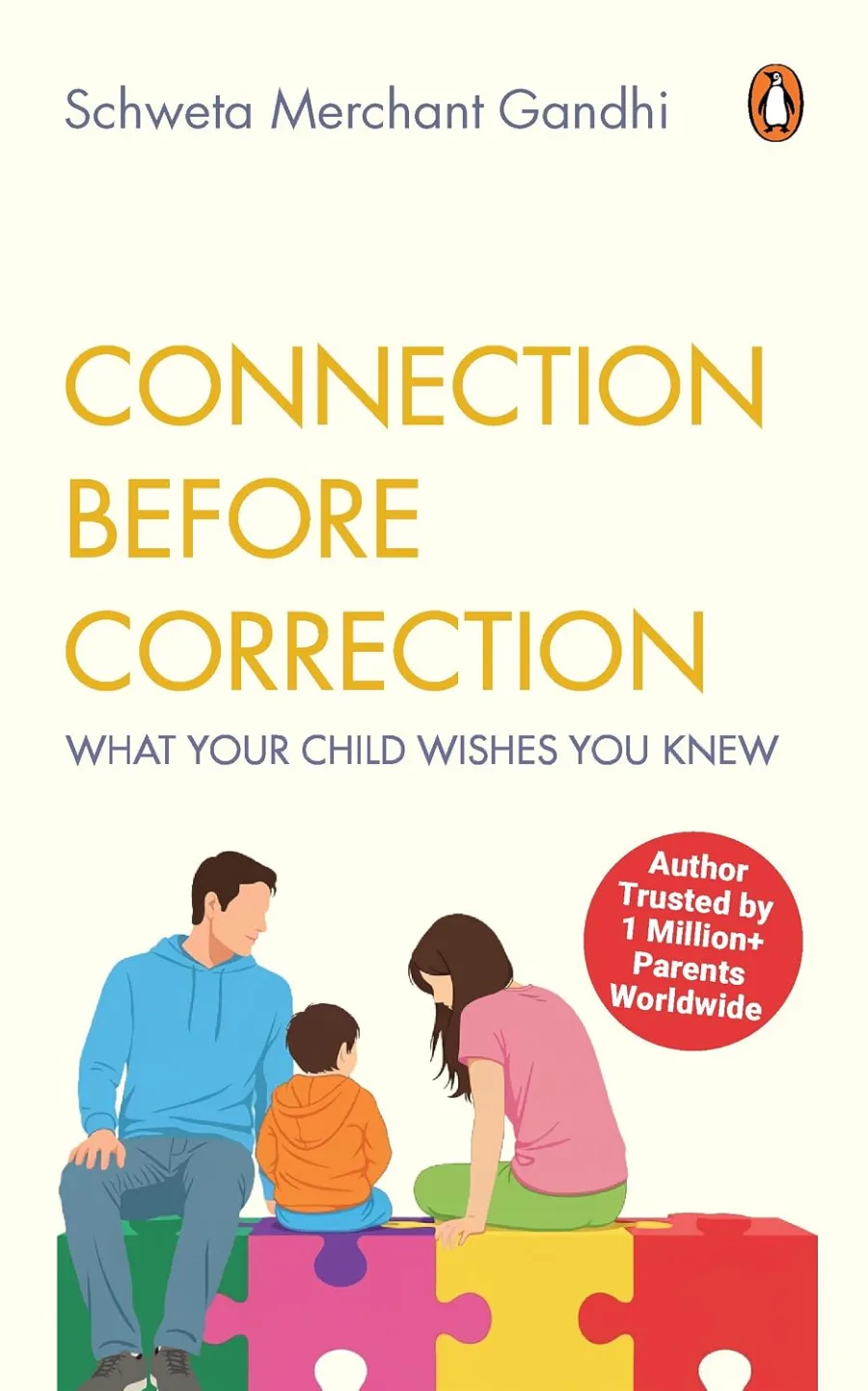
Download Cover Image
Do you want to download the full cover image for Connection Before Correction: What Your Child Wishes You Knew | Mind-Based Parenting Guide?