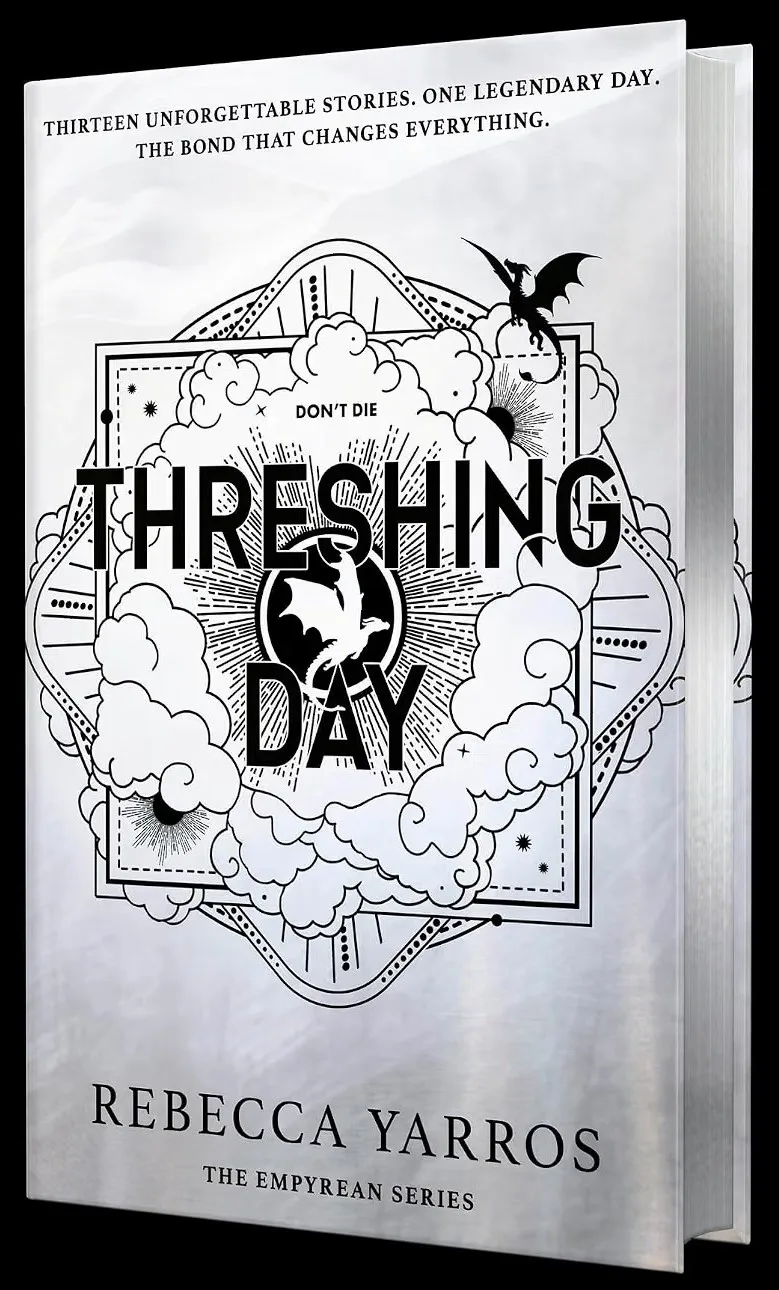
Threshing Day
Hardcover
• 224 Pages
• ₹ 1599.00
• English
• 9780349450612
No ratings yet
| Publisher | Piatkus |
|---|---|
| ISBN13 | 9780349450612 |
| ASIN/SKU | 0349450617 |
| Book Format | Hardcover |
| Language | English |
| Pages | 224 |
| List Price | ₹ 1599.00 |
| Publishing Date | 03/01/2006 |
| Dimensions | 16 x 2.8 x 23.8 cm |
| Weight | 460 g |
| Book Code | BD00070410 |
Buy this Book
Amazon Stores
Ebook Stores
Other Stores
Discover Threshing Day by Rebecca Yarros. This book is published by Piatkus in Hardcover format, ISBN 9780349450612, ASIN 0349450617, under Romance, Romantic Fantasy, Paranormal Romance.
Book Description
The next book in the blockbuster Empyrean series, Threshing Day, contains thirteen stories starring your favourite characters and their dragons.
The entire first print run is a limited deluxe full-colour hardback that includes sixteen original illustrations by artist Joe Requeza and silver-gilded edges. Only available while stocks last.
Full blurb to be revealed soon!
The entire first print run is a limited deluxe full-colour hardback that includes sixteen original illustrations by artist Joe Requeza and silver-gilded edges. Only available while stocks last.
Full blurb to be revealed soon!
Author Biography
Rebecca is a #1 New York Times, USA Today, Sunday Times, and Wall Street Journal bestselling author of over fifteen novels, including FOURTH WING, and is always ready to bring on the emotions. She's also the recipient of the Colorado Romance Writer’s Award of Excellence in New Adult for Eyes Turned Skyward from her Flight and Glory series.
She loves military heroes and has been blissfully married to hers for twenty-one years. She’s the mother of six children and lives in Colorado with her family, their stubborn English bulldog, feisty chinchillas, and Maine Coon cat who rules them all. Having fostered then adopted their youngest daughter, Rebecca is passionate about helping children in the foster system through her nonprofit, One October.
Visit her website at www.RebeccaYarros.com for more!
She loves military heroes and has been blissfully married to hers for twenty-one years. She’s the mother of six children and lives in Colorado with her family, their stubborn English bulldog, feisty chinchillas, and Maine Coon cat who rules them all. Having fostered then adopted their youngest daughter, Rebecca is passionate about helping children in the foster system through her nonprofit, One October.
Visit her website at www.RebeccaYarros.com for more!
Editorial Reviews
Editorial Reviews will be added soon…
Book Summary
Threshing Day by Rebecca Yarros is a contemporary romantic drama that explores grief, family, memory, love, and the complicated process of moving forward after life has been changed by loss. Like much of Yarros’s fiction, the story places emotionally vulnerable characters in circumstances where love is never simple and healing does not happen in a straight line. At its heart, the book is concerned with what happens when people are forced to confront the parts of their past they would rather leave untouched. The result is a deeply emotional story about relationships, buried pain, and the possibility of finding hope when life feels permanently altered.
The title itself carries an important symbolic meaning. “Threshing” traditionally refers to the process of separating grain from the stalk and husk. As a metaphor, it suggests separation, stripping away what is unnecessary, and discovering what remains after something has been broken apart. This idea reflects the emotional journey at the center of the story. The characters must separate the past from the present, painful memories from the people they have become, and fear from the possibility of love. Their experiences show that sometimes healing requires confronting everything that has been hidden beneath the surface.
The emotional world of Threshing Day is shaped by the reality that people rarely experience grief in a clean or predictable way. Loss can remain present long after the immediate crisis has passed. A person may continue with work, relationships, responsibilities, and ordinary routines while carrying memories that have never truly been resolved. Yarros approaches this emotional reality with sensitivity, allowing her characters to be imperfect rather than presenting them as people who know exactly how to heal themselves.
One of the story’s strongest qualities is its attention to the way the past continues to influence the present. The characters do not simply remember earlier events; those experiences affect their choices, their relationships, and their understanding of themselves. Memories become emotional forces. Some memories offer comfort, while others produce guilt, anger, regret, or fear. The characters must eventually recognize that avoiding painful memories does not necessarily make them disappear. Sometimes the only way to regain control over the present is to acknowledge what happened in the past.
This gives the story an intimate emotional quality. Rather than presenting healing as a sudden transformation, Yarros portrays it as a gradual process. The characters take small steps forward and sometimes retreat. They make mistakes, misunderstand one another, protect themselves when they should be vulnerable, and struggle to say what they really feel. These imperfections make the emotional experience more recognizable. Their pain is not treated as a dramatic device alone; it becomes part of the way they understand love, trust, and responsibility.
Love in Threshing Day is similarly complicated. It is not presented as a magical solution that makes suffering disappear. Instead, love becomes a challenge because genuine intimacy requires vulnerability. To allow another person to become important means accepting the possibility of being hurt. For someone who has already experienced profound loss, that possibility can be frightening. The characters therefore have to decide whether protecting themselves from future pain is worth sacrificing the possibility of genuine connection.
This tension creates much of the emotional energy in the narrative. The characters are drawn toward one another, but emotional closeness also forces them to confront fears they have tried to suppress. Attraction may be easy; trust is harder. Being physically or emotionally close to another person does not automatically erase old wounds. Instead, closeness can expose them.
Yarros understands that relationships are shaped by communication as much as by affection. People can love one another and still hurt each other through silence, assumptions, or fear. Sometimes the greatest obstacle is not the absence of love but the inability to express it honestly. The characters therefore have to learn that emotional honesty can be frightening but necessary. Saying what one truly feels means surrendering some control, and that is particularly difficult for people who have survived experiences that taught them to protect themselves.
Family also plays an important role in the emotional landscape of the book. Families carry histories that extend beyond individual relationships. They preserve memories, expectations, traditions, and wounds. They can provide a sense of belonging, but they can also become sources of pressure and misunderstanding. The story explores the complicated truth that family relationships are rarely entirely good or entirely bad. Love and resentment can exist at the same time.
The characters’ connections with family members help reveal their deeper personalities. What people say to strangers may be very different from what they say to those who have known them all their lives. Family can remember the person someone used to be even when that person is desperately trying to become someone new. This creates tension between identity and expectation. The characters must decide whether they are living according to their own desires or according to the roles others have assigned to them.
The setting contributes to the emotional atmosphere as well. Rural and agricultural imagery associated with threshing gives the story a grounded, physical quality. The rhythms of land, work, seasons, and community provide a contrast to the turmoil happening inside the characters. This contrast is meaningful. The natural world continues through cycles of growth, harvest, loss, and renewal, while human beings often struggle to accept that their own lives also move through cycles.
The metaphor of harvest is particularly powerful because harvesting involves both abundance and endings. A harvest represents the result of months of labor, but it also marks the conclusion of a particular cycle. Something must end before something new can begin. In the emotional context of the story, this becomes a way of understanding grief. Moving forward does not necessarily mean forgetting what came before. Instead, it means accepting that life has changed and finding a way to live honestly within that new reality.
The book also explores guilt, particularly the tendency people have to blame themselves for events they could not completely control. Grief often produces questions beginning with “what if.” What if someone had acted differently? What if a decision had been made earlier? What if a warning had been noticed? These questions can trap a person in an imagined version of the past. The story recognizes how destructive this can become. No amount of revisiting an event can change what has already happened.
Yet the characters are not simply encouraged to “move on.” That phrase can sometimes feel cruel when someone is grieving. Instead, the emotional journey suggests something more nuanced: people learn to carry their memories differently. Healing does not require erasing love, loss, or pain. It requires finding a place for those experiences within a larger life.
This is one of the most humane aspects of the narrative. The characters are not required to become completely healed versions of themselves before they are worthy of happiness. They are allowed to be unfinished. They can still have difficult days. They can still remember. They can still struggle. Hope becomes meaningful precisely because it exists alongside pain rather than replacing it.
The romantic elements of the story work particularly well within this framework because intimacy becomes a form of emotional risk. The characters have to decide whether they can trust another person with the parts of themselves they consider damaged. Such trust cannot be demanded; it has to be earned. Small moments of understanding therefore become as important as dramatic declarations. A gesture, a conversation, a willingness to listen, or the simple decision to remain present can carry enormous emotional significance.
Another important theme is the difference between surviving and living. Survival often requires emotional defenses. People learn to become practical, independent, guarded, or detached because those qualities help them endure difficult circumstances. But the same defenses can later prevent them from experiencing closeness and joy. The story asks what happens when survival is no longer enough. What does it mean to begin living again?
The answer is not simple. Living again requires risk. It means allowing happiness to exist without feeling guilty about the past. It means accepting that loving someone new does not diminish the importance of someone who is gone. It means understanding that the future does not betray the past.
Yarros’s writing is particularly effective when it focuses on these emotional contradictions. Her characters can be strong and vulnerable at the same time. They can want independence while desperately needing another person. They can understand intellectually that they should move forward while emotionally remaining attached to what they have lost. These contradictions make them feel human.
Ultimately, Threshing Day is a story about emotional separation and renewal. Like grain being separated from its husk, the characters must gradually distinguish what they truly need from the fears and burdens they have been carrying. The process is uncomfortable because growth often requires letting go. But the story does not suggest that everything from the past should be discarded. Some memories are worth keeping. Some relationships permanently shape us. Some losses become part of our identity.
The deeper message is that healing is not about becoming the person we were before something broke us. Sometimes that person no longer exists. Healing means becoming someone who can live with what happened without allowing it to determine every choice that comes afterward.
In this sense, Threshing Day becomes more than a story about romance or grief. It is a reflection on the fragile process of rebuilding a life. It asks readers to consider how much of themselves they have hidden away because they were afraid of being hurt again. It reminds us that love can be frightening precisely because it matters, and that vulnerability is not necessarily weakness. Sometimes allowing ourselves to be known is one of the bravest things we can do.
The emotional power of the story ultimately comes from its belief in second chances—not necessarily the kind that erase mistakes, but the kind that allow people to live differently after making them. The past cannot be rewritten, and loss cannot always be repaired. But the future can still contain tenderness, connection, and meaning.
Threshing Day therefore leaves readers with a quietly hopeful understanding of healing. Life may divide us from people, places, dreams, and versions of ourselves that once seemed permanent. Yet separation does not mean that nothing remains. Like a field after harvest, there can still be the possibility of another season. The characters’ journey suggests that love and grief can coexist, that memories can be carried without becoming prisons, and that beginning again does not mean forgetting where we came from. It means finding the courage to step forward while carrying the past with greater peace.
The title itself carries an important symbolic meaning. “Threshing” traditionally refers to the process of separating grain from the stalk and husk. As a metaphor, it suggests separation, stripping away what is unnecessary, and discovering what remains after something has been broken apart. This idea reflects the emotional journey at the center of the story. The characters must separate the past from the present, painful memories from the people they have become, and fear from the possibility of love. Their experiences show that sometimes healing requires confronting everything that has been hidden beneath the surface.
The emotional world of Threshing Day is shaped by the reality that people rarely experience grief in a clean or predictable way. Loss can remain present long after the immediate crisis has passed. A person may continue with work, relationships, responsibilities, and ordinary routines while carrying memories that have never truly been resolved. Yarros approaches this emotional reality with sensitivity, allowing her characters to be imperfect rather than presenting them as people who know exactly how to heal themselves.
One of the story’s strongest qualities is its attention to the way the past continues to influence the present. The characters do not simply remember earlier events; those experiences affect their choices, their relationships, and their understanding of themselves. Memories become emotional forces. Some memories offer comfort, while others produce guilt, anger, regret, or fear. The characters must eventually recognize that avoiding painful memories does not necessarily make them disappear. Sometimes the only way to regain control over the present is to acknowledge what happened in the past.
This gives the story an intimate emotional quality. Rather than presenting healing as a sudden transformation, Yarros portrays it as a gradual process. The characters take small steps forward and sometimes retreat. They make mistakes, misunderstand one another, protect themselves when they should be vulnerable, and struggle to say what they really feel. These imperfections make the emotional experience more recognizable. Their pain is not treated as a dramatic device alone; it becomes part of the way they understand love, trust, and responsibility.
Love in Threshing Day is similarly complicated. It is not presented as a magical solution that makes suffering disappear. Instead, love becomes a challenge because genuine intimacy requires vulnerability. To allow another person to become important means accepting the possibility of being hurt. For someone who has already experienced profound loss, that possibility can be frightening. The characters therefore have to decide whether protecting themselves from future pain is worth sacrificing the possibility of genuine connection.
This tension creates much of the emotional energy in the narrative. The characters are drawn toward one another, but emotional closeness also forces them to confront fears they have tried to suppress. Attraction may be easy; trust is harder. Being physically or emotionally close to another person does not automatically erase old wounds. Instead, closeness can expose them.
Yarros understands that relationships are shaped by communication as much as by affection. People can love one another and still hurt each other through silence, assumptions, or fear. Sometimes the greatest obstacle is not the absence of love but the inability to express it honestly. The characters therefore have to learn that emotional honesty can be frightening but necessary. Saying what one truly feels means surrendering some control, and that is particularly difficult for people who have survived experiences that taught them to protect themselves.
Family also plays an important role in the emotional landscape of the book. Families carry histories that extend beyond individual relationships. They preserve memories, expectations, traditions, and wounds. They can provide a sense of belonging, but they can also become sources of pressure and misunderstanding. The story explores the complicated truth that family relationships are rarely entirely good or entirely bad. Love and resentment can exist at the same time.
The characters’ connections with family members help reveal their deeper personalities. What people say to strangers may be very different from what they say to those who have known them all their lives. Family can remember the person someone used to be even when that person is desperately trying to become someone new. This creates tension between identity and expectation. The characters must decide whether they are living according to their own desires or according to the roles others have assigned to them.
The setting contributes to the emotional atmosphere as well. Rural and agricultural imagery associated with threshing gives the story a grounded, physical quality. The rhythms of land, work, seasons, and community provide a contrast to the turmoil happening inside the characters. This contrast is meaningful. The natural world continues through cycles of growth, harvest, loss, and renewal, while human beings often struggle to accept that their own lives also move through cycles.
The metaphor of harvest is particularly powerful because harvesting involves both abundance and endings. A harvest represents the result of months of labor, but it also marks the conclusion of a particular cycle. Something must end before something new can begin. In the emotional context of the story, this becomes a way of understanding grief. Moving forward does not necessarily mean forgetting what came before. Instead, it means accepting that life has changed and finding a way to live honestly within that new reality.
The book also explores guilt, particularly the tendency people have to blame themselves for events they could not completely control. Grief often produces questions beginning with “what if.” What if someone had acted differently? What if a decision had been made earlier? What if a warning had been noticed? These questions can trap a person in an imagined version of the past. The story recognizes how destructive this can become. No amount of revisiting an event can change what has already happened.
Yet the characters are not simply encouraged to “move on.” That phrase can sometimes feel cruel when someone is grieving. Instead, the emotional journey suggests something more nuanced: people learn to carry their memories differently. Healing does not require erasing love, loss, or pain. It requires finding a place for those experiences within a larger life.
This is one of the most humane aspects of the narrative. The characters are not required to become completely healed versions of themselves before they are worthy of happiness. They are allowed to be unfinished. They can still have difficult days. They can still remember. They can still struggle. Hope becomes meaningful precisely because it exists alongside pain rather than replacing it.
The romantic elements of the story work particularly well within this framework because intimacy becomes a form of emotional risk. The characters have to decide whether they can trust another person with the parts of themselves they consider damaged. Such trust cannot be demanded; it has to be earned. Small moments of understanding therefore become as important as dramatic declarations. A gesture, a conversation, a willingness to listen, or the simple decision to remain present can carry enormous emotional significance.
Another important theme is the difference between surviving and living. Survival often requires emotional defenses. People learn to become practical, independent, guarded, or detached because those qualities help them endure difficult circumstances. But the same defenses can later prevent them from experiencing closeness and joy. The story asks what happens when survival is no longer enough. What does it mean to begin living again?
The answer is not simple. Living again requires risk. It means allowing happiness to exist without feeling guilty about the past. It means accepting that loving someone new does not diminish the importance of someone who is gone. It means understanding that the future does not betray the past.
Yarros’s writing is particularly effective when it focuses on these emotional contradictions. Her characters can be strong and vulnerable at the same time. They can want independence while desperately needing another person. They can understand intellectually that they should move forward while emotionally remaining attached to what they have lost. These contradictions make them feel human.
Ultimately, Threshing Day is a story about emotional separation and renewal. Like grain being separated from its husk, the characters must gradually distinguish what they truly need from the fears and burdens they have been carrying. The process is uncomfortable because growth often requires letting go. But the story does not suggest that everything from the past should be discarded. Some memories are worth keeping. Some relationships permanently shape us. Some losses become part of our identity.
The deeper message is that healing is not about becoming the person we were before something broke us. Sometimes that person no longer exists. Healing means becoming someone who can live with what happened without allowing it to determine every choice that comes afterward.
In this sense, Threshing Day becomes more than a story about romance or grief. It is a reflection on the fragile process of rebuilding a life. It asks readers to consider how much of themselves they have hidden away because they were afraid of being hurt again. It reminds us that love can be frightening precisely because it matters, and that vulnerability is not necessarily weakness. Sometimes allowing ourselves to be known is one of the bravest things we can do.
The emotional power of the story ultimately comes from its belief in second chances—not necessarily the kind that erase mistakes, but the kind that allow people to live differently after making them. The past cannot be rewritten, and loss cannot always be repaired. But the future can still contain tenderness, connection, and meaning.
Threshing Day therefore leaves readers with a quietly hopeful understanding of healing. Life may divide us from people, places, dreams, and versions of ourselves that once seemed permanent. Yet separation does not mean that nothing remains. Like a field after harvest, there can still be the possibility of another season. The characters’ journey suggests that love and grief can coexist, that memories can be carried without becoming prisons, and that beginning again does not mean forgetting where we came from. It means finding the courage to step forward while carrying the past with greater peace.
Sample Chapters
Sample Chapters will be added soon…
Reader Reviews
No reviews yet.
Threshing Day