
Ghosts of the Silent Hills: Stories Based on True Hauntings
Paperback
• 312 Pages
• ₹ 249.00
• English
• 9789389717136
No ratings yet
| Publisher | Fingerprint! Publishing |
|---|---|
| ISBN13 | 9789389717136 |
| ASIN/SKU | 9389717132 |
| Book Format | Paperback |
| Language | English |
| Pages | 312 |
| List Price | ₹ 249.00 |
| Publishing Date | 01/12/2019 |
| Dimensions | 19.6 x 12.7 x 1.8 cm |
| Weight | 350 g |
| Book Code | BD00070195 |
Buy this Book
Amazon Stores
Ebook Stores
Other Stores
Discover Ghosts of the Silent Hills: Stories Based on True Hauntings by Anita Krishan. This book is published by Fingerprint! Publishing in Paperback format, ISBN 9789389717136, ASIN 9389717132, under Literature and Fiction, Horror for Young Adults, Literature and Fiction for Young Adults.
Book Description
The hills are surrounded by dense, menacing forests, enveloped in a deadly silence, where you never know what lurks in the cold, dark nights. You may come across a beautiful woman in white, who haunts the lonely pathways or you may hear screams of people who died in accidents. Ghosts of the Silent Hills is a collection of horror stories that will make your nights a little scarier, encompassing the very best spine-chilling stories based on true hauntings.
The scary spirits are ready to prey on the living!
Gripping tales of horror.
The stories are based on true hauntings.
Eerie and haunting characters.
Unexpected twists and turns with supernatural elements.
Ideal for the lovers of spine-chilling stories.
The scary spirits are ready to prey on the living!
Gripping tales of horror.
The stories are based on true hauntings.
Eerie and haunting characters.
Unexpected twists and turns with supernatural elements.
Ideal for the lovers of spine-chilling stories.
Author Biography
Born in Shimla in 1955, Anita Krishan spent the initial twenty-two years of her life in this pristine Himalayan town, earning her master’s degree in English literature from Himachal University, and moving on to a career of introducing delights of the language to her young learners. In her long tenure as an educator, she has enriched the lives of countless students with the mystery of the narrative. A versatile writer, each of her literary works appertains to a different genre... from the joys and travails of life, to terrorism that has brought the world to its tenterhooks, to now the paranormal. She has travelled extensively around the globe absorbing the diverse human ethos and cultures—the delectable food for her thoughts. Presently, she lives in Gurgaon with her family.
Editorial Reviews
Editorial Reviews will be added soon…
Book Summary
Anita Krishan’s Ghosts of the Silent Hills: Stories Based on True Hauntings is a collection of atmospheric Indian ghost stories inspired by accounts of supposedly real hauntings. Set largely against the eerie backdrop of the Himalayan hills, the book draws its power from abandoned buildings, lonely roads, mist-covered landscapes, old memories, unexplained deaths, and encounters that seem to belong to a world just beyond ordinary understanding. Rather than functioning as one continuous novel with a single protagonist, the book is an anthology of separate stories connected by mood and subject. Its central attraction is the uneasy suggestion that the supernatural may exist alongside everyday life, hidden in places people pass without knowing their histories. For readers searching for a Ghosts of the Silent Hills summary, the book is best understood as a collection of chilling tales in which ordinary people encounter extraordinary and frightening events.
The title itself captures much of the atmosphere Anita Krishan creates. “Silent hills” suggests more than beautiful mountain scenery. The hills are quiet because they contain memories, secrets, and tragedies that have never completely disappeared. Mountains can feel isolated even in daylight, and Krishan uses that isolation to create a natural setting for supernatural encounters. Fog can conceal a figure, an empty road can make a familiar journey suddenly frightening, and an old colonial-era house can appear completely different once darkness falls. The landscape becomes almost a character in its own right. The beauty of the mountains and the fear associated with them exist together, producing the distinctive atmosphere that runs through the collection.
One reason the stories are effective is that they begin with situations that feel familiar. Characters travel, visit friends, stay in old houses, work in remote locations, explore unfamiliar places, or hear stories from local people. Nothing initially appears extraordinary. The supernatural usually enters gradually, often through a small detail that seems easy to dismiss. A strange sound is heard repeatedly. A person appears where no one expects them to be. A room seems inexplicably cold. A familiar object moves. Someone begins behaving strangely. A local warning is ignored. By starting with ordinary circumstances, Krishan makes the eventual disturbance more unsettling because the reader has already accepted the world as normal.
The collection’s stories are particularly interested in the way places retain emotional histories. A house may look abandoned, but its walls can carry the memory of the people who once lived there. A road may appear harmless, but local residents may know of accidents or deaths associated with it. A hotel room may seem ordinary until a guest discovers that something terrible happened there in the past. This idea of haunted geography is central to the book. The ghosts are not always frightening simply because they are supernatural beings; they are frightening because they represent unresolved events. Something happened, someone suffered, and the emotional force of that event appears to have remained attached to the place.
Many of the stories also rely on the contrast between local knowledge and outside skepticism. Visitors often enter a location without understanding its history. Local residents, servants, caretakers, drivers, villagers, or elderly people may know that something is wrong but hesitate to explain it directly. Their warnings can sound like superstition to outsiders. Yet when the protagonist experiences something inexplicable personally, the old stories suddenly seem less foolish. This narrative pattern works especially well in Indian settings because folklore and oral storytelling remain important ways of preserving memories of unusual events. Krishan uses this tradition to create uncertainty: is the local story merely a legend, or is it a warning based on something that genuinely happened?
The phrase “based on true hauntings” is important to the book’s appeal. The stories are presented as being inspired by real accounts rather than as straightforward documentation of scientifically verified paranormal events. That distinction matters. The book belongs to supernatural fiction and storytelling, even when its premise draws upon alleged real experiences. Its power comes from the possibility that such incidents might have happened, not from proving that ghosts objectively exist. This uncertainty allows readers to occupy the uncomfortable space between skepticism and belief. A reader can rationalize an event while still feeling the chill created by the possibility that no rational explanation exists.
The supernatural figures in the stories are often connected to death, grief, violence, betrayal, loneliness, or unfinished business. This gives the collection a more emotional dimension than a simple sequence of jump scares. A ghost is sometimes frightening because of what it represents. The apparition may embody a forgotten tragedy, a person who died under disturbing circumstances, or a life that ended without closure. In this sense, haunting becomes a metaphor for memory. People may leave a place, but their stories remain. The past can disappear from public attention without disappearing completely.
Another recurring element is the vulnerability of individuals when they are alone. Solitude is one of the book’s most effective sources of suspense. A person who hears a strange noise while surrounded by friends can laugh it off. The same sound heard alone in an isolated house at midnight becomes something entirely different. Krishan repeatedly places characters in circumstances where help is distant and certainty is impossible. The hills amplify this effect. Poor visibility, unfamiliar terrain, sparse populations, and long stretches of silence create an environment in which characters cannot easily determine whether what they see is real.
The stories also make effective use of darkness and silence. Traditional horror often depends on obvious monsters or violent confrontations, but Krishan frequently derives tension from anticipation. The reader knows that something may be present before the protagonist fully understands it. A door that should remain closed becomes frightening. Footsteps heard behind someone become threatening. A figure glimpsed briefly can be more disturbing than a detailed description of a ghost. The imagination fills the gaps. Silence becomes a form of suspense because the reader begins listening for something that has not yet happened.
A major strength of Ghosts of the Silent Hills is its sense of place. The Himalayan setting gives the stories a distinctly Indian identity. Instead of relying on familiar Western Gothic locations such as medieval castles or European cemeteries, Krishan builds horror around mountain roads, old hill stations, remote homes, forests, lodges, abandoned structures, and misty landscapes. This makes the collection especially appealing to readers looking for Indian horror stories or ghost stories set in India. The supernatural feels integrated into recognizable cultural and geographical surroundings rather than imported from another tradition.
The book also reflects the enduring fascination with haunted hill stations in Indian popular imagination. Places associated with colonial history, aging architecture, dense forests, changing weather, and periods of isolation naturally lend themselves to ghost stories. Krishan takes advantage of these qualities without needing to turn every location into an obviously supernatural setting. The ordinary beauty of a hill town can itself become unsettling. A quiet road that looks picturesque in the afternoon can become threatening after sunset. An old building that seems charming during the day can feel oppressive when the lights go out.
The narrative style is generally accessible and straightforward, which helps the horror remain immediate. Krishan does not require readers to navigate complicated prose before reaching the frightening moments. The language serves the storytelling, allowing atmosphere and incident to carry much of the emotional weight. This makes the collection suitable for readers who want fast-moving supernatural fiction rather than highly experimental literary horror. The individual stories are relatively easy to read, but their cumulative effect is stronger: after several tales of unexplained encounters, ordinary silence begins to feel suspicious.
The collection’s episodic structure also contributes to its appeal. Because the stories are separate, readers can approach them individually rather than committing to a long narrative. Each tale establishes its own characters, location, mystery, and resolution. Yet the recurring atmosphere creates a sense of continuity. The reader moves from one haunted situation to another while carrying forward an expectation that seemingly ordinary places may conceal something disturbing. In this way, the book works well as a collection for readers who enjoy short horror stories, supernatural fiction, Indian folklore, and tales of supposedly real paranormal encounters.
One of the deeper ideas in the book is that fear often begins with uncertainty. A clearly identified threat can sometimes be confronted, but an unexplained event is much harder to control. If a character knows exactly what is happening, a response becomes possible. But what happens when the person cannot determine whether the figure in the distance is human? What if footsteps stop whenever the character turns around? What if a room appears empty but does not feel empty? Krishan uses these questions to exploit one of the oldest mechanisms of horror: the fear of what cannot be understood.
The book also encourages readers to think about how stories of ghosts are created and preserved. Every haunting begins, in some sense, with a story about something that happened. Someone witnessed an unusual event. Another person repeated it. Over time, the story became part of the identity of a place. The next visitor arrives already knowing that the location is “haunted,” and expectation itself becomes part of the experience. Krishan’s stories operate within this fascinating relationship between memory, folklore, belief, and fear. Whether the supernatural events are literally real becomes less important than the fact that people believe they happened and that these beliefs continue to shape how places are experienced.
There is also an important emotional quality beneath the horror. Ghost stories often revolve around the idea that death does not necessarily provide emotional closure. People leave behind relationships, regrets, secrets, injustices, and unfinished desires. The ghost becomes a narrative representation of something unresolved. In some stories, the frightening presence may therefore be interpreted not merely as an evil force but as the echo of a life that ended painfully. This gives the collection a human dimension. Fear and sympathy can exist at the same time.
For readers looking for the themes of Ghosts of the Silent Hills, several ideas stand out: the persistence of memory, the mystery of death, isolation, local folklore, unexplained phenomena, the emotional history of places, and the tension between rational explanation and supernatural belief. These themes help distinguish the collection from horror that relies exclusively on violence or graphic imagery. The book’s horror is primarily atmospheric. It asks readers to imagine what might be waiting in a place where nobody else is around to tell them what they are seeing.
The “true haunting” framing also makes the stories particularly effective for readers interested in allegedly real ghost encounters. The knowledge that the tales are inspired by reported experiences creates an additional layer of unease. Readers naturally begin wondering whether a similar event could happen to them. A fictional haunted house is frightening while reading, but a story introduced as being based on an actual haunting can make the ordinary world feel slightly less secure. A hotel, road, forest, or old building no longer seems entirely neutral. It may have a history that visitors do not know.
Ultimately, Ghosts of the Silent Hills succeeds because it combines a familiar human fascination with ghosts with the distinctive atmosphere of India’s mountains. Anita Krishan turns quiet landscapes into spaces of suspense and uses stories of alleged hauntings to explore the boundary between the known and the unknown. The collection is not simply about frightening apparitions. It is about the stories people tell when they encounter something they cannot explain, the memories that cling to places long after their inhabitants are gone, and the uncomfortable possibility that reality may contain things that ordinary reason cannot easily explain.
For anyone searching for a Ghosts of the Silent Hills book summary, review, or explanation, the simplest way to describe the collection is as an atmospheric anthology of Indian supernatural tales inspired by reported hauntings. Its appeal lies in the combination of Himalayan settings, mysterious encounters, folklore, psychological tension, and the suggestion of real-life origins. Rather than presenting horror as something distant and fantastical, Krishan places it within recognizable landscapes and everyday experiences. The result is a collection that invites readers to look differently at empty roads, old houses, quiet forests, and misty mountain evenings. The hills may appear silent, but in these stories, silence is never quite empty.
The title itself captures much of the atmosphere Anita Krishan creates. “Silent hills” suggests more than beautiful mountain scenery. The hills are quiet because they contain memories, secrets, and tragedies that have never completely disappeared. Mountains can feel isolated even in daylight, and Krishan uses that isolation to create a natural setting for supernatural encounters. Fog can conceal a figure, an empty road can make a familiar journey suddenly frightening, and an old colonial-era house can appear completely different once darkness falls. The landscape becomes almost a character in its own right. The beauty of the mountains and the fear associated with them exist together, producing the distinctive atmosphere that runs through the collection.
One reason the stories are effective is that they begin with situations that feel familiar. Characters travel, visit friends, stay in old houses, work in remote locations, explore unfamiliar places, or hear stories from local people. Nothing initially appears extraordinary. The supernatural usually enters gradually, often through a small detail that seems easy to dismiss. A strange sound is heard repeatedly. A person appears where no one expects them to be. A room seems inexplicably cold. A familiar object moves. Someone begins behaving strangely. A local warning is ignored. By starting with ordinary circumstances, Krishan makes the eventual disturbance more unsettling because the reader has already accepted the world as normal.
The collection’s stories are particularly interested in the way places retain emotional histories. A house may look abandoned, but its walls can carry the memory of the people who once lived there. A road may appear harmless, but local residents may know of accidents or deaths associated with it. A hotel room may seem ordinary until a guest discovers that something terrible happened there in the past. This idea of haunted geography is central to the book. The ghosts are not always frightening simply because they are supernatural beings; they are frightening because they represent unresolved events. Something happened, someone suffered, and the emotional force of that event appears to have remained attached to the place.
Many of the stories also rely on the contrast between local knowledge and outside skepticism. Visitors often enter a location without understanding its history. Local residents, servants, caretakers, drivers, villagers, or elderly people may know that something is wrong but hesitate to explain it directly. Their warnings can sound like superstition to outsiders. Yet when the protagonist experiences something inexplicable personally, the old stories suddenly seem less foolish. This narrative pattern works especially well in Indian settings because folklore and oral storytelling remain important ways of preserving memories of unusual events. Krishan uses this tradition to create uncertainty: is the local story merely a legend, or is it a warning based on something that genuinely happened?
The phrase “based on true hauntings” is important to the book’s appeal. The stories are presented as being inspired by real accounts rather than as straightforward documentation of scientifically verified paranormal events. That distinction matters. The book belongs to supernatural fiction and storytelling, even when its premise draws upon alleged real experiences. Its power comes from the possibility that such incidents might have happened, not from proving that ghosts objectively exist. This uncertainty allows readers to occupy the uncomfortable space between skepticism and belief. A reader can rationalize an event while still feeling the chill created by the possibility that no rational explanation exists.
The supernatural figures in the stories are often connected to death, grief, violence, betrayal, loneliness, or unfinished business. This gives the collection a more emotional dimension than a simple sequence of jump scares. A ghost is sometimes frightening because of what it represents. The apparition may embody a forgotten tragedy, a person who died under disturbing circumstances, or a life that ended without closure. In this sense, haunting becomes a metaphor for memory. People may leave a place, but their stories remain. The past can disappear from public attention without disappearing completely.
Another recurring element is the vulnerability of individuals when they are alone. Solitude is one of the book’s most effective sources of suspense. A person who hears a strange noise while surrounded by friends can laugh it off. The same sound heard alone in an isolated house at midnight becomes something entirely different. Krishan repeatedly places characters in circumstances where help is distant and certainty is impossible. The hills amplify this effect. Poor visibility, unfamiliar terrain, sparse populations, and long stretches of silence create an environment in which characters cannot easily determine whether what they see is real.
The stories also make effective use of darkness and silence. Traditional horror often depends on obvious monsters or violent confrontations, but Krishan frequently derives tension from anticipation. The reader knows that something may be present before the protagonist fully understands it. A door that should remain closed becomes frightening. Footsteps heard behind someone become threatening. A figure glimpsed briefly can be more disturbing than a detailed description of a ghost. The imagination fills the gaps. Silence becomes a form of suspense because the reader begins listening for something that has not yet happened.
A major strength of Ghosts of the Silent Hills is its sense of place. The Himalayan setting gives the stories a distinctly Indian identity. Instead of relying on familiar Western Gothic locations such as medieval castles or European cemeteries, Krishan builds horror around mountain roads, old hill stations, remote homes, forests, lodges, abandoned structures, and misty landscapes. This makes the collection especially appealing to readers looking for Indian horror stories or ghost stories set in India. The supernatural feels integrated into recognizable cultural and geographical surroundings rather than imported from another tradition.
The book also reflects the enduring fascination with haunted hill stations in Indian popular imagination. Places associated with colonial history, aging architecture, dense forests, changing weather, and periods of isolation naturally lend themselves to ghost stories. Krishan takes advantage of these qualities without needing to turn every location into an obviously supernatural setting. The ordinary beauty of a hill town can itself become unsettling. A quiet road that looks picturesque in the afternoon can become threatening after sunset. An old building that seems charming during the day can feel oppressive when the lights go out.
The narrative style is generally accessible and straightforward, which helps the horror remain immediate. Krishan does not require readers to navigate complicated prose before reaching the frightening moments. The language serves the storytelling, allowing atmosphere and incident to carry much of the emotional weight. This makes the collection suitable for readers who want fast-moving supernatural fiction rather than highly experimental literary horror. The individual stories are relatively easy to read, but their cumulative effect is stronger: after several tales of unexplained encounters, ordinary silence begins to feel suspicious.
The collection’s episodic structure also contributes to its appeal. Because the stories are separate, readers can approach them individually rather than committing to a long narrative. Each tale establishes its own characters, location, mystery, and resolution. Yet the recurring atmosphere creates a sense of continuity. The reader moves from one haunted situation to another while carrying forward an expectation that seemingly ordinary places may conceal something disturbing. In this way, the book works well as a collection for readers who enjoy short horror stories, supernatural fiction, Indian folklore, and tales of supposedly real paranormal encounters.
One of the deeper ideas in the book is that fear often begins with uncertainty. A clearly identified threat can sometimes be confronted, but an unexplained event is much harder to control. If a character knows exactly what is happening, a response becomes possible. But what happens when the person cannot determine whether the figure in the distance is human? What if footsteps stop whenever the character turns around? What if a room appears empty but does not feel empty? Krishan uses these questions to exploit one of the oldest mechanisms of horror: the fear of what cannot be understood.
The book also encourages readers to think about how stories of ghosts are created and preserved. Every haunting begins, in some sense, with a story about something that happened. Someone witnessed an unusual event. Another person repeated it. Over time, the story became part of the identity of a place. The next visitor arrives already knowing that the location is “haunted,” and expectation itself becomes part of the experience. Krishan’s stories operate within this fascinating relationship between memory, folklore, belief, and fear. Whether the supernatural events are literally real becomes less important than the fact that people believe they happened and that these beliefs continue to shape how places are experienced.
There is also an important emotional quality beneath the horror. Ghost stories often revolve around the idea that death does not necessarily provide emotional closure. People leave behind relationships, regrets, secrets, injustices, and unfinished desires. The ghost becomes a narrative representation of something unresolved. In some stories, the frightening presence may therefore be interpreted not merely as an evil force but as the echo of a life that ended painfully. This gives the collection a human dimension. Fear and sympathy can exist at the same time.
For readers looking for the themes of Ghosts of the Silent Hills, several ideas stand out: the persistence of memory, the mystery of death, isolation, local folklore, unexplained phenomena, the emotional history of places, and the tension between rational explanation and supernatural belief. These themes help distinguish the collection from horror that relies exclusively on violence or graphic imagery. The book’s horror is primarily atmospheric. It asks readers to imagine what might be waiting in a place where nobody else is around to tell them what they are seeing.
The “true haunting” framing also makes the stories particularly effective for readers interested in allegedly real ghost encounters. The knowledge that the tales are inspired by reported experiences creates an additional layer of unease. Readers naturally begin wondering whether a similar event could happen to them. A fictional haunted house is frightening while reading, but a story introduced as being based on an actual haunting can make the ordinary world feel slightly less secure. A hotel, road, forest, or old building no longer seems entirely neutral. It may have a history that visitors do not know.
Ultimately, Ghosts of the Silent Hills succeeds because it combines a familiar human fascination with ghosts with the distinctive atmosphere of India’s mountains. Anita Krishan turns quiet landscapes into spaces of suspense and uses stories of alleged hauntings to explore the boundary between the known and the unknown. The collection is not simply about frightening apparitions. It is about the stories people tell when they encounter something they cannot explain, the memories that cling to places long after their inhabitants are gone, and the uncomfortable possibility that reality may contain things that ordinary reason cannot easily explain.
For anyone searching for a Ghosts of the Silent Hills book summary, review, or explanation, the simplest way to describe the collection is as an atmospheric anthology of Indian supernatural tales inspired by reported hauntings. Its appeal lies in the combination of Himalayan settings, mysterious encounters, folklore, psychological tension, and the suggestion of real-life origins. Rather than presenting horror as something distant and fantastical, Krishan places it within recognizable landscapes and everyday experiences. The result is a collection that invites readers to look differently at empty roads, old houses, quiet forests, and misty mountain evenings. The hills may appear silent, but in these stories, silence is never quite empty.
Sample Chapters
Sample Chapters will be added soon…
Reader Reviews
No reviews yet.
Ghosts of the Silent Hills: Stories Based on True Hauntings
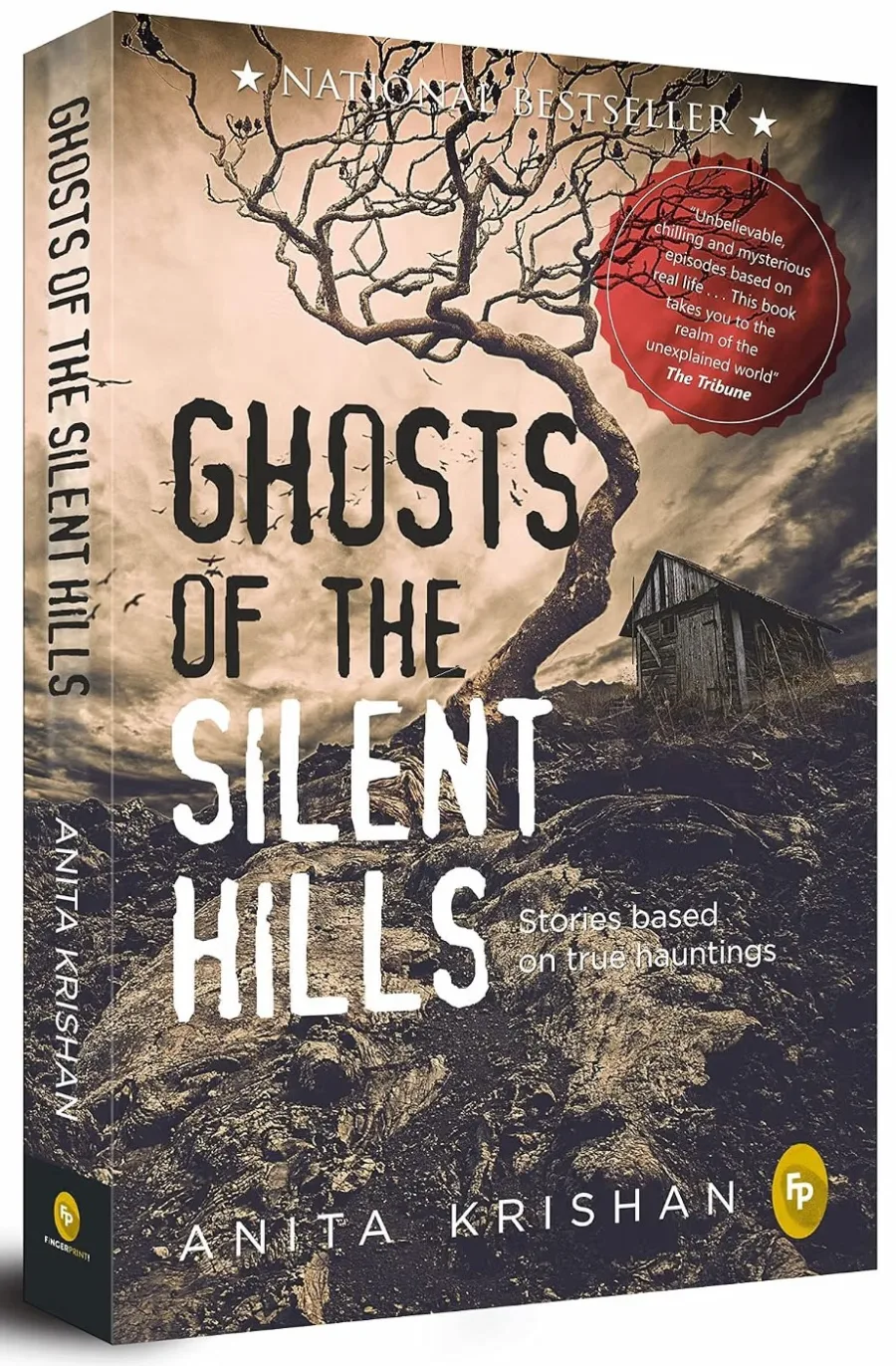
Download Cover Image
Do you want to download the full cover image for Ghosts of the Silent Hills: Stories Based on True Hauntings?