
Pride and Prejudice | Classic Romance Novel by Jane Austen | Bestseller English Literature Classic
Paperback
• 328 Pages
• ₹ 299.00
• English
• 9788172344504
No ratings yet
| Publisher | Fingerprint! Publishing |
|---|---|
| ISBN13 | 9788172344504 |
| ASIN/SKU | 8172344503 |
| Book Format | Paperback |
| Language | English |
| Pages | 328 |
| List Price | ₹ 299.00 |
| Publishing Date | 01/01/2013 |
| Dimensions | 21.5 x 14 x 1.6 cm |
| Weight | 263 g |
| Book Code | BD00070190 |
Buy this Book
Amazon Stores
Ebook Stores
Other Stores
Discover Pride and Prejudice | Classic Romance Novel by Jane Austen | Bestseller English Literature Classic by Jane Austen. This book is published by Fingerprint! Publishing in Paperback format, ISBN 9788172344504, ASIN 8172344503, under Literature and Fiction, Anthologies, Literary Theory, History and Criticism.
Book Description
Immerse yourself in the enchanting world of Pride and Prejudice by Jane Austen. Follow the spirited Elizabeth Bennet as she navigates the complexities of love, family, and societal expectations in this beloved classic that continues to captivate readers worldwide.
A tale of love and society!
Jane Austen's timeless masterpiece of wit, romance, and social commentary
Sparkling dialogue and unforgettable characters
Elizabeth Bennet's journey to overcome societal constraints
Fall in love with love
A delightful blend of humor, drama, and profound insights
A tale of love and society!
Jane Austen's timeless masterpiece of wit, romance, and social commentary
Sparkling dialogue and unforgettable characters
Elizabeth Bennet's journey to overcome societal constraints
Fall in love with love
A delightful blend of humor, drama, and profound insights
Author Biography
Jane Austen is one of the most well-known and widely-read English novelists of all time. She was born on December 16, 1775, at the rectory in the village of Steventon, in Hampshire, England.Jane’ s fascination with words and with the world of stories, began quite early. In the 1790s, during her adolescence, she started writing her own novels, the first one being Love and Freindship [sic]— a parody of romantic fiction organized as a series of love letters.
Between 1811 and 1816, Jane started to anonymously publish her works. Sense and Sensibility, Pride and Prejudice, Mansfield Park, and Emma were all published during this time. Jane started working on Persuasion, her last completed novel, soon after she finished Emma. Written in her unique and distinctive style, it subtly exposes the rapidly changing and expanding social environment of the nineteenth century England. Completed in 1816, it was published posthumously in December 1817.In 1816, at the age of forty-one, Jane became ill with Addison’ s disease. She died on July 18, 1817.
Between 1811 and 1816, Jane started to anonymously publish her works. Sense and Sensibility, Pride and Prejudice, Mansfield Park, and Emma were all published during this time. Jane started working on Persuasion, her last completed novel, soon after she finished Emma. Written in her unique and distinctive style, it subtly exposes the rapidly changing and expanding social environment of the nineteenth century England. Completed in 1816, it was published posthumously in December 1817.In 1816, at the age of forty-one, Jane became ill with Addison’ s disease. She died on July 18, 1817.
Editorial Reviews
Editorial Reviews will be added soon…
Book Summary
Jane Austen’s Pride and Prejudice is one of the most enduring classic romance novels in English literature, but calling it simply a love story does not fully capture its richness. First published in 1813, the novel combines romance, social comedy, family drama, sharp satire, and psychological insight to explore love, marriage, class, reputation, money, and the danger of judging people too quickly. At the center of the story is Elizabeth Bennet, an intelligent, lively, independent-minded young woman who refuses to marry simply for financial security or social approval. Her eventual relationship with the wealthy and seemingly arrogant Fitzwilliam Darcy develops through a series of misunderstandings, wounded pride, revelations, and changes of heart. For readers searching for a Pride and Prejudice summary, the novel is ultimately a story about learning to recognize one’s own prejudices, overcoming pride, and discovering that genuine love requires both self-knowledge and mutual respect.
The novel opens with one of Austen’s most famous observations about marriage and social expectations. Mrs. Bennet is obsessed with finding suitable husbands for her five daughters because the family’s estate is entailed away from the female line. This means that when Mr. Bennet dies, the property will eventually pass to a male relative rather than to one of his daughters. The Bennet sisters therefore face an uncomfortable economic reality: marriage is not simply a matter of romance but potentially their only reliable source of financial security. Austen uses this situation to expose the limited choices available to women in the society she depicts. Marriage can provide affection and companionship, but it can also be a form of economic necessity.
The arrival of Charles Bingley, a wealthy and amiable young gentleman, creates immediate excitement in the Bennet household. Bingley has rented Netherfield Park, a large estate near the Bennets, and Mrs. Bennet quickly imagines one of her daughters becoming his wife. Bingley is accompanied by his close friend Mr. Darcy, who is even wealthier but considerably less approachable. At a public assembly, Bingley dances readily and charms the local community, while Darcy appears proud and distant. Elizabeth overhears Darcy refusing to dance with her, declaring that she is not handsome enough to tempt him. This insult establishes the “prejudice” that Elizabeth will initially hold against him.
Elizabeth Bennet is the novel’s central character and one of Austen’s most memorable heroines. She is intelligent, observant, witty, and confident in her ability to judge character. Yet Austen makes clear that Elizabeth’s intelligence does not make her infallible. Her greatest weakness is precisely her confidence in her own judgment. Once she decides that Darcy is arrogant and Wickham is charming and honorable, she interprets subsequent events through those assumptions. Her prejudice is therefore not simple irrational hatred. It grows from a combination of Darcy’s genuinely unpleasant first impression and Elizabeth’s willingness to believe a story that confirms what she already thinks about him.
Jane Bennet, Elizabeth’s older sister, provides an important contrast. Jane is gentle, optimistic, and inclined to assume the best in everyone. She falls in love with Bingley, and he clearly returns her affection. Their relationship appears promising, but Bingley’s sisters, particularly Caroline Bingley, are less enthusiastic about the Bennet family. They consider the family socially inferior and are disturbed by the behavior of Elizabeth’s younger sisters and mother. This introduces another of Austen’s central themes: in a society organized around class and social reputation, a person’s family can influence how others judge them.
Bingley and Jane’s romance develops against the background of these social pressures. Bingley is genuinely attracted to Jane, but his friends and sisters encourage him to believe that the match is unsuitable. Darcy also plays a role in separating them because he believes Jane’s feelings for Bingley are not sufficiently obvious and worries about the Bennet family’s lack of social restraint. Darcy’s intervention is significant because he is not simply an arrogant villain. He sincerely believes that he is protecting his friend from an unsuitable marriage. However, his assumptions reveal his own class prejudice, and his interference causes considerable emotional pain.
Meanwhile, Elizabeth meets George Wickham, a charming young officer who immediately appears to be Darcy’s opposite. Wickham is friendly, attractive, and socially graceful. He tells Elizabeth that Darcy’s father had once promised him a valuable position but that Darcy spitefully prevented him from receiving it. Elizabeth readily believes Wickham because his story fits her existing opinion of Darcy. She does not investigate his claims carefully. Austen uses this episode to demonstrate how easily charm can be mistaken for goodness. Elizabeth believes she is a careful judge of character, yet she is actually allowing first impressions and personal feelings to influence her reasoning.
Darcy’s feelings for Elizabeth grow despite his initial contempt for her social position. He is attracted to her intelligence, humor, independence, and lively personality. Yet his love creates an internal conflict because he believes that marrying Elizabeth would connect him to a family he considers socially inferior. Eventually, he proposes to her, but the proposal is disastrous. Darcy emphasizes the obstacles he has had to overcome in order to love her, including her family’s lower social status. Elizabeth is furious. She rejects him and tells him that he is the last man she could ever marry.
Her rejection is based on two major accusations. First, she blames Darcy for separating Jane and Bingley. Second, she believes Wickham’s story that Darcy has treated him cruelly. Darcy’s response changes the direction of the novel. He writes Elizabeth a letter explaining the truth. He admits that he discouraged Bingley from pursuing Jane because he doubted Jane’s affection and was concerned about the Bennet family’s behavior. More importantly, he reveals the truth about Wickham: Wickham was given opportunities and financial assistance by Darcy’s father but repeatedly squandered them. He later attempted to elope with Darcy’s young sister Georgiana for her fortune.
Elizabeth is shocked by the letter. She begins to realize that she has been wrong. This is the moment when the novel’s title becomes especially meaningful. Darcy has demonstrated pride, but Elizabeth has also demonstrated prejudice. Her confidence in her own judgment has prevented her from seeing the truth. She rereads the evidence and recognizes that she has been unfair. This self-realization is one of the most important moments in the novel because Elizabeth’s character development depends not on changing her personality but on becoming more honest about her own limitations.
Elizabeth’s visit to Pemberley, Darcy’s magnificent estate, further changes her understanding of him. She arrives with her aunt and uncle and is initially uncertain about visiting Darcy’s home. The estate’s beauty and order provide a different image of Darcy from the arrogant man she first encountered. More importantly, the housekeeper, Mrs. Reynolds, speaks warmly of Darcy and describes him as generous and considerate. Elizabeth begins to see that the man she thought she understood may have qualities that he does not display easily in public.
Darcy himself has also changed. His first proposal and Elizabeth’s rejection force him to confront his pride and his behavior toward her. When he encounters Elizabeth again at Pemberley, he is courteous and attentive without expecting anything from her. His transformation is important because Austen does not require Elizabeth to change alone. For their relationship to work, both characters must grow. Elizabeth must overcome her prejudice, while Darcy must overcome his arrogance and sense of social superiority.
Their renewed relationship is interrupted by a crisis involving Lydia Bennet, Elizabeth’s youngest sister. Lydia is impulsive, flirtatious, and obsessed with officers. She travels to Brighton and eventually runs away with Wickham. Because Wickham has no intention of marrying her, the situation threatens to destroy the reputation of the entire Bennet family. In the society Austen depicts, a woman’s sexual reputation could have devastating consequences for her future and for the social standing of her relatives. Lydia’s actions therefore create a crisis much larger than a private family embarrassment.
The Bennet family is horrified. Mr. Bennet realizes that he has been too relaxed as a father and has failed to control Lydia’s reckless behavior. Mrs. Bennet reacts with distress but remains largely focused on the possibility of scandal. Elizabeth is devastated because she understands how difficult it will now be for Jane or herself to marry respectably. The situation seems almost impossible to repair.
Unknown to Elizabeth, Darcy intervenes. He finds Wickham and arranges the financial settlement necessary to make him marry Lydia. Darcy does this secretly because he does not want Elizabeth to feel that she owes him anything. His action reveals the extent of his transformation. Earlier, he was deeply concerned with social status and appearances. Now he is willing to risk his own money and reputation to protect Elizabeth’s family. His love has become practical rather than merely emotional.
When Elizabeth later learns what Darcy has done, her understanding of him changes completely. She recognizes that the man she once considered proud and selfish has acted with extraordinary generosity. At the same time, Darcy has no guarantee that Elizabeth will ever return his feelings. His willingness to help her family without demanding recognition demonstrates that his character has genuinely changed.
The relationship between Jane and Bingley is also restored. Bingley returns to Netherfield, proposes to Jane, and is accepted. Their marriage represents a gentler form of love than Elizabeth and Darcy’s. Jane and Bingley are naturally compatible, but they require outside interference before they can be together. Their story demonstrates how social pressure and excessive caution can interfere with genuine affection.
Elizabeth and Darcy eventually meet again, and Darcy proposes a second time. This time, however, his attitude is completely different. He no longer speaks as though marrying Elizabeth requires him to sacrifice his social position. Elizabeth is also a different woman from the one who rejected him. She has gained enough self-awareness to recognize her own earlier errors and enough confidence to make a decision based on genuine affection rather than pride or social expectations. She accepts him.
Their engagement is initially surprising to their families, especially Mrs. Bennet, who is delighted once she learns how wealthy Darcy is. Mr. Bennet, however, is more concerned about whether Elizabeth truly loves Darcy. He understands that she has always valued her independence and wants to make sure she is not agreeing to the marriage simply because Darcy is wealthy. Elizabeth assures him that she genuinely loves Darcy, and her father gives his approval.
The marriages at the end of the novel provide Austen with an opportunity to compare different kinds of relationships. Jane and Bingley marry for love and mutual affection. Elizabeth and Darcy marry after overcoming serious misunderstandings and personal flaws. Charlotte Lucas marries Mr. Collins primarily for security because she has little expectation of romantic happiness. Lydia marries Wickham, but her relationship is based largely on impulse and physical attraction and remains financially unstable. These marriages allow Austen to question the assumption that marriage automatically produces happiness.
Charlotte’s marriage to Mr. Collins is particularly revealing. Charlotte is practical and understands the economic realities facing women. She does not expect romance and instead chooses financial stability and a comfortable home. Elizabeth is initially disturbed by the decision, but Austen does not portray Charlotte as foolish. Her choice makes sense within the social conditions of the period. Through Charlotte, Austen demonstrates that women who lacked independent wealth often had to treat marriage as an economic calculation.
Mr. Collins himself is one of Austen’s greatest comic creations. He is pompous, self-important, and incapable of understanding when other people find him ridiculous. His obsession with Lady Catherine de Bourgh reveals the importance of social hierarchy in his mind. He assumes that people of higher status deserve automatic respect and that social distinctions determine personal worth. Austen uses him to satirize the rigid class consciousness of the society around her.
Lady Catherine represents another form of social authority. Wealthy, aristocratic, and accustomed to controlling other people, she assumes that Darcy should marry her daughter Anne. When she learns that Darcy may marry Elizabeth, she confronts Elizabeth and demands that she promise not to accept him. Elizabeth refuses. This scene is important because Elizabeth will not surrender her personal choice simply because a socially superior woman orders her to do so. Her refusal demonstrates the independence that has defined her character from the beginning.
One of the novel’s most important themes is the relationship between pride and prejudice. Darcy’s pride initially prevents him from treating Elizabeth warmly, while Elizabeth’s prejudice prevents her from interpreting Darcy fairly. Neither character is entirely wrong. Darcy really is arrogant at the beginning, and Elizabeth has legitimate reasons to dislike his behavior. The problem is that both characters allow their first impressions to become fixed judgments. Their eventual love becomes possible only after they are forced to reconsider themselves.
Social class is equally important. Austen does not simply argue that class differences are meaningless. Darcy’s wealth and Elizabeth’s relative poverty have real consequences. The Bennets face financial insecurity because of the entail, while Darcy possesses an enormous estate and considerable social power. Yet Austen challenges the idea that wealth automatically indicates moral superiority. Darcy begins with greater social status but inferior manners. Elizabeth has less money but greater independence and social intelligence. Their eventual marriage suggests that character can bridge social differences, even if society itself remains highly conscious of class.
Marriage, naturally, is the novel’s central social institution. Austen asks what makes a good marriage. Is it money? Attraction? Compatibility? Social status? Security? The answer suggested by Elizabeth and Darcy’s relationship is that genuine marriage requires mutual respect, self-knowledge, affection, and the willingness to change. A marriage based only on financial necessity can be comfortable but emotionally limited, while a marriage based only on attraction can be reckless. The strongest relationship combines emotional connection with mature judgment.
The novel is also fundamentally about first impressions. Elizabeth believes she understands Darcy almost immediately. She believes Wickham because he is charming and because his story confirms her opinion. Darcy initially dismisses Elizabeth because of her family and social position. Both discover that first impressions can be profoundly misleading. Austen therefore turns romantic development into a process of learning how to see another person accurately.
For readers searching for a Pride and Prejudice ending explained, the resolution is satisfying because both Elizabeth and Darcy earn their happiness through personal growth. Darcy becomes more humble and generous, while Elizabeth becomes more self-aware and less certain of her own infallibility. Jane and Bingley also reunite and marry, while Lydia’s marriage to Wickham provides a cautionary contrast to the more mature relationships. The final marriages do not erase the social problems that shaped the story, but they demonstrate that individuals can make better choices within those constraints.
The humor of Pride and Prejudice is another reason the novel remains so readable. Austen’s wit is often understated. She rarely announces that a character is ridiculous; instead, she allows the character to reveal their absurdity through dialogue and behavior. Mrs. Bennet’s obsession with marrying her daughters, Mr. Collins’s endless speeches, Lady Catherine’s confidence in her own authority, and Mary Bennet’s pretentious moralizing all provide comic relief while simultaneously revealing social weaknesses.
At its deepest level, Pride and Prejudice is a novel about learning to see clearly. Elizabeth’s greatest achievement is not winning Darcy but recognizing that she has been wrong. Darcy’s greatest achievement is not marrying Elizabeth but becoming worthy of her respect. Their romance works because both characters are capable of growth. Austen does not suggest that love magically transforms people. Instead, she suggests that meaningful love can force people to confront parts of themselves they would rather ignore.
For anyone searching for a Pride and Prejudice book summary, analysis, themes, characters, or ending explanation, the novel can therefore be understood as both a classic romance and a sophisticated social comedy. Elizabeth Bennet and Fitzwilliam Darcy begin as people who misunderstand each other because of pride, prejudice, class assumptions, and misleading first impressions. Through rejection, self-reflection, revelation, family crisis, and unexpected generosity, they gradually discover each other’s true character. Their eventual marriage is not simply a romantic reward; it is the result of mutual growth.
The enduring power of Jane Austen’s novel lies in its humanity. Elizabeth is intelligent but imperfect. Darcy is wealthy and principled but initially arrogant. Jane is kind but perhaps too trusting. Bingley is good-hearted but easily influenced. Wickham is charming but morally unreliable. Even the comic characters possess recognizable human motivations. Austen does not divide the world into perfect heroes and obvious villains. Instead, she shows how people make mistakes because they are proud, frightened, vain, hopeful, or simply unable to see beyond their own assumptions.
Ultimately, Pride and Prejudice remains a classic because its central problem is timeless. People still judge others too quickly. People still confuse confidence with character, charm with goodness, and social status with worth. People still struggle to admit when they are wrong. And people still discover that the person they initially misunderstood may be the person who understands them best. Elizabeth and Darcy’s journey from mutual dislike to love is therefore much more than a conventional romance. It is a story about becoming wiser through experience, learning to question one’s own judgments, and discovering that real love begins when pride gives way to understanding.
The novel opens with one of Austen’s most famous observations about marriage and social expectations. Mrs. Bennet is obsessed with finding suitable husbands for her five daughters because the family’s estate is entailed away from the female line. This means that when Mr. Bennet dies, the property will eventually pass to a male relative rather than to one of his daughters. The Bennet sisters therefore face an uncomfortable economic reality: marriage is not simply a matter of romance but potentially their only reliable source of financial security. Austen uses this situation to expose the limited choices available to women in the society she depicts. Marriage can provide affection and companionship, but it can also be a form of economic necessity.
The arrival of Charles Bingley, a wealthy and amiable young gentleman, creates immediate excitement in the Bennet household. Bingley has rented Netherfield Park, a large estate near the Bennets, and Mrs. Bennet quickly imagines one of her daughters becoming his wife. Bingley is accompanied by his close friend Mr. Darcy, who is even wealthier but considerably less approachable. At a public assembly, Bingley dances readily and charms the local community, while Darcy appears proud and distant. Elizabeth overhears Darcy refusing to dance with her, declaring that she is not handsome enough to tempt him. This insult establishes the “prejudice” that Elizabeth will initially hold against him.
Elizabeth Bennet is the novel’s central character and one of Austen’s most memorable heroines. She is intelligent, observant, witty, and confident in her ability to judge character. Yet Austen makes clear that Elizabeth’s intelligence does not make her infallible. Her greatest weakness is precisely her confidence in her own judgment. Once she decides that Darcy is arrogant and Wickham is charming and honorable, she interprets subsequent events through those assumptions. Her prejudice is therefore not simple irrational hatred. It grows from a combination of Darcy’s genuinely unpleasant first impression and Elizabeth’s willingness to believe a story that confirms what she already thinks about him.
Jane Bennet, Elizabeth’s older sister, provides an important contrast. Jane is gentle, optimistic, and inclined to assume the best in everyone. She falls in love with Bingley, and he clearly returns her affection. Their relationship appears promising, but Bingley’s sisters, particularly Caroline Bingley, are less enthusiastic about the Bennet family. They consider the family socially inferior and are disturbed by the behavior of Elizabeth’s younger sisters and mother. This introduces another of Austen’s central themes: in a society organized around class and social reputation, a person’s family can influence how others judge them.
Bingley and Jane’s romance develops against the background of these social pressures. Bingley is genuinely attracted to Jane, but his friends and sisters encourage him to believe that the match is unsuitable. Darcy also plays a role in separating them because he believes Jane’s feelings for Bingley are not sufficiently obvious and worries about the Bennet family’s lack of social restraint. Darcy’s intervention is significant because he is not simply an arrogant villain. He sincerely believes that he is protecting his friend from an unsuitable marriage. However, his assumptions reveal his own class prejudice, and his interference causes considerable emotional pain.
Meanwhile, Elizabeth meets George Wickham, a charming young officer who immediately appears to be Darcy’s opposite. Wickham is friendly, attractive, and socially graceful. He tells Elizabeth that Darcy’s father had once promised him a valuable position but that Darcy spitefully prevented him from receiving it. Elizabeth readily believes Wickham because his story fits her existing opinion of Darcy. She does not investigate his claims carefully. Austen uses this episode to demonstrate how easily charm can be mistaken for goodness. Elizabeth believes she is a careful judge of character, yet she is actually allowing first impressions and personal feelings to influence her reasoning.
Darcy’s feelings for Elizabeth grow despite his initial contempt for her social position. He is attracted to her intelligence, humor, independence, and lively personality. Yet his love creates an internal conflict because he believes that marrying Elizabeth would connect him to a family he considers socially inferior. Eventually, he proposes to her, but the proposal is disastrous. Darcy emphasizes the obstacles he has had to overcome in order to love her, including her family’s lower social status. Elizabeth is furious. She rejects him and tells him that he is the last man she could ever marry.
Her rejection is based on two major accusations. First, she blames Darcy for separating Jane and Bingley. Second, she believes Wickham’s story that Darcy has treated him cruelly. Darcy’s response changes the direction of the novel. He writes Elizabeth a letter explaining the truth. He admits that he discouraged Bingley from pursuing Jane because he doubted Jane’s affection and was concerned about the Bennet family’s behavior. More importantly, he reveals the truth about Wickham: Wickham was given opportunities and financial assistance by Darcy’s father but repeatedly squandered them. He later attempted to elope with Darcy’s young sister Georgiana for her fortune.
Elizabeth is shocked by the letter. She begins to realize that she has been wrong. This is the moment when the novel’s title becomes especially meaningful. Darcy has demonstrated pride, but Elizabeth has also demonstrated prejudice. Her confidence in her own judgment has prevented her from seeing the truth. She rereads the evidence and recognizes that she has been unfair. This self-realization is one of the most important moments in the novel because Elizabeth’s character development depends not on changing her personality but on becoming more honest about her own limitations.
Elizabeth’s visit to Pemberley, Darcy’s magnificent estate, further changes her understanding of him. She arrives with her aunt and uncle and is initially uncertain about visiting Darcy’s home. The estate’s beauty and order provide a different image of Darcy from the arrogant man she first encountered. More importantly, the housekeeper, Mrs. Reynolds, speaks warmly of Darcy and describes him as generous and considerate. Elizabeth begins to see that the man she thought she understood may have qualities that he does not display easily in public.
Darcy himself has also changed. His first proposal and Elizabeth’s rejection force him to confront his pride and his behavior toward her. When he encounters Elizabeth again at Pemberley, he is courteous and attentive without expecting anything from her. His transformation is important because Austen does not require Elizabeth to change alone. For their relationship to work, both characters must grow. Elizabeth must overcome her prejudice, while Darcy must overcome his arrogance and sense of social superiority.
Their renewed relationship is interrupted by a crisis involving Lydia Bennet, Elizabeth’s youngest sister. Lydia is impulsive, flirtatious, and obsessed with officers. She travels to Brighton and eventually runs away with Wickham. Because Wickham has no intention of marrying her, the situation threatens to destroy the reputation of the entire Bennet family. In the society Austen depicts, a woman’s sexual reputation could have devastating consequences for her future and for the social standing of her relatives. Lydia’s actions therefore create a crisis much larger than a private family embarrassment.
The Bennet family is horrified. Mr. Bennet realizes that he has been too relaxed as a father and has failed to control Lydia’s reckless behavior. Mrs. Bennet reacts with distress but remains largely focused on the possibility of scandal. Elizabeth is devastated because she understands how difficult it will now be for Jane or herself to marry respectably. The situation seems almost impossible to repair.
Unknown to Elizabeth, Darcy intervenes. He finds Wickham and arranges the financial settlement necessary to make him marry Lydia. Darcy does this secretly because he does not want Elizabeth to feel that she owes him anything. His action reveals the extent of his transformation. Earlier, he was deeply concerned with social status and appearances. Now he is willing to risk his own money and reputation to protect Elizabeth’s family. His love has become practical rather than merely emotional.
When Elizabeth later learns what Darcy has done, her understanding of him changes completely. She recognizes that the man she once considered proud and selfish has acted with extraordinary generosity. At the same time, Darcy has no guarantee that Elizabeth will ever return his feelings. His willingness to help her family without demanding recognition demonstrates that his character has genuinely changed.
The relationship between Jane and Bingley is also restored. Bingley returns to Netherfield, proposes to Jane, and is accepted. Their marriage represents a gentler form of love than Elizabeth and Darcy’s. Jane and Bingley are naturally compatible, but they require outside interference before they can be together. Their story demonstrates how social pressure and excessive caution can interfere with genuine affection.
Elizabeth and Darcy eventually meet again, and Darcy proposes a second time. This time, however, his attitude is completely different. He no longer speaks as though marrying Elizabeth requires him to sacrifice his social position. Elizabeth is also a different woman from the one who rejected him. She has gained enough self-awareness to recognize her own earlier errors and enough confidence to make a decision based on genuine affection rather than pride or social expectations. She accepts him.
Their engagement is initially surprising to their families, especially Mrs. Bennet, who is delighted once she learns how wealthy Darcy is. Mr. Bennet, however, is more concerned about whether Elizabeth truly loves Darcy. He understands that she has always valued her independence and wants to make sure she is not agreeing to the marriage simply because Darcy is wealthy. Elizabeth assures him that she genuinely loves Darcy, and her father gives his approval.
The marriages at the end of the novel provide Austen with an opportunity to compare different kinds of relationships. Jane and Bingley marry for love and mutual affection. Elizabeth and Darcy marry after overcoming serious misunderstandings and personal flaws. Charlotte Lucas marries Mr. Collins primarily for security because she has little expectation of romantic happiness. Lydia marries Wickham, but her relationship is based largely on impulse and physical attraction and remains financially unstable. These marriages allow Austen to question the assumption that marriage automatically produces happiness.
Charlotte’s marriage to Mr. Collins is particularly revealing. Charlotte is practical and understands the economic realities facing women. She does not expect romance and instead chooses financial stability and a comfortable home. Elizabeth is initially disturbed by the decision, but Austen does not portray Charlotte as foolish. Her choice makes sense within the social conditions of the period. Through Charlotte, Austen demonstrates that women who lacked independent wealth often had to treat marriage as an economic calculation.
Mr. Collins himself is one of Austen’s greatest comic creations. He is pompous, self-important, and incapable of understanding when other people find him ridiculous. His obsession with Lady Catherine de Bourgh reveals the importance of social hierarchy in his mind. He assumes that people of higher status deserve automatic respect and that social distinctions determine personal worth. Austen uses him to satirize the rigid class consciousness of the society around her.
Lady Catherine represents another form of social authority. Wealthy, aristocratic, and accustomed to controlling other people, she assumes that Darcy should marry her daughter Anne. When she learns that Darcy may marry Elizabeth, she confronts Elizabeth and demands that she promise not to accept him. Elizabeth refuses. This scene is important because Elizabeth will not surrender her personal choice simply because a socially superior woman orders her to do so. Her refusal demonstrates the independence that has defined her character from the beginning.
One of the novel’s most important themes is the relationship between pride and prejudice. Darcy’s pride initially prevents him from treating Elizabeth warmly, while Elizabeth’s prejudice prevents her from interpreting Darcy fairly. Neither character is entirely wrong. Darcy really is arrogant at the beginning, and Elizabeth has legitimate reasons to dislike his behavior. The problem is that both characters allow their first impressions to become fixed judgments. Their eventual love becomes possible only after they are forced to reconsider themselves.
Social class is equally important. Austen does not simply argue that class differences are meaningless. Darcy’s wealth and Elizabeth’s relative poverty have real consequences. The Bennets face financial insecurity because of the entail, while Darcy possesses an enormous estate and considerable social power. Yet Austen challenges the idea that wealth automatically indicates moral superiority. Darcy begins with greater social status but inferior manners. Elizabeth has less money but greater independence and social intelligence. Their eventual marriage suggests that character can bridge social differences, even if society itself remains highly conscious of class.
Marriage, naturally, is the novel’s central social institution. Austen asks what makes a good marriage. Is it money? Attraction? Compatibility? Social status? Security? The answer suggested by Elizabeth and Darcy’s relationship is that genuine marriage requires mutual respect, self-knowledge, affection, and the willingness to change. A marriage based only on financial necessity can be comfortable but emotionally limited, while a marriage based only on attraction can be reckless. The strongest relationship combines emotional connection with mature judgment.
The novel is also fundamentally about first impressions. Elizabeth believes she understands Darcy almost immediately. She believes Wickham because he is charming and because his story confirms her opinion. Darcy initially dismisses Elizabeth because of her family and social position. Both discover that first impressions can be profoundly misleading. Austen therefore turns romantic development into a process of learning how to see another person accurately.
For readers searching for a Pride and Prejudice ending explained, the resolution is satisfying because both Elizabeth and Darcy earn their happiness through personal growth. Darcy becomes more humble and generous, while Elizabeth becomes more self-aware and less certain of her own infallibility. Jane and Bingley also reunite and marry, while Lydia’s marriage to Wickham provides a cautionary contrast to the more mature relationships. The final marriages do not erase the social problems that shaped the story, but they demonstrate that individuals can make better choices within those constraints.
The humor of Pride and Prejudice is another reason the novel remains so readable. Austen’s wit is often understated. She rarely announces that a character is ridiculous; instead, she allows the character to reveal their absurdity through dialogue and behavior. Mrs. Bennet’s obsession with marrying her daughters, Mr. Collins’s endless speeches, Lady Catherine’s confidence in her own authority, and Mary Bennet’s pretentious moralizing all provide comic relief while simultaneously revealing social weaknesses.
At its deepest level, Pride and Prejudice is a novel about learning to see clearly. Elizabeth’s greatest achievement is not winning Darcy but recognizing that she has been wrong. Darcy’s greatest achievement is not marrying Elizabeth but becoming worthy of her respect. Their romance works because both characters are capable of growth. Austen does not suggest that love magically transforms people. Instead, she suggests that meaningful love can force people to confront parts of themselves they would rather ignore.
For anyone searching for a Pride and Prejudice book summary, analysis, themes, characters, or ending explanation, the novel can therefore be understood as both a classic romance and a sophisticated social comedy. Elizabeth Bennet and Fitzwilliam Darcy begin as people who misunderstand each other because of pride, prejudice, class assumptions, and misleading first impressions. Through rejection, self-reflection, revelation, family crisis, and unexpected generosity, they gradually discover each other’s true character. Their eventual marriage is not simply a romantic reward; it is the result of mutual growth.
The enduring power of Jane Austen’s novel lies in its humanity. Elizabeth is intelligent but imperfect. Darcy is wealthy and principled but initially arrogant. Jane is kind but perhaps too trusting. Bingley is good-hearted but easily influenced. Wickham is charming but morally unreliable. Even the comic characters possess recognizable human motivations. Austen does not divide the world into perfect heroes and obvious villains. Instead, she shows how people make mistakes because they are proud, frightened, vain, hopeful, or simply unable to see beyond their own assumptions.
Ultimately, Pride and Prejudice remains a classic because its central problem is timeless. People still judge others too quickly. People still confuse confidence with character, charm with goodness, and social status with worth. People still struggle to admit when they are wrong. And people still discover that the person they initially misunderstood may be the person who understands them best. Elizabeth and Darcy’s journey from mutual dislike to love is therefore much more than a conventional romance. It is a story about becoming wiser through experience, learning to question one’s own judgments, and discovering that real love begins when pride gives way to understanding.
Sample Chapters
Sample Chapters will be added soon…
Reader Reviews
No reviews yet.
Pride and Prejudice | Classic Romance Novel by Jane Austen | Bestseller English Literature Classic
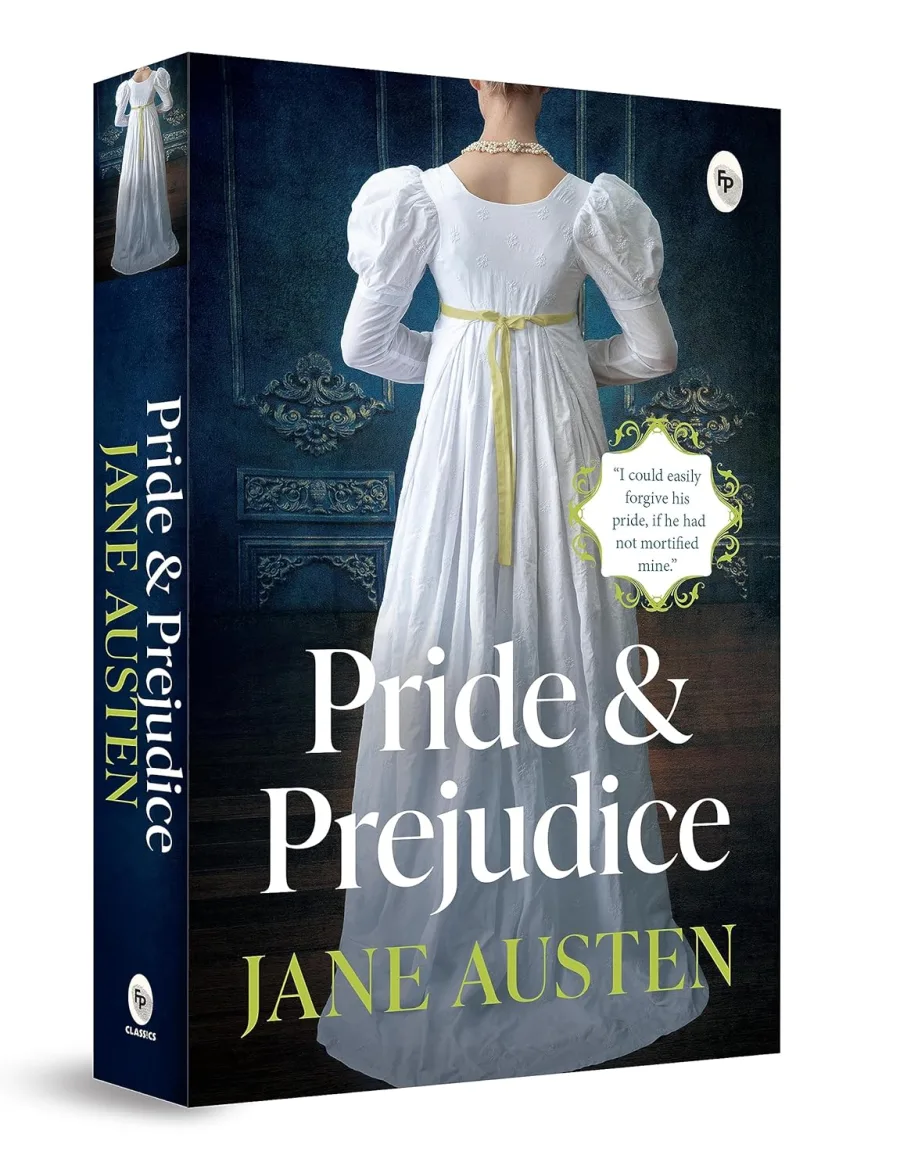
Download Cover Image
Do you want to download the full cover image for Pride and Prejudice | Classic Romance Novel by Jane Austen | Bestseller English Literature Classic?