
The Odyssey by Homer: The Greatest Greek Epic of Adventure, Mythology and Heroism
Paperback
• 416 Pages
• ₹ 499.00
• English
• 9780140449112
No ratings yet
| Publisher | Penguin Classics |
|---|---|
| ISBN13 | 9780140449112 |
| ASIN/SKU | 0140449116 |
| Book Format | Paperback |
| Language | English |
| Pages | 416 |
| List Price | ₹ 499.00 |
| Publishing Date | 30/01/2003 |
| Book Code | BD00070178 |
Buy this Book
Amazon Stores
Ebook Stores
Other Stores
Discover The Odyssey by Homer: The Greatest Greek Epic of Adventure, Mythology and Heroism by Homer. This book is published by Penguin Classics in Paperback format, ISBN 9780140449112, ASIN 0140449116, under Literature and Fiction, Literature, Poetry.
Book Description
'The Odyssey is a poem of extraordinary pleasures: it is a salt-caked, storm-tossed, wine-dark treasury of tales, of many twists and turns, like life itself' Guardian
The epic tale of Odysseus and his ten-year journey home after the Trojan War forms one of the earliest and greatest works of Western literature. Confronted by natural and supernatural threats - ship-wrecks, battles, monsters and the implacable enmity of the sea-god Poseidon - Odysseus must use his bravery and cunning to reach his homeland and overcome the obstacles that, even there, await him. E. V. Rieu's translation of The Odyssey was the very first Penguin Classic to be published, and has itself achieved classic status.
Translated by E. V. RIEU
Revised translation by D. C. H. RIEU
With an Introduction by PETER JONES
The epic tale of Odysseus and his ten-year journey home after the Trojan War forms one of the earliest and greatest works of Western literature. Confronted by natural and supernatural threats - ship-wrecks, battles, monsters and the implacable enmity of the sea-god Poseidon - Odysseus must use his bravery and cunning to reach his homeland and overcome the obstacles that, even there, await him. E. V. Rieu's translation of The Odyssey was the very first Penguin Classic to be published, and has itself achieved classic status.
Translated by E. V. RIEU
Revised translation by D. C. H. RIEU
With an Introduction by PETER JONES
Author Biography
Homer, born somewhere around 725 BC in ancient Greece, was a bard who worked in the oral tradition. He is also one of the poets of the ancient times whose works survive till date. Homer's works include the popular Odyssey and Iliad, both of which contain more than 10000 lines. Homer, like his contemporaries had an amazing memory which helped him in remembering and reciting long epic poems such as the ones he wrote.
Editorial Reviews
Editorial Reviews will be added soon…
Book Summary
The Odyssey by Homer is one of the foundational works of Western literature and one of the greatest adventure epics ever written. It tells the story of Odysseus, the clever king of Ithaca, and his extraordinarily difficult journey home after the Trojan War. Although the journey takes ten years, the epic is about much more than travel and adventure. It explores homecoming, loyalty, temptation, courage, intelligence, family, identity, hospitality, revenge, and the longing for home.
Odysseus is a different kind of hero from the great warriors of the Trojan War. He is not famous only for physical strength. His greatest weapon is his mind. He is clever, adaptable, persuasive, patient when necessary, and capable of creating elaborate plans. Yet these same qualities sometimes become weaknesses because his pride can lead him into unnecessary danger.
The epic begins not at the beginning of Odysseus's journey, but when he has already been away from home for many years.
Ithaca Without Odysseus
While Odysseus is struggling to return home, his kingdom of Ithaca is facing its own crisis.
His wife, Penelope, has remained faithful to him for twenty years. Their son, Telemachus, was only a baby when Odysseus left for Troy and has grown into a young man without his father.
Many wealthy men, known as the suitors, have taken over Odysseus's palace.
They want Penelope to marry one of them because they assume Odysseus is dead.
But the suitors are not merely waiting politely.
They consume Odysseus's food and wine, abuse his hospitality, and behave as though the kingdom already belongs to them.
Penelope refuses to choose a husband.
She tells the suitors that she must first finish weaving a burial cloth for Odysseus's father, Laertes.
During the day, she works on the cloth.
At night, she secretly unravels what she has woven.
This allows her to delay the decision for years.
Penelope's cleverness mirrors Odysseus's own intelligence.
While Odysseus fights to return home, she fights to preserve the household.
Telemachus Begins His Journey
Telemachus is initially uncertain and powerless.
He has grown up without his father and does not know how to challenge the aggressive men occupying his home.
The goddess Athena, who strongly favors Odysseus, encourages Telemachus to become more confident.
She disguises herself as a man named Mentor and guides him.
Telemachus travels to Pylos and Sparta, seeking information about his father.
These journeys are important because Telemachus is beginning his own coming-of-age story.
He cannot simply wait for Odysseus to return.
He must learn how to become a man capable of defending his family and kingdom.
Odysseus on Calypso's Island
Meanwhile, Odysseus is stranded on the island of Ogygia, where the beautiful nymph Calypso has kept him for years.
Calypso loves Odysseus and offers him immortality if he will remain with her.
It sounds like a perfect offer.
He could escape aging and live in comfort with a goddess-like woman.
But Odysseus refuses.
He wants Ithaca.
He wants Penelope.
He wants his ordinary human life.
This is one of the most important ideas in the epic.
Odysseus does not want eternal luxury.
He wants home.
The gods eventually intervene, and Calypso is ordered to release him.
Odysseus builds a raft and begins sailing again.
But the sea god Poseidon still hates him because Odysseus previously blinded Poseidon's son, the Cyclops Polyphemus.
Poseidon sends a storm that destroys Odysseus's raft.
Odysseus barely survives.
Eventually, he reaches the land of the Phaeacians.
Nausicaa and the Phaeacians
Odysseus encounters Nausicaa, the daughter of the Phaeacian king.
She and her attendants discover him exhausted and nearly naked after the shipwreck.
Nausicaa helps him find safety.
Odysseus eventually reaches the palace of King Alcinous and Queen Arete.
The Phaeacians welcome him as a stranger.
This is important because hospitality is one of the central values of The Odyssey.
In the ancient Greek world, welcoming travelers was considered a sacred responsibility.
A good host provides food, shelter, protection, and respect.
A bad host abuses strangers or takes advantage of them.
The suitors in Ithaca violate this principle.
The Phaeacians uphold it.
Odysseus Tells His Story
At the Phaeacian court, Odysseus finally reveals his identity and recounts the adventures that have kept him away from home.
His story includes some of the most famous episodes in world literature.
The Cicones
After leaving Troy, Odysseus and his men attack the land of the Cicones.
They defeat the inhabitants and take their possessions.
But Odysseus's men become greedy and refuse to leave quickly.
The Cicones gather reinforcements and attack.
Many of Odysseus's men are killed.
The episode demonstrates a recurring problem: victory can become dangerous when it creates arrogance and carelessness.
The Lotus-Eaters
Odysseus and his men later encounter the Lotus-Eaters.
The lotus plant has a strange effect.
Anyone who eats it loses the desire to return home.
Odysseus must force his men back to the ships.
The Lotus-Eaters represent the temptation to forget responsibility.
Homecoming requires more than physical movement.
It requires remembering where you belong.
The Cyclops
One of the most famous adventures occurs when Odysseus and his men encounter Polyphemus, a gigantic one-eyed Cyclops.
Polyphemus traps the Greeks inside his cave and begins eating them.
Odysseus develops a clever plan.
He tells the Cyclops that his name is Nobody.
Then he gives Polyphemus wine and gets him drunk.
While the Cyclops sleeps, Odysseus and his men sharpen a wooden stake and drive it into his eye.
When Polyphemus cries for help, the other Cyclopes ask who is attacking him.
He answers, “Nobody.”
They assume that no one is hurting him.
Odysseus and his men then escape by hiding underneath the Cyclops's sheep.
The plan works brilliantly.
But Odysseus makes a serious mistake.
Once safely away, he cannot resist boasting.
He reveals his real name.
Polyphemus calls upon his father, Poseidon, to punish Odysseus.
This act of pride has enormous consequences.
Odysseus's intelligence saves him, but his ego creates further suffering.
Aeolus and the Winds
Odysseus later meets Aeolus, the keeper of the winds.
Aeolus gives him a bag containing the dangerous winds and leaves the favorable wind free to carry Odysseus toward Ithaca.
The crew is almost home.
But while Odysseus sleeps, his men become suspicious.
They believe the bag contains treasure.
They open it.
The winds escape and blow the ships far away.
Once again, Odysseus comes close to home only to lose everything.
The episode shows how distrust and curiosity can destroy progress.
Circe
Odysseus next encounters the powerful enchantress Circe.
She transforms some of his men into pigs.
With help from the god Hermes, Odysseus resists her magic and forces her to restore them.
Eventually, Circe becomes an ally.
Odysseus and his men remain on her island for a year.
Circe later tells Odysseus that he must travel to the land of the dead to consult the prophet Tiresias.
The Underworld
Odysseus enters the realm of the dead.
There he meets the spirits of many important figures.
He encounters his mother, Anticleia, who died while waiting for him to return.
Her death deeply affects him.
He also speaks with Achilles, the greatest warrior of the Trojan War.
Achilles tells Odysseus that he would rather be alive as a poor man than rule over the dead.
This is a striking rejection of the heroic ideal of glory.
Death has made Achilles realize the value of ordinary life.
Odysseus also receives important information about his journey from Tiresias.
The encounter with the dead reminds him that his ultimate goal is not fame.
It is life.
The Sirens
Odysseus and his men later encounter the Sirens, whose beautiful singing lures sailors to destruction.
Odysseus wants to hear their song.
But he knows it is dangerous.
He orders his men to plug their ears with beeswax.
He has himself tied tightly to the ship's mast.
As the ship passes, the Sirens sing to him.
Odysseus desperately wants to follow them, but his crew obeys his earlier command and refuses to release him.
This episode illustrates an important aspect of Odysseus's intelligence.
He understands his own weakness and creates a system that prevents him from acting on temptation.
Scylla and Charybdis
The sailors then face Scylla and Charybdis, two terrifying dangers.
Charybdis is a deadly whirlpool.
Scylla is a monstrous creature who attacks passing ships.
Odysseus must choose between terrible alternatives.
He chooses the path that sacrifices several men rather than risking the destruction of the entire ship.
The episode shows that leadership sometimes involves making painful decisions in which there is no perfect solution.
The Cattle of the Sun God
Odysseus's crew eventually reaches an island where sacred cattle belonging to the sun god Helios graze.
Odysseus warns his men not to harm them.
But while Odysseus is asleep, the hungry crew kills and eats the cattle.
The gods punish them.
Their ship is destroyed.
Odysseus is the only survivor.
His journey becomes a story of personal endurance as well as leadership.
He has repeatedly warned his men, but he cannot control every decision they make.
The Return to Ithaca
After telling his story, Odysseus receives help from the Phaeacians.
They transport him secretly back to Ithaca.
But Athena advises him not to reveal himself immediately.
The suitors are still occupying his palace.
Odysseus must determine who remains loyal.
Athena disguises him as an old beggar.
This allows him to observe the situation without being recognized.
The transformation is important.
The great warrior returns home not with an army but in disguise.
He must rely on patience and intelligence rather than force.
The Loyal Servants
Odysseus discovers that some members of his household have remained loyal.
One of them is Eumaeus, a faithful swineherd.
Eumaeus welcomes the disguised stranger without knowing that he is Odysseus.
This demonstrates the importance of hospitality.
Odysseus also encounters his old dog, Argos.
Argos recognizes him immediately.
The dog has been neglected for years and is lying weak and dying.
After seeing Odysseus, Argos finally dies.
This brief episode is one of the most emotional moments in the epic.
The dog has waited years for his master's return.
Now that Odysseus is finally home, Argos can die peacefully.
The Recognition by Telemachus
Odysseus eventually reveals himself to Telemachus.
Father and son reunite.
Telemachus is initially astonished.
Together, they begin planning how to remove the suitors.
The reunion is important because both characters have changed.
Telemachus is no longer the uncertain boy he was at the beginning.
Odysseus is no longer simply the heroic warrior returning from Troy.
Both have grown through separation.
Penelope's Challenge
Penelope remains uncertain about the disguised stranger.
She does not immediately recognize Odysseus.
She has lived for twenty years with uncertainty and cannot afford to trust appearances.
She announces a contest.
The suitors must try to string Odysseus's great bow and shoot an arrow through a series of axe heads.
None of them can do it.
The disguised Odysseus picks up the bow.
He strings it effortlessly.
He then shoots the arrow through the targets.
The disguise is finally dropped.
Odysseus reveals himself.
The battle begins.
The Defeat of the Suitors
Odysseus, Telemachus, and a few loyal servants attack the suitors.
The men who have abused Odysseus's household are killed.
The violence is brutal, but within the moral framework of the epic, it represents the restoration of order.
The suitors have violated hospitality.
They have consumed another man's property.
They have pressured his wife.
They have threatened his son.
Their destruction restores Odysseus's authority.
Yet the scene also reminds readers that heroic justice in ancient epic literature is often closely connected with revenge.
Penelope Recognizes Odysseus
Even after the suitors are defeated, Penelope does not immediately embrace Odysseus.
She tests him.
She orders the servants to move their marriage bed.
Odysseus becomes angry because he knows that the bed cannot be moved.
He built it around a living olive tree.
Only Odysseus and Penelope know this secret.
His reaction proves his identity.
Penelope finally accepts him.
Their reunion is deeply emotional because both have endured years of uncertainty.
Odysseus's return is complete.
The Meaning of Homecoming
The central idea of The Odyssey is homecoming.
Odysseus spends twenty years away from Ithaca.
He encounters beautiful women, magical islands, monsters, gods, storms, shipwrecks, and opportunities for wealth and immortality.
But none of these can replace home.
Calypso offers him immortality.
He refuses.
The Lotus-Eaters offer forgetfulness.
He resists.
The Sirens offer irresistible knowledge and beauty.
He survives them.
Odysseus repeatedly chooses the difficult path toward home.
This makes Ithaca more than a physical location.
It represents identity, family, memory, belonging, and the life he has chosen.
Intelligence Versus Strength
Odysseus is a hero of intelligence.
He defeats the Cyclops through deception.
He survives the Sirens through planning.
He returns to Ithaca through disguise.
He defeats the suitors through strategy.
His greatest weapon is his ability to understand situations and adapt.
But the epic also shows the limitations of intelligence.
His pride causes him to reveal his name to Polyphemus.
That decision brings Poseidon's anger upon him.
The lesson is clear:
Cleverness without humility can become dangerous.
Penelope's Strength
Penelope is one of the epic's most important characters.
Her strength is quieter than Odysseus's.
She does not fight monsters or sail across dangerous seas.
Instead, she protects her household through patience and intelligence.
Her weaving trick allows her to delay remarriage.
Her caution prevents her from accepting Odysseus's identity too quickly.
Her test with the marriage bed demonstrates that she is not simply waiting passively.
She is an intelligent participant in the story.
Odysseus and Penelope are therefore well matched.
Both are clever.
Both understand deception.
Both are cautious.
Both know how to wait.
Telemachus and Growing Up
Telemachus's story represents another kind of journey.
He begins as a young man who feels powerless.
He ends as someone capable of standing beside his father.
His journey demonstrates that growing up involves more than age.
It involves learning responsibility, courage, judgment, and self-confidence.
Telemachus must develop his own identity rather than simply living in the shadow of his famous father.
Hospitality
Hospitality, or xenia, is one of the epic's major moral principles.
Good hosts welcome strangers.
Bad hosts exploit them.
The Phaeacians demonstrate ideal hospitality.
The Cyclops violates it.
The suitors abuse it.
Odysseus himself must behave properly when he is a guest.
Hospitality is not merely good manners.
It is part of the moral order of the world.
The treatment of strangers reveals a person's character.
The Gods
The gods play a major role in the story.
Athena supports Odysseus.
Poseidon opposes him.
Other gods intervene at different points.
Yet the gods do not completely control human destiny.
Odysseus makes choices.
His crew makes choices.
Penelope makes choices.
The gods can help or hinder, but human decisions still have consequences.
Odysseus's pride is his own.
His determination is his own.
His suffering is shaped partly by his choices.
This makes the epic more than a story about divine fate.
It is also a story about human responsibility.
Conclusion
The Odyssey is ultimately a story about returning home after being changed by experience.
Odysseus leaves Ithaca as a powerful warrior.
He returns as a man who has suffered shipwrecks, lost companions, encountered monsters, spoken with the dead, resisted temptation, and endured years of loneliness.
His journey teaches him that the things he truly values are not wealth, glory, or immortality.
They are home, family, identity, and belonging.
Penelope's parallel journey shows another kind of courage: the courage to wait, resist pressure, protect the household, and remain faithful despite uncertainty.
Telemachus's journey shows the difficult process of becoming an adult.
Together, their stories create a larger meditation on family and perseverance.
The epic also teaches that intelligence is powerful but must be accompanied by humility. Odysseus survives because he can think creatively, but he suffers because his pride sometimes prevents him from knowing when to remain silent.
His greatest victory therefore comes not when he defeats a monster.
It comes when he finally reaches Ithaca.
The true adventure of The Odyssey is not simply the journey across the sea.
It is the journey back to oneself.
Odysseus spends years trying to return to the place where he belongs, and when he finally arrives, he discovers that home is not merely a palace or kingdom.
It is the people who remember him.
It is Penelope's faith.
It is Telemachus's love.
It is the old dog Argos recognizing him.
It is the familiar marriage bed that only he and Penelope understand.
It is the knowledge that after years of wandering, he is finally where he is meant to be.
That is why The Odyssey has remained powerful for thousands of years. Beneath its monsters, gods, magic, battles, storms, and heroic adventures lies a deeply human story:
Sometimes the greatest journey is the journey home—and the greatest victory is finding your way back to the people and values that make you who you are.
Odysseus is a different kind of hero from the great warriors of the Trojan War. He is not famous only for physical strength. His greatest weapon is his mind. He is clever, adaptable, persuasive, patient when necessary, and capable of creating elaborate plans. Yet these same qualities sometimes become weaknesses because his pride can lead him into unnecessary danger.
The epic begins not at the beginning of Odysseus's journey, but when he has already been away from home for many years.
Ithaca Without Odysseus
While Odysseus is struggling to return home, his kingdom of Ithaca is facing its own crisis.
His wife, Penelope, has remained faithful to him for twenty years. Their son, Telemachus, was only a baby when Odysseus left for Troy and has grown into a young man without his father.
Many wealthy men, known as the suitors, have taken over Odysseus's palace.
They want Penelope to marry one of them because they assume Odysseus is dead.
But the suitors are not merely waiting politely.
They consume Odysseus's food and wine, abuse his hospitality, and behave as though the kingdom already belongs to them.
Penelope refuses to choose a husband.
She tells the suitors that she must first finish weaving a burial cloth for Odysseus's father, Laertes.
During the day, she works on the cloth.
At night, she secretly unravels what she has woven.
This allows her to delay the decision for years.
Penelope's cleverness mirrors Odysseus's own intelligence.
While Odysseus fights to return home, she fights to preserve the household.
Telemachus Begins His Journey
Telemachus is initially uncertain and powerless.
He has grown up without his father and does not know how to challenge the aggressive men occupying his home.
The goddess Athena, who strongly favors Odysseus, encourages Telemachus to become more confident.
She disguises herself as a man named Mentor and guides him.
Telemachus travels to Pylos and Sparta, seeking information about his father.
These journeys are important because Telemachus is beginning his own coming-of-age story.
He cannot simply wait for Odysseus to return.
He must learn how to become a man capable of defending his family and kingdom.
Odysseus on Calypso's Island
Meanwhile, Odysseus is stranded on the island of Ogygia, where the beautiful nymph Calypso has kept him for years.
Calypso loves Odysseus and offers him immortality if he will remain with her.
It sounds like a perfect offer.
He could escape aging and live in comfort with a goddess-like woman.
But Odysseus refuses.
He wants Ithaca.
He wants Penelope.
He wants his ordinary human life.
This is one of the most important ideas in the epic.
Odysseus does not want eternal luxury.
He wants home.
The gods eventually intervene, and Calypso is ordered to release him.
Odysseus builds a raft and begins sailing again.
But the sea god Poseidon still hates him because Odysseus previously blinded Poseidon's son, the Cyclops Polyphemus.
Poseidon sends a storm that destroys Odysseus's raft.
Odysseus barely survives.
Eventually, he reaches the land of the Phaeacians.
Nausicaa and the Phaeacians
Odysseus encounters Nausicaa, the daughter of the Phaeacian king.
She and her attendants discover him exhausted and nearly naked after the shipwreck.
Nausicaa helps him find safety.
Odysseus eventually reaches the palace of King Alcinous and Queen Arete.
The Phaeacians welcome him as a stranger.
This is important because hospitality is one of the central values of The Odyssey.
In the ancient Greek world, welcoming travelers was considered a sacred responsibility.
A good host provides food, shelter, protection, and respect.
A bad host abuses strangers or takes advantage of them.
The suitors in Ithaca violate this principle.
The Phaeacians uphold it.
Odysseus Tells His Story
At the Phaeacian court, Odysseus finally reveals his identity and recounts the adventures that have kept him away from home.
His story includes some of the most famous episodes in world literature.
The Cicones
After leaving Troy, Odysseus and his men attack the land of the Cicones.
They defeat the inhabitants and take their possessions.
But Odysseus's men become greedy and refuse to leave quickly.
The Cicones gather reinforcements and attack.
Many of Odysseus's men are killed.
The episode demonstrates a recurring problem: victory can become dangerous when it creates arrogance and carelessness.
The Lotus-Eaters
Odysseus and his men later encounter the Lotus-Eaters.
The lotus plant has a strange effect.
Anyone who eats it loses the desire to return home.
Odysseus must force his men back to the ships.
The Lotus-Eaters represent the temptation to forget responsibility.
Homecoming requires more than physical movement.
It requires remembering where you belong.
The Cyclops
One of the most famous adventures occurs when Odysseus and his men encounter Polyphemus, a gigantic one-eyed Cyclops.
Polyphemus traps the Greeks inside his cave and begins eating them.
Odysseus develops a clever plan.
He tells the Cyclops that his name is Nobody.
Then he gives Polyphemus wine and gets him drunk.
While the Cyclops sleeps, Odysseus and his men sharpen a wooden stake and drive it into his eye.
When Polyphemus cries for help, the other Cyclopes ask who is attacking him.
He answers, “Nobody.”
They assume that no one is hurting him.
Odysseus and his men then escape by hiding underneath the Cyclops's sheep.
The plan works brilliantly.
But Odysseus makes a serious mistake.
Once safely away, he cannot resist boasting.
He reveals his real name.
Polyphemus calls upon his father, Poseidon, to punish Odysseus.
This act of pride has enormous consequences.
Odysseus's intelligence saves him, but his ego creates further suffering.
Aeolus and the Winds
Odysseus later meets Aeolus, the keeper of the winds.
Aeolus gives him a bag containing the dangerous winds and leaves the favorable wind free to carry Odysseus toward Ithaca.
The crew is almost home.
But while Odysseus sleeps, his men become suspicious.
They believe the bag contains treasure.
They open it.
The winds escape and blow the ships far away.
Once again, Odysseus comes close to home only to lose everything.
The episode shows how distrust and curiosity can destroy progress.
Circe
Odysseus next encounters the powerful enchantress Circe.
She transforms some of his men into pigs.
With help from the god Hermes, Odysseus resists her magic and forces her to restore them.
Eventually, Circe becomes an ally.
Odysseus and his men remain on her island for a year.
Circe later tells Odysseus that he must travel to the land of the dead to consult the prophet Tiresias.
The Underworld
Odysseus enters the realm of the dead.
There he meets the spirits of many important figures.
He encounters his mother, Anticleia, who died while waiting for him to return.
Her death deeply affects him.
He also speaks with Achilles, the greatest warrior of the Trojan War.
Achilles tells Odysseus that he would rather be alive as a poor man than rule over the dead.
This is a striking rejection of the heroic ideal of glory.
Death has made Achilles realize the value of ordinary life.
Odysseus also receives important information about his journey from Tiresias.
The encounter with the dead reminds him that his ultimate goal is not fame.
It is life.
The Sirens
Odysseus and his men later encounter the Sirens, whose beautiful singing lures sailors to destruction.
Odysseus wants to hear their song.
But he knows it is dangerous.
He orders his men to plug their ears with beeswax.
He has himself tied tightly to the ship's mast.
As the ship passes, the Sirens sing to him.
Odysseus desperately wants to follow them, but his crew obeys his earlier command and refuses to release him.
This episode illustrates an important aspect of Odysseus's intelligence.
He understands his own weakness and creates a system that prevents him from acting on temptation.
Scylla and Charybdis
The sailors then face Scylla and Charybdis, two terrifying dangers.
Charybdis is a deadly whirlpool.
Scylla is a monstrous creature who attacks passing ships.
Odysseus must choose between terrible alternatives.
He chooses the path that sacrifices several men rather than risking the destruction of the entire ship.
The episode shows that leadership sometimes involves making painful decisions in which there is no perfect solution.
The Cattle of the Sun God
Odysseus's crew eventually reaches an island where sacred cattle belonging to the sun god Helios graze.
Odysseus warns his men not to harm them.
But while Odysseus is asleep, the hungry crew kills and eats the cattle.
The gods punish them.
Their ship is destroyed.
Odysseus is the only survivor.
His journey becomes a story of personal endurance as well as leadership.
He has repeatedly warned his men, but he cannot control every decision they make.
The Return to Ithaca
After telling his story, Odysseus receives help from the Phaeacians.
They transport him secretly back to Ithaca.
But Athena advises him not to reveal himself immediately.
The suitors are still occupying his palace.
Odysseus must determine who remains loyal.
Athena disguises him as an old beggar.
This allows him to observe the situation without being recognized.
The transformation is important.
The great warrior returns home not with an army but in disguise.
He must rely on patience and intelligence rather than force.
The Loyal Servants
Odysseus discovers that some members of his household have remained loyal.
One of them is Eumaeus, a faithful swineherd.
Eumaeus welcomes the disguised stranger without knowing that he is Odysseus.
This demonstrates the importance of hospitality.
Odysseus also encounters his old dog, Argos.
Argos recognizes him immediately.
The dog has been neglected for years and is lying weak and dying.
After seeing Odysseus, Argos finally dies.
This brief episode is one of the most emotional moments in the epic.
The dog has waited years for his master's return.
Now that Odysseus is finally home, Argos can die peacefully.
The Recognition by Telemachus
Odysseus eventually reveals himself to Telemachus.
Father and son reunite.
Telemachus is initially astonished.
Together, they begin planning how to remove the suitors.
The reunion is important because both characters have changed.
Telemachus is no longer the uncertain boy he was at the beginning.
Odysseus is no longer simply the heroic warrior returning from Troy.
Both have grown through separation.
Penelope's Challenge
Penelope remains uncertain about the disguised stranger.
She does not immediately recognize Odysseus.
She has lived for twenty years with uncertainty and cannot afford to trust appearances.
She announces a contest.
The suitors must try to string Odysseus's great bow and shoot an arrow through a series of axe heads.
None of them can do it.
The disguised Odysseus picks up the bow.
He strings it effortlessly.
He then shoots the arrow through the targets.
The disguise is finally dropped.
Odysseus reveals himself.
The battle begins.
The Defeat of the Suitors
Odysseus, Telemachus, and a few loyal servants attack the suitors.
The men who have abused Odysseus's household are killed.
The violence is brutal, but within the moral framework of the epic, it represents the restoration of order.
The suitors have violated hospitality.
They have consumed another man's property.
They have pressured his wife.
They have threatened his son.
Their destruction restores Odysseus's authority.
Yet the scene also reminds readers that heroic justice in ancient epic literature is often closely connected with revenge.
Penelope Recognizes Odysseus
Even after the suitors are defeated, Penelope does not immediately embrace Odysseus.
She tests him.
She orders the servants to move their marriage bed.
Odysseus becomes angry because he knows that the bed cannot be moved.
He built it around a living olive tree.
Only Odysseus and Penelope know this secret.
His reaction proves his identity.
Penelope finally accepts him.
Their reunion is deeply emotional because both have endured years of uncertainty.
Odysseus's return is complete.
The Meaning of Homecoming
The central idea of The Odyssey is homecoming.
Odysseus spends twenty years away from Ithaca.
He encounters beautiful women, magical islands, monsters, gods, storms, shipwrecks, and opportunities for wealth and immortality.
But none of these can replace home.
Calypso offers him immortality.
He refuses.
The Lotus-Eaters offer forgetfulness.
He resists.
The Sirens offer irresistible knowledge and beauty.
He survives them.
Odysseus repeatedly chooses the difficult path toward home.
This makes Ithaca more than a physical location.
It represents identity, family, memory, belonging, and the life he has chosen.
Intelligence Versus Strength
Odysseus is a hero of intelligence.
He defeats the Cyclops through deception.
He survives the Sirens through planning.
He returns to Ithaca through disguise.
He defeats the suitors through strategy.
His greatest weapon is his ability to understand situations and adapt.
But the epic also shows the limitations of intelligence.
His pride causes him to reveal his name to Polyphemus.
That decision brings Poseidon's anger upon him.
The lesson is clear:
Cleverness without humility can become dangerous.
Penelope's Strength
Penelope is one of the epic's most important characters.
Her strength is quieter than Odysseus's.
She does not fight monsters or sail across dangerous seas.
Instead, she protects her household through patience and intelligence.
Her weaving trick allows her to delay remarriage.
Her caution prevents her from accepting Odysseus's identity too quickly.
Her test with the marriage bed demonstrates that she is not simply waiting passively.
She is an intelligent participant in the story.
Odysseus and Penelope are therefore well matched.
Both are clever.
Both understand deception.
Both are cautious.
Both know how to wait.
Telemachus and Growing Up
Telemachus's story represents another kind of journey.
He begins as a young man who feels powerless.
He ends as someone capable of standing beside his father.
His journey demonstrates that growing up involves more than age.
It involves learning responsibility, courage, judgment, and self-confidence.
Telemachus must develop his own identity rather than simply living in the shadow of his famous father.
Hospitality
Hospitality, or xenia, is one of the epic's major moral principles.
Good hosts welcome strangers.
Bad hosts exploit them.
The Phaeacians demonstrate ideal hospitality.
The Cyclops violates it.
The suitors abuse it.
Odysseus himself must behave properly when he is a guest.
Hospitality is not merely good manners.
It is part of the moral order of the world.
The treatment of strangers reveals a person's character.
The Gods
The gods play a major role in the story.
Athena supports Odysseus.
Poseidon opposes him.
Other gods intervene at different points.
Yet the gods do not completely control human destiny.
Odysseus makes choices.
His crew makes choices.
Penelope makes choices.
The gods can help or hinder, but human decisions still have consequences.
Odysseus's pride is his own.
His determination is his own.
His suffering is shaped partly by his choices.
This makes the epic more than a story about divine fate.
It is also a story about human responsibility.
Conclusion
The Odyssey is ultimately a story about returning home after being changed by experience.
Odysseus leaves Ithaca as a powerful warrior.
He returns as a man who has suffered shipwrecks, lost companions, encountered monsters, spoken with the dead, resisted temptation, and endured years of loneliness.
His journey teaches him that the things he truly values are not wealth, glory, or immortality.
They are home, family, identity, and belonging.
Penelope's parallel journey shows another kind of courage: the courage to wait, resist pressure, protect the household, and remain faithful despite uncertainty.
Telemachus's journey shows the difficult process of becoming an adult.
Together, their stories create a larger meditation on family and perseverance.
The epic also teaches that intelligence is powerful but must be accompanied by humility. Odysseus survives because he can think creatively, but he suffers because his pride sometimes prevents him from knowing when to remain silent.
His greatest victory therefore comes not when he defeats a monster.
It comes when he finally reaches Ithaca.
The true adventure of The Odyssey is not simply the journey across the sea.
It is the journey back to oneself.
Odysseus spends years trying to return to the place where he belongs, and when he finally arrives, he discovers that home is not merely a palace or kingdom.
It is the people who remember him.
It is Penelope's faith.
It is Telemachus's love.
It is the old dog Argos recognizing him.
It is the familiar marriage bed that only he and Penelope understand.
It is the knowledge that after years of wandering, he is finally where he is meant to be.
That is why The Odyssey has remained powerful for thousands of years. Beneath its monsters, gods, magic, battles, storms, and heroic adventures lies a deeply human story:
Sometimes the greatest journey is the journey home—and the greatest victory is finding your way back to the people and values that make you who you are.
Sample Chapters
Sample Chapters will be added soon…
Reader Reviews
No reviews yet.
The Odyssey by Homer: The Greatest Greek Epic of Adventure, Mythology and Heroism
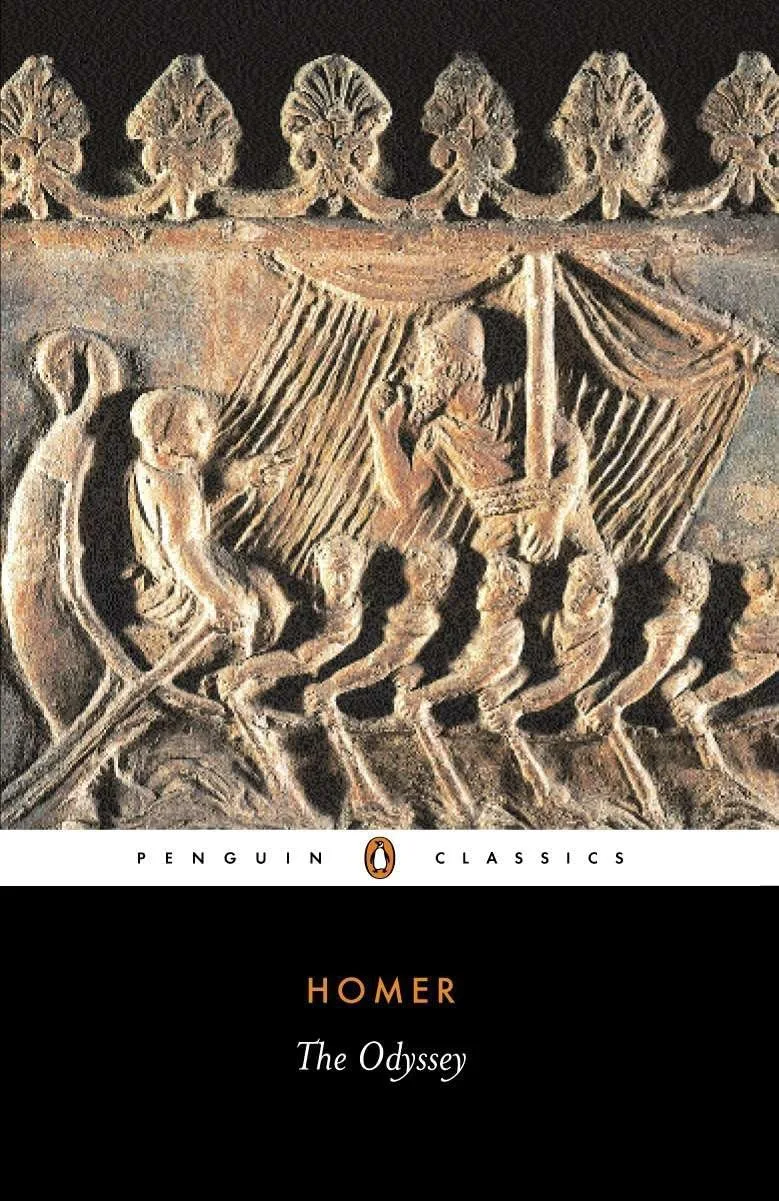
Download Cover Image
Do you want to download the full cover image for The Odyssey by Homer: The Greatest Greek Epic of Adventure, Mythology and Heroism?