
NCERT Class 9 Social Science Textbook Understanding Society Part-I New Syllabus 2026
Paperback
• 220 Pages
• ₹ 180.00
• English
No ratings yet
| Publisher | Vijeta Competition |
|---|---|
| ASIN/SKU | B0HBD1YC6R |
| Book Format | Paperback |
| Language | English |
| Pages | 220 |
| List Price | ₹ 180.00 |
| Publishing Date | 15/06/2026 |
| Dimensions | 18 x 8 x 2 cm |
| Weight | 210 g |
| Book Code | BD00070053 |
Buy this Book
Amazon Stores
Ebook Stores
Other Stores
Discover NCERT Class 9 Social Science Textbook Understanding Society Part-I New Syllabus 2026 by NCERT. This book is published by Vijeta Competition in Paperback format, ASIN B0HBD1YC6R, under School Books, CBSE Textbooks.
Book Description
NCERT Class 9 Social Science Textbook Understanding Society Part-I New Syllabus 2026
Author Biography
Author Biography will be added soon…
Editorial Reviews
Editorial Reviews will be added soon…
Book Summary
NCERT Class 9 Social Science Textbook – Understanding Society: India and Beyond, Part-I is the new integrated Social Science textbook introduced by the National Council of Educational Research and Training (NCERT) for the 2026–27 academic session. It represents a significant change from the earlier Class 9 Social Science structure because History, Geography, Political Science, and Economics are brought together within a connected framework rather than being treated simply as four separate subjects. NCERT's official textbook portal lists Exploring Society: India and Beyond with nine chapters for the new Grade 9 Social Science material.
The central purpose of the book is to help students understand society and the world around them rather than simply memorize dates, definitions, places, and facts. Social Science is presented as a way of understanding people, communities, environments, political institutions, economies, cultures, and historical change. This makes the subject more connected to everyday life and encourages students to ask questions about why societies develop in particular ways.
The new approach is aligned with the broader educational direction of the National Curriculum Framework for School Education 2023. The Grade 9 Social Science syllabus emphasizes understanding society, developing inquiry and analytical abilities, and nurturing responsible citizenship. It encourages students to examine evidence, construct explanations, think critically, appreciate diversity, and understand social and political life.
The first chapter, “Understanding Social Science,” provides the foundation for the entire book. Instead of immediately beginning with a traditional History, Geography, Civics, or Economics chapter, students are introduced to what Social Science actually means and why it matters. The chapter encourages them to understand how different disciplines examine different aspects of human life while remaining interconnected.
History helps us understand change over time. Geography helps us understand places, environments, and spatial relationships. Political studies examine power, governance, institutions, and citizenship. Economics looks at choices, resources, production, markets, and human needs. When these perspectives are brought together, students can develop a more complete understanding of society.
The second chapter, “Shaping of the Earth's Surface,” introduces students to the physical processes that shape our planet. The Earth's surface is not static. Mountains, valleys, plains, plateaus, and other landforms develop through natural processes operating over long periods.
Understanding these processes helps students see the connection between the physical environment and human civilization. Human settlements, agriculture, transportation, industries, and patterns of population are all influenced by geographical conditions.
The chapter encourages students to think beyond memorizing the names of landforms. They can ask how particular features were created, why they occur in certain regions, and how human beings interact with them. This approach makes Geography more analytical and meaningful.
The third chapter, “Atmosphere and Climate,” introduces another major component of the physical environment. Students explore the atmosphere, weather, climate, and the processes that influence climatic conditions.
Climate is particularly important because it affects agriculture, water availability, ecosystems, settlements, livelihoods, and human activities. Students can begin to understand why different parts of the world have different climates and how atmospheric processes influence everyday life.
The chapter also encourages students to distinguish between weather and climate. Weather refers to short-term atmospheric conditions, while climate describes longer-term patterns. Understanding this distinction provides a foundation for interpreting environmental changes and climate-related discussions.
The fourth chapter, “Early Humans and Beginning of Civilisation,” moves students into the study of human history. It examines early human societies and the development of civilization. Students begin to explore how humans adapted to their environments, developed tools, organized communities, and gradually transformed their ways of living.
This part of the book demonstrates that civilization did not appear suddenly. It developed through a long process involving technological changes, food production, settlement, social organization, trade, and cultural development.
Students can learn to view history as a story of human adaptation and transformation rather than simply a list of kings and dates. The development of civilizations was shaped by geography, resources, technology, social organization, and human creativity.
The fifth chapter, “State and Society up to 1000 CE,” examines the development of political and social structures in the early historical period. Students explore how societies became more complex and how states and systems of governance developed.
The chapter also encourages students to think about the relationship between rulers and society. Political structures do not exist independently of the people they govern. Economic activities, social groups, cultural traditions, institutions, and geographical conditions all influence the development of states.
This integrated approach allows students to connect History with Political Science and Geography. They can understand how physical environments affected settlements, how economic activity supported political institutions, and how social structures changed over time.
The sixth chapter, “Democracy,” brings the discussion into political life. Students learn about the meaning and importance of democracy and the principles that support democratic government.
Democracy is presented as more than simply holding elections. It involves participation, accountability, institutions, rights, equality, discussion, and respect for citizens. Students are encouraged to think about what makes a political system genuinely democratic and what challenges democratic societies can face.
The new textbook also discusses the 1975–77 Emergency as part of the challenges to democratic practices in India. This has been reported as a new inclusion in the Class 9 Social Science curriculum.
The discussion provides an opportunity for students to understand why democratic institutions and constitutional safeguards matter. Instead of viewing democracy as an abstract definition, students can examine how democratic practices may be challenged and why citizens need to remain aware of their rights and responsibilities.
The seventh chapter, “Elections,” continues the political theme by examining how citizens participate in representative democracy. Elections are one of the most visible ways through which citizens participate in government, but effective elections require institutions, rules, participation, and procedures.
Students can learn about the importance of electoral processes and the relationship between citizens and representatives. They can also begin to understand why free and fair elections are essential to democratic government.
The chapter connects political concepts with real-life civic participation. Elections are not merely events that happen every few years; they are part of a larger system through which citizens influence political decision-making.
The eighth chapter, “Building Blocks in Economics: The Problem of Choice,” introduces students to fundamental economic thinking. One of the central economic problems is that human wants are numerous while resources are limited. Because resources cannot satisfy every possible desire simultaneously, individuals and societies have to make choices.
This concept of choice and scarcity is fundamental to Economics. Students can observe it in everyday life. A family has a limited income and must decide how to spend it. A student has limited time and must decide how to divide it between study, recreation, and other responsibilities. A government has limited resources and must decide which public needs should receive priority.
By connecting economic concepts with familiar situations, the book makes Economics easier to understand.
The ninth chapter, “The Price Puzzle: What Drives the Market,” introduces students to markets and the factors that influence prices. Students begin to understand that prices are not simply arbitrary numbers. They can be influenced by supply, demand, scarcity, preferences, production conditions, and other factors.
This chapter connects classroom Economics with situations students encounter in everyday life. The price of vegetables, clothes, electronic products, or other goods can change because the conditions surrounding production and demand change.
The central purpose of the book is to help students understand society and the world around them rather than simply memorize dates, definitions, places, and facts. Social Science is presented as a way of understanding people, communities, environments, political institutions, economies, cultures, and historical change. This makes the subject more connected to everyday life and encourages students to ask questions about why societies develop in particular ways.
The new approach is aligned with the broader educational direction of the National Curriculum Framework for School Education 2023. The Grade 9 Social Science syllabus emphasizes understanding society, developing inquiry and analytical abilities, and nurturing responsible citizenship. It encourages students to examine evidence, construct explanations, think critically, appreciate diversity, and understand social and political life.
The first chapter, “Understanding Social Science,” provides the foundation for the entire book. Instead of immediately beginning with a traditional History, Geography, Civics, or Economics chapter, students are introduced to what Social Science actually means and why it matters. The chapter encourages them to understand how different disciplines examine different aspects of human life while remaining interconnected.
History helps us understand change over time. Geography helps us understand places, environments, and spatial relationships. Political studies examine power, governance, institutions, and citizenship. Economics looks at choices, resources, production, markets, and human needs. When these perspectives are brought together, students can develop a more complete understanding of society.
The second chapter, “Shaping of the Earth's Surface,” introduces students to the physical processes that shape our planet. The Earth's surface is not static. Mountains, valleys, plains, plateaus, and other landforms develop through natural processes operating over long periods.
Understanding these processes helps students see the connection between the physical environment and human civilization. Human settlements, agriculture, transportation, industries, and patterns of population are all influenced by geographical conditions.
The chapter encourages students to think beyond memorizing the names of landforms. They can ask how particular features were created, why they occur in certain regions, and how human beings interact with them. This approach makes Geography more analytical and meaningful.
The third chapter, “Atmosphere and Climate,” introduces another major component of the physical environment. Students explore the atmosphere, weather, climate, and the processes that influence climatic conditions.
Climate is particularly important because it affects agriculture, water availability, ecosystems, settlements, livelihoods, and human activities. Students can begin to understand why different parts of the world have different climates and how atmospheric processes influence everyday life.
The chapter also encourages students to distinguish between weather and climate. Weather refers to short-term atmospheric conditions, while climate describes longer-term patterns. Understanding this distinction provides a foundation for interpreting environmental changes and climate-related discussions.
The fourth chapter, “Early Humans and Beginning of Civilisation,” moves students into the study of human history. It examines early human societies and the development of civilization. Students begin to explore how humans adapted to their environments, developed tools, organized communities, and gradually transformed their ways of living.
This part of the book demonstrates that civilization did not appear suddenly. It developed through a long process involving technological changes, food production, settlement, social organization, trade, and cultural development.
Students can learn to view history as a story of human adaptation and transformation rather than simply a list of kings and dates. The development of civilizations was shaped by geography, resources, technology, social organization, and human creativity.
The fifth chapter, “State and Society up to 1000 CE,” examines the development of political and social structures in the early historical period. Students explore how societies became more complex and how states and systems of governance developed.
The chapter also encourages students to think about the relationship between rulers and society. Political structures do not exist independently of the people they govern. Economic activities, social groups, cultural traditions, institutions, and geographical conditions all influence the development of states.
This integrated approach allows students to connect History with Political Science and Geography. They can understand how physical environments affected settlements, how economic activity supported political institutions, and how social structures changed over time.
The sixth chapter, “Democracy,” brings the discussion into political life. Students learn about the meaning and importance of democracy and the principles that support democratic government.
Democracy is presented as more than simply holding elections. It involves participation, accountability, institutions, rights, equality, discussion, and respect for citizens. Students are encouraged to think about what makes a political system genuinely democratic and what challenges democratic societies can face.
The new textbook also discusses the 1975–77 Emergency as part of the challenges to democratic practices in India. This has been reported as a new inclusion in the Class 9 Social Science curriculum.
The discussion provides an opportunity for students to understand why democratic institutions and constitutional safeguards matter. Instead of viewing democracy as an abstract definition, students can examine how democratic practices may be challenged and why citizens need to remain aware of their rights and responsibilities.
The seventh chapter, “Elections,” continues the political theme by examining how citizens participate in representative democracy. Elections are one of the most visible ways through which citizens participate in government, but effective elections require institutions, rules, participation, and procedures.
Students can learn about the importance of electoral processes and the relationship between citizens and representatives. They can also begin to understand why free and fair elections are essential to democratic government.
The chapter connects political concepts with real-life civic participation. Elections are not merely events that happen every few years; they are part of a larger system through which citizens influence political decision-making.
The eighth chapter, “Building Blocks in Economics: The Problem of Choice,” introduces students to fundamental economic thinking. One of the central economic problems is that human wants are numerous while resources are limited. Because resources cannot satisfy every possible desire simultaneously, individuals and societies have to make choices.
This concept of choice and scarcity is fundamental to Economics. Students can observe it in everyday life. A family has a limited income and must decide how to spend it. A student has limited time and must decide how to divide it between study, recreation, and other responsibilities. A government has limited resources and must decide which public needs should receive priority.
By connecting economic concepts with familiar situations, the book makes Economics easier to understand.
The ninth chapter, “The Price Puzzle: What Drives the Market,” introduces students to markets and the factors that influence prices. Students begin to understand that prices are not simply arbitrary numbers. They can be influenced by supply, demand, scarcity, preferences, production conditions, and other factors.
This chapter connects classroom Economics with situations students encounter in everyday life. The price of vegetables, clothes, electronic products, or other goods can change because the conditions surrounding production and demand change.
Sample Chapters
Sample Chapters will be added soon…
Reader Reviews
No reviews yet.
NCERT Class 9 Social Science Textbook Understanding Society Part-I New Syllabus 2026
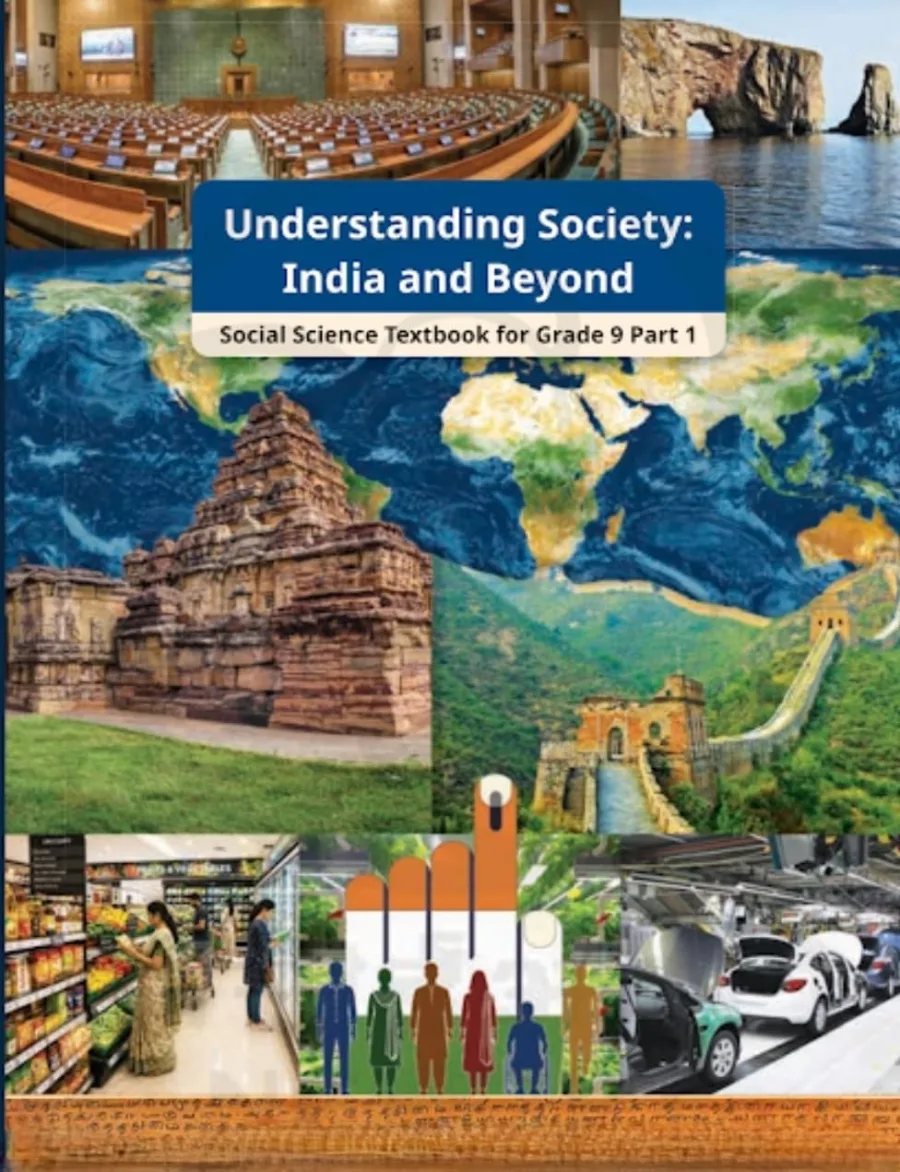
Download Cover Image
Do you want to download the full cover image for NCERT Class 9 Social Science Textbook Understanding Society Part-I New Syllabus 2026?