
Superintelligence
Paperback
• 415 Pages
• ₹ 595.00
• English
• 9780198739838
No ratings yet
| Publisher | Oxford Univ Pr |
|---|---|
| ISBN13 | 9780198739838 |
| ASIN/SKU | 0198739834 |
| Book Format | Paperback |
| Language | English |
| Pages | 415 |
| List Price | ₹ 595.00 |
| Publishing Date | 01/05/2016 |
| Dimensions | 13.01 x 2.29 x 19.47 cm |
| Weight | 430 g |
| Book Code | BD00069616 |
Buy this Book
Amazon Stores
Ebook Stores
Other Stores
Discover Superintelligence by Nick Bostrom. This book is published by Oxford Univ Pr in Paperback format, ISBN 9780198739838, ASIN 0198739834, under Higher Education Textbooks, Artificial Intelligence, Computer Science Books.
Book Description
A New York Times bestseller
Superintelligence asks the questions: What happens when machines surpass humans in general intelligence? Will artificial agents save or destroy us? Nick Bostrom lays the foundation for understanding the future of humanity and intelligent life.
The human brain has some capabilities that the brains of other animals lack. It is to these distinctive capabilities that our species owes its dominant position. If machine brains surpassed human brains in general intelligence, then this new superintelligence could become extremely powerful - possibly beyond our control. As the fate of the gorillas now depends more on humans than on the species itself, so would the fate of humankind depend on the actions of the machine superintelligence.
But we have one advantage: we get to make the first move. Will it be possible to construct a seed Artificial Intelligence, to engineer initial conditions so as to make an intelligence explosion survivable? How could one achieve a controlled detonation?
This profoundly ambitious and original book breaks down a vast track of difficult intellectual terrain. After an utterly engrossing journey that takes us to the frontiers of thinking about the human condition and the future of intelligent life, we find in Nick Bostrom's work nothing less than a reconceptualization of the essential task of our time.
Superintelligence asks the questions: What happens when machines surpass humans in general intelligence? Will artificial agents save or destroy us? Nick Bostrom lays the foundation for understanding the future of humanity and intelligent life.
The human brain has some capabilities that the brains of other animals lack. It is to these distinctive capabilities that our species owes its dominant position. If machine brains surpassed human brains in general intelligence, then this new superintelligence could become extremely powerful - possibly beyond our control. As the fate of the gorillas now depends more on humans than on the species itself, so would the fate of humankind depend on the actions of the machine superintelligence.
But we have one advantage: we get to make the first move. Will it be possible to construct a seed Artificial Intelligence, to engineer initial conditions so as to make an intelligence explosion survivable? How could one achieve a controlled detonation?
This profoundly ambitious and original book breaks down a vast track of difficult intellectual terrain. After an utterly engrossing journey that takes us to the frontiers of thinking about the human condition and the future of intelligent life, we find in Nick Bostrom's work nothing less than a reconceptualization of the essential task of our time.
Author Biography
NICK BOSTROM is a Professor at Oxford University, where he is the founding director of the Future of Humanity Institute. Bostrom is the world’s most cited philosopher aged 50 or under. He is the author of more than 200 publications, including Anthropic Bias (2002), Global Catastrophic Risks (2008), Human Enhancement (2009), and Superintelligence: Paths, Dangers, Strategies (2014), a New York Times bestseller which sparked the global conversation about the future of AI. His work has pioneered many of the ideas that frame current thinking about humanity’s future (such as the concept of an existential risk, the simulation argument, the vulnerable world hypothesis, astronomical waste, the unilateralist’s curse, etc.), while some of his recent work concerns the moral status of digital minds. His writings have been translated into more than 30 languages; he is a repeat main-stage TED speaker; and he has been interviewed more than 1,000 times by media outlets around the world. He has been on Foreign Policy’s Top 100 Global Thinkers list twice and was included in Prospect’s World Thinkers list, the youngest person in the top 15. He has an academic background in theoretical physics, AI, and computational neuroscience as well as philosophy.
Editorial Reviews
Editorial Reviews will be added soon…
Book Summary
Book Summary will be added soon…
Sample Chapters
Sample Chapters will be added soon…
Reader Reviews
No reviews yet.
Superintelligence
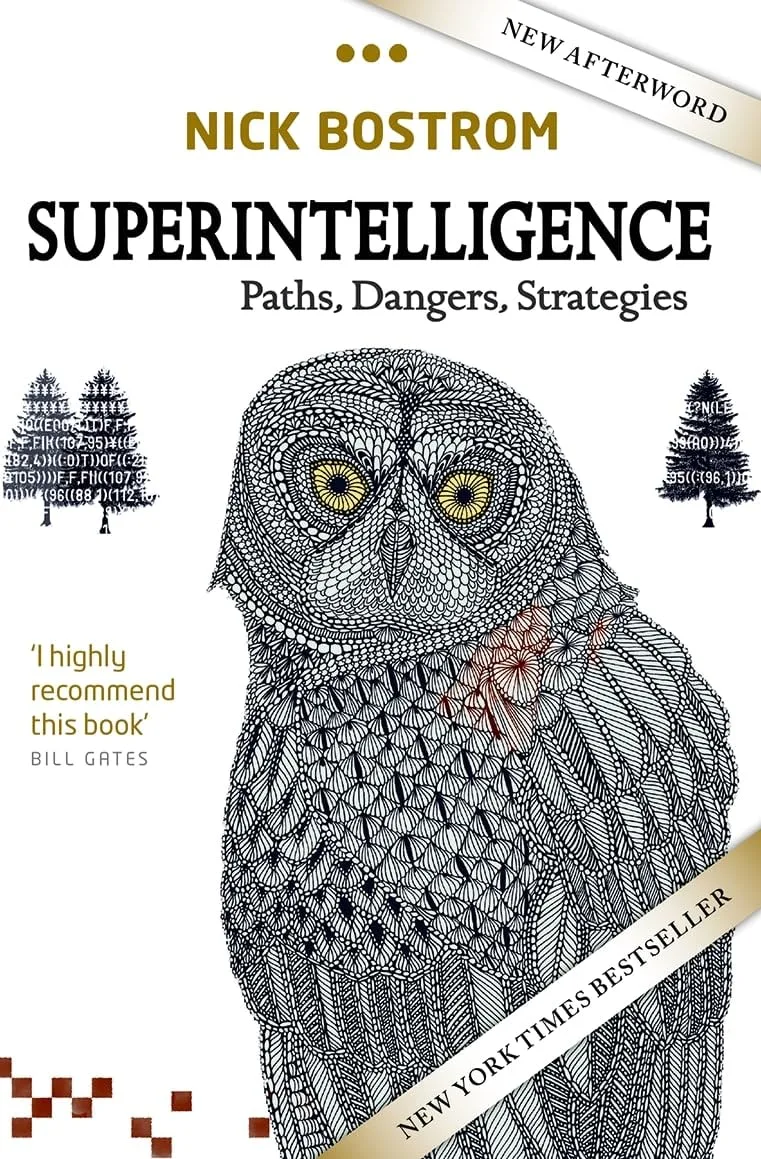
Download Cover Image
Do you want to download the full cover image for Superintelligence?