Birth of a Nation: The Twenty-One Days That Made India
Paperback
• 264 Pages
• ₹ 799.00
• English
• 9789379854827
No ratings yet
| Publisher | Westland Books A Division of Nasadiya Technologies Pvt Ltd |
|---|---|
| ISBN13 | 9789379854827 |
| ASIN/SKU | 937985482X |
| Book Format | Paperback |
| Language | English |
| Pages | 264 |
| List Price | ₹ 799.00 |
| Publishing Date | 29/06/2026 |
| Dimensions | 14 x 3 x 21 cm |
| Weight | 700 g |
| Book Code | BD00068392 |
Buy this Book
Amazon Stores
Ebook Stores
Other Stores
Discover Birth of a Nation: The Twenty-One Days That Made India by Josy Joseph. This book is published by Westland Books A Division of Nasadiya Technologies Pvt Ltd in Paperback format, ISBN 9789379854827, ASIN 937985482X, under History, Modern India, Politics and Government.
Book Description
WHILE JAWAHARLAL NEHRU, M.A. JINNAH AND OTHER PROMINENT LEADERS SPARRED AND DEBATED IN PUBLIC, AND LORD MOUNTBATTEN READIED HIMSELF TO BECOME THE GOVERNOR-GENERAL OF TWO NASCENT DEMOCRACIES, A SMALL GROUP OF CIVIL SERVANTS QUIETLY ANTICIPATED-AND SOUGHT TO PREVENT- THE EVENTUAL BALKANISATION OF INDIA.
25 July-14 August 1947: These were the twenty-one days that made India.
When Josy Joseph stumbles across dusty, neglected archival files in the course of his research, he is astounded by the material it holds. Bringing his investigative nous to historical research, Joseph stitches together a richly detailed account of how India came to be-and how very close it came to being splintered into several independent princely states and a small republic.
The Birth of a Nation follows the work of the newly set-up States Department led by Sardar patel, and its group of determined officials. They were pitted against a coterie of ruling families and their wily advisors who had declared their independence. The fiercest Hindu kingdom was in alliance with orthodox Muslim rulers. These states were building diplomatic relations with foreign nations; lying to Mountbatten, Nehru and Patel; preparing to print their own currencies; building relations with Jinnah and making strategic moves to defend themselves against military action by the Nehru government. They had significant support from a section of the British, Jinnah, the Hindu Mahasabha and the Muslim League.
This is the Indian history citizens need, to appreciate just how hard-won the sovereign, socialist, secular, democratic republic of India is-and how fragile and precious that idea is.
25 July-14 August 1947: These were the twenty-one days that made India.
When Josy Joseph stumbles across dusty, neglected archival files in the course of his research, he is astounded by the material it holds. Bringing his investigative nous to historical research, Joseph stitches together a richly detailed account of how India came to be-and how very close it came to being splintered into several independent princely states and a small republic.
The Birth of a Nation follows the work of the newly set-up States Department led by Sardar patel, and its group of determined officials. They were pitted against a coterie of ruling families and their wily advisors who had declared their independence. The fiercest Hindu kingdom was in alliance with orthodox Muslim rulers. These states were building diplomatic relations with foreign nations; lying to Mountbatten, Nehru and Patel; preparing to print their own currencies; building relations with Jinnah and making strategic moves to defend themselves against military action by the Nehru government. They had significant support from a section of the British, Jinnah, the Hindu Mahasabha and the Muslim League.
This is the Indian history citizens need, to appreciate just how hard-won the sovereign, socialist, secular, democratic republic of India is-and how fragile and precious that idea is.
Author Biography
Josy Joseph is a writer-journalist based in New Delhi, and the founder of Confluence Media, a platform-agnostic investigative journalism outfit. He is the author of the award-winning A Feast of Vultures: The Hidden Business of Democracy in India and The Silent Coup: A History of India's Deep State. Joseph has won several awards for his journalism, including the Prem Bhatia Trust's 'India's best political reporter' in 2010 and the 'Journalist of the Year' Ramnath Goenka award in 2013. He has exposed some of India's biggest scandals-among them, the Mumbai Adarsh Housing scam and the 2010 Commonwealth Games scam-and his stories have played a significant role in impacting the country's social and political narrative.
He was the National Security Editor of The Hindu newspaper, which he left to start Confluence Media. In this new space, Joseph is experimenting with creating a commercially viable, scalable, quality journalism outfit. He lives in New Delhi with his journalist-entrepreneur wife Priya Solomon and daughter Supriya.
He was the National Security Editor of The Hindu newspaper, which he left to start Confluence Media. In this new space, Joseph is experimenting with creating a commercially viable, scalable, quality journalism outfit. He lives in New Delhi with his journalist-entrepreneur wife Priya Solomon and daughter Supriya.
Editorial Reviews
Editorial Reviews will be added soon…
Book Summary
Birth of a Nation: The Twenty-One Days That Made India by Josy Joseph is a deeply researched account of one of the most uncertain and dramatic periods in the making of modern India. Instead of beginning the story of nationhood with the familiar image of 15 August 1947, when India formally became independent, Joseph takes readers back to the twenty-one days between 25 July and 14 August 1947. His central argument is that independence did not automatically create a united India. In those final weeks before the British left, the country could very easily have broken into numerous independent territories. The India that exists today, the book suggests, was the result of intense negotiations, political pressure, secret manoeuvring, administrative skill, and difficult decisions made behind the scenes.
The book focuses particularly on the problem of the princely states. At the time of independence, British India was not simply one unified political territory. Alongside the provinces directly governed by the British were hundreds of princely states ruled by maharajas, nawabs, nizams, and other hereditary rulers. When British paramountcy was about to end, these rulers were suddenly faced with a fundamental question: should they join India, join Pakistan, or attempt to become independent? The answer was far from obvious in every case. Some rulers genuinely believed that they could establish sovereign countries of their own. Others were encouraged by advisers, foreign contacts, religious or political interests, or the possibility of retaining their traditional privileges. Joseph shows how this uncertainty created a serious threat to the territorial unity of the new India.
At the heart of the story is the newly established States Department, led by Sardar Vallabhbhai Patel and supported by officials such as V. P. Menon. These men understood that the British withdrawal had created a race against time. If the princely states were allowed to make independent arrangements with foreign countries or build their own military and diplomatic positions, India could become a collection of competing territories rather than a single nation. The officials therefore had to persuade, pressure, negotiate with, and sometimes outmanoeuvre rulers who had very different ambitions. Their work was often carried out away from public attention, while the better-known political leaders were dealing with Partition, communal violence, and the enormous challenges of transferring power.
Joseph's narrative becomes particularly fascinating because it reveals how close some states came to taking a different path. Travancore, for example, seriously considered independence. Its powerful Dewan, Sir C. P. Ramaswamy Iyer, believed that Travancore had the resources and strategic importance to exist as a separate country. The state's ambitions were not merely theoretical; its leadership explored international relationships and considered how an independent Travancore might operate after the British departed. The story demonstrates that India's eventual unity was not inevitable. There were real alternatives being discussed at the time, and some of them could have dramatically changed the map of South Asia.
Hyderabad provides another important example. The Nizam wanted his state to retain independence rather than become part of India. Because Hyderabad was large, wealthy, strategically located, and ruled by a powerful dynasty, its decision had consequences far beyond its own borders. Joseph also examines the secret activities surrounding the Hyderabad question and brings attention to lesser-known officials who worked within the state's political environment. The book shows that intelligence gathering and quiet information networks were already becoming important tools in the struggle to preserve India's territorial unity. These hidden efforts complicate the traditional historical picture, which often gives most of the attention to famous leaders while overlooking the officials who carried out the difficult practical work.
The same uncertainty affected several other princely states, including Kashmir, Jodhpur, Bhopal, Junagadh, and Indore. Their rulers and advisers were weighing different possibilities, sometimes changing their positions as circumstances developed. Some explored relationships with Pakistan, some considered independence, and others hesitated before agreeing to accession to India. The result was an atmosphere of extraordinary uncertainty. Every decision had to be made quickly because the British transfer of power was approaching. Joseph's twenty-one-day framework makes the reader feel this pressure. The story becomes almost like a political countdown, with every meeting, telegram, journey, and negotiation potentially affecting the future shape of the country.
One of the book's most valuable features is its attention to people who rarely appear in popular accounts of independence. Joseph draws heavily on archival material, including letters, government files, reports, telegrams, and other documents. His research brings forward civil servants, intelligence officers, administrators, advisers, and intermediaries whose work was crucial but whose names are not as familiar as Gandhi, Nehru, Patel, Jinnah, or Mountbatten. By doing so, he changes the way the reader understands nation-building. A country is not created only by speeches and declarations. It is also created through paperwork, negotiations, intelligence, administration, persuasion, and thousands of decisions made by people working under extraordinary pressure.
Joseph also examines the role played by British officials and sections of the British establishment. Some British administrators were not necessarily committed to the creation of a strong and united Indian Union. The book discusses figures such as Conrad Corfield, who had close connections with the princely states and was deeply sympathetic to the rulers. Corfield's position and his handling of sensitive records reveal how complicated the British departure actually was. The end of colonial rule did not mean that every official involved in the transfer of power shared the same vision for India's future. Some continued to protect the interests of the princes, while Indian officials were working urgently to prevent the country from fragmenting.
What makes the book especially compelling is that Joseph does not present India's unity as something that simply happened because the country had always been destined to become one nation. Instead, he portrays unity as something that had to be actively created and protected. The possibility of Balkanisation was genuine. If several powerful princely states had successfully remained independent, the political map of South Asia could have looked completely different. India might have emerged as a patchwork of independent kingdoms and republics, with complicated borders, competing armies, foreign alliances, and continuing disputes. The book therefore encourages readers to look at independence not as a finished achievement but as the beginning of an enormous nation-building project.
The story of these twenty-one days also highlights the difficult balance between persuasion and force. Patel, Menon, and their colleagues had to convince rulers that joining India was in their own interests while making it clear that prolonged defiance could not continue indefinitely. The process involved diplomacy, political pressure, personal relationships, intelligence operations, and, in some situations, the possibility of military action. Joseph's account shows that the integration of India was neither completely peaceful nor simply the result of voluntary decisions. It was a complicated political process in which different kinds of power were used to secure a common national framework.
Ultimately, Birth of a Nation presents the creation of India as a fragile and hard-won achievement. The book's deeper message is that the modern Indian Union should not be taken for granted. The borders, institutions, and political unity that seem natural today were once uncertain possibilities. Joseph's investigative approach reveals how close the country came to fragmentation and how determined groups of officials worked to prevent it. By bringing forgotten documents and overlooked individuals into the story, he gives readers a more complicated and human understanding of independence. The book reminds us that 15 August 1947 was not the moment when India suddenly became a complete nation. The nation was still being assembled, negotiated, defended, and imagined in the days immediately before freedom. In Joseph's telling, those twenty-one days were the frantic final stage of a struggle to ensure that the India emerging from British rule would be one country rather than a collection of competing states.
The book focuses particularly on the problem of the princely states. At the time of independence, British India was not simply one unified political territory. Alongside the provinces directly governed by the British were hundreds of princely states ruled by maharajas, nawabs, nizams, and other hereditary rulers. When British paramountcy was about to end, these rulers were suddenly faced with a fundamental question: should they join India, join Pakistan, or attempt to become independent? The answer was far from obvious in every case. Some rulers genuinely believed that they could establish sovereign countries of their own. Others were encouraged by advisers, foreign contacts, religious or political interests, or the possibility of retaining their traditional privileges. Joseph shows how this uncertainty created a serious threat to the territorial unity of the new India.
At the heart of the story is the newly established States Department, led by Sardar Vallabhbhai Patel and supported by officials such as V. P. Menon. These men understood that the British withdrawal had created a race against time. If the princely states were allowed to make independent arrangements with foreign countries or build their own military and diplomatic positions, India could become a collection of competing territories rather than a single nation. The officials therefore had to persuade, pressure, negotiate with, and sometimes outmanoeuvre rulers who had very different ambitions. Their work was often carried out away from public attention, while the better-known political leaders were dealing with Partition, communal violence, and the enormous challenges of transferring power.
Joseph's narrative becomes particularly fascinating because it reveals how close some states came to taking a different path. Travancore, for example, seriously considered independence. Its powerful Dewan, Sir C. P. Ramaswamy Iyer, believed that Travancore had the resources and strategic importance to exist as a separate country. The state's ambitions were not merely theoretical; its leadership explored international relationships and considered how an independent Travancore might operate after the British departed. The story demonstrates that India's eventual unity was not inevitable. There were real alternatives being discussed at the time, and some of them could have dramatically changed the map of South Asia.
Hyderabad provides another important example. The Nizam wanted his state to retain independence rather than become part of India. Because Hyderabad was large, wealthy, strategically located, and ruled by a powerful dynasty, its decision had consequences far beyond its own borders. Joseph also examines the secret activities surrounding the Hyderabad question and brings attention to lesser-known officials who worked within the state's political environment. The book shows that intelligence gathering and quiet information networks were already becoming important tools in the struggle to preserve India's territorial unity. These hidden efforts complicate the traditional historical picture, which often gives most of the attention to famous leaders while overlooking the officials who carried out the difficult practical work.
The same uncertainty affected several other princely states, including Kashmir, Jodhpur, Bhopal, Junagadh, and Indore. Their rulers and advisers were weighing different possibilities, sometimes changing their positions as circumstances developed. Some explored relationships with Pakistan, some considered independence, and others hesitated before agreeing to accession to India. The result was an atmosphere of extraordinary uncertainty. Every decision had to be made quickly because the British transfer of power was approaching. Joseph's twenty-one-day framework makes the reader feel this pressure. The story becomes almost like a political countdown, with every meeting, telegram, journey, and negotiation potentially affecting the future shape of the country.
One of the book's most valuable features is its attention to people who rarely appear in popular accounts of independence. Joseph draws heavily on archival material, including letters, government files, reports, telegrams, and other documents. His research brings forward civil servants, intelligence officers, administrators, advisers, and intermediaries whose work was crucial but whose names are not as familiar as Gandhi, Nehru, Patel, Jinnah, or Mountbatten. By doing so, he changes the way the reader understands nation-building. A country is not created only by speeches and declarations. It is also created through paperwork, negotiations, intelligence, administration, persuasion, and thousands of decisions made by people working under extraordinary pressure.
Joseph also examines the role played by British officials and sections of the British establishment. Some British administrators were not necessarily committed to the creation of a strong and united Indian Union. The book discusses figures such as Conrad Corfield, who had close connections with the princely states and was deeply sympathetic to the rulers. Corfield's position and his handling of sensitive records reveal how complicated the British departure actually was. The end of colonial rule did not mean that every official involved in the transfer of power shared the same vision for India's future. Some continued to protect the interests of the princes, while Indian officials were working urgently to prevent the country from fragmenting.
What makes the book especially compelling is that Joseph does not present India's unity as something that simply happened because the country had always been destined to become one nation. Instead, he portrays unity as something that had to be actively created and protected. The possibility of Balkanisation was genuine. If several powerful princely states had successfully remained independent, the political map of South Asia could have looked completely different. India might have emerged as a patchwork of independent kingdoms and republics, with complicated borders, competing armies, foreign alliances, and continuing disputes. The book therefore encourages readers to look at independence not as a finished achievement but as the beginning of an enormous nation-building project.
The story of these twenty-one days also highlights the difficult balance between persuasion and force. Patel, Menon, and their colleagues had to convince rulers that joining India was in their own interests while making it clear that prolonged defiance could not continue indefinitely. The process involved diplomacy, political pressure, personal relationships, intelligence operations, and, in some situations, the possibility of military action. Joseph's account shows that the integration of India was neither completely peaceful nor simply the result of voluntary decisions. It was a complicated political process in which different kinds of power were used to secure a common national framework.
Ultimately, Birth of a Nation presents the creation of India as a fragile and hard-won achievement. The book's deeper message is that the modern Indian Union should not be taken for granted. The borders, institutions, and political unity that seem natural today were once uncertain possibilities. Joseph's investigative approach reveals how close the country came to fragmentation and how determined groups of officials worked to prevent it. By bringing forgotten documents and overlooked individuals into the story, he gives readers a more complicated and human understanding of independence. The book reminds us that 15 August 1947 was not the moment when India suddenly became a complete nation. The nation was still being assembled, negotiated, defended, and imagined in the days immediately before freedom. In Joseph's telling, those twenty-one days were the frantic final stage of a struggle to ensure that the India emerging from British rule would be one country rather than a collection of competing states.
Sample Chapters
Sample Chapters will be added soon…
Reader Reviews
No reviews yet.
Birth of a Nation: The Twenty-One Days That Made India
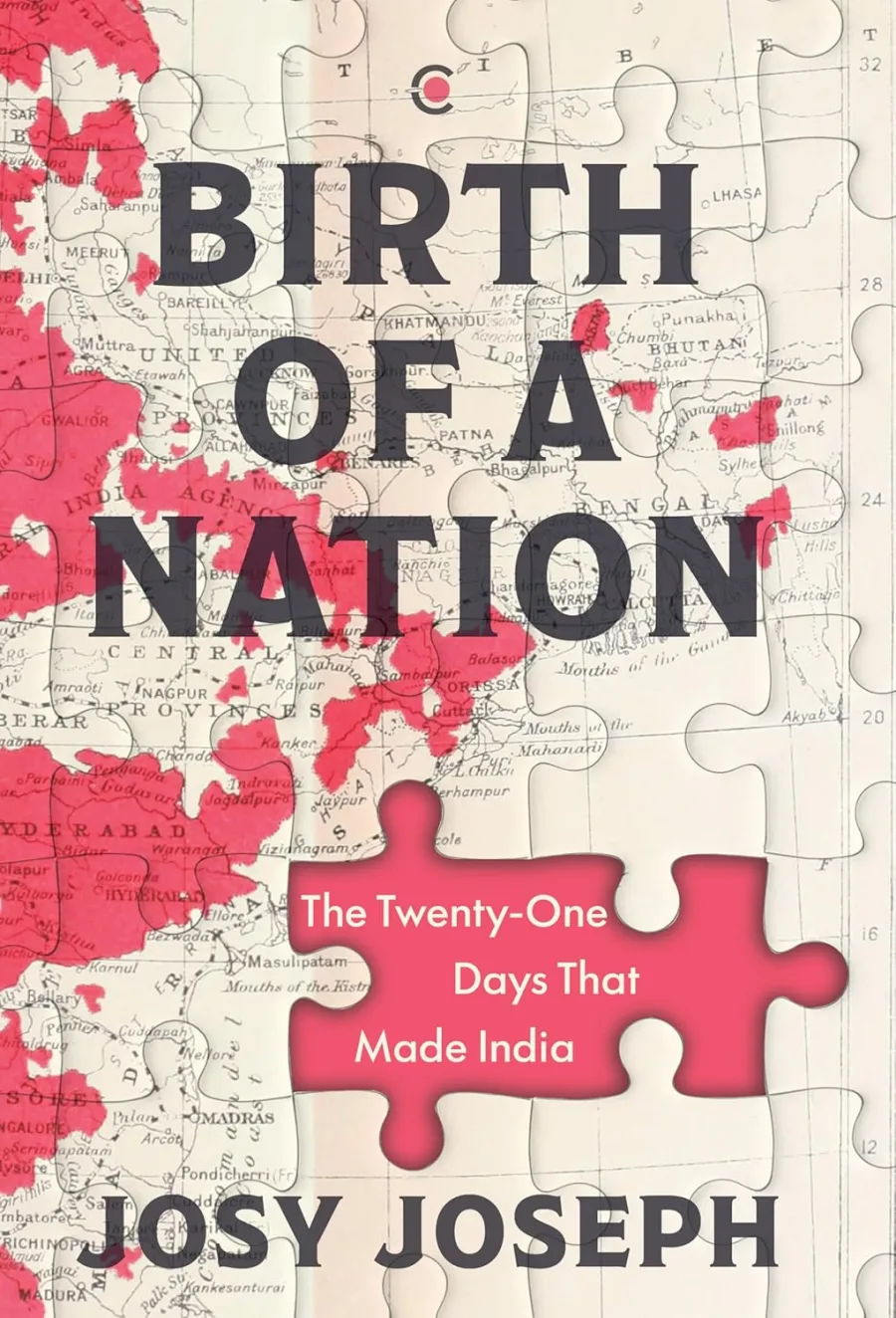
Download Cover Image
Do you want to download the full cover image for Birth of a Nation: The Twenty-One Days That Made India?