
Why I Am an Atheist and Other Works: Letters, Jail Diary & Writings of Bhagat Singh on Revolution, R
Paperback
• 176 Pages
• ₹ 179.00
• English
• 9789354405839
No ratings yet
| Publisher | Fingerprint Publishing |
|---|---|
| ISBN13 | 9789354405839 |
| ASIN/SKU | 9354405835 |
| Book Format | Paperback |
| Language | English |
| Pages | 176 |
| List Price | ₹ 179.00 |
| Publishing Date | 01/09/2022 |
| Dimensions | 12.7 x 1.09 x 19.69 cm |
| Weight | 130 g |
| Book Code | BD00068336 |
Buy this Book
Amazon Stores
Ebook Stores
Other Stores
Discover Why I Am an Atheist and Other Works: Letters, Jail Diary and Writings of Bhagat Singh on Revolution, R by Bhagat Singh. This book is published by Fingerprint Publishing in Paperback format, ISBN 9789354405839, ASIN 9354405835, under Politics and Social Sciences, Indian Writing, Colonialism and Imperialism History.
Book Description
“During your last days, you will begin to believe.”
I said, “No, dear Sir, it shall not be.
Bhagat Singh was one of the greatest freedom fighters of the independence of India. He fearlessly led protests and kept on fighting for his nation in the way he thought fit, even if his life was at stake. This fearless quality shone in his writings as well. After he was imprisoned, he put pen to paper and wrote ‘Why I Am an Atheist’—an essay questioning the existence of God—with complete knowledge of the fact that this was a country filled with people who were generally religious and superstitious.
From an essay that explores atheism, heartfelt letters to family, inspirational letters to comrades, to notices sent to court, and even an introduction to a poetical work—Bhagat Singh’s wide-ranging works, reflections of a cultivated mind, have been put together in this covetable collection.
This book is a must-read for all! It offers:
Great reflections from the mind of a revolutionary freedom fighter
A collection of thought-provoking writings
Highlights into the history and social systems of India
Real anecdotes and recollections that will keep you hooked
A meaningful collectable, perfect for libraries and gifting
I said, “No, dear Sir, it shall not be.
Bhagat Singh was one of the greatest freedom fighters of the independence of India. He fearlessly led protests and kept on fighting for his nation in the way he thought fit, even if his life was at stake. This fearless quality shone in his writings as well. After he was imprisoned, he put pen to paper and wrote ‘Why I Am an Atheist’—an essay questioning the existence of God—with complete knowledge of the fact that this was a country filled with people who were generally religious and superstitious.
From an essay that explores atheism, heartfelt letters to family, inspirational letters to comrades, to notices sent to court, and even an introduction to a poetical work—Bhagat Singh’s wide-ranging works, reflections of a cultivated mind, have been put together in this covetable collection.
This book is a must-read for all! It offers:
Great reflections from the mind of a revolutionary freedom fighter
A collection of thought-provoking writings
Highlights into the history and social systems of India
Real anecdotes and recollections that will keep you hooked
A meaningful collectable, perfect for libraries and gifting
Author Biography
One of the greatest freedom fighters in the history of Indian independence and a national hero, Bhagat Singh was born on September 27, 1907, in Lyallpur, western Punjab (now in Pakistan). From an early age, Bhagat Singh was drawn towards the Indian freedom struggle. From the peaceful protests against the Simon Commission, the planned murder of the then superintendent of police who had ordered the lathi charge that led to Lala Lajpat Rai’ s death, to throwing bombs and pamphlets in the Central Legislative Assembly, and robbing a train which was carrying the money that was meant for Indians but was being transferred to the British treasury— Bhagat Singh did not leave a single opportunity to take active part in fighting for the freedom of his country, even when he was a wanted man. By June 1929, Bhagat Singh was convicted and transported for life. During the time spent in jail, he wrote many works that have now garnered a wide readership. Bhagat Singh was hanged on March 23, 1931. It is believed that his last words were, ‘ Down with British imperialism.’ After his death, he came to be known as ‘ Shaheed’ Bhagat Singh.
Editorial Reviews
Editorial Reviews will be added soon…
Book Summary
Why I Am an Atheist and Other Works is a powerful collection of essays, letters, notes, and speeches by Bhagat Singh, one of India's most respected freedom fighters and revolutionary thinkers. While Bhagat Singh is widely remembered for his courage and sacrifice during India's struggle for independence, this collection introduces readers to another side of his personality—that of a thoughtful intellectual, philosopher, political activist, and social reformer. Written mainly during his years in prison, these works reveal his reflections on freedom, revolution, religion, justice, equality, education, and human dignity. Far from being merely political writings, they offer deep insights into the values that shaped his life and continue to inspire generations.
The most famous essay in the collection, "Why I Am an Atheist," was written in 1930 while Bhagat Singh was imprisoned. In this essay, he explains why he chose not to believe in God. He clarifies that his atheism did not arise from arrogance or a desire to oppose religion but from careful reasoning, study, and personal reflection. Bhagat Singh argues that human beings should rely on reason, evidence, and independent thinking rather than accepting beliefs without questioning them. He maintains that faith should never replace rational inquiry and that every individual has the right to examine ideas critically before accepting them.
Throughout the essay, Bhagat Singh responds to those who claimed that his rejection of religion was the result of pride after becoming famous as a revolutionary. He firmly denies this accusation, explaining that he had begun questioning religious beliefs long before gaining public recognition. He believes that genuine courage lies in facing reality without depending on supernatural support. Even while awaiting execution, he refuses to abandon his convictions, demonstrating remarkable honesty and intellectual integrity. The essay ultimately becomes a celebration of independent thought rather than an attack on people of faith.
Another major theme running through the collection is the meaning of revolution. Bhagat Singh argues that revolution is much more than armed resistance or political violence. For him, true revolution involves transforming society by eliminating injustice, exploitation, inequality, ignorance, and oppression. Political independence alone, he believes, cannot create a just society unless accompanied by social and economic reforms. His vision extends beyond replacing one government with another; he dreams of building a nation where every individual enjoys dignity, equality, and opportunity.
The collection also reflects Bhagat Singh's deep concern for social justice. He strongly opposes all forms of discrimination based on caste, religion, wealth, or social status. He argues that freedom has little meaning if large sections of society continue to suffer from poverty, exploitation, and inequality. His writings repeatedly emphasize that a truly independent nation must guarantee equal rights and opportunities for all its citizens. Justice, according to Bhagat Singh, should not be limited to political freedom but must include economic fairness and social equality.
Education and knowledge occupy a central place in his philosophy. Bhagat Singh believes that education should encourage people to think independently rather than simply memorize accepted ideas. He himself was an enthusiastic reader who studied history, politics, economics, philosophy, sociology, and world literature. His prison notebooks reveal his curiosity about thinkers from many countries and ideological backgrounds. Through this collection, readers see that he valued learning as a lifelong process and believed that an informed society is essential for meaningful democracy and progress.
Another significant aspect of the book is Bhagat Singh's discussion of patriotism. His love for India was not based on hatred toward other nations or communities. Instead, he envisioned a free India built on justice, equality, scientific thinking, and mutual respect. He repeatedly stresses that genuine patriotism requires service, sacrifice, and concern for the welfare of ordinary people rather than personal ambition or political power. His willingness to accept imprisonment and ultimately death for the cause of freedom reflects the depth of this commitment.
The collection also contains several letters written from prison, which reveal Bhagat Singh's emotional maturity and remarkable courage. Even while facing the possibility of execution, he remains calm, thoughtful, and deeply concerned about the future of the country. His letters express affection for family members, respect for fellow revolutionaries, and unwavering dedication to his ideals. Rather than expressing fear or bitterness, they reflect hope that future generations will continue working toward a more just and enlightened society.
One of the most inspiring qualities evident throughout the book is Bhagat Singh's commitment to critical thinking. He encourages readers to question traditions, challenge injustice, and reject blind obedience. According to him, progress becomes possible only when individuals are willing to examine accepted beliefs with honesty and reason. This emphasis on rational inquiry makes his writings remarkably relevant even today, as societies continue to confront issues of prejudice, misinformation, and intolerance.
The book also explores Bhagat Singh's understanding of sacrifice. He does not view sacrifice as an act of despair but as a conscious choice made in pursuit of a larger purpose. For him, personal comfort and even life itself become secondary when compared with the struggle for freedom, justice, and human dignity. However, he never glorifies violence for its own sake. Instead, he consistently argues that lasting change must ultimately be achieved through social awareness, education, and collective action.
Although written nearly a century ago, the ideas presented in this collection remain strikingly relevant. Questions about freedom, equality, secularism, scientific temper, democracy, social justice, and individual responsibility continue to shape modern societies. Bhagat Singh's writings encourage readers to become active, informed citizens who participate thoughtfully in public life rather than remaining passive observers. His emphasis on reason, compassion, and social responsibility continues to inspire students, scholars, activists, and ordinary readers alike.
The language of the collection is direct, sincere, and intellectually engaging. Bhagat Singh writes with clarity and conviction, presenting complex philosophical and political ideas in a manner that remains accessible to general readers. His arguments are supported by logical reasoning rather than emotional rhetoric, reflecting his disciplined approach to thinking and debate. Even when readers disagree with some of his conclusions, they are encouraged to appreciate the honesty and depth of his reasoning.
In conclusion, Why I Am an Atheist and Other Works is much more than a collection of political essays. It is a profound exploration of freedom, reason, justice, equality, and human responsibility written by one of India's greatest revolutionary thinkers. Through essays, letters, and reflections, Bhagat Singh emerges not only as a fearless freedom fighter but also as a passionate advocate of education, critical inquiry, and social reform. His writings remind readers that true patriotism is rooted in service, that genuine courage lies in standing by one's principles, and that lasting progress depends on reason, compassion, and the continuous pursuit of justice. The collection remains an enduring source of inspiration for anyone seeking to understand the ideals that shaped one of India's most remarkable young revolutionaries.
The most famous essay in the collection, "Why I Am an Atheist," was written in 1930 while Bhagat Singh was imprisoned. In this essay, he explains why he chose not to believe in God. He clarifies that his atheism did not arise from arrogance or a desire to oppose religion but from careful reasoning, study, and personal reflection. Bhagat Singh argues that human beings should rely on reason, evidence, and independent thinking rather than accepting beliefs without questioning them. He maintains that faith should never replace rational inquiry and that every individual has the right to examine ideas critically before accepting them.
Throughout the essay, Bhagat Singh responds to those who claimed that his rejection of religion was the result of pride after becoming famous as a revolutionary. He firmly denies this accusation, explaining that he had begun questioning religious beliefs long before gaining public recognition. He believes that genuine courage lies in facing reality without depending on supernatural support. Even while awaiting execution, he refuses to abandon his convictions, demonstrating remarkable honesty and intellectual integrity. The essay ultimately becomes a celebration of independent thought rather than an attack on people of faith.
Another major theme running through the collection is the meaning of revolution. Bhagat Singh argues that revolution is much more than armed resistance or political violence. For him, true revolution involves transforming society by eliminating injustice, exploitation, inequality, ignorance, and oppression. Political independence alone, he believes, cannot create a just society unless accompanied by social and economic reforms. His vision extends beyond replacing one government with another; he dreams of building a nation where every individual enjoys dignity, equality, and opportunity.
The collection also reflects Bhagat Singh's deep concern for social justice. He strongly opposes all forms of discrimination based on caste, religion, wealth, or social status. He argues that freedom has little meaning if large sections of society continue to suffer from poverty, exploitation, and inequality. His writings repeatedly emphasize that a truly independent nation must guarantee equal rights and opportunities for all its citizens. Justice, according to Bhagat Singh, should not be limited to political freedom but must include economic fairness and social equality.
Education and knowledge occupy a central place in his philosophy. Bhagat Singh believes that education should encourage people to think independently rather than simply memorize accepted ideas. He himself was an enthusiastic reader who studied history, politics, economics, philosophy, sociology, and world literature. His prison notebooks reveal his curiosity about thinkers from many countries and ideological backgrounds. Through this collection, readers see that he valued learning as a lifelong process and believed that an informed society is essential for meaningful democracy and progress.
Another significant aspect of the book is Bhagat Singh's discussion of patriotism. His love for India was not based on hatred toward other nations or communities. Instead, he envisioned a free India built on justice, equality, scientific thinking, and mutual respect. He repeatedly stresses that genuine patriotism requires service, sacrifice, and concern for the welfare of ordinary people rather than personal ambition or political power. His willingness to accept imprisonment and ultimately death for the cause of freedom reflects the depth of this commitment.
The collection also contains several letters written from prison, which reveal Bhagat Singh's emotional maturity and remarkable courage. Even while facing the possibility of execution, he remains calm, thoughtful, and deeply concerned about the future of the country. His letters express affection for family members, respect for fellow revolutionaries, and unwavering dedication to his ideals. Rather than expressing fear or bitterness, they reflect hope that future generations will continue working toward a more just and enlightened society.
One of the most inspiring qualities evident throughout the book is Bhagat Singh's commitment to critical thinking. He encourages readers to question traditions, challenge injustice, and reject blind obedience. According to him, progress becomes possible only when individuals are willing to examine accepted beliefs with honesty and reason. This emphasis on rational inquiry makes his writings remarkably relevant even today, as societies continue to confront issues of prejudice, misinformation, and intolerance.
The book also explores Bhagat Singh's understanding of sacrifice. He does not view sacrifice as an act of despair but as a conscious choice made in pursuit of a larger purpose. For him, personal comfort and even life itself become secondary when compared with the struggle for freedom, justice, and human dignity. However, he never glorifies violence for its own sake. Instead, he consistently argues that lasting change must ultimately be achieved through social awareness, education, and collective action.
Although written nearly a century ago, the ideas presented in this collection remain strikingly relevant. Questions about freedom, equality, secularism, scientific temper, democracy, social justice, and individual responsibility continue to shape modern societies. Bhagat Singh's writings encourage readers to become active, informed citizens who participate thoughtfully in public life rather than remaining passive observers. His emphasis on reason, compassion, and social responsibility continues to inspire students, scholars, activists, and ordinary readers alike.
The language of the collection is direct, sincere, and intellectually engaging. Bhagat Singh writes with clarity and conviction, presenting complex philosophical and political ideas in a manner that remains accessible to general readers. His arguments are supported by logical reasoning rather than emotional rhetoric, reflecting his disciplined approach to thinking and debate. Even when readers disagree with some of his conclusions, they are encouraged to appreciate the honesty and depth of his reasoning.
In conclusion, Why I Am an Atheist and Other Works is much more than a collection of political essays. It is a profound exploration of freedom, reason, justice, equality, and human responsibility written by one of India's greatest revolutionary thinkers. Through essays, letters, and reflections, Bhagat Singh emerges not only as a fearless freedom fighter but also as a passionate advocate of education, critical inquiry, and social reform. His writings remind readers that true patriotism is rooted in service, that genuine courage lies in standing by one's principles, and that lasting progress depends on reason, compassion, and the continuous pursuit of justice. The collection remains an enduring source of inspiration for anyone seeking to understand the ideals that shaped one of India's most remarkable young revolutionaries.
Sample Chapters
Sample Chapters will be added soon…
Reader Reviews
No reviews yet.
Why I Am an Atheist and Other Works: Letters, Jail Diary & Writings of Bhagat Singh on Revolution, R
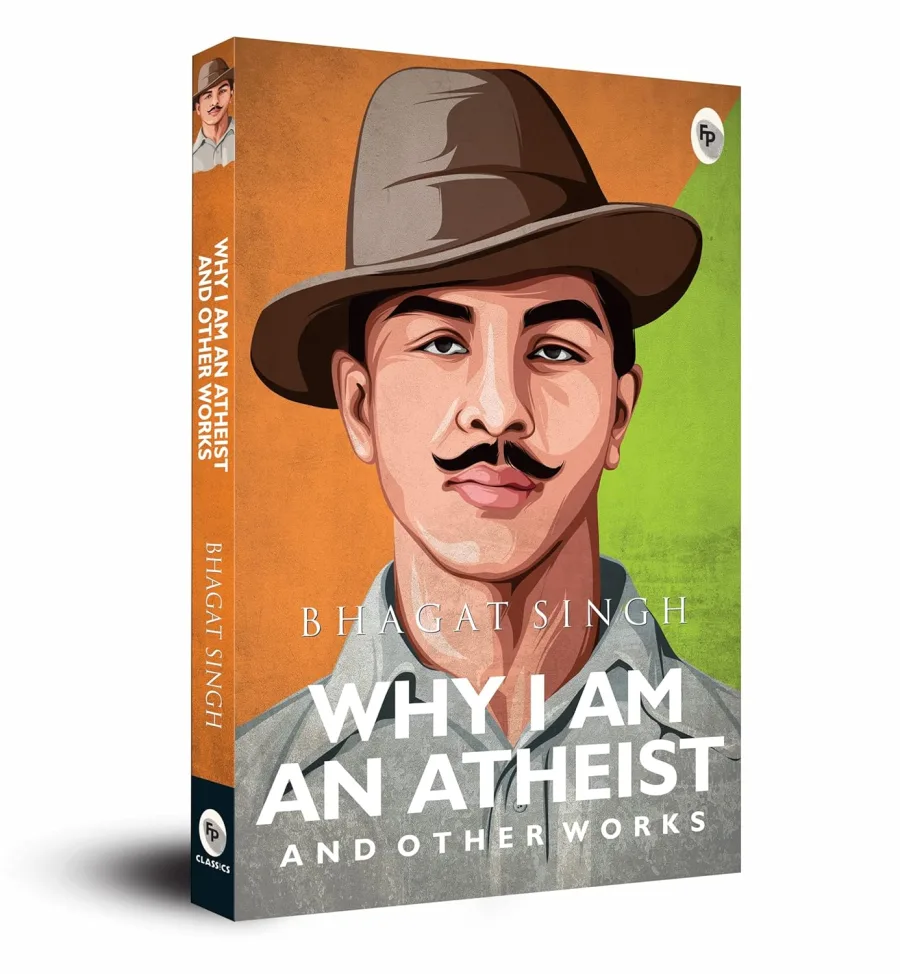
Download Cover Image
Do you want to download the full cover image for Why I Am an Atheist and Other Works: Letters, Jail Diary & Writings of Bhagat Singh on Revolution, R?