
Oxford Mini English Dictionary | Easy To Use | Extra Help with Spelling, Grammar and Vocabulary
Paperback
• 672 Pages
• USD 275.00
• English
• 9780190135096
No ratings yet
| Publisher | Oxford |
|---|---|
| ISBN13 | 9780190135096 |
| ASIN/SKU | 0190135093 |
| Book Format | Paperback |
| Language | English |
| Pages | 672 |
| List Price | USD 275.00 |
| Publishing Date | 12/09/2011 |
| Dimensions | 20.3 x 25.4 x 4.7 cm |
| Weight | 430 g |
| Book Code | BD00068292 |
Buy this Book
Amazon Stores
Ebook Stores
Other Stores
Discover Oxford Mini English Dictionary | Easy To Use | Extra Help with Spelling, Grammar and Vocabulary by Oxford. This book is published by Oxford in Paperback format, ISBN 9780190135096, ASIN 0190135093, under Reference, Dictionaries.
Book Description
Oxford English Mini Dictionary is small easy to carry and includes all words you need for everyday use.In the seventh edition definitions are much clearer and accessible than ever before.It provides extra help with spelling grammar and vocabulary.
Author Biography
Knowledge and learning underpin the progress we make, as individuals and as a society. When we know more, we can solve new problems and explore fresh opportunities. Oxford University Press advances knowledge and learning of all kinds, from a child reading their first words to a researcher expanding the frontiers of their field. Our work is constantly evolving, and the possibilities are endless. We strive to help more and more people around the world achieve their potential.
Oxford University Press is a department of the University of Oxford. It is our mission to further the University's objective of excellence in research, scholarship, and education by publishing worldwide.
Oxford University Press is a department of the University of Oxford. It is our mission to further the University's objective of excellence in research, scholarship, and education by publishing worldwide.
Editorial Reviews
Editorial Reviews will be added soon…
Book Summary
Oxford Mini English Dictionary: Easy to Use | Extra Help with Spelling, Grammar and Vocabulary by Oxford is a compact reference book designed to help learners understand and use English more confidently. Its main purpose is to provide quick access to word meanings, spelling, pronunciation, grammar information, and vocabulary guidance in a convenient format. Rather than being a large reference dictionary intended for extensive academic research, the book is designed as an everyday companion for students and general readers who need quick help while reading or writing English.
A dictionary may appear to be a simple book, but it plays an important role in language learning. When readers encounter an unfamiliar word, they need more than just a translation. They may want to know what the word means, how it is spelled, how it is pronounced, how it behaves grammatically, and how it can be used correctly in a sentence. A good learner's dictionary brings these pieces of information together, helping readers become more independent in their use of English.
One of the most useful features of a compact dictionary is quick access. Students often encounter unfamiliar words while reading textbooks, stories, newspapers, websites, or study materials. Instead of ignoring the word or guessing its meaning incorrectly, they can look it up and continue reading with a clearer understanding.
The dictionary can therefore encourage an important learning habit: checking unfamiliar words rather than automatically skipping them. This habit gradually expands vocabulary and improves reading comprehension.
The book is also useful for spelling support. English spelling can be challenging because many words are not pronounced exactly as they are written. Some words contain silent letters, unusual letter combinations, or spelling patterns that learners may find difficult to remember.
When a student is unsure whether a word is spelled correctly, consulting a dictionary provides a reliable reference. Repeated exposure to correct spellings can gradually improve spelling memory.
For students, this is particularly valuable when completing written assignments, preparing examinations, or writing essays. A single spelling mistake may change the meaning of a word, while repeated spelling errors can make otherwise good writing difficult to understand.
The dictionary also supports vocabulary development. Learning vocabulary is not simply about memorizing long lists of words. Students need to understand what words mean and recognize how they are used in real contexts.
A dictionary allows learners to discover multiple meanings of a word. Many English words have more than one meaning depending on the sentence. Understanding these different meanings helps students become more flexible readers and writers.
For example, a familiar word may have a completely different meaning when used in another context. Looking up the word can help learners recognize these differences instead of assuming that a word always has one fixed meaning.
Another useful aspect is grammar support. Words do not all behave in the same way. Some are nouns, some verbs, some adjectives, some adverbs, and others perform different grammatical functions. Understanding a word's grammatical role helps students use it correctly.
For learners, knowing the meaning of a word is therefore only the beginning. They also need to know how it fits into a sentence. Dictionary information can help them recognize whether a word is being used as a noun, verb, adjective, or another part of speech.
This is especially useful when students encounter words that can function in more than one grammatical role. Understanding the context and grammatical use prevents common mistakes.
The dictionary can also help with pronunciation. English contains many words whose spelling does not immediately reveal their pronunciation. A learner may recognize a word while reading but remain unsure about how to say it.
Pronunciation information gives students an opportunity to develop a more accurate spoken vocabulary. This can be useful in classroom discussions, presentations, interviews, and everyday conversations.
Improved pronunciation also supports listening. When students know how a word is pronounced, they are more likely to recognize it when someone else says it. Vocabulary knowledge therefore becomes more useful when pronunciation and meaning are learned together.
The compact format makes the dictionary particularly suitable for students and everyday use. A large dictionary can be comprehensive but may be inconvenient to carry around or use for quick questions. A mini dictionary can be kept on a study table, carried in a school bag, or used whenever a word needs to be checked.
The title's emphasis on being “easy to use” reflects another important feature of learner-oriented reference books: accessibility. A dictionary should not create another language problem while trying to solve one. Definitions should be understandable enough for learners to grasp the meaning without requiring them to look up several additional difficult words.
This makes a learner's dictionary different from a highly specialized academic dictionary. Its purpose is practical assistance in everyday English.
The book can be particularly useful for school students. Children and teenagers encounter new vocabulary continuously as they progress through different subjects. English textbooks often contain words that are not part of everyday conversation. A dictionary can help them understand these words and use them correctly.
Students can also use it while preparing for examinations. When studying literature, they may encounter unfamiliar descriptive words, expressions, or technical terms. Looking up the meaning can make the chapter easier to understand.
Similarly, while writing answers, students may want to find a more precise word. A dictionary can help them understand possible alternatives and expand their vocabulary.
The book can also support independent learning. One of the most important steps in language development is learning how to solve small problems without always depending on a teacher. If students know how to use a dictionary, they can investigate unfamiliar words themselves.
This encourages curiosity. Instead of treating an unfamiliar word as an obstacle, students begin to see it as an opportunity to learn something new.
Parents can introduce dictionary use through simple activities. When a child asks what a word means, the parent can sometimes encourage the child to find the word in the dictionary. This teaches both vocabulary and an important research habit.
Teachers can also incorporate dictionaries into classroom activities. Students can be asked to find the meaning of a word, identify its part of speech, check its spelling, or discover another meaning. Such activities make vocabulary learning more active.
The dictionary can also help students learn word families and related vocabulary. Once learners understand one word, they may encounter related forms derived from it. Recognizing these connections can expand vocabulary more efficiently than learning completely unrelated words.
For example, a learner may encounter a noun, verb, adjective, or adverb related to the same root. Understanding how these forms are connected can make vocabulary more systematic.
Another important benefit is improved reading comprehension. When readers understand more of the vocabulary in a text, they can focus more easily on the author's ideas. If too many words are unfamiliar, reading becomes slow and frustrating.
A dictionary does not need to be used for every unfamiliar word, however. Good readers learn to use context first. They can try to infer a word's general meaning from the surrounding sentence and then check the dictionary if necessary. This develops both contextual reasoning and accurate vocabulary knowledge.
The book can therefore be used as a support rather than as a substitute for reading. Students should continue reading stories, articles, textbooks, and other material because vocabulary develops most naturally through repeated exposure to words in context.
The dictionary can also improve writing quality. Students sometimes use simple words repeatedly because they are uncertain about alternatives. A dictionary can introduce them to a broader range of vocabulary. However, learners should avoid choosing complicated words simply to make their writing sound impressive. The goal should be accuracy and clarity.
Understanding the exact meaning of a word is important before using it. A synonym may have a slightly different emotional or contextual meaning, so students should not assume that two words are interchangeable in every sentence.
This is one reason dictionaries remain valuable even when digital search tools are widely available.
A dictionary may appear to be a simple book, but it plays an important role in language learning. When readers encounter an unfamiliar word, they need more than just a translation. They may want to know what the word means, how it is spelled, how it is pronounced, how it behaves grammatically, and how it can be used correctly in a sentence. A good learner's dictionary brings these pieces of information together, helping readers become more independent in their use of English.
One of the most useful features of a compact dictionary is quick access. Students often encounter unfamiliar words while reading textbooks, stories, newspapers, websites, or study materials. Instead of ignoring the word or guessing its meaning incorrectly, they can look it up and continue reading with a clearer understanding.
The dictionary can therefore encourage an important learning habit: checking unfamiliar words rather than automatically skipping them. This habit gradually expands vocabulary and improves reading comprehension.
The book is also useful for spelling support. English spelling can be challenging because many words are not pronounced exactly as they are written. Some words contain silent letters, unusual letter combinations, or spelling patterns that learners may find difficult to remember.
When a student is unsure whether a word is spelled correctly, consulting a dictionary provides a reliable reference. Repeated exposure to correct spellings can gradually improve spelling memory.
For students, this is particularly valuable when completing written assignments, preparing examinations, or writing essays. A single spelling mistake may change the meaning of a word, while repeated spelling errors can make otherwise good writing difficult to understand.
The dictionary also supports vocabulary development. Learning vocabulary is not simply about memorizing long lists of words. Students need to understand what words mean and recognize how they are used in real contexts.
A dictionary allows learners to discover multiple meanings of a word. Many English words have more than one meaning depending on the sentence. Understanding these different meanings helps students become more flexible readers and writers.
For example, a familiar word may have a completely different meaning when used in another context. Looking up the word can help learners recognize these differences instead of assuming that a word always has one fixed meaning.
Another useful aspect is grammar support. Words do not all behave in the same way. Some are nouns, some verbs, some adjectives, some adverbs, and others perform different grammatical functions. Understanding a word's grammatical role helps students use it correctly.
For learners, knowing the meaning of a word is therefore only the beginning. They also need to know how it fits into a sentence. Dictionary information can help them recognize whether a word is being used as a noun, verb, adjective, or another part of speech.
This is especially useful when students encounter words that can function in more than one grammatical role. Understanding the context and grammatical use prevents common mistakes.
The dictionary can also help with pronunciation. English contains many words whose spelling does not immediately reveal their pronunciation. A learner may recognize a word while reading but remain unsure about how to say it.
Pronunciation information gives students an opportunity to develop a more accurate spoken vocabulary. This can be useful in classroom discussions, presentations, interviews, and everyday conversations.
Improved pronunciation also supports listening. When students know how a word is pronounced, they are more likely to recognize it when someone else says it. Vocabulary knowledge therefore becomes more useful when pronunciation and meaning are learned together.
The compact format makes the dictionary particularly suitable for students and everyday use. A large dictionary can be comprehensive but may be inconvenient to carry around or use for quick questions. A mini dictionary can be kept on a study table, carried in a school bag, or used whenever a word needs to be checked.
The title's emphasis on being “easy to use” reflects another important feature of learner-oriented reference books: accessibility. A dictionary should not create another language problem while trying to solve one. Definitions should be understandable enough for learners to grasp the meaning without requiring them to look up several additional difficult words.
This makes a learner's dictionary different from a highly specialized academic dictionary. Its purpose is practical assistance in everyday English.
The book can be particularly useful for school students. Children and teenagers encounter new vocabulary continuously as they progress through different subjects. English textbooks often contain words that are not part of everyday conversation. A dictionary can help them understand these words and use them correctly.
Students can also use it while preparing for examinations. When studying literature, they may encounter unfamiliar descriptive words, expressions, or technical terms. Looking up the meaning can make the chapter easier to understand.
Similarly, while writing answers, students may want to find a more precise word. A dictionary can help them understand possible alternatives and expand their vocabulary.
The book can also support independent learning. One of the most important steps in language development is learning how to solve small problems without always depending on a teacher. If students know how to use a dictionary, they can investigate unfamiliar words themselves.
This encourages curiosity. Instead of treating an unfamiliar word as an obstacle, students begin to see it as an opportunity to learn something new.
Parents can introduce dictionary use through simple activities. When a child asks what a word means, the parent can sometimes encourage the child to find the word in the dictionary. This teaches both vocabulary and an important research habit.
Teachers can also incorporate dictionaries into classroom activities. Students can be asked to find the meaning of a word, identify its part of speech, check its spelling, or discover another meaning. Such activities make vocabulary learning more active.
The dictionary can also help students learn word families and related vocabulary. Once learners understand one word, they may encounter related forms derived from it. Recognizing these connections can expand vocabulary more efficiently than learning completely unrelated words.
For example, a learner may encounter a noun, verb, adjective, or adverb related to the same root. Understanding how these forms are connected can make vocabulary more systematic.
Another important benefit is improved reading comprehension. When readers understand more of the vocabulary in a text, they can focus more easily on the author's ideas. If too many words are unfamiliar, reading becomes slow and frustrating.
A dictionary does not need to be used for every unfamiliar word, however. Good readers learn to use context first. They can try to infer a word's general meaning from the surrounding sentence and then check the dictionary if necessary. This develops both contextual reasoning and accurate vocabulary knowledge.
The book can therefore be used as a support rather than as a substitute for reading. Students should continue reading stories, articles, textbooks, and other material because vocabulary develops most naturally through repeated exposure to words in context.
The dictionary can also improve writing quality. Students sometimes use simple words repeatedly because they are uncertain about alternatives. A dictionary can introduce them to a broader range of vocabulary. However, learners should avoid choosing complicated words simply to make their writing sound impressive. The goal should be accuracy and clarity.
Understanding the exact meaning of a word is important before using it. A synonym may have a slightly different emotional or contextual meaning, so students should not assume that two words are interchangeable in every sentence.
This is one reason dictionaries remain valuable even when digital search tools are widely available.
Sample Chapters
Sample Chapters will be added soon…
Reader Reviews
No reviews yet.
Oxford Mini English Dictionary | Easy To Use | Extra Help with Spelling, Grammar and Vocabulary
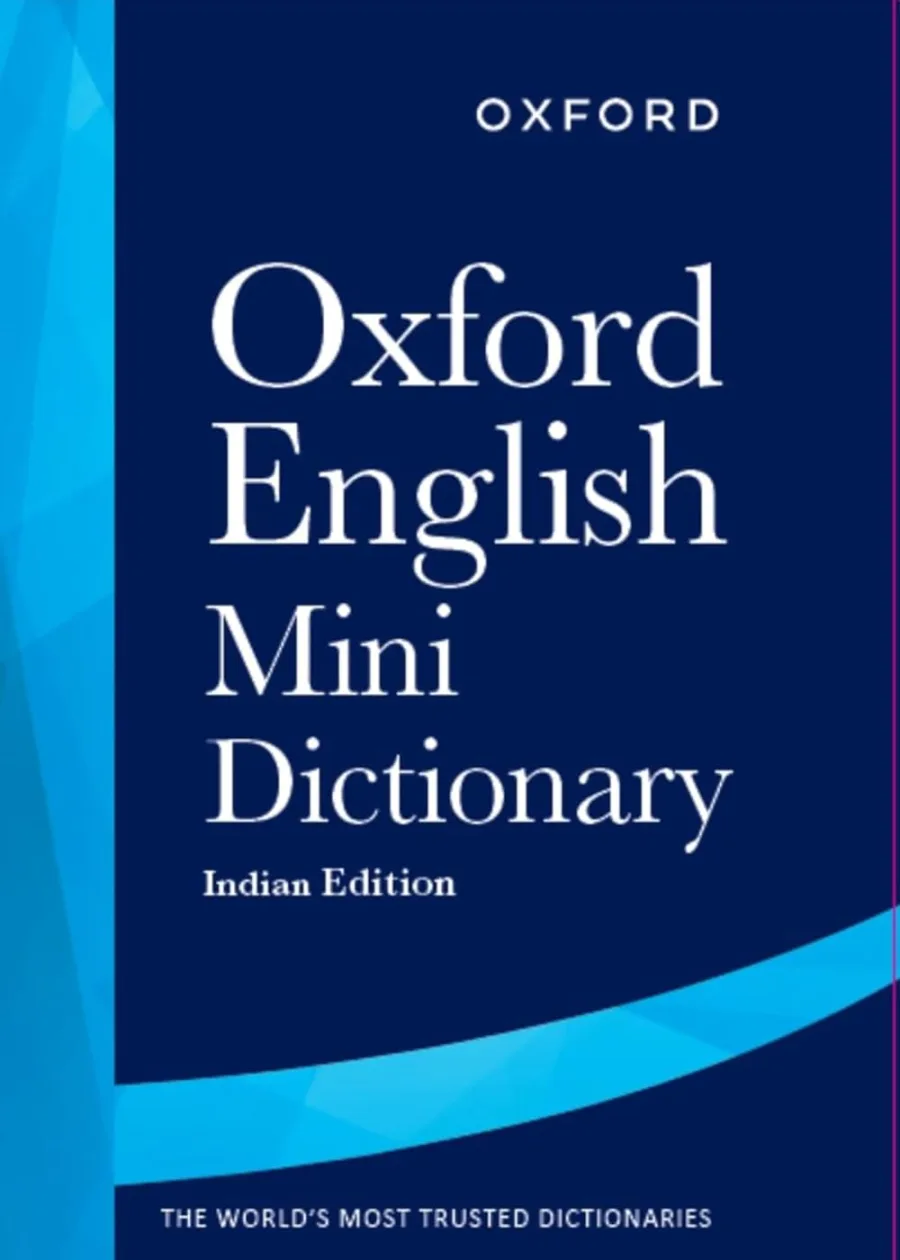
Download Cover Image
Do you want to download the full cover image for Oxford Mini English Dictionary | Easy To Use | Extra Help with Spelling, Grammar and Vocabulary?