
Nursery Rhymes – Board Book for Kids (My First Book Series): Illustrated Collection of Classic Rhyme
Paperback
• 24 Pages
• ₹ 299.00
• English
• 9789388144209
No ratings yet
Children's Books
Early Reader's Rhymes, Verse & Wordplay for Children
Children's Books on School & Education
| Publisher | Wonder House Books |
|---|---|
| ISBN13 | 9789388144209 |
| ASIN/SKU | 9388144201 |
| Book Format | Paperback |
| Language | English |
| Pages | 24 |
| List Price | ₹ 299.00 |
| Publishing Date | 01/01/2018 |
| Dimensions | 12.57 x 2.44 x 15.72 cm |
| Weight | 285 g |
| Book Code | BD00068038 |
Buy this Book
Amazon Stores
Ebook Stores
Other Stores
Discover Nursery Rhymes – Board Book for Kids (My First Book Series): Illustrated Collection of Classic Rhyme by Wonder House Books. This book is published by Wonder House Books in Paperback format, ISBN 9789388144209, ASIN 9388144201, under Children's Books, Early Reader's Rhymes, Verse and Wordplay for Children, Children's Books on School and Education.
Book Description
Nursery Rhymes Board Book (My First Book Series): Illustrated Classic Nursery Rhymes
A beautifully illustrated collection of traditional nursery rhymes including favorites like Twinkle Twinkle little star, Jack and Jill and Humpty Dumpty This board book is designed to enchant and educate young readers through timeless rhymes that have delighted generations. Padded cover and enchanting illustrations make this a perfect gift for your little one who has just started reading.
Sing, Rhyme, and Learn: A Perfect Read for Tiny Tots!
Promotes early language development and phonemic awareness
Sturdy board built to withstand rough handling
Easy-to-read rhymes and verses
Creates a joyful reading routine for young learners
Each rhyme is paired with delightful illustrations
A beautifully illustrated collection of traditional nursery rhymes including favorites like Twinkle Twinkle little star, Jack and Jill and Humpty Dumpty This board book is designed to enchant and educate young readers through timeless rhymes that have delighted generations. Padded cover and enchanting illustrations make this a perfect gift for your little one who has just started reading.
Sing, Rhyme, and Learn: A Perfect Read for Tiny Tots!
Promotes early language development and phonemic awareness
Sturdy board built to withstand rough handling
Easy-to-read rhymes and verses
Creates a joyful reading routine for young learners
Each rhyme is paired with delightful illustrations
Author Biography
Wonder House has a dedicated team of editors and designers involved in the development of magnificent and enriching children books. The team pays special attention to develop age appropriate content and does extensive research on every topic included in the book. Our mission is to develop highly informative content which will help the children to master different skills. At Wonder House, we strive to make learning a joy.
Editorial Reviews
Editorial Reviews will be added soon…
Book Summary
Nursery Rhymes – Board Book for Kids (My First Book Series): Illustrated Collection of Classic Rhymes by Wonder House Books is a colorful and child-friendly collection created to introduce babies and toddlers to the enjoyable world of nursery rhymes. The book brings together familiar traditional rhymes in a simple illustrated format that is designed especially for very young children. Rather than being a book that children are expected to read independently, it is intended to be explored with parents, grandparents, caregivers, or teachers through reading aloud, looking at pictures, repeating words, and singing together.
The biggest strength of a nursery-rhyme book is that it combines language learning with rhythm and repetition. Young children learn naturally by listening to sounds again and again. Nursery rhymes provide short sentences, repeated phrases, rhyming words, and predictable patterns that make language easier to recognize and remember. When children hear the same rhyme repeatedly, they gradually become familiar with its sounds and may begin completing familiar lines themselves.
The board-book format is particularly suitable for babies and toddlers. Very young children do not always handle ordinary paper books carefully, and pages can easily bend or tear. Thick board pages are easier for little hands to turn and are generally better suited to repeated handling. This allows children to interact with the book without parents having to worry about every page.
The colorful illustrations are another important part of the experience. Young children often understand and remember information visually, so pictures give meaning to the words they hear. When a rhyme mentions an animal, person, object, or action, the accompanying illustration helps children connect the spoken word with something they can see.
The book therefore works through sound, image, and repetition at the same time. A parent can read a rhyme aloud while pointing to the pictures, allowing the child to listen and observe. Over time, the child begins making connections between particular sounds and images.
Traditional nursery rhymes are valuable because they introduce children to the rhythm of language. English has patterns of stressed and unstressed sounds that can be difficult for beginners to understand consciously. Rhymes expose children to these patterns naturally. They begin hearing how words fit together, how sentences flow, and how certain words sound alike.
Rhyming words are especially useful for developing phonological awareness. When children notice that two words have similar ending sounds, they are beginning to pay attention to the sound structure of language. This ability later supports phonics and early reading development.
For example, when children repeatedly hear groups of words that rhyme, they gradually understand that words can share common sounds even when their meanings are different. This awareness can eventually help them recognize spelling patterns when they begin learning to read.
The collection can also help expand a child's early vocabulary. Nursery rhymes often introduce names of animals, objects, people, places, actions, and everyday situations. Children can learn these words naturally through repetition rather than through formal vocabulary lessons.
Parents can make vocabulary learning interactive. After reading a rhyme, they can point to an illustration and ask the child to identify an object or character. Simple questions such as “Where is the cat?” or “What is the baby doing?” encourage children to connect language with visual information.
The book can also strengthen listening skills. Babies and toddlers are still developing the ability to concentrate on spoken language for longer periods. Short rhymes provide manageable listening experiences. Their predictable structure makes it easier for children to remain engaged.
Repeated reading is especially valuable. A child may initially listen without responding, but after hearing the same rhyme several times, they may begin recognizing certain words or phrases. Eventually, they may join in by saying the final word of a line or repeating a familiar sentence.
This gradual participation is an important part of early language development. At first, the adult does almost all the speaking. Then the child begins responding to questions, repeating sounds, completing phrases, and eventually reciting entire rhymes.
Nursery rhymes can also support memory development. Their rhythm and repetition make them easier to remember than ordinary pieces of text. Children often enjoy reciting familiar rhymes from memory, which gives them practice in remembering sequences of words.
This activity can also build confidence. When a child successfully recites a rhyme independently, they experience the satisfaction of knowing something well. Such small achievements can encourage them to engage with more books and stories.
The book also provides an opportunity for parent-child bonding. Reading nursery rhymes together is not only an educational activity. It can become a warm daily routine. A parent can hold the child, point at pictures, use different voices, clap along with the rhythm, or encourage the child to repeat words.
These shared experiences can help children associate books with affection and attention. Developing this positive relationship with books at an early age can encourage a lasting interest in reading.
The illustrations also stimulate observation and imagination. Children can look carefully at the characters, objects, colors, and actions shown on each page. Parents can ask them to describe what they see or predict what might happen next.
Even before children can read, they can learn that pictures and words work together to tell a story. This is an important early literacy concept because children eventually learn to use both textual and visual information while reading.
The collection can also help develop speech and pronunciation. Nursery rhymes provide repeated opportunities to hear and say particular sounds. Children can practise difficult sounds naturally while singing or reciting the rhymes.
Rhythm can make pronunciation practice less intimidating. Instead of being asked to repeat isolated sounds or words as an exercise, children practise them while participating in something enjoyable.
Another benefit is the development of social interaction. Nursery rhymes can be enjoyed by groups of children. In a preschool classroom, teachers can recite a rhyme while children clap, sing, perform simple actions, or repeat particular lines together.
Movement can make the experience even more engaging. Some nursery rhymes naturally encourage actions such as clapping, pointing, jumping, waving, or pretending to be an animal. Combining movement with language can help young children remain attentive.
The book is also useful as a first exposure to English literature and culture. Traditional rhymes have been passed from generation to generation and have become an important part of early childhood reading in many English-speaking settings. Introducing them early can help children become comfortable with the sound and rhythm of English.
At the same time, adults can explain unfamiliar words rather than assuming that children will understand everything immediately. A simple explanation accompanied by a picture can turn an unfamiliar rhyme into a useful language-learning opportunity.
The board-book design also makes the collection suitable for independent exploration. A toddler may not be able to read the words, but they can hold the book, turn the pages, look at the pictures, and imitate the adult's reading behavior. This kind of book handling is itself an important part of becoming familiar with books.
Children learn that books have a beginning and an end, that pages are turned in a particular direction, and that pictures and written words carry information. These simple experiences help prepare them for later reading.
Another advantage of nursery rhymes is their predictability. When children know what comes next, they can participate more actively. They may anticipate a repeated phrase, laugh before a funny part, or complete a familiar line. Prediction is an important cognitive skill that later supports reading comprehension.
The collection can also be used as part of a bedtime routine. A few short rhymes can provide a calm transition from active play to quieter activities. Because the rhymes are short, parents can choose one or two each night rather than reading a long story.
The book can equally be used during morning play, travel, preschool activities, or family reading time. Its compact board-book format makes it easy to keep within a child's regular reading environment.
For teachers, the collection can provide material for activities involving rhyming, vocabulary, pronunciation, memory, and movement.
The biggest strength of a nursery-rhyme book is that it combines language learning with rhythm and repetition. Young children learn naturally by listening to sounds again and again. Nursery rhymes provide short sentences, repeated phrases, rhyming words, and predictable patterns that make language easier to recognize and remember. When children hear the same rhyme repeatedly, they gradually become familiar with its sounds and may begin completing familiar lines themselves.
The board-book format is particularly suitable for babies and toddlers. Very young children do not always handle ordinary paper books carefully, and pages can easily bend or tear. Thick board pages are easier for little hands to turn and are generally better suited to repeated handling. This allows children to interact with the book without parents having to worry about every page.
The colorful illustrations are another important part of the experience. Young children often understand and remember information visually, so pictures give meaning to the words they hear. When a rhyme mentions an animal, person, object, or action, the accompanying illustration helps children connect the spoken word with something they can see.
The book therefore works through sound, image, and repetition at the same time. A parent can read a rhyme aloud while pointing to the pictures, allowing the child to listen and observe. Over time, the child begins making connections between particular sounds and images.
Traditional nursery rhymes are valuable because they introduce children to the rhythm of language. English has patterns of stressed and unstressed sounds that can be difficult for beginners to understand consciously. Rhymes expose children to these patterns naturally. They begin hearing how words fit together, how sentences flow, and how certain words sound alike.
Rhyming words are especially useful for developing phonological awareness. When children notice that two words have similar ending sounds, they are beginning to pay attention to the sound structure of language. This ability later supports phonics and early reading development.
For example, when children repeatedly hear groups of words that rhyme, they gradually understand that words can share common sounds even when their meanings are different. This awareness can eventually help them recognize spelling patterns when they begin learning to read.
The collection can also help expand a child's early vocabulary. Nursery rhymes often introduce names of animals, objects, people, places, actions, and everyday situations. Children can learn these words naturally through repetition rather than through formal vocabulary lessons.
Parents can make vocabulary learning interactive. After reading a rhyme, they can point to an illustration and ask the child to identify an object or character. Simple questions such as “Where is the cat?” or “What is the baby doing?” encourage children to connect language with visual information.
The book can also strengthen listening skills. Babies and toddlers are still developing the ability to concentrate on spoken language for longer periods. Short rhymes provide manageable listening experiences. Their predictable structure makes it easier for children to remain engaged.
Repeated reading is especially valuable. A child may initially listen without responding, but after hearing the same rhyme several times, they may begin recognizing certain words or phrases. Eventually, they may join in by saying the final word of a line or repeating a familiar sentence.
This gradual participation is an important part of early language development. At first, the adult does almost all the speaking. Then the child begins responding to questions, repeating sounds, completing phrases, and eventually reciting entire rhymes.
Nursery rhymes can also support memory development. Their rhythm and repetition make them easier to remember than ordinary pieces of text. Children often enjoy reciting familiar rhymes from memory, which gives them practice in remembering sequences of words.
This activity can also build confidence. When a child successfully recites a rhyme independently, they experience the satisfaction of knowing something well. Such small achievements can encourage them to engage with more books and stories.
The book also provides an opportunity for parent-child bonding. Reading nursery rhymes together is not only an educational activity. It can become a warm daily routine. A parent can hold the child, point at pictures, use different voices, clap along with the rhythm, or encourage the child to repeat words.
These shared experiences can help children associate books with affection and attention. Developing this positive relationship with books at an early age can encourage a lasting interest in reading.
The illustrations also stimulate observation and imagination. Children can look carefully at the characters, objects, colors, and actions shown on each page. Parents can ask them to describe what they see or predict what might happen next.
Even before children can read, they can learn that pictures and words work together to tell a story. This is an important early literacy concept because children eventually learn to use both textual and visual information while reading.
The collection can also help develop speech and pronunciation. Nursery rhymes provide repeated opportunities to hear and say particular sounds. Children can practise difficult sounds naturally while singing or reciting the rhymes.
Rhythm can make pronunciation practice less intimidating. Instead of being asked to repeat isolated sounds or words as an exercise, children practise them while participating in something enjoyable.
Another benefit is the development of social interaction. Nursery rhymes can be enjoyed by groups of children. In a preschool classroom, teachers can recite a rhyme while children clap, sing, perform simple actions, or repeat particular lines together.
Movement can make the experience even more engaging. Some nursery rhymes naturally encourage actions such as clapping, pointing, jumping, waving, or pretending to be an animal. Combining movement with language can help young children remain attentive.
The book is also useful as a first exposure to English literature and culture. Traditional rhymes have been passed from generation to generation and have become an important part of early childhood reading in many English-speaking settings. Introducing them early can help children become comfortable with the sound and rhythm of English.
At the same time, adults can explain unfamiliar words rather than assuming that children will understand everything immediately. A simple explanation accompanied by a picture can turn an unfamiliar rhyme into a useful language-learning opportunity.
The board-book design also makes the collection suitable for independent exploration. A toddler may not be able to read the words, but they can hold the book, turn the pages, look at the pictures, and imitate the adult's reading behavior. This kind of book handling is itself an important part of becoming familiar with books.
Children learn that books have a beginning and an end, that pages are turned in a particular direction, and that pictures and written words carry information. These simple experiences help prepare them for later reading.
Another advantage of nursery rhymes is their predictability. When children know what comes next, they can participate more actively. They may anticipate a repeated phrase, laugh before a funny part, or complete a familiar line. Prediction is an important cognitive skill that later supports reading comprehension.
The collection can also be used as part of a bedtime routine. A few short rhymes can provide a calm transition from active play to quieter activities. Because the rhymes are short, parents can choose one or two each night rather than reading a long story.
The book can equally be used during morning play, travel, preschool activities, or family reading time. Its compact board-book format makes it easy to keep within a child's regular reading environment.
For teachers, the collection can provide material for activities involving rhyming, vocabulary, pronunciation, memory, and movement.
Sample Chapters
Sample Chapters will be added soon…
Reader Reviews
No reviews yet.
Nursery Rhymes – Board Book for Kids (My First Book Series): Illustrated Collection of Classic Rhyme
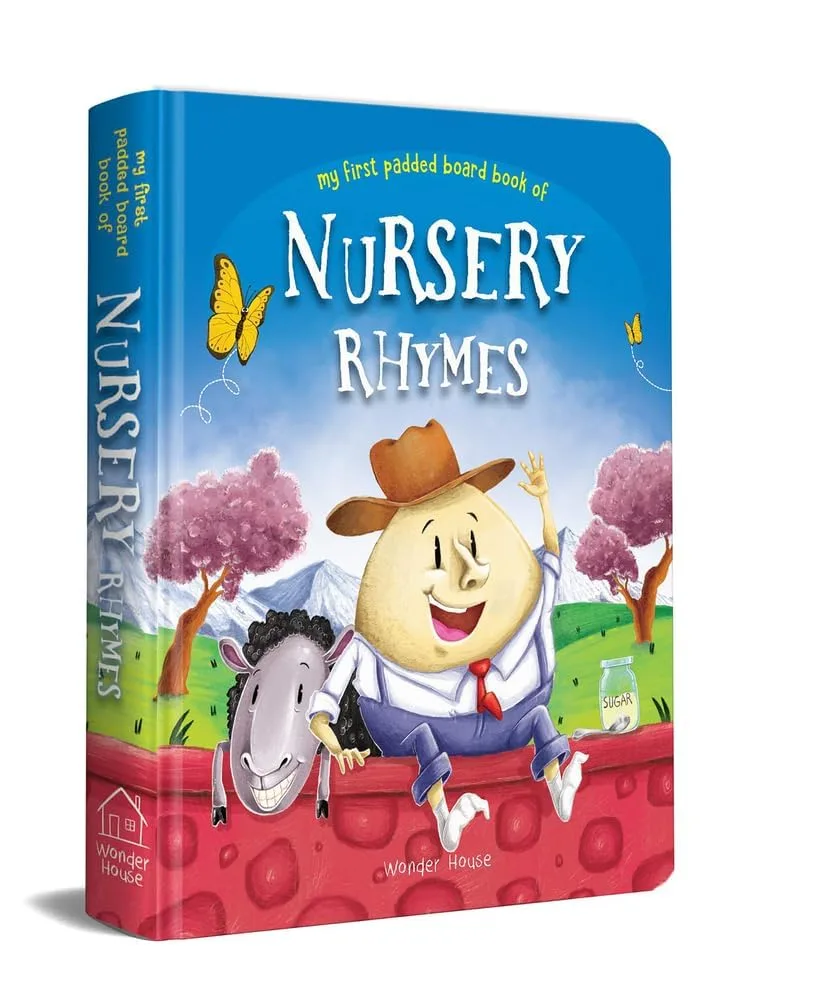
Download Cover Image
Do you want to download the full cover image for Nursery Rhymes – Board Book for Kids (My First Book Series): Illustrated Collection of Classic Rhyme?