
1984 by George Orwell | A Timeless Tale of Surveillance, Power & Rebellion | Classic Literature Best
Paperback
• 304 Pages
• ₹ 199.00
• English
• 9789389053739
No ratings yet
| Publisher | Fingerprint! Publishing |
|---|---|
| ISBN13 | 9789389053739 |
| ASIN/SKU | 9389053730 |
| Book Format | Paperback |
| Language | English |
| Pages | 304 |
| List Price | ₹ 199.00 |
| Publishing Date | 01/05/2219 |
| Dimensions | 21.5 x 14 x 1.75 cm |
| Weight | 195 g |
| Book Code | BD00067621 |
Buy this Book
Amazon Stores
Ebook Stores
Other Stores
Discover 1984 by George Orwell | A Timeless Tale of Surveillance, Power and Rebellion | Classic Literature Best by George Orwell. This book is published by Fingerprint! Publishing in Paperback format, ISBN 9789389053739, ASIN 9389053730, under Business and Money, Industries, Macroeconomics.
Book Description
1984 by George Orwell is a powerful and haunting work of dystopian fiction that continues to shape modern political and cultural conversations. First published in 1949, this classic novel presents a chilling vision of a world ruled by omnipresent surveillance, absolute power, and ruthless authoritarian control.
Set in Oceania, one of three global superstates formed after a catastrophic world war, the story follows Winston Smith, a weary citizen who works for the government yet secretly despises its oppressive rule. His quiet rebellion—and his forbidden love affair with Julia—reveal the terrifying consequences of resisting a system designed to crush individuality and truth.
More than a gripping narrative, 1984 stands as a timeless commentary on censorship, propaganda, and the dangers of unchecked political power. Orwell’s writing continues to resonate today, making this novel essential reading for anyone interested in society, freedom, and the human spirit.
A Landmark Dystopian Novel: One of the most influential works in modern literature, shaping global discussions on surveillance and authoritarianism.
Powerful Storytelling: Follows Winston Smith’s emotional and psychological journey as he dares to seek truth in a world built on lies.
Timeless Political Commentary: A sharp critique of propaganda, censorship, and totalitarian control that remains relevant across generations.
Rich, Thought-Provoking Themes: Explores freedom, individuality, rebellion, and the fragility of human rights.
A Must-Read Classic: Perfect for students, literature lovers, and readers seeking a gripping, meaningful, and enduring novel.
Set in Oceania, one of three global superstates formed after a catastrophic world war, the story follows Winston Smith, a weary citizen who works for the government yet secretly despises its oppressive rule. His quiet rebellion—and his forbidden love affair with Julia—reveal the terrifying consequences of resisting a system designed to crush individuality and truth.
More than a gripping narrative, 1984 stands as a timeless commentary on censorship, propaganda, and the dangers of unchecked political power. Orwell’s writing continues to resonate today, making this novel essential reading for anyone interested in society, freedom, and the human spirit.
A Landmark Dystopian Novel: One of the most influential works in modern literature, shaping global discussions on surveillance and authoritarianism.
Powerful Storytelling: Follows Winston Smith’s emotional and psychological journey as he dares to seek truth in a world built on lies.
Timeless Political Commentary: A sharp critique of propaganda, censorship, and totalitarian control that remains relevant across generations.
Rich, Thought-Provoking Themes: Explores freedom, individuality, rebellion, and the fragility of human rights.
A Must-Read Classic: Perfect for students, literature lovers, and readers seeking a gripping, meaningful, and enduring novel.
Author Biography
George Orwell, born as Eric Arthur Blair on June 25, 1903 in Bihar, India, was a much-respected English novelist, political author, and journalist who wrote some of the finest pieces in literary criticism, poetry, fiction, and polemical journalism. Orwell’s work is known for its simplicity, astuteness, and wit, and he wrote with great cleverness on subjects such as anti-fascism, democratic socialism, totalitarianism, and the anti-Stalinist left. His best works include Animal Farm, Nineteen Eighty Four, and Homage to Catalonia. Orwell died at the age of forty-six in 1950.
Editorial Reviews
Editorial Reviews will be added soon…
Book Summary
1984 by George Orwell is one of the most powerful dystopian novels ever written. Published in 1949, the novel imagines a frightening future in which an authoritarian government controls almost every part of human life. The story explores surveillance, political power, propaganda, censorship, manipulation of truth, fear, individuality, love, and rebellion. Through the life of Winston Smith, Orwell shows what can happen when a government becomes powerful enough not only to control people's actions but also to interfere with their memories, language, beliefs, and understanding of reality.
The story takes place in Oceania, a vast state ruled by a totalitarian government known as the Party. At the top of this system is the mysterious figure of Big Brother. His image appears everywhere, accompanied by the message that Big Brother is watching. Citizens are constantly reminded that they are being observed. Posters, screens, microphones, and other surveillance systems create an atmosphere in which people never feel truly alone.
The Party's power is based on complete control. It does not merely want citizens to obey its laws. It wants them to think in accordance with Party ideology. Independent opinions are considered dangerous because a person who can think independently might eventually question the government. As a result, individuality itself becomes a threat.
The central character, Winston Smith, works at the Ministry of Truth in London. His job is to rewrite historical records so that the past always agrees with the Party's current version of events. If the government makes a prediction that turns out to be wrong, old newspapers and documents are changed. If someone who was once praised becomes an enemy of the Party, references to that person can be removed or altered.
Winston's work reveals one of the novel's most disturbing ideas: control over the past creates control over the present. If people cannot know what really happened yesterday, they cannot easily challenge what the government says today. History becomes something that can be manufactured according to political needs.
Although Winston works for the Party, he secretly hates its system. He remembers enough of the past to understand that the official version of history cannot always be trusted. However, his memories are incomplete. He is uncertain about many details of his childhood and about how society looked before the Party gained complete control.
Winston begins keeping a secret diary. Writing in it is an act of rebellion because independent thought is forbidden. He writes down his feelings and questions, knowing that discovery could result in severe punishment. The diary represents his desire to preserve a private part of himself in a society where privacy has almost disappeared.
One of Winston's most important thoughts is that the future of humanity may depend on ordinary people, whom the Party calls the proles. The proles make up the majority of the population but are largely ignored by the Party because they are considered politically unimportant. Winston believes that if ordinary people ever became aware of their collective strength, they could challenge the system.
However, the proles are kept distracted by entertainment, poverty, routine, and simple pleasures. They are not subjected to the same level of ideological control as Party members, but they also lack the organization and awareness necessary to challenge the government.
Winston's life changes when he notices Julia, a young woman who works for the Party. At first, he suspects that she may be secretly watching him. He fears that she might be a member of the Thought Police. Later, however, Julia secretly communicates that she is attracted to him.
Their relationship becomes an important act of rebellion. In Oceania, the Party tries to control not only political beliefs but also personal relationships and sexuality. Genuine romantic attachment can create loyalty between individuals, and such loyalty competes with the Party's demand that citizens place the state above everything else.
Winston and Julia begin meeting secretly. Their relationship gives Winston something he has almost forgotten: a private life based on personal emotion rather than Party rules. Their meetings provide temporary freedom from the oppressive world around them.
Their relationship also gives Winston hope. He begins to believe that perhaps the Party is not completely invincible. If two people can secretly love one another, perhaps individuals can still preserve some part of their humanity.
Eventually, Winston and Julia rent a room above a small shop owned by Mr. Charrington. Winston believes that the room provides them with a safe private space. They imagine that they can maintain a small world of their own away from the Party's surveillance.
Their sense of security, however, is an illusion.
Winston later becomes interested in O'Brien, a powerful Party member whom he believes may secretly oppose Big Brother. O'Brien appears intelligent and sophisticated, and Winston imagines that he might belong to an underground resistance movement. Winston eventually meets him and becomes convinced that O'Brien is part of a rebellion against the Party.
O'Brien gives Winston and Julia hope that there is an organized resistance. Winston believes that joining such a movement might allow him to fight against the government and help restore freedom.
But this hope is deliberately constructed by the Party.
Winston and Julia are eventually arrested. The room they believed was private was being watched, and their rebellion had been discovered. Mr. Charrington is revealed to be connected to the authorities, demonstrating that even Winston's most private refuge was not truly safe.
Winston is taken to the Ministry of Love, an institution whose name is deeply ironic because it is associated with punishment, interrogation, and psychological control. There he discovers the true extent of the Party's power.
O'Brien reveals that he is not a revolutionary. He is loyal to the Party and has been involved in Winston's capture. Winston's hopes collapse. He realizes that the system has understood his rebellion long before he believed it had begun.
The Party's goal is not simply to punish Winston. It wants to change his mind.
This is one of the most important ideas in the novel. A traditional dictatorship may punish people for their thoughts, but the Party wants something more extreme: it wants citizens to accept the government's version of reality even when that version contradicts obvious facts.
O'Brien interrogates Winston and forces him to confront the idea that reality itself can be controlled by political authority. The Party insists that truth is not something independent of power. If the Party says that two plus two equals five, the ideal citizen must accept it.
Winston struggles against this idea because he wants to believe that reality exists independently of political commands. He understands that if the government can make people deny what they can clearly see, then it has achieved a level of control far beyond ordinary political power.
The concept of doublethink becomes central here. Doublethink means holding two contradictory beliefs at the same time and accepting both as true when the Party requires it. Citizens are expected to believe that the Party is always correct even when they know, or once knew, that it was wrong.
This creates a society in which logical consistency becomes dangerous. A person must constantly adjust their memory and beliefs to match whatever the Party currently says.
Another important concept is Newspeak, the artificial language developed by the Party. Its purpose is to reduce the range of human thought by reducing the number of available words. The theory is simple: if people lack words for certain ideas, it becomes more difficult for them to think about those ideas.
Words related to freedom, rebellion, independent thought, and political opposition can gradually disappear. Language therefore becomes another instrument of control.
Orwell shows that language and thought are closely connected. If political authorities can control language, they can influence the boundaries of what people are able to express and perhaps even what they are able to imagine.
The Party also controls information through propaganda. Citizens are constantly exposed to messages celebrating the government's achievements and describing its enemies as dangerous. The same enemy may be presented differently from one day to another, yet citizens are expected to accept every new version without questioning the contradiction.
This demonstrates the power of propaganda. When people are repeatedly exposed to a particular claim and have no independent sources of information, it can become increasingly difficult to separate fact from political fiction.
The story takes place in Oceania, a vast state ruled by a totalitarian government known as the Party. At the top of this system is the mysterious figure of Big Brother. His image appears everywhere, accompanied by the message that Big Brother is watching. Citizens are constantly reminded that they are being observed. Posters, screens, microphones, and other surveillance systems create an atmosphere in which people never feel truly alone.
The Party's power is based on complete control. It does not merely want citizens to obey its laws. It wants them to think in accordance with Party ideology. Independent opinions are considered dangerous because a person who can think independently might eventually question the government. As a result, individuality itself becomes a threat.
The central character, Winston Smith, works at the Ministry of Truth in London. His job is to rewrite historical records so that the past always agrees with the Party's current version of events. If the government makes a prediction that turns out to be wrong, old newspapers and documents are changed. If someone who was once praised becomes an enemy of the Party, references to that person can be removed or altered.
Winston's work reveals one of the novel's most disturbing ideas: control over the past creates control over the present. If people cannot know what really happened yesterday, they cannot easily challenge what the government says today. History becomes something that can be manufactured according to political needs.
Although Winston works for the Party, he secretly hates its system. He remembers enough of the past to understand that the official version of history cannot always be trusted. However, his memories are incomplete. He is uncertain about many details of his childhood and about how society looked before the Party gained complete control.
Winston begins keeping a secret diary. Writing in it is an act of rebellion because independent thought is forbidden. He writes down his feelings and questions, knowing that discovery could result in severe punishment. The diary represents his desire to preserve a private part of himself in a society where privacy has almost disappeared.
One of Winston's most important thoughts is that the future of humanity may depend on ordinary people, whom the Party calls the proles. The proles make up the majority of the population but are largely ignored by the Party because they are considered politically unimportant. Winston believes that if ordinary people ever became aware of their collective strength, they could challenge the system.
However, the proles are kept distracted by entertainment, poverty, routine, and simple pleasures. They are not subjected to the same level of ideological control as Party members, but they also lack the organization and awareness necessary to challenge the government.
Winston's life changes when he notices Julia, a young woman who works for the Party. At first, he suspects that she may be secretly watching him. He fears that she might be a member of the Thought Police. Later, however, Julia secretly communicates that she is attracted to him.
Their relationship becomes an important act of rebellion. In Oceania, the Party tries to control not only political beliefs but also personal relationships and sexuality. Genuine romantic attachment can create loyalty between individuals, and such loyalty competes with the Party's demand that citizens place the state above everything else.
Winston and Julia begin meeting secretly. Their relationship gives Winston something he has almost forgotten: a private life based on personal emotion rather than Party rules. Their meetings provide temporary freedom from the oppressive world around them.
Their relationship also gives Winston hope. He begins to believe that perhaps the Party is not completely invincible. If two people can secretly love one another, perhaps individuals can still preserve some part of their humanity.
Eventually, Winston and Julia rent a room above a small shop owned by Mr. Charrington. Winston believes that the room provides them with a safe private space. They imagine that they can maintain a small world of their own away from the Party's surveillance.
Their sense of security, however, is an illusion.
Winston later becomes interested in O'Brien, a powerful Party member whom he believes may secretly oppose Big Brother. O'Brien appears intelligent and sophisticated, and Winston imagines that he might belong to an underground resistance movement. Winston eventually meets him and becomes convinced that O'Brien is part of a rebellion against the Party.
O'Brien gives Winston and Julia hope that there is an organized resistance. Winston believes that joining such a movement might allow him to fight against the government and help restore freedom.
But this hope is deliberately constructed by the Party.
Winston and Julia are eventually arrested. The room they believed was private was being watched, and their rebellion had been discovered. Mr. Charrington is revealed to be connected to the authorities, demonstrating that even Winston's most private refuge was not truly safe.
Winston is taken to the Ministry of Love, an institution whose name is deeply ironic because it is associated with punishment, interrogation, and psychological control. There he discovers the true extent of the Party's power.
O'Brien reveals that he is not a revolutionary. He is loyal to the Party and has been involved in Winston's capture. Winston's hopes collapse. He realizes that the system has understood his rebellion long before he believed it had begun.
The Party's goal is not simply to punish Winston. It wants to change his mind.
This is one of the most important ideas in the novel. A traditional dictatorship may punish people for their thoughts, but the Party wants something more extreme: it wants citizens to accept the government's version of reality even when that version contradicts obvious facts.
O'Brien interrogates Winston and forces him to confront the idea that reality itself can be controlled by political authority. The Party insists that truth is not something independent of power. If the Party says that two plus two equals five, the ideal citizen must accept it.
Winston struggles against this idea because he wants to believe that reality exists independently of political commands. He understands that if the government can make people deny what they can clearly see, then it has achieved a level of control far beyond ordinary political power.
The concept of doublethink becomes central here. Doublethink means holding two contradictory beliefs at the same time and accepting both as true when the Party requires it. Citizens are expected to believe that the Party is always correct even when they know, or once knew, that it was wrong.
This creates a society in which logical consistency becomes dangerous. A person must constantly adjust their memory and beliefs to match whatever the Party currently says.
Another important concept is Newspeak, the artificial language developed by the Party. Its purpose is to reduce the range of human thought by reducing the number of available words. The theory is simple: if people lack words for certain ideas, it becomes more difficult for them to think about those ideas.
Words related to freedom, rebellion, independent thought, and political opposition can gradually disappear. Language therefore becomes another instrument of control.
Orwell shows that language and thought are closely connected. If political authorities can control language, they can influence the boundaries of what people are able to express and perhaps even what they are able to imagine.
The Party also controls information through propaganda. Citizens are constantly exposed to messages celebrating the government's achievements and describing its enemies as dangerous. The same enemy may be presented differently from one day to another, yet citizens are expected to accept every new version without questioning the contradiction.
This demonstrates the power of propaganda. When people are repeatedly exposed to a particular claim and have no independent sources of information, it can become increasingly difficult to separate fact from political fiction.
Sample Chapters
Sample Chapters will be added soon…
Reader Reviews
No reviews yet.
1984 by George Orwell | A Timeless Tale of Surveillance, Power & Rebellion | Classic Literature Best
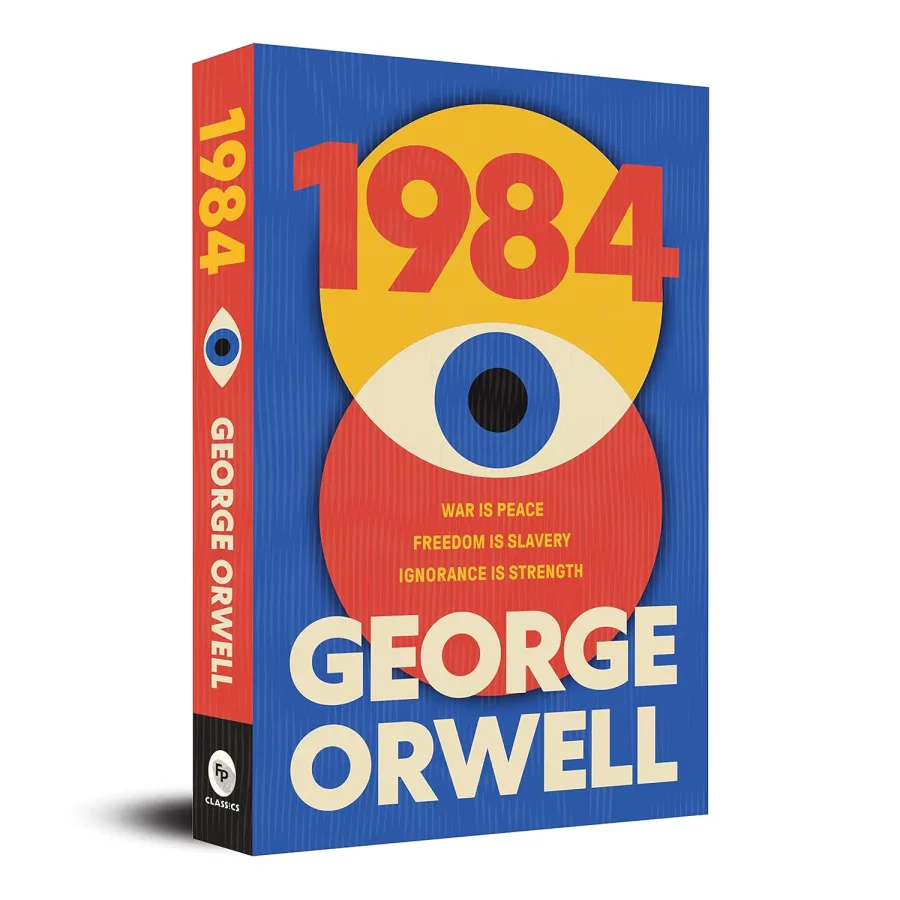
Download Cover Image
Do you want to download the full cover image for 1984 by George Orwell | A Timeless Tale of Surveillance, Power & Rebellion | Classic Literature Best?