
Man's Search For Meaning: The classic tribute to hope from the Holocaust
Paperback
• 160 Pages
• ₹ 249.00
• English
• 9781846041242
No ratings yet
| Publisher | Rider |
|---|---|
| ISBN13 | 9781846041242 |
| ASIN/SKU | 1846041244 |
| Book Format | Paperback |
| Language | English |
| Pages | 160 |
| List Price | ₹ 249.00 |
| Publishing Date | 07/02/2008 |
| Dimensions | 11.1 x 1.1 x 17.7 cm |
| Weight | 92 |
| Book Code | BD00066214 |
Buy this Book
Amazon Stores
Ebook Stores
Other Stores
Discover Man's Search For Meaning: The classic tribute to hope from the Holocaust by Viktor E Frankl. This book is published by Rider in Paperback format, ISBN 9781846041242, ASIN 1846041244, under Biographies and Memoirs, True Accounts, Holocaust.
Book Description
Remarkable...It changed my life and became a part of all that I live and all that I teach.
An enduring work of survival literature. ― New York Times
A book to read, to cherish, to debate, and one that will ultimately keep the memories of the victims alive -- John Boyne, author of The Boy in the Striped Pyjamas
I have loved this book for so many years, and I think every human being should read it. -- Simon Sinek
Viktor Frankl...one of the moral heroes of the 20th century. His insights into human freedom, dignity and the search for meaning are deeply humanizing, and have the power to transform lives. His works are essential reading for those who seek to understand the human condition.
An enduring work of survival literature. ― New York Times
A book to read, to cherish, to debate, and one that will ultimately keep the memories of the victims alive -- John Boyne, author of The Boy in the Striped Pyjamas
I have loved this book for so many years, and I think every human being should read it. -- Simon Sinek
Viktor Frankl...one of the moral heroes of the 20th century. His insights into human freedom, dignity and the search for meaning are deeply humanizing, and have the power to transform lives. His works are essential reading for those who seek to understand the human condition.
Author Biography
Viktor Frankl was born in Vienna in 1905 and was Professor of Neurology and Psychiatry at the University of Vienna Medical School. His wife, father, mother and brother all died in Nazi concentration camps, only he and his sister survived, but he never lost the qualities of compassion, loyalty, undaunted spirit and thirst for life (earning his pilot's licence aged 67). He died in Vienna in 1997.
Editorial Reviews
Remarkable...It changed my life and became a part of all that I live and all that I teach.
An enduring work of survival literature. ― New York Times
A book to read, to cherish, to debate, and one that will ultimately keep the memories of the victims alive -- John Boyne, author of The Boy in the Striped Pyjamas
I have loved this book for so many years, and I think every human being should read it. -- Simon Sinek
Viktor Frankl...one of the moral heroes of the 20th century. His insights into human freedom, dignity and the search for meaning are deeply humanizing, and have the power to transform lives. His works are essential reading for those who seek to understand the human condition.
An enduring work of survival literature. ― New York Times
A book to read, to cherish, to debate, and one that will ultimately keep the memories of the victims alive -- John Boyne, author of The Boy in the Striped Pyjamas
I have loved this book for so many years, and I think every human being should read it. -- Simon Sinek
Viktor Frankl...one of the moral heroes of the 20th century. His insights into human freedom, dignity and the search for meaning are deeply humanizing, and have the power to transform lives. His works are essential reading for those who seek to understand the human condition.
Book Summary
Man’s Search for Meaning by Viktor E. Frankl is one of the most influential books about suffering, hope, human resilience, and the search for purpose. Written by Austrian psychiatrist and neurologist Viktor Frankl, the book combines his personal experiences as a prisoner in Nazi concentration camps during the Holocaust with his psychological ideas about how human beings can survive even the most painful circumstances. It is not simply a memoir of wartime suffering. It is also a reflection on what gives life meaning and how people can preserve an inner sense of freedom even when almost every external freedom has been taken away.
Frankl was a trained psychiatrist before the Second World War. His professional interest was already focused on the question of what gives people a reason to live. During the Holocaust, he was deported to concentration camps and experienced hunger, exhaustion, fear, humiliation, forced labor, separation from loved ones, and the constant possibility of death. His experiences became the foundation for the first part of the book. Rather than describing the camps only from a historical perspective, Frankl examines what happened psychologically to prisoners and how they responded to extreme suffering.
One of the most powerful ideas in the book is that people can endure tremendous hardship when they have a reason to live. Frankl observed that prisoners who had something meaningful to hope for often had a different psychological attitude toward their circumstances. This could be a loved one waiting for them, unfinished work, a future responsibility, or simply the belief that their suffering still had some purpose. Meaning did not remove their pain, but it could give them a reason to continue.
Frankl does not suggest that suffering is automatically good or necessary. Instead, he argues that when suffering cannot be avoided, a person can still choose how to respond to it. This distinction is central to the book. There are circumstances that human beings cannot control, but even within those circumstances, there may remain a small area of inner freedom—the ability to choose one's attitude and response.
The concentration camps represented an environment where prisoners had almost no control over their external lives. Their possessions were taken away, their identities were reduced to numbers, their movements were controlled, and their future was uncertain. Yet Frankl believed that the human mind could retain a degree of independence. A person might not be able to change what was happening around them, but they could attempt to decide what the experience would mean to them internally.
This idea becomes especially important when Frankl describes the psychological stages of prisoners. He observes that many prisoners initially experienced shock after entering the camp. Their previous lives disappeared almost immediately, and they were confronted with conditions that were difficult to comprehend. The first psychological reaction was therefore often one of disbelief and emotional numbness.
As prisoners became accustomed to camp life, another stage developed. They became emotionally hardened as a way of protecting themselves from constant suffering. When terrible events happened repeatedly, people could no longer respond emotionally to every incident. This emotional distancing was not necessarily a sign of cruelty. In many cases, it was a psychological mechanism that helped people survive.
Frankl also describes how prisoners tried to preserve small pieces of their humanity. A brief conversation, a memory of home, a moment of humor, a beautiful sunset, or a thought about someone they loved could provide temporary relief from the harsh reality around them. These moments demonstrated that even under extreme conditions, human beings could still experience beauty and affection.
One of the most memorable ideas in the book concerns love. Frankl describes how thoughts of his wife became a source of strength during his imprisonment. His physical separation from her did not prevent him from experiencing an inner relationship with her. He came to understand that love could become a source of meaning even when the loved person was physically absent.
This does not mean that love magically protected him from suffering. Instead, memories and thoughts of love gave him something to hold on to. They allowed him to experience a world beyond the immediate cruelty of the camp. In this sense, love became connected to his understanding of meaning.
Frankl also found meaning through work and unfinished purpose. Before his imprisonment, he had developed ideas and professional work that he wanted to complete. Imagining a future in which he could continue his work gave him another reason to survive. He realized that life could still contain responsibilities that had not yet been fulfilled.
This leads to another important idea: meaning is not identical for everyone. There is no single answer to the question of what makes life worthwhile. For one person, meaning may come from family; for another, creative work; for another, service, responsibility, faith, or a particular task that needs to be completed.
Frankl therefore encourages people to ask not only, “What do I expect from life?” but also, in a sense, “What does life expect from me?” This changes the perspective from demanding an answer from the world to recognizing one's own responsibilities.
The book's second major section explains Frankl's psychological approach, which he called logotherapy. The word is derived from the Greek term logos, associated with meaning. Logotherapy is based on the idea that the search for meaning is a fundamental human motivation.
Frankl's approach differs from psychological theories that place primary emphasis on pleasure or power. He argues that people are often driven by the desire to discover a purpose for their existence. When people cannot find meaning, they may experience emptiness, boredom, frustration, or a sense that life lacks direction.
This condition is sometimes described by Frankl as an existential vacuum. A person may have food, shelter, work, entertainment, and material possessions but still feel that something important is missing. External comfort does not automatically create inner fulfillment.
The modern relevance of this idea is significant. People can be surrounded by opportunities and distractions while still wondering what their lives are actually for. Frankl suggests that meaning cannot simply be consumed or purchased. It has to be discovered through engagement with life.
According to logotherapy, meaning can be discovered in several broad ways. One is through creating or accomplishing something. Work, art, writing, building, teaching, or contributing to society can provide a sense of purpose.
Another is through experiencing something or encountering someone. Love, friendship, beauty, nature, and meaningful relationships can give life significance. A person may find meaning not only through what they produce but also through what they experience and appreciate.
A third possibility arises through the attitude a person takes toward unavoidable suffering. Frankl does not encourage people to seek suffering. If suffering can be prevented, it should be prevented. But when suffering cannot be changed, the way a person responds to it can become a source of meaning.
This is one of the most important distinctions in the book. Frankl is not saying that people should accept every form of injustice passively. Rather, he argues that even when circumstances are beyond one's control, one's response can still have significance.
The book also emphasizes responsibility. Frankl's understanding of meaning is not simply about finding something that makes a person feel good. Meaning often involves responsibility toward another person, a task, a value, or the future.
This makes his philosophy demanding as well as hopeful. Life does not always give people what they want, and there may be no easy explanation for suffering. Yet a person can still ask what can be done with the situation that exists.
Another important idea is that life's meaning can change. A person does not need to discover one permanent purpose that remains identical throughout their entire life. Different stages bring different responsibilities. A young person may find meaning through education, a parent through caring for children, a professional through work, and an older person through relationships, memories, or wisdom.
This flexible understanding of meaning makes Frankl's philosophy applicable to ordinary life as well as extreme situations.
The book also explores freedom and choice. Frankl's experiences demonstrate that external freedom and inner freedom are not exactly the same. A person can be physically restricted while still maintaining some ability to choose thoughts, attitudes, and responses.
Frankl was a trained psychiatrist before the Second World War. His professional interest was already focused on the question of what gives people a reason to live. During the Holocaust, he was deported to concentration camps and experienced hunger, exhaustion, fear, humiliation, forced labor, separation from loved ones, and the constant possibility of death. His experiences became the foundation for the first part of the book. Rather than describing the camps only from a historical perspective, Frankl examines what happened psychologically to prisoners and how they responded to extreme suffering.
One of the most powerful ideas in the book is that people can endure tremendous hardship when they have a reason to live. Frankl observed that prisoners who had something meaningful to hope for often had a different psychological attitude toward their circumstances. This could be a loved one waiting for them, unfinished work, a future responsibility, or simply the belief that their suffering still had some purpose. Meaning did not remove their pain, but it could give them a reason to continue.
Frankl does not suggest that suffering is automatically good or necessary. Instead, he argues that when suffering cannot be avoided, a person can still choose how to respond to it. This distinction is central to the book. There are circumstances that human beings cannot control, but even within those circumstances, there may remain a small area of inner freedom—the ability to choose one's attitude and response.
The concentration camps represented an environment where prisoners had almost no control over their external lives. Their possessions were taken away, their identities were reduced to numbers, their movements were controlled, and their future was uncertain. Yet Frankl believed that the human mind could retain a degree of independence. A person might not be able to change what was happening around them, but they could attempt to decide what the experience would mean to them internally.
This idea becomes especially important when Frankl describes the psychological stages of prisoners. He observes that many prisoners initially experienced shock after entering the camp. Their previous lives disappeared almost immediately, and they were confronted with conditions that were difficult to comprehend. The first psychological reaction was therefore often one of disbelief and emotional numbness.
As prisoners became accustomed to camp life, another stage developed. They became emotionally hardened as a way of protecting themselves from constant suffering. When terrible events happened repeatedly, people could no longer respond emotionally to every incident. This emotional distancing was not necessarily a sign of cruelty. In many cases, it was a psychological mechanism that helped people survive.
Frankl also describes how prisoners tried to preserve small pieces of their humanity. A brief conversation, a memory of home, a moment of humor, a beautiful sunset, or a thought about someone they loved could provide temporary relief from the harsh reality around them. These moments demonstrated that even under extreme conditions, human beings could still experience beauty and affection.
One of the most memorable ideas in the book concerns love. Frankl describes how thoughts of his wife became a source of strength during his imprisonment. His physical separation from her did not prevent him from experiencing an inner relationship with her. He came to understand that love could become a source of meaning even when the loved person was physically absent.
This does not mean that love magically protected him from suffering. Instead, memories and thoughts of love gave him something to hold on to. They allowed him to experience a world beyond the immediate cruelty of the camp. In this sense, love became connected to his understanding of meaning.
Frankl also found meaning through work and unfinished purpose. Before his imprisonment, he had developed ideas and professional work that he wanted to complete. Imagining a future in which he could continue his work gave him another reason to survive. He realized that life could still contain responsibilities that had not yet been fulfilled.
This leads to another important idea: meaning is not identical for everyone. There is no single answer to the question of what makes life worthwhile. For one person, meaning may come from family; for another, creative work; for another, service, responsibility, faith, or a particular task that needs to be completed.
Frankl therefore encourages people to ask not only, “What do I expect from life?” but also, in a sense, “What does life expect from me?” This changes the perspective from demanding an answer from the world to recognizing one's own responsibilities.
The book's second major section explains Frankl's psychological approach, which he called logotherapy. The word is derived from the Greek term logos, associated with meaning. Logotherapy is based on the idea that the search for meaning is a fundamental human motivation.
Frankl's approach differs from psychological theories that place primary emphasis on pleasure or power. He argues that people are often driven by the desire to discover a purpose for their existence. When people cannot find meaning, they may experience emptiness, boredom, frustration, or a sense that life lacks direction.
This condition is sometimes described by Frankl as an existential vacuum. A person may have food, shelter, work, entertainment, and material possessions but still feel that something important is missing. External comfort does not automatically create inner fulfillment.
The modern relevance of this idea is significant. People can be surrounded by opportunities and distractions while still wondering what their lives are actually for. Frankl suggests that meaning cannot simply be consumed or purchased. It has to be discovered through engagement with life.
According to logotherapy, meaning can be discovered in several broad ways. One is through creating or accomplishing something. Work, art, writing, building, teaching, or contributing to society can provide a sense of purpose.
Another is through experiencing something or encountering someone. Love, friendship, beauty, nature, and meaningful relationships can give life significance. A person may find meaning not only through what they produce but also through what they experience and appreciate.
A third possibility arises through the attitude a person takes toward unavoidable suffering. Frankl does not encourage people to seek suffering. If suffering can be prevented, it should be prevented. But when suffering cannot be changed, the way a person responds to it can become a source of meaning.
This is one of the most important distinctions in the book. Frankl is not saying that people should accept every form of injustice passively. Rather, he argues that even when circumstances are beyond one's control, one's response can still have significance.
The book also emphasizes responsibility. Frankl's understanding of meaning is not simply about finding something that makes a person feel good. Meaning often involves responsibility toward another person, a task, a value, or the future.
This makes his philosophy demanding as well as hopeful. Life does not always give people what they want, and there may be no easy explanation for suffering. Yet a person can still ask what can be done with the situation that exists.
Another important idea is that life's meaning can change. A person does not need to discover one permanent purpose that remains identical throughout their entire life. Different stages bring different responsibilities. A young person may find meaning through education, a parent through caring for children, a professional through work, and an older person through relationships, memories, or wisdom.
This flexible understanding of meaning makes Frankl's philosophy applicable to ordinary life as well as extreme situations.
The book also explores freedom and choice. Frankl's experiences demonstrate that external freedom and inner freedom are not exactly the same. A person can be physically restricted while still maintaining some ability to choose thoughts, attitudes, and responses.
Sample Chapters
Sample Chapters will be added soon…
Reader Reviews
No reviews yet.
Man's Search For Meaning: The classic tribute to hope from the Holocaust
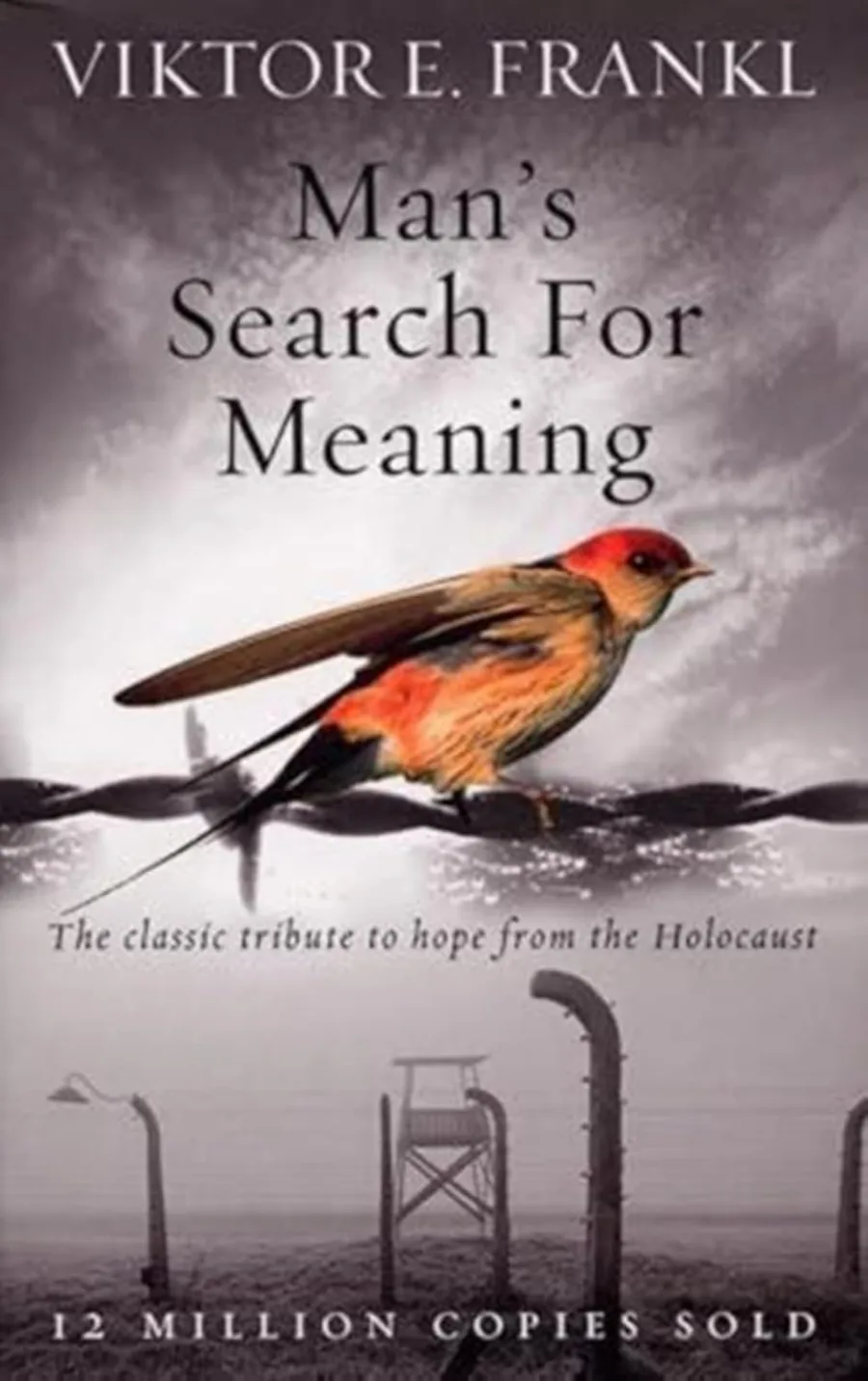
Download Cover Image
Do you want to download the full cover image for Man's Search For Meaning: The classic tribute to hope from the Holocaust?