
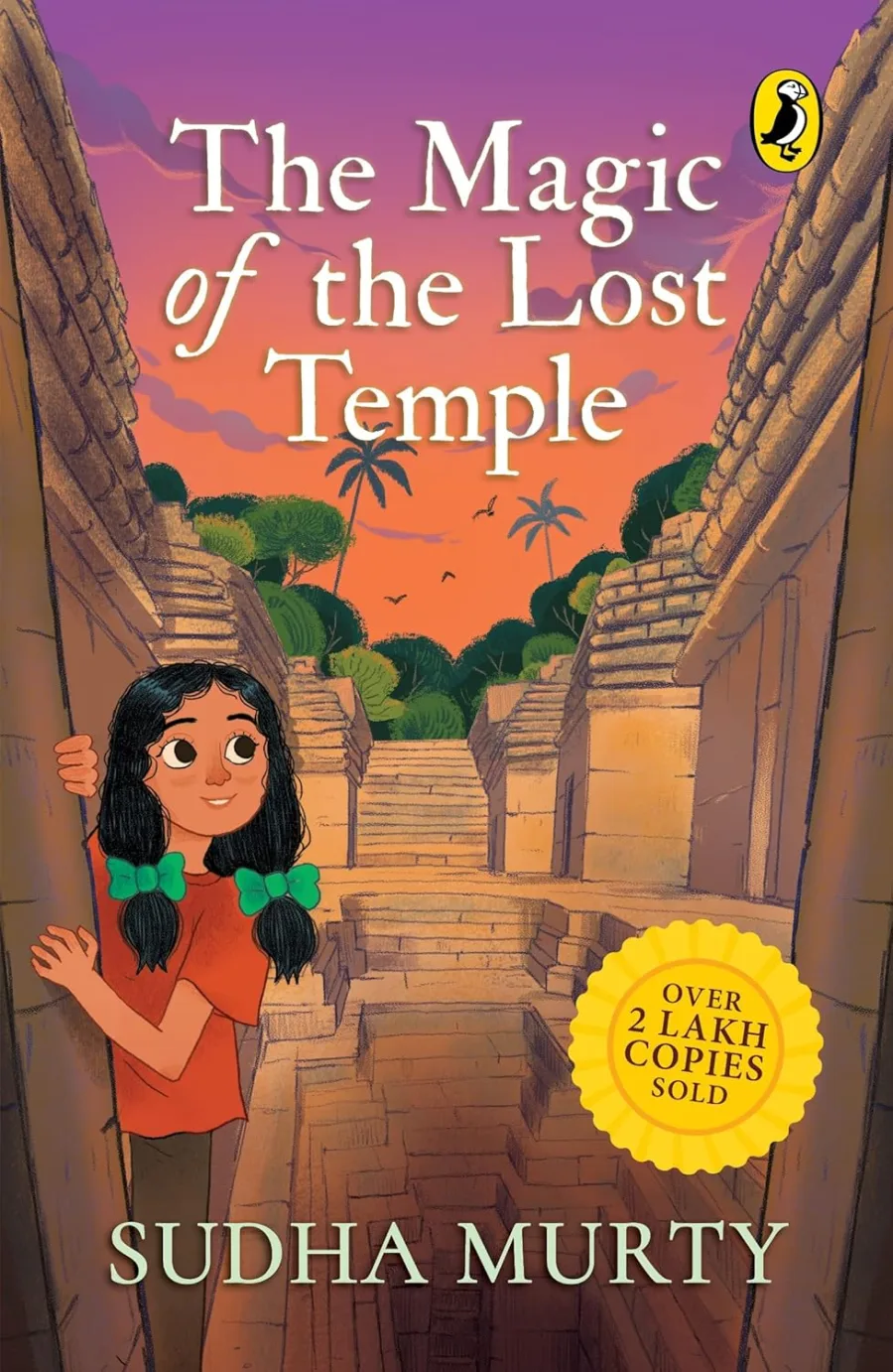
The Magic Of The Lost Temple
Paperback
• 164 Pages
• ₹ 185.00
• English
• 9780143333166
No ratings yet
| Publisher | Puffin |
|---|---|
| ISBN13 | 9780143333166 |
| ASIN/SKU | 014333316X |
| Book Format | Paperback |
| Language | English |
| Pages | 164 |
| List Price | ₹ 185.00 |
| Publishing Date | 25/01/2015 |
| Dimensions | 12.7 x 1.78 x 20.32 cm |
| Weight | 150 g |
| Book Code | BD00066210 |
Buy this Book
Amazon Stores
Ebook Stores
Other Stores
Discover The Magic Of The Lost Temple by Sudha Murty. This book is published by Puffin in Paperback format, ISBN 9780143333166, ASIN 014333316X, under Children's Books, Children's Action and Adventure, Fantasy for Children.
Book Description
Perfect as a read-along
Bursting with charming illustrations
Improves vocabulary skills of children aged 8 to 12
City girl Nooni is surprised at the pace of life in her grandparents' village in Karnataka. But she quickly gets used to the gentle routine there and involves herself in a flurry of activities, including papad making, organizing picnics and learning to ride a cycle, with her newfound friends.
Things get exciting when Nooni stumbles upon an ancient fabled stepwell right in the middle of a forest.
Join the intrepid Nooni on an adventure of a lifetime in this much-awaited book by Sudha Murty that is heart-warming, charming and absolutely unputdownable.
Bursting with charming illustrations
Improves vocabulary skills of children aged 8 to 12
City girl Nooni is surprised at the pace of life in her grandparents' village in Karnataka. But she quickly gets used to the gentle routine there and involves herself in a flurry of activities, including papad making, organizing picnics and learning to ride a cycle, with her newfound friends.
Things get exciting when Nooni stumbles upon an ancient fabled stepwell right in the middle of a forest.
Join the intrepid Nooni on an adventure of a lifetime in this much-awaited book by Sudha Murty that is heart-warming, charming and absolutely unputdownable.
Author Biography
Sudha Murty is the chairperson of the Infosys Foundation. A prolific writer in English and Kannada, she has written novels, technical books, travelogues, collections of short stories and non-fiction pieces, and the hugely popular children’s books which have been bestsellers. Her books have been translated into all the major Indian languages, and she has received many awards.
Editorial Reviews
Editorial Reviews will be added soon…
Book Summary
The Magic of the Lost Temple by Sudha Murty is a heartwarming children's novel that beautifully combines adventure, family values, friendship, history, and self-discovery. Written in Sudha Murty's simple and engaging style, the book tells the story of Nooni, a lively and curious twelve-year-old girl who spends her summer vacation in her grandparents' village. What begins as an ordinary holiday soon turns into an unforgettable adventure involving an ancient hidden temple, local history, and the importance of preserving cultural heritage. Through Nooni's experiences, the novel celebrates the joy of curiosity, the wisdom of elders, and the lasting value of India's traditions. It reminds readers that exciting discoveries often lie hidden in the most familiar places.
The story begins in Bengaluru, where Nooni lives with her busy parents. Since both of them have work commitments during the summer holidays, they decide to send her to her grandparents' village, Somanahalli, in Karnataka. At first, Nooni is uncertain about spending several weeks away from the comforts of city life. She worries that life in a small village might be boring. However, once she arrives, she is warmly welcomed by her loving grandparents, Ajja and Ajji, whose kindness and affection quickly make her feel at home.
As Nooni settles into village life, she begins to appreciate the peaceful surroundings and the close-knit community. Unlike the fast-paced life of the city, the village offers open fields, rivers, animals, fresh air, and plenty of opportunities for exploration. She makes new friends with children from the village, who introduce her to local customs, festivals, games, and traditions. These experiences help Nooni realize that happiness does not depend on modern conveniences but often comes from meaningful relationships and simple pleasures.
Nooni is naturally curious and enjoys asking questions about everything she sees. Her grandparents encourage this curiosity rather than dismissing it. They patiently explain the history of the village, local legends, farming practices, and traditional ways of living. Through these conversations, Nooni develops a deeper appreciation for India's rich cultural heritage and learns that every village has stories waiting to be discovered. Sudha Murty gently encourages young readers to ask questions, remain observant, and value knowledge gained from elders.
The central adventure of the novel begins when Nooni hears stories about an ancient temple that once existed in the village but disappeared many years ago after being buried beneath mud and floodwaters. Although many villagers have heard the legend, no one knows the exact location of the temple. Fascinated by the mystery, Nooni becomes determined to uncover the truth. With the help of her friends and guidance from her grandparents, she begins investigating clues hidden in old stories, historical records, and local traditions.
As the children search for evidence, they learn that history is often preserved not only in books but also in the memories of ordinary people. Conversations with elderly villagers reveal valuable information that gradually helps solve the mystery. Nooni realizes that listening carefully, respecting traditional knowledge, and observing small details are just as important as modern technology in uncovering the past. Her determination and logical thinking inspire others in the village to take the search seriously.
Eventually, careful exploration leads to the discovery of the long-lost temple buried beneath layers of earth. The finding becomes a moment of great joy and pride for the entire village. Archaeologists and government officials become involved in documenting and preserving the site. The discovery not only uncovers an important historical monument but also strengthens the villagers' connection to their cultural heritage. Through this exciting event, the novel demonstrates that history is not merely something found in textbooks—it lives all around us and deserves to be protected for future generations.
One of the strongest themes in the novel is the importance of curiosity. Nooni's willingness to ask questions and seek answers transforms an ordinary summer vacation into an extraordinary learning experience. The story encourages children to remain curious throughout life because every question has the potential to lead to new knowledge and unexpected discoveries.
Another major theme is the value of family relationships. The bond between Nooni and her grandparents forms the emotional heart of the novel. Ajja and Ajji not only care for Nooni but also become her teachers, sharing stories, wisdom, and life experiences. Their patient guidance helps Nooni grow in confidence, independence, and understanding. Sudha Murty beautifully portrays the special relationship between grandparents and grandchildren, showing how love and shared experiences strengthen family ties across generations.
The novel also celebrates friendship and teamwork. Nooni and her village friends work together, share ideas, solve problems, and support one another throughout the search for the temple. Their cooperation demonstrates that important goals are often achieved through collective effort rather than individual success. The friendships formed during the summer become an important part of Nooni's personal growth and leave her with memories that last a lifetime.
Another significant message of the book is the importance of preserving India's cultural and historical heritage. Ancient monuments, traditional stories, temples, and local customs connect people with their past and shape their identity. The discovery of the lost temple reminds readers that protecting historical sites is a shared responsibility. Heritage should not be neglected simply because it belongs to earlier generations; it continues to educate and inspire future generations.
Throughout the story, Sudha Murty highlights the beauty of rural life. The novel presents village life as peaceful, cooperative, and closely connected with nature. Readers experience festivals, farming, local traditions, rivers, trees, and wildlife through Nooni's eyes. Rather than portraying village life as backward, the author emphasizes its wisdom, simplicity, and strong sense of community.
The writing style is simple, warm, and accessible, making the novel suitable for middle-grade readers while remaining enjoyable for adults. Sudha Murty's storytelling is gentle and engaging, with vivid descriptions, realistic characters, and meaningful conversations. She avoids unnecessary complexity, allowing readers to focus on the emotions, values, and lessons within the story.
In conclusion, The Magic of the Lost Temple is much more than an adventure about discovering an ancient monument. It is a touching story about curiosity, family, friendship, history, and the importance of preserving cultural heritage. Through Nooni's memorable summer in Somanahalli, Sudha Murty reminds readers that learning often begins with asking questions, that wisdom can be found in the experiences of elders, and that even the smallest acts of curiosity can uncover extraordinary treasures. The novel inspires young readers to value their roots, respect history, appreciate simple joys, and remain lifelong learners, making it a delightful and meaningful read for all ages.
The story begins in Bengaluru, where Nooni lives with her busy parents. Since both of them have work commitments during the summer holidays, they decide to send her to her grandparents' village, Somanahalli, in Karnataka. At first, Nooni is uncertain about spending several weeks away from the comforts of city life. She worries that life in a small village might be boring. However, once she arrives, she is warmly welcomed by her loving grandparents, Ajja and Ajji, whose kindness and affection quickly make her feel at home.
As Nooni settles into village life, she begins to appreciate the peaceful surroundings and the close-knit community. Unlike the fast-paced life of the city, the village offers open fields, rivers, animals, fresh air, and plenty of opportunities for exploration. She makes new friends with children from the village, who introduce her to local customs, festivals, games, and traditions. These experiences help Nooni realize that happiness does not depend on modern conveniences but often comes from meaningful relationships and simple pleasures.
Nooni is naturally curious and enjoys asking questions about everything she sees. Her grandparents encourage this curiosity rather than dismissing it. They patiently explain the history of the village, local legends, farming practices, and traditional ways of living. Through these conversations, Nooni develops a deeper appreciation for India's rich cultural heritage and learns that every village has stories waiting to be discovered. Sudha Murty gently encourages young readers to ask questions, remain observant, and value knowledge gained from elders.
The central adventure of the novel begins when Nooni hears stories about an ancient temple that once existed in the village but disappeared many years ago after being buried beneath mud and floodwaters. Although many villagers have heard the legend, no one knows the exact location of the temple. Fascinated by the mystery, Nooni becomes determined to uncover the truth. With the help of her friends and guidance from her grandparents, she begins investigating clues hidden in old stories, historical records, and local traditions.
As the children search for evidence, they learn that history is often preserved not only in books but also in the memories of ordinary people. Conversations with elderly villagers reveal valuable information that gradually helps solve the mystery. Nooni realizes that listening carefully, respecting traditional knowledge, and observing small details are just as important as modern technology in uncovering the past. Her determination and logical thinking inspire others in the village to take the search seriously.
Eventually, careful exploration leads to the discovery of the long-lost temple buried beneath layers of earth. The finding becomes a moment of great joy and pride for the entire village. Archaeologists and government officials become involved in documenting and preserving the site. The discovery not only uncovers an important historical monument but also strengthens the villagers' connection to their cultural heritage. Through this exciting event, the novel demonstrates that history is not merely something found in textbooks—it lives all around us and deserves to be protected for future generations.
One of the strongest themes in the novel is the importance of curiosity. Nooni's willingness to ask questions and seek answers transforms an ordinary summer vacation into an extraordinary learning experience. The story encourages children to remain curious throughout life because every question has the potential to lead to new knowledge and unexpected discoveries.
Another major theme is the value of family relationships. The bond between Nooni and her grandparents forms the emotional heart of the novel. Ajja and Ajji not only care for Nooni but also become her teachers, sharing stories, wisdom, and life experiences. Their patient guidance helps Nooni grow in confidence, independence, and understanding. Sudha Murty beautifully portrays the special relationship between grandparents and grandchildren, showing how love and shared experiences strengthen family ties across generations.
The novel also celebrates friendship and teamwork. Nooni and her village friends work together, share ideas, solve problems, and support one another throughout the search for the temple. Their cooperation demonstrates that important goals are often achieved through collective effort rather than individual success. The friendships formed during the summer become an important part of Nooni's personal growth and leave her with memories that last a lifetime.
Another significant message of the book is the importance of preserving India's cultural and historical heritage. Ancient monuments, traditional stories, temples, and local customs connect people with their past and shape their identity. The discovery of the lost temple reminds readers that protecting historical sites is a shared responsibility. Heritage should not be neglected simply because it belongs to earlier generations; it continues to educate and inspire future generations.
Throughout the story, Sudha Murty highlights the beauty of rural life. The novel presents village life as peaceful, cooperative, and closely connected with nature. Readers experience festivals, farming, local traditions, rivers, trees, and wildlife through Nooni's eyes. Rather than portraying village life as backward, the author emphasizes its wisdom, simplicity, and strong sense of community.
The writing style is simple, warm, and accessible, making the novel suitable for middle-grade readers while remaining enjoyable for adults. Sudha Murty's storytelling is gentle and engaging, with vivid descriptions, realistic characters, and meaningful conversations. She avoids unnecessary complexity, allowing readers to focus on the emotions, values, and lessons within the story.
In conclusion, The Magic of the Lost Temple is much more than an adventure about discovering an ancient monument. It is a touching story about curiosity, family, friendship, history, and the importance of preserving cultural heritage. Through Nooni's memorable summer in Somanahalli, Sudha Murty reminds readers that learning often begins with asking questions, that wisdom can be found in the experiences of elders, and that even the smallest acts of curiosity can uncover extraordinary treasures. The novel inspires young readers to value their roots, respect history, appreciate simple joys, and remain lifelong learners, making it a delightful and meaningful read for all ages.
Sample Chapters
Sample Chapters will be added soon…
Reader Reviews
No reviews yet.
The Magic Of The Lost Temple
Download Cover Image
Do you want to download the full cover image for The Magic Of The Lost Temple?