
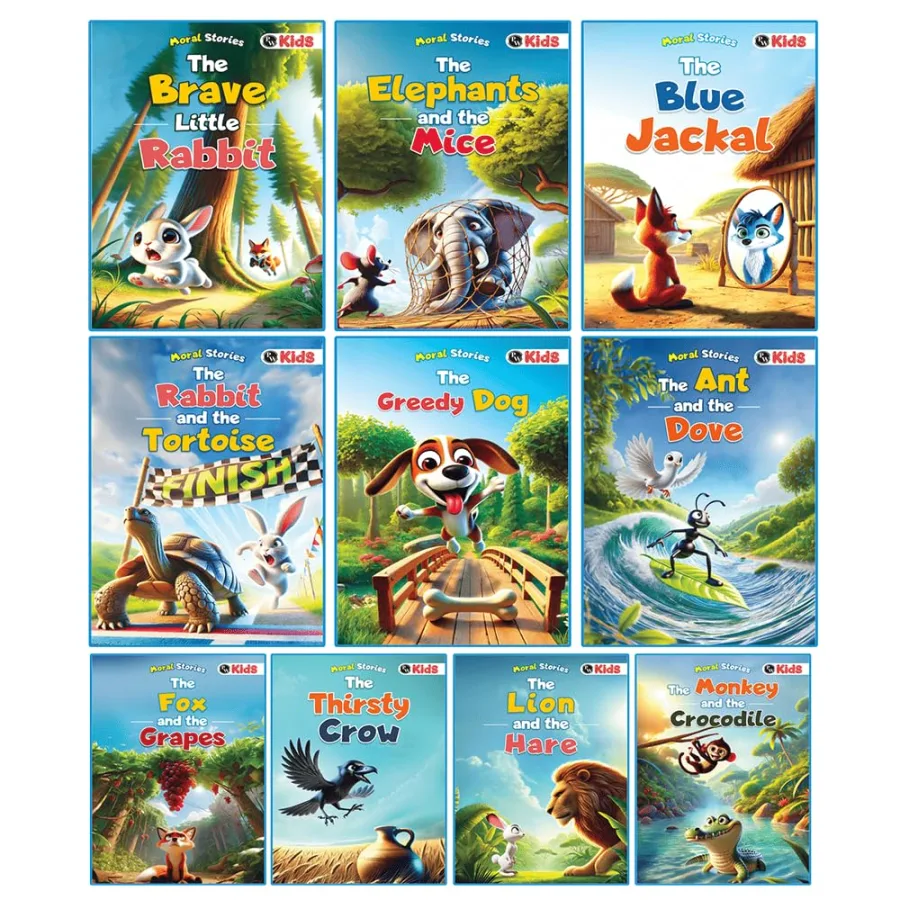
Set of 10 Moral Story Books for Kids, Short Illustrated Bedtime Stories with 3D Animated Images
Paperback
• 160 Pages
• ₹ 229.00
• English
• 9789368972563
No ratings yet
| Publisher | Physics Wallah Limited |
|---|---|
| ISBN13 | 9789368972563 |
| ASIN/SKU | 9368972567 |
| Book Format | Paperback |
| Language | English |
| Pages | 160 |
| List Price | ₹ 229.00 |
| Publishing Date | 20/12/2024 |
| Dimensions | 28 x 22 x 2 cm |
| Weight | 300 g |
| Book Code | BD00056106 |
Buy this Book
Amazon Stores
Ebook Stores
Other Stores
Discover Set of 10 Moral Story Books for Kids, Short Illustrated Bedtime Stories with 3D Animated Images by PW expert. This book is published by Physics Wallah Limited in Paperback format, ISBN 9789368972563, ASIN 9368972567, under Children's Books, Children's Books on Social Skills, Children's Trickster Tales Fiction.
Book Description
Fun, Learning & Values with 3D Animated Moral Stories!
Make storytelling magical with the ‘Moral Stories with 3D Animated Images’ (Set of 10 Books)! This delightful collection features timeless tales paired with vibrant 3D illustrations, helping kids learn essential moral values while enhancing their listening, comprehension, and vocabulary skills. Designed for children aged 3+, these engaging stories spark imagination, promote kindness, and make reading time fun—whether at bedtime or in the classroom.
Why Choose This Set?
Timeless Stories That Inspire: Classic tales that teach kindness, honesty, courage, and responsibility.
Colorful 3D Animated Illustrations: Eye-catching visuals bring stories to life, making reading exciting and engaging.
Simple, Child-Friendly Language: Easy-to-understand words ensure fun, independent reading or bonding through shared storytelling.
Encourages Imagination & Creativity: Sparks young minds to explore, dream, and think beyond boundaries.
Promotes Positive Behavior: Reinforces values like empathy, kindness, and respect through engaging storytelling.
Interactive "Recall Section": Fun memory-based questions at the end of each story help reinforce learning!
A perfect blend of learning, creativity, and moral values, this book set makes reading an enriching experience, fostering strong character development in young readers!
Make storytelling magical with the ‘Moral Stories with 3D Animated Images’ (Set of 10 Books)! This delightful collection features timeless tales paired with vibrant 3D illustrations, helping kids learn essential moral values while enhancing their listening, comprehension, and vocabulary skills. Designed for children aged 3+, these engaging stories spark imagination, promote kindness, and make reading time fun—whether at bedtime or in the classroom.
Why Choose This Set?
Timeless Stories That Inspire: Classic tales that teach kindness, honesty, courage, and responsibility.
Colorful 3D Animated Illustrations: Eye-catching visuals bring stories to life, making reading exciting and engaging.
Simple, Child-Friendly Language: Easy-to-understand words ensure fun, independent reading or bonding through shared storytelling.
Encourages Imagination & Creativity: Sparks young minds to explore, dream, and think beyond boundaries.
Promotes Positive Behavior: Reinforces values like empathy, kindness, and respect through engaging storytelling.
Interactive "Recall Section": Fun memory-based questions at the end of each story help reinforce learning!
A perfect blend of learning, creativity, and moral values, this book set makes reading an enriching experience, fostering strong character development in young readers!
Author Biography
PW creates thoughtfully designed books and STEM kits that turn everyday learning into a joyful adventure. From activity-filled books that boost imagination to science and electric kits that promote practical skills, our products help kids explore, create, and think independently. Safe, engaging, and educational, PW is committed to nurturing young minds through inspired learning experiences.
Editorial Reviews
Editorial Reviews will be added soon…
Book Summary
Set of 10 Moral Story Books for Kids by PW Expert is a collection of short, illustrated stories created especially for young children. The set contains ten individual books and is designed primarily for children aged three years and above. The stories use simple, child-friendly language and colorful 3D-style animated illustrations to make reading more attractive and easier to understand. The collection combines entertainment with basic moral education, introducing children to values such as kindness, honesty, courage, sharing, responsibility, respect, and good behavior. The set contains 159 pages and is presented as a resource suitable for bedtime reading, independent reading, or shared storytelling between parents and children.
The main purpose of the collection is to make moral learning enjoyable. Young children often understand ideas more easily when they encounter them through characters and stories rather than through direct instructions. Instead of simply telling a child to be honest or kind, these stories show characters facing situations in which their choices have consequences. A child can see what happens when someone tells the truth, helps a friend, behaves selfishly, or makes a careless decision. This makes the moral lesson easier to remember.
The ten-book format gives the collection variety. Rather than presenting one long story, it provides several short narratives that can be read separately. This makes the books especially convenient for young children whose attention spans may be limited. A parent can read one story before bedtime, while a child can later return to another story independently. The short format also makes it possible to discuss each lesson immediately after finishing a story.
The stories are based on familiar moral themes. Kindness is one of the most important values introduced through the collection. Children encounter characters who help others, show concern, or offer support during difficult situations. Such stories demonstrate that kindness does not always require a grand action. A small act of helping, sharing, comforting, or encouraging someone can make a meaningful difference.
The stories also emphasize honesty. Young children are gradually learning why telling the truth matters, and stories provide a safe way to explore this idea. A character may be tempted to hide a mistake or tell a lie to avoid trouble, only to discover that dishonesty creates a bigger problem. Through such situations, children learn that being truthful can sometimes be difficult in the short term but is usually better for relationships and trust.
Sharing is another important lesson. Children naturally begin by thinking strongly about their own possessions and preferences. Stories about sharing help them understand that other people have needs and feelings too. A character who shares food, toys, time, or resources can become an example of generosity. The lesson is not simply about giving things away but about learning to think beyond oneself.
The collection also introduces the idea of responsibility. Characters may have tasks to complete or promises to keep. When they avoid their responsibilities, other people may be affected. When they take responsibility seriously, problems can often be solved more easily. This helps children understand that their actions matter and that being responsible is part of growing up.
Respect is another value that appears naturally in moral storytelling. Children interact with parents, teachers, siblings, friends, and other members of their community. Learning to listen to others, speak politely, and recognize other people's feelings is an important part of social development. Stories provide examples of respectful and disrespectful behavior and allow children to think about the difference.
The collection also encourages courage. Courage for a young child does not necessarily mean facing a dangerous situation. It can mean admitting a mistake, telling the truth, standing up for a friend, trying something new, or refusing to follow someone who is behaving badly. Stories can help children understand that being brave sometimes means doing what is right even when it feels uncomfortable.
The characters often face simple problems that children can understand. Someone may feel lonely, make a mistake, lose something, misunderstand another person, or encounter a difficult choice. Because the problems are presented through stories, children can think about possible solutions without feeling personally judged. This encourages them to develop basic reasoning and emotional understanding.
The 3D animated illustrations are a major part of the collection's appeal. The product description emphasizes colorful, eye-catching visuals that bring the stories to life. For young children, pictures are not merely decoration. They help explain what is happening, introduce characters, establish settings, and maintain attention while the child listens to or reads the story.
The visual presentation can also support children who are still developing their reading skills. A child may not understand every word, but the pictures provide clues about what the characters are doing and how they might be feeling. This allows children to follow the general meaning of the story while gradually becoming more confident readers.
The language is intentionally simple and child-friendly. This makes the stories appropriate for beginning readers and also makes them suitable for adults to read aloud. Simple language is particularly useful for younger children because the purpose at this stage is not to overwhelm them with difficult vocabulary but to help them enjoy stories and understand basic ideas.
The books can therefore support vocabulary development. As children encounter repeated words and expressions in different contexts, they gradually become more familiar with them. Parents can strengthen this benefit by explaining unfamiliar words and asking children to use new words in their own sentences.
Reading these stories aloud can also improve listening comprehension. Children have to listen to the sequence of events, remember characters, understand what happened, and recognize the lesson at the end. The publisher's product description specifically identifies listening comprehension and vocabulary development among the benefits of the set.
The bedtime format is another important feature. Moral stories are particularly suitable for bedtime because they are generally short enough to finish in one sitting. A parent can choose one story each evening and spend a few minutes discussing its lesson before the child goes to sleep. This can turn reading into a regular family ritual rather than an occasional activity.
Such shared reading can strengthen parent-child bonding. When parents read to children, the experience is not limited to the words on the page. Children can ask questions, point to pictures, predict what might happen next, and talk about their own experiences. A story about sharing, for example, can lead to a conversation about sharing toys with siblings or friends.
The books can also be useful in classrooms and preschool settings. Teachers can read a story aloud and then ask children what the characters did correctly or incorrectly. They can discuss how a character felt, what another character could have done differently, and whether the children have experienced a similar situation. This turns a simple story into an interactive social-learning activity.
Another benefit is that the stories encourage empathy. When children see characters experiencing happiness, fear, disappointment, loneliness, or excitement, they are given opportunities to think about feelings from another person's perspective. Learning to recognize emotions is an important part of social development, and stories provide a natural setting for practicing this skill.
The collection also encourages imagination. Children enter fictional worlds where characters experience situations that may not happen in exactly the same way in everyday life. Through these stories, they can imagine different outcomes and think creatively about problems. The illustrations further support this imaginative experience.
An important strength of moral stories is that they allow children to learn from mistakes without having to make every mistake themselves. If a character becomes greedy and suffers because of it, the child can understand the possible consequences without experiencing the same situation. If another character helps someone and receives friendship or gratitude in return, the child can see the positive side of kindness.
The stories also show that good behavior is not always about receiving a reward. Sometimes a character does the right thing simply because it is the right thing to do. This can help children gradually understand internal values rather than thinking only in terms of prizes and punishments.
The main purpose of the collection is to make moral learning enjoyable. Young children often understand ideas more easily when they encounter them through characters and stories rather than through direct instructions. Instead of simply telling a child to be honest or kind, these stories show characters facing situations in which their choices have consequences. A child can see what happens when someone tells the truth, helps a friend, behaves selfishly, or makes a careless decision. This makes the moral lesson easier to remember.
The ten-book format gives the collection variety. Rather than presenting one long story, it provides several short narratives that can be read separately. This makes the books especially convenient for young children whose attention spans may be limited. A parent can read one story before bedtime, while a child can later return to another story independently. The short format also makes it possible to discuss each lesson immediately after finishing a story.
The stories are based on familiar moral themes. Kindness is one of the most important values introduced through the collection. Children encounter characters who help others, show concern, or offer support during difficult situations. Such stories demonstrate that kindness does not always require a grand action. A small act of helping, sharing, comforting, or encouraging someone can make a meaningful difference.
The stories also emphasize honesty. Young children are gradually learning why telling the truth matters, and stories provide a safe way to explore this idea. A character may be tempted to hide a mistake or tell a lie to avoid trouble, only to discover that dishonesty creates a bigger problem. Through such situations, children learn that being truthful can sometimes be difficult in the short term but is usually better for relationships and trust.
Sharing is another important lesson. Children naturally begin by thinking strongly about their own possessions and preferences. Stories about sharing help them understand that other people have needs and feelings too. A character who shares food, toys, time, or resources can become an example of generosity. The lesson is not simply about giving things away but about learning to think beyond oneself.
The collection also introduces the idea of responsibility. Characters may have tasks to complete or promises to keep. When they avoid their responsibilities, other people may be affected. When they take responsibility seriously, problems can often be solved more easily. This helps children understand that their actions matter and that being responsible is part of growing up.
Respect is another value that appears naturally in moral storytelling. Children interact with parents, teachers, siblings, friends, and other members of their community. Learning to listen to others, speak politely, and recognize other people's feelings is an important part of social development. Stories provide examples of respectful and disrespectful behavior and allow children to think about the difference.
The collection also encourages courage. Courage for a young child does not necessarily mean facing a dangerous situation. It can mean admitting a mistake, telling the truth, standing up for a friend, trying something new, or refusing to follow someone who is behaving badly. Stories can help children understand that being brave sometimes means doing what is right even when it feels uncomfortable.
The characters often face simple problems that children can understand. Someone may feel lonely, make a mistake, lose something, misunderstand another person, or encounter a difficult choice. Because the problems are presented through stories, children can think about possible solutions without feeling personally judged. This encourages them to develop basic reasoning and emotional understanding.
The 3D animated illustrations are a major part of the collection's appeal. The product description emphasizes colorful, eye-catching visuals that bring the stories to life. For young children, pictures are not merely decoration. They help explain what is happening, introduce characters, establish settings, and maintain attention while the child listens to or reads the story.
The visual presentation can also support children who are still developing their reading skills. A child may not understand every word, but the pictures provide clues about what the characters are doing and how they might be feeling. This allows children to follow the general meaning of the story while gradually becoming more confident readers.
The language is intentionally simple and child-friendly. This makes the stories appropriate for beginning readers and also makes them suitable for adults to read aloud. Simple language is particularly useful for younger children because the purpose at this stage is not to overwhelm them with difficult vocabulary but to help them enjoy stories and understand basic ideas.
The books can therefore support vocabulary development. As children encounter repeated words and expressions in different contexts, they gradually become more familiar with them. Parents can strengthen this benefit by explaining unfamiliar words and asking children to use new words in their own sentences.
Reading these stories aloud can also improve listening comprehension. Children have to listen to the sequence of events, remember characters, understand what happened, and recognize the lesson at the end. The publisher's product description specifically identifies listening comprehension and vocabulary development among the benefits of the set.
The bedtime format is another important feature. Moral stories are particularly suitable for bedtime because they are generally short enough to finish in one sitting. A parent can choose one story each evening and spend a few minutes discussing its lesson before the child goes to sleep. This can turn reading into a regular family ritual rather than an occasional activity.
Such shared reading can strengthen parent-child bonding. When parents read to children, the experience is not limited to the words on the page. Children can ask questions, point to pictures, predict what might happen next, and talk about their own experiences. A story about sharing, for example, can lead to a conversation about sharing toys with siblings or friends.
The books can also be useful in classrooms and preschool settings. Teachers can read a story aloud and then ask children what the characters did correctly or incorrectly. They can discuss how a character felt, what another character could have done differently, and whether the children have experienced a similar situation. This turns a simple story into an interactive social-learning activity.
Another benefit is that the stories encourage empathy. When children see characters experiencing happiness, fear, disappointment, loneliness, or excitement, they are given opportunities to think about feelings from another person's perspective. Learning to recognize emotions is an important part of social development, and stories provide a natural setting for practicing this skill.
The collection also encourages imagination. Children enter fictional worlds where characters experience situations that may not happen in exactly the same way in everyday life. Through these stories, they can imagine different outcomes and think creatively about problems. The illustrations further support this imaginative experience.
An important strength of moral stories is that they allow children to learn from mistakes without having to make every mistake themselves. If a character becomes greedy and suffers because of it, the child can understand the possible consequences without experiencing the same situation. If another character helps someone and receives friendship or gratitude in return, the child can see the positive side of kindness.
The stories also show that good behavior is not always about receiving a reward. Sometimes a character does the right thing simply because it is the right thing to do. This can help children gradually understand internal values rather than thinking only in terms of prizes and punishments.
Sample Chapters
Sample Chapters will be added soon…
Reader Reviews
No reviews yet.
Set of 10 Moral Story Books for Kids, Short Illustrated Bedtime Stories with 3D Animated Images
Download Cover Image
Do you want to download the full cover image for Set of 10 Moral Story Books for Kids, Short Illustrated Bedtime Stories with 3D Animated Images?