
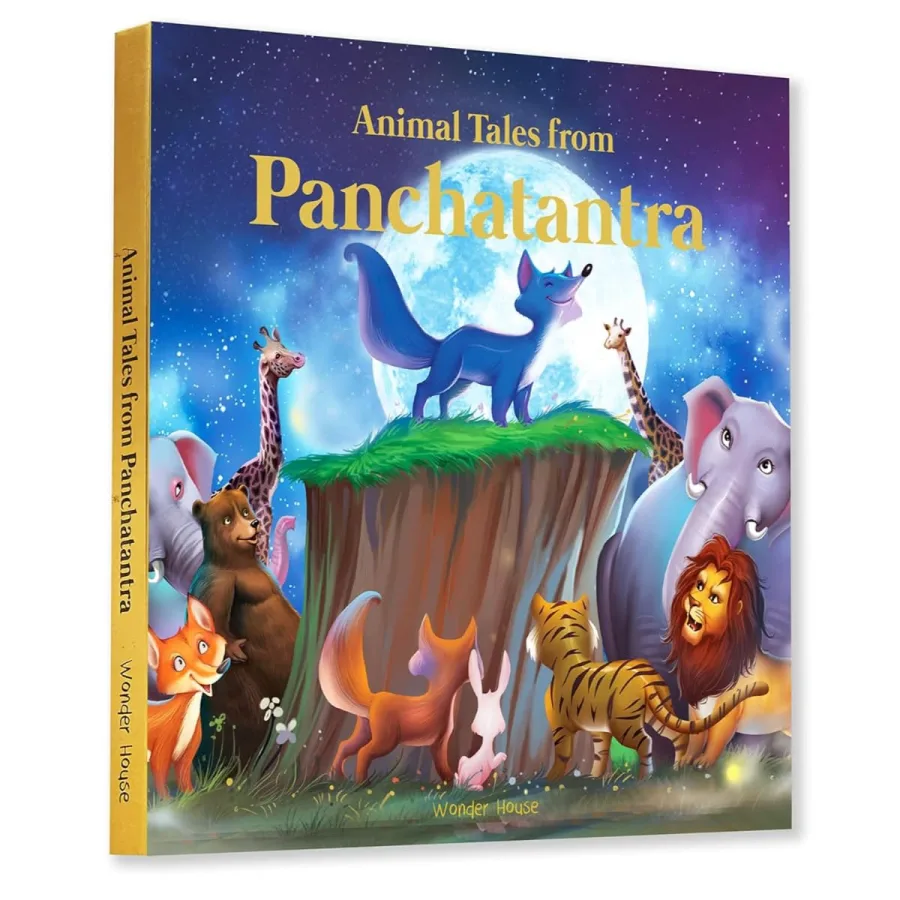
Animals Tales From Panchtantra: Timeless Stories for Children From Ancient India
Hardcover
• 84 Pages
• ₹ 349.00
• English
• 9789389178111
No ratings yet
| Publisher | Wonder House Books |
|---|---|
| ISBN13 | 9789389178111 |
| ASIN/SKU | 9389178118 |
| Book Format | Hardcover |
| Language | English |
| Pages | 84 |
| List Price | ₹ 349.00 |
| Publishing Date | 01/01/2019 |
| Dimensions | 20.32 x 1.02 x 20.32 cm |
| Weight | 421 g |
| Book Code | BD00056103 |
Buy this Book
Amazon Stores
Ebook Stores
Other Stores
Discover Animals Tales From Panchtantra: Timeless Stories for Children From Ancient India by Wonder House Books. This book is published by Wonder House Books in Hardcover format, ISBN 9789389178111, ASIN 9389178118, under Children's Books, Chapter Books and Readers for Children, Mythology and Folklore Encyclopedias.
Book Description
Panchatantra has been a part of the Indian folklore for centuries and continues to enchant young readers even today. The Animal Tales from Panchatantra is a wonderful collection of six stories that aim to guide the young readers about being wise, understand human nature among other moral values. Vibrant and beautiful illustrations will allow the young readers to understand the story better and will encourage reading.
Learning wise lessons with animals is fun!
Gorgeous Illustrations
Stories have morals
Develops a reading habit in children
Builds vocabulary
Classic Stories for children
Learning wise lessons with animals is fun!
Gorgeous Illustrations
Stories have morals
Develops a reading habit in children
Builds vocabulary
Classic Stories for children
Author Biography
Wonder House has a dedicated team of editors and designers involved in the development of magnificent and enriching children books. The team pays special attention to develop age appropriate content and does extensive research on every topic included in the book. Our mission is to develop highly informative content which will help the children to master different skills. At Wonder House, we strive to make learning a joy.
Editorial Reviews
Editorial Reviews will be added soon…
Book Summary
Animals Tales from Panchtantra: Timeless Stories for Children from Ancient India by Wonder House Books is a collection of traditional animal stories inspired by the ancient Indian Panchatantra tradition. Created especially for young readers, the book brings together entertaining tales in which animals speak, think, make plans, form friendships, face danger, and sometimes make foolish decisions. Behind the simple adventures are practical lessons about honesty, friendship, intelligence, courage, patience, kindness, greed, and the importance of thinking before acting. The collection introduces children to one of India's best-known storytelling traditions while making its lessons accessible through short, engaging narratives.
The Panchatantra is traditionally associated with stories created to teach practical wisdom through entertaining examples. Instead of giving children long explanations about morality, the stories allow animals and other characters to experience the consequences of their choices. A clever character may escape from danger because of quick thinking, while another may get into trouble because of greed or overconfidence. This makes the lessons easier for children to understand and remember.
The use of animals is one of the most appealing features of the book. Lions, foxes, crows, mice, rabbits, monkeys, deer, tortoises, and other creatures become central characters. Although they live in an imaginative world, their behavior reflects familiar human qualities. A proud lion may represent arrogance, a clever fox may represent intelligence, and a loyal animal may demonstrate the value of friendship. Children can therefore enjoy the stories as adventures while gradually recognizing the human qualities behind the characters.
Many of the stories begin with an apparently simple situation. Animals meet one another, form friendships, discover a problem, or find themselves in danger. As the story develops, one character's decision changes the situation. Sometimes the character makes a wise choice; at other times, a careless decision creates a chain of problems. The conclusion usually provides a clear lesson without requiring complicated explanations.
One of the strongest themes is the value of intelligence over physical strength. A large and powerful animal is not necessarily the wisest character. A small creature can sometimes defeat a stronger opponent by observing carefully and thinking creatively. These stories teach children that being clever, patient, and resourceful can be more useful than simply being powerful.
This lesson can be seen in the many Panchatantra-style stories in which smaller animals find ways to escape from predators. Rather than confronting danger directly, they may use a trick, create a distraction, cooperate with friends, or use an opponent's weakness against them. The stories encourage children to think about problems from different angles instead of assuming that strength is the only solution.
Friendship is another central idea. Some stories show how friends help each other during difficult situations. A character who appears weak may possess a special ability that becomes valuable when the group faces danger. These stories teach children that genuine friendship is based on mutual support rather than on what one person can gain from another.
The stories also show that friendship requires trust. Characters who keep their promises and help one another are generally rewarded with stronger relationships, while characters who betray their companions often face negative consequences. Children learn that trust takes time to build but can be lost through selfish or dishonest behavior.
The book repeatedly warns against greed. Characters sometimes become dissatisfied with what they already have and take unnecessary risks to obtain more. Their desire for additional food, wealth, power, or possessions can lead to trouble. Through humorous and sometimes surprising situations, children see that greed can make people careless.
Contentment is therefore presented as an important virtue. The stories do not suggest that people should never seek improvement. Instead, they show that wanting more without considering the consequences can be dangerous. A sensible character knows when enough is enough and does not sacrifice safety or friendship for unnecessary gain.
Honesty is equally important. Some characters try to deceive others for personal advantage, but lies often create larger problems. Once trust is damaged, it becomes difficult to restore. Other stories show that telling the truth, even when it is uncomfortable, can prevent misunderstandings and strengthen relationships.
The collection also teaches children to be careful about whom they trust. Not everyone who appears friendly has good intentions. Some characters pretend to be helpful while secretly planning to take advantage of another animal. These stories encourage children to listen to advice, observe behavior, and avoid making decisions based solely on appearances.
At the same time, the book does not teach children to distrust everyone. Instead, it promotes balanced judgment. Trust should be based on experience and character rather than blind acceptance. A good friend can be extremely valuable, but a careless choice of companion can create serious difficulties.
Patience is another recurring lesson. Characters who act too quickly often make mistakes. They may believe a rumor, attack without thinking, abandon a safe position, or accept an attractive offer without considering the consequences. More thoughtful characters take time to observe the situation and make decisions carefully.
This idea is especially useful for children because they are still learning to control impulses. The stories show that waiting, thinking, and asking questions can sometimes prevent problems. A character who pauses before acting often has a better chance of finding a successful solution.
The tales also encourage cooperation. Some problems are too difficult for one character to solve alone. A group may succeed because each member contributes a different ability. One animal may be strong, another intelligent, another quick, and another observant. Together, their strengths become more powerful than any individual ability.
This teaches children that teamwork is not about everyone being the same. Different people can contribute in different ways. A child who is not physically strong, for example, may still be excellent at solving problems or noticing details. The stories help children appreciate the value of different abilities.
Courage appears in many forms throughout the collection. Sometimes a character must confront a dangerous animal, but courage can also mean standing up for a friend, admitting a mistake, speaking the truth, or refusing to follow a foolish crowd. The stories show that bravery is not simply the absence of fear. It is the willingness to make a sensible and necessary choice despite fear.
The book also explores cleverness and observation. Characters often succeed because they notice something that others overlook. A small detail may reveal a hidden danger or provide the clue needed to escape from a difficult situation. This encourages children to pay attention to their surroundings rather than rushing through experiences.
Another recurring idea is that actions have consequences. Characters are not simply rewarded or punished randomly. Their experiences generally result from the decisions they make. A greedy character creates a problem through greed; a dishonest character loses trust through dishonesty; a patient character benefits from waiting; and a clever character succeeds by thinking carefully.
This connection between actions and consequences makes the stories valuable for teaching practical judgment. Children can ask themselves what they would have done in the same situation and whether a different decision might have produced a better result.
The stories also teach humility. Characters who become too proud of their intelligence, strength, wealth, or position often make mistakes because they underestimate others. The book reminds readers that no one is perfect and that even a powerful person can learn from someone who appears less important.
Animals make these lessons especially entertaining. A child can laugh at a foolish monkey or admire a clever rabbit without feeling that the story is directly criticizing them. Yet the underlying behavior remains recognizable. Children may eventually notice that a character's pride, impatience, or greed resembles behavior they have seen in real life.
The book's connection with ancient Indian storytelling traditions is also important. Panchatantra tales have been passed through generations and adapted into different languages and editions. Their continued popularity comes partly from the fact that the human problems they describe remain familiar.
The Panchatantra is traditionally associated with stories created to teach practical wisdom through entertaining examples. Instead of giving children long explanations about morality, the stories allow animals and other characters to experience the consequences of their choices. A clever character may escape from danger because of quick thinking, while another may get into trouble because of greed or overconfidence. This makes the lessons easier for children to understand and remember.
The use of animals is one of the most appealing features of the book. Lions, foxes, crows, mice, rabbits, monkeys, deer, tortoises, and other creatures become central characters. Although they live in an imaginative world, their behavior reflects familiar human qualities. A proud lion may represent arrogance, a clever fox may represent intelligence, and a loyal animal may demonstrate the value of friendship. Children can therefore enjoy the stories as adventures while gradually recognizing the human qualities behind the characters.
Many of the stories begin with an apparently simple situation. Animals meet one another, form friendships, discover a problem, or find themselves in danger. As the story develops, one character's decision changes the situation. Sometimes the character makes a wise choice; at other times, a careless decision creates a chain of problems. The conclusion usually provides a clear lesson without requiring complicated explanations.
One of the strongest themes is the value of intelligence over physical strength. A large and powerful animal is not necessarily the wisest character. A small creature can sometimes defeat a stronger opponent by observing carefully and thinking creatively. These stories teach children that being clever, patient, and resourceful can be more useful than simply being powerful.
This lesson can be seen in the many Panchatantra-style stories in which smaller animals find ways to escape from predators. Rather than confronting danger directly, they may use a trick, create a distraction, cooperate with friends, or use an opponent's weakness against them. The stories encourage children to think about problems from different angles instead of assuming that strength is the only solution.
Friendship is another central idea. Some stories show how friends help each other during difficult situations. A character who appears weak may possess a special ability that becomes valuable when the group faces danger. These stories teach children that genuine friendship is based on mutual support rather than on what one person can gain from another.
The stories also show that friendship requires trust. Characters who keep their promises and help one another are generally rewarded with stronger relationships, while characters who betray their companions often face negative consequences. Children learn that trust takes time to build but can be lost through selfish or dishonest behavior.
The book repeatedly warns against greed. Characters sometimes become dissatisfied with what they already have and take unnecessary risks to obtain more. Their desire for additional food, wealth, power, or possessions can lead to trouble. Through humorous and sometimes surprising situations, children see that greed can make people careless.
Contentment is therefore presented as an important virtue. The stories do not suggest that people should never seek improvement. Instead, they show that wanting more without considering the consequences can be dangerous. A sensible character knows when enough is enough and does not sacrifice safety or friendship for unnecessary gain.
Honesty is equally important. Some characters try to deceive others for personal advantage, but lies often create larger problems. Once trust is damaged, it becomes difficult to restore. Other stories show that telling the truth, even when it is uncomfortable, can prevent misunderstandings and strengthen relationships.
The collection also teaches children to be careful about whom they trust. Not everyone who appears friendly has good intentions. Some characters pretend to be helpful while secretly planning to take advantage of another animal. These stories encourage children to listen to advice, observe behavior, and avoid making decisions based solely on appearances.
At the same time, the book does not teach children to distrust everyone. Instead, it promotes balanced judgment. Trust should be based on experience and character rather than blind acceptance. A good friend can be extremely valuable, but a careless choice of companion can create serious difficulties.
Patience is another recurring lesson. Characters who act too quickly often make mistakes. They may believe a rumor, attack without thinking, abandon a safe position, or accept an attractive offer without considering the consequences. More thoughtful characters take time to observe the situation and make decisions carefully.
This idea is especially useful for children because they are still learning to control impulses. The stories show that waiting, thinking, and asking questions can sometimes prevent problems. A character who pauses before acting often has a better chance of finding a successful solution.
The tales also encourage cooperation. Some problems are too difficult for one character to solve alone. A group may succeed because each member contributes a different ability. One animal may be strong, another intelligent, another quick, and another observant. Together, their strengths become more powerful than any individual ability.
This teaches children that teamwork is not about everyone being the same. Different people can contribute in different ways. A child who is not physically strong, for example, may still be excellent at solving problems or noticing details. The stories help children appreciate the value of different abilities.
Courage appears in many forms throughout the collection. Sometimes a character must confront a dangerous animal, but courage can also mean standing up for a friend, admitting a mistake, speaking the truth, or refusing to follow a foolish crowd. The stories show that bravery is not simply the absence of fear. It is the willingness to make a sensible and necessary choice despite fear.
The book also explores cleverness and observation. Characters often succeed because they notice something that others overlook. A small detail may reveal a hidden danger or provide the clue needed to escape from a difficult situation. This encourages children to pay attention to their surroundings rather than rushing through experiences.
Another recurring idea is that actions have consequences. Characters are not simply rewarded or punished randomly. Their experiences generally result from the decisions they make. A greedy character creates a problem through greed; a dishonest character loses trust through dishonesty; a patient character benefits from waiting; and a clever character succeeds by thinking carefully.
This connection between actions and consequences makes the stories valuable for teaching practical judgment. Children can ask themselves what they would have done in the same situation and whether a different decision might have produced a better result.
The stories also teach humility. Characters who become too proud of their intelligence, strength, wealth, or position often make mistakes because they underestimate others. The book reminds readers that no one is perfect and that even a powerful person can learn from someone who appears less important.
Animals make these lessons especially entertaining. A child can laugh at a foolish monkey or admire a clever rabbit without feeling that the story is directly criticizing them. Yet the underlying behavior remains recognizable. Children may eventually notice that a character's pride, impatience, or greed resembles behavior they have seen in real life.
The book's connection with ancient Indian storytelling traditions is also important. Panchatantra tales have been passed through generations and adapted into different languages and editions. Their continued popularity comes partly from the fact that the human problems they describe remain familiar.
Sample Chapters
Sample Chapters will be added soon…
Reader Reviews
No reviews yet.
Animals Tales From Panchtantra: Timeless Stories for Children From Ancient India
Download Cover Image
Do you want to download the full cover image for Animals Tales From Panchtantra: Timeless Stories for Children From Ancient India?