
Dopamine Detox: A Short Guide to Remove Distractions and Get Your Brain to Do Hard Things
Paperback
• 80 Pages
• ₹ 245.00
• English
• 9788183286015
No ratings yet
| Publisher | Wisdom Tree |
|---|---|
| ISBN13 | 9788183286015 |
| ASIN/SKU | 8183286011 |
| Book Format | Paperback |
| Language | English |
| Pages | 80 |
| List Price | ₹ 245.00 |
| Publishing Date | 13/05/2023 |
| Dimensions | 21.5 x 14.3 x 1 cm |
| Weight | 100 g |
| Book Code | BD00056099 |
Buy this Book
Amazon Stores
Ebook Stores
Other Stores
Discover Dopamine Detox: A Short Guide to Remove Distractions and Get Your Brain to Do Hard Things by Thibaut Meurisse. This book is published by Wisdom Tree in Paperback format, ISBN 9788183286015, ASIN 8183286011, under Self-Help, Motivational Self-Help, Self-Help for Success.
Book Description
Reclaim your focus in 48 hours or less. Do you keep procrastinating? Do you feel restless and unable to focus on your work? Do you have trouble getting excited about major goals? If so, you might need a dopamine detox. In today’s world where distractions are everywhere, the ability to focus has become more and more difficult to achieve. We are constantly being stimulated, feeling restless, often without knowing why. When the time comes to work, we suddenly find an excess of other things to do. Instead of working toward our goals, we go for a walk, grab a coffee, or check our emails. Everything seems like a great idea—everything except the very things we should be doing. Do you recognize yourself in the above situation? If so, don’t worry. You’re simply overstimulated. Dopamine Detox will help you lower your level of stimulation and regain focus in 48 hours or less,so that you can tackle your key tasks. More specifically, in Dopamine Detox you’ll discover: what dopamine is and how it works; the main benefits of completing a dopamine detox; 3 simple steps to implement a successful detox in the next 48 hours; practical exercises to eliminate distractions and boost your focus; simple tools and techniques to avoid overstimulation and help you stay focused, and much more. Dopamine Detox is your must-read, must-follow guide to help you remove distractions so you can finally work on your goals with ease. If you like easy-to-understand strategies, practical exercises, and no-nonsense teaching, you will love this book.
Author Biography
I write simple, practical self-help books for ordinary people who seek extraordinary results.
Thibaut is the author of 20+ books including the #1 Amazon Bestseller, “Master Your Emotions” which has sold over 400,000 copies and has been translated into more than 30 languages including French, Spanish, German, Italian, Portuguese, Russian, Chinese, Korean and Thai.
Thibaut’s mission is to help ordinary people attain extraordinary results.
If you like simple practical and inspiring books, and are committed to improve your life, you'll love his work.
Thibaut is the author of 20+ books including the #1 Amazon Bestseller, “Master Your Emotions” which has sold over 400,000 copies and has been translated into more than 30 languages including French, Spanish, German, Italian, Portuguese, Russian, Chinese, Korean and Thai.
Thibaut’s mission is to help ordinary people attain extraordinary results.
If you like simple practical and inspiring books, and are committed to improve your life, you'll love his work.
Editorial Reviews
Editorial Reviews will be added soon…
Book Summary
Dopamine Detox: A Short Guide to Remove Distractions and Get Your Brain to Do Hard Things by Thibaut Meurisse is a concise self-help book about distraction, procrastination, focus, discipline, and the difficulty of doing meaningful work in a world filled with constant stimulation. The book argues that modern life gives people easy access to quick rewards through social media, entertainment, notifications, online content, and other forms of instant gratification. As a result, activities that require patience and effort—such as studying, writing, exercising, reading, or working toward long-term goals—can feel unusually difficult to begin. Meurisse's proposed solution is to deliberately reduce unnecessary stimulation and retrain attention toward activities that matter.
The book begins with a problem that many people recognize in everyday life. A person may have an important task to complete but find themselves checking their phone first. They may open social media for a few minutes and then spend much longer scrolling. They may intend to watch one video but continue watching several more. They may sit down to study and suddenly feel an overwhelming desire to check messages, browse websites, or find something more entertaining. The result is a cycle in which easy distractions repeatedly replace difficult but valuable activities.
Meurisse connects this behavior with the brain's reward system and particularly with dopamine. He explains that dopamine is often described too simply as a “pleasure chemical.” In the framework used by the book, dopamine is more closely associated with motivation, anticipation, and reward-seeking behavior. It helps encourage us to pursue things we expect to be rewarding. The problem, according to Meurisse, is that modern technology can provide an almost endless supply of quick and easily accessible rewards.
Social media is an important example. Notifications, likes, comments, new messages, short videos, and constantly changing feeds provide frequent opportunities for stimulation. Because the next interesting piece of content is unpredictable, people may continue checking their devices even when they know they should be doing something else. The same principle can apply to online videos, games, news feeds, entertainment, and other activities that provide immediate feedback.
The problem is not dopamine itself. Dopamine is a normal and necessary neurotransmitter involved in many functions, including motivation, learning, memory, mood, and movement. The book's “detox” concept is therefore best understood as a metaphor for reducing excessive stimulation rather than literally removing dopamine from the brain. Even summaries of the book note that the term “dopamine detox” can be misleading because the objective is to reduce overstimulation and compulsive reward-seeking, not to eliminate dopamine.
Meurisse argues that constant stimulation can change what feels attractive to us. When a person becomes accustomed to frequent entertainment and instant rewards, slower activities can seem boring. Reading a difficult book may feel less exciting than scrolling through a feed. Studying may seem harder than watching short videos. Working on a long-term project may feel less satisfying than checking notifications. This creates a gap between what a person knows is important and what their brain wants to do in the moment.
This gap is closely connected with procrastination. Procrastination is often described as laziness, but the book presents it differently. A person may genuinely want to achieve a goal but repeatedly choose an easier activity because the easier activity provides immediate stimulation. The problem is therefore not always a lack of ambition. Sometimes the environment has trained the person to seek immediate rewards instead of tolerating temporary boredom and effort.
The central idea of a dopamine detox is to interrupt this cycle. Instead of constantly feeding the desire for stimulation, a person deliberately removes or reduces the activities that provide the strongest distractions. This gives the mind an opportunity to become comfortable with lower levels of stimulation again. The purpose is not punishment. It is to make ordinary, meaningful activities easier to engage with.
Meurisse presents different levels of detox rather than insisting that everyone follow exactly the same routine. One approach is a more intensive 48-hour detox, while another is a shorter 24-hour version. For people who cannot or do not want to completely disconnect, the book also describes a partial approach focused on removing one major source of distraction.
During a more intensive detox, the goal is to remove activities that produce strong and immediate stimulation. Depending on the individual, these might include social media, streaming entertainment, video games, excessive internet browsing, junk food, or other habitual sources of instant gratification. The exact list is less important than identifying the activities that repeatedly interfere with the person's goals.
The detox is meant to create space for quieter activities. Instead of filling every empty moment with a phone or another source of entertainment, a person can walk, think, write, read, exercise, spend time outdoors, or simply sit without constantly searching for stimulation. This can initially feel uncomfortable because the mind is accustomed to being occupied.
That discomfort is an important part of the process. When people remove their usual distractions, they may discover how often they reach for stimulation automatically. They might feel bored, restless, impatient, or tempted to return to their old habits. Rather than immediately escaping these feelings, the detox encourages people to tolerate them. With practice, boredom becomes less threatening and concentration can gradually become easier.
The book's emphasis on doing hard things is especially important. Meurisse does not suggest that productivity means filling every minute with work. Instead, he wants readers to become capable of directing their attention toward activities that produce meaningful long-term results. Hard work is often uncomfortable at first, but it can lead to skills, achievements, relationships, and experiences that quick entertainment cannot provide.
This creates a distinction between short-term pleasure and long-term satisfaction. Watching videos or scrolling through social media may feel rewarding immediately, but the satisfaction often disappears quickly. Completing an important project may require hours of effort and may not be enjoyable every minute, but the eventual sense of accomplishment can be much deeper. The book encourages readers to become better at choosing long-term rewards over immediate stimulation.
One of its most practical ideas is to focus on environmental design rather than willpower alone. People often tell themselves that they simply need more discipline. But if the phone is beside them, social media is one click away, and notifications constantly appear, resisting distraction requires repeated effort. Meurisse suggests making distractions more difficult to access and productive activities easier to begin.
This can involve deleting distracting applications, turning off unnecessary notifications, using website blockers, keeping the phone away from the workspace, or creating physical separation between work and entertainment. At the same time, useful activities can be made easier by preparing the workspace in advance, keeping necessary materials nearby, and deciding what task to begin before sitting down.
This principle of adding friction to unwanted behaviors is simple but powerful. If checking social media requires several steps, the impulse may disappear before the behavior begins. If a book is already open on the desk, beginning to read requires very little effort. The environment can therefore support good habits instead of constantly fighting against them.
The book also introduces the distinction between open systems and closed systems. An open system contains almost unlimited possibilities. The internet is a good example: once you open a browser, there are endless websites, videos, messages, articles, advertisements, and links competing for attention. A closed system, by contrast, has a clear boundary. A notebook, a single book, or a predetermined work session can create a more controlled environment.
Meurisse suggests that beginning the day inside a closed system can help protect attention. Instead of immediately entering the endless stream of email, social media, and online information, a person can first complete a focused activity. This allows them to establish a sense of direction before exposing themselves to distractions.
Another major lesson is the importance of knowing one's most valuable tasks. Productivity is not simply about doing more things.
The book begins with a problem that many people recognize in everyday life. A person may have an important task to complete but find themselves checking their phone first. They may open social media for a few minutes and then spend much longer scrolling. They may intend to watch one video but continue watching several more. They may sit down to study and suddenly feel an overwhelming desire to check messages, browse websites, or find something more entertaining. The result is a cycle in which easy distractions repeatedly replace difficult but valuable activities.
Meurisse connects this behavior with the brain's reward system and particularly with dopamine. He explains that dopamine is often described too simply as a “pleasure chemical.” In the framework used by the book, dopamine is more closely associated with motivation, anticipation, and reward-seeking behavior. It helps encourage us to pursue things we expect to be rewarding. The problem, according to Meurisse, is that modern technology can provide an almost endless supply of quick and easily accessible rewards.
Social media is an important example. Notifications, likes, comments, new messages, short videos, and constantly changing feeds provide frequent opportunities for stimulation. Because the next interesting piece of content is unpredictable, people may continue checking their devices even when they know they should be doing something else. The same principle can apply to online videos, games, news feeds, entertainment, and other activities that provide immediate feedback.
The problem is not dopamine itself. Dopamine is a normal and necessary neurotransmitter involved in many functions, including motivation, learning, memory, mood, and movement. The book's “detox” concept is therefore best understood as a metaphor for reducing excessive stimulation rather than literally removing dopamine from the brain. Even summaries of the book note that the term “dopamine detox” can be misleading because the objective is to reduce overstimulation and compulsive reward-seeking, not to eliminate dopamine.
Meurisse argues that constant stimulation can change what feels attractive to us. When a person becomes accustomed to frequent entertainment and instant rewards, slower activities can seem boring. Reading a difficult book may feel less exciting than scrolling through a feed. Studying may seem harder than watching short videos. Working on a long-term project may feel less satisfying than checking notifications. This creates a gap between what a person knows is important and what their brain wants to do in the moment.
This gap is closely connected with procrastination. Procrastination is often described as laziness, but the book presents it differently. A person may genuinely want to achieve a goal but repeatedly choose an easier activity because the easier activity provides immediate stimulation. The problem is therefore not always a lack of ambition. Sometimes the environment has trained the person to seek immediate rewards instead of tolerating temporary boredom and effort.
The central idea of a dopamine detox is to interrupt this cycle. Instead of constantly feeding the desire for stimulation, a person deliberately removes or reduces the activities that provide the strongest distractions. This gives the mind an opportunity to become comfortable with lower levels of stimulation again. The purpose is not punishment. It is to make ordinary, meaningful activities easier to engage with.
Meurisse presents different levels of detox rather than insisting that everyone follow exactly the same routine. One approach is a more intensive 48-hour detox, while another is a shorter 24-hour version. For people who cannot or do not want to completely disconnect, the book also describes a partial approach focused on removing one major source of distraction.
During a more intensive detox, the goal is to remove activities that produce strong and immediate stimulation. Depending on the individual, these might include social media, streaming entertainment, video games, excessive internet browsing, junk food, or other habitual sources of instant gratification. The exact list is less important than identifying the activities that repeatedly interfere with the person's goals.
The detox is meant to create space for quieter activities. Instead of filling every empty moment with a phone or another source of entertainment, a person can walk, think, write, read, exercise, spend time outdoors, or simply sit without constantly searching for stimulation. This can initially feel uncomfortable because the mind is accustomed to being occupied.
That discomfort is an important part of the process. When people remove their usual distractions, they may discover how often they reach for stimulation automatically. They might feel bored, restless, impatient, or tempted to return to their old habits. Rather than immediately escaping these feelings, the detox encourages people to tolerate them. With practice, boredom becomes less threatening and concentration can gradually become easier.
The book's emphasis on doing hard things is especially important. Meurisse does not suggest that productivity means filling every minute with work. Instead, he wants readers to become capable of directing their attention toward activities that produce meaningful long-term results. Hard work is often uncomfortable at first, but it can lead to skills, achievements, relationships, and experiences that quick entertainment cannot provide.
This creates a distinction between short-term pleasure and long-term satisfaction. Watching videos or scrolling through social media may feel rewarding immediately, but the satisfaction often disappears quickly. Completing an important project may require hours of effort and may not be enjoyable every minute, but the eventual sense of accomplishment can be much deeper. The book encourages readers to become better at choosing long-term rewards over immediate stimulation.
One of its most practical ideas is to focus on environmental design rather than willpower alone. People often tell themselves that they simply need more discipline. But if the phone is beside them, social media is one click away, and notifications constantly appear, resisting distraction requires repeated effort. Meurisse suggests making distractions more difficult to access and productive activities easier to begin.
This can involve deleting distracting applications, turning off unnecessary notifications, using website blockers, keeping the phone away from the workspace, or creating physical separation between work and entertainment. At the same time, useful activities can be made easier by preparing the workspace in advance, keeping necessary materials nearby, and deciding what task to begin before sitting down.
This principle of adding friction to unwanted behaviors is simple but powerful. If checking social media requires several steps, the impulse may disappear before the behavior begins. If a book is already open on the desk, beginning to read requires very little effort. The environment can therefore support good habits instead of constantly fighting against them.
The book also introduces the distinction between open systems and closed systems. An open system contains almost unlimited possibilities. The internet is a good example: once you open a browser, there are endless websites, videos, messages, articles, advertisements, and links competing for attention. A closed system, by contrast, has a clear boundary. A notebook, a single book, or a predetermined work session can create a more controlled environment.
Meurisse suggests that beginning the day inside a closed system can help protect attention. Instead of immediately entering the endless stream of email, social media, and online information, a person can first complete a focused activity. This allows them to establish a sense of direction before exposing themselves to distractions.
Another major lesson is the importance of knowing one's most valuable tasks. Productivity is not simply about doing more things.
Sample Chapters
Sample Chapters will be added soon…
Reader Reviews
No reviews yet.
Dopamine Detox: A Short Guide to Remove Distractions and Get Your Brain to Do Hard Things
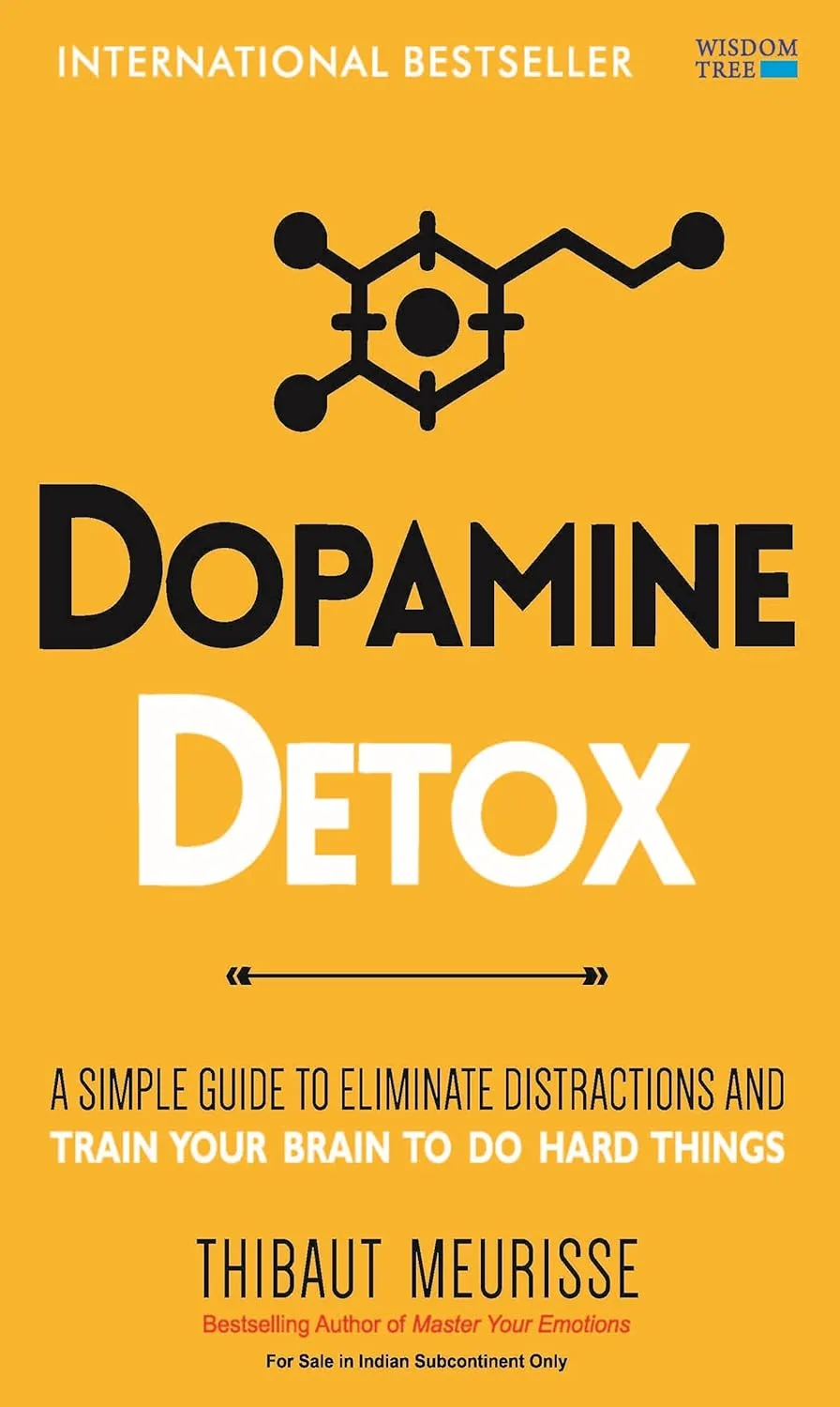
Download Cover Image
Do you want to download the full cover image for Dopamine Detox: A Short Guide to Remove Distractions and Get Your Brain to Do Hard Things?