
Tuesdays With Morrie (Export) (A Format)
Paperback
• 208 Pages
• ₹ 299.00
• English
• 9780751527377
No ratings yet
| Publisher | Sphere |
|---|---|
| ISBN13 | 9780751527377 |
| ASIN/SKU | 0751527378 |
| Book Format | Paperback |
| Language | English |
| Pages | 208 |
| List Price | ₹ 299.00 |
| Publishing Date | 01/12/1998 |
| Dimensions | 18 x 1.5 x 13 cm |
| Weight | 430 g |
| Book Code | BD00056098 |
Buy this Book
Amazon Stores
Ebook Stores
Other Stores
Discover Tuesdays With Morrie (Export) (A Format) by Mitch Albom. This book is published by Sphere in Paperback format, ISBN 9780751527377, ASIN 0751527378, under Biographies and Memoirs, Education, Biographies and Autobiographies.
Book Description
Maybe it was a grandparent, or a teacher or a colleague. Someone older, patient and wise, who understood you when you were young and searching, and gave you sound advice to help you make your way through it. For Mitch Albom, that person was Morrie Schwartz, his college professor from nearly twenty years ago.
Maybe, like Mitch, you lost track of this mentor as you made your way, and the insights faded. Wouldn't you like to see that person again, ask the bigger questions that still haunt you? Mitch Albom had that second chance. He rediscovered Morrie in the last months of the older man's life. Knowing he was dying of ALS - or motor neurone disease - MItch visited Morrie in his study every Tuesday, just as they used to back in college. Their rekindled relationship turned into one final 'class': lessons in how to live.
TUESDAYS WITH MORRIE is a magical chronicle of their time together, through which Mitch shares Morrie's lasting gift with the world.
Maybe, like Mitch, you lost track of this mentor as you made your way, and the insights faded. Wouldn't you like to see that person again, ask the bigger questions that still haunt you? Mitch Albom had that second chance. He rediscovered Morrie in the last months of the older man's life. Knowing he was dying of ALS - or motor neurone disease - MItch visited Morrie in his study every Tuesday, just as they used to back in college. Their rekindled relationship turned into one final 'class': lessons in how to live.
TUESDAYS WITH MORRIE is a magical chronicle of their time together, through which Mitch shares Morrie's lasting gift with the world.
Author Biography
Author, screenwriter, philanthropist, journalist, and broadcaster Mitch Albom is an inspiration around the world. His fiction and non-fiction books — which include 8 #1 New York Times bestsellers — have collectively sold 42 million copies worldwide in 48 languages. TUESDAYS WITH MORRIE, the bestselling memoir of all time, topped the list for four straight years and celebrated its 25th anniversary in 2022. He has also written Emmy Award-winning TV films, stage plays, screenplays, a nationally syndicated newspaper column, and a musical. Through his work at the Detroit Free Press, he was inducted into both the National Sports Media Association and Michigan Sports halls of fame and was the recipient of the Red Smith Award for lifetime achievement.
Following his bestselling memoir FINDING CHIKA and HUMAN TOUCH, a web and audio weekly serial that raised funds for pandemic relief, he returned to fiction with the bestselling novels THE STRANGER IN THE LIFEBOAT and THE LITTLE LIAR. His much-anticipated new novel is a stunning love story about magical second chances called TWICE, which dares to explore how our unchecked desires might mean losing what we’ve had all along.
Albom spends the majority of his time in philanthropic work. In 2006, he founded the nonprofit SAY Detroit, which provides pathways to success for Detroiters in need through major health, housing and education initiatives. All profits from an original dessert shop and a gourmet popcorn line also help fund the nonprofit. He operates Have Faith Haiti, a home and school for impoverished children and orphans, in Port-au-Prince, which he visits monthly. He lives with his wife, Janine, in Michigan.
Following his bestselling memoir FINDING CHIKA and HUMAN TOUCH, a web and audio weekly serial that raised funds for pandemic relief, he returned to fiction with the bestselling novels THE STRANGER IN THE LIFEBOAT and THE LITTLE LIAR. His much-anticipated new novel is a stunning love story about magical second chances called TWICE, which dares to explore how our unchecked desires might mean losing what we’ve had all along.
Albom spends the majority of his time in philanthropic work. In 2006, he founded the nonprofit SAY Detroit, which provides pathways to success for Detroiters in need through major health, housing and education initiatives. All profits from an original dessert shop and a gourmet popcorn line also help fund the nonprofit. He operates Have Faith Haiti, a home and school for impoverished children and orphans, in Port-au-Prince, which he visits monthly. He lives with his wife, Janine, in Michigan.
Editorial Reviews
Mitch Albom sees the magical in the ordinary
Powerful . . . Albom has touched the lives of a lot of people he never even knew ― Time
Compelling and uplifting
A writer with soul
Albom breaks hearts with his stories
Powerful . . . Albom has touched the lives of a lot of people he never even knew ― Time
Compelling and uplifting
A writer with soul
Albom breaks hearts with his stories
Book Summary
Tuesdays With Morrie by Mitch Albom is a deeply moving memoir about friendship, teaching, aging, death, love, and the meaning of a good life. It tells the true story of Albom's renewed relationship with his former sociology professor, Morrie Schwartz, who is dying from amyotrophic lateral sclerosis (ALS). Years after graduating from college, Mitch reconnects with Morrie and begins visiting him every Tuesday. Their meetings become a final course in living, with Morrie as the teacher and Mitch as the student. Through their conversations, Mitch gradually realizes that he has allowed career pressure, money, and social expectations to distract him from the relationships and values that once mattered most.
The story begins with Mitch remembering his college days at Brandeis University. As a student, he took several sociology classes with Morrie and developed a close relationship with him. Morrie was not simply a professor who taught academic subjects. He was the kind of teacher who encouraged students to think about their lives, relationships, values, and responsibilities. When Mitch graduated in 1979, he promised Morrie that they would keep in touch. Like many people who leave college, however, Mitch became absorbed in his own life and gradually lost contact with his former teacher.
Years pass, and Mitch becomes a successful sports journalist. From the outside, his life appears productive and comfortable. He travels for work, earns money, meets famous people, and spends much of his time following sporting events. Yet beneath this success, he is increasingly dissatisfied. His career has become a routine of deadlines, travel, competition, and constant activity. He has achieved many of the things society encourages people to pursue, but he does not feel genuinely fulfilled.
Mitch's life changes when he happens to see Morrie being interviewed on television. He learns that his former professor has been diagnosed with ALS, a progressive disease that is gradually taking away his physical abilities. Morrie knows that he is dying, but instead of hiding from the reality of death, he decides to use his remaining time to reflect on life and share what he has learned. Mitch is deeply affected by seeing the teacher he remembers becoming physically weaker, and he decides to visit him.
Their first reunion is emotional. Mitch expects to feel uncomfortable because he has broken his promise to remain in contact, but Morrie welcomes him warmly. The visit reminds Mitch of the relationship they once had. Morrie then suggests that Mitch come back on Tuesdays. The two men establish a routine in which Mitch travels to Morrie's home each week, and their Tuesday meetings become the central structure of the memoir.
Each Tuesday conversation focuses on an important part of life. They talk about death, family, marriage, money, work, aging, forgiveness, emotions, love, culture, and the importance of giving to others. Mitch records their conversations and gradually realizes that he is receiving something more valuable than any academic course. Morrie's final lessons are about how to live meaningfully when life itself is coming to an end. The book deliberately presents their relationship as a final class in which Mitch is once again Morrie's student.
One of Morrie's most important lessons concerns death. Most people know intellectually that they will eventually die, but they often behave as though death is something that happens only to other people. Morrie believes that accepting mortality can actually make life richer. If people understand that their time is limited, they may become more careful about how they spend it. Instead of wasting years chasing things that do not truly matter, they can focus on relationships, kindness, love, and meaningful experiences.
Morrie does not pretend that dying is easy. His illness causes increasing physical suffering and gradually takes away his independence. He needs assistance with basic activities and eventually becomes unable to perform many things he once enjoyed. Yet he refuses to allow his illness to become the only thing that defines him. He continues talking, teaching, laughing, listening, and connecting with other people. His acceptance of death does not mean that he stops valuing life. In fact, his awareness of death makes him appreciate life more deeply.
Morrie also teaches Mitch about aging. Modern culture often treats aging as something to fear or hide. Morrie takes a different view. He believes that every stage of life has something valuable to offer. Rather than wishing to remain young forever, he encourages people to accept the age they are and make the most of it. Aging becomes less frightening when people stop measuring themselves against unrealistic ideas about youth, beauty, success, and productivity.
Another major lesson is the importance of emotions. Mitch has become emotionally distant during his years as a professional adult. His work requires him to observe other people's stories, but he has gradually learned to protect himself from emotional vulnerability. Morrie encourages him to allow himself to feel. He believes that sadness, grief, love, fear, and compassion are natural parts of being human. Suppressing emotions does not necessarily make a person stronger. Sometimes genuine strength comes from allowing oneself to experience feelings honestly.
Morrie is particularly open about crying. He does not regard tears as a sign of weakness. Instead, he believes that emotions need to be acknowledged and released. His willingness to cry, even in front of others, challenges Mitch's assumptions about masculinity and emotional control. Slowly, Mitch begins to become more comfortable with his own feelings.
Love is perhaps the most important value in Morrie's philosophy. He believes that human beings need love and meaningful relationships far more than they need wealth, status, or public recognition. A life without love can become emotionally empty even when it looks successful from the outside. Morrie encourages Mitch to give love freely and to accept love from others rather than constantly protecting himself from vulnerability.
Family therefore becomes extremely important in the book. Morrie values his wife, children, relatives, and friends because they provide emotional connection and support. As his physical condition worsens, he becomes increasingly dependent on others, but he does not see this dependence as something shameful. He understands that human beings naturally need one another. Accepting help can be another form of trust and intimacy.
Morrie's own childhood also influences his understanding of love. He experienced emotional hardship and loss when he was young, and these experiences made him especially aware of the importance of affection and connection. Instead of allowing his difficult past to make him bitter, he uses it to understand what people need from one another. His later life becomes an effort to create the loving environment that he himself once lacked.
Mitch's relationship with his brother Peter becomes another important part of his transformation. Peter is dealing with cancer and has chosen to handle his illness privately, living away from the rest of the family. Mitch wants to reconnect with him but initially does not know how. Morrie encourages Mitch to respect his brother's wishes while continuing to show that he cares. This helps Mitch understand that love does not always mean forcing someone to communicate in the way we want. Sometimes it means remaining available without demanding anything in return.
The book also criticizes the values promoted by modern consumer culture. Morrie believes that society often teaches people to measure their worth through money, possessions, career status, popularity, and material success. The problem is that these things rarely provide lasting satisfaction. Once people obtain one goal, they often immediately begin chasing another. The result is a cycle of wanting more without asking whether the things being pursued are actually meaningful.
Morrie encourages Mitch to create his own values rather than automatically accepting society's definition of success. He believes people should decide what matters to them and build their lives around those principles. For Morrie, love, generosity, family, friendship, learning, compassion, and service are more important than wealth or status.
This idea has a profound effect on Mitch. He begins to realize that he has been living according to values he never consciously chose. His work has become important partly because society treats professional success as evidence of achievement. Yet he begins questioning whether endless work is worth sacrificing time with people he loves.
Mitch's transformation is gradual. Morrie's lessons do not immediately solve every problem in his life. Instead, they encourage him to examine his priorities.
The story begins with Mitch remembering his college days at Brandeis University. As a student, he took several sociology classes with Morrie and developed a close relationship with him. Morrie was not simply a professor who taught academic subjects. He was the kind of teacher who encouraged students to think about their lives, relationships, values, and responsibilities. When Mitch graduated in 1979, he promised Morrie that they would keep in touch. Like many people who leave college, however, Mitch became absorbed in his own life and gradually lost contact with his former teacher.
Years pass, and Mitch becomes a successful sports journalist. From the outside, his life appears productive and comfortable. He travels for work, earns money, meets famous people, and spends much of his time following sporting events. Yet beneath this success, he is increasingly dissatisfied. His career has become a routine of deadlines, travel, competition, and constant activity. He has achieved many of the things society encourages people to pursue, but he does not feel genuinely fulfilled.
Mitch's life changes when he happens to see Morrie being interviewed on television. He learns that his former professor has been diagnosed with ALS, a progressive disease that is gradually taking away his physical abilities. Morrie knows that he is dying, but instead of hiding from the reality of death, he decides to use his remaining time to reflect on life and share what he has learned. Mitch is deeply affected by seeing the teacher he remembers becoming physically weaker, and he decides to visit him.
Their first reunion is emotional. Mitch expects to feel uncomfortable because he has broken his promise to remain in contact, but Morrie welcomes him warmly. The visit reminds Mitch of the relationship they once had. Morrie then suggests that Mitch come back on Tuesdays. The two men establish a routine in which Mitch travels to Morrie's home each week, and their Tuesday meetings become the central structure of the memoir.
Each Tuesday conversation focuses on an important part of life. They talk about death, family, marriage, money, work, aging, forgiveness, emotions, love, culture, and the importance of giving to others. Mitch records their conversations and gradually realizes that he is receiving something more valuable than any academic course. Morrie's final lessons are about how to live meaningfully when life itself is coming to an end. The book deliberately presents their relationship as a final class in which Mitch is once again Morrie's student.
One of Morrie's most important lessons concerns death. Most people know intellectually that they will eventually die, but they often behave as though death is something that happens only to other people. Morrie believes that accepting mortality can actually make life richer. If people understand that their time is limited, they may become more careful about how they spend it. Instead of wasting years chasing things that do not truly matter, they can focus on relationships, kindness, love, and meaningful experiences.
Morrie does not pretend that dying is easy. His illness causes increasing physical suffering and gradually takes away his independence. He needs assistance with basic activities and eventually becomes unable to perform many things he once enjoyed. Yet he refuses to allow his illness to become the only thing that defines him. He continues talking, teaching, laughing, listening, and connecting with other people. His acceptance of death does not mean that he stops valuing life. In fact, his awareness of death makes him appreciate life more deeply.
Morrie also teaches Mitch about aging. Modern culture often treats aging as something to fear or hide. Morrie takes a different view. He believes that every stage of life has something valuable to offer. Rather than wishing to remain young forever, he encourages people to accept the age they are and make the most of it. Aging becomes less frightening when people stop measuring themselves against unrealistic ideas about youth, beauty, success, and productivity.
Another major lesson is the importance of emotions. Mitch has become emotionally distant during his years as a professional adult. His work requires him to observe other people's stories, but he has gradually learned to protect himself from emotional vulnerability. Morrie encourages him to allow himself to feel. He believes that sadness, grief, love, fear, and compassion are natural parts of being human. Suppressing emotions does not necessarily make a person stronger. Sometimes genuine strength comes from allowing oneself to experience feelings honestly.
Morrie is particularly open about crying. He does not regard tears as a sign of weakness. Instead, he believes that emotions need to be acknowledged and released. His willingness to cry, even in front of others, challenges Mitch's assumptions about masculinity and emotional control. Slowly, Mitch begins to become more comfortable with his own feelings.
Love is perhaps the most important value in Morrie's philosophy. He believes that human beings need love and meaningful relationships far more than they need wealth, status, or public recognition. A life without love can become emotionally empty even when it looks successful from the outside. Morrie encourages Mitch to give love freely and to accept love from others rather than constantly protecting himself from vulnerability.
Family therefore becomes extremely important in the book. Morrie values his wife, children, relatives, and friends because they provide emotional connection and support. As his physical condition worsens, he becomes increasingly dependent on others, but he does not see this dependence as something shameful. He understands that human beings naturally need one another. Accepting help can be another form of trust and intimacy.
Morrie's own childhood also influences his understanding of love. He experienced emotional hardship and loss when he was young, and these experiences made him especially aware of the importance of affection and connection. Instead of allowing his difficult past to make him bitter, he uses it to understand what people need from one another. His later life becomes an effort to create the loving environment that he himself once lacked.
Mitch's relationship with his brother Peter becomes another important part of his transformation. Peter is dealing with cancer and has chosen to handle his illness privately, living away from the rest of the family. Mitch wants to reconnect with him but initially does not know how. Morrie encourages Mitch to respect his brother's wishes while continuing to show that he cares. This helps Mitch understand that love does not always mean forcing someone to communicate in the way we want. Sometimes it means remaining available without demanding anything in return.
The book also criticizes the values promoted by modern consumer culture. Morrie believes that society often teaches people to measure their worth through money, possessions, career status, popularity, and material success. The problem is that these things rarely provide lasting satisfaction. Once people obtain one goal, they often immediately begin chasing another. The result is a cycle of wanting more without asking whether the things being pursued are actually meaningful.
Morrie encourages Mitch to create his own values rather than automatically accepting society's definition of success. He believes people should decide what matters to them and build their lives around those principles. For Morrie, love, generosity, family, friendship, learning, compassion, and service are more important than wealth or status.
This idea has a profound effect on Mitch. He begins to realize that he has been living according to values he never consciously chose. His work has become important partly because society treats professional success as evidence of achievement. Yet he begins questioning whether endless work is worth sacrificing time with people he loves.
Mitch's transformation is gradual. Morrie's lessons do not immediately solve every problem in his life. Instead, they encourage him to examine his priorities.
Sample Chapters
Sample Chapters will be added soon…
Reader Reviews
No reviews yet.
Tuesdays With Morrie (Export) (A Format)
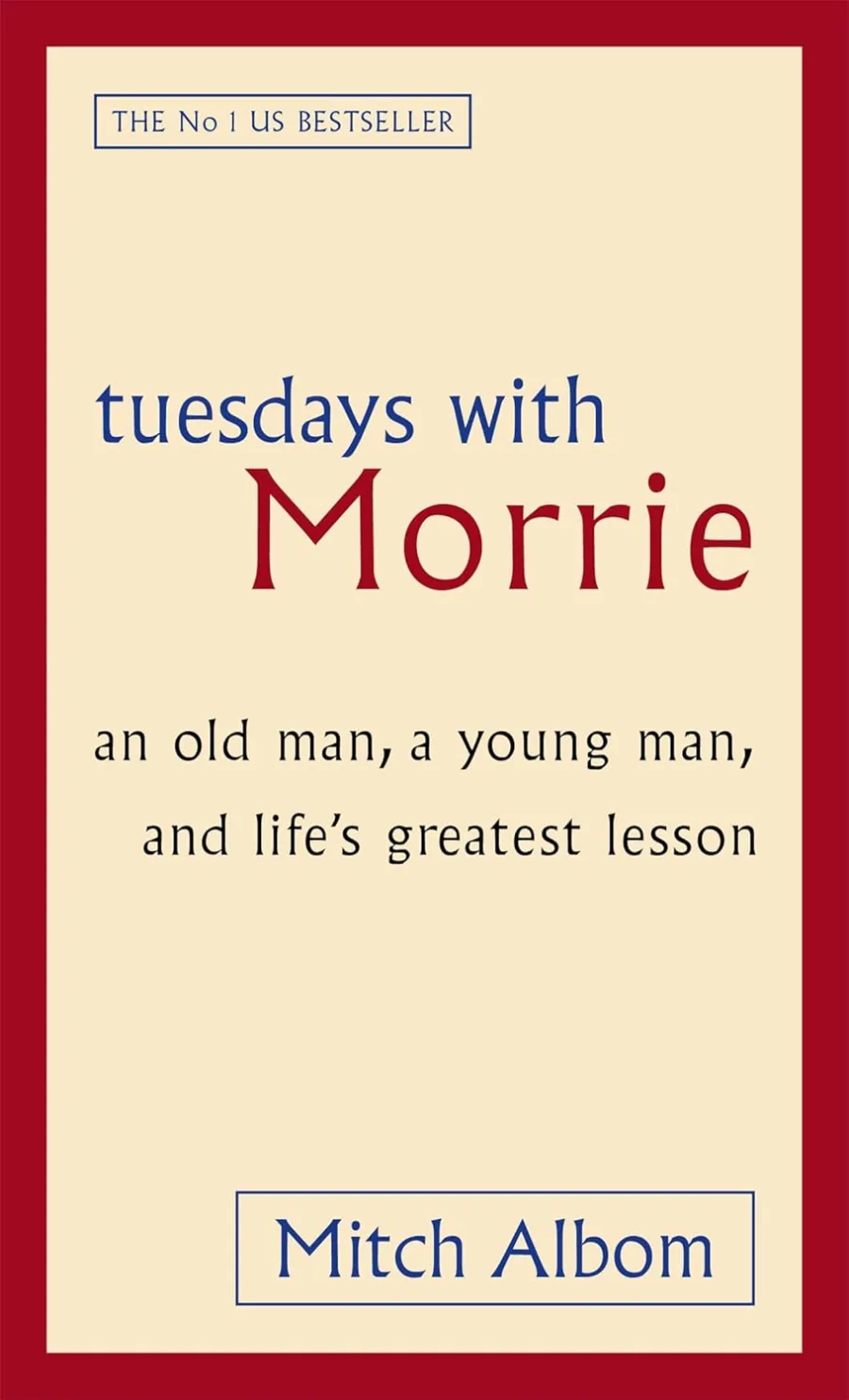
Download Cover Image
Do you want to download the full cover image for Tuesdays With Morrie (Export) (A Format)?