
Stop Letting Everything Affect You: How to break free from overthinking, emotional chaos
Paperback
• 186 Pages
• ₹ 269.00
• English
• 9789373171982
No ratings yet
| Publisher | Amaryllis (An Imprint of Manjul Publishing House) |
|---|---|
| ISBN13 | 9789373171982 |
| ASIN/SKU | 9373171984 |
| Book Format | Paperback |
| Language | English |
| Pages | 186 |
| List Price | ₹ 269.00 |
| Publishing Date | 25/11/2025 |
| Dimensions | 19.8 x 12.8 x 1.2 cm |
| Weight | 190 g |
| Book Code | BD00056097 |
Buy this Book
Amazon Stores
Ebook Stores
Other Stores
Discover Stop Letting Everything Affect You: How to break free from overthinking, emotional chaos by Daniel Chidiac. This book is published by Amaryllis (An Imprint of Manjul Publishing House) in Paperback format, ISBN 9789373171982, ASIN 9373171984, under Self-Help, Self-Esteem, Emotional Self Help.
Book Description
STOP LETTING EVERYTHING AFFECT YOU is a transformative guide for anyone who overthinks too often, gets stuck in emotional chaos, and finds themselves trapped in cycles of self-sabotage. With raw honesty and practical wisdom, Daniel Chidiac reveals why small things ruin your entire day and offers proven strategies to finally break free. This book will teach you how to: Stop letting little things ruin your entire day. Stop self-sabotaging. Set healthy boundaries without feeling guilty. Recognize the difference between real guilt and manipulation. Break the cycle of overthinking before it spirals out of control. Stop taking everything so personally and free yourself from emotional reactivity. Identify toxic patterns in relationships and walk away without regret. Be more in control and feel better everyday. Shift your mindset from victimhood to self-empowerment. Learn the art of emotional detachment—how to be unbothered without becoming cold. Move forward unapologetically, without feeling the need to explain your growth. Whether you're exhausted from overthinking everything, tired of absorbing everyone else's energy, or simply ready to stop letting life's chaos dictate how you feel, this book offers the transformative tools to finally reclaim your power, protect your peace, and live on your own terms. Your journey to inner strength and freedom starts here. Daniel Chidiac, International best-selling author of Who Says You Can't? You Do and The Modern Break-Up brings his new book, Stop Letting Everything Affect You. As Daniel says, "In a world designed to keep you overwhelmed, learning to protect your peace isn't just important—it's essential.”
Author Biography
Daniel Chidiac began writing in 2013, driven by a deep urge to express his thoughts and emotions. His debut self-help book, Who Says You Can't? You Do, became a best-seller in eight countries and was later re-published by Penguin Random House. Since then, his work has been translated into 18 languages, resonating with millions around the world.Daniel expanded his creative expression through fiction with The Modern Break-Up, a contemporary romance that became a viral sensation, striking a chord with readers for its raw honesty and emotional depth. He is also the author of Thoughts and Feelings: Volume 1, and is currently preparing to release his highly anticipated new book, Stop Letting Everything Affect You.With over 2 million followers across his social media platforms, Daniel continues to inspire and connect with a global audience through his words and storytelling.
Editorial Reviews
Editorial Reviews will be added soon…
Book Summary
Stop Letting Everything Affect You by Daniel Chidiac is a practical self-help book about emotional reactivity, overthinking, self-sabotage, unhealthy relationships, guilt, boundaries, and the struggle to maintain inner peace in a world full of constant emotional stimulation. Published in 2025, the book is aimed particularly at people who replay conversations in their minds, take other people's behavior personally, absorb the moods of those around them, or allow small problems to affect their entire day. Chidiac's central message is that emotional reactivity is not necessarily a fixed part of someone's personality. It can become a learned habit, and habits can be changed through awareness, practice, and deliberate choices.
The book begins by challenging the idea that highly emotional or sensitive people are simply “too sensitive.” Chidiac suggests that feeling deeply is not automatically a weakness. Sensitivity can allow people to understand others, notice details, care deeply, and form meaningful connections. The problem begins when sensitivity becomes uncontrolled emotional absorption. A person may begin carrying other people's moods, problems, expectations, and reactions as if they were their own. Over time, this can create exhaustion and confusion because the person loses track of where their own emotional responsibility ends and someone else's begins.
One of the book's major subjects is overthinking. Chidiac describes repetitive thinking as a mental trap in which people repeatedly analyze conversations, mistakes, possibilities, and imagined future problems. A person may believe that thinking about something again and again will eventually produce an answer or prevent another painful experience. Instead, the repeated mental replay often creates more anxiety. The mind gives the impression that it is solving a problem, while actually keeping the person emotionally connected to it. The book therefore encourages readers to recognize when thinking has stopped being useful reflection and has become rumination.
Chidiac's approach is not to demand that readers stop thinking altogether. The goal is to create distance from thoughts. Instead of automatically believing every thought, readers are encouraged to observe what is happening inside their minds. The “Witness Practice” described in the book involves noticing an emotion, identifying it, and observing it rather than immediately becoming consumed by it. This creates a small but important gap between an emotional reaction and the response that follows.
This distinction is central to emotional self-control. Feeling angry does not require immediate anger-driven action. Feeling rejected does not automatically mean that someone has rejected one's worth as a person. Feeling anxious does not necessarily mean that something terrible is about to happen. By observing emotions rather than instantly obeying them, people can begin making decisions based on their values rather than temporary emotional states.
The book also examines the illusion of control. People often become distressed because they try to control things that are fundamentally outside their control. They may attempt to control another person's opinion, behavior, feelings, decisions, or response. When those attempts fail, frustration increases. Chidiac encourages readers to redirect their attention toward what they actually can influence: their own choices, boundaries, behavior, values, and responses. This shift from external control to internal responsibility is one of the book's most important ideas.
Rejection is another situation in which people can lose emotional balance. When someone is rejected, ignored, criticized, or left behind, the experience can feel like a judgment on their entire identity. The book encourages readers to separate an event from the story they tell themselves about it. Another person's decision may be painful, but it does not automatically prove that the person who was rejected is inadequate or unworthy. Learning this distinction can reduce the tendency to seek constant validation.
The book also addresses taking things personally. People frequently interpret other people's moods or actions as statements about themselves. If someone is quiet, they may assume they have done something wrong. If someone is angry, they may immediately believe they are responsible. If someone withdraws, they may spend hours trying to discover what mistake they made. Chidiac encourages readers to stop automatically placing themselves at the center of every situation. Other people have their own histories, insecurities, problems, preferences, and emotional struggles.
Boundaries therefore become a major part of the book. Chidiac argues that setting boundaries is not an act of selfishness. Healthy boundaries help people protect their time, energy, emotional stability, and personal values. Without boundaries, caring people can become exhausted by constantly saying yes, solving other people's problems, or allowing unacceptable behavior because they are afraid of disappointing someone.
An important part of establishing boundaries is learning to tolerate guilt. Many people feel guilty when they say no, even when they have done nothing wrong. They may believe that being a good friend, partner, family member, or colleague means always being available. Chidiac encourages readers to distinguish genuine guilt from guilt created by manipulation or unhealthy expectations. Saying no to an unreasonable demand does not automatically make someone uncaring.
The book also explores manipulation and unhealthy relationship patterns. Sometimes people use guilt, emotional pressure, blame, or distortion of events to influence another person's behavior. Chidiac encourages readers to become more aware of these patterns rather than endlessly trying to convince or change the other person. In situations involving persistent manipulation or gaslighting, he emphasizes preserving one's sense of reality and seeking trustworthy outside perspectives when necessary.
At the same time, the book distinguishes compassion from emotional entanglement. Caring about someone does not mean carrying all of their pain. A person can listen, support, and empathize without taking responsibility for another person's entire emotional life. This idea of compassionate detachment allows people to remain caring while protecting their own psychological space.
Self-sabotage is another important theme. Chidiac suggests that people sometimes prevent themselves from changing because their existing identity, even when uncomfortable, feels familiar. A person may say they want a healthier relationship, a new career, greater confidence, or a different lifestyle, yet repeatedly behave in ways that keep them in the same situation. Fear of uncertainty can make familiar unhappiness feel safer than unfamiliar possibility.
This explains why personal growth can sometimes feel painful. When people begin changing, they may outgrow relationships, routines, environments, or identities that once felt important. The book refers to this experience as a kind of “grief of growth.” Moving forward can involve mourning what is being left behind. That sadness does not necessarily mean the change is wrong. Sometimes discomfort is simply evidence that an old version of life is no longer appropriate.
The book also challenges the idea that happiness should be a permanent emotional state. Modern self-help culture can sometimes create the impression that a successful person should feel positive all the time. Chidiac takes a more realistic approach by emphasizing understanding and acceptance. Difficult emotions are part of being human. The goal is not to eliminate sadness, anger, disappointment, or fear but to avoid allowing these emotions to control every decision.
Gratitude is presented as one way of changing attention. When the mind becomes focused entirely on what is wrong, it can overlook what is already valuable. Gratitude does not mean pretending that problems do not exist. Instead, it encourages people to recognize positive aspects of their lives alongside difficulties. This can help shift attention away from constant dissatisfaction and toward a more balanced perspective.
Another important lesson is that emotional freedom does not mean becoming cold or uncaring. The book is not asking readers to stop loving people, stop helping others, or become indifferent. Instead, it encourages them to decide where their emotional energy belongs. A person can care deeply without allowing every criticism, conflict, delay, rejection, or negative mood to determine their inner state.
The practical nature of the book is particularly important. Chidiac does not simply tell readers to “think positively.” He offers exercises and strategies intended to interrupt established patterns.
The book begins by challenging the idea that highly emotional or sensitive people are simply “too sensitive.” Chidiac suggests that feeling deeply is not automatically a weakness. Sensitivity can allow people to understand others, notice details, care deeply, and form meaningful connections. The problem begins when sensitivity becomes uncontrolled emotional absorption. A person may begin carrying other people's moods, problems, expectations, and reactions as if they were their own. Over time, this can create exhaustion and confusion because the person loses track of where their own emotional responsibility ends and someone else's begins.
One of the book's major subjects is overthinking. Chidiac describes repetitive thinking as a mental trap in which people repeatedly analyze conversations, mistakes, possibilities, and imagined future problems. A person may believe that thinking about something again and again will eventually produce an answer or prevent another painful experience. Instead, the repeated mental replay often creates more anxiety. The mind gives the impression that it is solving a problem, while actually keeping the person emotionally connected to it. The book therefore encourages readers to recognize when thinking has stopped being useful reflection and has become rumination.
Chidiac's approach is not to demand that readers stop thinking altogether. The goal is to create distance from thoughts. Instead of automatically believing every thought, readers are encouraged to observe what is happening inside their minds. The “Witness Practice” described in the book involves noticing an emotion, identifying it, and observing it rather than immediately becoming consumed by it. This creates a small but important gap between an emotional reaction and the response that follows.
This distinction is central to emotional self-control. Feeling angry does not require immediate anger-driven action. Feeling rejected does not automatically mean that someone has rejected one's worth as a person. Feeling anxious does not necessarily mean that something terrible is about to happen. By observing emotions rather than instantly obeying them, people can begin making decisions based on their values rather than temporary emotional states.
The book also examines the illusion of control. People often become distressed because they try to control things that are fundamentally outside their control. They may attempt to control another person's opinion, behavior, feelings, decisions, or response. When those attempts fail, frustration increases. Chidiac encourages readers to redirect their attention toward what they actually can influence: their own choices, boundaries, behavior, values, and responses. This shift from external control to internal responsibility is one of the book's most important ideas.
Rejection is another situation in which people can lose emotional balance. When someone is rejected, ignored, criticized, or left behind, the experience can feel like a judgment on their entire identity. The book encourages readers to separate an event from the story they tell themselves about it. Another person's decision may be painful, but it does not automatically prove that the person who was rejected is inadequate or unworthy. Learning this distinction can reduce the tendency to seek constant validation.
The book also addresses taking things personally. People frequently interpret other people's moods or actions as statements about themselves. If someone is quiet, they may assume they have done something wrong. If someone is angry, they may immediately believe they are responsible. If someone withdraws, they may spend hours trying to discover what mistake they made. Chidiac encourages readers to stop automatically placing themselves at the center of every situation. Other people have their own histories, insecurities, problems, preferences, and emotional struggles.
Boundaries therefore become a major part of the book. Chidiac argues that setting boundaries is not an act of selfishness. Healthy boundaries help people protect their time, energy, emotional stability, and personal values. Without boundaries, caring people can become exhausted by constantly saying yes, solving other people's problems, or allowing unacceptable behavior because they are afraid of disappointing someone.
An important part of establishing boundaries is learning to tolerate guilt. Many people feel guilty when they say no, even when they have done nothing wrong. They may believe that being a good friend, partner, family member, or colleague means always being available. Chidiac encourages readers to distinguish genuine guilt from guilt created by manipulation or unhealthy expectations. Saying no to an unreasonable demand does not automatically make someone uncaring.
The book also explores manipulation and unhealthy relationship patterns. Sometimes people use guilt, emotional pressure, blame, or distortion of events to influence another person's behavior. Chidiac encourages readers to become more aware of these patterns rather than endlessly trying to convince or change the other person. In situations involving persistent manipulation or gaslighting, he emphasizes preserving one's sense of reality and seeking trustworthy outside perspectives when necessary.
At the same time, the book distinguishes compassion from emotional entanglement. Caring about someone does not mean carrying all of their pain. A person can listen, support, and empathize without taking responsibility for another person's entire emotional life. This idea of compassionate detachment allows people to remain caring while protecting their own psychological space.
Self-sabotage is another important theme. Chidiac suggests that people sometimes prevent themselves from changing because their existing identity, even when uncomfortable, feels familiar. A person may say they want a healthier relationship, a new career, greater confidence, or a different lifestyle, yet repeatedly behave in ways that keep them in the same situation. Fear of uncertainty can make familiar unhappiness feel safer than unfamiliar possibility.
This explains why personal growth can sometimes feel painful. When people begin changing, they may outgrow relationships, routines, environments, or identities that once felt important. The book refers to this experience as a kind of “grief of growth.” Moving forward can involve mourning what is being left behind. That sadness does not necessarily mean the change is wrong. Sometimes discomfort is simply evidence that an old version of life is no longer appropriate.
The book also challenges the idea that happiness should be a permanent emotional state. Modern self-help culture can sometimes create the impression that a successful person should feel positive all the time. Chidiac takes a more realistic approach by emphasizing understanding and acceptance. Difficult emotions are part of being human. The goal is not to eliminate sadness, anger, disappointment, or fear but to avoid allowing these emotions to control every decision.
Gratitude is presented as one way of changing attention. When the mind becomes focused entirely on what is wrong, it can overlook what is already valuable. Gratitude does not mean pretending that problems do not exist. Instead, it encourages people to recognize positive aspects of their lives alongside difficulties. This can help shift attention away from constant dissatisfaction and toward a more balanced perspective.
Another important lesson is that emotional freedom does not mean becoming cold or uncaring. The book is not asking readers to stop loving people, stop helping others, or become indifferent. Instead, it encourages them to decide where their emotional energy belongs. A person can care deeply without allowing every criticism, conflict, delay, rejection, or negative mood to determine their inner state.
The practical nature of the book is particularly important. Chidiac does not simply tell readers to “think positively.” He offers exercises and strategies intended to interrupt established patterns.
Sample Chapters
Sample Chapters will be added soon…
Reader Reviews
No reviews yet.
Stop Letting Everything Affect You: How to break free from overthinking, emotional chaos
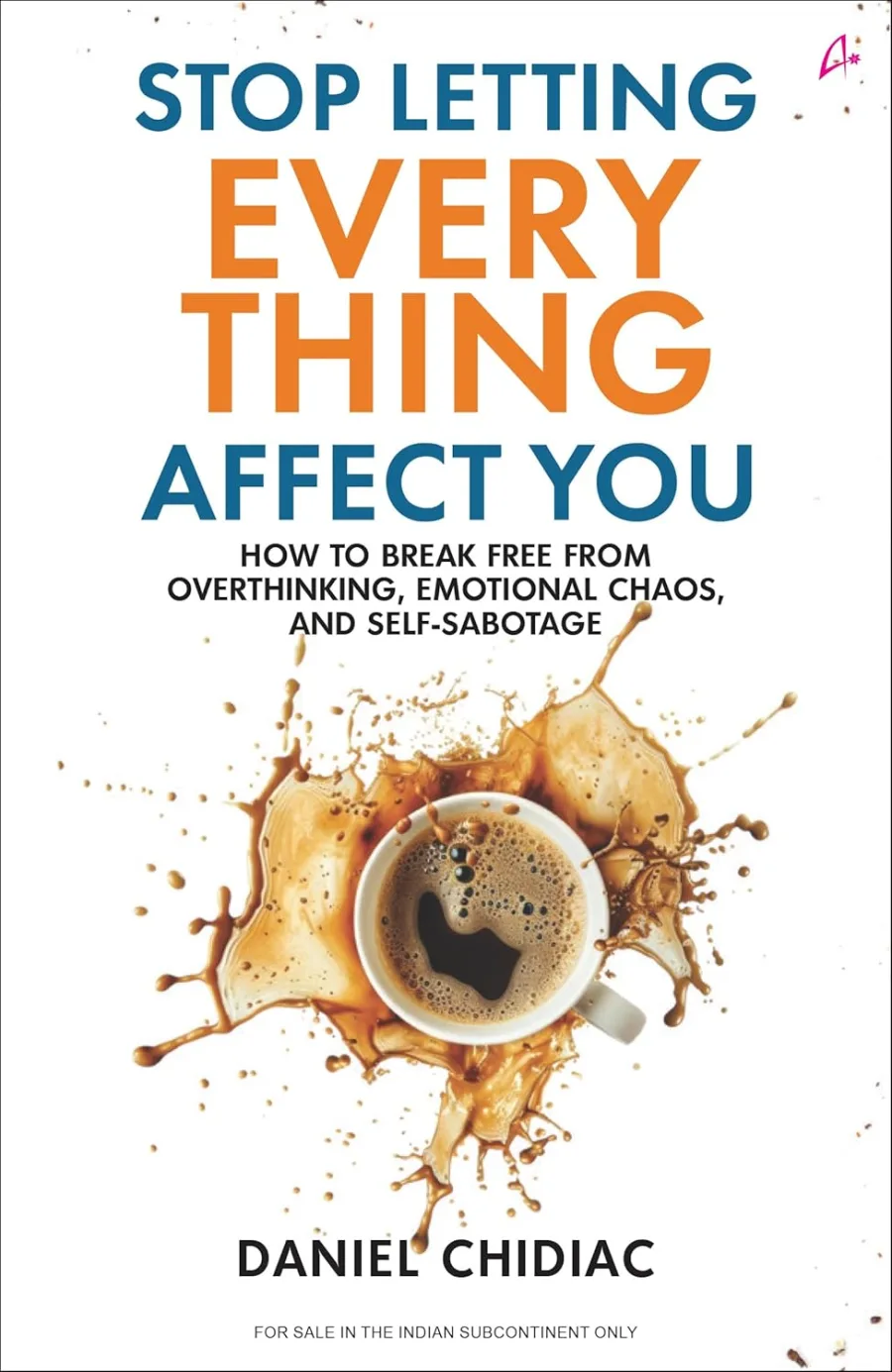
Download Cover Image
Do you want to download the full cover image for Stop Letting Everything Affect You: How to break free from overthinking, emotional chaos?