
Grandma's Bag Of Stories: Collection of 20+ Illustrated short stories, traditional Indian folk tales
Paperback
• 192 Pages
• ₹ 189.00
• English
• 9780143333623
No ratings yet
| Publisher | Puffin |
|---|---|
| ISBN13 | 9780143333623 |
| ASIN/SKU | 0143333623 |
| Book Format | Paperback |
| Language | English |
| Pages | 192 |
| List Price | ₹ 189.00 |
| Publishing Date | 01/01/2015 |
| Dimensions | 12.7 x 1.52 x 20.32 cm |
| Weight | 1 kg 50 g |
| Book Code | BD00056090 |
Buy this Book
Amazon Stores
Ebook Stores
Other Stores
Discover Grandma's Bag Of Stories: Collection of 20+ Illustrated short stories, traditional Indian folk tales by Sudha Murty. This book is published by Puffin in Paperback format, ISBN 9780143333623, ASIN 0143333623, under Children's Books, Children's Humour, Fantasy for Children.
Book Description
Over 20 short stories, ideal for children of ages 5 and up
Includes popular stories: 'The Princess' New Clothes', 'Roopa's Great Escape' and 'The Unending Story'
Every story is accompanied by colourful illustrations
Lucid and simple language of the book makes reading a pleasure.
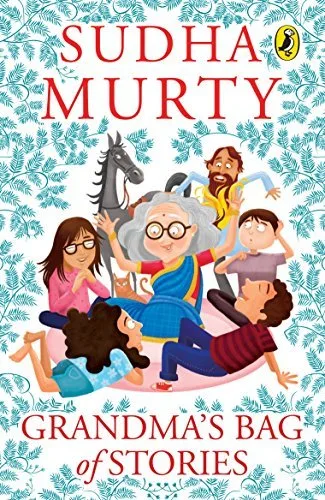
Memories of a grandparent spinning tales around animals and mysterious characters have kept many of us rapt till date. Sudha Murty's Grandma's Bag of Stories is simply delightful. The story starts with Anand, Krishna, Raghu and Meena arriving at their grandparents' house in Shiggaon. Overjoyed Ajji and Ajja(Grandmother and grandfather in Kannada) get the house ready, while Ajji prepares delicious snacks for children. Finally, times comes when everyone gathers around Ajji, as she opens her big bag of stories. She tells stories of kings and cheats, princesses and onions, monkeys and mice and scorpions and hidden treasures.
Though unlikely in combination, stories makes perfect sense when Grandma is the one narrating them.
Includes popular stories: 'The Princess' New Clothes', 'Roopa's Great Escape' and 'The Unending Story'
Every story is accompanied by colourful illustrations
Lucid and simple language of the book makes reading a pleasure.
Memories of a grandparent spinning tales around animals and mysterious characters have kept many of us rapt till date. Sudha Murty's Grandma's Bag of Stories is simply delightful. The story starts with Anand, Krishna, Raghu and Meena arriving at their grandparents' house in Shiggaon. Overjoyed Ajji and Ajja(Grandmother and grandfather in Kannada) get the house ready, while Ajji prepares delicious snacks for children. Finally, times comes when everyone gathers around Ajji, as she opens her big bag of stories. She tells stories of kings and cheats, princesses and onions, monkeys and mice and scorpions and hidden treasures.
Though unlikely in combination, stories makes perfect sense when Grandma is the one narrating them.
Author Biography
Sudha Murty is India's biggest selling woman author. Among her most popular non fiction works are Wise and Otherwise, The Old Man and His God, The Day I Stopped Drinking Milk and How I Taught My Grandmother to Read.
Editorial Reviews
Editorial Reviews will be added soon…
Book Summary
Grandma's Bag of Stories by Sudha Murty is a warm and entertaining collection of traditional Indian-style stories created especially for young readers. The book brings together more than twenty short stories told through the voice of a grandmother to her grandchildren. Set around the familiar atmosphere of a family gathering, the collection combines folk-tale traditions, humor, adventure, kindness, cleverness, and simple moral lessons. Rather than presenting lessons as formal instructions, Sudha Murty allows children to discover values naturally through the experiences of the characters.
The book begins with the children spending time with their grandmother during a school holiday. Like many children, they are eager to hear stories and repeatedly ask their grandmother to tell them something interesting. Their grandmother has a large collection of stories, and she draws from this imaginary “bag” whenever the children want to listen. The framing device gives the book a cozy and familiar atmosphere. Readers feel as though they are sitting beside the family and listening to a grandmother narrate one story after another.
The stories come from different settings and involve many kinds of characters. Some are kings and queens, while others are ordinary villagers, farmers, children, animals, travelers, merchants, and clever individuals. This variety keeps the collection lively. A story may begin with a simple problem but develop into an unexpected adventure or humorous situation. The characters often have to use intelligence, patience, courage, honesty, or kindness to solve their difficulties.
One of the important features of the collection is its connection with Indian storytelling traditions. Traditional folk tales have long been passed from one generation to another through oral storytelling. Grandparents, parents, and elders often tell children stories not only to entertain them but also to communicate ideas about right and wrong, human nature, relationships, and practical wisdom. Sudha Murty recreates this atmosphere in a form that is accessible to modern young readers.
Many of the stories emphasize the importance of kindness. Characters who help others often receive help when they themselves are in difficulty. The stories show children that kindness does not necessarily require wealth or extraordinary abilities. A small act of generosity, hospitality, or compassion can make a meaningful difference to another person.
Honesty is another recurring value. Some characters face situations in which lying or cheating might provide an immediate advantage. Yet the stories often show that dishonesty creates additional problems. Truthfulness may sometimes be difficult, but it allows people to maintain trust and dignity. Through simple situations, children are encouraged to understand why honesty matters in everyday life.
The book also celebrates intelligence and practical wisdom. Not every problem can be solved through physical strength or authority. Some characters succeed because they observe carefully, think creatively, or understand human behavior. Clever children and ordinary people are often able to overcome powerful opponents because they approach problems from a different perspective.
This emphasis on intelligence is particularly useful for young readers because it encourages them to think rather than simply accept what they are told. A character may appear weak or unimportant at first but eventually solve a difficult problem through careful reasoning. Such stories demonstrate that intelligence can take many forms and that a person's abilities should not be judged only by appearance or social position.
Humor plays an important role throughout the collection. Some stories involve misunderstandings, foolish decisions, exaggerated situations, or characters who believe they are clever but eventually discover their mistakes. The humor makes the moral lessons easier to accept. Children are more likely to remember a lesson when it is connected with an amusing story than when it is presented as a serious lecture.
The stories also explore the consequences of greed. Characters who want more than they need sometimes make poor decisions and lose what they already possess. The book encourages children to appreciate what they have rather than constantly wanting more. This lesson is communicated through entertaining situations rather than through direct preaching.
Similarly, pride is often shown as a weakness. Characters who believe they are superior to everyone else may underestimate others or make careless decisions. Their experiences teach children the importance of humility. A person can be talented or successful without treating others as inferior.
The collection also values hard work and perseverance. Some characters face difficult circumstances but continue trying rather than giving up immediately. Their success suggests that good outcomes often require patience and effort. Children learn that failure does not necessarily mean that a goal is impossible. Sometimes it simply means that another attempt or a different approach is needed.
Family relationships are central to the structure of the book. The grandmother's role is especially significant because she becomes both storyteller and guide. Her stories create a bond between generations. The children do not simply receive information from her; they spend time with her, ask questions, react to the stories, and enjoy her company. The book therefore celebrates the emotional importance of grandparents and family traditions.
The grandmother also represents the preservation of cultural memory. The stories she tells carry ideas, customs, humor, and values from an older generation into the lives of younger children. In this way, storytelling becomes a bridge between the past and the present. Children can enjoy the stories as entertainment while also becoming familiar with a style of storytelling that has traditionally been passed down orally.
The animals in some of the tales add another layer of appeal. Animal characters can behave like humans, displaying cleverness, greed, kindness, foolishness, bravery, or jealousy. Their experiences allow children to think about human behavior from a safe and imaginative distance. Such animal stories are common in Indian and other world folk-tale traditions.
The book also introduces children to the idea that appearances can be misleading. Someone who looks poor may possess great wisdom, while someone who appears powerful may make foolish decisions. A character who initially seems unimportant may eventually become the person who solves a problem. These stories encourage readers not to judge others too quickly.
Another recurring lesson is the importance of treating people with respect. Social status does not automatically make someone good or wise. Kings and wealthy characters can make mistakes, while ordinary people can demonstrate extraordinary intelligence and generosity. The stories therefore create a world in which character matters more than social position.
Some stories involve journeys and adventures, giving the collection a sense of movement and discovery. Characters may travel to unfamiliar places, encounter unexpected people, or face problems far from home. These adventures stimulate children's imagination while also showing how curiosity and courage can lead to new experiences.
The book's illustrations further support this storytelling experience. Visual elements can help younger readers understand characters, settings, and important moments. Pictures make the stories more approachable for children who are still developing their reading skills, while also adding to the charm of the collection.
The language and structure are generally accessible to young readers. The stories are short enough to be read individually, making the collection suitable for bedtime reading, family reading sessions, or independent reading. Children do not need to finish the entire book in one sitting. A parent or grandparent can choose one story each evening, creating a regular reading routine.
The stories can also encourage conversations between children and adults. After reading a tale, parents can ask children what they think a character should have done differently or why a particular decision led to a particular result. Such conversations help children move beyond simply listening to the story and begin thinking about motives, consequences, and values.
An important strength of Grandma's Bag of Stories is that its moral lessons are not presented in a heavy-handed way. The book does not repeatedly tell children what they must believe. Instead, the characters experience situations that allow readers to see the consequences of different choices.
The book begins with the children spending time with their grandmother during a school holiday. Like many children, they are eager to hear stories and repeatedly ask their grandmother to tell them something interesting. Their grandmother has a large collection of stories, and she draws from this imaginary “bag” whenever the children want to listen. The framing device gives the book a cozy and familiar atmosphere. Readers feel as though they are sitting beside the family and listening to a grandmother narrate one story after another.
The stories come from different settings and involve many kinds of characters. Some are kings and queens, while others are ordinary villagers, farmers, children, animals, travelers, merchants, and clever individuals. This variety keeps the collection lively. A story may begin with a simple problem but develop into an unexpected adventure or humorous situation. The characters often have to use intelligence, patience, courage, honesty, or kindness to solve their difficulties.
One of the important features of the collection is its connection with Indian storytelling traditions. Traditional folk tales have long been passed from one generation to another through oral storytelling. Grandparents, parents, and elders often tell children stories not only to entertain them but also to communicate ideas about right and wrong, human nature, relationships, and practical wisdom. Sudha Murty recreates this atmosphere in a form that is accessible to modern young readers.
Many of the stories emphasize the importance of kindness. Characters who help others often receive help when they themselves are in difficulty. The stories show children that kindness does not necessarily require wealth or extraordinary abilities. A small act of generosity, hospitality, or compassion can make a meaningful difference to another person.
Honesty is another recurring value. Some characters face situations in which lying or cheating might provide an immediate advantage. Yet the stories often show that dishonesty creates additional problems. Truthfulness may sometimes be difficult, but it allows people to maintain trust and dignity. Through simple situations, children are encouraged to understand why honesty matters in everyday life.
The book also celebrates intelligence and practical wisdom. Not every problem can be solved through physical strength or authority. Some characters succeed because they observe carefully, think creatively, or understand human behavior. Clever children and ordinary people are often able to overcome powerful opponents because they approach problems from a different perspective.
This emphasis on intelligence is particularly useful for young readers because it encourages them to think rather than simply accept what they are told. A character may appear weak or unimportant at first but eventually solve a difficult problem through careful reasoning. Such stories demonstrate that intelligence can take many forms and that a person's abilities should not be judged only by appearance or social position.
Humor plays an important role throughout the collection. Some stories involve misunderstandings, foolish decisions, exaggerated situations, or characters who believe they are clever but eventually discover their mistakes. The humor makes the moral lessons easier to accept. Children are more likely to remember a lesson when it is connected with an amusing story than when it is presented as a serious lecture.
The stories also explore the consequences of greed. Characters who want more than they need sometimes make poor decisions and lose what they already possess. The book encourages children to appreciate what they have rather than constantly wanting more. This lesson is communicated through entertaining situations rather than through direct preaching.
Similarly, pride is often shown as a weakness. Characters who believe they are superior to everyone else may underestimate others or make careless decisions. Their experiences teach children the importance of humility. A person can be talented or successful without treating others as inferior.
The collection also values hard work and perseverance. Some characters face difficult circumstances but continue trying rather than giving up immediately. Their success suggests that good outcomes often require patience and effort. Children learn that failure does not necessarily mean that a goal is impossible. Sometimes it simply means that another attempt or a different approach is needed.
Family relationships are central to the structure of the book. The grandmother's role is especially significant because she becomes both storyteller and guide. Her stories create a bond between generations. The children do not simply receive information from her; they spend time with her, ask questions, react to the stories, and enjoy her company. The book therefore celebrates the emotional importance of grandparents and family traditions.
The grandmother also represents the preservation of cultural memory. The stories she tells carry ideas, customs, humor, and values from an older generation into the lives of younger children. In this way, storytelling becomes a bridge between the past and the present. Children can enjoy the stories as entertainment while also becoming familiar with a style of storytelling that has traditionally been passed down orally.
The animals in some of the tales add another layer of appeal. Animal characters can behave like humans, displaying cleverness, greed, kindness, foolishness, bravery, or jealousy. Their experiences allow children to think about human behavior from a safe and imaginative distance. Such animal stories are common in Indian and other world folk-tale traditions.
The book also introduces children to the idea that appearances can be misleading. Someone who looks poor may possess great wisdom, while someone who appears powerful may make foolish decisions. A character who initially seems unimportant may eventually become the person who solves a problem. These stories encourage readers not to judge others too quickly.
Another recurring lesson is the importance of treating people with respect. Social status does not automatically make someone good or wise. Kings and wealthy characters can make mistakes, while ordinary people can demonstrate extraordinary intelligence and generosity. The stories therefore create a world in which character matters more than social position.
Some stories involve journeys and adventures, giving the collection a sense of movement and discovery. Characters may travel to unfamiliar places, encounter unexpected people, or face problems far from home. These adventures stimulate children's imagination while also showing how curiosity and courage can lead to new experiences.
The book's illustrations further support this storytelling experience. Visual elements can help younger readers understand characters, settings, and important moments. Pictures make the stories more approachable for children who are still developing their reading skills, while also adding to the charm of the collection.
The language and structure are generally accessible to young readers. The stories are short enough to be read individually, making the collection suitable for bedtime reading, family reading sessions, or independent reading. Children do not need to finish the entire book in one sitting. A parent or grandparent can choose one story each evening, creating a regular reading routine.
The stories can also encourage conversations between children and adults. After reading a tale, parents can ask children what they think a character should have done differently or why a particular decision led to a particular result. Such conversations help children move beyond simply listening to the story and begin thinking about motives, consequences, and values.
An important strength of Grandma's Bag of Stories is that its moral lessons are not presented in a heavy-handed way. The book does not repeatedly tell children what they must believe. Instead, the characters experience situations that allow readers to see the consequences of different choices.
Sample Chapters
Sample Chapters will be added soon…
Reader Reviews
No reviews yet.
Grandma's Bag Of Stories: Collection of 20+ Illustrated short stories, traditional Indian folk tales
Download Cover Image
Do you want to download the full cover image for Grandma's Bag Of Stories: Collection of 20+ Illustrated short stories, traditional Indian folk tales?