
The Mountain Is You: Transforming Self-Sabotage Into Self-Mastery (English)
Paperback
• 248 Pages
• ₹ 268.00
• English
• 9789355434142
No ratings yet
| Publisher | Amaryllis (An Imprint of Manjul Publishing House) |
|---|---|
| ISBN13 | 9789355434142 |
| ASIN/SKU | 9355434146 |
| Book Format | Paperback |
| Language | English |
| Pages | 248 |
| List Price | ₹ 268.00 |
| Publishing Date | 25/11/2023 |
| Dimensions | 12.85 x 1.42 x 19.84 cm |
| Weight | 210 g |
| Book Code | BD00056073 |
Buy this Book
Amazon Stores
Ebook Stores
Other Stores
Discover The Mountain Is You: Transforming Self-Sabotage Into Self-Mastery (English) by Brianna Wiest. This book is published by Amaryllis (An Imprint of Manjul Publishing House) in Paperback format, ISBN 9789355434142, ASIN 9355434146, under Self-Help, Personal Transformation, Motivational Self-Help.
Book Description
This is a book about self-sabotage. Why we do it, when we do it, and how to stop doing it—for good. Coexisting but conflicting needs create self-sabotaging behaviors. This is why we resist efforts to change, often until they feel completely futile. But by extracting crucial insight from our most damaging habits, building emotional intelligence by better understanding our brains and bodies, releasing past experiences at a cellular level, and learning to act as our highest potential future selves, we can step out of our own way and into our potential. For centuries, the mountain has been used as a metaphor for the big challenges we face, especially ones that seem impossible to overcome. To scale our mountains, we actually have to do the deep internal work of excavating trauma, building resilience, and adjusting how we show up for the climb. In the end, it is not the mountain we master, but ourselves.
Author Biography
Brianna is the bestselling author of the books 101 Essays That Will Change The Way You Think, The Mountain Is You, The Pivot Year, and more. Her books have sold millions of copies, regularly appear on global bestseller lists, and are currently being translated into 40+ languages. She has a B.A. in English and an Honorary Doctorate in Literature, both from Elizabethtown College.
Editorial Reviews
Editorial Reviews will be added soon…
Book Summary
The Mountain Is You: Transforming Self-Sabotage Into Self-Mastery by Brianna Wiest is a self-help and personal-growth book about the hidden patterns that prevent people from becoming the person they want to be. First published in 2020, the book uses the metaphor of a mountain to represent the internal obstacles that stand between a person and the life they want. According to Wiest, these obstacles are often not external circumstances but fears, limiting beliefs, unresolved emotions, unhealthy habits, and unconscious patterns of behavior. The central idea is that the mountain a person needs to climb is often within themselves.
The book begins by challenging the common understanding of self-sabotage. People often assume that when they procrastinate, abandon their goals, remain in unhealthy situations, or repeatedly make choices that work against their interests, they are simply lazy, weak, or lacking discipline. Wiest offers a more compassionate explanation. She argues that self-sabotaging behavior often serves a purpose, even when that purpose is no longer helpful. What looks like self-destruction may actually be an unconscious attempt to protect oneself from fear, uncertainty, rejection, failure, or emotional pain.
This idea changes the way readers are encouraged to look at their own behavior. Instead of asking only, “Why am I doing this to myself?” they can ask, “What is this behavior trying to protect me from?” Someone who repeatedly procrastinates may not simply be avoiding work. They might be afraid of failing, being judged, succeeding and attracting attention, or discovering that their abilities are not what they hoped. Someone who repeatedly damages relationships may be trying to avoid vulnerability or the possibility of being abandoned. Understanding the hidden purpose behind a behavior becomes the first step toward changing it.
Wiest explains that many self-sabotaging patterns develop because they once helped a person cope with difficult circumstances. A strategy that was useful in one period of life can become harmful later. For example, avoiding conflict may have once helped someone feel safe, but as an adult it may prevent them from communicating honestly. Staying emotionally distant may have protected someone from rejection, but it can also prevent genuine intimacy. The behavior is therefore not necessarily meaningless; it is an old solution being used for a new problem.
This is why the book emphasizes awareness before transformation. People cannot easily change patterns they do not recognize. Wiest encourages readers to observe the moments when their behavior contradicts what they consciously say they want. If someone says they want to write a book but repeatedly finds reasons not to begin, that contradiction is worth examining. If someone wants a healthier relationship but repeatedly chooses emotionally unavailable partners, that pattern also deserves attention. The repeated contradiction between desire and behavior can reveal an underlying fear or unmet need.
Another major theme is the conflict between what the conscious mind wants and what the deeper emotional system considers safe. A person may genuinely want success but still feel uncomfortable when success becomes possible. They may want closeness while simultaneously fearing vulnerability. They may want independence while being afraid of leaving familiar circumstances. In such situations, part of the person moves toward change while another part tries to preserve the familiar. Self-sabotage can emerge from this internal conflict.
The book therefore presents change as something that requires emotional understanding, not merely stronger willpower. Simply forcing oneself to behave differently may work temporarily, but if the underlying fear remains unresolved, the old pattern can return. Lasting change requires understanding what the pattern is doing and finding healthier ways to meet the need behind it.
Wiest also discusses the importance of emotional intelligence. Emotions provide information, but they do not necessarily provide instructions. Feeling afraid does not automatically mean that a decision is wrong. Feeling uncomfortable does not necessarily mean that a person should retreat. Similarly, feeling angry does not mean that anger should determine one's actions. Emotional intelligence involves noticing feelings, understanding where they come from, and deciding how to respond rather than allowing emotions to control every decision.
This distinction between experiencing an emotion and acting on it is an important part of self-mastery. A person can feel fear and still take a necessary step. They can feel sadness without allowing it to define their identity. They can experience anger and choose not to react impulsively. The goal is not to eliminate difficult emotions but to develop a healthier relationship with them.
The book also emphasizes the importance of processing the past. Unresolved experiences can influence present behavior even when a person believes they have moved on. Old beliefs about worth, safety, love, success, or failure can continue shaping decisions. Wiest encourages readers to examine where these beliefs came from and whether they still belong in their present lives.
This process is not presented as simply blaming the past. Understanding where a pattern came from is meant to create freedom rather than permanent identification with it. A person may have learned certain behaviors in response to earlier experiences, but that does not mean those behaviors must remain part of their future. The past can explain a pattern without having to dictate what happens next.
Another important concept is that adversity can become a catalyst for transformation. Difficult experiences can force people to question assumptions they previously accepted. A painful ending, disappointment, failure, or major life disruption may reveal that an old way of living is no longer sustainable. Wiest treats such periods as opportunities for deeper self-examination rather than automatically viewing them as meaningless suffering. The book connects this process with the idea of “positive disintegration,” in which old structures of identity can break down and make room for a more conscious way of living.
The mountain metaphor becomes particularly powerful here. A mountain is difficult to climb, but climbing it changes the person doing the climbing. The challenge requires patience, strength, awareness, and persistence. Similarly, confronting one's internal obstacles is difficult, but the process can develop qualities that would not emerge without the challenge. The goal is therefore not simply to reach the other side of a problem but to become stronger and more self-aware through the process.
Wiest also explores the role of fear in personal growth. People frequently remain in familiar circumstances because familiarity feels safer than uncertainty. Even an unhappy situation can become psychologically comfortable when it is predictable. Change introduces unknown possibilities, and the mind may resist those possibilities even when they could lead to a better life.
This explains why people sometimes return to old habits after making progress. The old pattern may be unhealthy, but it is familiar. A healthier pattern can initially feel strange. Someone who has always been anxious may find calmness uncomfortable. Someone accustomed to chaotic relationships may find a stable relationship unfamiliar. Someone who has always doubted themselves may feel strangely exposed when they begin believing in their abilities.
The book therefore encourages readers to become comfortable with the discomfort of growth. Transformation does not always feel good while it is happening. A person may experience uncertainty, grief, fear, or confusion while moving away from an old identity. This discomfort should not automatically be interpreted as evidence that something has gone wrong.
Another major lesson concerns identity. People often define themselves through old stories: “I am not disciplined,” “I always fail,” “I am bad at relationships,” or “I have never been confident.” These statements can become self-fulfilling because people unconsciously behave in ways that maintain their existing identity. Wiest encourages readers to question these fixed descriptions and recognize that identity can evolve through repeated choices.
The process of building a new identity involves small, consistent actions. A person does not become disciplined simply by deciding to be disciplined. They develop that identity by repeatedly keeping promises to themselves. Confidence grows through taking action despite uncertainty. Emotional stability develops through practicing healthier responses. Self-trust develops when people repeatedly demonstrate to themselves that they can handle difficult situations.
The book begins by challenging the common understanding of self-sabotage. People often assume that when they procrastinate, abandon their goals, remain in unhealthy situations, or repeatedly make choices that work against their interests, they are simply lazy, weak, or lacking discipline. Wiest offers a more compassionate explanation. She argues that self-sabotaging behavior often serves a purpose, even when that purpose is no longer helpful. What looks like self-destruction may actually be an unconscious attempt to protect oneself from fear, uncertainty, rejection, failure, or emotional pain.
This idea changes the way readers are encouraged to look at their own behavior. Instead of asking only, “Why am I doing this to myself?” they can ask, “What is this behavior trying to protect me from?” Someone who repeatedly procrastinates may not simply be avoiding work. They might be afraid of failing, being judged, succeeding and attracting attention, or discovering that their abilities are not what they hoped. Someone who repeatedly damages relationships may be trying to avoid vulnerability or the possibility of being abandoned. Understanding the hidden purpose behind a behavior becomes the first step toward changing it.
Wiest explains that many self-sabotaging patterns develop because they once helped a person cope with difficult circumstances. A strategy that was useful in one period of life can become harmful later. For example, avoiding conflict may have once helped someone feel safe, but as an adult it may prevent them from communicating honestly. Staying emotionally distant may have protected someone from rejection, but it can also prevent genuine intimacy. The behavior is therefore not necessarily meaningless; it is an old solution being used for a new problem.
This is why the book emphasizes awareness before transformation. People cannot easily change patterns they do not recognize. Wiest encourages readers to observe the moments when their behavior contradicts what they consciously say they want. If someone says they want to write a book but repeatedly finds reasons not to begin, that contradiction is worth examining. If someone wants a healthier relationship but repeatedly chooses emotionally unavailable partners, that pattern also deserves attention. The repeated contradiction between desire and behavior can reveal an underlying fear or unmet need.
Another major theme is the conflict between what the conscious mind wants and what the deeper emotional system considers safe. A person may genuinely want success but still feel uncomfortable when success becomes possible. They may want closeness while simultaneously fearing vulnerability. They may want independence while being afraid of leaving familiar circumstances. In such situations, part of the person moves toward change while another part tries to preserve the familiar. Self-sabotage can emerge from this internal conflict.
The book therefore presents change as something that requires emotional understanding, not merely stronger willpower. Simply forcing oneself to behave differently may work temporarily, but if the underlying fear remains unresolved, the old pattern can return. Lasting change requires understanding what the pattern is doing and finding healthier ways to meet the need behind it.
Wiest also discusses the importance of emotional intelligence. Emotions provide information, but they do not necessarily provide instructions. Feeling afraid does not automatically mean that a decision is wrong. Feeling uncomfortable does not necessarily mean that a person should retreat. Similarly, feeling angry does not mean that anger should determine one's actions. Emotional intelligence involves noticing feelings, understanding where they come from, and deciding how to respond rather than allowing emotions to control every decision.
This distinction between experiencing an emotion and acting on it is an important part of self-mastery. A person can feel fear and still take a necessary step. They can feel sadness without allowing it to define their identity. They can experience anger and choose not to react impulsively. The goal is not to eliminate difficult emotions but to develop a healthier relationship with them.
The book also emphasizes the importance of processing the past. Unresolved experiences can influence present behavior even when a person believes they have moved on. Old beliefs about worth, safety, love, success, or failure can continue shaping decisions. Wiest encourages readers to examine where these beliefs came from and whether they still belong in their present lives.
This process is not presented as simply blaming the past. Understanding where a pattern came from is meant to create freedom rather than permanent identification with it. A person may have learned certain behaviors in response to earlier experiences, but that does not mean those behaviors must remain part of their future. The past can explain a pattern without having to dictate what happens next.
Another important concept is that adversity can become a catalyst for transformation. Difficult experiences can force people to question assumptions they previously accepted. A painful ending, disappointment, failure, or major life disruption may reveal that an old way of living is no longer sustainable. Wiest treats such periods as opportunities for deeper self-examination rather than automatically viewing them as meaningless suffering. The book connects this process with the idea of “positive disintegration,” in which old structures of identity can break down and make room for a more conscious way of living.
The mountain metaphor becomes particularly powerful here. A mountain is difficult to climb, but climbing it changes the person doing the climbing. The challenge requires patience, strength, awareness, and persistence. Similarly, confronting one's internal obstacles is difficult, but the process can develop qualities that would not emerge without the challenge. The goal is therefore not simply to reach the other side of a problem but to become stronger and more self-aware through the process.
Wiest also explores the role of fear in personal growth. People frequently remain in familiar circumstances because familiarity feels safer than uncertainty. Even an unhappy situation can become psychologically comfortable when it is predictable. Change introduces unknown possibilities, and the mind may resist those possibilities even when they could lead to a better life.
This explains why people sometimes return to old habits after making progress. The old pattern may be unhealthy, but it is familiar. A healthier pattern can initially feel strange. Someone who has always been anxious may find calmness uncomfortable. Someone accustomed to chaotic relationships may find a stable relationship unfamiliar. Someone who has always doubted themselves may feel strangely exposed when they begin believing in their abilities.
The book therefore encourages readers to become comfortable with the discomfort of growth. Transformation does not always feel good while it is happening. A person may experience uncertainty, grief, fear, or confusion while moving away from an old identity. This discomfort should not automatically be interpreted as evidence that something has gone wrong.
Another major lesson concerns identity. People often define themselves through old stories: “I am not disciplined,” “I always fail,” “I am bad at relationships,” or “I have never been confident.” These statements can become self-fulfilling because people unconsciously behave in ways that maintain their existing identity. Wiest encourages readers to question these fixed descriptions and recognize that identity can evolve through repeated choices.
The process of building a new identity involves small, consistent actions. A person does not become disciplined simply by deciding to be disciplined. They develop that identity by repeatedly keeping promises to themselves. Confidence grows through taking action despite uncertainty. Emotional stability develops through practicing healthier responses. Self-trust develops when people repeatedly demonstrate to themselves that they can handle difficult situations.
Sample Chapters
Sample Chapters will be added soon…
Reader Reviews
No reviews yet.
The Mountain Is You: Transforming Self-Sabotage Into Self-Mastery (English)
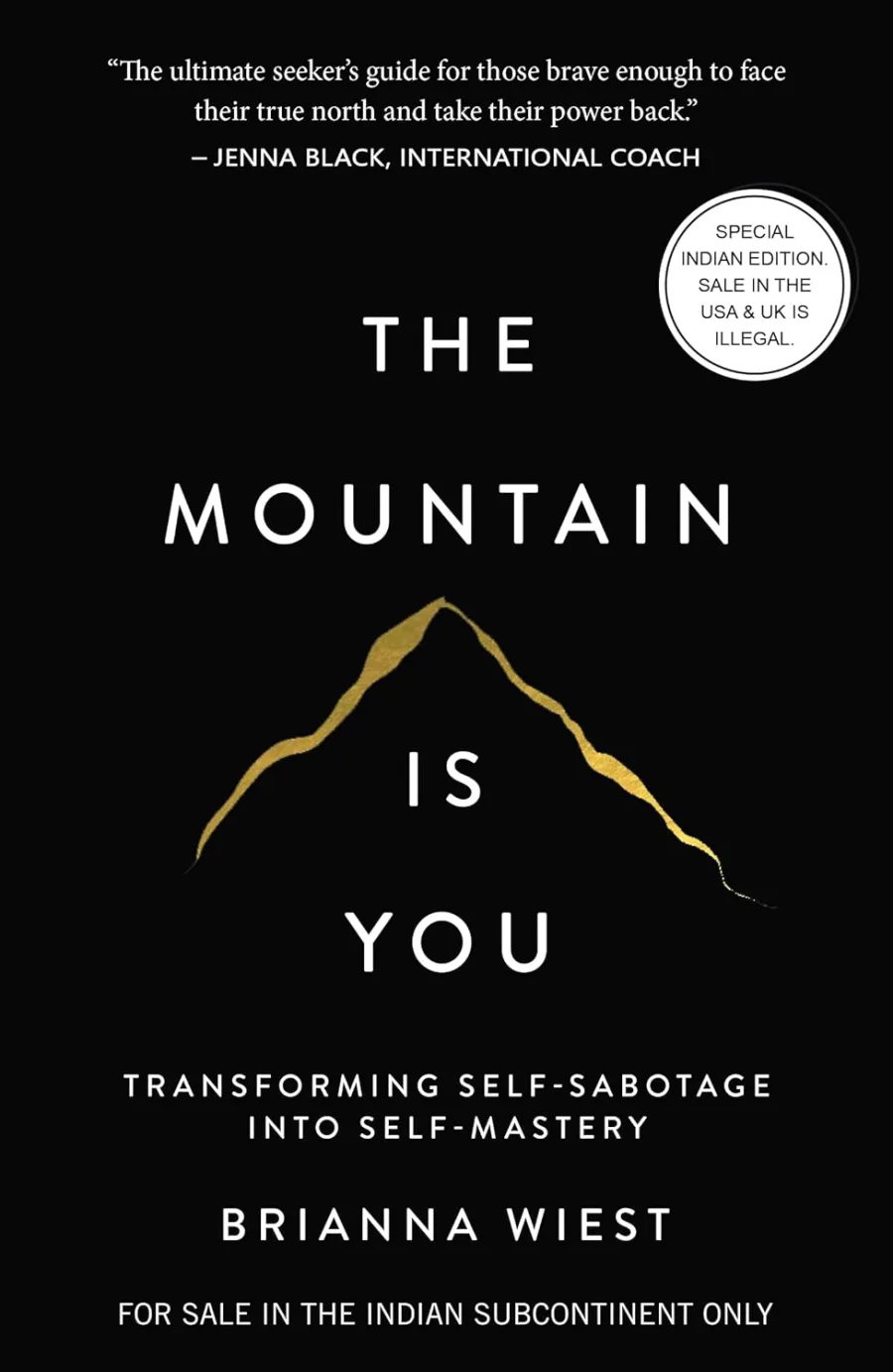
Download Cover Image
Do you want to download the full cover image for The Mountain Is You: Transforming Self-Sabotage Into Self-Mastery (English)?