
Meditations by Marcus Aurelius | Ancient Wisdom on Purpose, Calm & Personal Growth | Philosophy
Paperback
• 228 Pages
• ₹ 199.00
• English
• 9788175994751
No ratings yet
| Publisher | Fingerprint! Publishing |
|---|---|
| ISBN13 | 9788175994751 |
| ASIN/SKU | 8175994754 |
| Book Format | Paperback |
| Language | English |
| Pages | 228 |
| List Price | ₹ 199.00 |
| Publishing Date | 10/08/2017 |
| Dimensions | 12.7 x 1.52 x 20.32 cm |
| Weight | 185 g |
| Book Code | BD00056072 |
Buy this Book
Amazon Stores
Ebook Stores
Other Stores
Discover Meditations by Marcus Aurelius | Ancient Wisdom on Purpose, Calm and Personal Growth | Philosophy by Marcus Aurelius. This book is published by Fingerprint! Publishing in Paperback format, ISBN 9788175994751, ASIN 8175994754, under Self-Help, Anthologies, Meditation.
Book Description
A timeless guide to Stoic philosophy, Meditations by Marcus Aurelius offers invaluable insights into life, virtue, and resilience. This influential work offers a window into the mind of a Stoic philosopher-king as he reflects on the nature of the universe, the meaning of life, and the virtues that lead to a fulfilling existence. This inspirational read is a must-have for anyone seeking personal growth and enlightenment.
Ancient wisdom for modern life!
Offers practical advice on navigating life’s challenges and embracing the present moment.
Serves as a source of inspiration for those seeking a more purposeful and meaningful existence.
Includes teachings that encourage self-reflection and the art of mindfulness for a more balanced and fulfilling life.
Provides practical insights on resilience, self-discipline, and finding inner peace.
A must-read for those on a journey of self-discovery.
Ancient wisdom for modern life!
Offers practical advice on navigating life’s challenges and embracing the present moment.
Serves as a source of inspiration for those seeking a more purposeful and meaningful existence.
Includes teachings that encourage self-reflection and the art of mindfulness for a more balanced and fulfilling life.
Provides practical insights on resilience, self-discipline, and finding inner peace.
A must-read for those on a journey of self-discovery.
Author Biography
Marcus Aurelius was born Marcus Annius Verus in Rome on 26 April 121. He was taught at home by some of the best tutors. In 161, after the death of Antoninus, Marcus became the ruler of the Roman Empire. He made Lucius Verus his co-emperor, and for the first time in history, Rome was being ruled by two emperors.
During his campaigns against the Sarmatians and Germans, Marcus penned down this emotions, thoughts, and reflections in a series of twelve books called Meditations. Originally written in Greek, Meditations records the various stages of his life and gives an insight into his inner life, Stoic ideas, and philosophy.
The first English translation appeared in 1634. It was published by Meric Casaubon. With themes, ideas, and beliefs which have continued to inspire the readers across the centuries, Meditations is one of the greatest works of Greek and philosophical literature.
Marcus breathed his last on 17 March 180. He was succeeded by his son, Commodus.
During his campaigns against the Sarmatians and Germans, Marcus penned down this emotions, thoughts, and reflections in a series of twelve books called Meditations. Originally written in Greek, Meditations records the various stages of his life and gives an insight into his inner life, Stoic ideas, and philosophy.
The first English translation appeared in 1634. It was published by Meric Casaubon. With themes, ideas, and beliefs which have continued to inspire the readers across the centuries, Meditations is one of the greatest works of Greek and philosophical literature.
Marcus breathed his last on 17 March 180. He was succeeded by his son, Commodus.
Editorial Reviews
Meditations by Marcus Aurelius is one of the most enduring works of Stoic philosophy and a deeply personal reflection on how to live a good, disciplined, and meaningful life. Unlike a conventional philosophical textbook, the work consists of private notes and reflections that Marcus Aurelius wrote largely for himself while serving as Roman emperor. The surviving work is arranged into twelve books, and its subjects repeatedly return to virtue, self-control, duty, relationships, mortality, change, reason, and the importance of responding wisely to circumstances.
Marcus Aurelius lived in a position of enormous power, yet Meditations reveals that he was concerned with many of the same difficulties that ordinary people face. He worried about anger, distraction, temptation, criticism, difficult people, uncertainty, physical discomfort, and the shortness of life. His writings show that Stoicism was not simply an intellectual theory for him. It was a practical discipline that he repeatedly used to remind himself how he ought to think and behave. The book is therefore best understood as a collection of mental exercises designed to help Marcus live according to his principles.
One of the central ideas in Meditations is the distinction between what is within our control and what is not. We cannot completely control other people's behavior, public opinion, political events, accidents, illness, aging, or death. We can, however, exercise control over our judgments, choices, intentions, and responses. Marcus repeatedly reminds himself that unnecessary suffering often comes not simply from an event but from the judgment he makes about that event. This does not mean that difficult circumstances are imaginary or unimportant. Instead, it means that a person has some freedom in deciding how to meet them.
This principle becomes especially important when Marcus considers criticism and unkind behavior. He recognizes that people will sometimes be selfish, dishonest, impatient, or hostile. His response is not to encourage revenge or hatred. Instead, he asks himself to understand that other people act according to their own beliefs and limitations. If someone has made a mistake, that person is still a human being deserving of a measured response. Marcus encourages himself to correct others when necessary but not to become consumed by anger. This makes self-control an important part of strength.
The book places virtue above wealth, power, reputation, and pleasure. In Stoic philosophy, virtue is the essential good, while external possessions are not what ultimately determine whether a life is good. Marcus repeatedly reminds himself that fame and status are temporary. Even great rulers eventually disappear from memory. Wealth can be gained and lost, physical beauty changes with age, and social approval is unreliable. What remains meaningful is the quality of one's character and the choices one makes.
Justice is another major theme. Marcus does not present Stoicism as a philosophy of withdrawing from society and caring only about oneself. On the contrary, he believes human beings are naturally connected and have responsibilities toward one another. A person should contribute to the community, cooperate with others, and perform the role that circumstances have given them. For Marcus, living well means acting fairly and contributing to the larger human community rather than pursuing private satisfaction at everyone else's expense.
This idea of duty is particularly meaningful because Marcus was an emperor. He had enormous responsibilities, and his reflections repeatedly remind him not to become distracted by comfort, praise, or personal pleasure. He must do the work required of him. The lesson can be applied to ordinary life as well: instead of constantly waiting to feel motivated, a person should recognize responsibilities and carry them out with care.
Marcus Aurelius lived in a position of enormous power, yet Meditations reveals that he was concerned with many of the same difficulties that ordinary people face. He worried about anger, distraction, temptation, criticism, difficult people, uncertainty, physical discomfort, and the shortness of life. His writings show that Stoicism was not simply an intellectual theory for him. It was a practical discipline that he repeatedly used to remind himself how he ought to think and behave. The book is therefore best understood as a collection of mental exercises designed to help Marcus live according to his principles.
One of the central ideas in Meditations is the distinction between what is within our control and what is not. We cannot completely control other people's behavior, public opinion, political events, accidents, illness, aging, or death. We can, however, exercise control over our judgments, choices, intentions, and responses. Marcus repeatedly reminds himself that unnecessary suffering often comes not simply from an event but from the judgment he makes about that event. This does not mean that difficult circumstances are imaginary or unimportant. Instead, it means that a person has some freedom in deciding how to meet them.
This principle becomes especially important when Marcus considers criticism and unkind behavior. He recognizes that people will sometimes be selfish, dishonest, impatient, or hostile. His response is not to encourage revenge or hatred. Instead, he asks himself to understand that other people act according to their own beliefs and limitations. If someone has made a mistake, that person is still a human being deserving of a measured response. Marcus encourages himself to correct others when necessary but not to become consumed by anger. This makes self-control an important part of strength.
The book places virtue above wealth, power, reputation, and pleasure. In Stoic philosophy, virtue is the essential good, while external possessions are not what ultimately determine whether a life is good. Marcus repeatedly reminds himself that fame and status are temporary. Even great rulers eventually disappear from memory. Wealth can be gained and lost, physical beauty changes with age, and social approval is unreliable. What remains meaningful is the quality of one's character and the choices one makes.
Justice is another major theme. Marcus does not present Stoicism as a philosophy of withdrawing from society and caring only about oneself. On the contrary, he believes human beings are naturally connected and have responsibilities toward one another. A person should contribute to the community, cooperate with others, and perform the role that circumstances have given them. For Marcus, living well means acting fairly and contributing to the larger human community rather than pursuing private satisfaction at everyone else's expense.
This idea of duty is particularly meaningful because Marcus was an emperor. He had enormous responsibilities, and his reflections repeatedly remind him not to become distracted by comfort, praise, or personal pleasure. He must do the work required of him. The lesson can be applied to ordinary life as well: instead of constantly waiting to feel motivated, a person should recognize responsibilities and carry them out with care.
Book Summary
Meditations by Marcus Aurelius is one of the most enduring works of Stoic philosophy and a remarkable collection of personal reflections on how to live a meaningful, disciplined, and peaceful life. Written by the Roman emperor Marcus Aurelius during the second century CE, the work was never originally intended as a book for a general audience. Instead, it was a private record of thoughts, reminders, observations, and philosophical exercises that Marcus used to guide himself through the difficulties of life.
Today, Meditations is widely read as a classic work of Stoic philosophy, personal development, mindfulness, resilience, self-discipline, emotional control, and practical wisdom. Its central concerns remain surprisingly relevant: how to stay calm when circumstances are difficult, how to respond wisely to other people, how to distinguish what we can control from what we cannot, how to accept change, and how to live according to our principles rather than our impulses.
The book does not offer an easy formula for happiness. Instead, it repeatedly asks the reader to examine their own thoughts, judgments, habits, ambitions, and reactions.
The Life Behind the Philosophy
Marcus Aurelius was not a philosopher living apart from ordinary responsibilities. He was the Roman emperor, responsible for governing a vast empire during a period marked by political pressure, military conflict, personal loss, disease, and uncertainty.
This background is important for understanding Meditations.
The book is not simply theoretical philosophy. Marcus was attempting to practice his philosophy while dealing with the realities of power and responsibility.
His reflections repeatedly return to the question of how a person should behave when life does not cooperate with their wishes.
That makes the work particularly powerful. Marcus does not suggest that difficulties can be eliminated. Instead, he focuses on developing the inner discipline necessary to respond to them intelligently.
Stoicism and the Search for a Good Life
At the heart of Meditations is Stoicism, an ancient philosophical tradition that teaches people to live rationally, accept what they cannot control, and cultivate virtue.
For Marcus, a good life is not defined primarily by wealth, status, pleasure, fame, or external success.
A good life is one in which a person acts with wisdom, justice, courage, and self-control.
This distinction is fundamental.
A person may possess enormous wealth and still be miserable. Another person may experience hardship and yet maintain dignity and peace of mind.
According to Stoic thinking, external circumstances are not entirely within our control. What matters most is how we judge those circumstances and how we choose to respond.
Control Your Response
One of the most practical ideas associated with Stoic philosophy is the distinction between what is within our control and what is outside it.
We cannot completely control other people's opinions, the past, unexpected events, illness, social circumstances, or the behavior of other people.
But we can influence our own judgments, decisions, attitudes, and actions.
Meditations repeatedly encourages Marcus to bring his attention back to this inner territory.
Instead of wasting energy becoming angry about things he cannot change, he reminds himself to concentrate on what he can actually do.
This principle has made Stoicism particularly influential in modern discussions about stress management, resilience, emotional regulation, and personal growth.
Calm in Difficult Circumstances
The idea of calmness is central to Marcus Aurelius's philosophy.
However, Stoic calm does not mean becoming emotionally empty or indifferent to everything.
It means learning not to allow immediate emotional reactions to dictate behavior.
Anger, fear, frustration, jealousy, and disappointment can appear automatically. The Stoic challenge is to pause before allowing these emotions to determine one's actions.
Marcus repeatedly reminds himself that an event and our judgment about that event are not always the same thing.
This is an important psychological insight. Something unpleasant may happen, but the additional suffering we experience can sometimes come from the story we tell ourselves about what happened.
By examining those judgments, we can create space between the event and our reaction.
The Importance of Self-Discipline
Meditations is also a book about discipline.
Marcus understands that philosophical ideas are meaningless if they are not translated into behavior.
It is easy to say that we value patience, honesty, courage, or kindness. The real test comes when circumstances make those virtues difficult to practice.
For Marcus, philosophy is therefore a daily exercise.
He repeatedly reminds himself to behave according to his principles even when doing so is inconvenient.
This makes Meditations particularly valuable as a book about personal growth. It encourages readers to move beyond simply collecting inspirational ideas and instead ask whether those ideas are visible in everyday behavior.
Living According to Purpose
Another major theme is purpose.
Marcus believes that human beings should not live randomly or simply chase whatever desire happens to appear in the moment.
A meaningful life requires an understanding of one's responsibilities and values.
For Marcus, human beings are rational and social creatures. Therefore, living well involves using reason and contributing positively to the larger community.
Purpose does not necessarily mean having a grand career ambition or extraordinary life mission.
It can be much simpler.
Do your work properly.
Treat people fairly.
Control your impulses.
Help others when possible.
Accept your responsibilities.
Use your abilities well.
These ordinary actions become meaningful when they are performed consciously and consistently.
Dealing with Other People
Marcus Aurelius spends considerable time thinking about difficult people.
He understands that other people can be selfish, rude, dishonest, arrogant, or unreasonable. Yet he repeatedly reminds himself that becoming angry or hateful does not solve the problem.
Instead, he asks himself to understand human behavior and respond according to his own values.
This is one of the most practical lessons in Meditations.
You cannot determine how everyone around you will behave.
You can, however, decide whether their behavior will transform you into someone you do not want to become.
If another person's anger causes you to become equally angry, you have surrendered control of your own behavior.
Marcus therefore emphasizes patience, forgiveness, understanding, and fairness.
Mortality and the Passing of Time
Death is another recurring subject in Meditations.
Marcus does not treat mortality as an abstract philosophical problem. He sees it as an unavoidable part of existence.
Everything changes.
People grow old.
Reputations disappear.
Possessions are eventually lost.
Empires rise and fall.
Even the memory of famous people eventually fades.
Rather than viewing mortality only as something frightening, Marcus uses it as a reminder to live properly in the present.
If life is temporary, then our attention should not be wasted on trivial concerns.
The awareness of death can therefore become a reason to live more deliberately.
Accepting Change
Change is unavoidable, and Marcus encourages acceptance rather than constant resistance.
The world is always moving. Circumstances change, relationships change, bodies age, political situations shift, and plans fail.
Trying to freeze life exactly as we want it to be is ultimately impossible.
Stoic philosophy does not require us to like every change. It asks us to recognize reality as it is and then determine the wisest response.
This idea makes Meditations especially relevant in modern life, where uncertainty and rapid change can produce considerable anxiety.
Acceptance does not mean passivity.
It means starting from reality rather than from the fantasy that reality should have been different.
The Present Moment
Marcus repeatedly returns to the importance of focusing on the present.
The past cannot be changed.
The future is uncertain.
The present is where action actually takes place.
This does not mean ignoring the future or refusing to learn from the past. Rather, it means avoiding the habit of mentally living somewhere other than the moment in which one actually has the ability to act.
The principle is surprisingly close to modern ideas about mindfulness and attention.
When the mind constantly moves backward into regret or forward into anxiety, it becomes difficult to deal effectively with the present.
Marcus encourages a more disciplined form of attention: focus on what is happening now and on what the present moment requires from you.
Fame, Wealth, and Status
As emperor of Rome, Marcus possessed extraordinary political status. Yet Meditations repeatedly questions the value of fame and worldly recognition.
He reminds himself that public admiration is temporary.
People eventually forget even those who were once considered powerful and famous.
This perspective challenges the desire for external validation.
Modern readers can easily apply this idea to social media, professional recognition, popularity, and public reputation. The constant desire to be noticed can become exhausting when personal worth is tied entirely to the opinions of others.
Marcus instead emphasizes character.
The important question is not whether everyone admires you.
It is whether you are living according to your principles.
Kindness and Human Connection
Although Stoicism is sometimes misunderstood as a philosophy of emotional detachment, Meditations contains a strong concern for human relationships and social responsibility.
Marcus views human beings as interconnected.
People have obligations toward one another.
This means that living well is not simply a matter of protecting oneself from negative emotions. It also involves contributing to the community and treating others with fairness.
Kindness, cooperation, patience, and justice therefore become philosophical practices.
A person's inner peace should not come at the expense of other people.
Personal Growth Through Self-Examination
Meditations is essentially a book of self-examination.
Marcus constantly asks himself questions.
Am I behaving according to my values?
Am I allowing anger to control me?
Am I worrying about things I cannot change?
Am I treating other people fairly?
Am I wasting my limited time?
Am I allowing wealth, status, or praise to influence my judgment?
This habit of self-questioning makes the book especially useful for readers interested in personal development.
It teaches that growth begins with honest observation.
Before changing our behavior, we must become aware of it.
Why Meditations Remains Relevant
More than eighteen centuries after Marcus Aurelius wrote his reflections, many of the problems he considered remain recognizable.
People still worry about what others think.
People still struggle with anger.
People still chase status.
People still fear uncertainty.
People still experience loss.
People still want to control circumstances that cannot be controlled.
And people still search for a meaningful way to live.
This is why Meditations continues to attract readers interested in Stoicism, philosophy, productivity, resilience, mindfulness, emotional discipline, leadership, and personal development.
Its advice is not based on technological or cultural trends. It deals with fundamental aspects of human behavior.
Who Should Read Meditations?
This book is particularly suitable for readers interested in:
Stoic philosophy
Ancient Greek and Roman philosophy
Personal growth and self-improvement
Emotional resilience
Mindfulness and present-moment awareness
Self-discipline
Purpose and meaning
Leadership and responsibility
Managing anger and frustration
Coping with uncertainty
Accepting change
Understanding human behavior
Living a calmer and more intentional life
It is also an excellent choice for readers who want philosophy that can be applied to everyday situations rather than philosophy that remains entirely theoretical.
Final Thoughts
Meditations by Marcus Aurelius is ultimately a book about learning how to govern the one life that is actually ours.
Marcus cannot control the entire Roman Empire. He cannot prevent every illness, loss, betrayal, political difficulty, or disappointment. What he can do is control his own judgment and behavior.
That insight lies at the heart of the book.
Meditations teaches that a meaningful life does not require perfect circumstances. It requires a disciplined mind, a commitment to virtue, an acceptance of reality, and a willingness to act well even when circumstances are difficult.
Its philosophy is demanding because Marcus does not promise an effortless path to happiness. Instead, he asks readers to become responsible for their own responses, to examine their habits, to treat others fairly, and to focus their limited time on what genuinely matters.
The book's message can be summarized through a simple principle: you may not be able to choose everything that happens to you, but you can work on choosing how you respond.
That idea makes Meditations much more than an ancient philosophical text. It is a practical guide to calm, purpose, resilience, self-discipline, emotional balance, and personal growth.
For readers searching for Meditations by Marcus Aurelius, Marcus Aurelius philosophy, Stoicism for beginners, ancient Stoic wisdom, Stoic philosophy books, personal growth books, books about calm and resilience, philosophy for everyday life, emotional control, self-discipline, purpose and meaning, mindfulness and Stoicism, or ancient wisdom for modern life, Meditations remains one of the most valuable philosophical works to return to again and again.
Its greatest lesson is not that life will become easy.
It is that we can become wiser, calmer, and more deliberate in the way we meet life.
Today, Meditations is widely read as a classic work of Stoic philosophy, personal development, mindfulness, resilience, self-discipline, emotional control, and practical wisdom. Its central concerns remain surprisingly relevant: how to stay calm when circumstances are difficult, how to respond wisely to other people, how to distinguish what we can control from what we cannot, how to accept change, and how to live according to our principles rather than our impulses.
The book does not offer an easy formula for happiness. Instead, it repeatedly asks the reader to examine their own thoughts, judgments, habits, ambitions, and reactions.
The Life Behind the Philosophy
Marcus Aurelius was not a philosopher living apart from ordinary responsibilities. He was the Roman emperor, responsible for governing a vast empire during a period marked by political pressure, military conflict, personal loss, disease, and uncertainty.
This background is important for understanding Meditations.
The book is not simply theoretical philosophy. Marcus was attempting to practice his philosophy while dealing with the realities of power and responsibility.
His reflections repeatedly return to the question of how a person should behave when life does not cooperate with their wishes.
That makes the work particularly powerful. Marcus does not suggest that difficulties can be eliminated. Instead, he focuses on developing the inner discipline necessary to respond to them intelligently.
Stoicism and the Search for a Good Life
At the heart of Meditations is Stoicism, an ancient philosophical tradition that teaches people to live rationally, accept what they cannot control, and cultivate virtue.
For Marcus, a good life is not defined primarily by wealth, status, pleasure, fame, or external success.
A good life is one in which a person acts with wisdom, justice, courage, and self-control.
This distinction is fundamental.
A person may possess enormous wealth and still be miserable. Another person may experience hardship and yet maintain dignity and peace of mind.
According to Stoic thinking, external circumstances are not entirely within our control. What matters most is how we judge those circumstances and how we choose to respond.
Control Your Response
One of the most practical ideas associated with Stoic philosophy is the distinction between what is within our control and what is outside it.
We cannot completely control other people's opinions, the past, unexpected events, illness, social circumstances, or the behavior of other people.
But we can influence our own judgments, decisions, attitudes, and actions.
Meditations repeatedly encourages Marcus to bring his attention back to this inner territory.
Instead of wasting energy becoming angry about things he cannot change, he reminds himself to concentrate on what he can actually do.
This principle has made Stoicism particularly influential in modern discussions about stress management, resilience, emotional regulation, and personal growth.
Calm in Difficult Circumstances
The idea of calmness is central to Marcus Aurelius's philosophy.
However, Stoic calm does not mean becoming emotionally empty or indifferent to everything.
It means learning not to allow immediate emotional reactions to dictate behavior.
Anger, fear, frustration, jealousy, and disappointment can appear automatically. The Stoic challenge is to pause before allowing these emotions to determine one's actions.
Marcus repeatedly reminds himself that an event and our judgment about that event are not always the same thing.
This is an important psychological insight. Something unpleasant may happen, but the additional suffering we experience can sometimes come from the story we tell ourselves about what happened.
By examining those judgments, we can create space between the event and our reaction.
The Importance of Self-Discipline
Meditations is also a book about discipline.
Marcus understands that philosophical ideas are meaningless if they are not translated into behavior.
It is easy to say that we value patience, honesty, courage, or kindness. The real test comes when circumstances make those virtues difficult to practice.
For Marcus, philosophy is therefore a daily exercise.
He repeatedly reminds himself to behave according to his principles even when doing so is inconvenient.
This makes Meditations particularly valuable as a book about personal growth. It encourages readers to move beyond simply collecting inspirational ideas and instead ask whether those ideas are visible in everyday behavior.
Living According to Purpose
Another major theme is purpose.
Marcus believes that human beings should not live randomly or simply chase whatever desire happens to appear in the moment.
A meaningful life requires an understanding of one's responsibilities and values.
For Marcus, human beings are rational and social creatures. Therefore, living well involves using reason and contributing positively to the larger community.
Purpose does not necessarily mean having a grand career ambition or extraordinary life mission.
It can be much simpler.
Do your work properly.
Treat people fairly.
Control your impulses.
Help others when possible.
Accept your responsibilities.
Use your abilities well.
These ordinary actions become meaningful when they are performed consciously and consistently.
Dealing with Other People
Marcus Aurelius spends considerable time thinking about difficult people.
He understands that other people can be selfish, rude, dishonest, arrogant, or unreasonable. Yet he repeatedly reminds himself that becoming angry or hateful does not solve the problem.
Instead, he asks himself to understand human behavior and respond according to his own values.
This is one of the most practical lessons in Meditations.
You cannot determine how everyone around you will behave.
You can, however, decide whether their behavior will transform you into someone you do not want to become.
If another person's anger causes you to become equally angry, you have surrendered control of your own behavior.
Marcus therefore emphasizes patience, forgiveness, understanding, and fairness.
Mortality and the Passing of Time
Death is another recurring subject in Meditations.
Marcus does not treat mortality as an abstract philosophical problem. He sees it as an unavoidable part of existence.
Everything changes.
People grow old.
Reputations disappear.
Possessions are eventually lost.
Empires rise and fall.
Even the memory of famous people eventually fades.
Rather than viewing mortality only as something frightening, Marcus uses it as a reminder to live properly in the present.
If life is temporary, then our attention should not be wasted on trivial concerns.
The awareness of death can therefore become a reason to live more deliberately.
Accepting Change
Change is unavoidable, and Marcus encourages acceptance rather than constant resistance.
The world is always moving. Circumstances change, relationships change, bodies age, political situations shift, and plans fail.
Trying to freeze life exactly as we want it to be is ultimately impossible.
Stoic philosophy does not require us to like every change. It asks us to recognize reality as it is and then determine the wisest response.
This idea makes Meditations especially relevant in modern life, where uncertainty and rapid change can produce considerable anxiety.
Acceptance does not mean passivity.
It means starting from reality rather than from the fantasy that reality should have been different.
The Present Moment
Marcus repeatedly returns to the importance of focusing on the present.
The past cannot be changed.
The future is uncertain.
The present is where action actually takes place.
This does not mean ignoring the future or refusing to learn from the past. Rather, it means avoiding the habit of mentally living somewhere other than the moment in which one actually has the ability to act.
The principle is surprisingly close to modern ideas about mindfulness and attention.
When the mind constantly moves backward into regret or forward into anxiety, it becomes difficult to deal effectively with the present.
Marcus encourages a more disciplined form of attention: focus on what is happening now and on what the present moment requires from you.
Fame, Wealth, and Status
As emperor of Rome, Marcus possessed extraordinary political status. Yet Meditations repeatedly questions the value of fame and worldly recognition.
He reminds himself that public admiration is temporary.
People eventually forget even those who were once considered powerful and famous.
This perspective challenges the desire for external validation.
Modern readers can easily apply this idea to social media, professional recognition, popularity, and public reputation. The constant desire to be noticed can become exhausting when personal worth is tied entirely to the opinions of others.
Marcus instead emphasizes character.
The important question is not whether everyone admires you.
It is whether you are living according to your principles.
Kindness and Human Connection
Although Stoicism is sometimes misunderstood as a philosophy of emotional detachment, Meditations contains a strong concern for human relationships and social responsibility.
Marcus views human beings as interconnected.
People have obligations toward one another.
This means that living well is not simply a matter of protecting oneself from negative emotions. It also involves contributing to the community and treating others with fairness.
Kindness, cooperation, patience, and justice therefore become philosophical practices.
A person's inner peace should not come at the expense of other people.
Personal Growth Through Self-Examination
Meditations is essentially a book of self-examination.
Marcus constantly asks himself questions.
Am I behaving according to my values?
Am I allowing anger to control me?
Am I worrying about things I cannot change?
Am I treating other people fairly?
Am I wasting my limited time?
Am I allowing wealth, status, or praise to influence my judgment?
This habit of self-questioning makes the book especially useful for readers interested in personal development.
It teaches that growth begins with honest observation.
Before changing our behavior, we must become aware of it.
Why Meditations Remains Relevant
More than eighteen centuries after Marcus Aurelius wrote his reflections, many of the problems he considered remain recognizable.
People still worry about what others think.
People still struggle with anger.
People still chase status.
People still fear uncertainty.
People still experience loss.
People still want to control circumstances that cannot be controlled.
And people still search for a meaningful way to live.
This is why Meditations continues to attract readers interested in Stoicism, philosophy, productivity, resilience, mindfulness, emotional discipline, leadership, and personal development.
Its advice is not based on technological or cultural trends. It deals with fundamental aspects of human behavior.
Who Should Read Meditations?
This book is particularly suitable for readers interested in:
Stoic philosophy
Ancient Greek and Roman philosophy
Personal growth and self-improvement
Emotional resilience
Mindfulness and present-moment awareness
Self-discipline
Purpose and meaning
Leadership and responsibility
Managing anger and frustration
Coping with uncertainty
Accepting change
Understanding human behavior
Living a calmer and more intentional life
It is also an excellent choice for readers who want philosophy that can be applied to everyday situations rather than philosophy that remains entirely theoretical.
Final Thoughts
Meditations by Marcus Aurelius is ultimately a book about learning how to govern the one life that is actually ours.
Marcus cannot control the entire Roman Empire. He cannot prevent every illness, loss, betrayal, political difficulty, or disappointment. What he can do is control his own judgment and behavior.
That insight lies at the heart of the book.
Meditations teaches that a meaningful life does not require perfect circumstances. It requires a disciplined mind, a commitment to virtue, an acceptance of reality, and a willingness to act well even when circumstances are difficult.
Its philosophy is demanding because Marcus does not promise an effortless path to happiness. Instead, he asks readers to become responsible for their own responses, to examine their habits, to treat others fairly, and to focus their limited time on what genuinely matters.
The book's message can be summarized through a simple principle: you may not be able to choose everything that happens to you, but you can work on choosing how you respond.
That idea makes Meditations much more than an ancient philosophical text. It is a practical guide to calm, purpose, resilience, self-discipline, emotional balance, and personal growth.
For readers searching for Meditations by Marcus Aurelius, Marcus Aurelius philosophy, Stoicism for beginners, ancient Stoic wisdom, Stoic philosophy books, personal growth books, books about calm and resilience, philosophy for everyday life, emotional control, self-discipline, purpose and meaning, mindfulness and Stoicism, or ancient wisdom for modern life, Meditations remains one of the most valuable philosophical works to return to again and again.
Its greatest lesson is not that life will become easy.
It is that we can become wiser, calmer, and more deliberate in the way we meet life.
Sample Chapters
Sample Chapters will be added soon…
Reader Reviews
No reviews yet.
Meditations by Marcus Aurelius | Ancient Wisdom on Purpose, Calm & Personal Growth | Philosophy
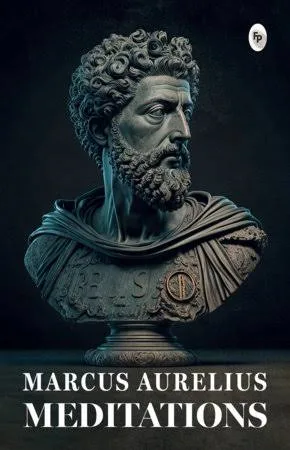
Download Cover Image
Do you want to download the full cover image for Meditations by Marcus Aurelius | Ancient Wisdom on Purpose, Calm & Personal Growth | Philosophy?