
You Can by George Matthew Adams | The Classic Guide to Self-Belief, Self-Help, Motivation & Personal
Paperback
• 232 Pages
• ₹ 99.00
• English
• 9789389931846
No ratings yet
| Publisher | Fingerprint! Publishing |
|---|---|
| ISBN13 | 9789389931846 |
| ASIN/SKU | 9389931843 |
| Book Format | Paperback |
| Language | English |
| Pages | 232 |
| List Price | ₹ 99.00 |
| Publishing Date | 06/08/2020 |
| Dimensions | 19.6 x 12.6 x 1.5 cm |
| Weight | 300g |
| Book Code | BD00056052 |
Buy this Book
Amazon Stores
Ebook Stores
Other Stores
Discover You Can by George Matthew Adams | The Classic Guide to Self-Belief, Self-Help, Motivation and Personal by George Matthew Adams. This book is published by Fingerprint! Publishing in Paperback format, ISBN 9789389931846, ASIN 9389931843, under Self-Help, Self-Help for Stress Management, Entrepreneurship.
Book Description
Do you often wonder whether you really have it in you to accomplish your goals, to win over obstacles, and to succeed in life? Through the empowering self-help manual you can, penned to promote personal growth and well-being for anyone who reads it, George Matthew Adams talks about things to be done to pave your way to a fulfilling, successful life—such as sitting for an hour in silence to shape your creative vision, going the extra mile in serving others, letting your character rule your work, studying your mistakes, learning to use time, and many more. Inculcate these habits, and your life will change. A powerful guide that asserts that you can do anything you set your mind to, you can is filled with quotes imparting wisdom of a man whose teachings have inspired millions—napoleon Hill, and commentary by the executive director of the Napoleon Hill foundation, don M. Green. “You yourself determine the height to which you shall climb. Have you the summit in view?”.
Author Biography
Author of many bestselling books, such as Just Among Friends (1928), Better than Gold (1949), and The Great Little Things (1953), George Matthew Adams was an American newspaper columnist, whose columns featured in The Gettysburg Times and many other newspapers. After graduating from Ottawa University in Kansas, Adams was employed in an advertising agency to operate the elevator. He worked his way up and became a copywriter in that very agency. He also founded the George Matthew Adams Newspaper Service in 1907, a service that distributed comic strips and columns to newspapers.
Editorial Reviews
Editorial Reviews will be added soon…
Book Summary
You Can by George Matthew Adams is a classic self-help book built around a simple but powerful belief: every person possesses abilities and possibilities that can be developed through confidence, discipline, purposeful action, and persistence. Originally published in 1913 under the fuller title You Can: A Collection of Brief Talks on the Most Important Topic in the World—Your Success, the book is a collection of short inspirational talks rather than a single continuous argument. Adams uses these brief reflections to encourage readers to believe in themselves, make better use of their abilities, learn from mistakes, serve others, and take active responsibility for their own progress. The original edition was published by Frederick A. Stokes Company and contained 115 pages.
The central message appears in the title itself: “You Can.” Adams wants readers to stop looking at themselves as powerless or permanently limited. He believes that people often possess much more ability than they realize, but fear, hesitation, poor habits, negative thinking, and lack of confidence prevent them from using it. His purpose is therefore not simply to make readers feel optimistic for a few minutes. He wants them to develop the inner conviction that they can improve their circumstances by developing what is already within them. The book repeatedly returns to the idea that success begins with belief, but belief must eventually become action.
Adams approaches success in a broad way. He does not describe it only as wealth, fame, or professional achievement. Success involves becoming a stronger, more useful, more capable, and more purposeful person. A fulfilling life requires character as well as ambition. This is why the book discusses subjects such as health, character, mistakes, silence, time, work, service, and personal responsibility. Modern editions and descriptions likewise emphasize self-confidence, overcoming limitations, positive thinking, resilience, and personal growth.
One of the book's important ideas is the value of knowing oneself. Adams encourages readers to recognize their individual abilities rather than constantly comparing themselves with other people. He argues that a person should not try to become a copy of someone else. Each individual has a particular combination of talents, experiences, interests, and possibilities. Real progress begins when people discover these qualities and learn how to use them effectively. The goal is not to imitate another person's path but to make the best possible use of one's own.
Adams also places great importance on silence and reflection. In a world filled with noise, distraction, and constant activity, taking time to think can help a person discover what they actually want. The book encourages periods of quiet in which people can develop their ideas, examine their goals, and listen to their own thoughts. One of the practical recommendations associated with the book is spending time in silence to shape creative vision. This idea remains relevant because people can become so busy responding to everything around them that they never stop to decide where they themselves want to go.
Another recurring theme is the importance of character. Adams believes that the quality of a person's character ultimately influences the quality of that person's work and relationships. Talent may create opportunities, but honesty, reliability, patience, courage, and responsibility determine how those opportunities are used. He therefore encourages readers to develop qualities that remain valuable even when circumstances change. Success without character, in his view, is incomplete.
The book also gives mistakes a positive role. Failure can be painful, but Adams does not treat mistakes as proof that a person is incapable. Instead, they can become teachers. A thoughtful person examines what went wrong, learns from the experience, and uses that knowledge to make a better attempt next time. This approach turns failure from a final judgment into part of the learning process. The important question is not whether a person has made mistakes but whether those mistakes have produced greater understanding and better action.
Time is another resource that Adams asks readers to use wisely. Every person receives the same basic number of hours in a day, but people use those hours differently. The book encourages readers to avoid wasting time on aimless activity and instead direct their energy toward meaningful work. Effective use of time does not necessarily mean working constantly. It means understanding priorities and giving attention to activities that genuinely contribute to one's goals and personal development.
Adams also believes that useful work has value in itself. He encourages people to approach their work with seriousness and enthusiasm instead of treating it merely as an obligation. When people take pride in doing something well, even ordinary tasks can become opportunities for growth. Work develops discipline, tests character, and provides a way to contribute to others. Achievement therefore becomes more meaningful when it is connected with usefulness rather than personal gain alone.
Service is an especially important part of Adams's philosophy. He encourages readers to go beyond what is minimally expected and to look for ways of helping others. The idea of “going the extra mile” is presented as a practical principle of success. A person who consistently creates value for others builds trust, develops stronger relationships, and becomes more useful. In this sense, Adams connects personal success with service: becoming successful should not mean simply getting more from the world but also giving something valuable back to it.
The book's treatment of perseverance is equally important. Dreams rarely become reality immediately. There are periods of disappointment, uncertainty, and slow progress. Adams encourages readers to continue working even when results are not visible. Confidence does not mean believing that everything will be easy. It means believing that difficulty does not automatically make achievement impossible. Persistence allows a person to continue learning and adapting until the desired result becomes more attainable.
Positive thinking is another foundation of the book. Adams recognizes the influence of thoughts on behavior and attitude. A person who repeatedly tells himself that he cannot succeed is likely to approach opportunities with hesitation. By contrast, a person who believes that improvement is possible is more willing to try, learn, and persist. His positive philosophy is therefore connected with action. Simply repeating encouraging words is not enough; constructive thinking should lead to constructive behavior.
At the same time, You Can is not presented as a technical system with a rigid sequence of exercises. Its short talks are intended to stimulate thought and encourage readers. The original book was explicitly described as a collection of brief talks about success, and Adams's introductory remarks explain that he wrote them as practical reflections drawn from his own experiences and observations. This gives the work a conversational quality. Each short piece offers another perspective on how a person can approach life more confidently and purposefully.
Overall, You Can is an optimistic guide to personal development that places responsibility in the hands of the individual. Its message is that people should not underestimate their abilities, surrender to fear, or allow temporary failures to define their future. Instead, they should cultivate self-belief, develop character, use time wisely, learn from mistakes, work with purpose, and contribute to others. Adams's approach is simple and direct, but its underlying idea is powerful: potential becomes meaningful only when it is acted upon.
The lasting appeal of You Can comes from the encouragement at the heart of the book. Adams reminds readers that they do not have to become extraordinary overnight. They can begin with the abilities they already possess and improve them through steady effort. They can replace doubt with action, mistakes with learning, and hesitation with purposeful effort. More than a promise of easy success, the book is an invitation to take one's own possibilities seriously. Its essential message remains clear: believe that growth is possible, make the effort, keep learning, help others, and have the courage to discover just how much you can do.
The central message appears in the title itself: “You Can.” Adams wants readers to stop looking at themselves as powerless or permanently limited. He believes that people often possess much more ability than they realize, but fear, hesitation, poor habits, negative thinking, and lack of confidence prevent them from using it. His purpose is therefore not simply to make readers feel optimistic for a few minutes. He wants them to develop the inner conviction that they can improve their circumstances by developing what is already within them. The book repeatedly returns to the idea that success begins with belief, but belief must eventually become action.
Adams approaches success in a broad way. He does not describe it only as wealth, fame, or professional achievement. Success involves becoming a stronger, more useful, more capable, and more purposeful person. A fulfilling life requires character as well as ambition. This is why the book discusses subjects such as health, character, mistakes, silence, time, work, service, and personal responsibility. Modern editions and descriptions likewise emphasize self-confidence, overcoming limitations, positive thinking, resilience, and personal growth.
One of the book's important ideas is the value of knowing oneself. Adams encourages readers to recognize their individual abilities rather than constantly comparing themselves with other people. He argues that a person should not try to become a copy of someone else. Each individual has a particular combination of talents, experiences, interests, and possibilities. Real progress begins when people discover these qualities and learn how to use them effectively. The goal is not to imitate another person's path but to make the best possible use of one's own.
Adams also places great importance on silence and reflection. In a world filled with noise, distraction, and constant activity, taking time to think can help a person discover what they actually want. The book encourages periods of quiet in which people can develop their ideas, examine their goals, and listen to their own thoughts. One of the practical recommendations associated with the book is spending time in silence to shape creative vision. This idea remains relevant because people can become so busy responding to everything around them that they never stop to decide where they themselves want to go.
Another recurring theme is the importance of character. Adams believes that the quality of a person's character ultimately influences the quality of that person's work and relationships. Talent may create opportunities, but honesty, reliability, patience, courage, and responsibility determine how those opportunities are used. He therefore encourages readers to develop qualities that remain valuable even when circumstances change. Success without character, in his view, is incomplete.
The book also gives mistakes a positive role. Failure can be painful, but Adams does not treat mistakes as proof that a person is incapable. Instead, they can become teachers. A thoughtful person examines what went wrong, learns from the experience, and uses that knowledge to make a better attempt next time. This approach turns failure from a final judgment into part of the learning process. The important question is not whether a person has made mistakes but whether those mistakes have produced greater understanding and better action.
Time is another resource that Adams asks readers to use wisely. Every person receives the same basic number of hours in a day, but people use those hours differently. The book encourages readers to avoid wasting time on aimless activity and instead direct their energy toward meaningful work. Effective use of time does not necessarily mean working constantly. It means understanding priorities and giving attention to activities that genuinely contribute to one's goals and personal development.
Adams also believes that useful work has value in itself. He encourages people to approach their work with seriousness and enthusiasm instead of treating it merely as an obligation. When people take pride in doing something well, even ordinary tasks can become opportunities for growth. Work develops discipline, tests character, and provides a way to contribute to others. Achievement therefore becomes more meaningful when it is connected with usefulness rather than personal gain alone.
Service is an especially important part of Adams's philosophy. He encourages readers to go beyond what is minimally expected and to look for ways of helping others. The idea of “going the extra mile” is presented as a practical principle of success. A person who consistently creates value for others builds trust, develops stronger relationships, and becomes more useful. In this sense, Adams connects personal success with service: becoming successful should not mean simply getting more from the world but also giving something valuable back to it.
The book's treatment of perseverance is equally important. Dreams rarely become reality immediately. There are periods of disappointment, uncertainty, and slow progress. Adams encourages readers to continue working even when results are not visible. Confidence does not mean believing that everything will be easy. It means believing that difficulty does not automatically make achievement impossible. Persistence allows a person to continue learning and adapting until the desired result becomes more attainable.
Positive thinking is another foundation of the book. Adams recognizes the influence of thoughts on behavior and attitude. A person who repeatedly tells himself that he cannot succeed is likely to approach opportunities with hesitation. By contrast, a person who believes that improvement is possible is more willing to try, learn, and persist. His positive philosophy is therefore connected with action. Simply repeating encouraging words is not enough; constructive thinking should lead to constructive behavior.
At the same time, You Can is not presented as a technical system with a rigid sequence of exercises. Its short talks are intended to stimulate thought and encourage readers. The original book was explicitly described as a collection of brief talks about success, and Adams's introductory remarks explain that he wrote them as practical reflections drawn from his own experiences and observations. This gives the work a conversational quality. Each short piece offers another perspective on how a person can approach life more confidently and purposefully.
Overall, You Can is an optimistic guide to personal development that places responsibility in the hands of the individual. Its message is that people should not underestimate their abilities, surrender to fear, or allow temporary failures to define their future. Instead, they should cultivate self-belief, develop character, use time wisely, learn from mistakes, work with purpose, and contribute to others. Adams's approach is simple and direct, but its underlying idea is powerful: potential becomes meaningful only when it is acted upon.
The lasting appeal of You Can comes from the encouragement at the heart of the book. Adams reminds readers that they do not have to become extraordinary overnight. They can begin with the abilities they already possess and improve them through steady effort. They can replace doubt with action, mistakes with learning, and hesitation with purposeful effort. More than a promise of easy success, the book is an invitation to take one's own possibilities seriously. Its essential message remains clear: believe that growth is possible, make the effort, keep learning, help others, and have the courage to discover just how much you can do.
Sample Chapters
Sample Chapters will be added soon…
Reader Reviews
No reviews yet.
You Can by George Matthew Adams | The Classic Guide to Self-Belief, Self-Help, Motivation & Personal
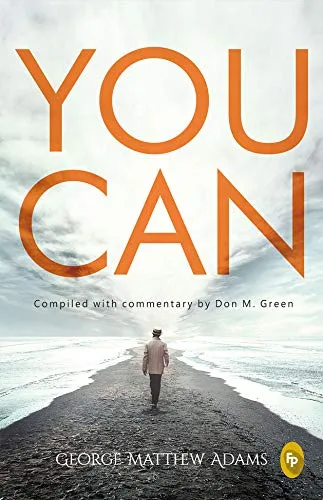
Download Cover Image
Do you want to download the full cover image for You Can by George Matthew Adams | The Classic Guide to Self-Belief, Self-Help, Motivation & Personal?