
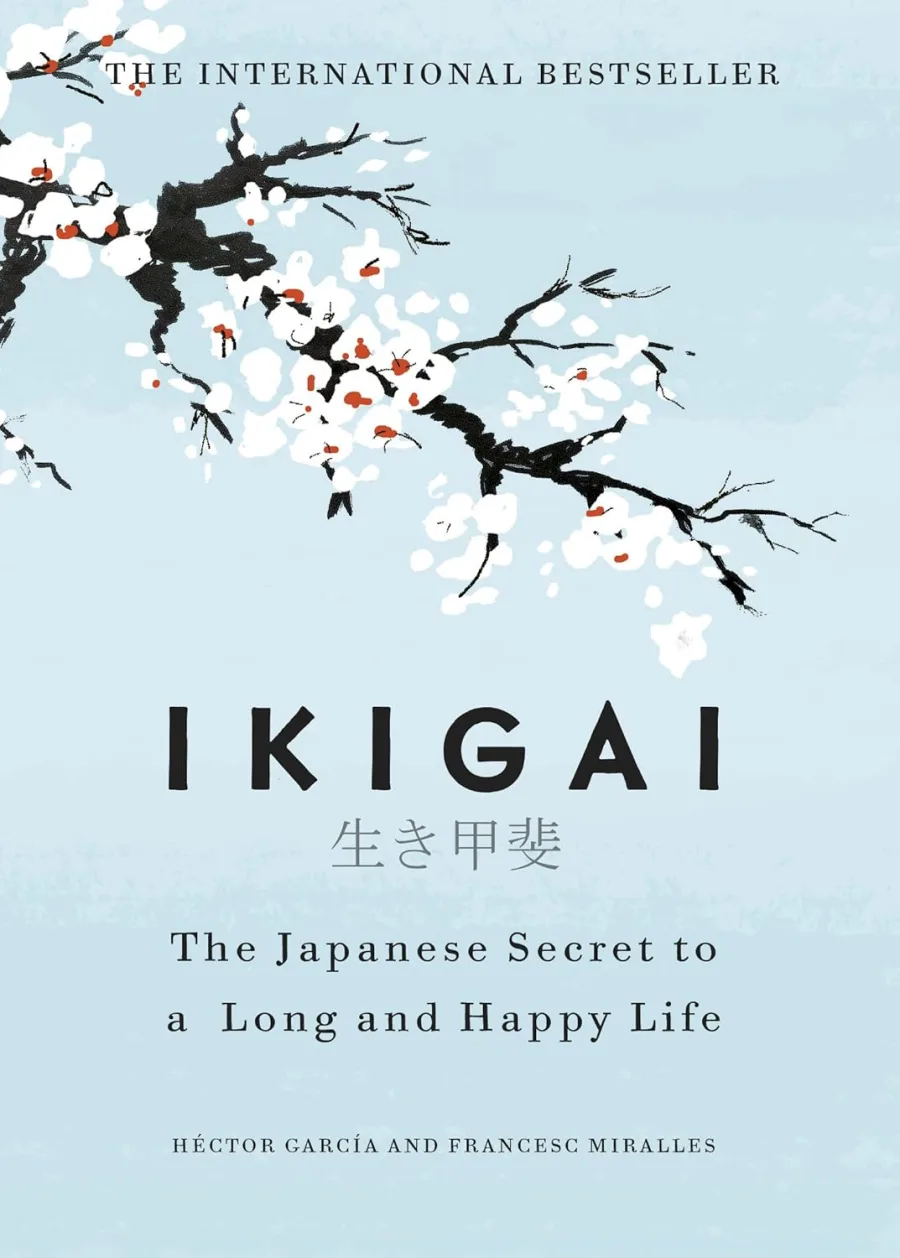
Ikigai: The Japanese secret to a long and happy life
Héctor García, Francesc Miralles
Paperback
• 208 Pages
• ₹ 599.00
• English
• 9781786330895
No ratings yet
| Publisher | Hutchinson |
|---|---|
| ISBN13 | 9781786330895 |
| ASIN/SKU | 178633089X |
| Book Format | Paperback |
| Language | English |
| Pages | 208 |
| List Price | ₹ 599.00 |
| Publishing Date | 07/09/2017 |
| Dimensions | 13.4 x 2.2 x 18.4 cm |
| Weight | 271 g |
| Book Code | BD00056043 |
Buy this Book
Amazon Stores
Ebook Stores
Other Stores
Discover Ikigai: The Japanese secret to a long and happy life by Héctor García. This book is published by Hutchinson in Paperback format, ISBN 9781786330895, ASIN 178633089X, under Self-Help, Self-Esteem, Self-Help for Happiness.
Book Description
THE INTERNATIONAL PHENOMENON
‘A practical guide to seeking a long, healthy and happy life.’ Liz Earle
‘Ikigai urges individuals to simplify their lives by pursuing what sparks joy for them.’ Marie Kondo
'I read it and it's bewitched me ever since. I'm spellbound.' Chris Evans
We all have an ikigai.
It's the Japanese word for 'a reason to live' or 'a reason to jump out of bed in the morning'.
It's the place where your needs, desires, ambitions, and satisfaction meet. A place of balance. Small wonder that finding your ikigai is closely linked to living longer.
Finding your ikigai is easier than you might think. This book will help you work out what your own ikigai really is, and equip you to change your life. You have a purpose in this world: your skills, your interests, your desires and your history have made you the perfect candidate for something. All you have to do is find it.
Do that, and you can make every single day of your life joyful and meaningful.
'A refreshingly simple recipe for happiness.' Stylist
'Warm, patient, and kind, this book pulls you gently along your own journey rather than pushing you from behind.' Neil Pasricha, bestselling author of The Happiness Equation
'You've tried hygge and lagom - but it turns out ikigai is the key to happiness' Independent
AVAILABLE NOW: The Four-Way Path, a guide to how Indian spirituality holds the key to a life of happiness and purpose - the new book from the bestselling authors of Ikigai!
‘A practical guide to seeking a long, healthy and happy life.’ Liz Earle
‘Ikigai urges individuals to simplify their lives by pursuing what sparks joy for them.’ Marie Kondo
'I read it and it's bewitched me ever since. I'm spellbound.' Chris Evans
We all have an ikigai.
It's the Japanese word for 'a reason to live' or 'a reason to jump out of bed in the morning'.
It's the place where your needs, desires, ambitions, and satisfaction meet. A place of balance. Small wonder that finding your ikigai is closely linked to living longer.
Finding your ikigai is easier than you might think. This book will help you work out what your own ikigai really is, and equip you to change your life. You have a purpose in this world: your skills, your interests, your desires and your history have made you the perfect candidate for something. All you have to do is find it.
Do that, and you can make every single day of your life joyful and meaningful.
'A refreshingly simple recipe for happiness.' Stylist
'Warm, patient, and kind, this book pulls you gently along your own journey rather than pushing you from behind.' Neil Pasricha, bestselling author of The Happiness Equation
'You've tried hygge and lagom - but it turns out ikigai is the key to happiness' Independent
AVAILABLE NOW: The Four-Way Path, a guide to how Indian spirituality holds the key to a life of happiness and purpose - the new book from the bestselling authors of Ikigai!
Author Biography
Héctor García is a citizen of Japan, where he has lived for over a decade, and of Spain, where he was born. He is the author of several books about Japanese culture, including two worldwide bestsellers, A Geek in Japan and Ikigai. A former software engineer, he worked at CERN in Switzerland before moving to Japan.
Editorial Reviews
Ikigai urges individuals to simplify their lives by pursuing what sparks joy for them ― Marie 'KonMari' Kondo
I love [this] book…I read it's and its bewitched me ever since. I'm spellbound
A refreshingly simple recipe for happiness... According to the Japanese, everyone has an ikigai. It means your purpose - the reason you get up in the morning. The thing that fires you up and keeps you busy. Your raison d'être. ― Stylist
Curl up on the sofa with this and enjoy an insight into Japanese culture while picking up some self-care tips you may not have considered before... Ikigai offers an insight into a gentle yet focused way of life built around a sense of purpose. ― Independent
Ikigaigently unlocks simple secrets we can all use to live long, meaningful, happy lives. Science-based studies weave beautifully into honest, straight-talking conversation you won't be able to put down. Warm, patient, and kind, this book pulls you gently along your own journey rather than pushing you from behind.
[The] Japanese art of ikigai ...Its basic message is about "authentic living". Practitioners must fill in overlapping circles that cover motivation, fulfilment, what they earn and what improves their life. The answer at the centre will be the key to a happy and long life. ― Guardian
If hygge is the art of doing nothing, ikigai is the art of doing something - and doing it with supreme focus and joy. ― New York Post
I love [this] book…I read it's and its bewitched me ever since. I'm spellbound
A refreshingly simple recipe for happiness... According to the Japanese, everyone has an ikigai. It means your purpose - the reason you get up in the morning. The thing that fires you up and keeps you busy. Your raison d'être. ― Stylist
Curl up on the sofa with this and enjoy an insight into Japanese culture while picking up some self-care tips you may not have considered before... Ikigai offers an insight into a gentle yet focused way of life built around a sense of purpose. ― Independent
Ikigaigently unlocks simple secrets we can all use to live long, meaningful, happy lives. Science-based studies weave beautifully into honest, straight-talking conversation you won't be able to put down. Warm, patient, and kind, this book pulls you gently along your own journey rather than pushing you from behind.
[The] Japanese art of ikigai ...Its basic message is about "authentic living". Practitioners must fill in overlapping circles that cover motivation, fulfilment, what they earn and what improves their life. The answer at the centre will be the key to a happy and long life. ― Guardian
If hygge is the art of doing nothing, ikigai is the art of doing something - and doing it with supreme focus and joy. ― New York Post
Book Summary
Ikigai: The Japanese Secret to a Long and Happy Life by Héctor García and Francesc Miralles is an accessible book about purpose, happiness, healthy living, and the habits that can contribute to a meaningful life. Inspired by the lives and traditions of people in Japan, particularly those living in Okinawa, the book explores the idea of ikigai, commonly understood as a reason for being or something that gives life meaning and makes a person want to get up each morning. Rather than presenting happiness as something that comes only from wealth, achievement, or comfort, the authors encourage readers to discover purpose in everyday activities, relationships, work, creativity, and contribution.
The book begins with the idea that having a sense of purpose can make life more satisfying. People who know why they want to live and what gives their days meaning often have a stronger reason to remain active and engaged. Ikigai does not have to be a grand ambition. It can be found in family, meaningful work, art, gardening, teaching, friendship, helping others, learning something new, or simply enjoying an activity that brings genuine satisfaction. The important point is that each person can have a different source of meaning.
A major part of the book's inspiration comes from Okinawa, an island region known for its distinctive culture and the longevity of some of its residents. The authors explore the lifestyle of older people who remain active and connected with their communities. Instead of treating old age as a period of complete withdrawal from society, these individuals often continue doing useful work, maintaining relationships, participating in community activities, and pursuing interests. The authors connect this continued engagement with a sense of purpose and vitality.
The book emphasizes that retirement does not necessarily have to mean stopping all meaningful activity. When people suddenly stop working without replacing work with another source of purpose, they may feel that an important part of their identity has disappeared. The authors therefore encourage readers to remain active in ways that suit their abilities and interests. This does not mean working continuously or refusing to rest. Rather, it means having activities that provide a reason to participate in life.
One of the book's central themes is the importance of staying active. The authors suggest that a completely inactive lifestyle can contribute to physical and psychological decline. The people they describe often incorporate movement naturally into their daily routines rather than relying only on intense exercise. Walking, gardening, household activities, stretching, traditional exercises, and regular movement can all contribute to an active lifestyle. The broader lesson is that physical activity does not have to be complicated to be beneficial.
The book also discusses the importance of avoiding unnecessary stress. Modern life can encourage people to rush constantly from one responsibility to another. Continuous pressure can make it difficult to enjoy the present moment. The authors encourage readers to slow down, pay attention to what they are doing, and avoid filling their lives with unnecessary commitments. A calmer pace can create space for reflection, relationships, and activities that genuinely matter.
Another important idea is the concept of “flow.” Flow is a state in which a person becomes deeply absorbed in an activity. When someone is completely focused on what they are doing, they may lose awareness of time and temporarily forget distractions. Artists, musicians, writers, athletes, craftspeople, and even people performing ordinary tasks can experience this state when their attention is fully engaged. The authors present flow as an important source of satisfaction because it allows people to become deeply involved in activities they enjoy.
Finding flow requires a balance between challenge and ability. If an activity is too easy, it may become boring. If it is impossibly difficult, it can create frustration. The most engaging activities often challenge a person enough to require concentration while remaining achievable with effort. This idea encourages readers to identify activities that naturally absorb their attention and consider whether those activities might be connected with their personal ikigai.
The authors also examine the Japanese concept of living in the present. People often spend considerable time regretting the past or worrying about the future. While planning and reflection are useful, excessive focus on either can prevent people from experiencing the present moment. The book encourages greater awareness of everyday experiences: eating a meal, talking with a friend, walking outside, working on a hobby, or simply noticing one's surroundings. Meaning can be found in ordinary moments when they are experienced with attention.
Diet and eating habits are another part of the book's discussion of longevity. The authors describe the traditional Okinawan approach to food and emphasize moderation. One well-known principle discussed in the book is hara hachi bu, the practice of stopping eating before becoming completely full. The idea encourages people to pay attention to their body's signals rather than eating until they are uncomfortable. The book also discusses the variety of foods traditionally consumed in Okinawan diets and the importance of eating a balanced range of plant-based foods.
However, the broader lesson is not simply about following one specific diet. It is about developing a thoughtful relationship with food. Eating slowly, choosing varied foods, avoiding excessive consumption, and treating meals as an opportunity to nourish the body can all contribute to healthier habits. The authors connect moderation with the broader philosophy of balance that runs throughout the book.
Social relationships are presented as another important factor in a fulfilling life. The authors describe moai, a traditional Okinawan practice involving groups of people who maintain long-term social connections and support one another. Such relationships can provide emotional support, companionship, practical assistance, and a sense of belonging. The idea illustrates that longevity and happiness are not purely individual achievements. Human beings benefit from being part of supportive communities.
This emphasis on community is particularly important because loneliness can affect both emotional well-being and quality of life. Having people who listen, share experiences, and provide support can make difficult periods easier. The authors therefore encourage readers to nurture friendships and maintain meaningful connections rather than allowing social relationships to disappear because of busy schedules.
The book also explores resilience. Life inevitably contains setbacks, disappointments, losses, and uncertainty. A meaningful life does not depend on avoiding all difficulties. Instead, people need the ability to recover and continue moving forward. The authors discuss Japanese ideas associated with resilience and encourage readers to accept that difficult experiences are part of life while continuing to search for meaning.
One related idea is the importance of accepting what cannot be controlled. People can spend enormous amounts of energy worrying about circumstances they cannot change. Learning to distinguish between what can and cannot be controlled can reduce unnecessary mental strain. This does not mean becoming passive. It means directing energy toward actions that are actually possible while accepting circumstances that cannot immediately be changed.
The authors also discuss the importance of developing a calm and positive mindset. Practices such as meditation, breathing exercises, spending time in nature, and maintaining meaningful relationships can help people create greater emotional balance. The book does not present happiness as a permanent state in which negative emotions disappear. Instead, it suggests that a fulfilling life includes both difficulties and pleasures and that balance comes from learning how to respond to experiences.
Another recurring theme is simplicity. A meaningful life does not necessarily require expensive possessions or extraordinary experiences. Many of the people described in the book find satisfaction in simple routines, relationships, useful activities, and connection with nature. This challenges the idea that happiness always comes from acquiring more. Sometimes reducing unnecessary desires can create greater appreciation for what is already present.
Ultimately, the concept of ikigai brings these ideas together. A person's ikigai can emerge from the intersection of what they enjoy, what they are capable of doing, what is useful to others, and what gives their life meaning.
The book begins with the idea that having a sense of purpose can make life more satisfying. People who know why they want to live and what gives their days meaning often have a stronger reason to remain active and engaged. Ikigai does not have to be a grand ambition. It can be found in family, meaningful work, art, gardening, teaching, friendship, helping others, learning something new, or simply enjoying an activity that brings genuine satisfaction. The important point is that each person can have a different source of meaning.
A major part of the book's inspiration comes from Okinawa, an island region known for its distinctive culture and the longevity of some of its residents. The authors explore the lifestyle of older people who remain active and connected with their communities. Instead of treating old age as a period of complete withdrawal from society, these individuals often continue doing useful work, maintaining relationships, participating in community activities, and pursuing interests. The authors connect this continued engagement with a sense of purpose and vitality.
The book emphasizes that retirement does not necessarily have to mean stopping all meaningful activity. When people suddenly stop working without replacing work with another source of purpose, they may feel that an important part of their identity has disappeared. The authors therefore encourage readers to remain active in ways that suit their abilities and interests. This does not mean working continuously or refusing to rest. Rather, it means having activities that provide a reason to participate in life.
One of the book's central themes is the importance of staying active. The authors suggest that a completely inactive lifestyle can contribute to physical and psychological decline. The people they describe often incorporate movement naturally into their daily routines rather than relying only on intense exercise. Walking, gardening, household activities, stretching, traditional exercises, and regular movement can all contribute to an active lifestyle. The broader lesson is that physical activity does not have to be complicated to be beneficial.
The book also discusses the importance of avoiding unnecessary stress. Modern life can encourage people to rush constantly from one responsibility to another. Continuous pressure can make it difficult to enjoy the present moment. The authors encourage readers to slow down, pay attention to what they are doing, and avoid filling their lives with unnecessary commitments. A calmer pace can create space for reflection, relationships, and activities that genuinely matter.
Another important idea is the concept of “flow.” Flow is a state in which a person becomes deeply absorbed in an activity. When someone is completely focused on what they are doing, they may lose awareness of time and temporarily forget distractions. Artists, musicians, writers, athletes, craftspeople, and even people performing ordinary tasks can experience this state when their attention is fully engaged. The authors present flow as an important source of satisfaction because it allows people to become deeply involved in activities they enjoy.
Finding flow requires a balance between challenge and ability. If an activity is too easy, it may become boring. If it is impossibly difficult, it can create frustration. The most engaging activities often challenge a person enough to require concentration while remaining achievable with effort. This idea encourages readers to identify activities that naturally absorb their attention and consider whether those activities might be connected with their personal ikigai.
The authors also examine the Japanese concept of living in the present. People often spend considerable time regretting the past or worrying about the future. While planning and reflection are useful, excessive focus on either can prevent people from experiencing the present moment. The book encourages greater awareness of everyday experiences: eating a meal, talking with a friend, walking outside, working on a hobby, or simply noticing one's surroundings. Meaning can be found in ordinary moments when they are experienced with attention.
Diet and eating habits are another part of the book's discussion of longevity. The authors describe the traditional Okinawan approach to food and emphasize moderation. One well-known principle discussed in the book is hara hachi bu, the practice of stopping eating before becoming completely full. The idea encourages people to pay attention to their body's signals rather than eating until they are uncomfortable. The book also discusses the variety of foods traditionally consumed in Okinawan diets and the importance of eating a balanced range of plant-based foods.
However, the broader lesson is not simply about following one specific diet. It is about developing a thoughtful relationship with food. Eating slowly, choosing varied foods, avoiding excessive consumption, and treating meals as an opportunity to nourish the body can all contribute to healthier habits. The authors connect moderation with the broader philosophy of balance that runs throughout the book.
Social relationships are presented as another important factor in a fulfilling life. The authors describe moai, a traditional Okinawan practice involving groups of people who maintain long-term social connections and support one another. Such relationships can provide emotional support, companionship, practical assistance, and a sense of belonging. The idea illustrates that longevity and happiness are not purely individual achievements. Human beings benefit from being part of supportive communities.
This emphasis on community is particularly important because loneliness can affect both emotional well-being and quality of life. Having people who listen, share experiences, and provide support can make difficult periods easier. The authors therefore encourage readers to nurture friendships and maintain meaningful connections rather than allowing social relationships to disappear because of busy schedules.
The book also explores resilience. Life inevitably contains setbacks, disappointments, losses, and uncertainty. A meaningful life does not depend on avoiding all difficulties. Instead, people need the ability to recover and continue moving forward. The authors discuss Japanese ideas associated with resilience and encourage readers to accept that difficult experiences are part of life while continuing to search for meaning.
One related idea is the importance of accepting what cannot be controlled. People can spend enormous amounts of energy worrying about circumstances they cannot change. Learning to distinguish between what can and cannot be controlled can reduce unnecessary mental strain. This does not mean becoming passive. It means directing energy toward actions that are actually possible while accepting circumstances that cannot immediately be changed.
The authors also discuss the importance of developing a calm and positive mindset. Practices such as meditation, breathing exercises, spending time in nature, and maintaining meaningful relationships can help people create greater emotional balance. The book does not present happiness as a permanent state in which negative emotions disappear. Instead, it suggests that a fulfilling life includes both difficulties and pleasures and that balance comes from learning how to respond to experiences.
Another recurring theme is simplicity. A meaningful life does not necessarily require expensive possessions or extraordinary experiences. Many of the people described in the book find satisfaction in simple routines, relationships, useful activities, and connection with nature. This challenges the idea that happiness always comes from acquiring more. Sometimes reducing unnecessary desires can create greater appreciation for what is already present.
Ultimately, the concept of ikigai brings these ideas together. A person's ikigai can emerge from the intersection of what they enjoy, what they are capable of doing, what is useful to others, and what gives their life meaning.
Sample Chapters
Sample Chapters will be added soon…
Reader Reviews
No reviews yet.
Ikigai: The Japanese secret to a long and happy life
Download Cover Image
Do you want to download the full cover image for Ikigai: The Japanese secret to a long and happy life?