
My First Book of Patterns Pencil Control: Patterns Practice book for kids (Pattern Writing)
Paperback
• 48 Pages
• ₹ 149.00
• English
• 9789387779310
No ratings yet
| Publisher | Wonder House Books |
|---|---|
| ISBN13 | 9789387779310 |
| ASIN/SKU | 9387779319 |
| Book Format | Paperback |
| Language | English |
| Pages | 48 |
| List Price | ₹ 149.00 |
| Publishing Date | 25/04/2018 |
| Dimensions | 1.5 x 21.6 x 28 cm |
| Weight | 152 |
| Book Code | BD00055751 |
Buy this Book
Amazon Stores
Ebook Stores
Other Stores
Discover My First Book of Patterns Pencil Control: Patterns Practice book for kids (Pattern Writing) by Wonder House Books. This book is published by Wonder House Books in Paperback format, ISBN 9789387779310, ASIN 9387779319, under Children's Books, Writing Guides, Linguistics.
Book Description
My First Book of Patterns Pencil Control: Patterns Practice book for kids (Pattern Writing)
A perfect activity book designed for early learners to develop pencil control and motor skills. By following the arrows and tracing the dotted lines, little scholars can complete the tracing exercises and creative activities leading to development of their early writing skills. The child will learn to identify straight, curvy, zig zag lines and multiple patterns. The book is an excellent first step to prepare for school.
Shaping Bright Futures, One Pattern at a time!
Offers beautiful illustrations and fun activities
Introduces skill-building exercises for the cognitive development of the child
Instills foundational skills such as pencil control and pattern recognition
Features large, easy-to-follow pattern outlines
Inculcates hand-eye coordination and muscle memory
A perfect activity book designed for early learners to develop pencil control and motor skills. By following the arrows and tracing the dotted lines, little scholars can complete the tracing exercises and creative activities leading to development of their early writing skills. The child will learn to identify straight, curvy, zig zag lines and multiple patterns. The book is an excellent first step to prepare for school.
Shaping Bright Futures, One Pattern at a time!
Offers beautiful illustrations and fun activities
Introduces skill-building exercises for the cognitive development of the child
Instills foundational skills such as pencil control and pattern recognition
Features large, easy-to-follow pattern outlines
Inculcates hand-eye coordination and muscle memory
Author Biography
Wonder House has a dedicated team of editors and designers involved in the development of magnificent and enriching children books. The team pays special attention to develop age appropriate content and does extensive research on every topic included in the book. Our mission is to develop highly informative content which will help the children to master different skills. At Wonder House, we strive to make learning a joy.
Editorial Reviews
Editorial Reviews will be added soon…
Book Summary
My First Book of Patterns Pencil Control: Patterns Practice Book for Kids by Wonder House Books is an early-learning activity book designed to help young children develop the basic hand movements and coordination needed for writing. Intended mainly for preschool-aged children, the 48-page book turns pencil practice into a simple and enjoyable activity. Instead of asking children to begin immediately with letters and numbers, it starts with the simpler movements that come before formal writing, such as straight lines, curves, zigzags, and repeated patterns. The publisher describes it as a book for children around three to five years old, although younger children who are beginning to use pencils or crayons may also benefit from guided practice.
The central idea of the book is pencil control. For a young child, holding a pencil and moving it in a controlled direction can be surprisingly difficult. Writing requires the eyes and hands to work together while the fingers and wrist make small, deliberate movements. This book gives children an opportunity to practice those movements gradually. The exercises use arrows, dotted lines, and clearly defined patterns to show children where to begin and how to move their pencil. By following these visual instructions, children can practice keeping their pencil on a particular path rather than moving it randomly across the page.
The book begins with simple forms of pattern writing and gradually exposes children to different types of lines. Straight lines are among the most basic exercises because they teach children to move a pencil in a particular direction. From there, children encounter curved lines, zigzag movements, and other repeated patterns. These activities may look very simple to an adult, but for a preschool child they provide valuable practice in controlling movement. The repeated nature of the exercises allows children to try the same kind of movement several times until it becomes more natural.
Tracing is an important part of the learning process. Children are shown patterns through dotted lines or outlines and are encouraged to trace over them. Arrows help indicate the direction in which the pencil should travel. This gives children a clear visual model to follow. Instead of having to invent a movement themselves, they can concentrate on copying what they see. With practice, this can help them become more comfortable with controlled pencil movements and prepare them for the more demanding task of forming letters and numbers later.
The activities also help children recognize patterns. A pattern is more than a decorative design; it teaches children to notice repetition, direction, sequence, and visual relationships. When a child traces a repeated line or shape, the child is learning to observe how one movement connects with the next. This develops attention and encourages the child to anticipate what comes after a particular part of the pattern. Such skills are useful not only for handwriting but also for early visual thinking and learning.
Another important benefit is hand-eye coordination. A child must look carefully at the dotted or outlined path while moving the pencil along it. The eyes guide the hand, and the hand responds to what the child sees. Repeated practice can gradually make this coordination smoother. The book therefore works on several skills at once: pencil control, visual attention, fine motor movement, pattern recognition, and coordination. These skills form an important foundation for future classroom activities.
The visual presentation is also designed to make practice less intimidating. Large pattern outlines and child-friendly illustrations give the pages an activity-book feel rather than making them look like formal handwriting lessons. This matters because young children often learn better when they feel that they are playing and exploring rather than completing a difficult academic task. The publisher specifically presents the book as a fun activity book with illustrations and easy-to-follow patterns, helping children remain interested while practicing.
The progression from simple lines to more varied patterns is one of the book's useful features. Children do not need to master handwriting immediately. They first need to become comfortable holding a writing tool and making intentional marks. Straight lines can lead to curves, curves can lead to more complicated movements, and repeated patterns can eventually help prepare children for the strokes used in letters and numbers. In this way, the book acts as a bridge between free drawing and structured writing practice.
The book can also be useful for parents and teachers because its activities are easy to understand. An adult can demonstrate how to hold the pencil, explain the direction shown by the arrows, and encourage the child to trace slowly. The child can then work through the exercises with increasing independence. It is particularly suitable for short, regular practice sessions rather than forcing a child to finish many pages at once. Encouragement is important because the purpose at this stage is to build confidence as well as skill.
The activities can also be approached creatively. Children may use pencils, crayons, or other suitable writing tools depending on the adult's preference and the particular edition. The tracing exercises give them a structured starting point, while the visual patterns can make the experience feel more like drawing. This combination of structure and creativity helps prevent writing practice from becoming monotonous.
Overall, My First Book of Patterns Pencil Control is a practical introduction to the movements that support early handwriting. Its focus is not on teaching children to write complete words but on developing the physical and visual skills that make writing possible. Through straight lines, curves, zigzags, repeated patterns, arrows, and dotted tracing exercises, children gradually learn to guide a pencil with greater control. The 48-page format provides a manageable amount of practice for preschool learners, and the book is especially suited to children preparing for kindergarten or beginning their first structured writing activities.
At its heart, the book teaches a simple lesson: good writing begins with controlled movement and patient practice. By giving children an enjoyable way to repeat basic strokes and patterns, it helps turn an unfamiliar pencil into a comfortable learning tool. For parents looking for a first step toward handwriting, the book offers a gentle progression from tracing simple lines to practicing more complex patterns, while building the confidence, coordination, and fine motor skills that children will need when they begin writing letters and numbers.
The central idea of the book is pencil control. For a young child, holding a pencil and moving it in a controlled direction can be surprisingly difficult. Writing requires the eyes and hands to work together while the fingers and wrist make small, deliberate movements. This book gives children an opportunity to practice those movements gradually. The exercises use arrows, dotted lines, and clearly defined patterns to show children where to begin and how to move their pencil. By following these visual instructions, children can practice keeping their pencil on a particular path rather than moving it randomly across the page.
The book begins with simple forms of pattern writing and gradually exposes children to different types of lines. Straight lines are among the most basic exercises because they teach children to move a pencil in a particular direction. From there, children encounter curved lines, zigzag movements, and other repeated patterns. These activities may look very simple to an adult, but for a preschool child they provide valuable practice in controlling movement. The repeated nature of the exercises allows children to try the same kind of movement several times until it becomes more natural.
Tracing is an important part of the learning process. Children are shown patterns through dotted lines or outlines and are encouraged to trace over them. Arrows help indicate the direction in which the pencil should travel. This gives children a clear visual model to follow. Instead of having to invent a movement themselves, they can concentrate on copying what they see. With practice, this can help them become more comfortable with controlled pencil movements and prepare them for the more demanding task of forming letters and numbers later.
The activities also help children recognize patterns. A pattern is more than a decorative design; it teaches children to notice repetition, direction, sequence, and visual relationships. When a child traces a repeated line or shape, the child is learning to observe how one movement connects with the next. This develops attention and encourages the child to anticipate what comes after a particular part of the pattern. Such skills are useful not only for handwriting but also for early visual thinking and learning.
Another important benefit is hand-eye coordination. A child must look carefully at the dotted or outlined path while moving the pencil along it. The eyes guide the hand, and the hand responds to what the child sees. Repeated practice can gradually make this coordination smoother. The book therefore works on several skills at once: pencil control, visual attention, fine motor movement, pattern recognition, and coordination. These skills form an important foundation for future classroom activities.
The visual presentation is also designed to make practice less intimidating. Large pattern outlines and child-friendly illustrations give the pages an activity-book feel rather than making them look like formal handwriting lessons. This matters because young children often learn better when they feel that they are playing and exploring rather than completing a difficult academic task. The publisher specifically presents the book as a fun activity book with illustrations and easy-to-follow patterns, helping children remain interested while practicing.
The progression from simple lines to more varied patterns is one of the book's useful features. Children do not need to master handwriting immediately. They first need to become comfortable holding a writing tool and making intentional marks. Straight lines can lead to curves, curves can lead to more complicated movements, and repeated patterns can eventually help prepare children for the strokes used in letters and numbers. In this way, the book acts as a bridge between free drawing and structured writing practice.
The book can also be useful for parents and teachers because its activities are easy to understand. An adult can demonstrate how to hold the pencil, explain the direction shown by the arrows, and encourage the child to trace slowly. The child can then work through the exercises with increasing independence. It is particularly suitable for short, regular practice sessions rather than forcing a child to finish many pages at once. Encouragement is important because the purpose at this stage is to build confidence as well as skill.
The activities can also be approached creatively. Children may use pencils, crayons, or other suitable writing tools depending on the adult's preference and the particular edition. The tracing exercises give them a structured starting point, while the visual patterns can make the experience feel more like drawing. This combination of structure and creativity helps prevent writing practice from becoming monotonous.
Overall, My First Book of Patterns Pencil Control is a practical introduction to the movements that support early handwriting. Its focus is not on teaching children to write complete words but on developing the physical and visual skills that make writing possible. Through straight lines, curves, zigzags, repeated patterns, arrows, and dotted tracing exercises, children gradually learn to guide a pencil with greater control. The 48-page format provides a manageable amount of practice for preschool learners, and the book is especially suited to children preparing for kindergarten or beginning their first structured writing activities.
At its heart, the book teaches a simple lesson: good writing begins with controlled movement and patient practice. By giving children an enjoyable way to repeat basic strokes and patterns, it helps turn an unfamiliar pencil into a comfortable learning tool. For parents looking for a first step toward handwriting, the book offers a gentle progression from tracing simple lines to practicing more complex patterns, while building the confidence, coordination, and fine motor skills that children will need when they begin writing letters and numbers.
Sample Chapters
Sample Chapters will be added soon…
Reader Reviews
No reviews yet.
My First Book of Patterns Pencil Control: Patterns Practice book for kids (Pattern Writing)
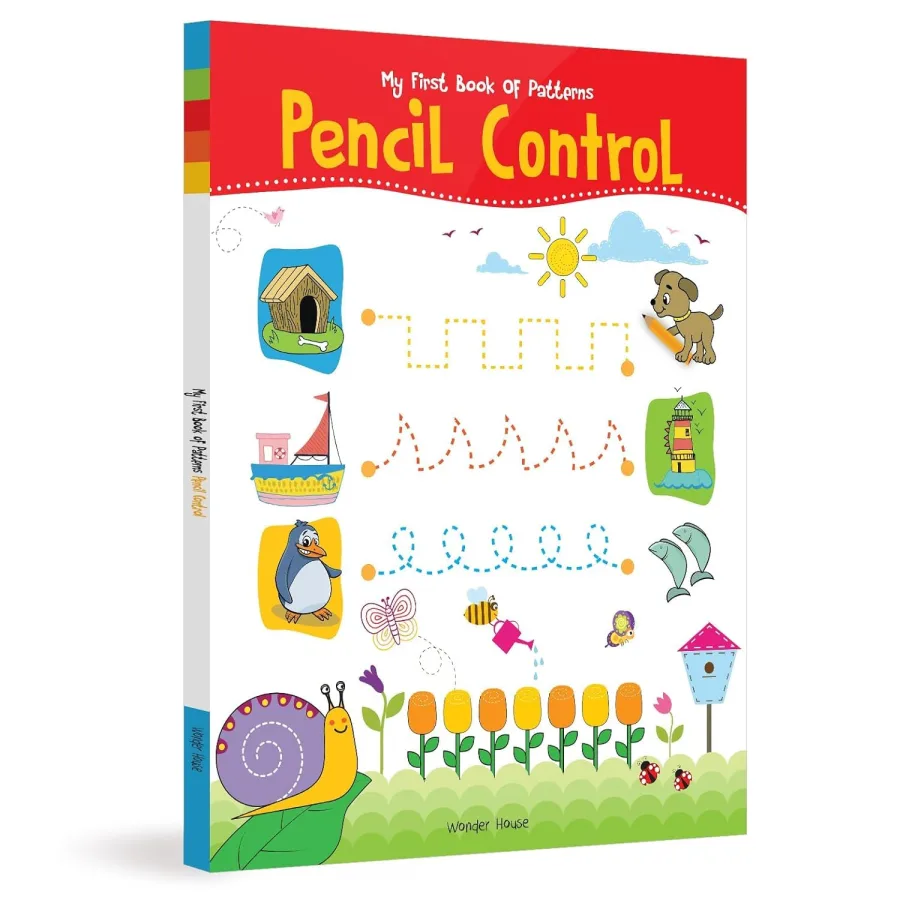
Download Cover Image
Do you want to download the full cover image for My First Book of Patterns Pencil Control: Patterns Practice book for kids (Pattern Writing)?