
Ncert Class 9 Kaveri, Textbook of English for Grade 9, 903 (2026-2027 Edition)
Paperback
• 230 Pages
• ₹ 140.00
• English
• 9789357294195
No ratings yet
| Publisher | National Council of Educational Research and Training |
|---|---|
| ISBN13 | 9789357294195 |
| ASIN/SKU | 9357294198 |
| Book Format | Paperback |
| Language | English |
| Pages | 230 |
| List Price | ₹ 140.00 |
| Publishing Date | 08/01/2026 |
| Dimensions | 22 x 28 x 3 cm |
| Weight | 600 g |
| Book Code | BD00055750 |
Buy this Book
Amazon Stores
Ebook Stores
Other Stores
Discover Ncert Class 9 Kaveri, Textbook of English for Grade 9, 903 (2026-2027 Edition) by NCERT. This book is published by National Council of Educational Research and Training in Paperback format, ISBN 9789357294195, ASIN 9357294198, under School Books, Education, Schools and Teaching.
Book Description
NCERT CLASS 9 Kaveri, Textbook of English for Grade 9, 903 (2026-2027 Edition) By Studyupindia.com
Author Biography
National Council of Educational Research and Training (NCERT)
Established in 1961 by the Government of India, the National Council of Educational Research and Training (NCERT) is the apex autonomous organization shaping the landscape of Indian school education. Its core mandate is to assist and advise the Central and State Governments on policies and academic programs designed to drive qualitative improvement in schooling across the nation.
The Institute
NCERT is the architectural cornerstone of India’s educational framework. It is globally recognized for developing the National Curriculum Framework (NCF) and publishing standardized, highly acclaimed textbooks used by millions of students in CBSE-affiliated and state-board schools. Beyond publishing, the institute is a hub of innovation. It conducts extensive educational research, develops supplementary learning materials, designs multimedia and digital resources, and pioneers new pedagogical methods. NCERT operates through a robust network of constituent units, including the National Institute of Education (NIE), the Central Institute of Educational Technology (CIET), and several Regional Institutes of Education (RIEs) located across the country.
The Team
The true strength of NCERT lies in its multidisciplinary team of eminent academicians, seasoned pedagogues, researchers, and subject-matter experts. This diverse faculty works collaboratively to bridge the gap between educational theory and everyday classroom practice. The team includes curriculum designers who align syllabi with modern national goals—such as the National Education Policy (NEP)—and master trainers who lead capacity-building and specialized training programs for teachers nationwide. Their rigorous, research-backed approach ensures that all educational materials remain inclusive, scientifically accurate, and developmentally appropriate.
Vision and Impact
Driven by a commitment to holistic, learner-centric, and equitable education, the NCERT team continuously adapts to meet contemporary global challenges. Through decades of relentless dedication, the institute has shaped the intellectual foundation of generations of Indians, remaining the gold standard for educational excellence and progressive learning ecosystems in the country.
Established in 1961 by the Government of India, the National Council of Educational Research and Training (NCERT) is the apex autonomous organization shaping the landscape of Indian school education. Its core mandate is to assist and advise the Central and State Governments on policies and academic programs designed to drive qualitative improvement in schooling across the nation.
The Institute
NCERT is the architectural cornerstone of India’s educational framework. It is globally recognized for developing the National Curriculum Framework (NCF) and publishing standardized, highly acclaimed textbooks used by millions of students in CBSE-affiliated and state-board schools. Beyond publishing, the institute is a hub of innovation. It conducts extensive educational research, develops supplementary learning materials, designs multimedia and digital resources, and pioneers new pedagogical methods. NCERT operates through a robust network of constituent units, including the National Institute of Education (NIE), the Central Institute of Educational Technology (CIET), and several Regional Institutes of Education (RIEs) located across the country.
The Team
The true strength of NCERT lies in its multidisciplinary team of eminent academicians, seasoned pedagogues, researchers, and subject-matter experts. This diverse faculty works collaboratively to bridge the gap between educational theory and everyday classroom practice. The team includes curriculum designers who align syllabi with modern national goals—such as the National Education Policy (NEP)—and master trainers who lead capacity-building and specialized training programs for teachers nationwide. Their rigorous, research-backed approach ensures that all educational materials remain inclusive, scientifically accurate, and developmentally appropriate.
Vision and Impact
Driven by a commitment to holistic, learner-centric, and equitable education, the NCERT team continuously adapts to meet contemporary global challenges. Through decades of relentless dedication, the institute has shaped the intellectual foundation of generations of Indians, remaining the gold standard for educational excellence and progressive learning ecosystems in the country.
Editorial Reviews
Editorial Reviews will be added soon…
Book Summary
Kaveri: Textbook of English for Grade 9 is the new English textbook introduced by the National Council of Educational Research and Training (NCERT) for the academic session 2026–2027. It replaces the earlier Class 9 English textbooks, Beehive and Moments, and brings them together into a single, integrated volume. Developed in accordance with the National Curriculum Framework for School Education (NCF-SE) 2023 and the National Education Policy (NEP) 2020, the book aims to move beyond rote learning and develop students' language proficiency, critical thinking, creativity, communication skills, and appreciation of literature.
Unlike a traditional literature book that focuses mainly on stories and poems, Kaveri is designed as a complete language-learning resource. It combines prose, poetry, grammar, vocabulary, speaking, listening, reading, and writing activities into thematic units. The lessons encourage students to actively engage with texts, ask questions, express opinions, work collaboratively, and relate literature to their own lives. Instead of memorizing answers, learners are encouraged to interpret ideas, solve problems, and communicate confidently in English.
A significant feature of the textbook is its emphasis on Indian culture, values, and experiences while maintaining a global outlook. Many of the prose lessons and poems are written by distinguished Indian authors or are inspired by Indian settings and traditions. Alongside these are carefully selected international writings that expose students to different cultures and perspectives. This balanced approach helps students appreciate both their own cultural heritage and the diversity of the wider world.
The stories included in Kaveri explore a wide range of themes such as education, family relationships, kindness, perseverance, courage, innovation, environmental responsibility, social harmony, and personal growth. Through relatable characters and realistic situations, students learn important life lessons while simultaneously improving their language skills. Rather than presenting moral values directly, the stories encourage readers to think critically and draw their own conclusions.
The poetry section introduces students to different poetic styles, emotions, and literary devices. The poems celebrate nature, imagination, hope, compassion, resilience, and the beauty of everyday life. Students are encouraged not only to understand the meaning of poems but also to appreciate rhythm, imagery, symbolism, and the emotional power of language. Activities following each poem promote creative thinking through discussions, recitation, interpretation, and reflective writing.
One of the most notable aspects of Kaveri is its learner-centered teaching approach. Every lesson includes carefully designed exercises that develop all four language skills—listening, speaking, reading, and writing. Reading passages are followed by comprehension questions that test both factual understanding and higher-order thinking. Vocabulary exercises help students understand words in context instead of memorizing definitions. Grammar is introduced through practical examples and meaningful activities rather than isolated rules, enabling students to use language naturally in real-life situations.
The writing tasks in the textbook are equally diverse. Students are guided to write paragraphs, essays, letters, speeches, notices, reports, dialogues, and creative compositions. These activities emphasize organization of ideas, clarity of expression, logical reasoning, and effective communication. Instead of simply reproducing textbook content, learners are encouraged to express original thoughts and support their ideas with examples.
Speaking and listening activities form another important component of the book. Classroom discussions, debates, storytelling, presentations, role plays, interviews, and group projects encourage students to become confident communicators. These activities help improve pronunciation, fluency, active listening, teamwork, and public speaking skills. The textbook recognizes that language is learned most effectively through meaningful interaction rather than passive reading alone.
The textbook also integrates art, creativity, and experiential learning into English education. Students may be asked to create posters, conduct surveys, prepare presentations, write reflections, or connect literary themes with real-life experiences. Such activities make learning enjoyable while developing creativity, observation, collaboration, and problem-solving abilities. This approach reflects the broader educational vision of NEP 2020, which promotes holistic and competency-based learning instead of examination-oriented study.
Another important feature of Kaveri is its focus on values and social awareness. Many lessons encourage students to think about empathy, respect for diversity, gender equality, environmental conservation, scientific curiosity, and responsible citizenship. Rather than preaching these values, the textbook presents situations that invite discussion and thoughtful reflection. Students learn to appreciate different viewpoints, develop compassion for others, and recognize their responsibilities as members of society.
The language used throughout the book is simple, engaging, and appropriate for Grade 9 learners. Difficult words are introduced naturally through context, enabling students to gradually expand their vocabulary. The progression of lessons ensures that learners build confidence step by step while developing both linguistic accuracy and literary appreciation. Teachers are also encouraged to facilitate discussions and interactive activities instead of relying solely on lectures.
One of the major improvements in the new textbook is its integrated structure. Earlier, students had to study separate textbooks for prose and supplementary reading. Kaveri combines these elements into one cohesive volume, reducing repetition while providing a more connected learning experience. The overall number of texts has also been streamlined, allowing students to study each lesson more deeply and meaningfully.
Overall, NCERT Class 9 Kaveri: Textbook of English for Grade 9 (2026–2027 Edition) is much more than a school textbook. It is a comprehensive language-learning resource that seeks to develop communication skills, literary appreciation, creativity, critical thinking, and ethical values in young learners. By blending engaging stories, inspiring poems, practical language exercises, and meaningful classroom activities, the book prepares students not only for academic success but also for effective communication in everyday life. Its learner-friendly approach, cultural relevance, and emphasis on holistic development make it an important step toward modern, competency-based English education in Indian schools.
Unlike a traditional literature book that focuses mainly on stories and poems, Kaveri is designed as a complete language-learning resource. It combines prose, poetry, grammar, vocabulary, speaking, listening, reading, and writing activities into thematic units. The lessons encourage students to actively engage with texts, ask questions, express opinions, work collaboratively, and relate literature to their own lives. Instead of memorizing answers, learners are encouraged to interpret ideas, solve problems, and communicate confidently in English.
A significant feature of the textbook is its emphasis on Indian culture, values, and experiences while maintaining a global outlook. Many of the prose lessons and poems are written by distinguished Indian authors or are inspired by Indian settings and traditions. Alongside these are carefully selected international writings that expose students to different cultures and perspectives. This balanced approach helps students appreciate both their own cultural heritage and the diversity of the wider world.
The stories included in Kaveri explore a wide range of themes such as education, family relationships, kindness, perseverance, courage, innovation, environmental responsibility, social harmony, and personal growth. Through relatable characters and realistic situations, students learn important life lessons while simultaneously improving their language skills. Rather than presenting moral values directly, the stories encourage readers to think critically and draw their own conclusions.
The poetry section introduces students to different poetic styles, emotions, and literary devices. The poems celebrate nature, imagination, hope, compassion, resilience, and the beauty of everyday life. Students are encouraged not only to understand the meaning of poems but also to appreciate rhythm, imagery, symbolism, and the emotional power of language. Activities following each poem promote creative thinking through discussions, recitation, interpretation, and reflective writing.
One of the most notable aspects of Kaveri is its learner-centered teaching approach. Every lesson includes carefully designed exercises that develop all four language skills—listening, speaking, reading, and writing. Reading passages are followed by comprehension questions that test both factual understanding and higher-order thinking. Vocabulary exercises help students understand words in context instead of memorizing definitions. Grammar is introduced through practical examples and meaningful activities rather than isolated rules, enabling students to use language naturally in real-life situations.
The writing tasks in the textbook are equally diverse. Students are guided to write paragraphs, essays, letters, speeches, notices, reports, dialogues, and creative compositions. These activities emphasize organization of ideas, clarity of expression, logical reasoning, and effective communication. Instead of simply reproducing textbook content, learners are encouraged to express original thoughts and support their ideas with examples.
Speaking and listening activities form another important component of the book. Classroom discussions, debates, storytelling, presentations, role plays, interviews, and group projects encourage students to become confident communicators. These activities help improve pronunciation, fluency, active listening, teamwork, and public speaking skills. The textbook recognizes that language is learned most effectively through meaningful interaction rather than passive reading alone.
The textbook also integrates art, creativity, and experiential learning into English education. Students may be asked to create posters, conduct surveys, prepare presentations, write reflections, or connect literary themes with real-life experiences. Such activities make learning enjoyable while developing creativity, observation, collaboration, and problem-solving abilities. This approach reflects the broader educational vision of NEP 2020, which promotes holistic and competency-based learning instead of examination-oriented study.
Another important feature of Kaveri is its focus on values and social awareness. Many lessons encourage students to think about empathy, respect for diversity, gender equality, environmental conservation, scientific curiosity, and responsible citizenship. Rather than preaching these values, the textbook presents situations that invite discussion and thoughtful reflection. Students learn to appreciate different viewpoints, develop compassion for others, and recognize their responsibilities as members of society.
The language used throughout the book is simple, engaging, and appropriate for Grade 9 learners. Difficult words are introduced naturally through context, enabling students to gradually expand their vocabulary. The progression of lessons ensures that learners build confidence step by step while developing both linguistic accuracy and literary appreciation. Teachers are also encouraged to facilitate discussions and interactive activities instead of relying solely on lectures.
One of the major improvements in the new textbook is its integrated structure. Earlier, students had to study separate textbooks for prose and supplementary reading. Kaveri combines these elements into one cohesive volume, reducing repetition while providing a more connected learning experience. The overall number of texts has also been streamlined, allowing students to study each lesson more deeply and meaningfully.
Overall, NCERT Class 9 Kaveri: Textbook of English for Grade 9 (2026–2027 Edition) is much more than a school textbook. It is a comprehensive language-learning resource that seeks to develop communication skills, literary appreciation, creativity, critical thinking, and ethical values in young learners. By blending engaging stories, inspiring poems, practical language exercises, and meaningful classroom activities, the book prepares students not only for academic success but also for effective communication in everyday life. Its learner-friendly approach, cultural relevance, and emphasis on holistic development make it an important step toward modern, competency-based English education in Indian schools.
Sample Chapters
Sample Chapters will be added soon…
Reader Reviews
No reviews yet.
Ncert Class 9 Kaveri, Textbook of English for Grade 9, 903 (2026-2027 Edition)
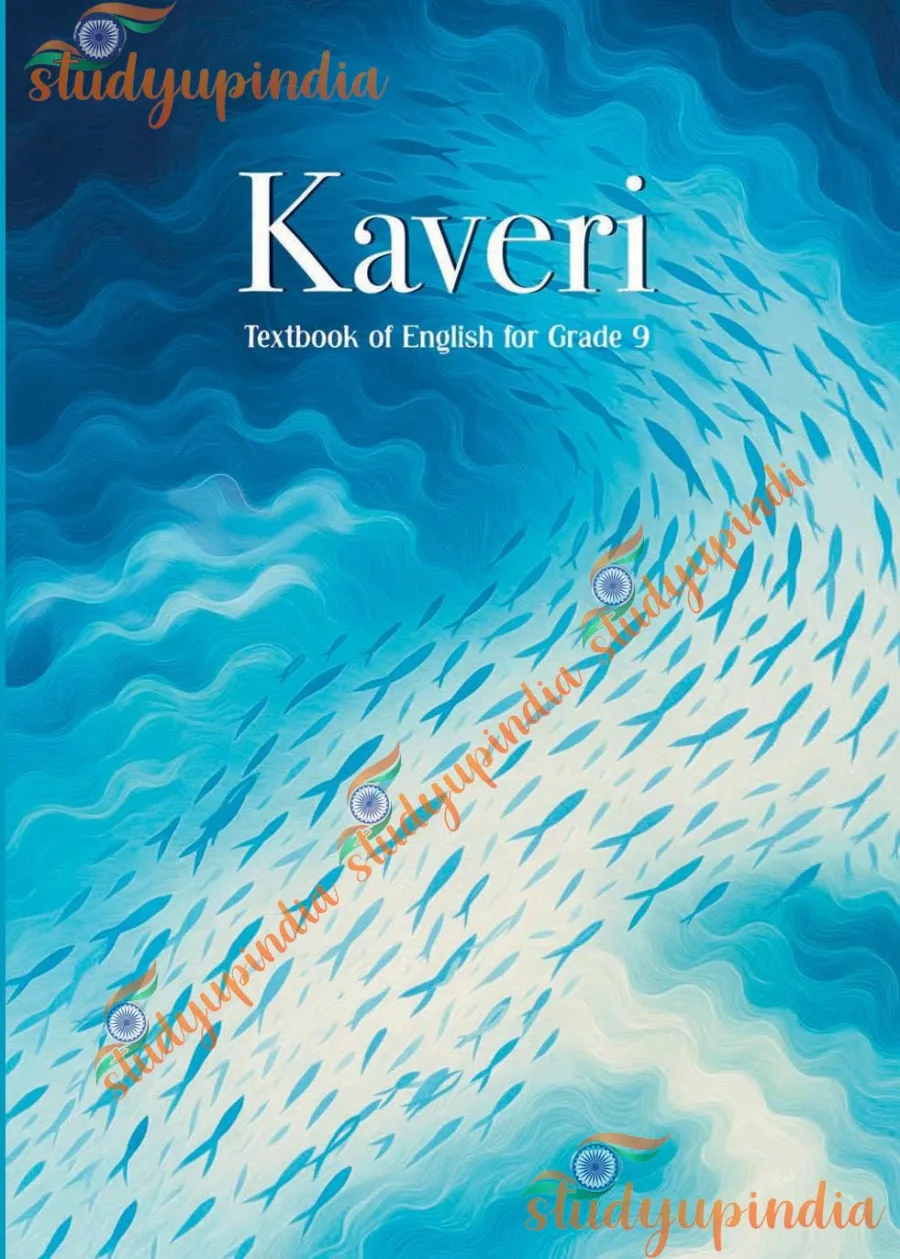
Download Cover Image
Do you want to download the full cover image for Ncert Class 9 Kaveri, Textbook of English for Grade 9, 903 (2026-2027 Edition)?