
Atomic Habits: Tiny Changes, Remarkable Results
Paperback
• 320 Pages
• ₹ 899.00
• English
• 9781847941831
No ratings yet
| Publisher | Random House Business |
|---|---|
| ISBN13 | 9781847941831 |
| ASIN/SKU | 1847941834 |
| Book Format | Paperback |
| Language | English |
| Pages | 320 |
| List Price | ₹ 899.00 |
| Publishing Date | 18/10/2018 |
| Dimensions | 15.2 x 2.3 x 23.4 cm |
| Weight | 395 g |
| Book Code | BD00055748 |
Buy this Book
Amazon Stores
Ebook Stores
Other Stores
Discover Atomic Habits: Tiny Changes, Remarkable Results by James Clear. This book is published by Random House Business in Paperback format, ISBN 9781847941831, ASIN 1847941834, under Self-Help, Self-Help for Happiness, Healthy Living and Wellness.
Book Description
THE PHENOMENAL INTERNATIONAL BESTSELLER: OVER 20 MILLION COPIES SOLD WORLDWIDE
Transform your life with tiny changes in behaviour, starting now.
People think that when you want to change your life, you need to think big. But world-renowned habits expert James Clear has discovered another way. He knows that real change comes from the compound effect of hundreds of small decisions: doing two push-ups a day, waking up five minutes early, or holding a single short phone call.
He calls them atomic habits.
In this ground-breaking book, Clears reveals exactly how these minuscule changes can grow into such life-altering outcomes. He uncovers a handful of simple life hacks (the forgotten art of Habit Stacking, the unexpected power of the Two Minute Rule, or the trick to entering the Goldilocks Zone), and delves into cutting-edge psychology and neuroscience to explain why they matter. Along the way, he tells inspiring stories of Olympic gold medalists, leading CEOs, and distinguished scientists who have used the science of tiny habits to stay productive, motivated, and happy.
These small changes will have a revolutionary effect on your career, your relationships, and your life.
________________________________
A NEW YORK TIMES AND SUNDAY TIMES BESTSELLER
'A supremely practical and useful book.' Mark Manson, author of The Subtle Art of Not Giving A F*ck
'James Clear has spent years honing the art and studying the science of habits. This engaging, hands-on book is the guide you need to break bad routines and make good ones.' Adam Grant, author of Originals
'Atomic Habits is a step-by-step manual for changing routines.' Books of the Month, Financial Times
'A special book that will change how you approach your day and live your life.' Ryan Holiday, author of The Obstacle is the Way
Number 1 Sunday Times bestseller, August 2023
New York Times bestseller, April 2024
Atomic Habits has sold over 1 million copies in all formats [Nielsen BookScan UK and Circana Bookscan US, April 2024]
Transform your life with tiny changes in behaviour, starting now.
People think that when you want to change your life, you need to think big. But world-renowned habits expert James Clear has discovered another way. He knows that real change comes from the compound effect of hundreds of small decisions: doing two push-ups a day, waking up five minutes early, or holding a single short phone call.
He calls them atomic habits.
In this ground-breaking book, Clears reveals exactly how these minuscule changes can grow into such life-altering outcomes. He uncovers a handful of simple life hacks (the forgotten art of Habit Stacking, the unexpected power of the Two Minute Rule, or the trick to entering the Goldilocks Zone), and delves into cutting-edge psychology and neuroscience to explain why they matter. Along the way, he tells inspiring stories of Olympic gold medalists, leading CEOs, and distinguished scientists who have used the science of tiny habits to stay productive, motivated, and happy.
These small changes will have a revolutionary effect on your career, your relationships, and your life.
________________________________
A NEW YORK TIMES AND SUNDAY TIMES BESTSELLER
'A supremely practical and useful book.' Mark Manson, author of The Subtle Art of Not Giving A F*ck
'James Clear has spent years honing the art and studying the science of habits. This engaging, hands-on book is the guide you need to break bad routines and make good ones.' Adam Grant, author of Originals
'Atomic Habits is a step-by-step manual for changing routines.' Books of the Month, Financial Times
'A special book that will change how you approach your day and live your life.' Ryan Holiday, author of The Obstacle is the Way
Number 1 Sunday Times bestseller, August 2023
New York Times bestseller, April 2024
Atomic Habits has sold over 1 million copies in all formats [Nielsen BookScan UK and Circana Bookscan US, April 2024]
Author Biography
James Clear is an expert on habits and decision making. He made his name as the author of one of the fastest-growing email newsletters in history, which grew from zero to 100,000 subscribers in under two years. Today, his newsletter has over 400,000 subscribers, and his articles at jamesclear.com receive 10 million hits each year. His work frequently appears in publications including the New York Times, Forbes and Business Insider.
Editorial Reviews
A supremely practical and useful book. James Clear distils the most fundamental information about habit formation, so you can accomplish more by focusing on less. ― Mark Manson, author of The Subtle Art of Not Giving a F*ck
It's an absolutely fabulous book and it doesn't surprise me that it's sold so many copies . . . Very useful, very practical, super well-researched. -- Dr Rangan Chatterjee
Atomic Habits is a step-by-step manual for changing routines . . . Inspiring real-life stories. ― Financial Times
James Clear has spent years honing the art and studying the science of habits. This engaging, hands-on book is the guide you need to break bad routines and make good ones. ― Adam Grant, author of Originals
A special book that will change how you approach your day and live your life. ― Ryan Holiday, author of The Obstacle is the Way
Excellent . . . I’m almost done with my PhD in organisational psychology and James did a brilliant job describing much of the science in psychology and neuroscience. ― Inc.
I’d attribute about 60 per cent of my good habits to [James Clear’s] blog and this book is rapidly filling in the other 40 per cent. ― Tim Urban, creator of Wait But Why
Zeroes in on the science behind building good habits and breaking bad ones . . . enlightening. ― Business Insider
Atomic Habits [is] a new book by James Clear that I’m relying on to develop realistic goals. ― Financial Times
In Atomic Habits, author and self-improvement guru James Clear outlines a practical framework for improving just about every aspect of your life through the power of habit. ― Globe and Mail
James Clear argues that the key [to changing your behaviour] is in making tiny changes that, over time, compound into large transformations. This book shows you how. ― Fast Company
Want to improve your fitness this year? Start with small ambitions – the results will be better . . . It’s a theory that has caught the imagination of James Clear, the author of a new book called Atomic Habits. ― The Times
Illuminating . . . The attractive message . . . is that life doesn’t have to be a chore or a bore . . . The first move toward order might be a step as small as putting on your exercise clothes. ― Wall Street Journal
You may have heard the key to habit formation is starting small. But you’ve likely never considered starting as small as James Clear suggests in his new book Atomic Habits. ― New York Times
Full of practical insights and tips, this will inspire you to make that tiny change today. ― Sun
If you are someone looking to gain some knowledge about creativity, happiness, health, productivity, picking this book is the right choice. [Clear’s] book is the proper blueprint that tells how to form some good habits, let go of your bad ones and what little changes one needs to bring to become better. And in case you thought it is all talk, let us tell you the book is packed with evidence-based strategies. Clear’s book actually has the potential to change a lot of thing
It's an absolutely fabulous book and it doesn't surprise me that it's sold so many copies . . . Very useful, very practical, super well-researched. -- Dr Rangan Chatterjee
Atomic Habits is a step-by-step manual for changing routines . . . Inspiring real-life stories. ― Financial Times
James Clear has spent years honing the art and studying the science of habits. This engaging, hands-on book is the guide you need to break bad routines and make good ones. ― Adam Grant, author of Originals
A special book that will change how you approach your day and live your life. ― Ryan Holiday, author of The Obstacle is the Way
Excellent . . . I’m almost done with my PhD in organisational psychology and James did a brilliant job describing much of the science in psychology and neuroscience. ― Inc.
I’d attribute about 60 per cent of my good habits to [James Clear’s] blog and this book is rapidly filling in the other 40 per cent. ― Tim Urban, creator of Wait But Why
Zeroes in on the science behind building good habits and breaking bad ones . . . enlightening. ― Business Insider
Atomic Habits [is] a new book by James Clear that I’m relying on to develop realistic goals. ― Financial Times
In Atomic Habits, author and self-improvement guru James Clear outlines a practical framework for improving just about every aspect of your life through the power of habit. ― Globe and Mail
James Clear argues that the key [to changing your behaviour] is in making tiny changes that, over time, compound into large transformations. This book shows you how. ― Fast Company
Want to improve your fitness this year? Start with small ambitions – the results will be better . . . It’s a theory that has caught the imagination of James Clear, the author of a new book called Atomic Habits. ― The Times
Illuminating . . . The attractive message . . . is that life doesn’t have to be a chore or a bore . . . The first move toward order might be a step as small as putting on your exercise clothes. ― Wall Street Journal
You may have heard the key to habit formation is starting small. But you’ve likely never considered starting as small as James Clear suggests in his new book Atomic Habits. ― New York Times
Full of practical insights and tips, this will inspire you to make that tiny change today. ― Sun
If you are someone looking to gain some knowledge about creativity, happiness, health, productivity, picking this book is the right choice. [Clear’s] book is the proper blueprint that tells how to form some good habits, let go of your bad ones and what little changes one needs to bring to become better. And in case you thought it is all talk, let us tell you the book is packed with evidence-based strategies. Clear’s book actually has the potential to change a lot of thing
Book Summary
Atomic Habits: Tiny Changes, Remarkable Results by James Clear is a practical and encouraging book about how small daily actions can gradually transform a person's life. Its central message is simple: lasting improvement does not usually come from making huge changes all at once. Instead, meaningful results are created by making small improvements repeatedly until they become part of everyday life. Clear describes these small behaviors as “atomic habits” because they are tiny building blocks that, when combined and repeated, can produce remarkably large results. The book presents habit formation as a process that can be understood, designed, and improved rather than something that depends entirely on willpower.
Clear begins by explaining why small changes matter so much. People often judge themselves according to immediate results, but habits work differently. A person may exercise for several days without seeing a visible change, read regularly without immediately becoming an expert, or save money without quickly becoming wealthy. This can make good habits seem ineffective. Clear argues that the real value of a habit often appears only after its effects have accumulated. Just as small amounts of money can grow through compound interest, repeated behaviors can compound into major improvements. A tiny positive action may seem insignificant today, but its effect becomes much greater when it is repeated over months and years.
The book also challenges the common habit of concentrating only on goals. Goals are useful because they provide direction, but Clear argues that systems are what actually produce results. Two people may have the same goal, yet the person with the better daily system is more likely to succeed. A goal describes where someone wants to go; a system describes what that person does repeatedly. This shifts attention away from waiting for a dramatic transformation and toward building routines that make progress almost inevitable.
One of the most important ideas in the book is that lasting habit change begins with identity. Instead of simply asking, “What do I want to achieve?” Clear encourages readers to ask, “What kind of person do I want to become?” A person who wants to write a book, for example, can focus on becoming a writer by writing regularly. Someone who wants to become healthier can begin thinking and acting like a healthy person. Each repeated action becomes evidence supporting a particular identity. In this way, habits are not merely things we do; over time, they help shape how we see ourselves.
Clear explains habit formation through four stages: cue, craving, response, and reward. A cue tells the brain that something is about to happen. It creates an expectation or desire, which leads to a response, and the response produces a reward. When this cycle is repeated, the behavior becomes increasingly automatic. Understanding this cycle helps people recognize why certain habits are difficult to break and how better habits can be deliberately created.
From this model, Clear develops the Four Laws of Behavior Change: make it obvious, make it attractive, make it easy, and make it satisfying. These four principles form the practical foundation of the book.
The first law, “Make It Obvious,” focuses on cues. Good habits are easier to perform when their cues are clear and visible. Clear recommends becoming aware of existing routines and deliberately connecting a new habit to something that already happens. This technique, known as habit stacking, allows a new behavior to become attached to an established routine. Instead of saying vaguely, “I will read more,” a person can decide to read immediately after a regular activity such as having breakfast. The environment also matters greatly. If something is visible and convenient, we are more likely to notice it and act on it.
The second law, “Make It Attractive,” deals with motivation. People naturally prefer activities that they find rewarding or enjoyable. Clear therefore suggests making desirable habits more appealing. One technique is temptation bundling, where an activity that needs to be done is paired with something enjoyable. The social environment also influences behavior. When people spend time with others who have desirable habits, those habits can begin to feel normal and attractive.
The third law, “Make It Easy,” addresses one of the biggest obstacles to consistency: unnecessary difficulty. Clear argues that people often expect themselves to rely on motivation when it would be better to reduce friction. If a good habit requires too many steps, it becomes easier to avoid. Making the desired behavior simple and convenient increases the chance that it will actually happen. One of the book's best-known ideas is the Two-Minute Rule, which encourages people to begin with a version of a habit that takes roughly two minutes or less. Reading one page, putting on exercise clothes, or writing a single sentence can be enough to establish the starting point. The purpose is to make beginning so easy that resistance becomes much smaller.
The fourth law, “Make It Satisfying,” explains why immediate rewards are important. Good habits often have delayed benefits, while bad habits can provide immediate pleasure. This creates a challenge because the brain naturally responds strongly to immediate rewards. Clear therefore recommends finding ways to make positive behaviors feel rewarding in the present. Habit tracking can help because seeing a chain of completed actions provides visible evidence of progress. The goal is not perfection but consistency. If a habit is missed, the important thing is to return to it quickly rather than allowing one missed day to become a long interruption.
Clear also explains how the same four laws can be reversed to break bad habits: make them invisible, unattractive, difficult, and unsatisfying. For example, someone trying to reduce phone use can remove distracting apps from the home screen or keep the phone farther away. The larger lesson is that changing the environment can sometimes be more effective than repeatedly fighting temptation through willpower.
Another important theme is the role of environment. People often believe that behavior is mainly a matter of character, but Clear shows how strongly surroundings influence what people do. A person is more likely to eat healthy food when healthy choices are readily available and more likely to read when books are easily visible. Designing the environment therefore becomes a practical way of designing behavior. Instead of constantly asking ourselves to make the right choice, we can arrange our surroundings so that the right choice becomes easier.
The book also discusses motivation and the importance of choosing habits that are challenging but not overwhelming. If an activity is too easy, it may become boring; if it is too difficult, it can become discouraging. The most sustainable habits often exist in a middle range where the task is difficult enough to remain interesting but manageable enough to encourage continued effort. Clear emphasizes that professionals and successful people are not always more motivated than everyone else. They have learned to continue practicing even when enthusiasm disappears.
Ultimately, Atomic Habits is a book about patience, consistency, and the power of ordinary actions. Its message is reassuring because it removes the pressure to change everything immediately. A person does not need to become completely different overnight. Instead, the person can start with one small behavior, repeat it, improve the surrounding environment, and gradually build a system that supports the desired identity. The book's four laws—make it obvious, attractive, easy, and satisfying—provide a straightforward framework for doing this.
The deeper lesson of Atomic Habits is that transformation is usually built quietly. There may be no dramatic moment when everything changes. Instead, improvement comes from small choices made again and again: reading a few pages, exercising for a short time, preparing for tomorrow, saving a little money, or doing a small piece of meaningful work. Over time, these actions shape both results and identity. Clear's approach ultimately encourages readers to stop waiting for perfect motivation and start creating systems that make good behavior easier. By focusing on tiny improvements and allowing them to compound, ordinary daily actions can gradually produce remarkable changes in work, health, relationships, and life.
Clear begins by explaining why small changes matter so much. People often judge themselves according to immediate results, but habits work differently. A person may exercise for several days without seeing a visible change, read regularly without immediately becoming an expert, or save money without quickly becoming wealthy. This can make good habits seem ineffective. Clear argues that the real value of a habit often appears only after its effects have accumulated. Just as small amounts of money can grow through compound interest, repeated behaviors can compound into major improvements. A tiny positive action may seem insignificant today, but its effect becomes much greater when it is repeated over months and years.
The book also challenges the common habit of concentrating only on goals. Goals are useful because they provide direction, but Clear argues that systems are what actually produce results. Two people may have the same goal, yet the person with the better daily system is more likely to succeed. A goal describes where someone wants to go; a system describes what that person does repeatedly. This shifts attention away from waiting for a dramatic transformation and toward building routines that make progress almost inevitable.
One of the most important ideas in the book is that lasting habit change begins with identity. Instead of simply asking, “What do I want to achieve?” Clear encourages readers to ask, “What kind of person do I want to become?” A person who wants to write a book, for example, can focus on becoming a writer by writing regularly. Someone who wants to become healthier can begin thinking and acting like a healthy person. Each repeated action becomes evidence supporting a particular identity. In this way, habits are not merely things we do; over time, they help shape how we see ourselves.
Clear explains habit formation through four stages: cue, craving, response, and reward. A cue tells the brain that something is about to happen. It creates an expectation or desire, which leads to a response, and the response produces a reward. When this cycle is repeated, the behavior becomes increasingly automatic. Understanding this cycle helps people recognize why certain habits are difficult to break and how better habits can be deliberately created.
From this model, Clear develops the Four Laws of Behavior Change: make it obvious, make it attractive, make it easy, and make it satisfying. These four principles form the practical foundation of the book.
The first law, “Make It Obvious,” focuses on cues. Good habits are easier to perform when their cues are clear and visible. Clear recommends becoming aware of existing routines and deliberately connecting a new habit to something that already happens. This technique, known as habit stacking, allows a new behavior to become attached to an established routine. Instead of saying vaguely, “I will read more,” a person can decide to read immediately after a regular activity such as having breakfast. The environment also matters greatly. If something is visible and convenient, we are more likely to notice it and act on it.
The second law, “Make It Attractive,” deals with motivation. People naturally prefer activities that they find rewarding or enjoyable. Clear therefore suggests making desirable habits more appealing. One technique is temptation bundling, where an activity that needs to be done is paired with something enjoyable. The social environment also influences behavior. When people spend time with others who have desirable habits, those habits can begin to feel normal and attractive.
The third law, “Make It Easy,” addresses one of the biggest obstacles to consistency: unnecessary difficulty. Clear argues that people often expect themselves to rely on motivation when it would be better to reduce friction. If a good habit requires too many steps, it becomes easier to avoid. Making the desired behavior simple and convenient increases the chance that it will actually happen. One of the book's best-known ideas is the Two-Minute Rule, which encourages people to begin with a version of a habit that takes roughly two minutes or less. Reading one page, putting on exercise clothes, or writing a single sentence can be enough to establish the starting point. The purpose is to make beginning so easy that resistance becomes much smaller.
The fourth law, “Make It Satisfying,” explains why immediate rewards are important. Good habits often have delayed benefits, while bad habits can provide immediate pleasure. This creates a challenge because the brain naturally responds strongly to immediate rewards. Clear therefore recommends finding ways to make positive behaviors feel rewarding in the present. Habit tracking can help because seeing a chain of completed actions provides visible evidence of progress. The goal is not perfection but consistency. If a habit is missed, the important thing is to return to it quickly rather than allowing one missed day to become a long interruption.
Clear also explains how the same four laws can be reversed to break bad habits: make them invisible, unattractive, difficult, and unsatisfying. For example, someone trying to reduce phone use can remove distracting apps from the home screen or keep the phone farther away. The larger lesson is that changing the environment can sometimes be more effective than repeatedly fighting temptation through willpower.
Another important theme is the role of environment. People often believe that behavior is mainly a matter of character, but Clear shows how strongly surroundings influence what people do. A person is more likely to eat healthy food when healthy choices are readily available and more likely to read when books are easily visible. Designing the environment therefore becomes a practical way of designing behavior. Instead of constantly asking ourselves to make the right choice, we can arrange our surroundings so that the right choice becomes easier.
The book also discusses motivation and the importance of choosing habits that are challenging but not overwhelming. If an activity is too easy, it may become boring; if it is too difficult, it can become discouraging. The most sustainable habits often exist in a middle range where the task is difficult enough to remain interesting but manageable enough to encourage continued effort. Clear emphasizes that professionals and successful people are not always more motivated than everyone else. They have learned to continue practicing even when enthusiasm disappears.
Ultimately, Atomic Habits is a book about patience, consistency, and the power of ordinary actions. Its message is reassuring because it removes the pressure to change everything immediately. A person does not need to become completely different overnight. Instead, the person can start with one small behavior, repeat it, improve the surrounding environment, and gradually build a system that supports the desired identity. The book's four laws—make it obvious, attractive, easy, and satisfying—provide a straightforward framework for doing this.
The deeper lesson of Atomic Habits is that transformation is usually built quietly. There may be no dramatic moment when everything changes. Instead, improvement comes from small choices made again and again: reading a few pages, exercising for a short time, preparing for tomorrow, saving a little money, or doing a small piece of meaningful work. Over time, these actions shape both results and identity. Clear's approach ultimately encourages readers to stop waiting for perfect motivation and start creating systems that make good behavior easier. By focusing on tiny improvements and allowing them to compound, ordinary daily actions can gradually produce remarkable changes in work, health, relationships, and life.
Sample Chapters
Sample Chapters will be added soon…
Reader Reviews
No reviews yet.
Atomic Habits: Tiny Changes, Remarkable Results
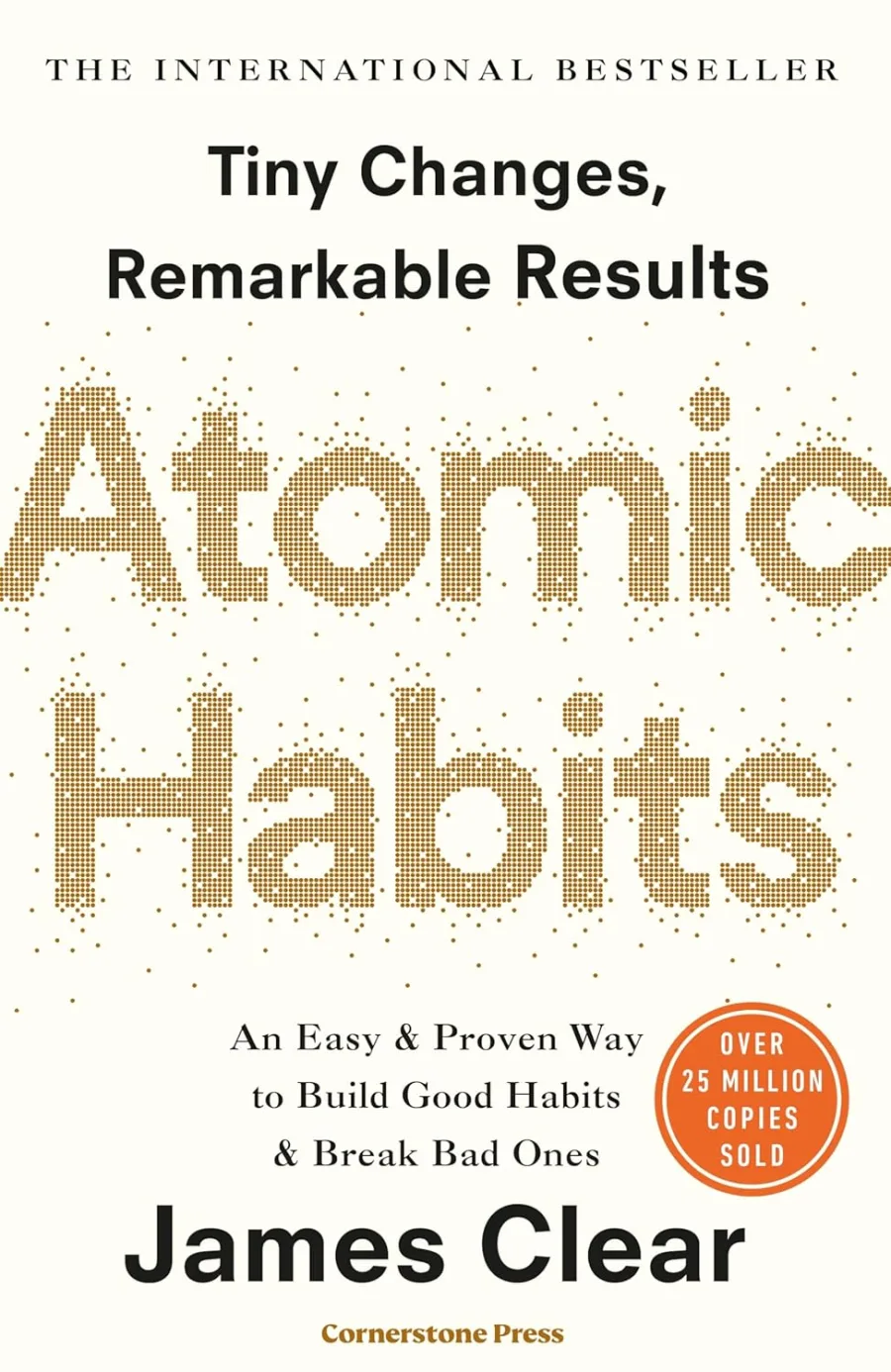
Download Cover Image
Do you want to download the full cover image for Atomic Habits: Tiny Changes, Remarkable Results?