
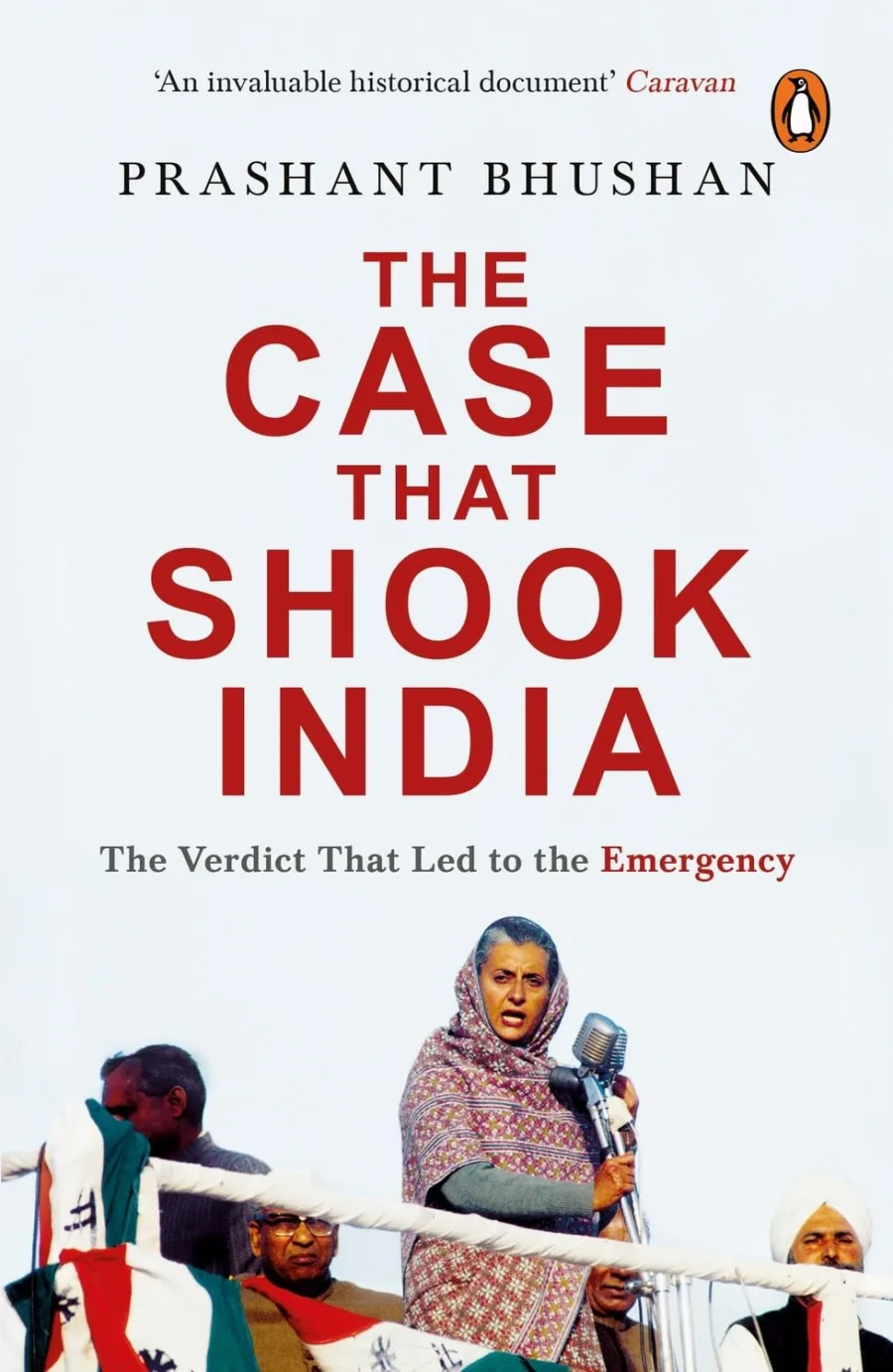
The Case That Shook India
Paperback
• 336 Pages
• ₹ 399.00
• English
• 9780143442646
No ratings yet
| Publisher | Penguin |
|---|---|
| ISBN13 | 9780143442646 |
| ASIN/SKU | 0143442643 |
| Book Format | Paperback |
| Language | English |
| Pages | 336 |
| List Price | ₹ 399.00 |
| Publishing Date | 10/01/2018 |
| Dimensions | 12.7 x 2.29 x 19.79 cm |
| Weight | 245 g |
| Book Code | BD00055298 |
Buy this Book
Amazon Stores
Ebook Stores
Other Stores
Discover The Case That Shook India by Prashant Bhushan. This book is published by Penguin in Paperback format, ISBN 9780143442646, ASIN 0143442643, under Law, Indian History.
Book Description
On 12 June 1975, for the first time in independent India's history, the election of a prime minister was set aside by a high court judgment. The watershed case, Indira Gandhi v. Raj Narain, acted as the catalyst for the imposition of the Emergency. Based on detailed notes of the court proceedings, The Case That Shook India is both a significant legal and a historical document.
The author, advocate Prashant Bhushan, provides a blow-by-blow account of the goings-on inside the courtroom as well as the manoeuvrings outside it, including threats, bribes and deceit. As the case goes to the Supreme Court, we see how a ruling government can misuse legislative power to save the PM's election.
Through his forceful and gripping narrative, Bhushan vividly recreates the legal drama that decisively shaped India's political destiny.
'Not just of historical interest . . . many of these issues are back in focus today' Mint
'An invaluable historical document . . . being re-issued when new questions are being asked about the independence of the judiciary from the PMO' Caravan
'Of general interest [with] contemporary resonances' India Today
'Bhushan reminds the public about how a democracy can go wrong, so that we remain vigilant' Hans India
The author, advocate Prashant Bhushan, provides a blow-by-blow account of the goings-on inside the courtroom as well as the manoeuvrings outside it, including threats, bribes and deceit. As the case goes to the Supreme Court, we see how a ruling government can misuse legislative power to save the PM's election.
Through his forceful and gripping narrative, Bhushan vividly recreates the legal drama that decisively shaped India's political destiny.
'Not just of historical interest . . . many of these issues are back in focus today' Mint
'An invaluable historical document . . . being re-issued when new questions are being asked about the independence of the judiciary from the PMO' Caravan
'Of general interest [with] contemporary resonances' India Today
'Bhushan reminds the public about how a democracy can go wrong, so that we remain vigilant' Hans India
Author Biography
Prashant Bhushan is an eminent public interest lawyer in the Supreme Court of India, most known for cases such as 2G and Coal Scam. He is also an activist and a founder member of Swaraj Abhiyan-a campaign organization that focuses on various issues such as the environment, human rights, corruption and good governance. He was a prominent member of the group India Against Corruption (IAC) and worked alongside Anna Hazare for the implementation of the Jan Lokpal Bill (Citizen's Anti-corruption Ombudsman Bill).
Editorial Reviews
Editorial Reviews will be added soon…
Book Summary
The Case That Shook India, Prashant Bhushan delivers a gripping, meticulously detailed account of the historic legal battle that fundamentally altered the trajectory of Indian democracy. The narrative centers on the 1971 election petition filed by Raj Narain against the then-Prime Minister of India, Indira Gandhi. What began as a seemingly straightforward challenge regarding electoral malpractices quickly spiraled into a seismic constitutional crisis. Bhushan, writing with the precision of both a legal expert and a keen political observer, captures the high-stakes atmosphere of the time, illustrating how a single courtroom battle became the defining catalyst for the imposition of the Emergency in 1975.
The story opens against the backdrop of the 1971 general elections, a contest that saw Indira Gandhi sweep to power with an overwhelming majority. However, her victory in the Rae Bareli constituency was immediately clouded by allegations of corruption and procedural violations. Raj Narain, a flamboyant and relentless socialist politician, accused Gandhi of utilizing government resources, enlisting the services of government employees, and indulging in corrupt practices to secure her seat. While many observers initially dismissed the petition as a lost cause against the most powerful person in the country, it slowly gained momentum, eventually landing before the Allahabad High Court.
Bhushan masterfully breaks down the legal intricacies of the case without losing the reader in dry legalese. He highlights the courage of Justice Jagmohan Lal Sinha, the presiding judge, who navigated immense political pressure and veiled threats to ensure the proceedings remained fair and transparent. The trial itself became a spectacle, with the Prime Minister being summoned to the witness stand—a rare and humiliating occurrence for a sitting head of government. Through vivid descriptions of the courtroom exchanges, Bhushan portrays Gandhi as a formidable, often cold figure, contrasting sharply with the dogged, unyielding tenacity of the opposition.
The climax of the legal drama arrived on June 12, 1975, when Justice Sinha delivered a bombshell verdict: he found Indira Gandhi guilty of corrupt practices and declared her election to the Lok Sabha void. The judgment effectively barred her from holding public office for six years. This was an unprecedented moment in Indian history, marking the first time a Prime Minister had been unseated by a court of law. Bhushan explores the immediate, chaotic aftermath of the verdict, documenting the panic within the Congress party and Gandhi’s refusal to resign, despite the mounting calls for her departure from across the political spectrum.
The book excels at contextualizing the legal ruling within the broader political climate of the mid-seventies. It details the growing disillusionment with Gandhi’s governance, the widespread economic distress, and the powerful anti-corruption movement led by Jayaprakash Narayan. Bhushan provides a clear-eyed analysis of how the Allahabad High Court’s decision, rather than being viewed as a triumph of the rule of law, was perceived by Gandhi and her inner circle as an existential threat to her authority. This paranoia, Bhushan argues, was the direct driver of her subsequent decision to bypass democratic norms entirely.
As the political tension reached a breaking point, the narrative shifts to the chilling days leading up to the declaration of the Emergency on June 25, 1975. Bhushan details the subversion of the judiciary, the silencing of the media, and the mass arrests of political opponents. He frames the Emergency as a desperate, authoritarian response to the legal setback in Allahabad, showcasing how Gandhi chose to suspend the Constitution rather than accept the verdict of the court. The author effectively links the micro-level legal arguments of the Rae Bareli case to the macro-level dismantling of India's democratic foundations, illustrating that the court’s attempt to enforce accountability was the very thing the establishment sought to permanently extinguish.
Beyond the specific events of the 1970s, the book serves as a vital reflection on the delicate balance of power between the executive, the legislature, and the judiciary. Bhushan emphasizes that the strength of a democracy is measured not by the power of its leaders, but by the independence of its institutions. He treats the case as a cautionary tale about the dangers of unchecked power and the immense fragility of democratic processes when confronted with leaders who view personal survival as synonymous with national stability. The narrative remains deeply relevant today, serving as a reminder that the checks and balances of the Indian Constitution are only as robust as the people who defend them.
Ultimately, The Case That Shook India is a masterful blend of legal history and political thriller. It is an essential read for anyone seeking to understand the darkest chapter of post-independence Indian politics. Bhushan does not merely recount the facts; he forces the reader to confront the profound ethical and constitutional questions that arose during those turbulent years. The book concludes by honoring the individuals—lawyers, judges, and activists—who stood firm against the tidal wave of authoritarianism. It leaves the reader with a stark, lingering message: the preservation of democracy requires constant vigilance, and sometimes, it takes a single, courageous legal challenge to expose the cracks in the foundations of even the most powerful regimes.
The story opens against the backdrop of the 1971 general elections, a contest that saw Indira Gandhi sweep to power with an overwhelming majority. However, her victory in the Rae Bareli constituency was immediately clouded by allegations of corruption and procedural violations. Raj Narain, a flamboyant and relentless socialist politician, accused Gandhi of utilizing government resources, enlisting the services of government employees, and indulging in corrupt practices to secure her seat. While many observers initially dismissed the petition as a lost cause against the most powerful person in the country, it slowly gained momentum, eventually landing before the Allahabad High Court.
Bhushan masterfully breaks down the legal intricacies of the case without losing the reader in dry legalese. He highlights the courage of Justice Jagmohan Lal Sinha, the presiding judge, who navigated immense political pressure and veiled threats to ensure the proceedings remained fair and transparent. The trial itself became a spectacle, with the Prime Minister being summoned to the witness stand—a rare and humiliating occurrence for a sitting head of government. Through vivid descriptions of the courtroom exchanges, Bhushan portrays Gandhi as a formidable, often cold figure, contrasting sharply with the dogged, unyielding tenacity of the opposition.
The climax of the legal drama arrived on June 12, 1975, when Justice Sinha delivered a bombshell verdict: he found Indira Gandhi guilty of corrupt practices and declared her election to the Lok Sabha void. The judgment effectively barred her from holding public office for six years. This was an unprecedented moment in Indian history, marking the first time a Prime Minister had been unseated by a court of law. Bhushan explores the immediate, chaotic aftermath of the verdict, documenting the panic within the Congress party and Gandhi’s refusal to resign, despite the mounting calls for her departure from across the political spectrum.
The book excels at contextualizing the legal ruling within the broader political climate of the mid-seventies. It details the growing disillusionment with Gandhi’s governance, the widespread economic distress, and the powerful anti-corruption movement led by Jayaprakash Narayan. Bhushan provides a clear-eyed analysis of how the Allahabad High Court’s decision, rather than being viewed as a triumph of the rule of law, was perceived by Gandhi and her inner circle as an existential threat to her authority. This paranoia, Bhushan argues, was the direct driver of her subsequent decision to bypass democratic norms entirely.
As the political tension reached a breaking point, the narrative shifts to the chilling days leading up to the declaration of the Emergency on June 25, 1975. Bhushan details the subversion of the judiciary, the silencing of the media, and the mass arrests of political opponents. He frames the Emergency as a desperate, authoritarian response to the legal setback in Allahabad, showcasing how Gandhi chose to suspend the Constitution rather than accept the verdict of the court. The author effectively links the micro-level legal arguments of the Rae Bareli case to the macro-level dismantling of India's democratic foundations, illustrating that the court’s attempt to enforce accountability was the very thing the establishment sought to permanently extinguish.
Beyond the specific events of the 1970s, the book serves as a vital reflection on the delicate balance of power between the executive, the legislature, and the judiciary. Bhushan emphasizes that the strength of a democracy is measured not by the power of its leaders, but by the independence of its institutions. He treats the case as a cautionary tale about the dangers of unchecked power and the immense fragility of democratic processes when confronted with leaders who view personal survival as synonymous with national stability. The narrative remains deeply relevant today, serving as a reminder that the checks and balances of the Indian Constitution are only as robust as the people who defend them.
Ultimately, The Case That Shook India is a masterful blend of legal history and political thriller. It is an essential read for anyone seeking to understand the darkest chapter of post-independence Indian politics. Bhushan does not merely recount the facts; he forces the reader to confront the profound ethical and constitutional questions that arose during those turbulent years. The book concludes by honoring the individuals—lawyers, judges, and activists—who stood firm against the tidal wave of authoritarianism. It leaves the reader with a stark, lingering message: the preservation of democracy requires constant vigilance, and sometimes, it takes a single, courageous legal challenge to expose the cracks in the foundations of even the most powerful regimes.
Sample Chapters
Sample Chapters will be added soon…
Reader Reviews
No reviews yet.
The Case That Shook India
Download Cover Image
Do you want to download the full cover image for The Case That Shook India?