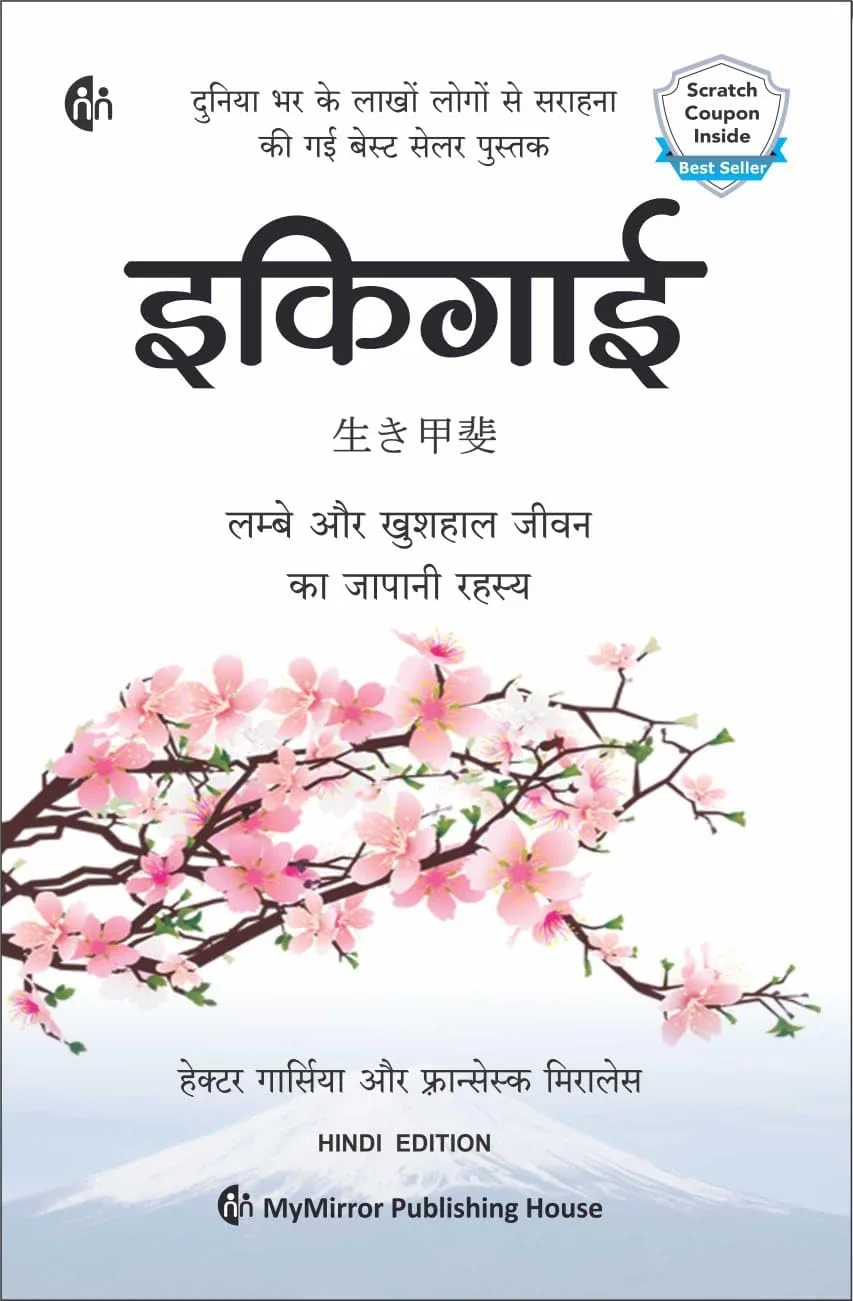
Ikigai (Hindi)
Héctor García, Francesc Miralles
Paperback
• 208 Pages
• ₹ 280.00
• Hindi
• 9788193881323
No ratings yet
| Publisher | MyMirror Publishing House Pvt. Ltd. |
|---|---|
| ISBN13 | 9788193881323 |
| ASIN/SKU | 9388550072 |
| Book Format | Paperback |
| Language | Hindi |
| Pages | 208 |
| List Price | ₹ 280.00 |
| Publishing Date | 31/12/2019 |
| Dimensions | 20.3 x 25.4 x 4.7 cm |
| Weight | 230 g |
| Book Code | BD00055237 |
Buy this Book
Amazon Stores
Ebook Stores
Other Stores
Discover Ikigai (Hindi) by Héctor García. This book is published by MyMirror Publishing House Pvt. Ltd. in Paperback format, ISBN 9788193881323, ASIN 9388550072, under Health, Fitness and Dieting, Healthy Living and Wellness, Self-Help for Happiness.
Book Description
दीर्घायु, तंदुरुस्त और आनंदित जीवन का जापानी रहस्य जापानी लोग मानते है कि हरइन्सान का इकिगाई होता ही है। इस किताब के लिए इकिगाई इस संकल्पना की जानकारी इकट्ठा करते वक्त लेखक ने कई सारे शतायुषी लोगों से बातचीत करके उनके दीर्घायु जीवन का रहस्य जान लिया। वह रहस्य इस किताब के माध्यम से आपके सामने रखा गया है। यह किताब आपको आपका इकिगाई प्राप्त करने में सहायता करेगी। * शारीरिक स्वास्थ्य के लिए 80 प्रतिशत का रहस्य। * चुस्त शरीर, चुस्त मन * तनाव का लाभ लेने की कला * स्टीव्ह जॉब्ज का जापानी संस्कृति के लिए प्रेम * लोगोथैरपी और मोरिता थैरपी * तंत्रज्ञान और संस्कृति का संगम
Author Biography
Héctor García was born in Spain and worked at CERN in Switzerland before moving to Japan, his home for 16 years and counting. In Tokyo, when he is not writing his next book, he makes a living in the IT industry. His popular blog led to his international bestseller A Geek In Japan. He is the author of the bestselling Ikigai: The Japanese Secret to a Long and Happy Life; translated to 57 languages, has the strange honor of being the most translated book ever originally written in Spanish language. To this day he has published seven books, his latest one is: The Book of Ichigo Ichie.
Editorial Reviews
Editorial Reviews will be added soon…
Book Summary
Héctor García and Francesc Miralles’s Ikigai: The Japanese Secret to a Long and Happy Life takes readers on a captivating journey to the Japanese island of Okinawa, home to the world’s highest concentration of centenarians. The book seeks to unravel the mysteries behind the extraordinary longevity, health, and happiness of the residents of this unique "Blue Zone." At the very heart of their remarkably vibrant lives is the profound, yet beautifully simple, philosophy of ikigai, a Japanese concept that roughly translates to "the happiness of always being busy" or, more deeply, "a reason to jump out of bed in the morning." Rather than offering a prescriptive, rigid set of rules, the authors present a holistic lifestyle guide based on extensive interviews with the elderly residents of Ogimi, a rural Okinawan village. The resulting narrative is an inspiring blend of philosophical inquiry, practical lifestyle advice, and heartwarming personal anecdotes that collectively demonstrate how purpose, community, and gentle habits can profoundly extend and enrich human life.
The core philosophy of the book revolves around discovering one's personal ikigai, which the authors conceptualize as the intersection of four fundamental elements: what you deeply love, what you are naturally good at, what the world genuinely needs, and what you can be paid for. Finding this delicate balance is not presented as an overnight revelation, but rather as a patient, ongoing process of self-exploration. For the Okinawans, ikigai is not necessarily tied to grand career ambitions, immense wealth, or changing the world on a massive scale. Instead, it is often found in the mastery of everyday tasks, the cultivation of a garden, the dedication to a craft, or the simple joy of serving one's community. The authors emphasize that retiring—in the Western sense of completely stopping work and withdrawing from active life—is a foreign concept in Okinawan culture. Because their daily activities are deeply aligned with their sense of purpose, the residents never truly "retire"; they remain active, engaged, and passionately dedicated to their ikigai until their very last days.
Beyond the psychological anchor of purpose, the book meticulously outlines the daily physical and dietary habits that contribute to Okinawan longevity. A central tenet of their dietary philosophy is the ancient Confucian practice of Hara Hachi Bu, which dictates that one should stop eating when they feel about eighty percent full. This simple practice of calorie restriction prevents the digestive system from being overworked and significantly reduces cellular oxidation, a primary driver of aging. Furthermore, their diet is inherently rich in vegetables, legumes, tofu, and antioxidant-heavy foods, complemented by the continuous consumption of green tea. Equally important to what they eat is how they move. The authors observe that the centenarians do not engage in intense, grueling gym workouts. Instead, their lives are structured around constant, low-intensity physical activity. Whether it is walking through the village, tending to their vegetable gardens, or participating in the daily synchronized stretching routine known as Radio Taiso, their bodies are engaged in gentle, continuous motion, which keeps them remarkably agile and independent well into their advanced years.
Another critical pillar of the Okinawan lifestyle explored in the book is the profound power of community and deep social bonds. The residents belong to tight-knit social networks known as moai, which are essentially groups of friends formed in early childhood who commit to supporting one another for life. A moai provides its members with a profound sense of belonging, emotional security, and even financial assistance in times of need. This unwavering social support acts as a powerful buffer against stress and loneliness, which are increasingly recognized as major contributors to chronic illness and premature death in modern society. The elderly in Okinawa are never isolated; they celebrate birthdays together, share their joys and sorrows, and maintain an infectious sense of optimism and lightheartedness. They approach life with a gentle smile, prioritizing harmony and avoiding the chronic, cortisol-spiking stress that plagues much of the modern, fast-paced world.
Ultimately, Ikigai is an elegant, inspiring reminder that a long, fulfilling life is rarely the result of bio-hacking or relentless ambition, but rather the natural byproduct of living simply, intentionally, and joyfully. García and Miralles brilliantly weave together themes of resilience, the psychological state of "flow" where time seems to stand still during focused work, and the Japanese aesthetic of wabi-sabi—finding beauty in imperfection and accepting the transient nature of life. By focusing on the present moment, nurturing deep relationships, fueling the body with light, nourishing food, and cultivating a clear, enduring sense of purpose, the book argues that anyone can begin to experience the profound benefits of this ancient wisdom. It serves as a gentle, yet powerful, wake-up call to slow down, reconnect with what truly matters, and patiently cultivate the unique passions that make our individual lives genuinely worth living.
The core philosophy of the book revolves around discovering one's personal ikigai, which the authors conceptualize as the intersection of four fundamental elements: what you deeply love, what you are naturally good at, what the world genuinely needs, and what you can be paid for. Finding this delicate balance is not presented as an overnight revelation, but rather as a patient, ongoing process of self-exploration. For the Okinawans, ikigai is not necessarily tied to grand career ambitions, immense wealth, or changing the world on a massive scale. Instead, it is often found in the mastery of everyday tasks, the cultivation of a garden, the dedication to a craft, or the simple joy of serving one's community. The authors emphasize that retiring—in the Western sense of completely stopping work and withdrawing from active life—is a foreign concept in Okinawan culture. Because their daily activities are deeply aligned with their sense of purpose, the residents never truly "retire"; they remain active, engaged, and passionately dedicated to their ikigai until their very last days.
Beyond the psychological anchor of purpose, the book meticulously outlines the daily physical and dietary habits that contribute to Okinawan longevity. A central tenet of their dietary philosophy is the ancient Confucian practice of Hara Hachi Bu, which dictates that one should stop eating when they feel about eighty percent full. This simple practice of calorie restriction prevents the digestive system from being overworked and significantly reduces cellular oxidation, a primary driver of aging. Furthermore, their diet is inherently rich in vegetables, legumes, tofu, and antioxidant-heavy foods, complemented by the continuous consumption of green tea. Equally important to what they eat is how they move. The authors observe that the centenarians do not engage in intense, grueling gym workouts. Instead, their lives are structured around constant, low-intensity physical activity. Whether it is walking through the village, tending to their vegetable gardens, or participating in the daily synchronized stretching routine known as Radio Taiso, their bodies are engaged in gentle, continuous motion, which keeps them remarkably agile and independent well into their advanced years.
Another critical pillar of the Okinawan lifestyle explored in the book is the profound power of community and deep social bonds. The residents belong to tight-knit social networks known as moai, which are essentially groups of friends formed in early childhood who commit to supporting one another for life. A moai provides its members with a profound sense of belonging, emotional security, and even financial assistance in times of need. This unwavering social support acts as a powerful buffer against stress and loneliness, which are increasingly recognized as major contributors to chronic illness and premature death in modern society. The elderly in Okinawa are never isolated; they celebrate birthdays together, share their joys and sorrows, and maintain an infectious sense of optimism and lightheartedness. They approach life with a gentle smile, prioritizing harmony and avoiding the chronic, cortisol-spiking stress that plagues much of the modern, fast-paced world.
Ultimately, Ikigai is an elegant, inspiring reminder that a long, fulfilling life is rarely the result of bio-hacking or relentless ambition, but rather the natural byproduct of living simply, intentionally, and joyfully. García and Miralles brilliantly weave together themes of resilience, the psychological state of "flow" where time seems to stand still during focused work, and the Japanese aesthetic of wabi-sabi—finding beauty in imperfection and accepting the transient nature of life. By focusing on the present moment, nurturing deep relationships, fueling the body with light, nourishing food, and cultivating a clear, enduring sense of purpose, the book argues that anyone can begin to experience the profound benefits of this ancient wisdom. It serves as a gentle, yet powerful, wake-up call to slow down, reconnect with what truly matters, and patiently cultivate the unique passions that make our individual lives genuinely worth living.
Sample Chapters
Sample Chapters will be added soon…
Reader Reviews
No reviews yet.
Ikigai (Hindi)