
The Subtle Art of Not Giving a F*ck: A Counterintuitive Approach to Living a Good Life
Paperback
• 224 Pages
• ₹ 550.00
• English
• 9780062641540
No ratings yet
| Publisher | Harper Collins |
|---|---|
| ISBN13 | 9780062641540 |
| ASIN/SKU | 0062641549 |
| Book Format | Paperback |
| Language | English |
| Pages | 224 |
| List Price | ₹ 550.00 |
| Publishing Date | 30/01/2017 |
| Dimensions | 21.49 x 1.42 x 14 cm |
| Weight | 294 g |
| Book Code | BD00055102 |
Buy this Book
Amazon Stores
Ebook Stores
Other Stores
Discover The Subtle Art of Not Giving a F*ck: A Counterintuitive Approach to Living a Good Life by Mark Manson. This book is published by Harper Collins in Paperback format, ISBN 9780062641540, ASIN 0062641549, under Health, Fitness and Dieting, Self-Help for Anger Management, Psychology.
Book Description
In this generation-defining self-help guide, a superstar blogger cuts through the crap to show us how to stop trying to be positive all the time so that we can truly become better, happier people
For decades, weve been told that positive thinking is the key to a happy, rich life. Fuck positivity, Mark Manson says. Lets be honest, shit is fucked and we have to live with it. In his wildly popular Internet blog, Manson doesnt sugar-coat or equivocate. He tells it like it isa dose of raw, refreshing, honest truth that is sorely lacking today. The Subtle Art of Not Giving a F**k is his antidote to the coddling, lets-all-feel-good mind-set that has infected
American society and spoiled a generation, rewarding them with gold medals just for showing up.
Manson makes the argument, backed both by academic research and well-timed poop jokes, that improving our lives hinges not on our ability to turn lemons into lemonade, but on learning to stomach lemons better. Human beings are flawed and limitednot everybody can be extraordinary, there are winners and losers in society and some of it is not fair or your fault. Manson advises us to get to know our limitations and accept them. Once we embrace
our fears, faults and uncertainties, once we stop running and avoiding and start confronting painful truths, we can begin to find the courage, perseverance, honesty, responsibility, curiosity and forgiveness we seek.
There are only so many things we can give a fuck about so we need to figure out which ones really matter, Manson makes clear. While money is nice, caring about what you do with your life is better, because true wealth is about experience.
A much-needed grab-you-by-the-shoulders-and-look-you-in the-eye moment of real talk, filled with entertaining stories and profane, ruthless humor, The Subtle Art of Not Giving a F**k is a refreshing slap for a generation to help them truly lead contented, grounded lives.
For decades, weve been told that positive thinking is the key to a happy, rich life. Fuck positivity, Mark Manson says. Lets be honest, shit is fucked and we have to live with it. In his wildly popular Internet blog, Manson doesnt sugar-coat or equivocate. He tells it like it isa dose of raw, refreshing, honest truth that is sorely lacking today. The Subtle Art of Not Giving a F**k is his antidote to the coddling, lets-all-feel-good mind-set that has infected
American society and spoiled a generation, rewarding them with gold medals just for showing up.
Manson makes the argument, backed both by academic research and well-timed poop jokes, that improving our lives hinges not on our ability to turn lemons into lemonade, but on learning to stomach lemons better. Human beings are flawed and limitednot everybody can be extraordinary, there are winners and losers in society and some of it is not fair or your fault. Manson advises us to get to know our limitations and accept them. Once we embrace
our fears, faults and uncertainties, once we stop running and avoiding and start confronting painful truths, we can begin to find the courage, perseverance, honesty, responsibility, curiosity and forgiveness we seek.
There are only so many things we can give a fuck about so we need to figure out which ones really matter, Manson makes clear. While money is nice, caring about what you do with your life is better, because true wealth is about experience.
A much-needed grab-you-by-the-shoulders-and-look-you-in the-eye moment of real talk, filled with entertaining stories and profane, ruthless humor, The Subtle Art of Not Giving a F**k is a refreshing slap for a generation to help them truly lead contented, grounded lives.
Author Biography
Mark Manson is the #1 New York Times Bestselling author of Everything is F*cked: A Book About Hope and The Subtle Art of Not Giving a F*ck: A Counterintuitive Approach to Living a Good Life, the mega-bestseller that reached #1 in fourteen different countries. Mark’s books have been translated into more than 50 languages and have sold over 12 million copies worldwide.
Mark runs one of the largest personal growth websites in the world, MarkManson.net, a blog with more than two million monthly readers and half a million subscribers. His writing is often described as ‘self-help for people who hate self-help’ — a no-BS brand of life advice and cultural commentary that has struck a chord with people around the globe. His writing has appeared in The New York Times, Wall Street Journal, TIME Magazine, Forbes, Vice, CNN, and Vox, among many others. He currently lives in New York City.
Mark runs one of the largest personal growth websites in the world, MarkManson.net, a blog with more than two million monthly readers and half a million subscribers. His writing is often described as ‘self-help for people who hate self-help’ — a no-BS brand of life advice and cultural commentary that has struck a chord with people around the globe. His writing has appeared in The New York Times, Wall Street Journal, TIME Magazine, Forbes, Vice, CNN, and Vox, among many others. He currently lives in New York City.
Editorial Reviews
Editorial Reviews will be added soon…
Book Summary
Mark Manson’s The Subtle Art of Not Giving a Fck* is a refreshing departure from the typical, sugar-coated self-help genre that insists on relentless positivity as the key to happiness. Instead of teaching readers how to achieve a "perfect" life, Manson argues that true growth and satisfaction come from learning how to prioritize what truly matters. The central premise is that we have a limited amount of emotional energy and time, so we must learn to be selective about where we "give a f*ck." Being indifferent to trivialities—the opinions of others, minor inconveniences, or superficial successes—allows us to reserve our focus for the few things in life that actually deserve our attention and effort.
Manson begins by dismantling the cultural obsession with happiness. He suggests that our constant pursuit of positive experiences is paradoxically what makes us feel so miserable. When we chase only the "good," we implicitly condemn our inevitable negative experiences as failures. Manson proposes a counterintuitive solution: instead of trying to be happy, we should embrace the reality that life involves suffering. Whether it is stress, rejection, or disappointment, pain is an inevitable component of the human experience. Therefore, the goal shouldn't be to avoid pain, but to find something worth suffering for. He challenges readers to ask themselves not what they want to enjoy in life, but what pain they are willing to sustain.
A significant portion of the book focuses on the importance of values. Manson argues that many of our personal problems stem from holding poor values—things like the pursuit of fame, excessive wealth, or constant validation from others. These goals are externally dependent and largely out of our control. When we build our identity around them, we become vulnerable to external circumstances. Instead, he advocates for adopting "good" values. Good values are internal, process-oriented, and immediately attainable. They include things like honesty, humility, self-reliance, and vulnerability. By choosing values that focus on the process rather than the outcome, we gain a sense of agency that makes us resilient to the inevitable ups and downs of life.
Manson also tackles the concept of personal responsibility. He makes a crucial distinction between "fault" and "responsibility." Something might not be your fault—a traumatic event, a bad upbringing, or a sudden tragedy—but it is always your responsibility to decide how you respond to it. Blaming external factors for our unhappiness is a way of avoiding the work required to change our lives. By taking absolute ownership of our reactions and decisions, we reclaim our power. This is not about blaming yourself for everything that goes wrong, but about realizing that even when we are not to blame for our circumstances, we are entirely responsible for the meaning we assign to them.
Throughout the book, Manson emphasizes the role of uncertainty and the danger of "knowing it all." He encourages the "Backwards Law," which suggests that the more we actively chase a feeling of certainty or superiority, the more insecure we become. He argues that being willing to be wrong is the only way to actually grow. True confidence is not the belief that you are always right, but the ability to look at your current beliefs and accept that you might be mistaken. This mindset keeps us humble and open to new information, preventing the stagnation that comes from intellectual or emotional arrogance.
The importance of saying "no" is another major pillar of the book. Manson contends that defining ourselves by what we reject is just as important as defining ourselves by what we accept. To have a meaningful life, we must be willing to commit to one thing by rejecting many others. If you don't reject anything, you don't stand for anything. This applies to relationships as well. Healthy relationships are built on setting boundaries and being willing to walk away when those boundaries are violated. Many people struggle with this because they fear abandonment, but Manson argues that true intimacy can only exist when two people are able to maintain their individuality and set limits.
Finally, the book touches upon the inevitability of death. Manson suggests that confronting our mortality is perhaps the ultimate "subtle art." Most of our petty anxieties and superficial concerns seem trivial when placed against the backdrop of our limited time on earth. Remembering that we are going to die is not meant to be depressing; rather, it is a powerful tool to strip away the unimportant things and focus on the legacy we are building. It encourages us to live with urgency and to treat our time as the precious, finite resource it is.
Ultimately, The Subtle Art of Not Giving a Fck* is not a guide to apathy. It is a guide to intentionality. It is about discarding the societal pressures, the need for constant validation, and the toxic positivity that keeps us distracted. By narrowing our focus, accepting our limitations, and choosing our struggles wisely, we can lead a life that is messy and imperfect, but profoundly meaningful. The book serves as a wake-up call to stop worrying about the things that don't matter so that we can finally invest our limited energy into the things that do.
Manson begins by dismantling the cultural obsession with happiness. He suggests that our constant pursuit of positive experiences is paradoxically what makes us feel so miserable. When we chase only the "good," we implicitly condemn our inevitable negative experiences as failures. Manson proposes a counterintuitive solution: instead of trying to be happy, we should embrace the reality that life involves suffering. Whether it is stress, rejection, or disappointment, pain is an inevitable component of the human experience. Therefore, the goal shouldn't be to avoid pain, but to find something worth suffering for. He challenges readers to ask themselves not what they want to enjoy in life, but what pain they are willing to sustain.
A significant portion of the book focuses on the importance of values. Manson argues that many of our personal problems stem from holding poor values—things like the pursuit of fame, excessive wealth, or constant validation from others. These goals are externally dependent and largely out of our control. When we build our identity around them, we become vulnerable to external circumstances. Instead, he advocates for adopting "good" values. Good values are internal, process-oriented, and immediately attainable. They include things like honesty, humility, self-reliance, and vulnerability. By choosing values that focus on the process rather than the outcome, we gain a sense of agency that makes us resilient to the inevitable ups and downs of life.
Manson also tackles the concept of personal responsibility. He makes a crucial distinction between "fault" and "responsibility." Something might not be your fault—a traumatic event, a bad upbringing, or a sudden tragedy—but it is always your responsibility to decide how you respond to it. Blaming external factors for our unhappiness is a way of avoiding the work required to change our lives. By taking absolute ownership of our reactions and decisions, we reclaim our power. This is not about blaming yourself for everything that goes wrong, but about realizing that even when we are not to blame for our circumstances, we are entirely responsible for the meaning we assign to them.
Throughout the book, Manson emphasizes the role of uncertainty and the danger of "knowing it all." He encourages the "Backwards Law," which suggests that the more we actively chase a feeling of certainty or superiority, the more insecure we become. He argues that being willing to be wrong is the only way to actually grow. True confidence is not the belief that you are always right, but the ability to look at your current beliefs and accept that you might be mistaken. This mindset keeps us humble and open to new information, preventing the stagnation that comes from intellectual or emotional arrogance.
The importance of saying "no" is another major pillar of the book. Manson contends that defining ourselves by what we reject is just as important as defining ourselves by what we accept. To have a meaningful life, we must be willing to commit to one thing by rejecting many others. If you don't reject anything, you don't stand for anything. This applies to relationships as well. Healthy relationships are built on setting boundaries and being willing to walk away when those boundaries are violated. Many people struggle with this because they fear abandonment, but Manson argues that true intimacy can only exist when two people are able to maintain their individuality and set limits.
Finally, the book touches upon the inevitability of death. Manson suggests that confronting our mortality is perhaps the ultimate "subtle art." Most of our petty anxieties and superficial concerns seem trivial when placed against the backdrop of our limited time on earth. Remembering that we are going to die is not meant to be depressing; rather, it is a powerful tool to strip away the unimportant things and focus on the legacy we are building. It encourages us to live with urgency and to treat our time as the precious, finite resource it is.
Ultimately, The Subtle Art of Not Giving a Fck* is not a guide to apathy. It is a guide to intentionality. It is about discarding the societal pressures, the need for constant validation, and the toxic positivity that keeps us distracted. By narrowing our focus, accepting our limitations, and choosing our struggles wisely, we can lead a life that is messy and imperfect, but profoundly meaningful. The book serves as a wake-up call to stop worrying about the things that don't matter so that we can finally invest our limited energy into the things that do.
Sample Chapters
Sample Chapters will be added soon…
Reader Reviews
No reviews yet.
The Subtle Art of Not Giving a F*ck: A Counterintuitive Approach to Living a Good Life
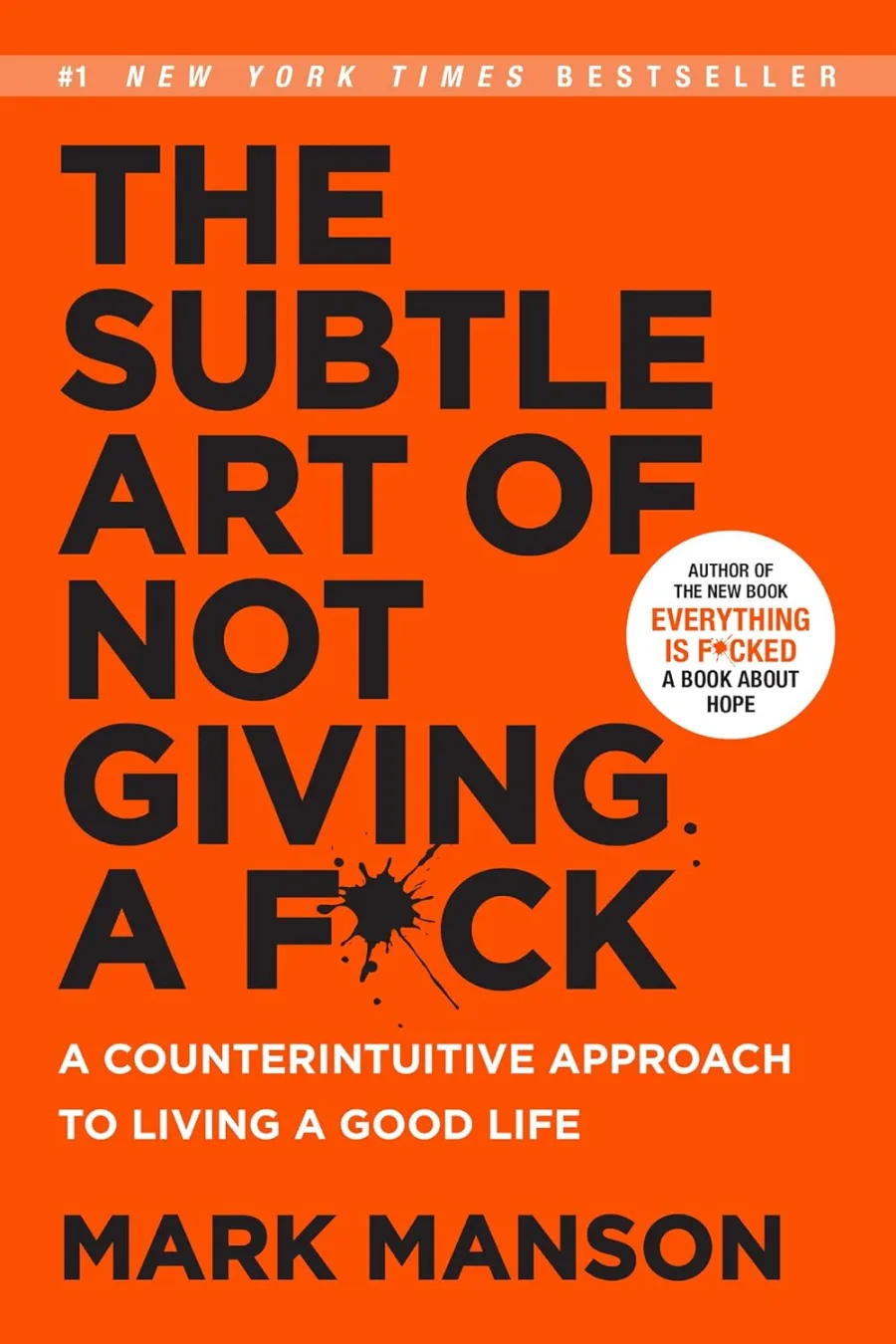
Download Cover Image
Do you want to download the full cover image for The Subtle Art of Not Giving a F*ck: A Counterintuitive Approach to Living a Good Life?