
The Body Keeps the Score: Brain, Mind, and Body in the Healing of Trauma
Paperback
• 464 Pages
• ₹ 799.00
• English
• 9780141978611
No ratings yet
| Publisher | Penguin |
|---|---|
| ISBN13 | 9780141978611 |
| ASIN/SKU | 0141978619 |
| Book Format | Paperback |
| Language | English |
| Pages | 464 |
| List Price | ₹ 799.00 |
| Publishing Date | 24/09/2015 |
| Dimensions | 12.9 x 2.5 x 19.9 cm |
| Weight | 750 Grams |
| Book Code | BD00055097 |
Buy this Book
Amazon Stores
Ebook Stores
Other Stores
Discover The Body Keeps the Score: Brain, Mind, and Body in the Healing of Trauma by Bessel van der Kolk. This book is published by Penguin in Paperback format, ISBN 9780141978611, ASIN 0141978619, under Health, Fitness and Dieting, Mental and Spiritual Healing, Meditation.
Book Description
THE INTERNATIONAL BESTSELLER - OVER 3 MILLION COPIES SOLD
'Dr. van der Kolk's masterpiece combines the boundless curiosity of the scientist, the erudition of the scholar, and the passion of the truth teller' Judith Herman, author of Trauma and Recovery
The effects of trauma can be devastating for sufferers, their families and future generations. Here one of the world's experts on traumatic stress offers a bold new paradigm for treatment, moving away from standard talking and drug therapies and towards an alternative approach that heals mind, brain and body.
'Fascinating, hard to put down, and filled with powerful case histories. . . . the most important series of breakthroughs in mental health in the last thirty years' Norman Doidge, author of The Brain that Changes Itself
'An astonishing and important book. The trauma Bible. I cannot recommend it enough for anyone struggling with...well...anything' Tara Westover
The Body Keeps Score has sold over 3 million copies since publication [Circana BookScan, April 2024]
Sunday Times (UK) and New York Times (USA) bestseller, March 2024
'Dr. van der Kolk's masterpiece combines the boundless curiosity of the scientist, the erudition of the scholar, and the passion of the truth teller' Judith Herman, author of Trauma and Recovery
The effects of trauma can be devastating for sufferers, their families and future generations. Here one of the world's experts on traumatic stress offers a bold new paradigm for treatment, moving away from standard talking and drug therapies and towards an alternative approach that heals mind, brain and body.
'Fascinating, hard to put down, and filled with powerful case histories. . . . the most important series of breakthroughs in mental health in the last thirty years' Norman Doidge, author of The Brain that Changes Itself
'An astonishing and important book. The trauma Bible. I cannot recommend it enough for anyone struggling with...well...anything' Tara Westover
The Body Keeps Score has sold over 3 million copies since publication [Circana BookScan, April 2024]
Sunday Times (UK) and New York Times (USA) bestseller, March 2024
Author Biography
Bessel van der Kolk (born 1943) is a Boston based psychiatrist noted for his research in the area of post-traumatic stress since the 1970s. His work focuses on the interaction of attachment, neurobiology, and developmental aspects of trauma’s effects on people. His major publication, the New York Times bestseller, 'The Body keeps the Score', talks about how the role of trauma in psychiatric illness has changed over the past 20 years; what we have learned about the ways the brain is shaped by traumatic experiences; how traumatic stress is a response of the entire organism and how that knowledge needs be integrated into healing practices.
Bio from Wikipedia, the free encyclopedia.
Bio from Wikipedia, the free encyclopedia.
Editorial Reviews
Editorial Reviews will be added soon…
Book Summary
The Body Keeps the Score: Brain, Mind, and Body in the Healing of Trauma by Bessel van der Kolk is a landmark book about the profound ways traumatic experiences can affect the whole human being. Drawing on more than three decades of clinical work and research, van der Kolk explains that trauma is not simply a painful memory stored in the mind. It can influence the brain, nervous system, emotions, physical sensations, relationships, behavior, and a person's basic sense of safety. The book combines neuroscience, clinical experiences, patient stories, history, and discussions of different therapeutic approaches to argue that healing trauma requires more than simply talking about what happened.
The central idea of the book is captured by its title: the body keeps the score. When a person experiences something overwhelming, particularly when they feel helpless or unable to escape, the experience can continue to influence the body and nervous system long after the danger has passed. A person may intellectually understand that an event is over, yet their body may continue to respond as though danger is present. They may become easily startled, emotionally numb, constantly tense, unable to sleep, overwhelmed by certain sensations, or unable to trust other people. Trauma can therefore create a painful gap between knowing that one is safe and actually feeling safe.
Van der Kolk begins by challenging the narrow understanding of trauma that focuses only on obvious memories and conscious thoughts. Traditional approaches have often treated psychological suffering primarily as a problem of the mind. His work emphasizes that traumatic stress can also become deeply embedded in bodily responses. The nervous system may remain prepared for danger, while ordinary situations begin to trigger reactions associated with the original experience. The survivor may therefore react intensely to something that another person considers insignificant, not because the person is choosing to overreact, but because the body has learned to detect danger.
One of the book's most important contributions is its explanation of the survival response. When people encounter overwhelming danger, the brain and body rapidly organize themselves around survival. The person may fight, flee, freeze, or become emotionally disconnected. These responses can be extremely useful during an actual crisis. The difficulty arises when the nervous system continues operating as though the emergency has not ended.
Trauma can leave people trapped between two extremes. Some remain hyper-alert, anxious, angry, impulsive, or constantly prepared for danger. Others become numb and disconnected from their emotions and physical sensations. Van der Kolk describes how trauma can interfere with concentration, emotional regulation, memory, pleasure, relationships, and the ability to feel comfortable inside one's own body.
This helps explain why trauma survivors sometimes behave in ways that appear confusing even to themselves. Someone may desperately want intimacy but become frightened when another person comes close. Another person may crave safety while repeatedly entering dangerous relationships. Someone may understand intellectually that a situation is harmless but experience overwhelming fear when confronted with a reminder of the past. The book encourages readers to see these reactions through the lens of survival rather than simply labeling them as irrational or self-destructive.
A particularly important theme is memory. Van der Kolk explains that traumatic memories may not always behave like ordinary autobiographical memories. A normal memory can usually be placed in a clear context: something happened in the past, it happened at a particular time, and it is over. Traumatic experiences can be encoded differently. Fragments of sensation, emotion, images, sounds, or bodily reactions may return without the complete feeling that the event belongs to the past.
This is one reason a survivor can feel as though something is happening again rather than merely remembering it. A smell, sound, physical sensation, facial expression, or particular situation can activate an old survival response. The person's body may react before conscious thought has time to understand why. The past, in such moments, becomes strangely present.
Van der Kolk also emphasizes the role of dissociation. When an experience becomes unbearable, the mind may protect itself by disconnecting from what is happening. A person may feel detached from the body, emotionally numb, unreal, or as though they are watching themselves from outside. Dissociation can be a powerful survival mechanism during overwhelming experiences, especially when escape is impossible. But a strategy that protects someone during danger can later interfere with ordinary life.
The book pays particular attention to childhood trauma. Children depend on adults for protection, regulation, and a sense of safety. When caregivers themselves become sources of fear, neglect, violence, or instability, the child faces a profound contradiction: the person they need for security may simultaneously be the person they fear.
Such experiences can affect the development of attachment and emotional regulation. Children may learn that relationships are unpredictable or dangerous. They may have difficulty identifying and expressing feelings, trusting others, controlling impulses, or developing a stable sense of self. These patterns can continue into adulthood if they are not understood and addressed.
This leads to one of the book's central insights: relationships can both create trauma and help heal it. Human beings regulate themselves partly through connection with other people. Safe relationships can provide experiences of being seen, understood, protected, and accepted. Conversely, relationships marked by violence, neglect, manipulation, or unpredictability can reinforce a sense of danger.
Van der Kolk therefore places considerable importance on creating environments where traumatized people can experience genuine safety. Healing is not simply about removing symptoms. It is about helping people regain the ability to participate in life, form relationships, experience pleasure, and feel at home in their own bodies.
The book also examines the limitations of conventional approaches to trauma treatment. Van der Kolk does not argue that talking therapy or medication is always useless. Rather, he questions the assumption that one treatment method can adequately address every form of trauma. A person may understand intellectually why they react in certain ways and still remain trapped in bodily patterns that cannot be changed through explanation alone.
This leads to the book's broader argument for integrated approaches to healing. Van der Kolk explores a range of methods, including psychotherapy, neurofeedback, mindfulness, yoga, movement, theater, meditation, and other body-oriented or experiential approaches. The official description of the book similarly emphasizes that different people may benefit from different interventions and that there is no single treatment that works for everyone.
One of the approaches discussed is neurofeedback, which aims to help people develop greater regulation of brain activity. Van der Kolk describes research and clinical experiences suggesting that some traumatized individuals may benefit from learning to regulate states of arousal and attention. The larger principle is that the brain is not necessarily permanently fixed by traumatic experience. Its functioning can change.
This idea introduces the concept of neuroplasticity. The brain is capable of changing in response to experience. Trauma can shape the brain in harmful ways, but new experiences can also create different patterns. Healing therefore becomes a process of giving the brain and body repeated experiences of safety, regulation, connection, and agency.
Another major theme is becoming aware of the body. Trauma can cause people to disconnect from physical sensations because the body itself has become associated with pain, fear, or helplessness. Yet reconnecting with bodily experience can become an important part of recovery. Instead of automatically suppressing sensations, a person can gradually learn to notice them without being overwhelmed.
This is where van der Kolk's discussion of yoga and mindfulness becomes important. These practices can help people develop awareness of breathing, movement, tension, posture, and internal sensations. The goal is not simply relaxation. It is learning that one can experience a physical sensation without automatically being controlled by it. Over time, this can strengthen a sense of bodily ownership.
The book also discusses theater and movement as ways of recovering agency. Trauma frequently involves helplessness: something happened to the person, and they could not stop it. Therapeutic activities that involve movement, expression, play, or coordinated action can provide experiences in which the individual once again makes choices with the body.
This idea of agency is central to the book. Healing means more than remembering what happened. It means regaining the feeling that “I am here, I have choices, and I can influence what happens next.” Trauma can make people feel as though their lives are controlled by the past. Recovery gradually returns a sense of authorship over the present.
Van der Kolk also highlights the importance of play, particularly for children. Play allows children to experiment, create, take risks, form relationships, and experience control in a safe setting. For traumatized children, structured play can offer experiences that counter helplessness. It can provide a way of expressing emotions that cannot easily be communicated through words.
The book's discussion of children also leads to a larger social question: how should society respond to traumatized people? Van der Kolk argues that trauma should not be understood only as an individual medical problem. Families, schools, communities, and social institutions can either reinforce or reduce trauma. A child who is punished repeatedly for behavior rooted in traumatic stress may become even more dysregulated. A child who receives safety, consistency, understanding, and appropriate support has a different opportunity for recovery.
Another important concept is the restoration of pleasure and engagement. Trauma does not only create fear. It can also diminish a person's ability to enjoy life. People may feel emotionally flat, disconnected, or unable to become absorbed in ordinary experiences. The goal of recovery is therefore not merely to stop nightmares or panic attacks. It is to regain the capacity for curiosity, intimacy, creativity, joy, and meaningful participation in life.
This makes the book ultimately more hopeful than its difficult subject matter might suggest. Van der Kolk spends considerable time describing suffering, but his larger message is that human beings possess remarkable capacities for adaptation and recovery. The brain and body can change, relationships can provide corrective experiences, and people can develop new ways of responding to the present.
At the same time, the book should not be read as a guarantee that any particular therapy will cure trauma. Its treatment discussions are based heavily on van der Kolk's clinical experience and research interests, and some of the scientific claims and treatment approaches presented in the book have been debated or criticized by other researchers. The book is best understood as an influential perspective on trauma rather than as a substitute for individualized professional care.
The deepest lesson of The Body Keeps the Score is that healing requires reconnecting the parts of ourselves that trauma has separated. The mind may know one thing while the body feels another. A person may understand that the danger is gone while still living physiologically as though it is present. Recovery involves gradually bringing thoughts, emotions, bodily sensations, relationships, and choices back into a more integrated whole.
Ultimately, Bessel van der Kolk presents trauma not as a sign of personal weakness but as an understandable response to overwhelming experience. His work encourages compassion toward people whose reactions may otherwise seem strange, difficult, or self-defeating. Instead of asking only, “What is wrong with this person?” the book encourages us to ask, “What happened to this person, and how has that experience continued to shape the way they live?”
That shift in perspective is perhaps the book's most important contribution. Trauma can alter the brain, disturb relationships, distort memories, and make the present feel unsafe. But the story does not have to end there. Through safe relationships, greater bodily awareness, appropriate therapeutic support, meaningful activity, and repeated experiences of agency and connection, people can gradually learn that the danger belongs to the past and that the present can contain something different.
In the end, The Body Keeps the Score is a book about trauma, but even more deeply, it is a book about recovery and human resilience. Its central message is that healing is not simply forgetting the past. It is learning to inhabit the present again—to feel one's body without fear, to recognize emotions without being overwhelmed by them, to trust carefully, to form meaningful relationships, and to rediscover pleasure and purpose. Trauma may leave profound traces, but van der Kolk's account insists that those traces do not necessarily have to determine the rest of a person's life.
The central idea of the book is captured by its title: the body keeps the score. When a person experiences something overwhelming, particularly when they feel helpless or unable to escape, the experience can continue to influence the body and nervous system long after the danger has passed. A person may intellectually understand that an event is over, yet their body may continue to respond as though danger is present. They may become easily startled, emotionally numb, constantly tense, unable to sleep, overwhelmed by certain sensations, or unable to trust other people. Trauma can therefore create a painful gap between knowing that one is safe and actually feeling safe.
Van der Kolk begins by challenging the narrow understanding of trauma that focuses only on obvious memories and conscious thoughts. Traditional approaches have often treated psychological suffering primarily as a problem of the mind. His work emphasizes that traumatic stress can also become deeply embedded in bodily responses. The nervous system may remain prepared for danger, while ordinary situations begin to trigger reactions associated with the original experience. The survivor may therefore react intensely to something that another person considers insignificant, not because the person is choosing to overreact, but because the body has learned to detect danger.
One of the book's most important contributions is its explanation of the survival response. When people encounter overwhelming danger, the brain and body rapidly organize themselves around survival. The person may fight, flee, freeze, or become emotionally disconnected. These responses can be extremely useful during an actual crisis. The difficulty arises when the nervous system continues operating as though the emergency has not ended.
Trauma can leave people trapped between two extremes. Some remain hyper-alert, anxious, angry, impulsive, or constantly prepared for danger. Others become numb and disconnected from their emotions and physical sensations. Van der Kolk describes how trauma can interfere with concentration, emotional regulation, memory, pleasure, relationships, and the ability to feel comfortable inside one's own body.
This helps explain why trauma survivors sometimes behave in ways that appear confusing even to themselves. Someone may desperately want intimacy but become frightened when another person comes close. Another person may crave safety while repeatedly entering dangerous relationships. Someone may understand intellectually that a situation is harmless but experience overwhelming fear when confronted with a reminder of the past. The book encourages readers to see these reactions through the lens of survival rather than simply labeling them as irrational or self-destructive.
A particularly important theme is memory. Van der Kolk explains that traumatic memories may not always behave like ordinary autobiographical memories. A normal memory can usually be placed in a clear context: something happened in the past, it happened at a particular time, and it is over. Traumatic experiences can be encoded differently. Fragments of sensation, emotion, images, sounds, or bodily reactions may return without the complete feeling that the event belongs to the past.
This is one reason a survivor can feel as though something is happening again rather than merely remembering it. A smell, sound, physical sensation, facial expression, or particular situation can activate an old survival response. The person's body may react before conscious thought has time to understand why. The past, in such moments, becomes strangely present.
Van der Kolk also emphasizes the role of dissociation. When an experience becomes unbearable, the mind may protect itself by disconnecting from what is happening. A person may feel detached from the body, emotionally numb, unreal, or as though they are watching themselves from outside. Dissociation can be a powerful survival mechanism during overwhelming experiences, especially when escape is impossible. But a strategy that protects someone during danger can later interfere with ordinary life.
The book pays particular attention to childhood trauma. Children depend on adults for protection, regulation, and a sense of safety. When caregivers themselves become sources of fear, neglect, violence, or instability, the child faces a profound contradiction: the person they need for security may simultaneously be the person they fear.
Such experiences can affect the development of attachment and emotional regulation. Children may learn that relationships are unpredictable or dangerous. They may have difficulty identifying and expressing feelings, trusting others, controlling impulses, or developing a stable sense of self. These patterns can continue into adulthood if they are not understood and addressed.
This leads to one of the book's central insights: relationships can both create trauma and help heal it. Human beings regulate themselves partly through connection with other people. Safe relationships can provide experiences of being seen, understood, protected, and accepted. Conversely, relationships marked by violence, neglect, manipulation, or unpredictability can reinforce a sense of danger.
Van der Kolk therefore places considerable importance on creating environments where traumatized people can experience genuine safety. Healing is not simply about removing symptoms. It is about helping people regain the ability to participate in life, form relationships, experience pleasure, and feel at home in their own bodies.
The book also examines the limitations of conventional approaches to trauma treatment. Van der Kolk does not argue that talking therapy or medication is always useless. Rather, he questions the assumption that one treatment method can adequately address every form of trauma. A person may understand intellectually why they react in certain ways and still remain trapped in bodily patterns that cannot be changed through explanation alone.
This leads to the book's broader argument for integrated approaches to healing. Van der Kolk explores a range of methods, including psychotherapy, neurofeedback, mindfulness, yoga, movement, theater, meditation, and other body-oriented or experiential approaches. The official description of the book similarly emphasizes that different people may benefit from different interventions and that there is no single treatment that works for everyone.
One of the approaches discussed is neurofeedback, which aims to help people develop greater regulation of brain activity. Van der Kolk describes research and clinical experiences suggesting that some traumatized individuals may benefit from learning to regulate states of arousal and attention. The larger principle is that the brain is not necessarily permanently fixed by traumatic experience. Its functioning can change.
This idea introduces the concept of neuroplasticity. The brain is capable of changing in response to experience. Trauma can shape the brain in harmful ways, but new experiences can also create different patterns. Healing therefore becomes a process of giving the brain and body repeated experiences of safety, regulation, connection, and agency.
Another major theme is becoming aware of the body. Trauma can cause people to disconnect from physical sensations because the body itself has become associated with pain, fear, or helplessness. Yet reconnecting with bodily experience can become an important part of recovery. Instead of automatically suppressing sensations, a person can gradually learn to notice them without being overwhelmed.
This is where van der Kolk's discussion of yoga and mindfulness becomes important. These practices can help people develop awareness of breathing, movement, tension, posture, and internal sensations. The goal is not simply relaxation. It is learning that one can experience a physical sensation without automatically being controlled by it. Over time, this can strengthen a sense of bodily ownership.
The book also discusses theater and movement as ways of recovering agency. Trauma frequently involves helplessness: something happened to the person, and they could not stop it. Therapeutic activities that involve movement, expression, play, or coordinated action can provide experiences in which the individual once again makes choices with the body.
This idea of agency is central to the book. Healing means more than remembering what happened. It means regaining the feeling that “I am here, I have choices, and I can influence what happens next.” Trauma can make people feel as though their lives are controlled by the past. Recovery gradually returns a sense of authorship over the present.
Van der Kolk also highlights the importance of play, particularly for children. Play allows children to experiment, create, take risks, form relationships, and experience control in a safe setting. For traumatized children, structured play can offer experiences that counter helplessness. It can provide a way of expressing emotions that cannot easily be communicated through words.
The book's discussion of children also leads to a larger social question: how should society respond to traumatized people? Van der Kolk argues that trauma should not be understood only as an individual medical problem. Families, schools, communities, and social institutions can either reinforce or reduce trauma. A child who is punished repeatedly for behavior rooted in traumatic stress may become even more dysregulated. A child who receives safety, consistency, understanding, and appropriate support has a different opportunity for recovery.
Another important concept is the restoration of pleasure and engagement. Trauma does not only create fear. It can also diminish a person's ability to enjoy life. People may feel emotionally flat, disconnected, or unable to become absorbed in ordinary experiences. The goal of recovery is therefore not merely to stop nightmares or panic attacks. It is to regain the capacity for curiosity, intimacy, creativity, joy, and meaningful participation in life.
This makes the book ultimately more hopeful than its difficult subject matter might suggest. Van der Kolk spends considerable time describing suffering, but his larger message is that human beings possess remarkable capacities for adaptation and recovery. The brain and body can change, relationships can provide corrective experiences, and people can develop new ways of responding to the present.
At the same time, the book should not be read as a guarantee that any particular therapy will cure trauma. Its treatment discussions are based heavily on van der Kolk's clinical experience and research interests, and some of the scientific claims and treatment approaches presented in the book have been debated or criticized by other researchers. The book is best understood as an influential perspective on trauma rather than as a substitute for individualized professional care.
The deepest lesson of The Body Keeps the Score is that healing requires reconnecting the parts of ourselves that trauma has separated. The mind may know one thing while the body feels another. A person may understand that the danger is gone while still living physiologically as though it is present. Recovery involves gradually bringing thoughts, emotions, bodily sensations, relationships, and choices back into a more integrated whole.
Ultimately, Bessel van der Kolk presents trauma not as a sign of personal weakness but as an understandable response to overwhelming experience. His work encourages compassion toward people whose reactions may otherwise seem strange, difficult, or self-defeating. Instead of asking only, “What is wrong with this person?” the book encourages us to ask, “What happened to this person, and how has that experience continued to shape the way they live?”
That shift in perspective is perhaps the book's most important contribution. Trauma can alter the brain, disturb relationships, distort memories, and make the present feel unsafe. But the story does not have to end there. Through safe relationships, greater bodily awareness, appropriate therapeutic support, meaningful activity, and repeated experiences of agency and connection, people can gradually learn that the danger belongs to the past and that the present can contain something different.
In the end, The Body Keeps the Score is a book about trauma, but even more deeply, it is a book about recovery and human resilience. Its central message is that healing is not simply forgetting the past. It is learning to inhabit the present again—to feel one's body without fear, to recognize emotions without being overwhelmed by them, to trust carefully, to form meaningful relationships, and to rediscover pleasure and purpose. Trauma may leave profound traces, but van der Kolk's account insists that those traces do not necessarily have to determine the rest of a person's life.
Sample Chapters
Sample Chapters will be added soon…
Reader Reviews
No reviews yet.
The Body Keeps the Score: Brain, Mind, and Body in the Healing of Trauma
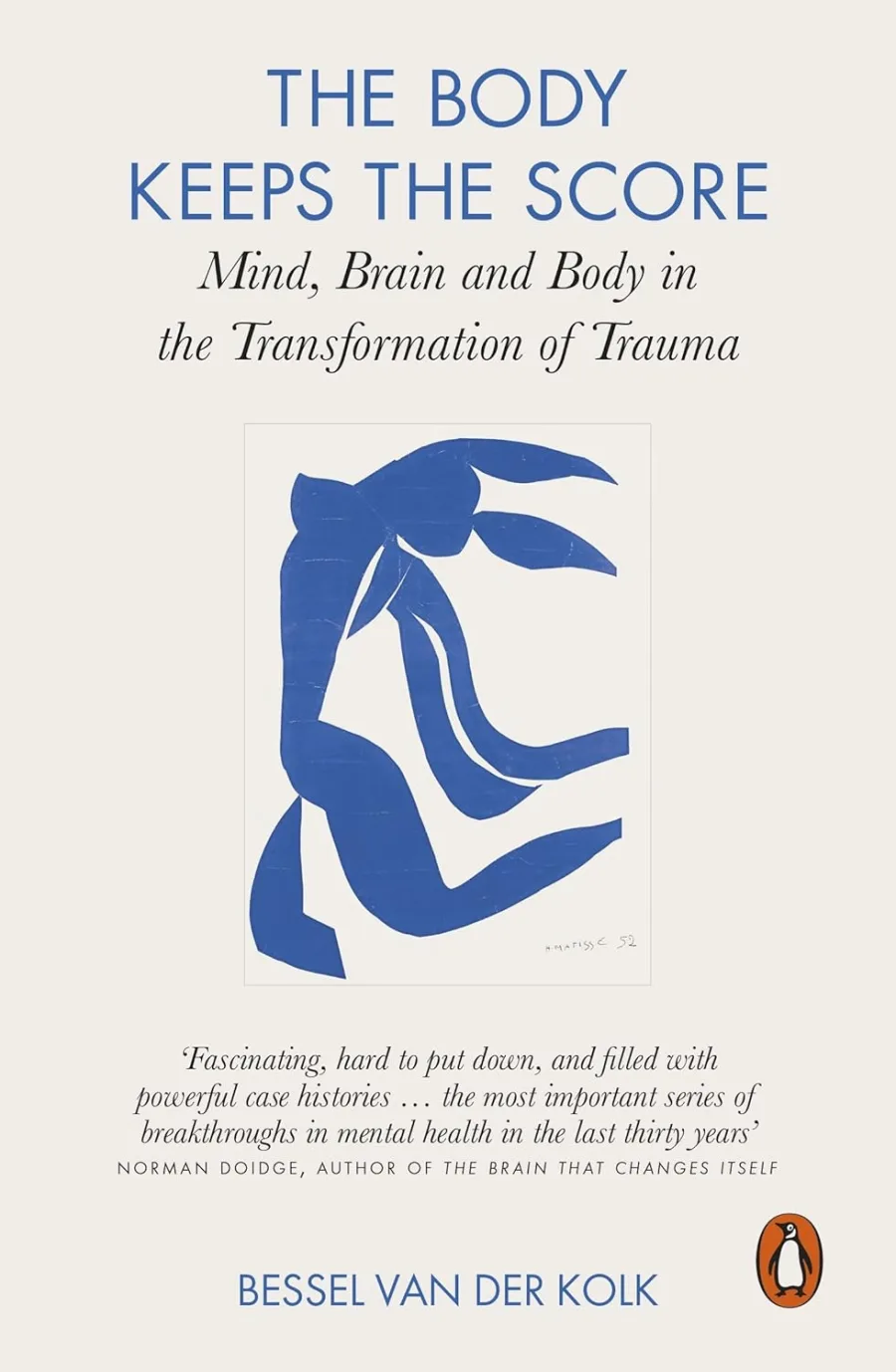
Download Cover Image
Do you want to download the full cover image for The Body Keeps the Score: Brain, Mind, and Body in the Healing of Trauma?