
The Monk Who Sold His Ferrari
Paperback
• 198 Pages
• ₹ 299.00
• English
• 9788179921623
No ratings yet
| Publisher | Jaico Publishing House |
|---|---|
| ISBN13 | 9788179921623 |
| ASIN/SKU | 817992162X |
| Book Format | Paperback |
| Language | English |
| Pages | 198 |
| List Price | ₹ 299.00 |
| Publishing Date | 25/09/2003 |
| Dimensions | 13.34 x 1.27 x 20.96 cm |
| Weight | 272 g |
| Book Code | BD00055092 |
Buy this Book
Amazon Stores
Ebook Stores
Other Stores
Discover The Monk Who Sold His Ferrari by Robin Sharma. This book is published by Jaico Publishing House in Paperback format, ISBN 9788179921623, ASIN 817992162X, under Literature and Fiction, Health, Fitness and Nutrition, Religion and Spirituality.
Book Description
A renowned inspirational fiction, The Monk Who Sold His Ferrari is a revealing story that offers the readers a simple yet profound way to live life. The plot of this story revolves around Julian Mantle, a lawyer who has made his fortune and name in the profession. A sudden heart-attack creates havoc in the successful lawyer?s life. Jolted by the sudden onset of the illness, his practice comes to a standstill. He ponders over material success being worth it all, renounces all of it and leaves for India. A visit to India about a spiritual awakening that opens up new vistas and Julian begins to view life in a different perspective. He decides to live his life once again but in a way that is much more fulfilling and meaningful than before. In the book, the reader goes through a spiritual journey and into a very old culture that has gathered much wisdom over the millennia. The book advocates about how to live happily, think deep and rightly, value time and relationships, be more disciplined, follow the heart?s call and live every moment of the life. Written in simple words, the book has turned out to be a bestseller and is more than just an endearing story. Through storytelling, Robin Sharma showcases the miracles and wonders of living a fulfilling life. In the process, the book introduces readers to enlightening yet simple principles that vouch to make life better, happier and more meaningful. A bestselling novel, what readers all over the globe appreciate about this book is its deft amalgam of the philosophies from both western and eastern worlds. The book has been followed by important personalities around the world. About the Author Robin Sharma, the bestselling author of 'The Monk Who Sold His Ferrari', first published in 1999, is an International Leadership Professional Guru who is credited with having written 15 books on leadership. He has been guiding people to live a better life, by drawing inspiration from his own life experiences. The Leader Who Had No Title, The Leader Who Had No Title, The Greatness Guide and The Saint and The Saint are among his best books. He heads the Sharma Leadership International Inc, a firm that trains people in leadership. A former litigation lawyer, Robin holds a law degree from Dalhousie Law School, Canada. This book along with The Greatness Guide has been among the world?s bestsellers and has been translated in as many as 70 languages all over the world.
Author Biography
Robin Sharma is one of the world's premier speakers on Leadership and Personal Mastery, recently named one of the World's Top Leadership Gurus. As a presenter, Sharma has the rare ability to electrify an audience yet deliver uncommonly original and useful insights that lead to individuals doing their best work, teams providing superb results and organizations becoming unbeatable.
For nearly 20 years, many of the most well-known organizations on the planet, ranging from Nike, GE, Microsoft, FedEx, PwC, HP and Oracle to NASA, Yale University and YPO have chosen Robin Sharma for their most important events, when nothing less than a world-class speaker will do.
Sharma's books such as The Leader Who Had No Title have topped bestseller lists internationally and his social media posts reach over six hundred million people a year, making him a true global phenomenon for helping people do brilliant work, thrive amid change and realize their highest leadership capacities within the organization so that personal responsibility, productivity, ingenuity and mastery soars.
Sharma has been ranked as one of the Top 5 Leadership Gurus in the World in an independent survey of over 22,000 businesspeople and appears on platforms with other luminaries such as Richard Branson, Bill Clinton, Jack Welch and Shaquille O'Neill.
For nearly 20 years, many of the most well-known organizations on the planet, ranging from Nike, GE, Microsoft, FedEx, PwC, HP and Oracle to NASA, Yale University and YPO have chosen Robin Sharma for their most important events, when nothing less than a world-class speaker will do.
Sharma's books such as The Leader Who Had No Title have topped bestseller lists internationally and his social media posts reach over six hundred million people a year, making him a true global phenomenon for helping people do brilliant work, thrive amid change and realize their highest leadership capacities within the organization so that personal responsibility, productivity, ingenuity and mastery soars.
Sharma has been ranked as one of the Top 5 Leadership Gurus in the World in an independent survey of over 22,000 businesspeople and appears on platforms with other luminaries such as Richard Branson, Bill Clinton, Jack Welch and Shaquille O'Neill.
Editorial Reviews
Everyone loves a good fable, and this is certainly one. The protagonist is Julian Mantle, a high-profile attorney with a whacked-out schedule and a shameful set of spiritual priorities. Of course it takes a crisis (heart attack) to give Mantle pause. And pause he does--suddenly selling all his beloved possessions to trek India in pursuit of a meaningful existence. The Himalayan gurus along the way give simple advice, such as, "What lies behind you and what lies before you is nothing compared to what lies within you." Yet it is easy to forgive the story's simplicity because each kernel of wisdom is framed to address the persistent angst of Western white-collar professionals.
Here is the story of Julian Mantle, a superstar lawyer whose out-of-balance lifestyle leads him to a near-fatal heart attack in a packed courtroom. His physical collapse brings him into a spiritual crisis that forces him to confront the condition of his life. Hoping to find happiness and fulfillment, he embarks upon an extraordinary odyssey to an ancient culture, where he discovers a powerful system to release the potential of his mind, body, and soul and learns to live with passion, purpose, and peace. Brilliantly blending ancient spiritual wisdom of the east with contemporary success principles of the West, this inspiring tale provides a step-by-step approach to living with greater courage, balance, abundance and joy.
Here is the story of Julian Mantle, a superstar lawyer whose out-of-balance lifestyle leads him to a near-fatal heart attack in a packed courtroom. His physical collapse brings him into a spiritual crisis that forces him to confront the condition of his life. Hoping to find happiness and fulfillment, he embarks upon an extraordinary odyssey to an ancient culture, where he discovers a powerful system to release the potential of his mind, body, and soul and learns to live with passion, purpose, and peace. Brilliantly blending ancient spiritual wisdom of the east with contemporary success principles of the West, this inspiring tale provides a step-by-step approach to living with greater courage, balance, abundance and joy.
Book Summary
Robin Sharma’s The Monk Who Sold His Ferrari is a powerful fable that explores the profound journey of Julian Mantle, a high-powered, workaholic lawyer who experiences a life-altering heart attack in the middle of a crowded courtroom. This health crisis serves as a brutal wake-up call, forcing him to confront the emptiness of his success-driven existence. Seeking a deeper purpose, Julian abandons his opulent lifestyle, sells his prized red Ferrari, and travels to the Himalayas in search of the sages of Sivana. The book chronicles the wisdom he gains from these monks and how he passes it on to his former protégé, John, through an intense, transformative conversation.
The core of the book is structured around seven essential virtues that form the basis of a truly meaningful life. The first of these is the mastery of the mind. The monks compare the mind to a beautiful garden; if you take care of it and nourish it, it will blossom beyond your wildest dreams, but if you allow weeds to grow—in the form of negative thoughts and anxieties—it will eventually stifle your potential. Julian emphasizes that we are what we think, and by practicing constant vigilance over our mental state, we can cultivate peace and clarity. This is often illustrated through the imagery of a lighthouse, which remains steady and bright despite the stormy chaos surrounding it.
The second virtue is the pursuit of purpose. The monks teach that the purpose of life is a life of purpose. Most people spend their lives chasing external rewards, like wealth or status, without ever defining what truly gives their lives meaning. When we fail to set a vision for our lives, we become victims of circumstance rather than architects of our own destiny. Julian encourages readers to write down their life goals and visualize them daily. This creates a "magnetic" effect, drawing us toward the life we truly desire while filtering out the distractions that lead us astray.
The third virtue is the practice of Kaizen, a Japanese term for continuous, never-ending improvement. The sages believe that to master your life, you must first master yourself. This involves a daily commitment to self-reflection and personal growth. Whether it is through reading, learning new skills, or physical exercise, we should strive to be one percent better every day. By consistently raising the bar for ourselves, we build the discipline necessary to tackle the challenges of life with grace and resilience.
Living with discipline is the fourth virtue, described through the metaphor of a Vow of Silence. Discipline is not about restriction; it is about building the mental strength to act in alignment with your values. Julian explains that the "willpower" required to achieve greatness is like a muscle—the more you use it, the stronger it becomes. By keeping small promises to ourselves, we develop the integrity needed to keep larger commitments to others and to our own dreams.
The fifth virtue centers on the respect for our time. The monks teach that time is our most precious, non-renewable resource, yet most of us squander it on trivial tasks. To live a rich life, we must learn to simplify our days and focus only on the activities that contribute to our long-term vision. This involves being ruthless about saying "no" to things that don't serve our purpose. A simple life, in this context, is not one of poverty, but one of focus, where we prioritize the moments that bring us closer to our true potential.
The sixth virtue is the self-less service to others. Julian explains that the secret to lasting happiness is not what you gain, but what you give. By helping others and leaving the world a little better than we found it, we create a legacy that outlives us. This acts as a profound antidote to the ego and the shallow pursuit of material wealth. Serving others connects us to the universal flow of life and provides a sense of fulfillment that no promotion or bank account balance could ever offer.
Finally, the seventh virtue is the practice of living in the present. We often trap ourselves in the regrets of the past or the anxieties of the future, effectively missing the beauty that exists in the "now." The monks remind us that the present moment is all we ever truly have. By embracing the beauty of the current moment—even in mundane tasks—we cultivate gratitude and joy. This doesn't mean ignoring the future, but rather experiencing life as it unfolds with a sense of wonder and presence.
By the end of the narrative, the transformation of Julian Mantle serves as a mirror for the reader. It is not necessarily about selling all your possessions and moving to a mountain range, but about shifting your perspective on what truly counts. The book argues that wealth is not defined by what we own, but by the richness of our character and the depth of our experiences. Through Julian’s journey, Sharma reminds us that life is short and fragile, and that we have the power to redefine our existence at any moment. By integrating these seven virtues into our daily routines, we can move from a life of frantic busyness to one of calm, purpose, and deep, enduring satisfaction.
The core of the book is structured around seven essential virtues that form the basis of a truly meaningful life. The first of these is the mastery of the mind. The monks compare the mind to a beautiful garden; if you take care of it and nourish it, it will blossom beyond your wildest dreams, but if you allow weeds to grow—in the form of negative thoughts and anxieties—it will eventually stifle your potential. Julian emphasizes that we are what we think, and by practicing constant vigilance over our mental state, we can cultivate peace and clarity. This is often illustrated through the imagery of a lighthouse, which remains steady and bright despite the stormy chaos surrounding it.
The second virtue is the pursuit of purpose. The monks teach that the purpose of life is a life of purpose. Most people spend their lives chasing external rewards, like wealth or status, without ever defining what truly gives their lives meaning. When we fail to set a vision for our lives, we become victims of circumstance rather than architects of our own destiny. Julian encourages readers to write down their life goals and visualize them daily. This creates a "magnetic" effect, drawing us toward the life we truly desire while filtering out the distractions that lead us astray.
The third virtue is the practice of Kaizen, a Japanese term for continuous, never-ending improvement. The sages believe that to master your life, you must first master yourself. This involves a daily commitment to self-reflection and personal growth. Whether it is through reading, learning new skills, or physical exercise, we should strive to be one percent better every day. By consistently raising the bar for ourselves, we build the discipline necessary to tackle the challenges of life with grace and resilience.
Living with discipline is the fourth virtue, described through the metaphor of a Vow of Silence. Discipline is not about restriction; it is about building the mental strength to act in alignment with your values. Julian explains that the "willpower" required to achieve greatness is like a muscle—the more you use it, the stronger it becomes. By keeping small promises to ourselves, we develop the integrity needed to keep larger commitments to others and to our own dreams.
The fifth virtue centers on the respect for our time. The monks teach that time is our most precious, non-renewable resource, yet most of us squander it on trivial tasks. To live a rich life, we must learn to simplify our days and focus only on the activities that contribute to our long-term vision. This involves being ruthless about saying "no" to things that don't serve our purpose. A simple life, in this context, is not one of poverty, but one of focus, where we prioritize the moments that bring us closer to our true potential.
The sixth virtue is the self-less service to others. Julian explains that the secret to lasting happiness is not what you gain, but what you give. By helping others and leaving the world a little better than we found it, we create a legacy that outlives us. This acts as a profound antidote to the ego and the shallow pursuit of material wealth. Serving others connects us to the universal flow of life and provides a sense of fulfillment that no promotion or bank account balance could ever offer.
Finally, the seventh virtue is the practice of living in the present. We often trap ourselves in the regrets of the past or the anxieties of the future, effectively missing the beauty that exists in the "now." The monks remind us that the present moment is all we ever truly have. By embracing the beauty of the current moment—even in mundane tasks—we cultivate gratitude and joy. This doesn't mean ignoring the future, but rather experiencing life as it unfolds with a sense of wonder and presence.
By the end of the narrative, the transformation of Julian Mantle serves as a mirror for the reader. It is not necessarily about selling all your possessions and moving to a mountain range, but about shifting your perspective on what truly counts. The book argues that wealth is not defined by what we own, but by the richness of our character and the depth of our experiences. Through Julian’s journey, Sharma reminds us that life is short and fragile, and that we have the power to redefine our existence at any moment. By integrating these seven virtues into our daily routines, we can move from a life of frantic busyness to one of calm, purpose, and deep, enduring satisfaction.
Sample Chapters
Sample Chapters will be added soon…
Reader Reviews
No reviews yet.
The Monk Who Sold His Ferrari
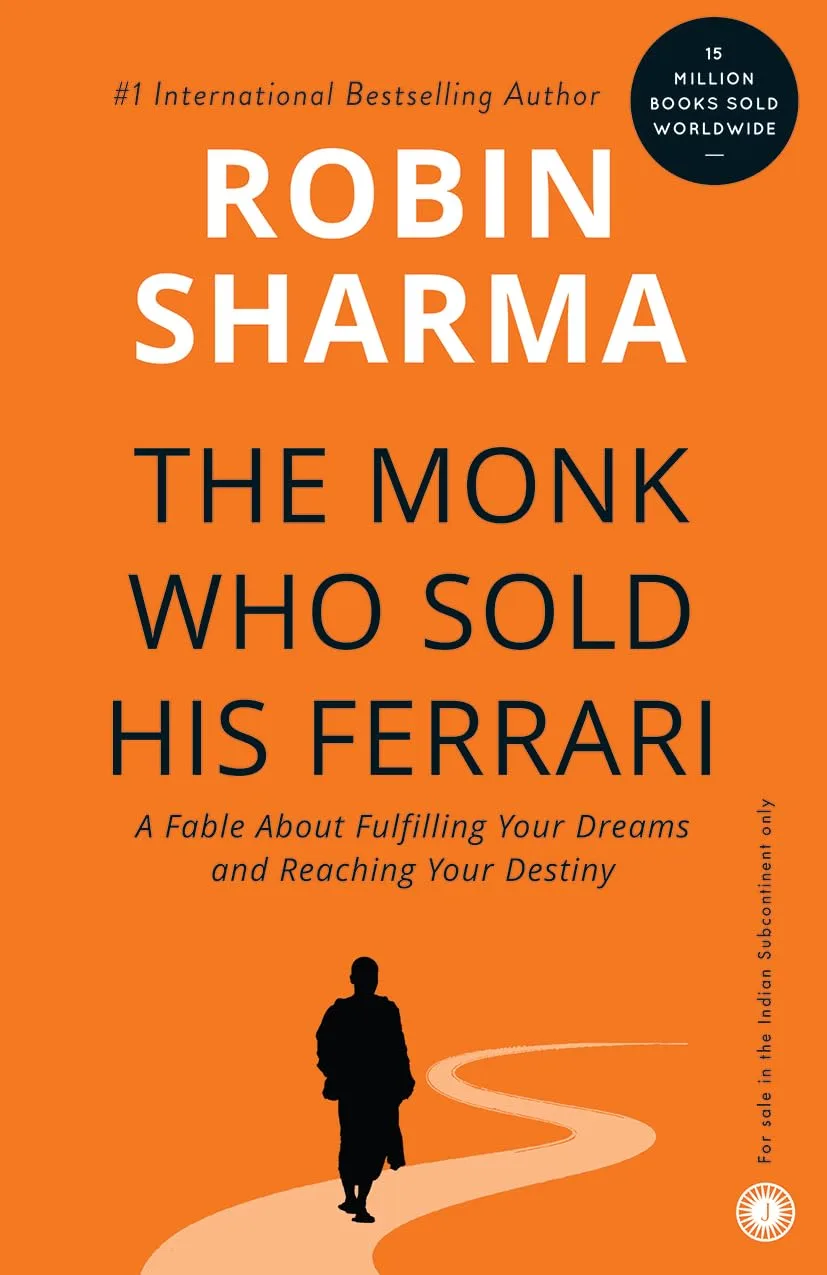
Download Cover Image
Do you want to download the full cover image for The Monk Who Sold His Ferrari?