
The Kite Runner (Certified reading)
Paperback
• 352 Pages
• ₹ 355.00
• English
• 9781408850251
No ratings yet
| Publisher | Bloomsbury Paperbacks |
|---|---|
| ISBN13 | 9781408850251 |
| ASIN/SKU | 1408850257 |
| Book Format | Paperback |
| Language | English |
| Pages | 352 |
| List Price | ₹ 355.00 |
| Publishing Date | 21/05/2013 |
| Dimensions | 20.3 x 25.4 x 4.7 cm |
| Weight | 430 g |
| Book Code | BD00055085 |
Buy this Book
Amazon Stores
Ebook Stores
Other Stores
Discover The Kite Runner (Certified reading) by Khaled Hosseini. This book is published by Bloomsbury Paperbacks in Paperback format, ISBN 9781408850251, ASIN 1408850257, under Literature and Fiction, Contemporary Fiction.
Book Description
Afghanistan, 1975: Twelve-year-old Amir is desperate to win the local kite-fighting tournament, and his loyal friend Hassan promises to help him. But neither of the boys can foresee what will happen to Hassan that afternoon—an event that will shatter their lives.
After the Russian invasion forces Amir's family to flee to America, he grows up in a new world but realises that one day he must return to Afghanistan, now under Taliban rule, to find the one thing his new life cannot grant him: redemption.
After the Russian invasion forces Amir's family to flee to America, he grows up in a new world but realises that one day he must return to Afghanistan, now under Taliban rule, to find the one thing his new life cannot grant him: redemption.
Author Biography
Khaled Hosseini was born in Kabul, Afghanistan and moved to the United States in 1980. His first novel, The Kite Runner,
was an international bestseller, published in thirty-four countries. In
2006 he was named a US goodwill envoy to the United Nations Refugee
Agency. He lives in northern California.
was an international bestseller, published in thirty-four countries. In
2006 he was named a US goodwill envoy to the United Nations Refugee
Agency. He lives in northern California.
Editorial Reviews
Editorial Reviews will be added soon…
Book Summary
Khaled Hosseini’s deeply moving debut novel, The Kite Runner, is a sweeping story of friendship, betrayal, and the devastating price of redemption, set against the tragic backdrop of Afghanistan’s tumultuous modern history. Spanning several decades and two continents, the narrative follows the life of Amir, a young boy growing up in the privileged Wazir Akbar Khan district of Kabul, whose choices as a child haunt him well into adulthood. The novel meshes intensely personal domestic drama with broad political upheaval, offering readers an intimate look at a country being torn apart by shifting regimes, war, and extremism. At its core, however, it is a profoundly human story about the agonizing weight of guilt and the desperate lengths to which one will go to finally make amends.
The early chapters paint a vivid, culturally rich picture of Kabul in the 1970s, a time of relative peace before the Soviet invasion. Amir lives a life of luxury with his wealthy, imposing father, affectionately known as Baba, a man whose formidable presence constantly makes Amir feel inadequate. Living in the mud hut on their property is Ali, Baba’s lifelong servant, and Ali’s son, Hassan. Despite the rigid ethnic and class divisions of Afghan society—Amir is a Sunni Pashtun, while Hassan is a marginalized Shi'a Hazara—the two boys are inseparable companions. Hassan is fiercely loyal, inherently brave, and possesses an unwavering moral compass, often serving as a stark contrast to Amir’s insecurities and moral cowardice. Their bond is strongest during the winter months when they participate in the city's highly competitive kite-fighting tournaments, an activity where Amir flies the kite and Hassan expertly tracks down the defeated ones.
The turning point of the novel, and the moment that shatters their innocence forever, occurs during the pivotal winter kite tournament of 1975. Desperate to win the tournament and finally earn his father’s elusive affection, Amir successfully cuts down the final kite. True to form, Hassan runs to retrieve it for him, shouting his famous pledge of devotion. However, in a secluded alleyway, Hassan is cornered by a vicious, sociopathic neighborhood bully named Assef. When Amir goes searching for his friend, he witnesses Assef brutally assaulting Hassan. Paralyzed by fear and an overriding desire to bring the winning kite back to his father, Amir chooses to hide and does nothing to intervene. This single act of cowardice poisons everything. Unable to bear the crushing weight of his guilt and the constant visual reminder of his betrayal, Amir manipulatively frames Hassan for theft, forcing Ali and Hassan to leave Baba’s household forever, permanently severing the boys' friendship.
Years later, the political landscape of Afghanistan violently shifts. The Soviet Union invades, transforming Kabul into a war zone and forcing Amir and Baba to flee their homeland in a harrowing journey. They eventually settle in Fremont, California, where the dynamic between father and son drastically changes. Baba, once a powerful and respected figure in Kabul, is reduced to working at a gas station, while Amir adapts to American culture, eventually graduating from college, marrying a kind and supportive woman named Soraya, and achieving his dream of becoming a published novelist. Yet, despite his seemingly successful new life and his father's eventual peaceful passing, Amir is unable to escape the ghosts of his past. The unatoned sins of his childhood remain an invisible burden, preventing him from ever truly finding peace.
The path to redemption abruptly opens in 2001 when Amir receives an unexpected phone call from Rahim Khan, his father's closest friend and a father figure from his youth. Rahim Khan, dying in Pakistan, asks Amir to visit him, offering a cryptic but irresistible promise: "There is a way to be good again." Upon arriving in Peshawar, Amir learns devastating truths that completely upend his understanding of his family history. Rahim Khan reveals that Hassan was not just a servant, but Baba’s illegitimate son, making him Amir’s half-brother. Furthermore, Amir learns that Hassan and his wife have been brutally executed by the Taliban in Kabul, leaving behind a young son named Sohrab, who is now trapped in a dilapidated orphanage.
To finally atone for his lifelong cowardice, Amir embarks on a terrifying journey back into the heart of a radically changed, Taliban-controlled Afghanistan to rescue Sohrab. The mission forces him to confront the horrors of the new regime and, ultimately, brings him face-to-face with his childhood tormentor, Assef, who has now become a high-ranking Taliban official. In a brutal, bloody confrontation to secure Sohrab's freedom, Amir takes the physical beating he feels he has deserved since 1975, finding a strange, profound sense of peace in the pain. The novel concludes with Amir bringing a deeply traumatized Sohrab back to the United States. While the boy's psychological wounds are immense, a glimmer of hope finally emerges on a rainy day in a California park. Amir flies a kite for Sohrab, echoing his brother's childhood devotion, willingly running the kite for the boy, finally stepping out of his past and taking his first genuine steps toward forgiveness.
The early chapters paint a vivid, culturally rich picture of Kabul in the 1970s, a time of relative peace before the Soviet invasion. Amir lives a life of luxury with his wealthy, imposing father, affectionately known as Baba, a man whose formidable presence constantly makes Amir feel inadequate. Living in the mud hut on their property is Ali, Baba’s lifelong servant, and Ali’s son, Hassan. Despite the rigid ethnic and class divisions of Afghan society—Amir is a Sunni Pashtun, while Hassan is a marginalized Shi'a Hazara—the two boys are inseparable companions. Hassan is fiercely loyal, inherently brave, and possesses an unwavering moral compass, often serving as a stark contrast to Amir’s insecurities and moral cowardice. Their bond is strongest during the winter months when they participate in the city's highly competitive kite-fighting tournaments, an activity where Amir flies the kite and Hassan expertly tracks down the defeated ones.
The turning point of the novel, and the moment that shatters their innocence forever, occurs during the pivotal winter kite tournament of 1975. Desperate to win the tournament and finally earn his father’s elusive affection, Amir successfully cuts down the final kite. True to form, Hassan runs to retrieve it for him, shouting his famous pledge of devotion. However, in a secluded alleyway, Hassan is cornered by a vicious, sociopathic neighborhood bully named Assef. When Amir goes searching for his friend, he witnesses Assef brutally assaulting Hassan. Paralyzed by fear and an overriding desire to bring the winning kite back to his father, Amir chooses to hide and does nothing to intervene. This single act of cowardice poisons everything. Unable to bear the crushing weight of his guilt and the constant visual reminder of his betrayal, Amir manipulatively frames Hassan for theft, forcing Ali and Hassan to leave Baba’s household forever, permanently severing the boys' friendship.
Years later, the political landscape of Afghanistan violently shifts. The Soviet Union invades, transforming Kabul into a war zone and forcing Amir and Baba to flee their homeland in a harrowing journey. They eventually settle in Fremont, California, where the dynamic between father and son drastically changes. Baba, once a powerful and respected figure in Kabul, is reduced to working at a gas station, while Amir adapts to American culture, eventually graduating from college, marrying a kind and supportive woman named Soraya, and achieving his dream of becoming a published novelist. Yet, despite his seemingly successful new life and his father's eventual peaceful passing, Amir is unable to escape the ghosts of his past. The unatoned sins of his childhood remain an invisible burden, preventing him from ever truly finding peace.
The path to redemption abruptly opens in 2001 when Amir receives an unexpected phone call from Rahim Khan, his father's closest friend and a father figure from his youth. Rahim Khan, dying in Pakistan, asks Amir to visit him, offering a cryptic but irresistible promise: "There is a way to be good again." Upon arriving in Peshawar, Amir learns devastating truths that completely upend his understanding of his family history. Rahim Khan reveals that Hassan was not just a servant, but Baba’s illegitimate son, making him Amir’s half-brother. Furthermore, Amir learns that Hassan and his wife have been brutally executed by the Taliban in Kabul, leaving behind a young son named Sohrab, who is now trapped in a dilapidated orphanage.
To finally atone for his lifelong cowardice, Amir embarks on a terrifying journey back into the heart of a radically changed, Taliban-controlled Afghanistan to rescue Sohrab. The mission forces him to confront the horrors of the new regime and, ultimately, brings him face-to-face with his childhood tormentor, Assef, who has now become a high-ranking Taliban official. In a brutal, bloody confrontation to secure Sohrab's freedom, Amir takes the physical beating he feels he has deserved since 1975, finding a strange, profound sense of peace in the pain. The novel concludes with Amir bringing a deeply traumatized Sohrab back to the United States. While the boy's psychological wounds are immense, a glimmer of hope finally emerges on a rainy day in a California park. Amir flies a kite for Sohrab, echoing his brother's childhood devotion, willingly running the kite for the boy, finally stepping out of his past and taking his first genuine steps toward forgiveness.
Sample Chapters
Sample Chapters will be added soon…
Reader Reviews
No reviews yet.
The Kite Runner (Certified reading)
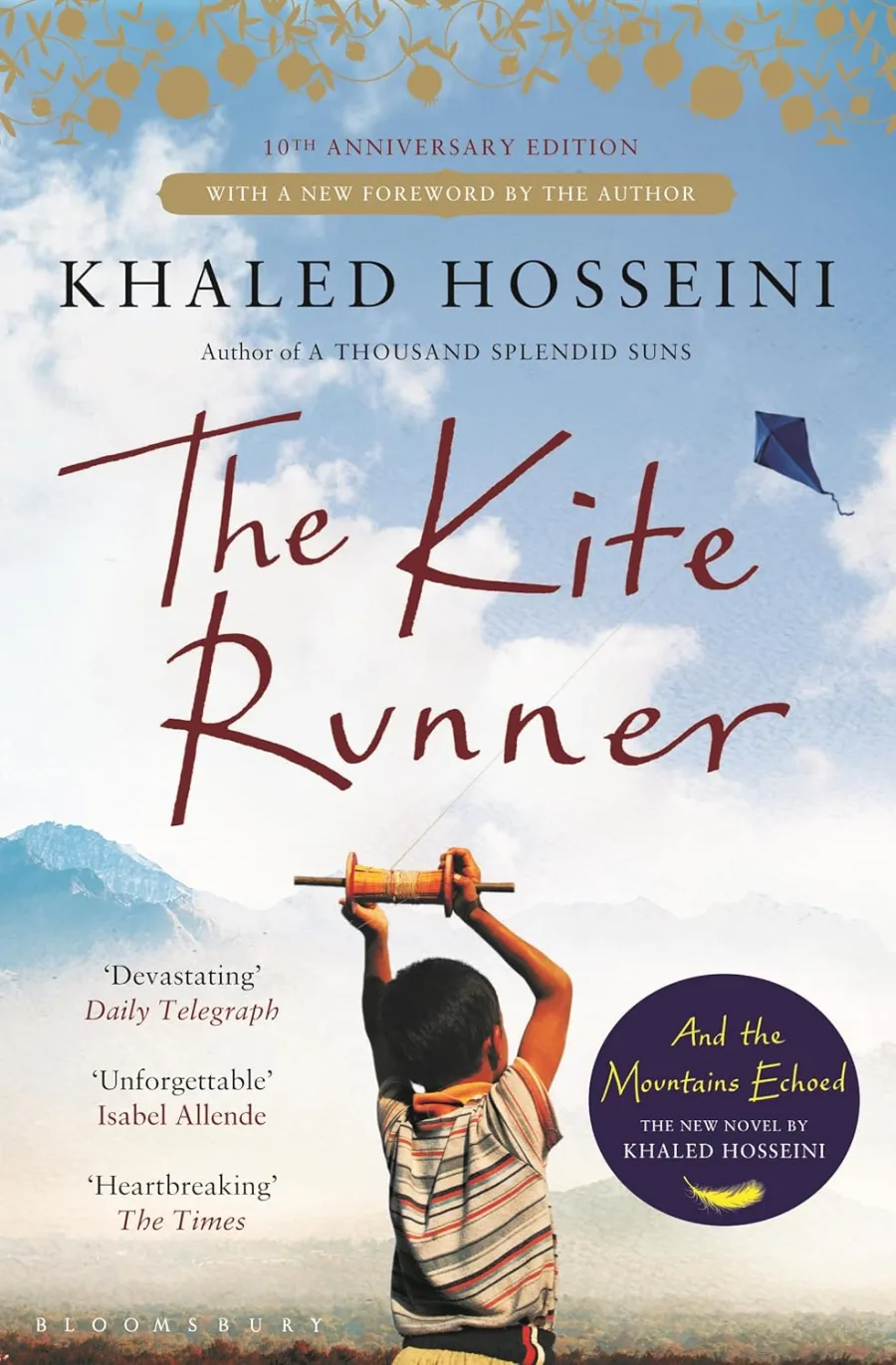
Download Cover Image
Do you want to download the full cover image for The Kite Runner (Certified reading)?