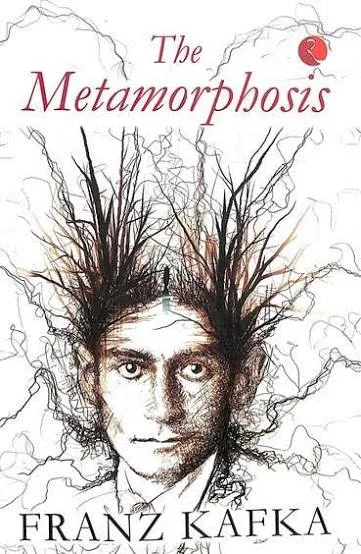
Metamorphosis
Paperback
• 112 Pages
• ₹ 295.00
• English
• 9789355201065
No ratings yet
| Publisher | Rupa Publications India |
|---|---|
| ISBN13 | 9789355201065 |
| ASIN/SKU | 9355201060 |
| Book Format | Paperback |
| Language | English |
| Pages | 112 |
| List Price | ₹ 295.00 |
| Publishing Date | 05/10/2021 |
| Dimensions | 20.32 x 12.7 x 1.27 cm |
| Weight | 120 g |
| Book Code | BD00055073 |
Buy this Book
Amazon Stores
Ebook Stores
Other Stores
Discover Metamorphosis by Franz Kafka. This book is published by Rupa Publications India in Paperback format, ISBN 9789355201065, ASIN 9355201060, under Literature and Fiction, Horror, Readers.
Book Description
How significant can a picture of a woman in fur be when you try to hold it dear as the only resemblance left to human life? When Gregor Samsa wakes up in his bed, he is aghast to find himself transformed into a giant bug. He is now to spend the rest of his life in that state. Life to him becomes a struggle to align his lingering humanity and his transformed physicality. Thus begins Metamorphosis. Delving into absurdity of life, the disconnect between the mind and body and limits of sympathy, the book has been cited as one of the seminal works of twentieth-century fiction.
Author Biography
Franz Kafka (1883–1924) was a German-language writer of visionary fiction whose works—especially the novel Der Prozess (1925; The Trial) and the story Die Verwandlung (1915; The Metamorphosis)—express the anxieties and alienation felt by many in twentieth-century Europe and North America.
Editorial Reviews
Editorial Reviews will be added soon…
Book Summary
Metamorphosis by Franz Kafka is one of the most famous and unsettling works of twentieth-century literature. First published in 1915, the novella tells the extraordinary story of Gregor Samsa, a traveling salesman who wakes one morning to discover that he has been transformed into a gigantic insect-like creature. Yet the physical transformation is only the beginning. The real tragedy unfolds as Gregor's family, who once depended upon him financially, gradually stop seeing him as a human being.
Kafka's story is strange, darkly humorous, deeply sad, and deliberately open to interpretation. It explores alienation, family responsibility, work, identity, loneliness, guilt, social expectations, and the loss of human dignity. Gregor's transformation can be read literally as a fantastic event, but it also functions as a powerful metaphor for what happens when a person becomes valued only for what they can provide to others.
Gregor Samsa's Ordinary Life
Before his transformation, Gregor Samsa is an ordinary young man with an extraordinarily burdensome life. He works as a traveling salesman and spends his days moving from place to place, dealing with customers, trains, hotels, and demanding employers.
Gregor dislikes his job, but he feels trapped in it.
His family depends heavily on his income. His father has debts, his mother is not working, and his younger sister Grete is still financially dependent on the family. Gregor therefore sees supporting them as his responsibility.
His own desires have been pushed into the background.
He dreams of eventually earning enough money to send Grete to a music conservatory because he knows that she has genuine talent as a violinist. Yet he does not tell her about this plan. Like much of Gregor's emotional life, his hopes remain largely unspoken.
The irony is immediate: Gregor is already living like someone who has sacrificed his humanity to fulfill an economic role.
Then, one morning, everything changes.
Gregor wakes up and discovers that his body has become something resembling a gigantic insect. Kafka does not provide a scientific explanation for the transformation. It simply happens. Gregor himself does not spend much time asking why.
Instead, his first concern is work.
He worries that he has overslept.
He worries that his employer will be angry.
He worries about missing his train.
He worries about his family's finances.
The absurdity is central to Kafka's story. Gregor has undergone an impossible physical transformation, yet his mind remains occupied with the ordinary anxieties of employment and responsibility.
This immediately establishes one of the novella's most important ideas: Gregor has been treated as a worker before he is treated as a person, and he has internalized that same way of seeing himself.
The Family Discovers the Transformation
Gregor's unusual delay soon attracts attention.
His mother calls to him.
His father becomes impatient.
Eventually, a representative from Gregor's employer arrives at the apartment to find out why he has not gone to work. The appearance of the company's representative reveals how little trust exists between Gregor and his employer. Even one unexplained absence is enough for the company to send someone to his home.
Gregor tries desperately to communicate.
He wants his family and employer to understand that he is still Gregor.
But his transformed body has also changed his voice.
When he finally manages to open his bedroom door, everyone is horrified.
His mother collapses.
The office representative flees.
His father reacts with fear and aggression.
Gregor realizes that although his mind remains essentially unchanged, other people can no longer recognize the person inside the creature.
This creates the novella's central conflict: Is Gregor still human if everyone around him refuses to treat him as one?
The answer becomes increasingly painful.
Gregor Becomes a Prisoner
After the initial shock, Gregor is confined to his bedroom.
His family keeps him hidden because they are ashamed and frightened of what has happened. The room gradually becomes both his home and his prison.
At first, Grete takes responsibility for caring for him.
She brings him food and tries to determine what he can eat. She discovers that Gregor no longer enjoys fresh food but prefers spoiled leftovers.
Grete also begins cleaning his room.
This creates the closest relationship Gregor has with another person after his transformation.
Although he cannot communicate normally, he remains deeply aware of Grete's kindness.
He listens to her movements.
He recognizes her voice.
He worries about frightening her.
Most importantly, he remembers his dream of sending her to music school.
His concern for Grete demonstrates that his inner humanity remains intact.
His body has changed, but his capacity for affection has not.
The Family's Dependence Changes
Before Gregor's transformation, the family depends on him financially.
Afterward, everything changes.
Because Gregor can no longer work, the family must find other sources of income.
His father returns to employment.
His mother begins sewing work.
Grete takes a job.
The family also begins renting rooms to three boarders to supplement their income.
This is one of the novella's most important structural changes.
Gregor had believed that he was indispensable.
But once he can no longer provide money, the family gradually discovers that they are capable of supporting themselves.
This creates a painful reversal.
Gregor once had value because he earned money.
Now that he cannot earn money, his family increasingly sees him as a burden.
The transformation therefore exposes the economic foundation of their relationships.
Kafka does not simply ask whether Gregor's family loves him.
He asks a more disturbing question:
What happens to love when the person being loved can no longer perform the role society expects of them?
Gregor's Isolation Deepens
Gregor's physical isolation becomes increasingly severe.
He spends most of his time alone in his room.
He crawls across the walls and ceiling.
He hides beneath furniture.
He becomes increasingly comfortable in darkness.
Yet emotionally, he remains attached to his family.
He listens to their conversations from behind the door.
He worries about their financial difficulties.
He wants to help them.
But he is unable to communicate.
This inability to communicate is crucial.
Gregor understands what people say, but they cannot understand him.
His attempts to speak sound like meaningless animal noises.
The tragedy is therefore not simply that Gregor looks different.
It is that his inner life has become inaccessible to everyone else.
The more isolated he becomes, the more his family assumes that there is no human consciousness left inside him.
The Father's Violence
Gregor's father becomes increasingly hostile toward him.
One of the most disturbing episodes occurs when Gregor leaves his room and his mother becomes frightened. His father responds by driving Gregor back toward his bedroom.
He throws apples at him.
One apple becomes lodged in Gregor's back, causing a serious injury.
The wound never properly heals.
From this point onward, Gregor's physical condition deteriorates steadily.
The apple becomes a powerful symbol of family rejection and suffering. His father's violence demonstrates that Gregor is no longer being treated as a son who has become ill. He is being treated as a dangerous creature that must be controlled.
This is another important transformation in the story: Gregor's family does not simply adapt to his condition; their understanding of him changes.
Grete's Transformation
Grete initially represents compassion.
She is the person who feeds Gregor, cleans his room, and attempts to understand his needs.
But as time passes, her attitude changes.
She becomes exhausted by the responsibility.
She begins to see Gregor less as her brother and more as a problem that the family must solve.
This is particularly painful because Gregor's affection for her remains strong.
He remembers her musical talent and wants to support her.
Eventually, the family decides to remove furniture from Gregor's room so that he will have more space to crawl.
Gregor becomes distressed.
The furniture represents his human past.
His desk, belongings, and possessions remind him that he once had an ordinary human life.
Removing them suggests that his family is gradually erasing evidence that he was ever human.
Gregor tries to protect a picture of a woman in furs hanging on the wall.
He clings to it because he does not want every reminder of his former identity removed.
His attempt to preserve the picture leads to another confrontation with his family.
His mother is horrified.
His father becomes aggressive.
And Gregor realizes that his connection to his previous human existence is disappearing.
The Violin Scene
The final major turning point occurs when Grete plays the violin for the three boarders.
Gregor is deeply moved by her music.
He leaves his room and listens.
For Gregor, the music awakens something profound.
He imagines that he can explain to Grete how much her music means to him. He remembers his plan to send her to the conservatory and dreams of telling her that he always believed in her talent.
For a brief moment, he feels more human than ever.
But the boarders are unimpressed.
They complain about the performance.
This contrast is devastating.
Gregor recognizes the beauty in Grete's music while the people who are paying to live in the house see it merely as an inconvenience.
Gregor's emotional response reveals that his humanity has not disappeared.
Indeed, he may now be more sensitive to beauty and love than the people who still possess human bodies.
But Grete reaches a different conclusion.
She tells her parents that they must get rid of Gregor.
She argues that they have done everything they can for him and that the creature in the room can no longer truly be her brother.
This is the moment when Gregor finally understands that he has become completely unwanted.
He does not fight.
He does not blame his family.
Instead, he retreats to his room.
Gregor's Death
Gregor dies quietly during the night.
His body has become weak from his injury, isolation, and lack of nourishment.
The family discovers his body the following morning.
Instead of experiencing overwhelming grief, they feel relief.
The burden has been removed.
The transformation is complete—not only has Gregor become physically different, but his family has emotionally separated itself from him.
The family takes the day off and travels into the countryside.
They begin thinking about their future.
They also begin considering Grete's prospects for marriage.
The ending is disturbing precisely because the family seems to recover so quickly.
Gregor's death allows them to move forward.
His existence had become an obstacle to their future, and once he disappears, they are able to imagine a better life.
The final image of Grete is especially significant.
She has grown into a young woman during the course of the story.
Her parents begin thinking about her future, and they notice that she has matured into someone who may soon leave home and begin a life of her own.
The family has undergone its own metamorphosis.
Gregor changed physically.
His family changed economically and emotionally.
Grete changed from a dependent young girl into an independent adult.
Thus, the title refers to more than Gregor's transformation.
Everyone in the story changes.
Alienation and Loneliness
The most powerful theme in Metamorphosis is alienation.
Gregor is isolated from society before his transformation because his job prevents him from forming meaningful relationships. After his transformation, that alienation becomes physical.
His bedroom becomes a prison.
His family becomes distant.
His voice becomes incomprehensible.
His body becomes something others fear.
Kafka turns an emotional experience into a literal physical condition.
Gregor's insect form can therefore be understood as an embodiment of the feeling of being unwanted, useless, or fundamentally different from everyone around you. The novella's enduring power comes partly from this ability to make psychological alienation visible.
Work and Dehumanization
Gregor's relationship with his job is equally important.
Even after becoming an insect, he worries first about missing work.
This is darkly comic but also deeply disturbing.
His employer treats him as a replaceable worker.
His family depends upon his wages.
Gregor himself measures his worth largely through his ability to provide.
When he can no longer work, much of his identity disappears.
Kafka therefore raises questions about a society in which human beings are valued primarily for their productivity. The story has often been interpreted as a critique of the dehumanizing pressures of work and economic dependence.
Family and Conditional Love
The family relationship is perhaps even more painful.
Gregor believes he has sacrificed himself for his parents and sister.
He works to repay his father's debts.
He dreams of helping Grete pursue music.
But when Gregor can no longer fulfill his economic role, his family's feelings toward him gradually change.
This suggests that affection may sometimes be conditional upon usefulness.
Yet Kafka does not portray the family as entirely evil.
They are frightened.
They are financially stressed.
They are exhausted.
They do care for Gregor for a time.
Their tragedy lies in the fact that their compassion eventually gives way to resentment.
This makes the story more disturbing than if they were simply cruel from the beginning.
Identity and the Body
Gregor's transformation also raises a fundamental question about identity.
If a person's body changes but their memories, emotions, and consciousness remain, what makes them human?
Gregor continues to think.
He continues to love his family.
He continues to appreciate music.
He continues to remember his responsibilities.
But nobody can see those qualities anymore.
Kafka therefore separates inner identity from outward appearance.
The family sees an insect.
The reader sees Gregor.
That difference is crucial.
We know what remains inside him even when the characters around him refuse to recognize it.
Absurdity
Kafka's story is also a masterpiece of the absurd.
The transformation itself has no rational explanation.
Gregor does not know why it happened.
His family does not know.
The story never explains it.
And yet the characters attempt to respond to it using ordinary practical concerns.
This mixture of the impossible and the mundane creates the unsettling quality now associated with the term Kafkaesque.
The strange becomes ordinary.
The impossible becomes bureaucratic.
The horrifying becomes part of the daily routine.
Gregor's family does not ask why the transformation happened nearly as much as they ask how they can manage it.
That is part of Kafka's genius.
The Meaning of the Metamorphosis
There is no single definitive interpretation of Gregor's transformation.
It can be understood as a metaphor for alienation.
It can represent the experience of being treated as worthless.
It can symbolize the dehumanization of labor.
It can reflect family conflict.
It can represent illness, disability, depression, shame, or social exclusion.
It can also simply be what it appears to be: an inexplicable transformation in a strange story.
Kafka's refusal to provide a single explanation is one reason the novella remains so powerful. Readers can recognize different aspects of their own experiences in Gregor's situation.
Penguin's description similarly emphasizes the tension between Gregor's unchanged humanity and his family's inability to see the person inside his transformed body.
A Tragic Story of Being Needed but Not Loved
Perhaps the most painful idea in Metamorphosis is that Gregor's family seems to need him more when he is useful than when he is vulnerable.
As long as Gregor works, he is essential.
When he becomes dependent, he becomes a burden.
This reversal exposes the fragility of relationships built around obligation.
Gregor spends his life asking what he can do for others.
Nobody asks what he needs.
Even after his transformation, his first instinct is to worry about his family's finances.
He never learns to demand care for himself.
His tragedy is therefore partly the tragedy of a person who has forgotten that he has value beyond his usefulness.
Conclusion
Metamorphosis is ultimately much more than a strange story about a man who becomes an insect. It is a profound exploration of what happens when a person loses the role that once gave them social and familial value.
Gregor begins as a hardworking son who supports his family.
He becomes a creature hidden behind a locked door.
Yet his physical transformation does not destroy his capacity for love, memory, sacrifice, or appreciation of beauty.
Instead, it reveals how fragile other people's recognition of those qualities can be.
The family changes alongside him. His father becomes more active and authoritative, his mother adapts to new responsibilities, and Grete grows from a caring younger sister into an independent young woman. Their transformation ultimately allows them to imagine a future without Gregor.
The ending is therefore both tragic and unsettling.
Gregor dies believing that removing himself will make life easier for his family.
And his family, relieved by his death, begins planning a new future.
Kafka leaves readers with an uncomfortable question:
If someone can be treated as less than human simply because they are no longer useful, what does that say about the society—and the people—around them?
That question is what makes Metamorphosis timeless. Its insect is fantastic, but its emotional reality is painfully recognizable. People can feel transformed by illness, failure, unemployment, rejection, aging, disability, family conflict, or loneliness. They can remain fully human inside while becoming invisible to the people around them.
Kafka's masterpiece ultimately reminds us that human worth cannot be measured by productivity, appearance, usefulness, or social acceptance. Gregor's body changes, but his inner humanity persists. The real tragedy is that the people closest to him gradually stop seeing it.
Kafka's story is strange, darkly humorous, deeply sad, and deliberately open to interpretation. It explores alienation, family responsibility, work, identity, loneliness, guilt, social expectations, and the loss of human dignity. Gregor's transformation can be read literally as a fantastic event, but it also functions as a powerful metaphor for what happens when a person becomes valued only for what they can provide to others.
Gregor Samsa's Ordinary Life
Before his transformation, Gregor Samsa is an ordinary young man with an extraordinarily burdensome life. He works as a traveling salesman and spends his days moving from place to place, dealing with customers, trains, hotels, and demanding employers.
Gregor dislikes his job, but he feels trapped in it.
His family depends heavily on his income. His father has debts, his mother is not working, and his younger sister Grete is still financially dependent on the family. Gregor therefore sees supporting them as his responsibility.
His own desires have been pushed into the background.
He dreams of eventually earning enough money to send Grete to a music conservatory because he knows that she has genuine talent as a violinist. Yet he does not tell her about this plan. Like much of Gregor's emotional life, his hopes remain largely unspoken.
The irony is immediate: Gregor is already living like someone who has sacrificed his humanity to fulfill an economic role.
Then, one morning, everything changes.
Gregor wakes up and discovers that his body has become something resembling a gigantic insect. Kafka does not provide a scientific explanation for the transformation. It simply happens. Gregor himself does not spend much time asking why.
Instead, his first concern is work.
He worries that he has overslept.
He worries that his employer will be angry.
He worries about missing his train.
He worries about his family's finances.
The absurdity is central to Kafka's story. Gregor has undergone an impossible physical transformation, yet his mind remains occupied with the ordinary anxieties of employment and responsibility.
This immediately establishes one of the novella's most important ideas: Gregor has been treated as a worker before he is treated as a person, and he has internalized that same way of seeing himself.
The Family Discovers the Transformation
Gregor's unusual delay soon attracts attention.
His mother calls to him.
His father becomes impatient.
Eventually, a representative from Gregor's employer arrives at the apartment to find out why he has not gone to work. The appearance of the company's representative reveals how little trust exists between Gregor and his employer. Even one unexplained absence is enough for the company to send someone to his home.
Gregor tries desperately to communicate.
He wants his family and employer to understand that he is still Gregor.
But his transformed body has also changed his voice.
When he finally manages to open his bedroom door, everyone is horrified.
His mother collapses.
The office representative flees.
His father reacts with fear and aggression.
Gregor realizes that although his mind remains essentially unchanged, other people can no longer recognize the person inside the creature.
This creates the novella's central conflict: Is Gregor still human if everyone around him refuses to treat him as one?
The answer becomes increasingly painful.
Gregor Becomes a Prisoner
After the initial shock, Gregor is confined to his bedroom.
His family keeps him hidden because they are ashamed and frightened of what has happened. The room gradually becomes both his home and his prison.
At first, Grete takes responsibility for caring for him.
She brings him food and tries to determine what he can eat. She discovers that Gregor no longer enjoys fresh food but prefers spoiled leftovers.
Grete also begins cleaning his room.
This creates the closest relationship Gregor has with another person after his transformation.
Although he cannot communicate normally, he remains deeply aware of Grete's kindness.
He listens to her movements.
He recognizes her voice.
He worries about frightening her.
Most importantly, he remembers his dream of sending her to music school.
His concern for Grete demonstrates that his inner humanity remains intact.
His body has changed, but his capacity for affection has not.
The Family's Dependence Changes
Before Gregor's transformation, the family depends on him financially.
Afterward, everything changes.
Because Gregor can no longer work, the family must find other sources of income.
His father returns to employment.
His mother begins sewing work.
Grete takes a job.
The family also begins renting rooms to three boarders to supplement their income.
This is one of the novella's most important structural changes.
Gregor had believed that he was indispensable.
But once he can no longer provide money, the family gradually discovers that they are capable of supporting themselves.
This creates a painful reversal.
Gregor once had value because he earned money.
Now that he cannot earn money, his family increasingly sees him as a burden.
The transformation therefore exposes the economic foundation of their relationships.
Kafka does not simply ask whether Gregor's family loves him.
He asks a more disturbing question:
What happens to love when the person being loved can no longer perform the role society expects of them?
Gregor's Isolation Deepens
Gregor's physical isolation becomes increasingly severe.
He spends most of his time alone in his room.
He crawls across the walls and ceiling.
He hides beneath furniture.
He becomes increasingly comfortable in darkness.
Yet emotionally, he remains attached to his family.
He listens to their conversations from behind the door.
He worries about their financial difficulties.
He wants to help them.
But he is unable to communicate.
This inability to communicate is crucial.
Gregor understands what people say, but they cannot understand him.
His attempts to speak sound like meaningless animal noises.
The tragedy is therefore not simply that Gregor looks different.
It is that his inner life has become inaccessible to everyone else.
The more isolated he becomes, the more his family assumes that there is no human consciousness left inside him.
The Father's Violence
Gregor's father becomes increasingly hostile toward him.
One of the most disturbing episodes occurs when Gregor leaves his room and his mother becomes frightened. His father responds by driving Gregor back toward his bedroom.
He throws apples at him.
One apple becomes lodged in Gregor's back, causing a serious injury.
The wound never properly heals.
From this point onward, Gregor's physical condition deteriorates steadily.
The apple becomes a powerful symbol of family rejection and suffering. His father's violence demonstrates that Gregor is no longer being treated as a son who has become ill. He is being treated as a dangerous creature that must be controlled.
This is another important transformation in the story: Gregor's family does not simply adapt to his condition; their understanding of him changes.
Grete's Transformation
Grete initially represents compassion.
She is the person who feeds Gregor, cleans his room, and attempts to understand his needs.
But as time passes, her attitude changes.
She becomes exhausted by the responsibility.
She begins to see Gregor less as her brother and more as a problem that the family must solve.
This is particularly painful because Gregor's affection for her remains strong.
He remembers her musical talent and wants to support her.
Eventually, the family decides to remove furniture from Gregor's room so that he will have more space to crawl.
Gregor becomes distressed.
The furniture represents his human past.
His desk, belongings, and possessions remind him that he once had an ordinary human life.
Removing them suggests that his family is gradually erasing evidence that he was ever human.
Gregor tries to protect a picture of a woman in furs hanging on the wall.
He clings to it because he does not want every reminder of his former identity removed.
His attempt to preserve the picture leads to another confrontation with his family.
His mother is horrified.
His father becomes aggressive.
And Gregor realizes that his connection to his previous human existence is disappearing.
The Violin Scene
The final major turning point occurs when Grete plays the violin for the three boarders.
Gregor is deeply moved by her music.
He leaves his room and listens.
For Gregor, the music awakens something profound.
He imagines that he can explain to Grete how much her music means to him. He remembers his plan to send her to the conservatory and dreams of telling her that he always believed in her talent.
For a brief moment, he feels more human than ever.
But the boarders are unimpressed.
They complain about the performance.
This contrast is devastating.
Gregor recognizes the beauty in Grete's music while the people who are paying to live in the house see it merely as an inconvenience.
Gregor's emotional response reveals that his humanity has not disappeared.
Indeed, he may now be more sensitive to beauty and love than the people who still possess human bodies.
But Grete reaches a different conclusion.
She tells her parents that they must get rid of Gregor.
She argues that they have done everything they can for him and that the creature in the room can no longer truly be her brother.
This is the moment when Gregor finally understands that he has become completely unwanted.
He does not fight.
He does not blame his family.
Instead, he retreats to his room.
Gregor's Death
Gregor dies quietly during the night.
His body has become weak from his injury, isolation, and lack of nourishment.
The family discovers his body the following morning.
Instead of experiencing overwhelming grief, they feel relief.
The burden has been removed.
The transformation is complete—not only has Gregor become physically different, but his family has emotionally separated itself from him.
The family takes the day off and travels into the countryside.
They begin thinking about their future.
They also begin considering Grete's prospects for marriage.
The ending is disturbing precisely because the family seems to recover so quickly.
Gregor's death allows them to move forward.
His existence had become an obstacle to their future, and once he disappears, they are able to imagine a better life.
The final image of Grete is especially significant.
She has grown into a young woman during the course of the story.
Her parents begin thinking about her future, and they notice that she has matured into someone who may soon leave home and begin a life of her own.
The family has undergone its own metamorphosis.
Gregor changed physically.
His family changed economically and emotionally.
Grete changed from a dependent young girl into an independent adult.
Thus, the title refers to more than Gregor's transformation.
Everyone in the story changes.
Alienation and Loneliness
The most powerful theme in Metamorphosis is alienation.
Gregor is isolated from society before his transformation because his job prevents him from forming meaningful relationships. After his transformation, that alienation becomes physical.
His bedroom becomes a prison.
His family becomes distant.
His voice becomes incomprehensible.
His body becomes something others fear.
Kafka turns an emotional experience into a literal physical condition.
Gregor's insect form can therefore be understood as an embodiment of the feeling of being unwanted, useless, or fundamentally different from everyone around you. The novella's enduring power comes partly from this ability to make psychological alienation visible.
Work and Dehumanization
Gregor's relationship with his job is equally important.
Even after becoming an insect, he worries first about missing work.
This is darkly comic but also deeply disturbing.
His employer treats him as a replaceable worker.
His family depends upon his wages.
Gregor himself measures his worth largely through his ability to provide.
When he can no longer work, much of his identity disappears.
Kafka therefore raises questions about a society in which human beings are valued primarily for their productivity. The story has often been interpreted as a critique of the dehumanizing pressures of work and economic dependence.
Family and Conditional Love
The family relationship is perhaps even more painful.
Gregor believes he has sacrificed himself for his parents and sister.
He works to repay his father's debts.
He dreams of helping Grete pursue music.
But when Gregor can no longer fulfill his economic role, his family's feelings toward him gradually change.
This suggests that affection may sometimes be conditional upon usefulness.
Yet Kafka does not portray the family as entirely evil.
They are frightened.
They are financially stressed.
They are exhausted.
They do care for Gregor for a time.
Their tragedy lies in the fact that their compassion eventually gives way to resentment.
This makes the story more disturbing than if they were simply cruel from the beginning.
Identity and the Body
Gregor's transformation also raises a fundamental question about identity.
If a person's body changes but their memories, emotions, and consciousness remain, what makes them human?
Gregor continues to think.
He continues to love his family.
He continues to appreciate music.
He continues to remember his responsibilities.
But nobody can see those qualities anymore.
Kafka therefore separates inner identity from outward appearance.
The family sees an insect.
The reader sees Gregor.
That difference is crucial.
We know what remains inside him even when the characters around him refuse to recognize it.
Absurdity
Kafka's story is also a masterpiece of the absurd.
The transformation itself has no rational explanation.
Gregor does not know why it happened.
His family does not know.
The story never explains it.
And yet the characters attempt to respond to it using ordinary practical concerns.
This mixture of the impossible and the mundane creates the unsettling quality now associated with the term Kafkaesque.
The strange becomes ordinary.
The impossible becomes bureaucratic.
The horrifying becomes part of the daily routine.
Gregor's family does not ask why the transformation happened nearly as much as they ask how they can manage it.
That is part of Kafka's genius.
The Meaning of the Metamorphosis
There is no single definitive interpretation of Gregor's transformation.
It can be understood as a metaphor for alienation.
It can represent the experience of being treated as worthless.
It can symbolize the dehumanization of labor.
It can reflect family conflict.
It can represent illness, disability, depression, shame, or social exclusion.
It can also simply be what it appears to be: an inexplicable transformation in a strange story.
Kafka's refusal to provide a single explanation is one reason the novella remains so powerful. Readers can recognize different aspects of their own experiences in Gregor's situation.
Penguin's description similarly emphasizes the tension between Gregor's unchanged humanity and his family's inability to see the person inside his transformed body.
A Tragic Story of Being Needed but Not Loved
Perhaps the most painful idea in Metamorphosis is that Gregor's family seems to need him more when he is useful than when he is vulnerable.
As long as Gregor works, he is essential.
When he becomes dependent, he becomes a burden.
This reversal exposes the fragility of relationships built around obligation.
Gregor spends his life asking what he can do for others.
Nobody asks what he needs.
Even after his transformation, his first instinct is to worry about his family's finances.
He never learns to demand care for himself.
His tragedy is therefore partly the tragedy of a person who has forgotten that he has value beyond his usefulness.
Conclusion
Metamorphosis is ultimately much more than a strange story about a man who becomes an insect. It is a profound exploration of what happens when a person loses the role that once gave them social and familial value.
Gregor begins as a hardworking son who supports his family.
He becomes a creature hidden behind a locked door.
Yet his physical transformation does not destroy his capacity for love, memory, sacrifice, or appreciation of beauty.
Instead, it reveals how fragile other people's recognition of those qualities can be.
The family changes alongside him. His father becomes more active and authoritative, his mother adapts to new responsibilities, and Grete grows from a caring younger sister into an independent young woman. Their transformation ultimately allows them to imagine a future without Gregor.
The ending is therefore both tragic and unsettling.
Gregor dies believing that removing himself will make life easier for his family.
And his family, relieved by his death, begins planning a new future.
Kafka leaves readers with an uncomfortable question:
If someone can be treated as less than human simply because they are no longer useful, what does that say about the society—and the people—around them?
That question is what makes Metamorphosis timeless. Its insect is fantastic, but its emotional reality is painfully recognizable. People can feel transformed by illness, failure, unemployment, rejection, aging, disability, family conflict, or loneliness. They can remain fully human inside while becoming invisible to the people around them.
Kafka's masterpiece ultimately reminds us that human worth cannot be measured by productivity, appearance, usefulness, or social acceptance. Gregor's body changes, but his inner humanity persists. The real tragedy is that the people closest to him gradually stop seeing it.
Sample Chapters
Sample Chapters will be added soon…
Reader Reviews
No reviews yet.
Metamorphosis