
The Stationery Shop Of Tehran
Paperback
• 320 Pages
• ₹ 299.00
• English
• 9781471185014
No ratings yet
| Publisher | Simon & Schuster Ltd |
|---|---|
| ISBN13 | 9781471185014 |
| ASIN/SKU | 147118501X |
| Book Format | Paperback |
| Language | English |
| Pages | 320 |
| List Price | ₹ 299.00 |
| Publishing Date | 28/11/2019 |
| Dimensions | 13 x 2.25 x 19.8 cm |
| Weight | 230 g |
| Book Code | BD00055069 |
Buy this Book
Amazon Stores
Ebook Stores
Other Stores
Discover The Stationery Shop Of Tehran by Marjan Kamali. This book is published by Simon and Schuster Ltd in Paperback format, ISBN 9781471185014, ASIN 147118501X, under Literature and Fiction, 20th Century Historical Romance, Military Romance.
Book Description
*** If you read The Little Coffee Shop of Kabul and enjoyed The Beekeeper of Aleppo, you will love The Stationery Shop of Tehran ***
1953, Tehran. In a small shop in a country on the brink of unrest, two people meet for the very first time.
Roya loves nothing better than to while away the hours in the stationery shop run by Mr Fakhri. The store, stocked with fountain pens, shiny ink bottles, and thick wads of writing paper, also carries translations of literature from all over the world. Bahman, with his burning passion for justice, is like no one else she has ever met.
But all around them, as their relationship blossoms, life in Tehran is changing.
Suddenly, shockingly, violence erupts: a coup d'etat that forever changes their country's future, as well as their own.
Marjan Kamali's beautiful novel explores themes of love and loss, and delivers an unforgettable ending.
?An enchanting romance?
MY WEEKLY
?Simultaneously briskly paced and deeply moving, this will appeal to fans of Khaled Hosseini and should find a wide audience?
BOOKLIST
?Evocative, devastating, and hauntingly beautiful? This book broke my heart again and again?
Whitney Scharer, author of THE AGE OF LIGHT
?What a pleasure ? a novel that is all at once masterfully plotted, beautifully written, and populated by characters who are arresting, lovable and so real?
Elinor Lipman, author of TURPENTINE LANE
?A beautiful and sensitive novel that I loved from the first page?
Alyson Richman, international bestselling author of THE LOST WIFE
?A beautifully immersive tale ? brings to life a lost and complex world and the captivating characters who once called it home?
Jasmin Darznik, New York Times bestselling author of THE GOOD DAUGHTER and SONG OF A CAPTIVE BIRD
?A sweeping romantic tale of thwarted love?
KIRKUS REVIEWS
?The unfurling stories? will stun readers? For those who enjoy getting caught up in romance while discovering unfamiliar history of another country?
LIBRARY JOURNAL
?Grab your tissues'
BOSTON MAGAZINE
?A tender story of enduring love.?
MINNEAPOLIS STAR TRIBUNE
?I! Am! Obsessed! With! This! Book!?
COSMOPOLITAN.COM
1953, Tehran. In a small shop in a country on the brink of unrest, two people meet for the very first time.
Roya loves nothing better than to while away the hours in the stationery shop run by Mr Fakhri. The store, stocked with fountain pens, shiny ink bottles, and thick wads of writing paper, also carries translations of literature from all over the world. Bahman, with his burning passion for justice, is like no one else she has ever met.
But all around them, as their relationship blossoms, life in Tehran is changing.
Suddenly, shockingly, violence erupts: a coup d'etat that forever changes their country's future, as well as their own.
Marjan Kamali's beautiful novel explores themes of love and loss, and delivers an unforgettable ending.
?An enchanting romance?
MY WEEKLY
?Simultaneously briskly paced and deeply moving, this will appeal to fans of Khaled Hosseini and should find a wide audience?
BOOKLIST
?Evocative, devastating, and hauntingly beautiful? This book broke my heart again and again?
Whitney Scharer, author of THE AGE OF LIGHT
?What a pleasure ? a novel that is all at once masterfully plotted, beautifully written, and populated by characters who are arresting, lovable and so real?
Elinor Lipman, author of TURPENTINE LANE
?A beautiful and sensitive novel that I loved from the first page?
Alyson Richman, international bestselling author of THE LOST WIFE
?A beautifully immersive tale ? brings to life a lost and complex world and the captivating characters who once called it home?
Jasmin Darznik, New York Times bestselling author of THE GOOD DAUGHTER and SONG OF A CAPTIVE BIRD
?A sweeping romantic tale of thwarted love?
KIRKUS REVIEWS
?The unfurling stories? will stun readers? For those who enjoy getting caught up in romance while discovering unfamiliar history of another country?
LIBRARY JOURNAL
?Grab your tissues'
BOSTON MAGAZINE
?A tender story of enduring love.?
MINNEAPOLIS STAR TRIBUNE
?I! Am! Obsessed! With! This! Book!?
COSMOPOLITAN.COM
Author Biography
Marjan Kamali is the award-winning author of The Stationery Shop (Gallery Books/Simon & Schuster), a national bestseller, and Together Tea (EccoBooks/HarperCollins), a Massachusetts Book Award finalist. She is a 2022 recipient of the National Endowment for the Arts Creative Writing Fellowship. Kamali’s novels are published in translation in more than 20 languages and The Stationery Shop was awarded the Prix Attitude in France. Her essays have appeared in the Wall Street Journal, Literary Hub, and the Los Angeles Review of Books. She holds a bachelor’s degree in English literature from the University of California, Berkeley, an MBA from Columbia University, and a Master of Fine Arts in creative writing from New York University. Born in Turkey to Iranian parents, Kamali spent her childhood in Turkey, Iran, Germany, Kenya, and the U.S.
Visit the author at marjankamali.com, on instagram at @marjankamali7, on facebook at www.facebook.com/MarjanKamaliAuthor or on twitter at @MarjanKamali.
Visit the author at marjankamali.com, on instagram at @marjankamali7, on facebook at www.facebook.com/MarjanKamaliAuthor or on twitter at @MarjanKamali.
Editorial Reviews
Editorial Reviews will be added soon…
Book Summary
The Stationery Shop of Tehran by Marjan Kamali is a poignant historical romance about first love, political upheaval, separation, memory, and the possibility of reconciliation after a lifetime of loss. Set primarily against the turbulent backdrop of 1953 Tehran, the novel follows Roya Kayhani and Bahman Aslan, two young people whose lives change when they meet in a neighborhood stationery shop. Their love develops just as Iran is being transformed by political conflict, and a tragic misunderstanding separates them for more than six decades. The novel later moves between 1953 and 2013, showing how one unfinished love story can continue shaping a person's life long after the original events have passed.
Roya is a seventeen-year-old girl growing up in Tehran with her parents and younger sister, Zari. She is intelligent, dreamy, and deeply fond of books. While the political tensions surrounding her country are becoming increasingly intense, Roya is primarily interested in literature, poetry, friendship, and the possibilities of young adulthood. Her favorite place is a small stationery shop owned by the kindly Ali Fakhri. The shop is filled with beautiful writing paper, fountain pens, colorful inks, and books, making it a refuge from the uncertainty of the outside world.
The stationery shop is much more than a retail store. For Roya, it represents imagination and possibility. It is a place where literature opens doors to other worlds and where she can temporarily escape the expectations surrounding her. The shop's atmosphere becomes inseparable from her memories of youth, making it one of the novel's most important symbols.
It is here that Roya meets Bahman Aslan, a handsome and passionate young man with a love of poetry and a strong commitment to political change. Bahman supports Prime Minister Mohammad Mossadegh and believes deeply in justice and the future of his country. Unlike Roya, he is intensely engaged with the political crisis unfolding around them. Yet their differences do not keep them apart. Instead, Roya is drawn to his conviction, intelligence, kindness, and idealism.
Their relationship develops quickly but sincerely. The stationery shop becomes their special meeting place, where they talk about books, poetry, politics, dreams, and their hopes for the future. Bahman's love of Rumi's poetry especially resonates with Roya, and their emotional connection gradually becomes the center of both their lives.
For Roya, falling in love with Bahman changes the way she sees everything. She begins to understand his political convictions and becomes more interested in the struggles taking place around her. Love gives her a stronger sense of purpose and makes her imagine a future that she had previously thought about only vaguely.
The young couple begin planning their marriage. Roya believes they have found the kind of love that will define the rest of their lives. Her parents eventually accept Bahman, but his family presents a serious obstacle. His mother, Badri Aslan, strongly opposes the relationship and wants Bahman to marry another young woman, Shahla, whose family has political connections. Badri's opposition introduces the first major threat to Roya and Bahman's future.
At the same time, Iran itself is becoming increasingly unstable. The political conflict surrounding Mossadegh and the Shah intensifies, and demonstrations and violence become part of daily life. The personal story of Roya and Bahman is therefore unfolding against a national crisis. Their relationship is private and intimate, but history is moving around them with enormous force.
Eventually, Bahman disappears.
Roya is devastated. She does not know whether he has been forced into hiding because of political danger or whether something has happened to their relationship. Mr. Fakhri becomes an intermediary, helping the separated lovers communicate through letters. These letters give Roya hope that Bahman still loves her and intends to marry her.
Then Bahman sends a message asking Roya to meet him at a particular square so that they can finally escape together. Roya goes to the meeting place expecting their lives to begin again.
Instead, she encounters chaos.
Political violence erupts, and the situation becomes increasingly dangerous. Roya waits desperately for Bahman, but he does not appear. Mr. Fakhri eventually arrives, seemingly carrying crucial information, but before he can explain everything, he is shot and killed. The event leaves Roya shocked and confused.
Soon afterward, Badri tells Roya that Bahman has chosen another woman. A letter also appears to confirm that Bahman no longer intends to marry her. Heartbroken and unable to understand why the man she loves would abandon her so suddenly, Roya makes the painful decision to leave Iran.
She travels to the United States to study and begin a new life. Her journey takes her first to California and eventually to New England, where she builds a life with Walter Archer, an American man who is very different from Bahman. Walter is practical, dependable, patient, and emotionally steady. Their relationship lacks the dramatic intensity of Roya's first love, but it offers her stability and companionship.
Roya eventually marries Walter. Together they build a family, but her past never completely disappears.
One of the novel's most powerful ideas is that people can move forward without truly leaving their past behind. Roya tries to construct a new identity in America, adapting to a different culture and creating a family of her own. Yet the seventeen-year-old girl who fell in love with Bahman remains part of her. Her memories of Tehran, the stationery shop, the poetry, and the lost future continue to live inside her.
Roya experiences further joy and tragedy in America. She has children, but motherhood also brings profound grief when her first child, Marigold, dies as a young child. This loss becomes another defining wound in Roya's life. Her later son, Kyle, brings happiness, but grief and memory remain intertwined with her experience of motherhood.
Decades pass. Roya grows old without returning to Iran and without learning the truth about what happened to Bahman.
Then, in 2013, something extraordinary happens.
An encounter with a stationery shop in New England awakens memories of the shop she knew in Tehran. Roya discovers a connection to Bahman and learns that he is still alive. He is living at a senior center.
At seventy-seven, Roya finally decides to see him.
The reunion is emotionally overwhelming. After more than sixty years, the person who has occupied such a powerful place in Roya's memories is suddenly real and physically present. But the meeting does not immediately provide the closure she expected. Bahman's recollection of their separation does not match hers.
He insists that he waited for her.
Roya cannot understand this. She remembers going to the appointed meeting place and being told that Bahman had rejected her. How could both of them remember the same day so differently?
The answer gradually emerges through a painful revelation.
Roya and Bahman had not abandoned each other.
They had been deliberately separated.
Badri had interfered with their letters and manipulated the information each received. She arranged for a crucial meeting location to be changed, ensuring that Roya and Bahman would miss each other. She also created the impression that each had rejected the other. Her actions were driven by a complicated mixture of jealousy, resentment, family expectations, and her own troubled history.
The revelation transforms Roya's understanding of her entire life.
For decades, she believed Bahman had chosen another woman and abandoned her. Bahman, meanwhile, believed Roya had rejected him. Their lives had been shaped by a lie neither understood.
Even more tragically, Mr. Fakhri had become involved in the deception. His own complicated history with Badri helps explain why he participated in manipulating the lovers' correspondence. His actions, motivated by guilt and unresolved feelings, contribute to one of the novel's central tragedies: people who claim to act out of love can sometimes cause devastating harm.
The discovery is heartbreaking because it reveals how close Roya and Bahman came to sharing the life they had imagined. Their separation was not caused by a loss of love. It was caused by misinformation, political violence, family interference, and circumstances neither of them could control.
This is where the novel's treatment of fate becomes especially powerful. Roya spends much of her life wondering why Bahman left. When the truth finally emerges, she realizes that their separation was not the result of a simple choice. Human beings made choices, but those choices operated within circumstances shaped by political upheaval, family pressures, fear, illness, and chance.
The story therefore avoids presenting fate as a magical force that determines everything. Instead, fate appears as the accumulation of unpredictable events that can redirect an entire life.
Roya and Bahman's reunion offers them one final opportunity to confront what was lost. Their love has survived decades of separation, but the reunion cannot restore the lives they might have lived together. Time cannot be reversed. The young Roya and Bahman who dreamed of marriage are gone.
What they can achieve, however, is understanding.
Roya learns that the love she remembered was real. Bahman learns that Roya never willingly abandoned him. Their reunion therefore provides a form of emotional reconciliation, even though it arrives far too late to give them the future they once imagined.
The novel's treatment of first love is particularly moving because it does not suggest that first love must remain one's only or greatest love. Roya's marriage to Walter is meaningful precisely because it is different. Walter provides stability, patience, and kindness. He does not replace Bahman; instead, he becomes an important part of another chapter of Roya's life.
This makes Roya's emotional journey more nuanced. She is not simply a woman who spent sixty years waiting for her first love. She lived, married, became a mother, experienced happiness, endured devastating loss, and created a life in another country. Bahman remained part of her emotional history, but he was not the entirety of her existence.
The novel also explores immigration and cultural identity. After leaving Iran, Roya tries to adapt to American life. Her identity becomes a combination of her Iranian upbringing, her memories of Tehran, and her experiences in America. She cannot completely erase her past, nor does she ultimately need to. Her life demonstrates that identity can contain multiple cultures and histories simultaneously.
The political setting is equally important. The 1953 Iranian coup is not merely historical scenery. It directly changes the lives of ordinary people. Roya and Bahman's love story is interrupted by political violence, demonstrating how major historical events can invade private lives. The backdrop of Mossadegh's government, political demonstrations, and the struggle surrounding Iran's future gives the romance a larger historical dimension.
The novel's alternating timelines reinforce this connection between personal memory and history. The 1953 sections show Roya as a young woman experiencing events in real time, while the 2013 sections show an elderly Roya looking back at those experiences. The reader therefore sees both the immediacy of first love and the perspective that comes with decades of hindsight.
This structure also emphasizes how memories change meaning over time. An event that seemed inexplicable at seventeen can acquire a completely different significance at seventy-seven. Roya's older self is forced to reconsider the assumptions she made when she was young.
The stationery shop itself becomes the novel's central symbol. It represents writing, memory, possibility, and connection. Roya and Bahman meet there because of their shared love of books and poetry, and letters later become one of the mechanisms through which their relationship is manipulated. Writing therefore connects and separates people simultaneously.
Paper preserves what people feel, but it can also carry lies. A letter can express love, but a changed word or destination can destroy a relationship. The stationery shop consequently represents both the beauty and fragility of communication.
Ultimately, The Stationery Shop of Tehran is a story about the enormous consequences of small misunderstandings. A changed message, a missed meeting, an assumption, or a lie can redirect an entire lifetime. The novel asks readers to consider how much of life depends on information that may be incomplete or misunderstood.
Yet the story is not entirely tragic. Its later chapters offer the possibility of forgiveness and reconciliation. Roya cannot recover the decades she lost, but she can finally understand them. That understanding allows her to see her life as a whole rather than as a collection of isolated tragedies.
In the end, Marjan Kamali's novel suggests that the past does not have to be erased in order for a person to move forward. Roya's memories of Bahman, her marriage to Walter, her children, her grief, and her Iranian heritage all form part of the same life.
The Stationery Shop of Tehran is therefore much more than a story of lost romance. It is a meditation on love, memory, history, migration, family, regret, forgiveness, and fate. Through Roya and Bahman's heartbreaking story, Marjan Kamali shows how political events can transform private lives and how a love lost in youth can continue to shape a person decades later.
Most importantly, the novel reminds readers that sometimes closure does not come from changing the past. It comes from finally understanding it. Roya cannot return to 1953 or reclaim the life she once imagined. But when she discovers the truth about Bahman, she can finally release the false story she has carried for more than sixty years.
And perhaps that is the novel's most touching message: a life may not unfold according to the future we once dreamed of, but that does not mean the love, relationships, and experiences we eventually find are any less meaningful.
Roya is a seventeen-year-old girl growing up in Tehran with her parents and younger sister, Zari. She is intelligent, dreamy, and deeply fond of books. While the political tensions surrounding her country are becoming increasingly intense, Roya is primarily interested in literature, poetry, friendship, and the possibilities of young adulthood. Her favorite place is a small stationery shop owned by the kindly Ali Fakhri. The shop is filled with beautiful writing paper, fountain pens, colorful inks, and books, making it a refuge from the uncertainty of the outside world.
The stationery shop is much more than a retail store. For Roya, it represents imagination and possibility. It is a place where literature opens doors to other worlds and where she can temporarily escape the expectations surrounding her. The shop's atmosphere becomes inseparable from her memories of youth, making it one of the novel's most important symbols.
It is here that Roya meets Bahman Aslan, a handsome and passionate young man with a love of poetry and a strong commitment to political change. Bahman supports Prime Minister Mohammad Mossadegh and believes deeply in justice and the future of his country. Unlike Roya, he is intensely engaged with the political crisis unfolding around them. Yet their differences do not keep them apart. Instead, Roya is drawn to his conviction, intelligence, kindness, and idealism.
Their relationship develops quickly but sincerely. The stationery shop becomes their special meeting place, where they talk about books, poetry, politics, dreams, and their hopes for the future. Bahman's love of Rumi's poetry especially resonates with Roya, and their emotional connection gradually becomes the center of both their lives.
For Roya, falling in love with Bahman changes the way she sees everything. She begins to understand his political convictions and becomes more interested in the struggles taking place around her. Love gives her a stronger sense of purpose and makes her imagine a future that she had previously thought about only vaguely.
The young couple begin planning their marriage. Roya believes they have found the kind of love that will define the rest of their lives. Her parents eventually accept Bahman, but his family presents a serious obstacle. His mother, Badri Aslan, strongly opposes the relationship and wants Bahman to marry another young woman, Shahla, whose family has political connections. Badri's opposition introduces the first major threat to Roya and Bahman's future.
At the same time, Iran itself is becoming increasingly unstable. The political conflict surrounding Mossadegh and the Shah intensifies, and demonstrations and violence become part of daily life. The personal story of Roya and Bahman is therefore unfolding against a national crisis. Their relationship is private and intimate, but history is moving around them with enormous force.
Eventually, Bahman disappears.
Roya is devastated. She does not know whether he has been forced into hiding because of political danger or whether something has happened to their relationship. Mr. Fakhri becomes an intermediary, helping the separated lovers communicate through letters. These letters give Roya hope that Bahman still loves her and intends to marry her.
Then Bahman sends a message asking Roya to meet him at a particular square so that they can finally escape together. Roya goes to the meeting place expecting their lives to begin again.
Instead, she encounters chaos.
Political violence erupts, and the situation becomes increasingly dangerous. Roya waits desperately for Bahman, but he does not appear. Mr. Fakhri eventually arrives, seemingly carrying crucial information, but before he can explain everything, he is shot and killed. The event leaves Roya shocked and confused.
Soon afterward, Badri tells Roya that Bahman has chosen another woman. A letter also appears to confirm that Bahman no longer intends to marry her. Heartbroken and unable to understand why the man she loves would abandon her so suddenly, Roya makes the painful decision to leave Iran.
She travels to the United States to study and begin a new life. Her journey takes her first to California and eventually to New England, where she builds a life with Walter Archer, an American man who is very different from Bahman. Walter is practical, dependable, patient, and emotionally steady. Their relationship lacks the dramatic intensity of Roya's first love, but it offers her stability and companionship.
Roya eventually marries Walter. Together they build a family, but her past never completely disappears.
One of the novel's most powerful ideas is that people can move forward without truly leaving their past behind. Roya tries to construct a new identity in America, adapting to a different culture and creating a family of her own. Yet the seventeen-year-old girl who fell in love with Bahman remains part of her. Her memories of Tehran, the stationery shop, the poetry, and the lost future continue to live inside her.
Roya experiences further joy and tragedy in America. She has children, but motherhood also brings profound grief when her first child, Marigold, dies as a young child. This loss becomes another defining wound in Roya's life. Her later son, Kyle, brings happiness, but grief and memory remain intertwined with her experience of motherhood.
Decades pass. Roya grows old without returning to Iran and without learning the truth about what happened to Bahman.
Then, in 2013, something extraordinary happens.
An encounter with a stationery shop in New England awakens memories of the shop she knew in Tehran. Roya discovers a connection to Bahman and learns that he is still alive. He is living at a senior center.
At seventy-seven, Roya finally decides to see him.
The reunion is emotionally overwhelming. After more than sixty years, the person who has occupied such a powerful place in Roya's memories is suddenly real and physically present. But the meeting does not immediately provide the closure she expected. Bahman's recollection of their separation does not match hers.
He insists that he waited for her.
Roya cannot understand this. She remembers going to the appointed meeting place and being told that Bahman had rejected her. How could both of them remember the same day so differently?
The answer gradually emerges through a painful revelation.
Roya and Bahman had not abandoned each other.
They had been deliberately separated.
Badri had interfered with their letters and manipulated the information each received. She arranged for a crucial meeting location to be changed, ensuring that Roya and Bahman would miss each other. She also created the impression that each had rejected the other. Her actions were driven by a complicated mixture of jealousy, resentment, family expectations, and her own troubled history.
The revelation transforms Roya's understanding of her entire life.
For decades, she believed Bahman had chosen another woman and abandoned her. Bahman, meanwhile, believed Roya had rejected him. Their lives had been shaped by a lie neither understood.
Even more tragically, Mr. Fakhri had become involved in the deception. His own complicated history with Badri helps explain why he participated in manipulating the lovers' correspondence. His actions, motivated by guilt and unresolved feelings, contribute to one of the novel's central tragedies: people who claim to act out of love can sometimes cause devastating harm.
The discovery is heartbreaking because it reveals how close Roya and Bahman came to sharing the life they had imagined. Their separation was not caused by a loss of love. It was caused by misinformation, political violence, family interference, and circumstances neither of them could control.
This is where the novel's treatment of fate becomes especially powerful. Roya spends much of her life wondering why Bahman left. When the truth finally emerges, she realizes that their separation was not the result of a simple choice. Human beings made choices, but those choices operated within circumstances shaped by political upheaval, family pressures, fear, illness, and chance.
The story therefore avoids presenting fate as a magical force that determines everything. Instead, fate appears as the accumulation of unpredictable events that can redirect an entire life.
Roya and Bahman's reunion offers them one final opportunity to confront what was lost. Their love has survived decades of separation, but the reunion cannot restore the lives they might have lived together. Time cannot be reversed. The young Roya and Bahman who dreamed of marriage are gone.
What they can achieve, however, is understanding.
Roya learns that the love she remembered was real. Bahman learns that Roya never willingly abandoned him. Their reunion therefore provides a form of emotional reconciliation, even though it arrives far too late to give them the future they once imagined.
The novel's treatment of first love is particularly moving because it does not suggest that first love must remain one's only or greatest love. Roya's marriage to Walter is meaningful precisely because it is different. Walter provides stability, patience, and kindness. He does not replace Bahman; instead, he becomes an important part of another chapter of Roya's life.
This makes Roya's emotional journey more nuanced. She is not simply a woman who spent sixty years waiting for her first love. She lived, married, became a mother, experienced happiness, endured devastating loss, and created a life in another country. Bahman remained part of her emotional history, but he was not the entirety of her existence.
The novel also explores immigration and cultural identity. After leaving Iran, Roya tries to adapt to American life. Her identity becomes a combination of her Iranian upbringing, her memories of Tehran, and her experiences in America. She cannot completely erase her past, nor does she ultimately need to. Her life demonstrates that identity can contain multiple cultures and histories simultaneously.
The political setting is equally important. The 1953 Iranian coup is not merely historical scenery. It directly changes the lives of ordinary people. Roya and Bahman's love story is interrupted by political violence, demonstrating how major historical events can invade private lives. The backdrop of Mossadegh's government, political demonstrations, and the struggle surrounding Iran's future gives the romance a larger historical dimension.
The novel's alternating timelines reinforce this connection between personal memory and history. The 1953 sections show Roya as a young woman experiencing events in real time, while the 2013 sections show an elderly Roya looking back at those experiences. The reader therefore sees both the immediacy of first love and the perspective that comes with decades of hindsight.
This structure also emphasizes how memories change meaning over time. An event that seemed inexplicable at seventeen can acquire a completely different significance at seventy-seven. Roya's older self is forced to reconsider the assumptions she made when she was young.
The stationery shop itself becomes the novel's central symbol. It represents writing, memory, possibility, and connection. Roya and Bahman meet there because of their shared love of books and poetry, and letters later become one of the mechanisms through which their relationship is manipulated. Writing therefore connects and separates people simultaneously.
Paper preserves what people feel, but it can also carry lies. A letter can express love, but a changed word or destination can destroy a relationship. The stationery shop consequently represents both the beauty and fragility of communication.
Ultimately, The Stationery Shop of Tehran is a story about the enormous consequences of small misunderstandings. A changed message, a missed meeting, an assumption, or a lie can redirect an entire lifetime. The novel asks readers to consider how much of life depends on information that may be incomplete or misunderstood.
Yet the story is not entirely tragic. Its later chapters offer the possibility of forgiveness and reconciliation. Roya cannot recover the decades she lost, but she can finally understand them. That understanding allows her to see her life as a whole rather than as a collection of isolated tragedies.
In the end, Marjan Kamali's novel suggests that the past does not have to be erased in order for a person to move forward. Roya's memories of Bahman, her marriage to Walter, her children, her grief, and her Iranian heritage all form part of the same life.
The Stationery Shop of Tehran is therefore much more than a story of lost romance. It is a meditation on love, memory, history, migration, family, regret, forgiveness, and fate. Through Roya and Bahman's heartbreaking story, Marjan Kamali shows how political events can transform private lives and how a love lost in youth can continue to shape a person decades later.
Most importantly, the novel reminds readers that sometimes closure does not come from changing the past. It comes from finally understanding it. Roya cannot return to 1953 or reclaim the life she once imagined. But when she discovers the truth about Bahman, she can finally release the false story she has carried for more than sixty years.
And perhaps that is the novel's most touching message: a life may not unfold according to the future we once dreamed of, but that does not mean the love, relationships, and experiences we eventually find are any less meaningful.
Sample Chapters
Sample Chapters will be added soon…
Reader Reviews
No reviews yet.
The Stationery Shop Of Tehran
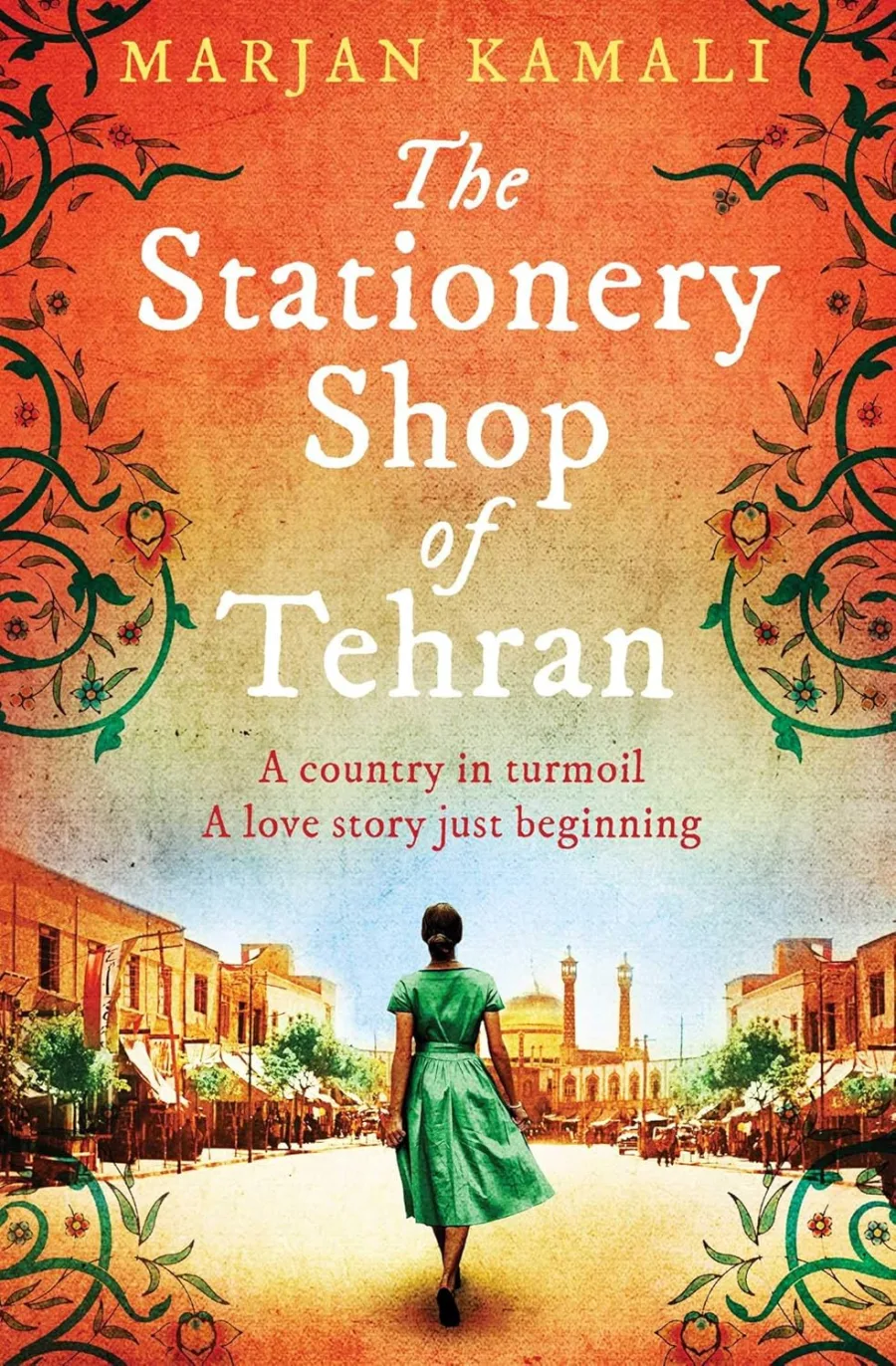
Download Cover Image
Do you want to download the full cover image for The Stationery Shop Of Tehran?